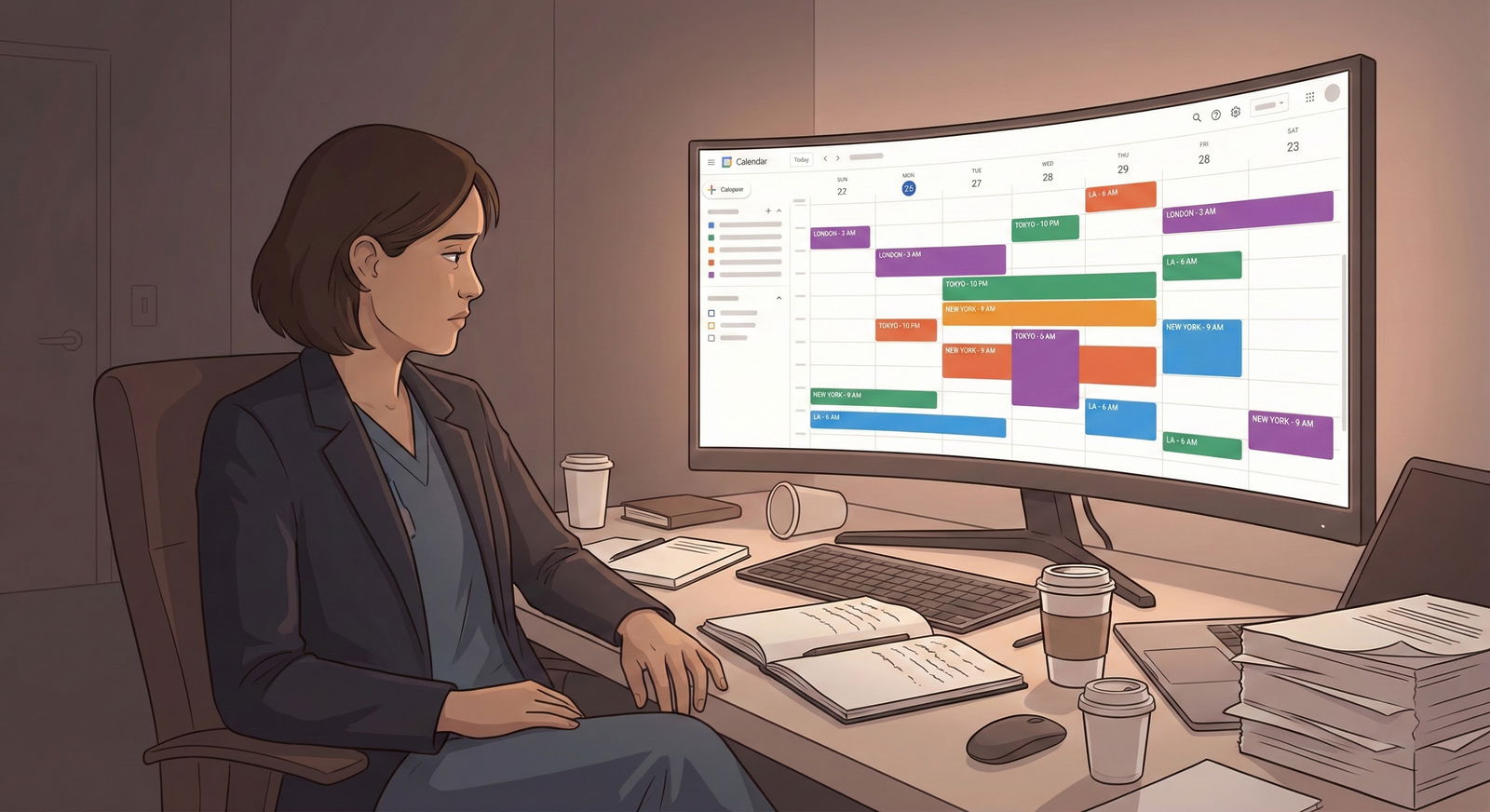
The romantic idea that “if they see me in person, I will match better” is not supported by the data.
For most specialties and most applicants, virtual residency interviews have not significantly harmed match outcomes. The numbers are very clear on this point.
What has changed is who gets interviews, how many they accept, and how programs have to manage yield. The structure of the market shifted. The core “can I match?” question—much less than people fear.
Let me walk you through the evidence.
1. What Actually Changed When Interviews Went Virtual
Residency interviews went almost universally virtual in the 2020–2021 cycle because of COVID. Before that, >95% of interviews were in-person. Now we have multiple years of NRMP and specialty-specific data to compare.
Here is the short version of what the data shows when comparing pre-virtual and virtual eras:
- Match rates stayed similar or improved slightly.
- Geographic “spread” of matches increased a bit.
- Students applied and interviewed at more programs.
- Costs dropped dramatically for applicants.
- Program directors complained more, but behaviorally adapted.
You can see this structural shift most clearly in application and interview volume.
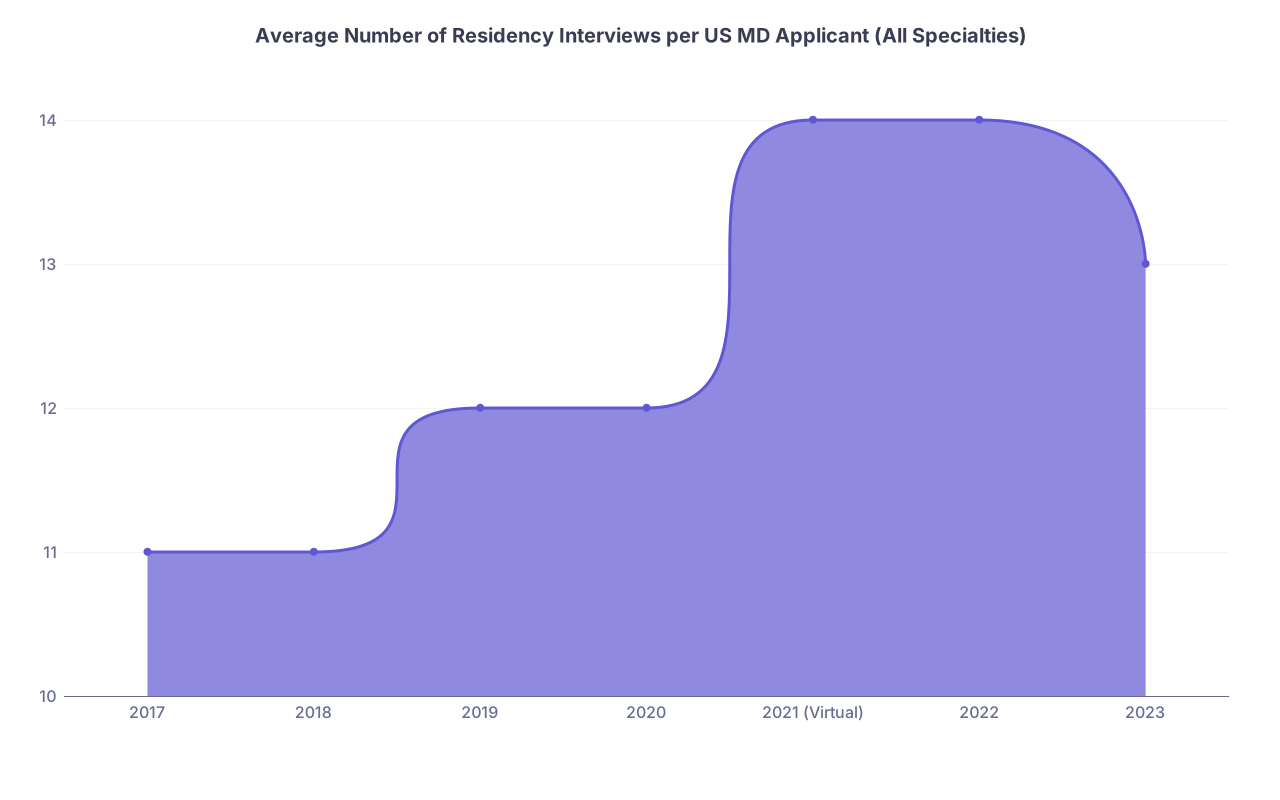
| Category | Value |
|---|---|
| 2017 | 11 |
| 2018 | 11 |
| 2019 | 12 |
| 2020 | 12 |
| 2021 (Virtual) | 14 |
| 2022 | 14 |
| 2023 | 13 |
The exact numbers vary by data source and specialty, but the pattern is consistent: a clear bump around the first fully virtual cycle, then a slight softening as programs and applicants learned to self-regulate.
Match rates did not collapse. In fact, for U.S. MD seniors, the overall match rate remained around the 92–94% range across these years.
So the apocalyptic fear that “Zoom interviews will destroy my shot” was simply wrong.
2. Match Outcomes: Virtual vs In-Person
Let’s tackle the core question: did virtual interviews change the likelihood of matching?
We have three layers of data to lean on:
- NRMP overall statistics
- Specialty-specific studies (EM, IM, surgery, etc.)
- Individual program surveys following the initial virtual cycles
Overall Match Rates
For U.S. MD seniors, NRMP data around the shift to virtual interviews shows:
- 2019 (pre-virtual): ~93.9% match rate
- 2020: ~93.7%
- 2021 (first fully virtual cycle): ~92.8–93%
- 2022: ~92–93%
- 2023: ~93–94%
The fluctuations are small. Year-to-year noise, not a structural collapse.
For U.S. DO seniors and IMGs, there were also no catastrophic drops attributable to the interview format; the larger drivers were specialty competitiveness and application inflation, not Zoom.
Programs filled their spots. Applicants matched at roughly similar rates.
Program Fill Rates
Another sanity check: did programs struggle to fill using virtual interviews?
Across most core specialties (IM, FM, peds, psych, OB/GYN), fill rates stayed in the mid-90s or higher. A few highly competitive specialties (like plastic surgery, dermatology, some surgical subspecialties) saw more volatility, but that was already true pre-virtual.
If virtual interviews were truly inferior for identifying good fits, you’d expect:
- Increased unfilled positions
- More post-Match scrambling
- Program directors loudly demanding a return to in-person
We saw some grumbling, sure. But not a collapse in fill metrics.
3. Who Benefits (and Who Doesn’t) From Virtual Interviews?
The data shows clear winners and losers, but not always where people expect.
Applicant Costs and Equity
Travel for in-person interviews is expensive: flights, hotels, Ubers, food. Multiple surveys of residency applicants pre-2020 found:
- Average total interview costs often in the $3,000–$7,000 range
- Some students, especially in competitive specialties, pushing >$10,000
Post-virtual shift, survey data from multiple schools shows:
- Cost reductions of 60–90%
- Many students reporting total interview spend under $1,000
- A significant group spending almost nothing beyond basic equipment / clothing
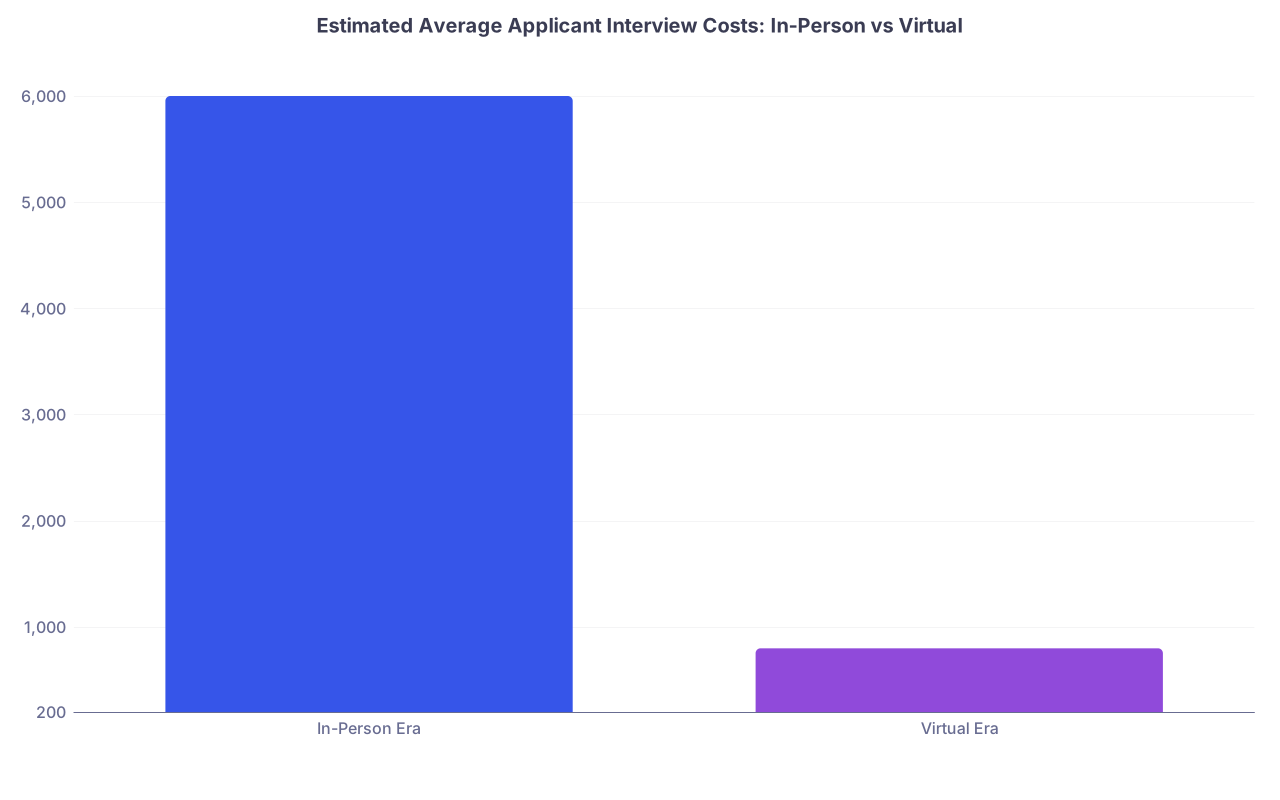
| Category | Value |
|---|---|
| In-Person Era | 6000 |
| Virtual Era | 800 |
Is this exact to the dollar? No. But the order of magnitude is right. Thousands of dollars saved per applicant.
Who does that help most?
- Students from lower socioeconomic backgrounds
- Applicants without family financial backing
- Students applying in expensive coastal markets far from their medical school
From an equity standpoint, the virtual format clearly lowered the financial barrier to compete.
Interview Hoarding and Distribution
The downside of removing travel friction: high-stat applicants accepting more interviews than they truly need.
Data from NRMP and specialty organizations shows:
- Increased number of interviews per applicant in competitive fields (ortho, derm, ENT, etc.)
- A more skewed distribution: some applicants with >20 interviews, others stuck at 2–3
Programs responded with interview caps, signaling, and preference signaling mechanisms in some specialties, trying to restore balance.
But this effect is not about virtual vs in-person quality; it is about market dynamics. Logistics were the bottleneck before. Zoom removed that bottleneck.
4. Does Virtual vs In-Person Change Rank List Behavior?
The real question is not “Did I match?” but “Where did I match?”
Here the data gets more nuanced.
Geographic Spread
Several analyses after the first virtual cycle noted:
- A slight increase in applicants matching outside their home region
- More cross-country matches, especially for strong applicants
In other words, virtual interviews may have weakened the “regional bias” a bit. Programs interviewed more far-away candidates. Applicants felt more able to consider programs they would not have paid to visit.
Perceived Fit vs Actual Ranking
A striking finding from multiple program director surveys:
- PDs reported that virtual interviews slightly lowered their confidence in assessing “fit,” nonverbal cues, and professionalism.
- Despite this, rank list construction and matching did not show major disruptions.
This gap between feeling and outcome is important. Directors often felt worse about the process, but their actual fill and subsequent resident performance data did not show obvious deterioration.
Home and Away Rotations
The one place where format interacts heavily with outcomes is away rotations (especially in surgical fields and EM). These are often in-person again and matter a lot.
Virtual interviews did not remove this “audition” effect. If anything, programs may rely more on prior direct exposure (aways, sub-I’s, home rotations) when interviews are online. But that is mostly a specialty-specific effect, not a universal one.
5. Specialty-Level Data: Where Format Might Matter More
Let’s break this down by broad buckets. Not every specialty behaves the same.
| Specialty Group | Match Rate Impact | Interview Volume Change | Key Concern |
|---|---|---|---|
| Primary Care (IM/FM/Peds) | Minimal | Moderate increase | Equity, cost |
| Psychiatry | Minimal | Moderate increase | Applicant volume surge |
| Surgical Specialties | Minimal–moderate | Large increase | Fit, away rotation weight |
| Competitive Lifestyle (Derm, Optho) | Minimal–moderate | Large increase | Over-interviewing, signaling |
Primary Care (IM, FM, Peds)
- Match rates stable and high.
- Virtual format mainly improved access and reduced cost.
- Programs rely heavily on application metrics and letters; interviews are confirmatory, not decisive for most candidates.
Surgical Specialties
Here’s where skepticism is strongest.
Surgeons will tell you they “need to see you in person” to judge work ethic, professionalism, and team fit. Yet the data on match rates and resident performance has not conclusively shown that virtual interviews produce worse classes.
What is true:
- Away rotations and home performance remain critical.
- Some applicants and programs reported difficulty assessing OR culture, infrastructure, and mentorship virtually.
- A subset of programs experimented with optional in-person second looks—but under heavy scrutiny from governing bodies.
Still, the hard outcomes—fill rate, attrition, Board pass rates—have not exploded.
6. What Programs Actually Changed Behind the Scenes
You care about format. Programs care about workflow and prediction accuracy.
Program director surveys post-virtual transition repeatedly show similar patterns:
- Many kept or increased use of structured interviews and scoring rubrics.
- Some added “standardized” questions to mitigate virtual bias.
- A number significantly increased pre-interview screening thresholds (Step scores, class rank, research).
- Quite a few reweighted interview performance slightly down and prior metrics up in determining rank.
That last point matters for you.
When interviews are virtual:
- Signal-to-noise ratio from a 20–30 minute Zoom conversation is lower.
- It is harder to read group dynamics, informal interactions, social professionalism.
- Program directors compensate by trusting the paper and the track record more.
So yes, the interview still matters. But the rest of the application arguably matters relatively more in a fully virtual ecosystem.
7. Misconceptions Applicants Still Cling To
Let me be blunt about a few myths that data simply does not support.
Myth 1: “If interviews go back to in-person, my match odds will improve.”
No consistent evidence. Match rates were not higher in the old system. They may feel more intuitive and “human,” but feelings are not metrics.
Myth 2: “Programs cannot really tell who is good over Zoom.”
Programs can and do distinguish candidates. Do they lose some nuance? Yes. Do they completely lose predictive power? No. They rely more on:
- Clinical evaluations
- LORs with detailed narrative
- Step / COMLEX scores
- Research productivity and trajectory
- Home institution reputation and prior resident experiences from that school
Myth 3: “Virtual interviews hurt IMGs more.”
Cost savings probably helped many IMGs. What hurts IMGs more is overall competitiveness, limited U.S. clinical experience, and over-application congestion—issues present regardless of format. There is no robust evidence that Zoom alone materially worsened their odds.
8. How to Strategically Think About Virtual vs In-Person for Your Own Match
Given all this, what should you do differently, depending on format?
If Interviews Are Virtual
You are in a high-volume, low-friction ecosystem. Data shows:
- You will likely receive and accept more interviews than in a travel-limited world.
- Programs are wary of no-shows and fake interest, so signaling and communication matter more.
Strategic implications:
- Be ruthless about tracking and ranking programs early.
- Do not hoard interviews you know you will never rank. Top-heavy behavior distorts the market and adds nothing to your chances once you reach the “safe” interview count for your specialty.
- Over-prepare for clear, concise communication. Virtual interviews compress your signal into a smaller set of data points.
If Interviews Are In-Person (or Hybrid)
Logistical friction returns. Data from the pre-2020 era shows:
- Interview counts per applicant are naturally lower because of travel constraints.
- Geographic clustering is stronger; you are more likely to match near where you trained or rotated.
Strategic implications:
- Be more selective in where you apply and which interviews you accept. Cost and time become real constraints again.
- You gain more from seeing facilities, resident camaraderie, and city environment. Use that to refine your rank list.
- Your “on-site” behavior—punctuality, hallway conversations, interactions with staff—contributes to soft data that programs will lean on heavily.
9. Where the Evidence Is Still Thin (And What To Watch)
We have strong short- and medium-term data on match and fill rates. We have less long-term data on:
- Resident performance under different interview formats
- Burnout and attrition differences for cohorts chosen virtually vs in-person
- Diversity outcomes (though early numbers suggest virtual helped widen access, especially geographically and socioeconomically)
Future research will likely focus on whether classes recruited virtually differ in:
- Board pass rates
- Fellowship match rates
- Program satisfaction and retention
So far, there has been no widespread alarm from RRCs, ABMS boards, or major specialty organizations that “virtual interview cohorts” are objectively worse.
If catastrophic outcomes were appearing, you would see strong pushes to ban or severely limit virtual formats. Instead, what you see is a patchwork of specialty-level recommendations, many continuing to endorse or at least permit virtual interviews, with guarded language about equity and cost.
10. Bottom Line: What The Data Actually Supports
Strip away nostalgia and anecdote, and the numbers come down to this:
- Overall match rates: largely unchanged by the shift to virtual.
- Program fill rates: stable. Programs adapted.
- Applicant costs: dramatically lower with virtual.
- Equity and access: improved for many, especially those with less money or far from large academic centers.
- Market dynamics: more interview hoarding, more need for signaling and structured processes.
- Quality of matches: no clear evidence of widespread harm. Some modest changes in geography and fit perception, but not in core outcomes.
So if you are sitting there convinced that an in-person handshake is the only thing between you and a match: the data does not agree with you.
Use whatever format you are given intelligently. Optimize for clarity, professionalism, and honest preference signaling. The residency selection system is flawed in many ways. But the switch from in-person to virtual interviews is not the disaster people claimed—and in many respects, it has made the process more accessible and rational.