The obsession with “standing out” on virtual residency interviews is doing more harm than good.
Programs are not hunting for the flashiest Zoom personality. They are trying to make sure you are safe, sane, teachable, and not going to blow up their call schedule or their culture. That’s it. The bar is much more boring—and much more achievable—than the internet makes it sound.
Let’s dismantle the mythology around video interviews and talk about what actually moves the needle in the Match.
The Myth of “Crushing” the Virtual Interview
I keep hearing versions of the same advice:
“Your goal is to be memorable.”
“You need to differentiate yourself.”
“Interview day is where people win or lose the Match.”
That sounds dramatic. It is also mostly wrong.
In large categorical programs, by the time you show up on Zoom, the real selection work is already 80–90% done. You’ve been screened on Step scores, MSPE, grades, LORs, and maybe research. Your file drove the invite; the video call is mostly quality control and ranking fine-tuning, not a talent show.
Here’s the unglamorous truth from what programs and NRMP data repeatedly show:
- Interviews almost never rescue a weak application into a competitive program.
- Interviews can torpedo a strong application if you’re weird, rude, or unprepared.
- Most candidates end up in a big, undifferentiated “solid” bucket after interviews.
So the real game is not standing out. It’s avoiding standing out for the wrong reasons and landing firmly in the “safe to train, pleasant to work with” pile.
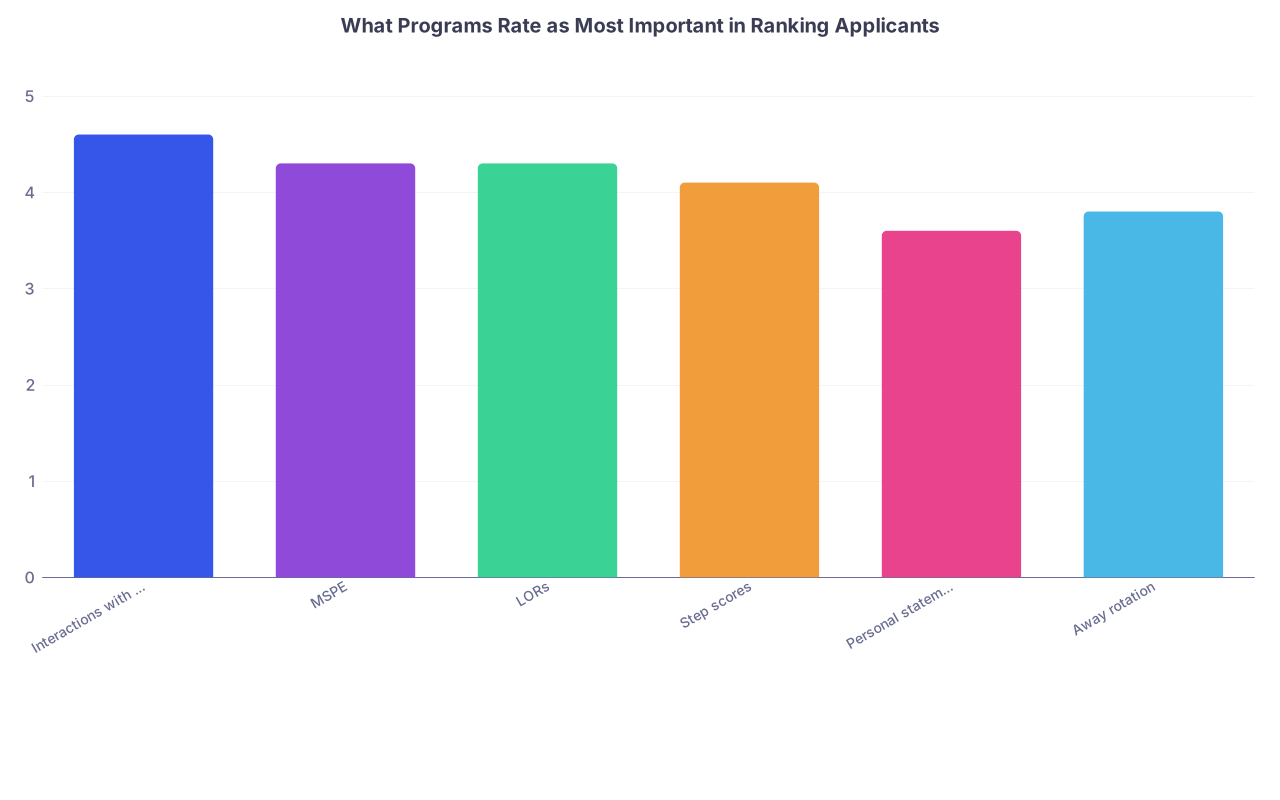
| Category | Value |
|---|---|
| Interactions with faculty | 4.6 |
| MSPE | 4.3 |
| LORs | 4.3 |
| Step scores | 4.1 |
| Personal statement | 3.6 |
| Away rotation | 3.8 |
Those numbers (NRMP Program Director Survey–style 1–5 importance ratings) tell you something: interviews matter, but they’re sitting on top of a pile of pre-existing data about you. They’re not a magic override button.
What Virtual Interviews Actually Let Programs See
Let me be blunt: a virtual interview is a low‑resolution snapshot of you as a coworker.
Not a deep character study. Not a full personality profile. Just a basic check in three buckets:
- Are you normal enough to be on a team at 3 a.m. without causing chaos?
- Do you understand the specialty and the program well enough to not regret matching here in six months?
- Are there any glaring red flags—interpersonal, professionalism, or judgment—that your application didn’t show?
That’s what’s happening behind the curtain while you’re worried about whether your background plant looks professional enough.
Where virtual specifically changes the game is not in what matters, but in how easily you can screw it up with tech and environment distractions. Programs are not grading you on your Logitech model number. They are grading you on attention to basic details and respect for the process.
The Overrated Stuff Everyone Obsessively Fixates On
Here’s the part people do not like hearing: the things students endlessly agonize about usually sit at the bottom of the list for faculty.
Your camera, mic, and “aesthetic”
Unless your audio is so bad they cannot hear you or your background is actively offensive or wildly unprofessional, nobody cares.
I’ve sat through interviews where:
- One applicant had a $200 mic, blurred background, perfectly framed shot.
- Another was at a kitchen table with a basic laptop cam, slightly off-center.
They both got the same comment afterward: “Seemed normal. Would work with.” No one mentioned their setups.
If you can be heard clearly, seen clearly, and you look like you made an effort to appear professional, you’ve hit the ceiling on tech benefits. There is no secret style multiplier beyond that.
Hyper‑scripted “brand” answers
You’ve probably been told to “craft your narrative,” “find your hook,” or “brand yourself.” Then you see people on Reddit memorizing 2–3 minute monologues for “Tell me about yourself.”
Faculty smell that from the first sentence. It does not make you look polished. It makes you look coached and inauthentic.
Over-rehearsed answers usually backfire in three ways:
- You sound robotic and disconnected.
- You struggle when they interrupt or pivot because you’ve memorized, not understood.
- You come off as trying to game the interaction instead of having a conversation.
They are not grading you on performance art. They are checking: can this person talk to patients and colleagues like a human?
“Memorable” gimmicks
Funny Zoom backgrounds. Quirky props. Overly personal stories shoehorned into unrelated questions. I know where this comes from—people misinterpreting “programs see dozens of people a day, you need to stand out.”
No. You need to not be the one they remember for the wrong reason. I’ve heard debriefs like:
- “He was the one with the neon gaming chair. Just…why?”
- “She kept mentioning her TikTok surgery channel.”
- “He tried to be super funny. It was awkward.”
That’s the kind of “memorable” that quietly slides you down the rank list.
The Underrated Stuff That Actually Moves Your Rank
If you want to spend your limited mental energy wisely, shift from “How do I impress them?” to “How do I make it extremely easy for them to trust me?”
There are four main levers that matter much more than your lighting setup.
1. Baseline professionalism and reliability
Programs are trying to predict: will this person show up, respond, and not create fires?
Virtual interviews give them a few simple data points:
- You log in on time, with the right link, to the right session.
- Your email responses to logistics are clear and timely.
- You have a functional backup plan if tech fails (phone nearby, number ready).
- Your environment is quiet enough that you’re not yelling over roommates or espresso machines.
You’d be amazed how many applicants fail these basic checks. Late logins without apology. Interviewing from noisy public spaces. Fumbling with mute for 30 seconds every time.
This doesn’t make you look “nervous.” It makes you look disorganized and higher risk. Nobody wants that in a resident who’ll be cross-covering 40 patients on nights.
2. Thoughtful, program-specific understanding
This is the one that quietly separates the middle of the list.
You don’t need to recite their website. You do need to show that:
- You understand what kind of program they are (community vs academic, heavy research vs workhorse clinical, etc.).
- You know how their strengths align with what you actually want.
- You’ve done enough homework that your questions couldn’t be copy‑pasted to any program on your list.
This isn’t about flattery. It’s signaling that if they invest 3 years (or more) of training into you, you’re unlikely to wake up PGY-1 July thinking, “What have I done?”

A simple test: if every question you plan to ask could be asked at every program, you have done zero real prep.
3. Being pleasantly normal in conversation
This is where people overcomplicate things badly.
Programs are not ranking you on extroversion. They are looking for:
- You can answer a question directly without veering into a five-minute tangent.
- You can track the thread of a conversation and respond like a colleague, not a test taker.
- You show a normal range of affect—smile sometimes, show interest, react to what they say.
That’s it. No charisma award. No TED Talk energy.
If you talk the way you would with an attending on rounds you like and respect—engaged, concise, not trying too hard—you’re already well above the danger line.
4. Not setting off red-flag alarms
This is where interviews have disproportionate power.
The most common red flags I’ve seen on virtual days:
- Blaming others constantly when describing conflicts or challenges.
- Thin-skinned reactions to mild pushback (“So what would you do differently?”).
- Aggressive program shopping behavior: “How many fellows do you graduate into X top program yearly?” asked with entitlement.
- Boundary issues: oversharing about personal trauma in a way that feels unprocessed and makes the room uncomfortable.
The single fastest way to tank your rank: make interviewers worry you will bring drama, litigation, or burnout explosions into their residency.
Virtual interviews can actually amplify this. There’s less small talk, less informal context. Strange comments stand out more.
How Virtual Interview Performance Compares to the Rest of Your Application
Let’s put interview performance in context, because this is where a lot of bad advice comes from.
| Component | Typical Impact on Rank | When It Matters Most |
|---|---|---|
| Interview Performance | High (within tiers) | Among similarly qualified applicants |
| Letters of Recommendation | High | For specialty fit, red/green flags |
| MSPE/Clerkship Performance | High | For clinical reliability |
| Step Scores | Moderate–High | Mostly for invite & initial tiering |
| Personal Statement | Low–Moderate | When there are concerns/questions |
Interview performance is high within whatever tier you were already placed in by your file. It’s not independent. A stellar interview can move you up within that band; a disastrous one can drop you out of contention.
What it’s not doing: erasing a 210 into a 260 or transforming two failed clerkships into a “must-rank-high” situation at a top program.
So if you’re spending 40 hours tweaking hand gestures on Zoom and 4 hours on tightening your letters strategy or Step 2 performance, your priorities are backwards.
A Simple, Boring Preparation Framework That Actually Works
No gimmicks. Just a practical baseline that gets you into the “safe yes” group most of the time.
Step 1: Fix the environment once, then stop fussing
- Quiet room. Door closed. Tell roommates/family the times.
- Decent lighting (window in front of you or basic lamp).
- Laptop at eye level so you’re not staring downward into your chin.
- Test your mic and camera with a friend one time the week before.
Then stop. You’re done. More tweaking buys you almost nothing.
Step 2: Build flexible, not memorized, answers
Have 3–5 real stories you know cold: a conflict, a failure, a proud moment, a time you helped a struggling teammate, a time you took initiative.
Know the story beats, not the script. That lets you adapt: the same story can answer “Tell me about a challenge,” “Tell me about a conflict,” or “Tell me about a time you grew.”
If you hear yourself giving the same 90-second answer word-for-word three times in a day, you’ve over‑scripted.
Step 3: Prepare targeted program questions
For each program, pick 2–3 things that are actually specific to them:
- “I noticed your night float structure is X. How has that affected intern workload and learning?”
- “You mention strong QI involvement. How do residents typically get pulled into those projects?”
- “I saw you have both community and VA sites—how do you balance time between them over three years?”
Again, this is not flattery. It’s you auditioning as a future colleague who pays attention and makes good decisions.

| Step | Description |
|---|---|
| Step 1 | Check Interview Invite |
| Step 2 | Confirm Time & Tech |
| Step 3 | One-time Tech Run-through |
| Step 4 | Prepare 3-5 Core Stories |
| Step 5 | Research Programs Briefly |
| Step 6 | Draft Program-specific Questions |
| Step 7 | Light Mock Interview |
| Step 8 | Interview Day Execution |
Step 4: One or two mock interviews. Not ten.
Run through a couple of sessions with someone who will tell you the truth, not someone who says, “That was great!” no matter what.
You’re looking for:
- Are you rambling?
- Are you answering the question that was actually asked?
- Any distracting tics (constant “umm,” looking off-screen, weird fidgeting)?
Fix the big stuff, then stop. Endless rehearsal usually just pushes you into stiff, fake territory.
What To Stop Worrying About Immediately
To save your cortisol levels, here’s what you can safely stop obsessing over:
- Whether your background art makes you “look interesting.”
- Whether your tie, blouse color, or hijab shade will make you stand out.
- Whether you should mention your niche hobby to seem “unique.”
- Whether to buy a ring light because someone on YouTube said lighting is everything.
If your setup doesn’t actively distract or offend, nobody cares. They’re not scoring you on cinematography.
Spend that energy understanding the program, reflecting honestly on your training so far, and making sure you sleep the night before.
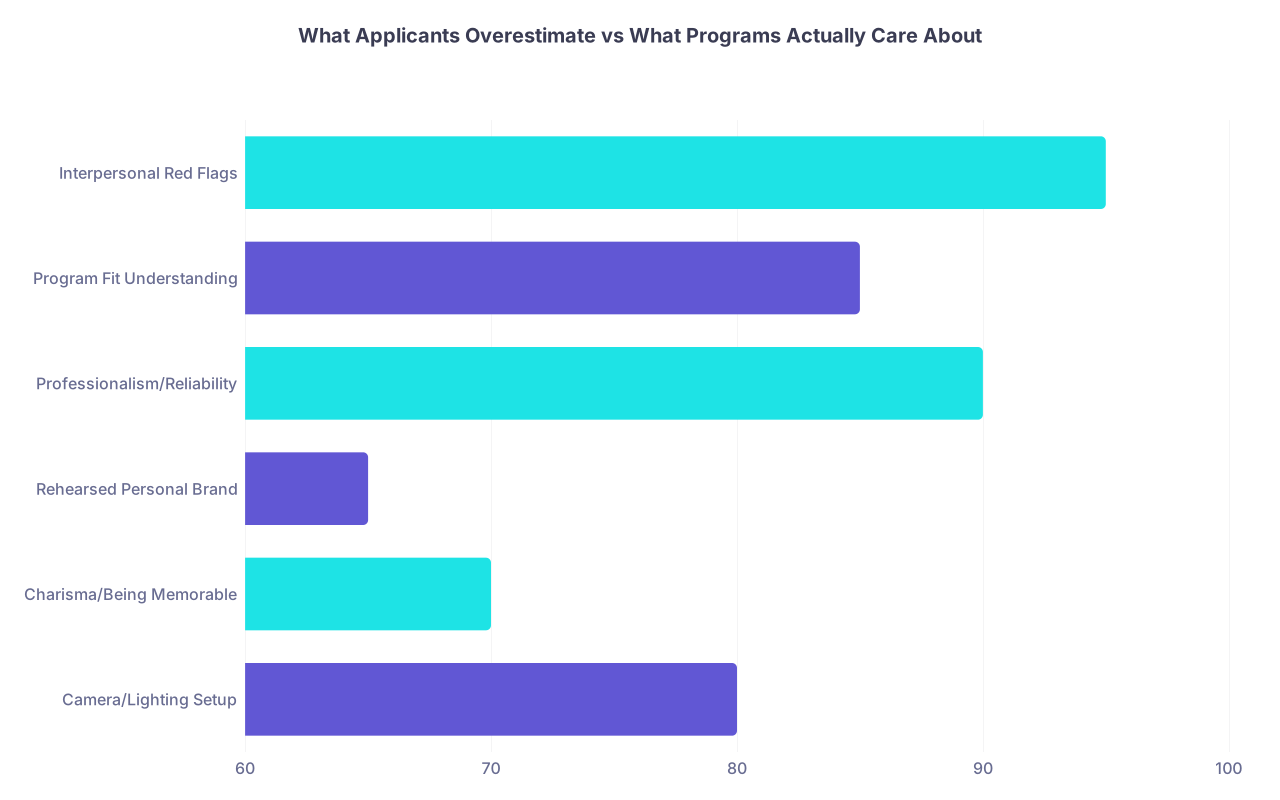
| Category | Value |
|---|---|
| Camera/Lighting Setup | 80 |
| Charisma/Being Memorable | 70 |
| Rehearsed Personal Brand | 65 |
| Professionalism/Reliability | 90 |
| Program Fit Understanding | 85 |
| Interpersonal Red Flags | 95 |
(Think of higher values as “mental bandwidth spent by applicants/programs”—they are badly mismatched.)
The Real Measure of a “Good” Virtual Interview
You know you had a successful interview day if:
- The conversations felt like you were talking to future colleagues, not examiners.
- You were able to be consistent across multiple rooms—no wildly different personas.
- You walked away with a clearer sense of which programs actually fit you.
You do not need interviewers to gush, “Fantastic candidate!” on the spot. Quiet “seems solid, would work with” is exactly what you want. That’s the language of being ranked comfortably.
The Bottom Line
Three things to remember:
- Standing out on virtual interviews is overrated; not being a red flag is underrated. Programs want safe, reliable colleagues, not Zoom superstars.
- Tech polish beyond basic clarity and professionalism is wasted effort. Your understanding of the program, your interpersonal normalcy, and your judgment matter far more.
- Prepare just enough to be clear, honest, and specific—then stop. Spend your energy on the substance of your application and your own fit, not on manufacturing a performance.