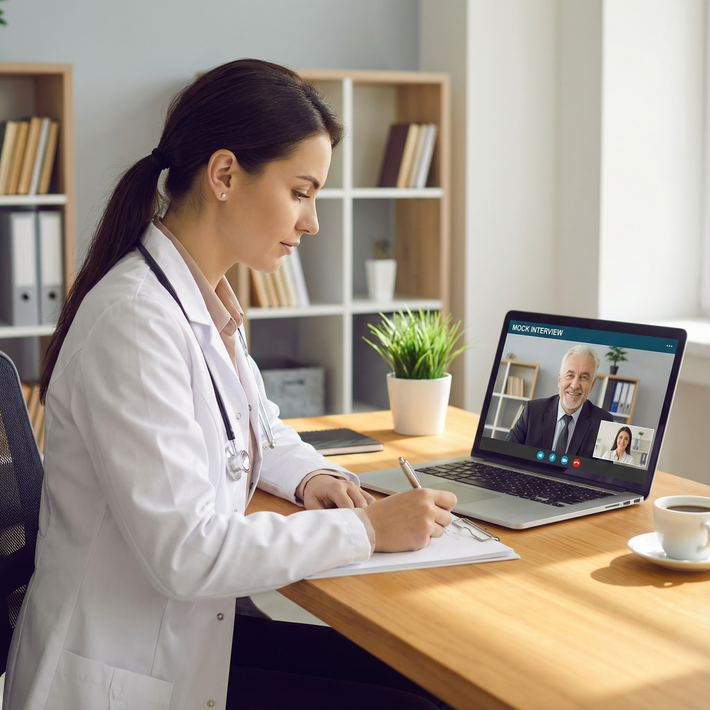
The PD absolutely knows you’re taking notes during a Zoom interview. The real question is whether you do it in a way that helps you—or makes you look distracted and unprepared.
Here’s the straight answer: yes, it’s okay to take notes during a Zoom interview with program directors. But only if you do it right. Quietly, minimally, and without breaking eye contact every five seconds.
Let’s walk through how to do that like a professional instead of like a nervous MS4 trying to transcribe the entire conversation.
The Core Answer: Yes, With Rules
You can take notes during a Zoom interview. No serious program director is offended by that alone. Many of them assume you’re jotting things down—especially during program overview sessions or Q&A with residents.
What PDs do notice and dislike:
- Long pauses while you’re clearly typing
- Eyes constantly darting down or to the side
- Loud keyboard clacking
- Looking like you’re “reading a script” instead of having a conversation
- Obviously copying down every word they say
They want a human conversation, not a court reporter.
So the rule set is simple:
- Notes: yes.
- Obvious, constant note-taking: no.
- Typing a novel: absolutely not.
- Glancing at a few key bullets: fine. Reading essays: not fine.
What You Should Use Notes For (And What You Shouldn’t)
You don’t need a full transcript of the interview. That’s pointless, and your brain won’t process it anyway.
Use notes for three things:
- Quick facts about the program you’ll forget later
- Specific names, projects, or opportunities you might reference in thank-you emails or your rank list
- Short reminders of questions or stories you want to remember to bring up
Examples of good notes to jot down during the interview:
- “Night float: 2 weeks blocks, 3x/year”
- “Scholarly project required PGY-2”
- “Dr. Singh – interest in med ed QI, wants residents involved”
- “No fellows in ICU – residents run codes”
Stuff you don’t need to write down in real time:
- Their entire answer about why they love the program
- Full descriptions of every rotation
- Generic lines like “collegial culture,” “supportive environment,” “we’re a family”
Those phrases show up in 80% of interviews. You’ll remember the real differences: schedule, vibe, autonomy, location, fellowship outcomes.
Handwriting vs Typing: Which Is Better on Zoom?
If you want to look engaged, handwriting usually wins.
Here’s why:
- Typing = more eye movement away from camera and more obvious
- Keyboards are noisy, especially on laptops
- Visually, PDs see your shoulder and arms shift more when you type
- Handwriting is smaller movement, quieter, and feels more like you’re “jotting” than “working”
If you’re going to take notes, I’d do this:
- Keep a small notebook or pad just below your camera or slightly to the side
- Keep your pen uncapped and ready before the interview starts
- Jot 2–5 word bullets, not sentences
If you must type (e.g., accessibility, physical limitations, you organize everything digitally), then:
- Turn down your keyboard sound / use an external quiet keyboard
- Type rarely and briefly
- Make your camera slightly higher so eye shifts look more natural
How Much Note-Taking Is Too Much?
Here’s the line: if your note-taking is interfering with the flow of conversation, it’s too much.
Red flags from a PD’s perspective:
- You take several seconds to respond after they finish talking because you’re mid-typing
- You frequently look down for long stretches
- Your facial expression is neutral/blank for most of the interview because you’re focusing on writing
- You have to say “Sorry, can you repeat that?” more than once because you were writing instead of listening
You don’t want them thinking, “This applicant is more focused on their notes than on me.”
Target: 3–8 short notes for a 20–30 minute individual interview.
For a full half-day with multiple sessions, your total might be a page or two, but spread out.
Should You Tell Them You’re Taking Notes?
If your note-taking is subtle, you don’t need to announce it. Just do it.
But if you know you’re going to occasionally look down for a second, there’s nothing wrong with a single, quick line early in the day like:
- “If you see me glance down, I’m just jotting a couple notes—helps me keep programs straight later.”
Simple. One time. Then move on.
Don’t keep apologizing. That’s more distracting than the note-taking itself.
The Bigger Problem: Reading From Notes Like a Script
There’s a more dangerous version of “notes” you need to avoid: using scripted answers.
PDs and faculty are very good at spotting applicants who:
- Have over-rehearsed their answers
- Are clearly reading from bullets just off screen
- Sound robotic, with long, perfect, overly formal answers
They’ve heard “I’m passionate about lifelong learning” enough times for one lifetime.
Use notes to keep your brain organized, not to turn your personality off.
A reasonable setup:
On paper:
- 3–5 key experiences you might mention (with 2–3 one-word prompts each)
- 5–7 question prompts you want to ask the program
On screen:
- Zoom window full screen
- Maybe a small sticky note on the edge of your monitor with 2–3 “must ask” items if you need that security blanket
What you should not do:
Type out full answers to “Tell me about yourself,” “Why our program?” or “Biggest weakness?” and try to read them.
You will sound stiff. Your eye movements will give you away. And PDs hate scripted-sounding applicants.
What PDs Actually Care About During Zoom Interviews
They’re not scoring your notepad. They’re asking themselves:
- Do I like talking to this person?
- Do they seem interested in our program, not just any program?
- Do they answer questions thoughtfully and honestly?
- Would I trust them with my patients at 3:00 a.m.?
Professional behavior includes basic things like:
- Looking at the camera most of the time
- Having a clean, non-distracting background
- Decent audio and internet
- Not obviously multitasking
Taking notes doesn’t help you if your connection’s awful, your audio is echoing, and your camera is pointing up your nose.
Get the basics right first. Then layer on discreet note-taking.
A Clean System That Actually Works
Here’s a structure I’ve seen work really well for applicants during interview season.
Before the Interview
Have a single “Program Interview Notes” notebook or digital doc divided by program.
For each program, set this up ahead of time:
Top section:
- Program name
- Date of interview
- Names of people you’re scheduled to meet (if you have them)
Pre-filled bullets:
- 3–4 specific things about the program you’re curious about
- A few quick lines on “Why this program?” (just concepts, not full script)
Questions section:
- 5–7 questions to ask faculty
- 3–5 questions to ask residents
During the Interview
You only add:
- Key facts or unique features you learn
- A couple of direct quotes or phrases that stand out (especially if you might mention them in a thank-you email)
- Personal gut reactions in 1–2 words at the end (“strong vibe,” “heavy call but great teaching,” “seems malignant,” etc.)
That’s it. Not a novel.
After the Interview (Same Day)
This is where detail belongs.
As soon as you’re done for the day—or at worst, that evening—take 5–10 minutes per program and add:
- Overall impression (2–4 sentences max)
- Pros / cons (short bullets)
- Anything you want to remember for ranking later (e.g., “partner can find work here,” “friends in same city,” “great peds exposure but weak ICU”)
You’ll forget the details shockingly fast if you skip this step. People think they’ll remember every program. By your 7th or 8th interview, they blur.
Taking light notes during and then processing them after is the sweet spot.
Is It Ever Better to Skip Notes Entirely?
Yes—if notes are making you visibly anxious or robotic.
If you’re someone who starts obsessing over capturing every detail, or if you find yourself zoning out while writing, you’re better off:
- Fully focusing during the call
- Then immediately after hanging up, recording a 2–3 minute voice memo or quick written summary of what you remember
PDs care far more that you’re present and engaged than that you’ve documented their call schedule down to the last weekend.
If you’re on the fence: for your first 1–2 interviews, try very light note-taking. If you notice your performance dipping, dial it back.
Common Mistakes to Avoid
I’ll call these out bluntly, because I’ve seen them:
Typing constantly during the program director’s intro talk.
You look like you’re doing something else. Take minimal notes, then ask for the slide deck or written info later if you need it.Staring off to one side where your second monitor is.
If you use another screen for notes, put the Zoom window directly in front of where your eyes usually go. Don’t have them side-by-side.Asking a question they literally just answered.
This screams “I wasn’t really listening.” If you’re taking notes, this is exactly what they’re supposed to prevent.Shuffling papers loudly or flipping through a binder.
You don’t need a residency “Bible” binder on your desk. One notebook. Quiet movements.Overcomplicating your system.
Colored tabs, multiple spreadsheets, printed question banks—if it helps you before and after, fine. But keep interview-day setup simple.
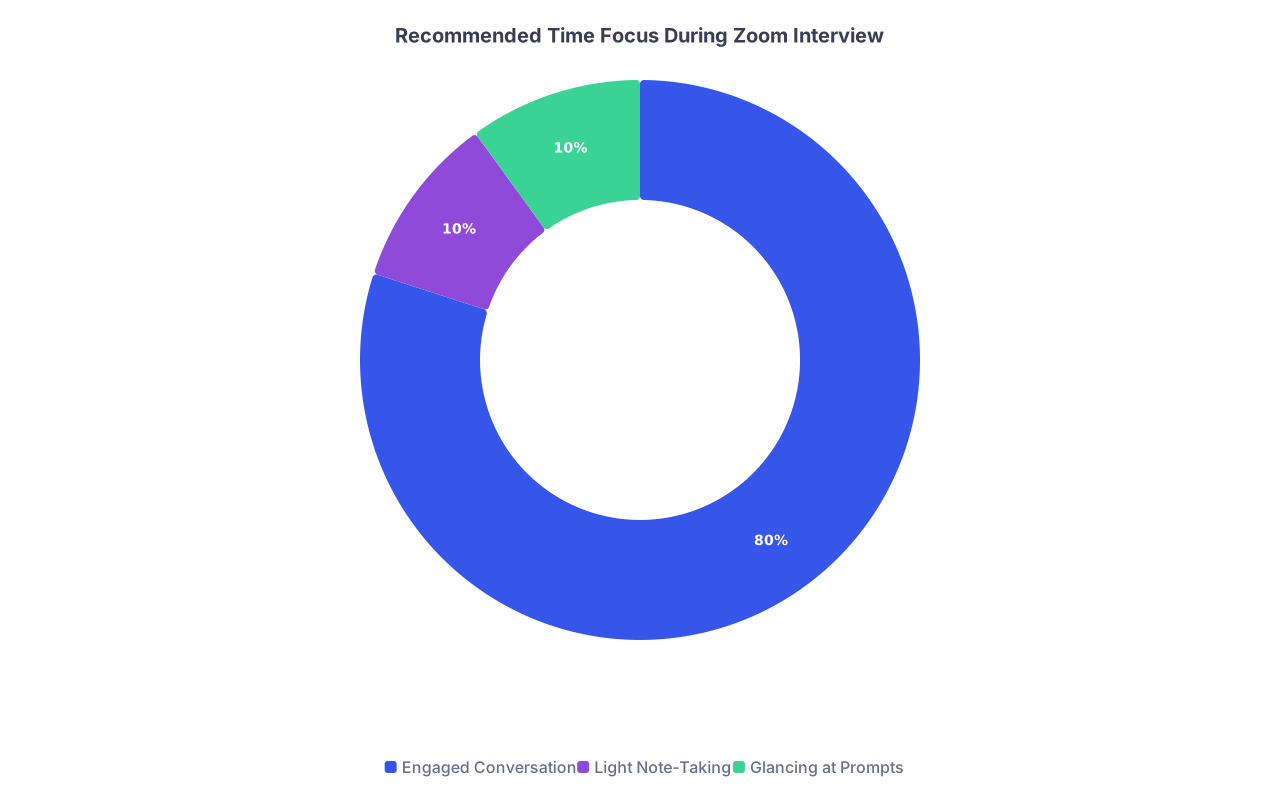
A Quick Visual: Balance of Focus vs Note-Taking
| Category | Value |
|---|---|
| Engaged Conversation | 80 |
| Light Note-Taking | 10 |
| Glancing at Prompts | 10 |
Roughly how your attention should be distributed:
- ~80%: listening, talking, making eye contact
- ~10%: jotting quick notes
- ~10%: glancing at questions or reminders
If those numbers are flipped—or if you’re spending half your energy managing your notes—you’re doing too much.
How This Plays Into Your Thank-You Emails and Rank List
Where good notes really help is later:
- Writing thank-you emails that are specific:
- “I appreciated hearing about how residents take the lead in family meetings in the ICU by the end of PGY-1.”
- Ranking programs with clear reasons:
- “Strong outpatient, but weaker inpatient autonomy than X program.”
Without notes, your thank-you emails either become generic fluff or you skip them entirely. Your rank list becomes a vague feeling of “I liked that place… I think?”
With light, targeted notes, you can:
- Differentiate programs that otherwise feel similar
- Remember which PD mentioned which unique feature
- Remind yourself of any red flags or specific concerns
| Behavior | Good or Bad? |
|---|---|
| Jotting 3–5 bullets per interview | Good |
| Typing continuously while PD talks | Bad |
| Glancing briefly at a question list | Good |
| Reading scripted answers from screen | Bad |
| Writing a quick summary right after | Good |
A Simple Interview-Day Flow That Works
Here’s one clean, low-stress setup:

| Step | Description |
|---|---|
| Step 1 | Before Interview |
| Step 2 | Open notebook to program page |
| Step 3 | Join Zoom early |
| Step 4 | Light notes during key points |
| Step 5 | Focus mainly on conversation |
| Step 6 | End session |
| Step 7 | Immediately add 3-5 summary bullets |
| Step 8 | Later that day: fuller reflection |
Notice that most of the real writing happens after the call, not during.
Final Takeaways
Let me boil it down.
- Yes, it’s okay to take notes during a Zoom interview with PDs—if it’s light, quiet, and doesn’t interrupt the flow.
- Handwritten, minimal bullets beat constant typing or scripted answers every time.
- Use interviews to connect; use your notebook afterward to capture and organize what matters for thank-yous and your rank list.