
What If I Accidentally Talk Over an Attending on Video?
What actually happens if you cut off an attending mid-sentence in a residency video interview… and you know they noticed?
Because that’s the nightmare, right? You’re already on edge, your internet lags for half a second, you misjudge the pause, you jump in—and suddenly you’re talking over the program director at your dream program. You hear both your voices colliding in your headphones. Your stomach drops. You can’t exactly hit “undo.”
Let me be honest: this happens all the time on video. To normal, successful applicants. To faculty. To program directors. To literally everyone who’s ever used Zoom.
The question isn’t “Will it ever happen?”
It’s “What do they think when it does—and can it tank your chances?”
Let’s walk through this like it actually happens in real life, not in some perfect “model applicant” fantasy world.
First: How Bad Is It Really?
You’re probably imagining the worst-case version:
You cut off the attending.
They think you’re rude.
They mark you down as “unprofessional” or “poor communicator.”
Your application goes straight to the rejection pile.
That’s the story your brain is telling you.
Here’s the boring, honest version I’ve seen play out over and over: most of the time, it barely registers as a blip—if you handle the next five seconds like a functioning human and not a panicked robot.
There are basically three levels of “talking over” someone on video:
| Level | Description | Typical Impact |
|---|---|---|
| Minor | Quick overlap, both stop, one continues | Basically none |
| Moderate | You keep going a bit too long | Slight ding if repeated |
| Major | Repeatedly dominating, ignoring cues | Real red flag |
Minor: You both start talking at once, both stop, someone says, “Oh sorry, go ahead.” This is normal video delay life. No one cares. This is like breathing now.
Moderate: You jump in a bit early while they’re finishing a thought. You talk over a few words, realize it, stop, apologize quickly. Slightly awkward, but again—if it happens once or twice, it’s fine.
Major: You repeatedly interrupt them, talk over answers, answer questions before they’re finished speaking, and never really acknowledge the dynamic. That’s when people start writing “domineering,” “poor listener,” “doesn’t read social cues.”
You’re probably obsessing over a minor or moderate situation and treating it like a major one.
What They’re Actually Thinking (Not the Horror Movie in Your Head)
Most attendings and PDs are:
- Tired
- On their 8th Zoom of the day
- Used to tech glitches, lags, and awkward timing
They’ve all done it themselves. I’ve literally heard PDs say on Zoom:
- “Oh, sorry, I stepped on your answer there.”
- “Zoom delay, my bad—go ahead.”
- “We’re both too polite—someone pick.”
They are not sitting there like: “Wow. This applicant talked over me. Instant rejection.”
They’re asking bigger questions:
- Do you listen overall?
- Do you let others finish most of the time?
- Do you answer thoughtfully?
- Do you seem respectful, even if there are small glitches?
If you’re overall a good listener and it’s clear it was timing/lag/nerves, they move on within seconds. You’re the only one nursing it for three days afterward.
In the Moment: What Do You Do When It Happens?
Let’s say it actually happens in the interview.
You hear it. You feel the overlap. Now what?
Here’s the move, and it’s simple:
- Stop talking immediately
- Slight smile
- Quick, light acknowledgement
- Let them go first
It might sound like:
- “Oh, sorry—please go ahead.”
- “My apologies, I think there’s a bit of a delay—you first.”
- “Oh, I didn’t mean to cut you off—go ahead.”
Short. Calm. Normal.
The thing that actually looks bad isn’t the overlap. It’s when someone:
- Plows through it and keeps talking
- Gets obviously flustered and derails completely
- Over-apologizes for 20 seconds and makes it way more awkward than it needed to be
You don’t need to justify yourself. You don’t need a speech about the internet. A quick, respectful reset actually makes you look more mature, not less.
But What If I Did It Multiple Times?
Here’s the fear: “I didn’t just do it once. It happened like three times. I sounded aggressive. Or disrespectful. Or just socially off.”
This is where context matters.
If it’s because:
- The connection lag was horrible
- There were multiple interviewers and weird pauses
- Everyone was constantly stepping on each other
Then honestly? They’re likely blaming Zoom, not you. Especially if other people were also overlapping.
If it’s because:
- You were anxious and answering too fast
- You were scared of silence and kept jumping in
- You were trying too hard to show enthusiasm and ended up steamrolling
Then yeah, it might leave a bit of an impression. Not necessarily a total deal-breaker, but enough that they may write things like “slightly anxious,” “talks quickly,” “needs to work on pausing.”
Does that automatically mean “won’t rank”? No. People match with a lot of human flaws. The real question is: did they still get a sense of who you are, your story, and your fit? Or did the interruptions overshadow everything?
If you felt it happening in real time, and you course-corrected—started slowing down, started pausing more, started explicitly saying, “I want to make sure I answered your question”—they’ll pick up on that too.
Should You Address It During the Interview?
If it was just one or two overlaps? No. Don’t turn a small glitch into a big deal by dragging attention back to it.
If you feel like the pattern was bad enough that the whole dynamic went off, you have two options:
- Mini reset during the interview
- Or let it go and stop reopening the wound
Mini reset might sound like:
“Sorry, I think I’m just a bit nervous because I’m excited about this program. I don’t mean to jump in—please feel free to cut me off if I’m talking too fast.”
That can actually humanize you. Shows self-awareness. Shows you’re not oblivious.
But do it once. Not after every question. Constantly apologizing for existing reads as insecurity, and that’s not really better than talking a bit too fast.
Should You Email Them After to Apologize?
This is everyone’s favorite 2 a.m. anxiety question.
You finish the interview. You spiral. You replay the moment in your head on loop. Now you’re hovering over your keyboard, half-writing an email that starts with:
“Dear Dr. X, I just wanted to apologize for interrupting you during our interview…”
My take: don’t. Just don’t.
A standard thank-you email? Sure, if the program says it’s okay or you genuinely want to. But turning that thank-you note into an apology monologue about the one time you talked over them? No.
Why?
- You’re amplifying an issue they may barely remember
- You’re giving off “I crumble when I’m not perfect” energy
- It forces them to re-examine the interaction through the lens of your anxiety
If you have to mention it because it was egregious (like, you know you came off as really intense), then fold it into something small and forward-looking:
“Thank you again for speaking with me today. I realized afterward that in my enthusiasm I may have spoken a bit quickly at times; I appreciate your patience and the opportunity to share why I’m so excited about your program.”
That’s it. No scene. No self-flagellation.
Most of the time though? Say nothing. Move on.
Practicing So It’s Less Likely to Happen (Or at Least Feel Less Catastrophic)
You can’t fully control video lag, but you can control your pace, your habits, and your awareness.
A few practical things that actually help:
- Record a mock Zoom with a friend or advisor and watch it back. Notice if you jump in the second someone breathes. Notice if you use filler words when you’re nervous and trying to fill silence.
- Practice answering questions with a beat before you start—literally count “one, two” silently in your head before answering. It feels long to you. It doesn’t feel long to them.
- Use visual cues. On Zoom, watch their mouth—don’t start talking until you’re sure they’ve stopped. If you’re unsure, give it another half-second.
- Plan phrases that naturally slow you down: “That’s a great question, I think for me…” or “I’d divide that into two parts…” They buy you a moment and prevent that panicked, immediate jump.
There’s a difference between “I’m a naturally fast talker, I sometimes overlap,” and “I bulldoze people and never let them finish.” Most anxious applicants are in the first group and terrified they’re in the second.
You’re probably not.
The Bigger Picture: What Actually Gets You Ranked Low
Programs don’t tank people for being human on Zoom. They do get concerned when they see patterns that scream “this will be a problem in a real hospital.” Things like:
- Constantly talking over everyone
- Ignoring questions and going off on tangents
- Not letting others finish ideas during group interviews
- Showing no curiosity about others, making everything about yourself
- Coming across as entitled, dismissive, or arrogant
Talking over an attending once or twice because of nerves or lag? That’s not the pattern.
If, in the same interview, you also:
- Answered questions clearly
- Showed insight into your strengths and weaknesses
- Talked respectfully about staff, patients, and colleagues
- Asked thoughtful questions
- Didn’t badmouth other programs or people
They’re going to remember that far more than the 1.5 seconds of audio overlap.
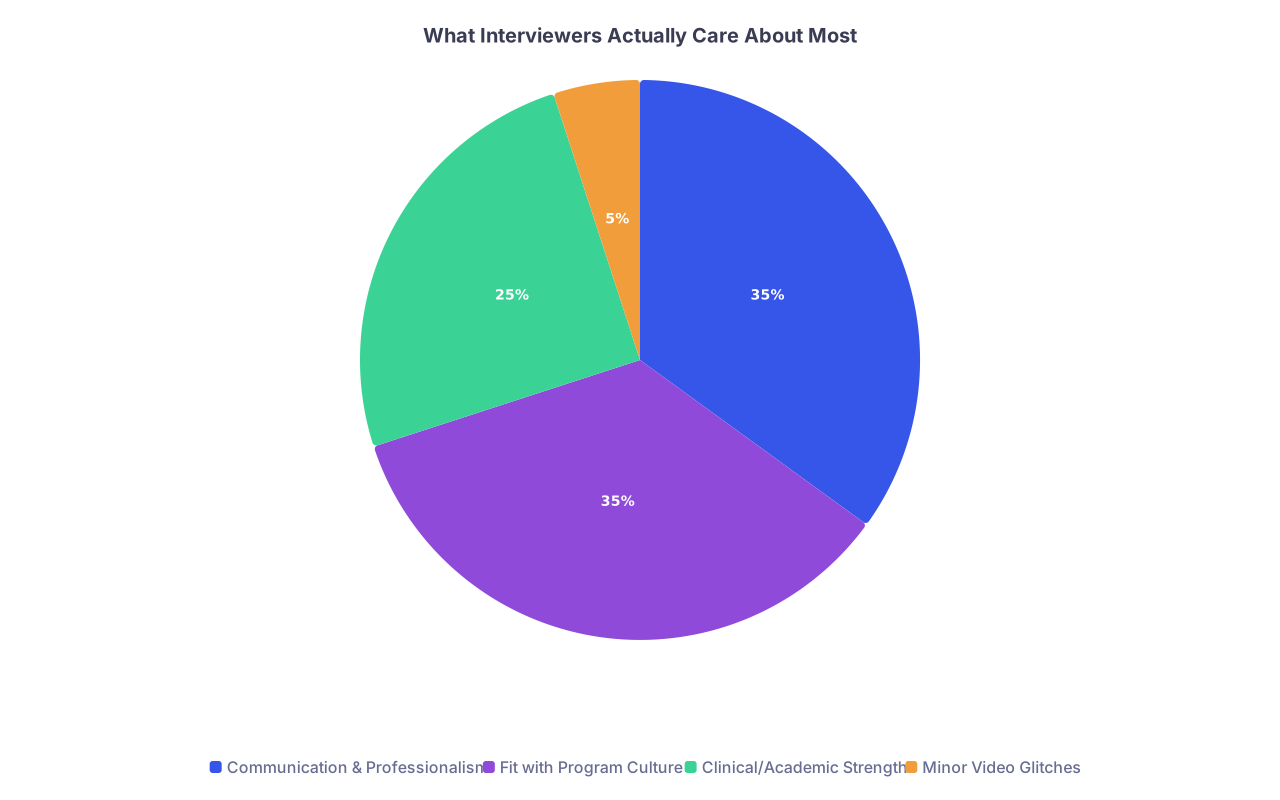
| Category | Value |
|---|---|
| Communication & Professionalism | 35 |
| Fit with Program Culture | 35 |
| Clinical/Academic Strength | 25 |
| Minor Video Glitches | 5 |
Look at that last slice. Minor video glitches—including overlap—are at the bottom of their list. They notice. They just… don’t care that much.
But What If This Was My Top Choice Program?
That’s when the obsessing gets louder, right?
“If this were some random backup program, I’d be annoyed but I’d move on. But this was my #1. The PD. My dream city. My dream specialty.”
Here’s the painful truth: you can ace the interview and still not match there. You can also feel like you bombed it and still match there. You’ve probably heard people say, “I was sure I failed that one. That’s where I matched.”
Faculty are not grading you the way you grade yourself. They’re comparing you to:
- The rest of the applicant pool that day
- What the program actually needs
- Who they think will genuinely be happy and functional there
They’re not running a tally of micro-missteps. They’re looking for overall patterns.
So yes, if the whole vibe was off, this may not end up a love match on either side. But if the only thing you’re clinging to is, “I talked over them once,” you’re probably magnifying a tiny detail into the whole story.
You’re not an audio waveform. You’re a whole person. That’s what they’re ranking.
What to Do With the Anxiety Now
You can’t go back and edit the interview. This isn’t a personal statement. There’s no track changes for Zoom.
So now what?
A few things that don’t completely suck:
Reframe it as a data point, not a fatal flaw.
“I tend to jump in when I’m nervous” is something you can work on. You just got real-time feedback, uncomfortable as it was.Channel it into your next interviews.
Make “pause before speaking” a specific, actionable goal. Write it on a Post-it next to your screen if you have to.Stop rehearsing the moment like it’s a crime scene.
Every time you replay it, you’re cementing it as some huge disaster. You don’t need to forget it. You just don’t need to live there.Remember how little of the interaction that actually was.
A 20–30 minute interview, and you’re fixated on a 2-second overlap. That’s 0.1–0.2% of the experience. Not exactly the deciding factor.

| Step | Description |
|---|---|
| Step 1 | Start Zoom Interview |
| Step 2 | Small Talk |
| Step 3 | Questions & Answers |
| Step 4 | Quick Apology & Reset |
| Step 5 | Continue Strong Answers |
| Step 6 | Closing Questions |
| Step 7 | Overall Impression & Notes |
| Step 8 | Minor Overlap Happens |
See that? The glitch is a node, not the whole diagram.
One Last Thing You Probably Need to Hear
The attendings and PDs interviewing you? They’ve all said something awkward in an interview before. They’ve all interrupted someone. They’ve all had a moment where they walked away thinking, “Why did I say it like that?”
You’re not auditioning to be flawless. You’re auditioning to be someone they can work with at 3 a.m. on a call night when everyone is tired and imperfect and a little frayed.
Years from now, you won’t remember the exact split second when you talked over that attending on Zoom. You’ll remember whether you learned to forgive yourself for being human and kept showing up anyway.