
It’s 10:00 p.m. The Zoom interview is tomorrow morning at 9:00. Your suit jacket is hanging on the closet door. Your email has the Zoom link. Your brain is buzzing, your stomach’s a little off, and you’re debating whether to cram one more “Tell me about a patient” story or just lie down and scroll your phone.
This is the danger zone. What you do in the last 60 minutes before bed either calms your brain and sets you up for a sharp, controlled interview… or turns tomorrow into a foggy, anxious mess.
So here’s your timeline: a structured, minute‑by‑minute 60‑minute plan for the night before a Zoom residency interview. You’ll wind things down in a deliberate order: tech → space → content → body → brain → bed. No improvising. No “maybe I’ll just check...” chaos.
Overview: Your 60-Minute Night-Before Timeline
You’re one hour from when you should be in bed. At this point, scrolling Reddit about “how competitive is EM this year” is actively hurting you.
Here’s the high-level breakdown:
| Time Block | Focus Area |
|---|---|
| 0–10 min | Tech + access check |
| 10–20 min | Physical setup |
| 20–35 min | Targeted content review |
| 35–45 min | Personal readiness |
| 45–55 min | Mental rehearsal |
| 55–60 min | Shut-down routine |
Now let’s walk it exactly as you should live it.
Minute 0–10: Lock Down Tech and Access
At this point you should not be re-reading every bullet point on your CV. You should be making sure you can actually get into the interview.
Minute 0–3: Reconfirm the logistics
- Open tomorrow’s interview email.
- Verify:
- Correct date and time (and time zone—people get wrecked by CST/EST confusion every year).
- Zoom link and any passcode.
- Interview schedule (individual vs MMI vs group, breakout rooms, etc.).
- Contact phone/email in case of tech failure.
Copy the Zoom link and passcode into:
- A calendar event (if not already there).
- A plain text note on your desktop.
- Your phone (backup).
Minute 3–7: Test the hardware you’ll actually use
Do not change devices tomorrow morning unless your laptop literally dies. At this point you should:
- Plug in your laptop (no battery gambling).
- Open Zoom.
- Start a new test meeting:
- Check camera: centered, no weird blur/filter, no distracting background.
- Check microphone: do the Zoom test; make sure input is your real mic, not some random monitor mic.
- Check speakers / headphones.
If you’re using headphones, decide wired vs Bluetooth tonight. Pair or plug them in and test now, not at 8:55 a.m.
Minute 7–10: Internet backup and updates
- Run a quick speed test (you don’t need perfection, but if it’s awful, move closer to the router or plan a different spot).
- Check for:
- Pending OS updates.
- Zoom updates.
If there’s a big update:
- Install it now. Do not click “Update and restart” at 8:50 a.m. tomorrow.
Done. Close extra programs. Strip the computer down to essentials for the morning.
Minute 10–20: Set Up Your Physical Environment
By now, tech is basically safe. Next problem: what they see and hear when Zoom opens.
Minute 10–14: Frame your shot
Re-open a Zoom test meeting.
Your goals:
- Head and shoulders visible, with a little space above your head.
- Your eyes at roughly the top third of the screen.
- Camera at eye level:
- If you’re looking down: stack books under the laptop.
- If you’re looking up their noses tomorrow, you’ll hate yourself watching the recording.
Adjust distance:
- Too close: your face fills the frame and every nostril pore is on display.
- Too far: you look disengaged.
Minute 14–17: Background and lighting
At this point you should fix the obvious distractions:
- Look behind you in the frame:
- No unmade bed if you can avoid it. If you can’t, smooth the blanket and keep it neutral.
- Remove posters, clutter piles, laundry mountains.
- Lighting:
- Best: light source in front of you, slightly above eye level (desk lamp behind the laptop, facing you, often works).
- Avoid strong light behind you (windows, bright lamps) that turn you into a silhouette.
- Do one more camera check: if you look like you’re in witness protection, rearrange.
Minute 17–20: Noise control and physical comfort
- Close windows. Fans are fine if they don’t roar into the mic.
- Tell roommates/family your exact interview window and ask for quiet.
- Silence phone notifications for tomorrow’s interview block (set focus mode / Do Not Disturb with exceptions for only truly critical contacts).
- Adjust chair height for:
- Feet supported.
- You not slouching down out of frame.
At this point, your environment should feel like a small, controlled “studio,” not a random corner you hope will work.
Minute 20–35: Targeted Content Review (Not Cramming)
Now you switch to content, but in a laser-focused way. This is not the time to re-read your entire ERAS application. It’s about quick refresh and confidence.
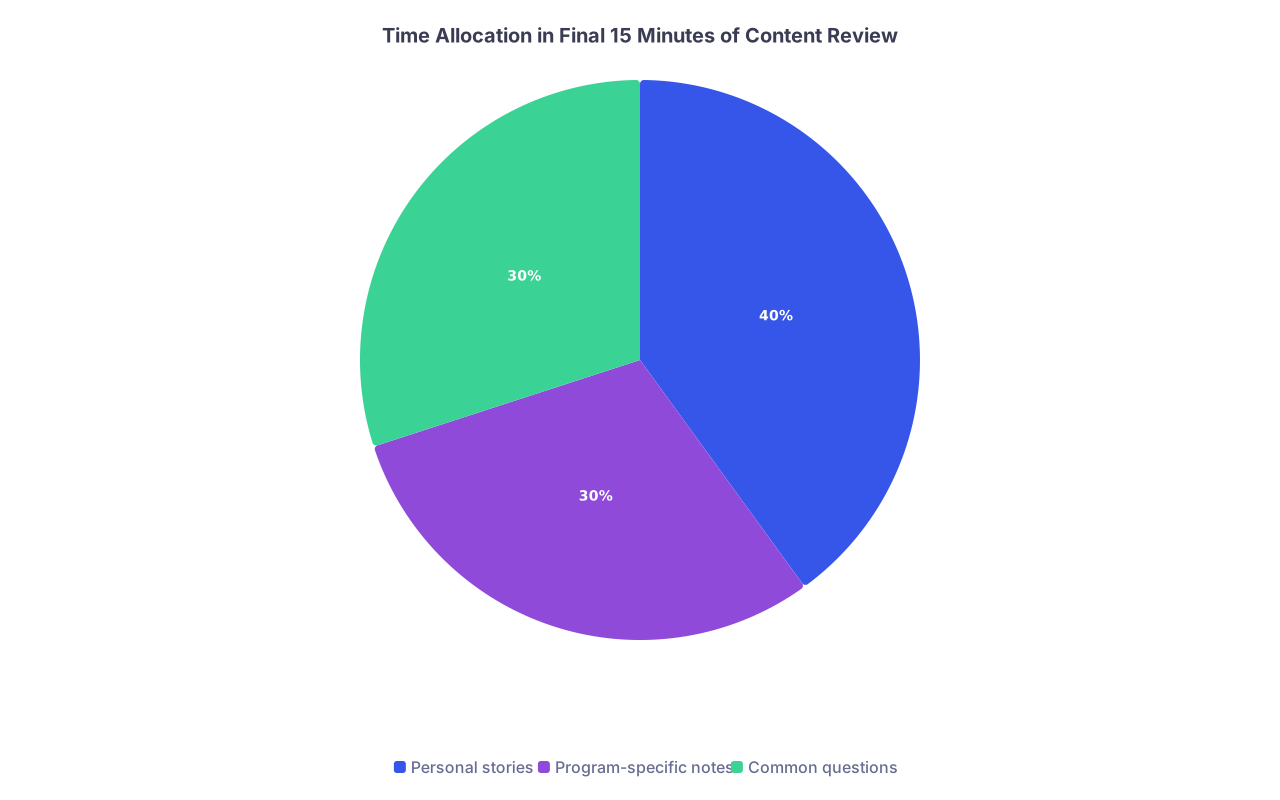
| Category | Value |
|---|---|
| Personal stories | 40 |
| Program-specific notes | 30 |
| Common questions | 30 |
Minute 20–25: Your personal anchor stories
Pull out your notes (or a simple sheet) with 4–6 anchor stories. Things like:
- “Difficult patient / conflict with a team member.”
- “A time I failed / made a mistake.”
- “Leadership experience.”
- “Most meaningful patient.”
At this point you should:
- Skim each story.
- For each, quickly check:
- Situation (1 line)
- What you did (1–2 key actions)
- Outcome / what you learned (1–2 key takeaways)
You’re not rewriting them. You’re reminding your brain: “I’ve got material. I’m not going to blank.”
Minute 25–30: Program-specific bullets
Open your brief program notes—if you don’t have them, make them in 5 minutes:
For each program you’re interviewing with tomorrow (maybe just one, maybe two):
Write 3 columns on a notepad:
- Why this program
- Why I fit here
- Questions to ask
Then fill each with 3 bullets max. Examples:
Why this program:
- Strong county hospital exposure.
- PD’s emphasis on resident autonomy (heard on residents’ podcast).
- Research in health disparities that matches my MPH.
Why I fit:
- Comfortable working with underserved populations (2 years FQHC).
- Strong in Spanish—useful for their patient population.
- Used to high-volume ED in my sub-I.
Having these bullets visible tomorrow reduces the “everything I liked about you just left my memory” panic.
Minute 30–35: Quick run-through of common questions
Pick 5 core questions and glance through your mental answers:
- “Tell me about yourself.”
- “Why this specialty?”
- “Why our program?”
- “Tell me about a challenge or failure.”
- “What are your strengths and weaknesses?”
Do not script. Just:
- Say the first line of each out loud (quietly is fine).
- “I grew up in [place], but I really decided on medicine after…”
- “I knew I wanted [specialty] after seeing…”
- Check that your answer is:
- 60–90 seconds long in your head.
- Focused on you, not generic fluff about “teamwork and compassion.”
You’re priming pathways, not memorizing a play.
Minute 35–45: Personal Readiness (Clothes, Body, Fuel)
Now we move away from “what you’ll say” to “what state you’ll be in.”
Minute 35–40: Outfit dry-run
At this point, your outfit should not be a theoretical concept.
- Lay out:
- Shirt or blouse (check for wrinkles and stains).
- Tie if you’re wearing one (pre-tie it now or at least practice once).
- Jacket.
- Bottoms (yes, real pants or skirt—no flannel pajama pants; if you have to stand up unexpectedly, you’ll thank me).
- Socks/shoes or house shoes.
Try it all on, sit in front of Zoom:
- Check:
- Does your shirt bunch up weirdly when you sit?
- Any distracting patterns (tiny checks can flicker on camera)?
- Neckline appropriate when you lean forward?
If something feels off now, change it. You do not want a wardrobe debate at 8:40 a.m.
Minute 40–43: Tomorrow’s fuel and water
You’re not eating a whole meal now, but you should set up tomorrow:
- Decide:
- What you’ll eat for breakfast (simple, not greasy, not dairy-heavy if that messes with your stomach).
- What you’ll drink (coffee/tea plan—don’t suddenly double your usual caffeine).
- Prep:
- A water bottle or glass to have on your desk.
- A light snack you can eat between interview blocks (nuts, granola bar, whatever you can actually tolerate when anxious).
Do not experiment with new “performance boosting” supplements tomorrow. Save the experiments for literally any other day of your life.
Minute 43–45: Quick body reset
You’ve been mentally grinding. Get out of your head for 2 minutes:
- Light stretching:
- Roll your shoulders.
- Neck side-to-side.
- Stand, touch toes, or do a gentle quad/hip stretch.
- 5 deep breaths:
- In for 4, hold 4, out for 6.
- Feel your heart rate come down a notch.
You’re telling your body: we’re not in an exam. We’re in a professional conversation.
Minute 45–55: Mental Rehearsal Without Anxiety Spiral
This is the most fragile part of the night. You want just enough mental practice to feel ready, but not enough to trigger a 2-hour worry loop.

| Step | Description |
|---|---|
| Step 1 | Start 60-Minute Block |
| Step 2 | Tech Check 0-10 |
| Step 3 | Environment Setup 10-20 |
| Step 4 | Content Review 20-35 |
| Step 5 | Personal Readiness 35-45 |
| Step 6 | Mental Rehearsal 45-55 |
| Step 7 | Shutdown Routine 55-60 |
Minute 45–50: One mock question set (out loud)
Pick 3–4 questions. Stand or sit where you’ll interview tomorrow. Look at the camera, not the screen.
Ask yourself the question and answer out loud:
- “Tell me about yourself.”
- “Why this specialty?”
- “Tell me about a time you had a conflict on the team.”
- “What questions do you have for us?” (answer with your question, obviously).
Do not restart every time you stumble. That’s how you build perfectionism and anxiety.
Watch for:
- Rambling beyond ~90 seconds.
- Overuse of filler (“like,” “you know” every other word).
- Stories that feel vague or generic.
If you notice a flaw:
- Make one quick adjustment note on your pad.
- Move on. You’re not rewriting your application tonight.
Minute 50–53: Visualize the opening 5 minutes
Close your eyes for 2 minutes and run through tomorrow like a movie:
- You sit down at your desk, log in 10 minutes early.
- You see your own face in the waiting room; you adjust your posture.
- The interviewer admits you.
- You smile, say, “Good morning Dr. _____. Thank you for taking the time to meet with me.”
- First question lands. You take a half-second pause and respond calmly.
You’re training your brain so that tomorrow feels familiar. Less threat, more repetition.
Minute 53–55: Decide your “day-of” script for rough moments
In every interview season I’ve watched, what separates people isn’t just polish—it’s how they handle when their brain blanks or tech glitches.
Write down three tiny scripts:
- If your mind goes blank:
- “That’s a great question. Let me think for a brief moment about the best example.”
- If you didn’t hear the question:
- “I’m sorry, the audio cut out for a second. Could you please repeat that?”
- If Zoom freezes / lags:
- “I’m having a bit of a connection issue on my end. If the audio drops again, I’ll turn off my video for a moment to stabilize the call.”
Now your brain has a fallback plan. That alone lowers anxiety.
Minute 55–60: Shut It Down and Protect Your Sleep
Last five minutes. This is where a lot of applicants blow it. They finish “prep,” open Instagram, and suddenly it’s midnight and their pulse is 110.
You will not do that.
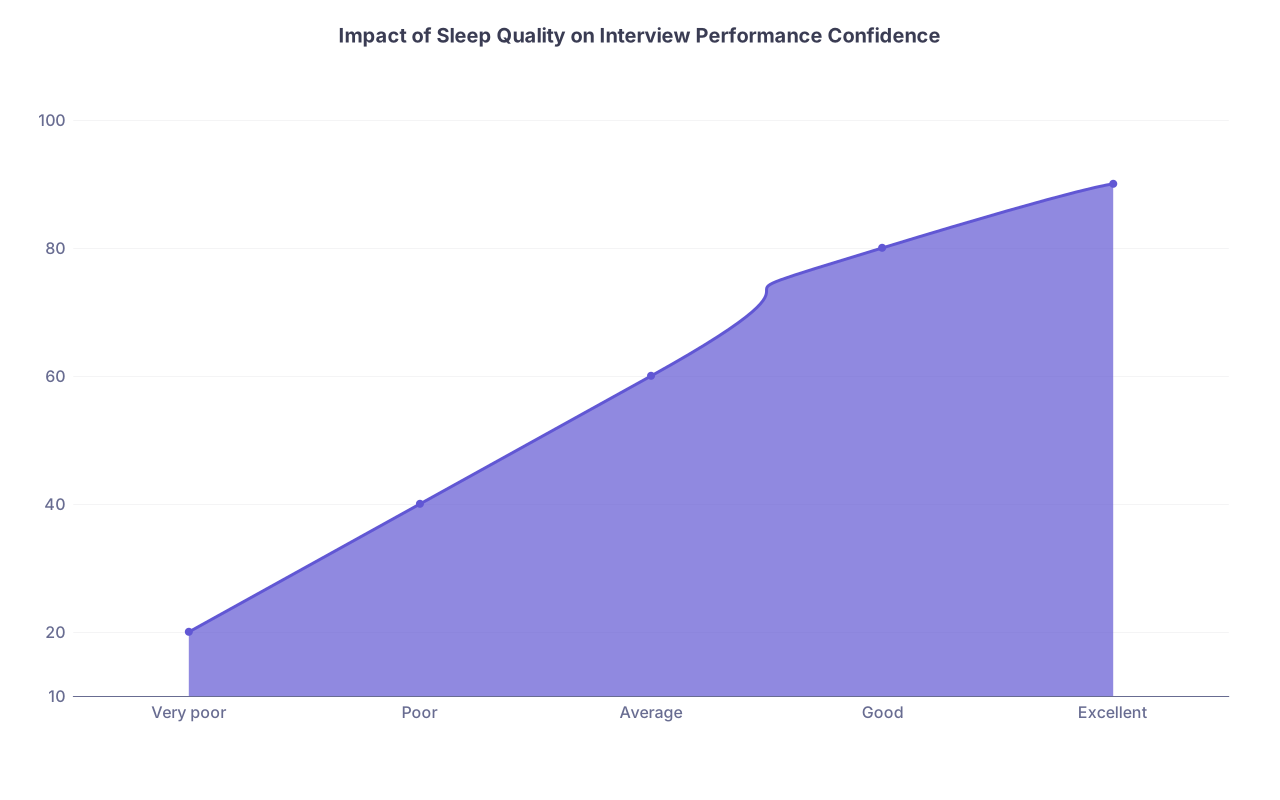
| Category | Value |
|---|---|
| Very poor | 20 |
| Poor | 40 |
| Average | 60 |
| Good | 80 |
| Excellent | 90 |
Minute 55–58: Physical cues for ‘day is over’
- Put your notes:
- On the desk where you’ll see them tomorrow.
- Closed. Face down if you’re prone to re-reading.
- Set two alarms:
- One main alarm.
- One backup on a separate device.
- Turn off:
- Email notifications on your phone.
- Slack/Teams/whatever might ping you in the morning.
Dim the lights, step away from the desk. You’re signaling to your brain: we’re not still “on.”
Minute 58–60: Last mental message
Here’s what you should tell yourself, explicitly:
- “I know my story. I’ve done the work to get here.”
- “Interviews are conversations, not interrogations.”
- “My only job tomorrow is to be clear, honest, and present.”
If you’re someone who spirals, write a one-line mantra on a sticky note and put it where you’ll see it in the morning:
- “Be clear. Be kind. Be concise.”
- Or, “Curious, not perfect.”
Then go brush your teeth. Get in bed. Phone away from your face.
Morning-of Micro-Checklist (Bonus, but Fast)
I know this is “night before,” but let me give you a 3-minute thing for tomorrow so you don’t invent your own chaos:
1 hour before interview:
- Light breakfast, hydration.
- Minimal caffeine beyond normal.
30 minutes before:
- Open laptop, join Zoom 10–15 minutes early.
- Recheck camera, mic, background quickly.
- Put your:
- Program bullets.
- Anchor stories.
- Questions for them.
- Water.
Within reach. No more adjustments; just sit and breathe.
Core Takeaways
- The night before a Zoom interview is not for cramming; it’s for stabilizing: tech, environment, and your own nervous system.
- Use your last 60 minutes to follow a fixed sequence: tech → space → content → clothes/fuel → mental rehearsal → shutdown. Don’t improvise.
- A calm, well-rested applicant with solid basics always outperforms the over-caffeinated perfectionist who stayed up rewriting answers until midnight.