
The way most applicants “wing” multiple virtual interview days in one week is reckless. You would not walk into the OR without a case plan; you should not walk into a 4‑interview week without one either.
Here is the scheduling map you actually need—day by day—for stacking multiple virtual residency interviews in a single week without melting down, double‑booking yourself, or saying the wrong program name on camera.
4–6 Weeks Before Your First Heavy Interview Week: Build the Master Framework
At this point you should stop treating interviews as individual events and start treating them as a project.
Step 1: Create a Single Source of Truth
Do this before you accept a fourth interview in one week.
- Open a dedicated digital calendar (Google Calendar or Outlook)
- Create one color for each:
- Interview day
- Travel/away-from-home day (if applicable)
- Personal/school obligations
- Protected “no interview” time
Now build a Master Interview Table to keep everything straight.
| Program | Date | Time (Local) | Time Zone | Format | Notes |
|---|---|---|---|---|---|
| Program A | Mon | 8:00–14:00 | EST | Multiple 1:1 | PD at 12:30 |
| Program B | Wed | 10:00–16:00 | CST | MMI | Lunch Q&A at 13:00 |
| Program C | Thu | 7:30–13:00 | PST | Panel + 1:1 | Social night before |
| Program D | Fri | 9:00–15:00 | EST | Traditional | Resident-only session 11:00 |
Every time an invite comes in, it gets logged here first. Not in your head. Not in your email. Here.
Step 2: Decide Your Maximum Load Per Week
This is where people lie to themselves.
- 3 full interview days in one week is usually the realistic upper limit
- 4 is possible, but performance often drops by the last one
- Half‑day interviews can be mixed more aggressively (e.g., three half‑days + one full day)
Set a personal rule now:
- “No more than X full interview days per week”
- “At least 1 buffer day with no interviews”
If a program offers you a slot that violates this, you negotiate. Or you decline. Better to be sharp in 8 interviews than mediocre in 14.
2–3 Weeks Before: Lock the Week Structure and Time Zones
At this point you should know which week(s) are going to be heavy and start building the exact skeleton of those days.
Step 3: Translate Everything Into Your Time Zone
Virtual interviews are a time‑zone trap. I have watched applicants miss interviews because they trusted the program’s vague “8 AM” without thinking.
Create a “Time Zone Check” mini‑table for your heavy week:
| Program | Program Time | Your Time Zone | Your Local Time |
|---|---|---|---|
| East Coast IM | 8:00–14:00 EST | CST | 7:00–13:00 |
| Midwest Surgery | 9:00–16:00 CST | CST | 9:00–16:00 |
| West Coast Peds | 8:00–13:00 PST | CST | 10:00–15:00 |
| East Coast Psych | 12:00–17:00 EST | CST | 11:00–16:00 |
Then, in your digital calendar, name events with your local time AND time zone, like:
- “UW Peds Interview – 10:00–15:00 CST (8–13 PST)”
Step 4: Assign Each Interview to a “Slot”
For a sample 4‑interview week (Mon–Fri), you might end up with:
- Monday: Program A (full day)
- Tuesday: Recovery + prep
- Wednesday: Program B (full day)
- Thursday: Program C (half‑day morning) + light prep
- Friday: Program D (full day)
No double booking. No “maybe I can squeeze this in.”
Now translate this into a visual timeline.
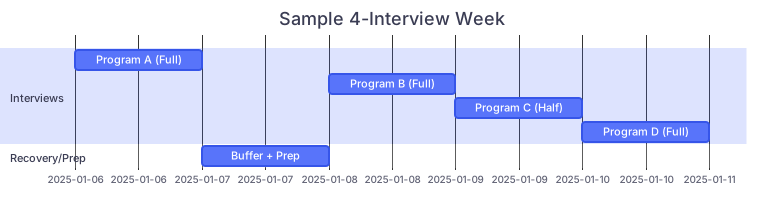
| Task | Details |
|---|---|
| Interviews: Program A (Full) | a1, 2025-01-06, 1d |
| Interviews: Program B (Full) | a2, 2025-01-08, 1d |
| Interviews: Program C (Half) | a3, 2025-01-09, 0.5d |
| Interviews: Program D (Full) | a4, 2025-01-10, 1d |
| Recovery/Prep: Buffer + Prep | b1, 2025-01-07, 1d |
Once this skeleton exists, stop adding more interviews to that week unless it is a true dream program.
10–7 Days Before: Daily Prep Blocks and Tech Rehearsals
Now you start planning within each day.
Step 5: Break Each Interview Day Into Blocks
For every interview day, map it out hour by hour based on the program’s schedule email. Example for a 9–15 CST day:
- 7:30–8:15 – Wake, shower, light breakfast, warm‑up questions
- 8:15–8:30 – Log on, last tech check
- 9:00–9:30 – Welcome / orientation
- 9:30–11:30 – Interviews (3 x 30 min)
- 11:30–12:00 – Short break, notes, snack
- 12:00–13:00 – Resident lunch Q&A
- 13:00–14:30 – Interviews (2 x 45 min)
- 14:30–15:00 – Wrap‑up / debrief
- 15:00–16:00 – Immediate notes + decompress walk
At this point you should add two non‑negotiable items into every interview day:
- 20–30 minutes before start: tech + environment check
- 30–60 minutes after end: structured notes + quick rank impression while memory is fresh
Step 6: Standardize Your Daily Routines Across the Week
Interview weeks become survivable when the days feel similar.
Create a standard “Interview Day Routine” that you repeat:
Morning:
- Same breakfast (nothing experimental that might upset your stomach)
- 3–5 warm‑up answers aloud (tell me about yourself, why this specialty, difficult patient)
- 5 minutes posture/voice warm up (yes, actually do this)
Evening before:
- 30–45 minutes: quick review of program highlights and your question list
- 15 minutes: lay out clothes, check camera frame, organize notes
Do not reinvent the wheel on Day 3. You will be too tired.
7 Days Before a Multi‑Interview Week: Environment and Tech Setup
At this point you should lock in your physical and technical setup so it is identical across days.
Step 7: Build a Reusable Interview “Set”
Pick one location and freeze it for the week.
- Neutral background (bookshelf, plain wall, plant)
- Stable internet (if Wi‑Fi is unstable, buy or borrow a long Ethernet cable)
- Consistent lighting (ring light or lamp at face level)
Create a checklist you run the night before each interview:
- Laptop plugged in, notifications off
- Phone on Do Not Disturb, face down but reachable
- Backup device charged (tablet or second laptop) with Zoom/Teams/ Webex installed
- Headphones tested; backup wired pair nearby
- Printed or digital one‑page cheat sheet:
- 3 reasons you like this program
- 3 stories (teamwork, conflict, failure)
- 3 questions for faculty, 3 for residents
Now do a full tech rehearsal once, then a shorter one the night before each interview day.
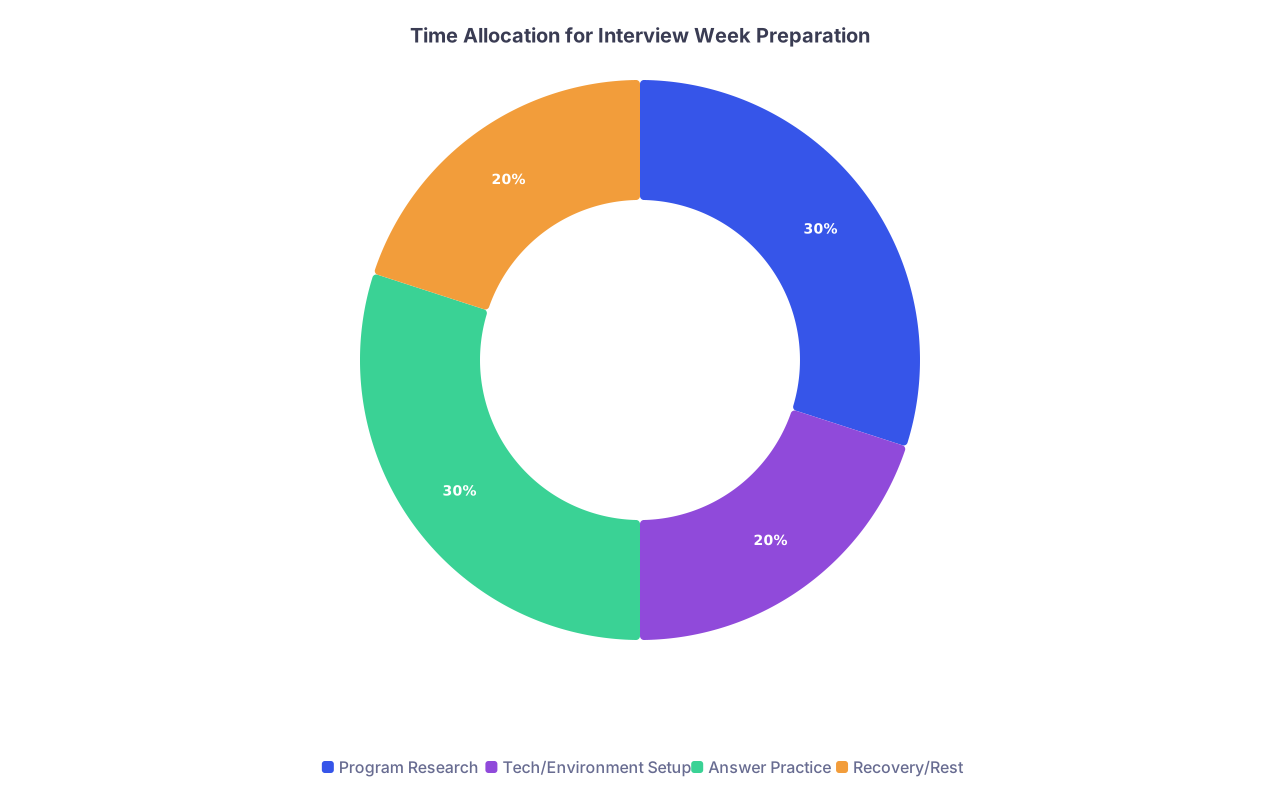
| Category | Value |
|---|---|
| Program Research | 30 |
| Tech/Environment Setup | 20 |
| Answer Practice | 30 |
| Recovery/Rest | 20 |
3–2 Days Before the Heavy Week: Program‑Specific Prep Map
At this point you should shift from generic prep to program‑targeted prep, organized by day.
Step 8: Create a One‑Page Snapshot Per Program
For each interview, build a single page (physical or digital) that you will review the night before and the morning of:
- Program name and city (reduces wrong‑city slip‑ups)
- Quick facts:
- Size (e.g., 12 residents per year)
- Tracks (categorical, prelim, research)
- ICU / subspecialty strengths
- 2–3 things you genuinely like
- 1 potential concern you want to clarify
- 5–7 resident/faculty names if known
- Tailored “Why this program” bullets
Organize these pages in the order of the week:
- Monday at front, Friday at back
So you are always physically moving forward through the week.
Step 9: Schedule Pre‑Work in Short, Sharp Sessions
Do not try to do all program research in one binge. You will forget half of it.
For a 4‑interview week, 2–3 days before:
- Morning: 30 minutes – Program A review
- Midday: 30 minutes – Program B review
- Evening: 30 minutes – Program C and D quick skim
You are not writing essays. You are building recognition: “I have seen these faculty names, I know their major strengths.”
The Week Itself: Day‑by‑Day Map
Now the real timeline. Assume a 4‑interview week: Mon, Wed, Thu (half), Fri.
Sunday (Day −1): Week Launch
At this point you should be front‑loading logistics and minimizing randomness.
Tasks:
- Review the master weekly schedule and time zones
- Lay out clothes for Monday and Wednesday
- Prep your space (background, lighting)
- Print or open the one‑pager for Monday’s program
- Set two alarms for Monday (main + backup)
Limit prep Sunday night to 60–90 minutes. You need sleep more than one extra article review.
Monday (Interview 1): Execution + Immediate Debrief
Morning:
- Follow your standard routine
- 20–30 minutes before: log in to the platform, test audio/video, adjust framing
- Keep water and light snack nearby
During the day:
- Between sessions, jot 1–2 words on memorable moments:
- “Resident X – mentorship story”
- “Chair – research expectations clear”
- Short bathroom/stretch breaks when possible
After the interview (within 1 hour):
- Fill out:
- “Initial gut feeling: 0–10”
- 3 pros / 3 cons
- Anything that changed your rank perspective
Then stop. No deep analysis yet. You are protecting Tuesday.
Tuesday (Recovery + Light Prep): Protect Your Bandwidth
At this point you should not schedule another interview unless absolutely necessary.
Goals:
- Physically recover from social fatigue
- Lock in prep for Wednesday and Thursday
Schedule:
- Morning:
- 30 minutes: Program B one‑pager review
- 15 minutes: practice top 5 answers aloud
- Midday:
- 30 minutes: walk, gym, or some movement
- Afternoon:
- 20 minutes: tech check for Program B (different platform? Account set up?)
- Evening:
- 20–30 minutes: Program C half‑day prep
Do not take a full call shift, do not volunteer for extra coverage. Protect this day ruthlessly.
Wednesday (Interview 2): Maintain Consistency
You are probably a bit tired now. This is where having the same routine saves you.
Morning:
- Same breakfast, same warm‑up
- Skim Program B one‑pager
During the day:
- Use the same immediate note‑taking strategy as Monday:
- Write program‑specific details that will help later with your rank list
After the interview:
- 30–45 minutes: debrief + comparison
- Compare gut rating with Monday’s program
- Note any major differentiators (call structure, fellowship placement, culture)
Keep the evening light:
- 20–30 minutes: Program C final prep
- Sleep early. No “quick” Netflix spiral.
Thursday (Half‑Day Interview 3): Manage Split Energy
Half‑day interviews are deceptive. They feel shorter, but the cognitive load is the same.
Morning (if AM interview):
- Normal routine, compressed
- Post‑interview: 30–45 minutes debrief
Afternoon:
- DO:
- Light admin (answer a few emails, low‑stakes work)
- Short walk or workout
- 30–40 minutes: Program D prep
- DO NOT:
- Schedule big exams, major presentations, or long clinic sessions
- Start deep research projects
At this point you should be thinking in terms of energy conservation, not productivity.
Friday (Interview 4): Finish Without Fading
The risk on Day 4 is autopilot. You start recycling answers without emotion. Programs smell that.
Morning:
- Slightly longer warm‑up: 10–15 minutes of out‑loud answers
- Intentionally remind yourself what is unique about this program
(Glance at your one‑pager again)
During the interview:
- Push yourself to stay curious:
- Ask at least one follow‑up question in each faculty/resident interaction
- Keep posture and eye contact conscious; fatigue slumps are obvious on camera
After the interview:
- Full debrief like the other days
- Immediately after that: close the book on the week
- No rank list finalization yet
- Just file notes and back up any digital documents
Weekend After: Consolidate and Adjust Future Weeks
At this point you should move from survival mode back to strategy.
Step 10: Rank List Drafting (Not Final)
Use the weekend to do a first‑pass ordering of programs from the week:
- Re‑read your daily notes
- Quickly sort: “Top, Middle, Low” within your specialty
- Make a snapshot bar of your gut ranking:
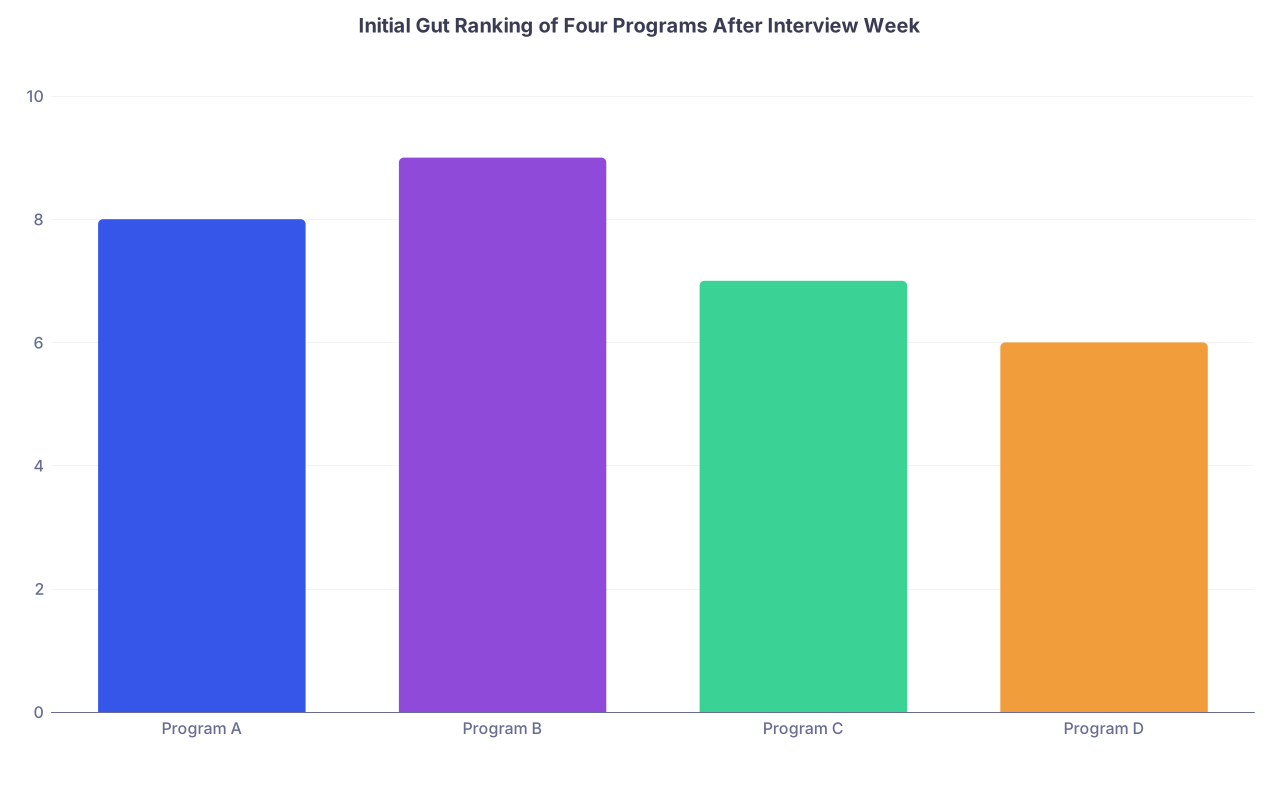
| Category | Value |
|---|---|
| Program A | 8 |
| Program B | 9 |
| Program C | 7 |
| Program D | 6 |
You are not locking anything in yet. You are just preserving fresh impressions before they blend together with future weeks.
Step 11: Adjust Upcoming Weeks Based on How You Felt
Ask yourself:
- Was 4 interviews too many?
- If yes, start pushing later invites into lighter weeks
- Did you crash by Wednesday?
- If yes, avoid back‑to‑back‑to‑back full days
Update your master calendar:
- Mark red weeks (already heavy, no more additions)
- Mark yellow weeks (one slot left)
- Mark green weeks (open to more interviews)
Handling Last‑Minute Changes During a Heavy Week
Real life intrudes: programs reschedule, interview platforms change, or you get a sudden dream invite.
At this point you should rely on your structure, not adrenaline.
If a program asks to move you into your already‑packed week:
- Look at the master calendar and see:
- Does the new time collide with tech checks or your debrief time?
- If adding the interview breaks your weekly max:
- Politely ask for another date:
- “I am already scheduled for multiple interviews that week and want to be fully present. Do you have availability the following week?”
- Politely ask for another date:
- If it is a top‑choice program and you must stack:
- Convert a half‑day into a pure recovery/prep block
- Shorten non‑essential activities (socials, optional Q&As) elsewhere
What This Looks Like in Real Time
To anchor all this, here is a compact timeline summary of a demanding interview week.
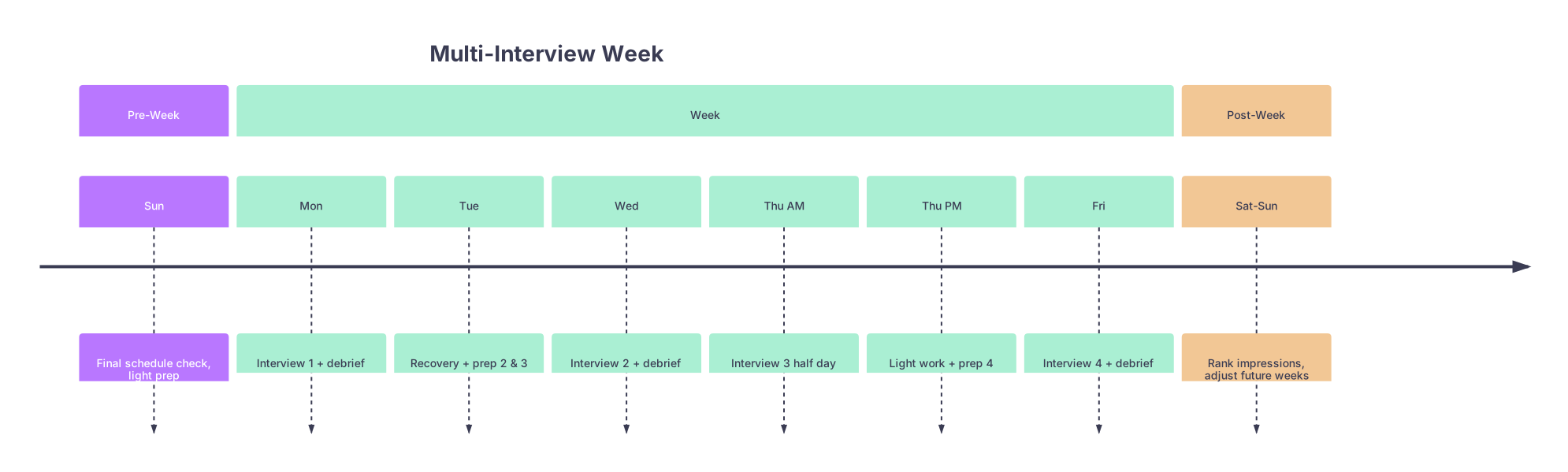
| Period | Event |
|---|---|
| Pre-Week - Sun | Final schedule check, light prep |
| Week - Mon | Interview 1 + debrief |
| Week - Tue | Recovery + prep 2 & 3 |
| Week - Wed | Interview 2 + debrief |
| Week - Thu AM | Interview 3 half day |
| Week - Thu PM | Light work + prep 4 |
| Week - Fri | Interview 4 + debrief |
| Post-Week - Sat-Sun | Rank impressions, adjust future weeks |
Key Takeaways
- Treat weeks with multiple virtual interviews as projects, not isolated events: one master calendar, one weekly structure, clear maximum load.
- Standardize your routines and environment so every interview day feels familiar, and protect buffer days for recovery and targeted prep.
- Debrief each interview within an hour, record your gut ranking, and use that data to refine both your rank list and how you schedule the rest of your season.