
The way most applicants schedule virtual interviews is reckless. They front‑load, double‑book, and then wonder why they are exhausted, rambling, and forgettable by December.
You do not have to do it that way.
You are about to walk through October to January week by week, with a sane pacing strategy that protects your energy and keeps your performance high on screen.
Big Picture: Your Interview Season Architecture
Before we go month‑by‑month, you need a structural plan. Otherwise you will say yes to everything at any time and burn out by mid‑December.
Here is the target structure I recommend for virtual residency interviews:
| Month | Target Interviews/Week | Max Interviews/Day | Notes |
|---|---|---|---|
| Late Oct | 2–3 | 1 | Warm‑up, early programs |
| Nov | 3–4 | 1 (rarely 2) | Core interview month |
| Dec (1–2) | 3–4 | 1 | Peak, protect energy |
| Dec (3–4) | 2–3 | 1 | Taper, rank list focus |
| Jan | 1–2 | 1 | Late interviews, waitlists |
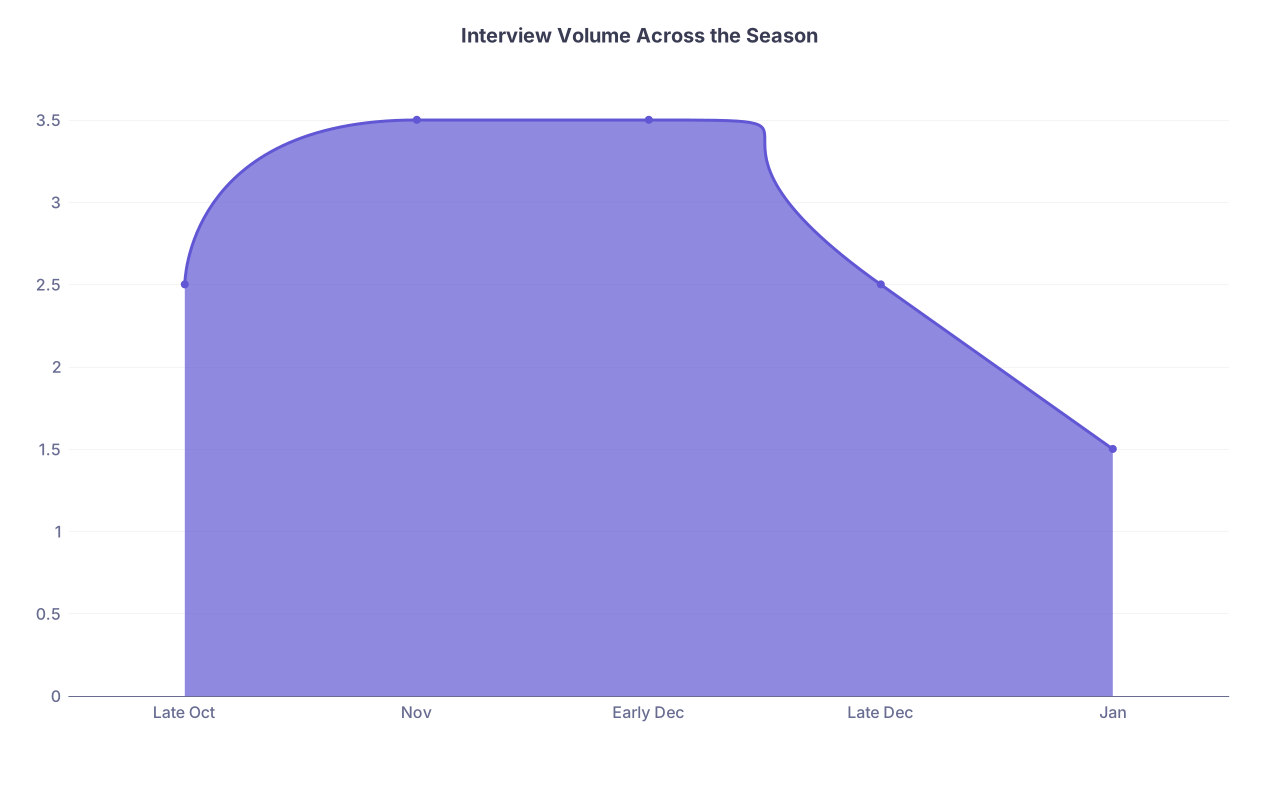
| Category | Value |
|---|---|
| Late Oct | 2.5 |
| Nov | 3.5 |
| Early Dec | 3.5 |
| Late Dec | 2.5 |
| Jan | 1.5 |
Opinion: More than 4 virtual interviews per week for more than 2 weeks straight is a bad idea for most people. I have watched strong applicants become flat, monotone, and generic under that load.
Your job from October to January is simple:
- Guard your calendar.
- Train like an athlete in competition season.
- Set up a repeatable, low‑friction system for each interview day.
Now let us go chronologically.
Late October: Set the Rules Before the Flood
By late October, invites start trickling in for many specialties. This is where people either build a smart system or start the slow slide into chaos.
Week 4 of October: Build Your Scheduling System
At this point you should:
Create a single master calendar.
Use Google Calendar, Outlook, or whatever you already live in. Color‑code:- Interviews (red)
- Travel/clinicals/other non‑movable obligations (blue)
- Prep / debrief blocks (green)
- Rest / protected time (purple)
Define your “hard limits” in writing.
Literally write these rules at the top of the month in your calendar:- Max interviews per week
- No interviews on post‑call days
- No more than X early‑morning interviews per week (if on west coast with east coast programs)
- Latest end time you will accept (especially if you are in a far time zone)
Block standard interview windows.
Reserve 2–4 “potential interview days” per week through January. For example:- Tue, Thu, Fri: 7:30–15:00 blocked as “Interview / Protected”
- These blocks are placeholders. They make sure you do not accidentally fill those days with other things.
Decide your automatic “no” criteria.
Before the invitations hit:- Programs in locations you truly will not rank
- Programs far below your safety threshold if you are already over‑interviewed
- Interview days that would require post‑call participation
You want these rules set before you feel the emotional pull of an invite.
November: Peak Volume, Controlled Pace
November is where most applicants lose control. They grab every date, double‑book, then realize they have 5 interviews in 6 days. Do not do that.
We will break November into weeks.
Week 1 of November: Warm‑Up and Calibrate
By this point you should have completed 1–2 interviews or have them scheduled.
Your goals this week:
- Run your full interview day routine at least once.
- Debug your tech and environment.
- Calibrate your energy and recovery time.
3 days before each interview:
- 30–45 minutes:
- Review program overview and resident list.
- Identify 3 specific reasons you might rank them.
- Prepare 2–3 tailored questions.
Night before:
- Print or open a single clean page:
- Program name, 3 key things you like
- Faculty names (if known)
- Bullet prompts for your stories (STAR format)
- Lay out clothes, check lighting at the actual interview time, test camera and mic.
Interview day structure (virtual, November baseline)
At this point you should standardize something like:
- T‑90 minutes: Light breakfast, 10–15 minutes of vocal warm‑up and posture work.
- T‑60 minutes: Tech check, Zoom/Teams link tested, background checked.
- T‑30 minutes: Quiet time. No last‑minute program cramming. Quick review of your story bullets only.
- Interview block: Focus on being present, not perfect.
- Post‑interview (within 2 hours):
- 10 minutes: Fill out a short ranking impression form (fit, faculty vibe, resident happiness, location, “would I be happy here?”).
- 10 minutes: Draft any thank‑you emails while memory is fresh.
That post‑interview log becomes crucial in December when everything blurs.
Week 2–3 of November: Controlled Ramp‑Up
At this point you should be in the 3–4 interviews per week range.
Rules for these weeks:
Never schedule interviews on consecutive post‑call days.
Avoid back‑to‑back full‑day interviews.
If an interview is a half‑day (common for virtual), stacking 2 in one day is sometimes acceptable, but:- Only if time zones work cleanly.
- Only once every couple weeks.
- Only if at least 1 is a lower‑priority program.
Preserve at least 1 true off‑day per week.
No interviews. No heavy prep. Just normal life and maybe light reflection.

| Stage | Activity | Score |
|---|---|---|
| Early Week | Interview Day 1 | 4 |
| Early Week | Light Prep / Clinicals | 3 |
| Mid Week | Interview Day 2 | 4 |
| Mid Week | Debrief & Rank Notes | 2 |
| Late Week | Optional Interview Day 3 | 3 |
| Late Week | Protected Rest Day | 5 |
If you notice by Thursday you feel flat, bored with your own answers, or irritable at small tech glitches, that is early burnout. Do not ignore it. Cut one interview the following week if you can.
Week 4 of November: Mid‑Season Checkpoint
At this point you should pause and reassess before December hits.
Do this before the month ends:
Count your scheduled interviews vs. historical match needs.
Rough guide (varies by specialty, applicant strength):Approximate Total Interview Targets Competitiveness Target Range Example Specialties Less competitive 8–10 Pediatrics, FM Moderate 10–12 IM, Neurology Highly competitive 12–15+ Derm, Ortho, ENT Categorize programs:
- Top choice / dream
- Solid / likely to rank
- Safety / would attend but lower excitement
Decision point:
If you are already at or above your needed total with more invites coming:- Start declining lower‑priority interviews.
- Free up dates for others and spare yourself exhaustion.
This is where mature applicants say no and protect performance, while everyone else keeps saying yes and drifts toward burnout.
Early December (Weeks 1–2): Peak, Not Collapse
December is busy. Holidays, family expectations, clinical schedules, plus a heavy interview load. This is where pacing becomes non‑negotiable.
Week 1 of December: Lock the Ceiling
At this point you should decide your absolute upper limit for what you will schedule in December.
For most:
- Max 4 interviews / week
- Max 3 full interview days in any 5‑day stretch
- No interviews after 5 p.m. local unless unavoidable
Also do this:
- Look ahead to holiday weeks (e.g., Christmas–New Year).
Decide now whether you will:- Keep those mostly free for recovery.
- Or accept a small number of high‑priority interviews only.
(See also: What If My Wi‑Fi Drops During a Residency Zoom Interview?)
Do not let a Dec 24th or Dec 31st offer twist your arm unless it is a truly top program and there are no earlier dates.
Micro‑pacing during heavy weeks
When you have a 4‑interview week in early December, your day‑to‑day needs more structure.
- 20 minutes: Program‑specific prep.
- 20 minutes: Run through your 4–5 core stories (leadership, conflict, failure, teamwork, patient story).
- 5 minutes: Decide your 1–2 key themes for tomorrow (“curious, team‑oriented IM resident who cares about teaching,” etc.).
Day of: tightly protected
- No major errands.
- No extra shifts immediately post‑interview.
- Minimal social media. Yes, really. The constant comparison during interview season feeds anxiety and drains focus.
Energy management on camera
By now, fatigue shows up in very specific ways:
- Your face is less expressive on screen.
- You default to generic answers because you “know the script.”
- You stop asking good questions in the second half of the day.
To counter that:
(See also: What If I Get Scheduled for Two Virtual Interviews on the Same Day?)
Build in micro‑resets between sessions:
- 5 push‑ups or a short walk between interviews.
- Drink water, not just coffee.
- Look away from screens for 3 minutes.
On multi‑hour Zoom days:
- Stand up during breaks.
- Switch to a standing position for one of the sessions if camera framing allows.
These details sound small. They are not. I have seen attending interviewers write notes like “seemed tired and disengaged” for excellent applicants in late December.
Late December (Weeks 3–4): Taper and Protect Your Brain
This is where people either recover wisely or limp into January barely functional.
Week 3 of December: Taper the Load
At this point you should:
Reduce to 2–3 interviews per week, if total numbers allow.
Prioritize:
- Programs you are excited about.
- Geographic regions you strongly prefer.
- Institutions with clear training advantages for your goals.
Start building your early draft rank list, using your post‑interview notes from November and early December.
You want more mental space, not less, as decisions become real.
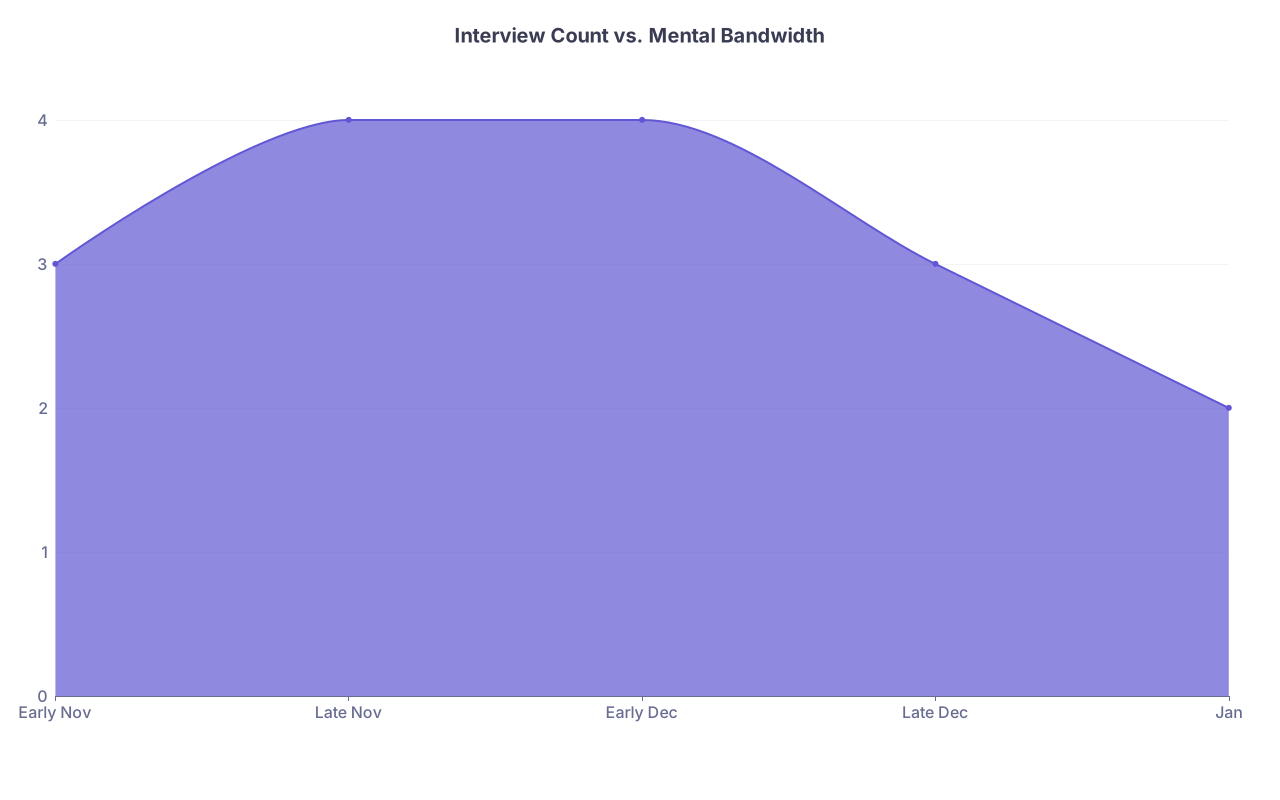
| Category | Value |
|---|---|
| Early Nov | 3 |
| Late Nov | 4 |
| Early Dec | 4 |
| Late Dec | 3 |
| Jan | 2 |
Holiday week strategy
If you celebrate major holidays in late December, the emotional load is real.
At this point you should:
Shield 1–2 full days from anything interview‑related.
No emails, no prep, no rank discussions. That quiet time actually sharpens your later decisions.Limit family interrogation.
Have a stock answer ready:- “Interviews are going well; I will know more in March. I am trying not to overthink it right now.”
- Then redirect.
Protect your bandwidth. Constant rehashing of every program with relatives just drains you.
January: Finish Strong, Not Frantic
January interviews often feel like an afterthought but can matter a lot, especially for borderline or aspirational programs.
The key: lighter volume, higher intentionality.
Early January (Week 1): Re‑Set and Re‑Focus
At this point you should:
Review your working rank list once, then put it away.
Confirm all remaining January interview dates and times (time zones again; programs sometimes mislabel).
Decide:
- Are these January interviews potential top‑half rank programs?
- Or are they safety net / “just in case”?
That answer changes how much energy you invest in prep.
Your January weekly pattern
Aim for:
- 1–2 interviews per week.
- At least 2 days entirely free of interview thoughts (usually a weekend and one weekday evening).
Day‑before routine in January:
- 15–20 minutes: Re‑read your notes about why this program might rise or fall on your list.
- 10 minutes: Review any unique aspects (research track, global health options, specific faculty).
- 5 minutes: Visualize walking into this program as a PGY‑1. Gut check: excited, neutral, resistant?
If the gut check is consistently negative, you may still complete the interview (especially if you need the numbers), but be honest with yourself when ranking.
Mid‑January: Integrate and Decide
At this point you should be near the end of your schedule.
Between interviews:
Compare new programs only against your current top 5 and bottom 5, not the entire list every time.
- “Is this better or worse than my #5?”
- “Is this clearly above my bottom tier?”
Update your rank impression log immediately after each final interview. No essays. Just:
- 1–10 overall fit.
- 3 pros.
- 3 cons.
- One‑sentence summary: “I would/would not be happy here because…”
Late January: Close the Door on Burnout
When the last interview is done, you must intentionally transition out of interview mode.
At this point you should:
- Block two days with no:
- Program websites
- Email to coordinators
- Rank discussions with classmates
Then, and only then, come back to build your final rank list with a clear head.
Daily Pacing Blueprint: What to Do Morning to Night
You do not need a rigid script, but you do need consistency. Here is a simple day‑of structure you can apply October through January.
Night before
- 15 minutes: Light program review, no deep dive.
- 5 minutes: Tech check (camera framing, audio, background).
- 5 minutes: Lay out clothes, water bottle, notepad, pen.
- Wake up at least 2 hours before the first session.
- 10 minutes: Physical warm‑up (stretching, short walk).
- 5–10 minutes: Say a few of your key stories out loud. Get your voice going.
30 minutes before
- Close all other tabs and notifications.
- Log in early to test link.
- Sit in silence for 5 minutes before the start. No phone. No “one more check.”
During breaks
- Stand up.
- Look at something far away to rest your eyes.
- Take a sip of water and one deep breath before jumping back in.
After the final session
- 10–15 minutes: Fill out your impression log and draft thank‑you messages.
- Then walk away. Do not spiral by rehashing every phrase you said.
What Actually Prevents Burnout (October–January)
Let me be blunt: You will be tired. That is normal. What you are preventing is functional burnout—where your performance drops and your judgment gets sloppy.
The things that actually help:
- A hard weekly cap on interviews, set in October and respected in December.
- A consistent interview‑day routine so your brain is not reinventing the wheel every time.
- Fast, structured post‑interview notes so you do not have to replay hours of Zoom in February.
- Protected non‑interview days each week, even in peak season.
The things that sound good but barely help:
- Obsessing over perfect answers.
- Re‑reading Reddit threads about every program.
- Replaying every sentence you said on a loop at 1 a.m.
Let everyone else burn out trying to chase perfection. Your goal is stable, high‑average performance across all interviews.
Today, take out your calendar and block your “interview capacity” from October through January—weeks, days, and hard limits. If your schedule is already crowded, mark one interview you will decline or reschedule to bring it back within your limits.