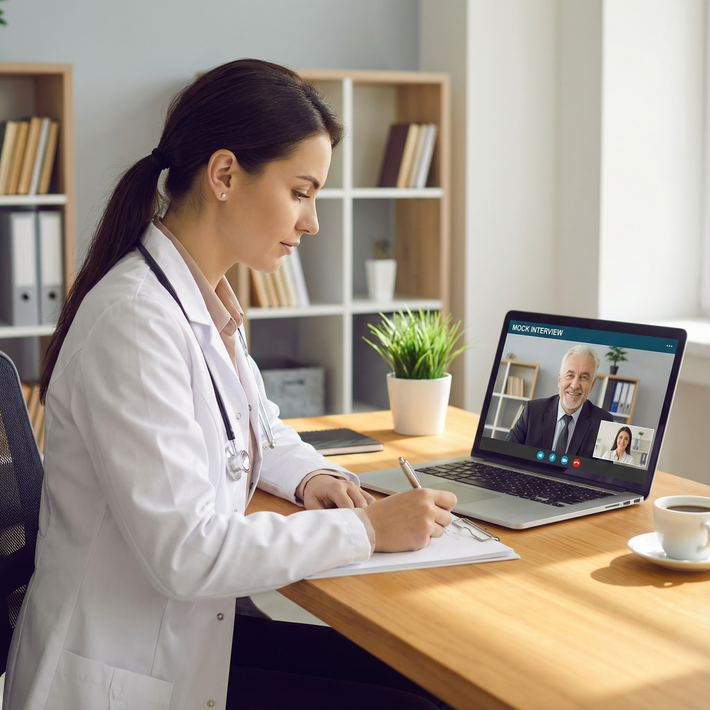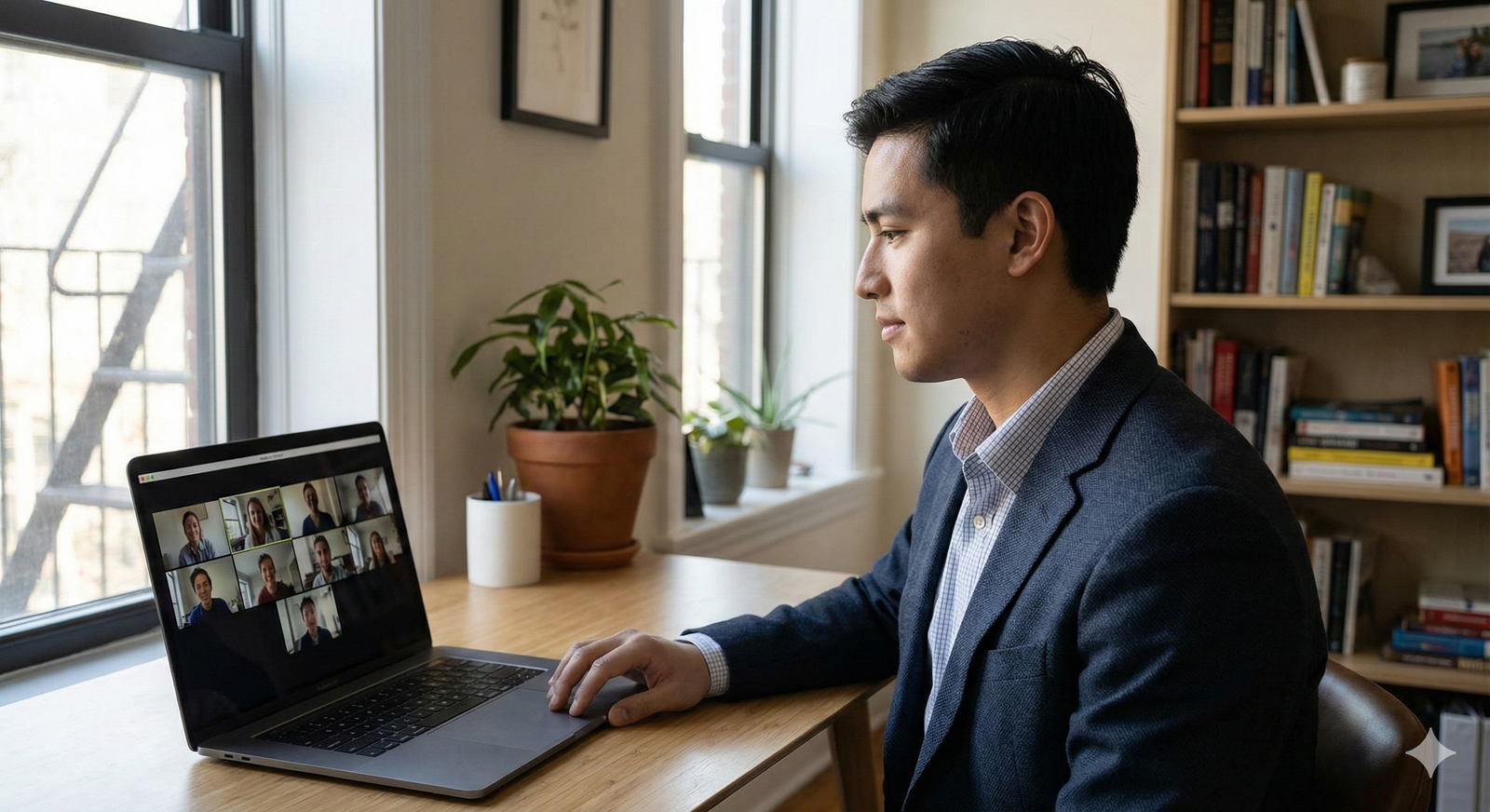
The obsession with “perfect lighting” for residency video interviews is wildly overblown. Programs do not care if you look like a YouTube beauty vlogger. They care if they can see you, hear you, and figure out who you are.
Let me be direct: good enough lighting is all you need. Not cinematic, not influencer-grade, not $300 ring light perfect. The myth that your lighting setup will make or break your residency application is mostly driven by social media, anxious group chats, and people selling you gear.
Let’s walk through what programs actually notice, what the limited data suggests, and where lighting fits in the real hierarchy of what matters.
What Programs Actually Care About (And Where Lighting Ranks)
You’re not interviewing for a job in broadcast journalism. You’re interviewing to be a functional, teachable, safe physician on a team that has zero time for drama.
Look at any real program director panel or NRMP stakeholder survey and you’ll see the same top themes repeated:
- Clinical performance / MSPE narrative
- Letters of recommendation
- USMLE/COMLEX performance (especially Step 2 now)
- Interview performance (content, communication, professionalism)
- Perceived fit / teamwork / maturity
Video “production values” are nowhere on that list. At best, “professionalism in virtual setting” shows up as a minor point under interview skills.
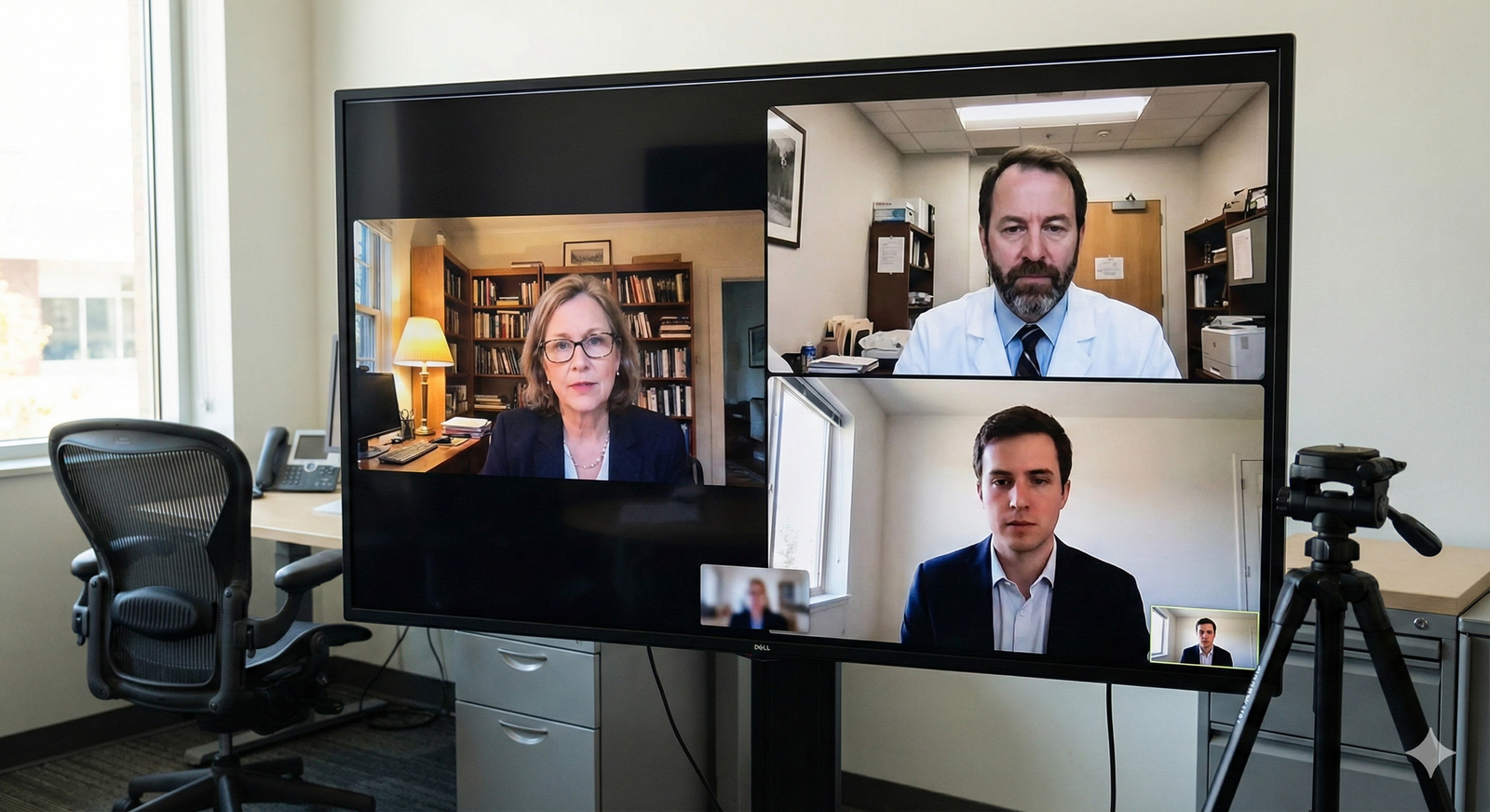
When PDs do talk about virtual interviews, they mention three technical issues consistently:
- Can we hear you clearly?
- Can we see your face and expressions?
- Are there major distractions (noise, chaos, people walking behind you)?
Lighting only matters insofar as it affects #2.
To put some structure on this, here’s how I’d roughly rank the technical factors based on what PDs actually complain about in debriefs:
| Factor | Relative Impact on Perception |
|---|---|
| Audio clarity | Very high |
| Internet stability | High |
| Major background noise | High |
| Camera framing | Moderate |
| Lighting | Low–moderate |
| Background aesthetics | Low |
Is this a randomized trial? No. But it lines up disturbingly well with what faculty actually remember after 8 back-to-back Zoom interviews: the person who froze repeatedly, the one whose audio cut in and out, the one with constant door slams in the background. Not the one whose lighting was a bit yellow.
What the Data and Reports Actually Show
There’s no RCT of “Ring light vs. No ring light” for residency matching. But we do have:
- NRMP and AAMC post-2020 reports on virtual interviews
- Surveys of program directors across multiple specialties
- Internal feedback from faculty on virtual interview days
Common themes:
- PDs overwhelmingly prefer keeping virtual interviews at least in part because they reduce cost and logistics headaches. Nobody is saying, “We need to go back in person because the lighting on Zoom is terrible.”
- When they discuss “virtual professionalism,” examples are:
- Taking the interview in a moving car
- Being clearly in a café / public area
- Wearing deeply inappropriate attire
- Audible roommates, pets, or TV in the background
Lighting shows up basically as: “Make sure we can see your face clearly.”
That’s it. Not “three-point lighting,” not “avoid mixed color temperatures,” not “purchase high-end gear.” Just visibility.
One AAMC guide for applicants literally phrases it as “Ensure your face is well lit,” and then moves on. The paragraph on audio is longer than the paragraph on lighting. That should tell you something.
The Real Problem: When Lighting Becomes a Distraction
Here’s the nuance: lighting almost never helps you. It only hurts you in extreme cases.
Lighting becomes a real problem when:
- You’re backlit by a bright window and your face is in shadow
- The room is so dark your camera is cranking ISO and everything is muddy and grainy
- You have harsh overhead light creating deep eye sockets and weird shadows that make your expressions harder to read
- Rapidly changing light (like sitting right next to a window with shifting sunlight) keeps blowing out the exposure
In those cases, it’s not about aesthetics. It’s about cognitive load. If faculty have to work harder to read your face, they get tired faster, and they focus less on your content.
But notice the threshold: “Can this person be seen clearly and comfortably?” That’s a low bar, and meeting it doesn’t require anything fancy.
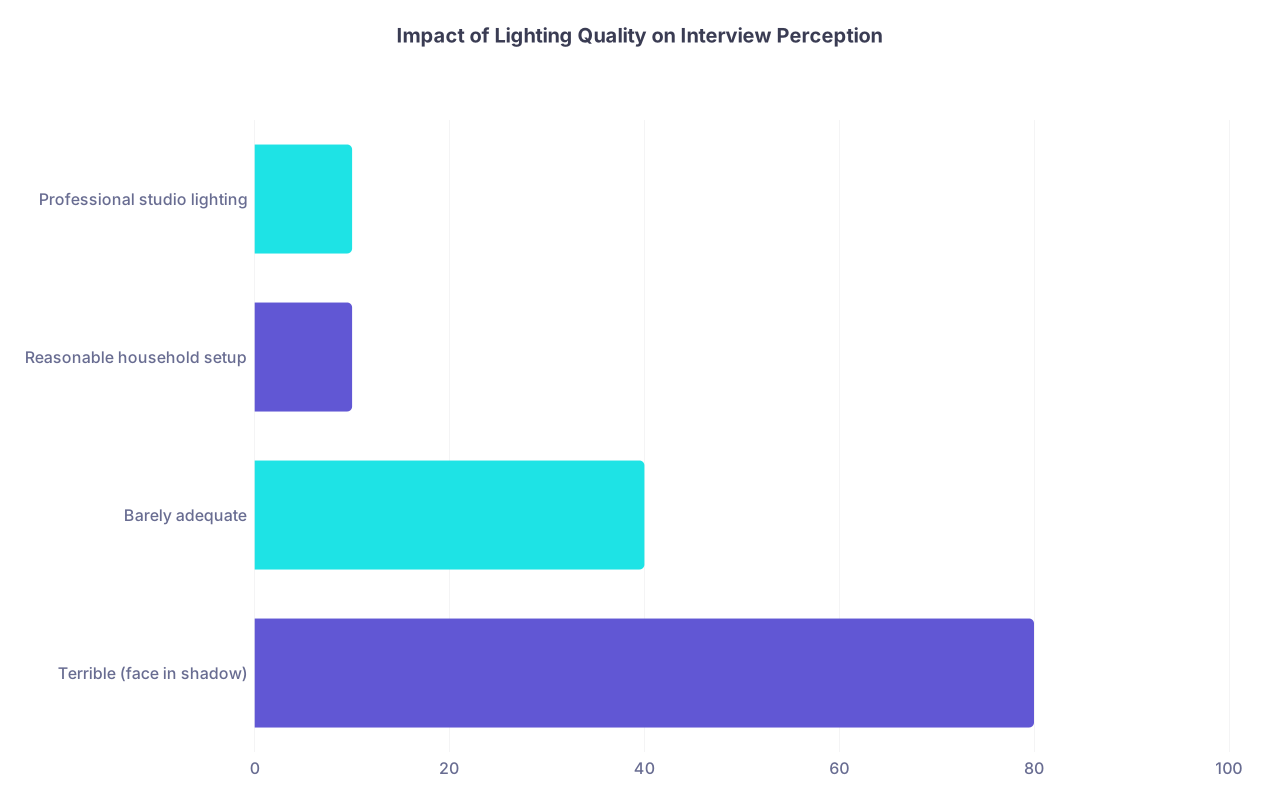
Here’s a simple way to look at it:
| Category | Value |
|---|---|
| Terrible (face in shadow) | 80 |
| Barely adequate | 40 |
| Reasonable household setup | 10 |
| Professional studio lighting | 10 |
This isn’t real numeric data; it’s conceptual: the difference between terrible and barely adequate lighting is huge. The difference between reasonable and professional is tiny. Programs absolutely notice when they cannot see you. They do not meaningfully reward you for looking like you hired a production crew.
The Psychology: Why Applicants Fixate on Lighting
You know why “perfect lighting” became a mythic requirement? Because it’s controllable. You can’t fix your Step 1 score. But you can buy a ring light at 2 a.m. before interview season.
So people cling to it.
I’ve heard and seen:
- Group chats where everyone posts their “setup pics” like they’re building a streaming studio.
- Applicants spending $200+ on softboxes, tripods, external mics, replacement webcams “just in case.”
- People postponing mock interviews because “my lighting isn’t dialed in yet.”
Here’s the harsh truth: that time and money should go into practicing your answers, tightening your stories, and researching programs. Programs do not rank you higher because your catchlights are symmetrical.
Faculty remember:
- Your answer about a difficult patient and what you learned
- How you handled an ethical dilemma question
- Whether you sounded like someone they’d trust at 2 a.m. on call
They do not remember, “Applicant #4 had a really well-balanced key light.”
What Counts as “Good Enough” Lighting?
Let’s strip this down to a practical standard. Good enough lighting for a residency video interview means:
- Your face is clearly visible with normal skin tone
- No strong shadows hiding your eyes or expressions
- No strobing, flickering, or major color weirdness
- The background isn’t brighter than you (no silhouette effect)
You can hit that bar in a small apartment with zero specialized gear.
Use this order of operations:
- Face a window during the day. Natural, diffuse daylight is better than 95% of budget lights.
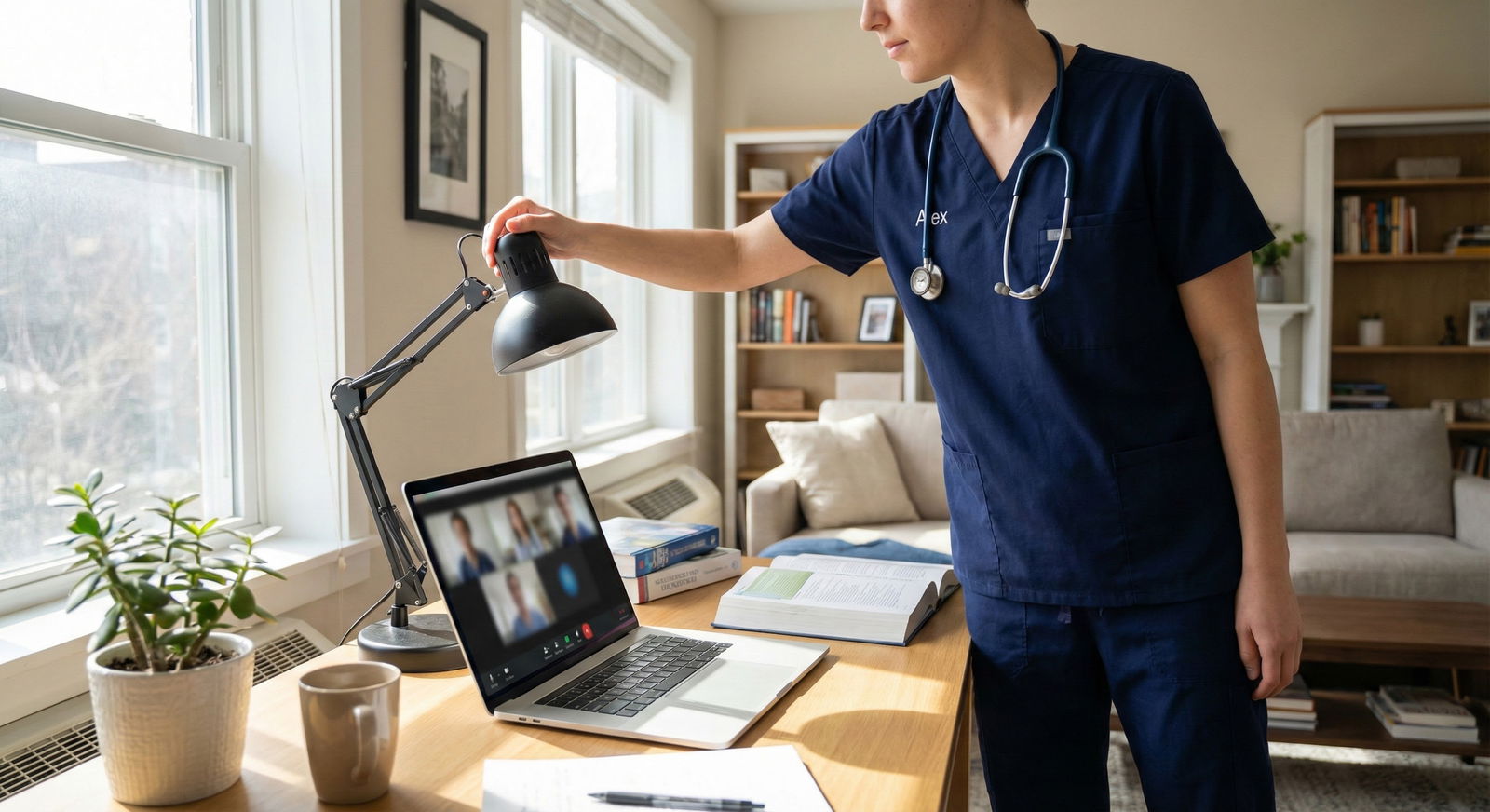
- If it’s dark or you don’t have a window, use a lamp behind your laptop. Raise it to roughly face height, point it toward the wall or ceiling for softer light.
- Avoid overhead-only lighting. It creates raccoon eyes and harsh shadows. Supplement with a lamp near your face if needed.
- Kill the backlight. If there’s a bright window or lamp behind you, close the blinds or turn that lamp off.
That’s it. If you do just those things, you’ve cleared the “programs can see you comfortably” threshold.
Want a quick mental checklist? Use this:
- Can I see the whites of my eyes clearly on camera?
- Is my face brighter than the background?
- Does the lighting stay consistent for 20–30 minutes?
If yes, stop tweaking. You’re done.
Where Lighting Ranks Against Everything Else You Could Fix
If you’re going to obsess about something, obsess in the right order.
Here’s a more appropriate hierarchy for “video interview optimization” based on what actually affects how you’re perceived:
| Priority | Factor | Why It Matters |
|---|---|---|
| 1 | Audio clarity & volume | Directly affects communication |
| 2 | Internet stability | Avoids repeated interruptions |
| 3 | Environment (noise, chaos) | Signals professionalism |
| 4 | Framing & eye level | Affects engagement, presence |
| 5 | Lighting (as long as adequate) | Comfort, readability of expressions |
| 6 | Background aesthetics | Very minor unless extremely messy |
Programs will forgive average lighting. They will not forgive being unable to hear you, repeated dropped calls, or a chaotic environment that screams “I didn’t take this seriously enough to find a quiet space.”
If you have limited time or money, spend it at the top of this list, not the bottom.
Common Lighting Myths, Bluntly Debunked
Let’s kill a few specific myths that keep circulating.
Myth 1: “You need a ring light to look professional.”
No. You need to be visible. A ring light is one way to do that, but far from the only way. Plenty of residents and faculty are interviewing you from their office with a basic desk lamp and a window.
If your choice is between:
- Buying a ring light
- Upgrading your terrible laptop mic to a $30 wired headset
Choose audio every single time.
Myth 2: “Bad lighting will tank an otherwise strong applicant.”
If “bad lighting” means “your face is slightly yellow and there’s a shadow on one side,” absolutely not.
What can hurt you is lighting so bad they can’t read your expressions or maintain eye contact comfortably. That’s fixable with a window and a lamp. Once you fix that, there’s no evidence incremental “perfection” moves the needle.
Myth 3: “Programs see your environment as a reflection of your commitment.”
Only at the extremes. Taking an interview lying in bed or in a noisy Starbucks? Yes, that reflects something.
But plain off-white wall, IKEA lamp, slightly uneven lighting? No one cares. Remember, half of the faculty are calling you from a cramped office with fluorescent overheads and an aging webcam. They’re not expecting a studio.
The One Place Lighting Really Does Matter: Fatigue
There is one subtle angle where lighting can matter: interviewer fatigue.
On big interview days, faculty may do 6–10 virtual interviews in a row. If your lighting is flickery, harsh, or creates constant contrast shifts, it’s visually tiring. That doesn’t mean they dislike you. It just means you’re making them work harder to focus for no good reason.
So your goal isn’t “perfection.” It’s “low-friction.” Lighting that disappears into the background because it’s not drawing attention to itself. Functional, not fancy.
Think: “Could someone comfortably look at this for 30 minutes without getting a headache?” If yes, move on.
A Simple, Realistic Setup That’s More Than Enough
Here’s an example of a perfectly adequate setup that I’ve seen applicants match with:
- 11 a.m. interview, sitting at a kitchen table
- Laptop on a stack of textbooks so camera is at eye level
- Window in front, blinds slightly closed to diffuse light
- One floor lamp behind laptop, bouncing light off the wall
- Plain wall behind, a bookshelf half visible on one side
- Built-in laptop webcam
- Wired earbuds with built-in mic
Was the lighting “perfect”? No. Was it fine? Completely. The interviewer could see the applicant’s eyes, mouth, and expressions clearly. That’s the entire game.
To contrast, I’ve seen the opposite:
- $150 ring light
- 4K external webcam
- But spotty Wi-Fi, constant video freezing, and echoing audio in a bare room.
Ask any program director which applicant they’d rather interview.
Where to Actually Spend Your Energy
Since you’re probably over-prepping your lighting, I’ll tell you where that energy should go instead:
- Tightening 6–8 core stories: a conflict, a failure, a leadership moment, a time you made a mistake, a high-stress situation, a time you advocated for a patient, your best teamwork example, and why this specialty/program.
- Practicing out loud on camera and watching yourself back. This fixes way more “vibe” problems than lighting.
- Doing one or two full mock interviews on the actual platform (Zoom, Thalamus, etc.) at the actual time of day you’ll be interviewing. Lighting, internet, and audio all get tested in one go.
If you do that and your lighting is merely “fine,” you’re already ahead of the many applicants who look polished but sound generic.
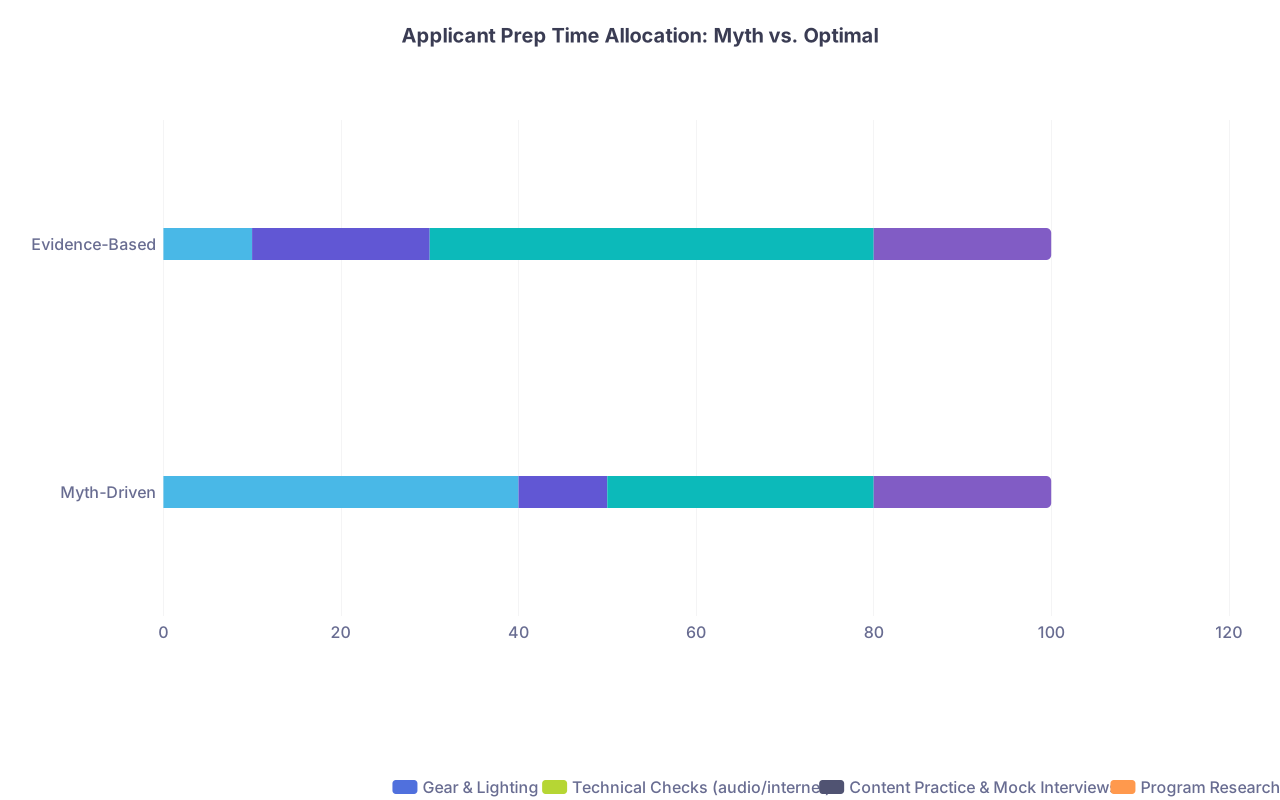
| Category | Gear & Lighting | Technical Checks (audio/internet) | Content Practice & Mock Interviews | Program Research |
|---|---|---|---|---|
| Myth-Driven | 40 | 10 | 30 | 20 |
| Evidence-Based | 10 | 20 | 50 | 20 |
That rough comparison is the real takeaway: lighting deserves a small, finite slice of your attention. Not the starring role.

| Step | Description |
|---|---|
| Step 1 | Plan Interview Setup |
| Step 2 | Check Audio |
| Step 3 | Check Internet |
| Step 4 | Check Camera & Framing |
| Step 5 | Adjust Basic Lighting |
| Step 6 | Run Mock Interview |
| Step 7 | Refine Content & Stories |
The Bottom Line
Three points and you can forget the rest:
- Programs do not care about “perfect” lighting; they care that they can see and hear you clearly without distraction.
- Lighting only helps you up to the “adequate and comfortable” level; beyond that, extra perfection is basically wasted effort.
- Your time is much better spent on audio, internet stability, quiet environment, and strong interview content than on chasing studio-quality light.
Meet the basic standard, stop obsessing, and go work on something that actually moves your rank list odds.