
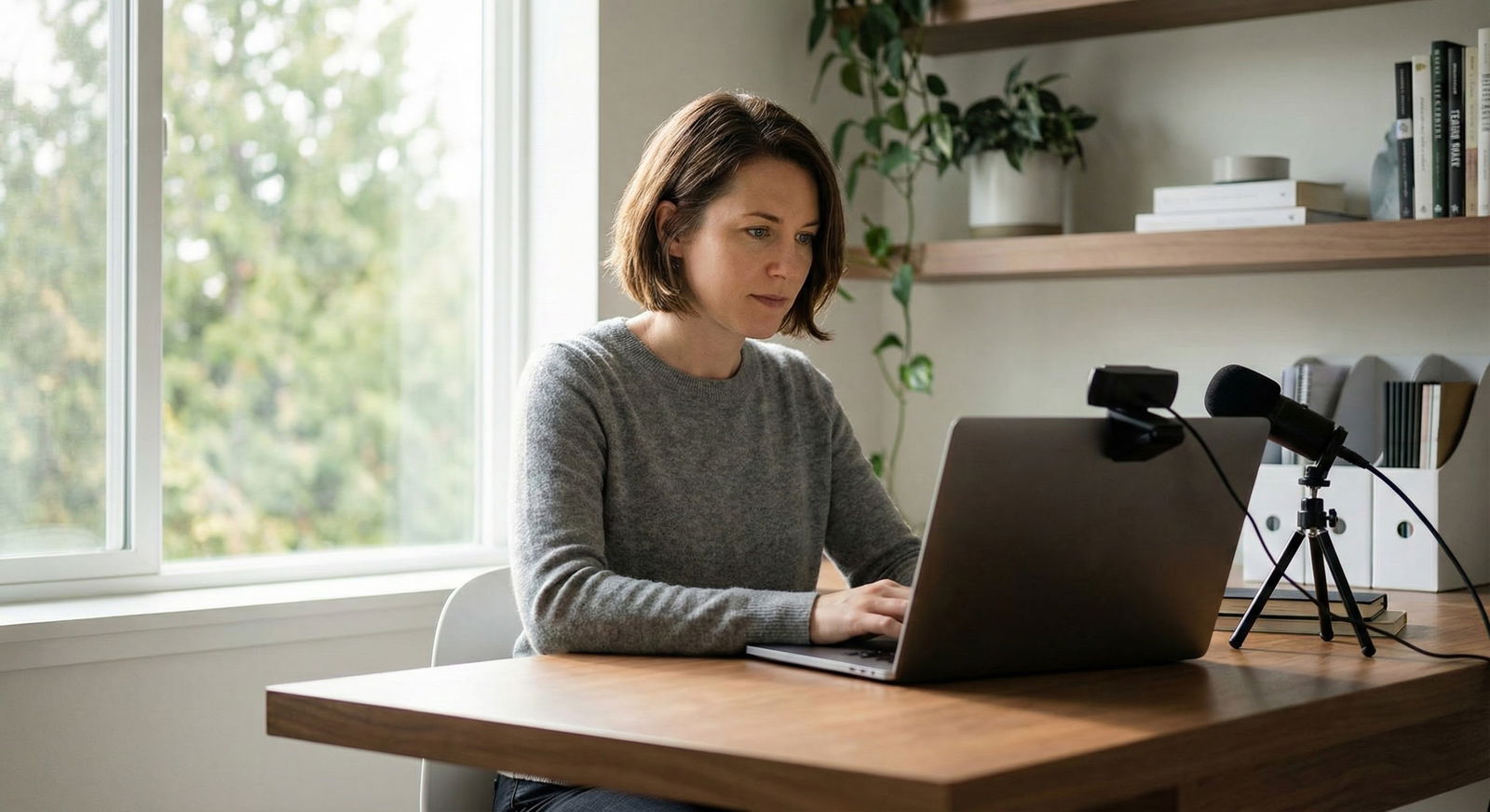
Most residency applicants are obsessing over the wrong part of their video setup.
You’re tweaking bookshelf angles, buying fake plants, and freaking out because your apartment wall is “too plain.” Meanwhile, the program director cares infinitely more about whether you answer questions coherently and seem like someone they can trust on night float.
Let’s break this down properly: how much do interviewers actually care about your workspace?
Not the TikTok version. The real, evidence-backed version.
The Myth: “Your Background Can Make or Break Your Interview”
The dominant narrative in med student group chats is something like this:
- “Your background has to look professional or they’ll think you’re sloppy.”
- “You need a bookshelf, some diplomas, and perfect lighting or it looks un-serious.”
- “Any mess in the frame is an automatic red flag.”
I’ve listened to MS4s agonize for twenty minutes over whether a bed visible in the background “looks unprofessional” while they still haven’t practiced a single answer to “Tell me about yourself.”
This is backward.
When you look at what communication research and actual interviewer feedback show, the hierarchy of what matters is brutally simple:
| Rank | Factor |
|---|---|
| 1 | Content of your answers |
| 2 | Nonverbal communication (eye contact, tone) |
| 3 | Technical reliability (audio, connection) |
| 4 | Professional appearance (you) |
| 5 | Background / workspace |
Your workspace is on the list. But it’s near the bottom, and only really matters when it becomes distracting or signals poor judgment.
Not when it’s just… normal.
What the Data (and Interviewers) Actually Care About
We don’t have randomized controlled trials of “plant vs no plant” in residency Zoom interviews. But we do have:
- Data from virtual interview cycles (2020 onward)
- Communication and HCI (human-computer interaction) research on video calls
- Survey data from programs about what factors drive ranking decisions
- Direct anecdotal feedback from PDs and faculty who’ve sat through 80+ Zoom days
The pattern is consistent: workspace is a threshold variable, not a rank-order variable.
Meaning:
- It can hurt you if it’s bad enough to be distracting or problematic.
- It almost never moves you up once it’s “good enough.”
Think of it like hygiene. If you show up visibly unwashed? Problem. If you’re clean and normal? No one’s ranking you higher because you used an expensive moisturizer that morning.
What actually causes problems
Interviewers tend to notice the workspace only when:
There’s obvious chaos:
Piles of laundry, open closet bursting with clothes, trash visible, unmade bed dominating the frame.
Translation in their head: “Is this how they’ll keep a call room or workroom?”There are repeated distractions:
People walking behind you, TV on, roommates/partners appearing, pets jumping into frame multiple times, notifications blaring.
Translation: “How seriously did they take this?”There’s poor technical execution related to the setup:
Camera pointed up your nose, you’re backlit and look like a silhouette, your microphone is so far away they can’t hear you clearly.
Translation: “If I can’t even hear them, how do I evaluate them?”
But the reverse is not true in any strong way. Having an “aesthetic” background does not rescue weak answers, low insight, or awkward interpersonal skills.
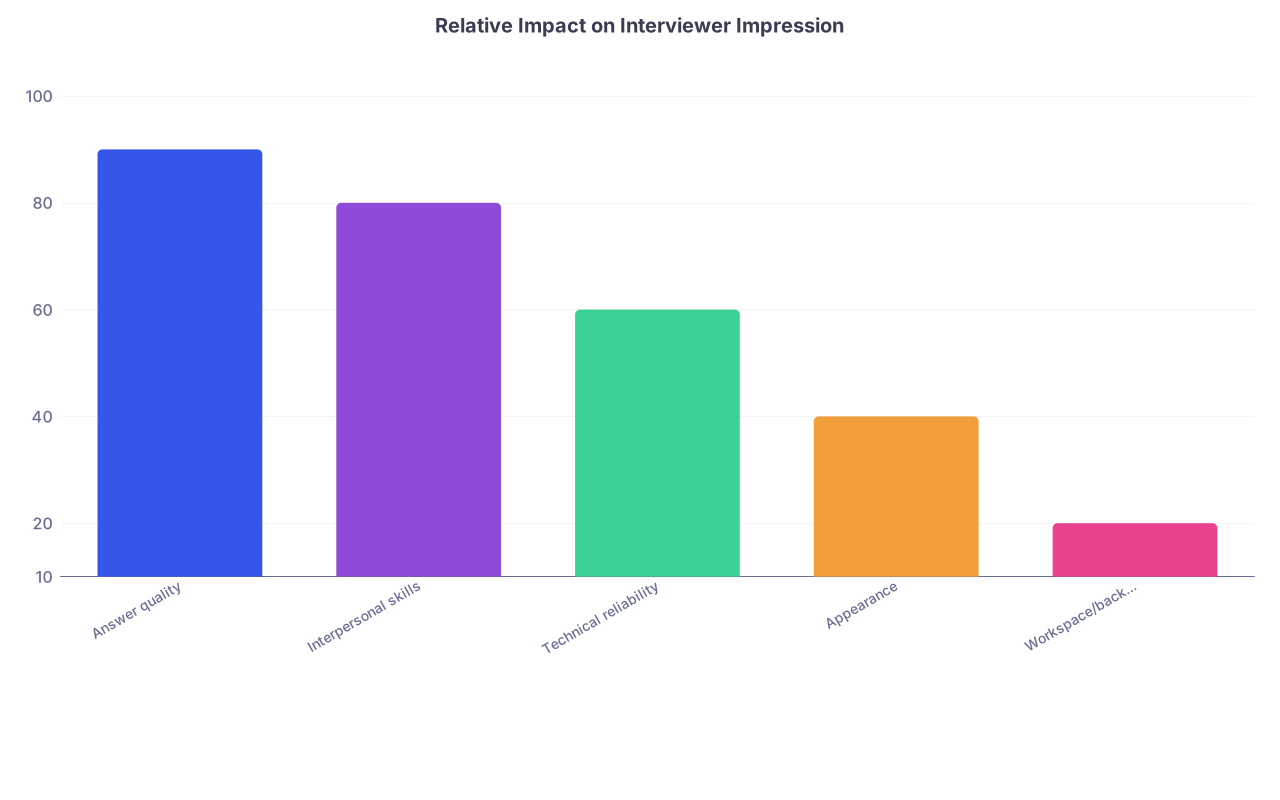
| Category | Value |
|---|---|
| Answer quality | 90 |
| Interpersonal skills | 80 |
| Technical reliability | 60 |
| Appearance | 40 |
| Workspace/background | 20 |
These numbers are illustrative, but they track with what faculty say when they feel safe to be blunt.
The Reality: “Good Enough” Beats “Perfect”
Here’s the line you should be aiming for:
A workspace that disappears from the interviewer’s consciousness within the first 30 seconds.
That’s it. Not impressive. Not cinematic. Invisible.
Once they’ve registered “Looks fine, nothing weird,” their attention shifts to you. Which is exactly where you want it.
What “good enough” actually looks like
Let’s be unromantic and specific:
- Neutral or simple background: wall, bookshelf, closet doors, or a neat corner of a room.
- No obvious mess in the frame: you don’t need a spotless house, just keep visible space reasonably tidy.
- Adequate lighting: they can see your face clearly, without harsh backlighting.
- Stable camera at eye level: not looking up your nose, not bouncing around in your hands.
- Quiet enough environment: occasional noise is okay; constant interruptions are not.
That’s the bar.
A $20 floor lamp and stacking your laptop on a couple of textbooks solve 80% of visual problems. Not a $300 ring light and a fake fern wall.
What interviewers actually comment on after
I’ve sat in on debriefs where 10 faculty talk about 25 candidates. The notes look like:
- “Strong clinical reasoning, great fit for academic IM.”
- “A bit rigid, canned answers, hard to read.”
- “Excellent insight into their failures, very reflective.”
- “Clearly tired, low energy, did not seem enthusiastic.”
You almost never hear:
“Did you see his Ikea plant? Instant rank bump.”
When workspace comes up, it’s usually either:
- “Background was pretty distracting, lots of people walking behind.”
- “Hard to hear her, mic seemed far away or something.”
Again: threshold issue, not differentiator.
The Few Times Workspace Does Matter A Lot
Now, let’s be fair. There are scenarios where your workspace will absolutely impact how you’re perceived. But they’re not about interior design. They’re about judgment.
1. Serious privacy or professionalism breaches
Examples I’ve seen or heard described:
- Interviewing in a shared kitchen while people cook behind you.
- Interviewing in a car in a parking lot in noisy conditions when other options existed.
- Family members audibly commenting or interrupting during answers.
- Background revealing things that raise eyebrows (explicit posters, paraphernalia, etc.).
What this signals to programs:
- You don’t understand professional boundaries and privacy.
- You didn’t prioritize the interview enough to secure an appropriate space.
- You may bring similar lapses into patient care or team interactions.
Is it always fair? No. Sometimes applicants have real constraints. But from the program’s side, they see one data point: how you handled this high-stakes professional interaction.
2. Extreme technical negligence
Not bad luck. Negligence.
- Never tested your setup and spend the first 10 minutes fumbling with audio.
- Camera so low they’re basically staring at your chin and ceiling fan.
- Significant echo because you’re in a bare hallway or tiled room and didn’t bother with earbuds.
Programs understand tech problems. They don’t expect perfection. But they do expect you to behave like this matters more than a casual FaceTime call.

| Step | Description |
|---|---|
| Step 1 | Choose interview spot |
| Step 2 | Find different room or time |
| Step 3 | Remove visible clutter |
| Step 4 | Test camera & audio |
| Step 5 | Adjust lighting/mic/position |
| Step 6 | Done - stop tweaking |
| Step 7 | Quiet enough? |
| Step 8 | Background tidy? |
| Step 9 | Can they see/hear you clearly? |
Notice the last box: stop tweaking. That’s where most applicants fail. They don’t know when to leave it alone and focus on what actually matters.
3. When the workspace becomes a proxy for your story
Occasionally, the environment adds context in a good way.
- Applicant clearly in a modest shared space, but totally focused, well-prepared, with a simple neat background. Reads as: “Made the most of limited resources, professional anyway.”
- Applicant using a quiet corner in a hospital education room between shifts, with permission. Reads as: “Working hard, still showed up prepared and on time.”
In those cases, the setting reinforces the story you’re already telling about yourself: resilient, thoughtful, serious.
But they notice your character first. The workspace just supports it.
The Decor Trap: How Perfectionism Wastes Your Energy
A lot of you are channeling Step 1 anxiety into your interviews. When you can’t control the outcome, you over-control the controllables. Like your Zoom background.
You end up in nonsense territory:
- Buying random “professional” decor that doesn’t even fit your real life.
- Repainting walls or rearranging entire rooms for a one-season process.
- Running half a dozen “background trials” with friends who say: “Move the plant 3 inches to the left.”
Meanwhile, you’ve maybe answered “Why this program?” out loud twice.
Let me be blunt: this is academic procrastination dressed up as productivity.
You’re not polishing your application. You’re avoiding the hard part—sitting with your own story, failures, insecurities, and strengths long enough to talk about them like an adult.
If your workspace is already:
- Quiet enough
- Non-distracting
- Tidy in-frame
- Technically functional
then every extra hour spent adjusting your bookshelf is a bad use of limited cognitive bandwidth.
Re-allocate that bandwidth to:
- Doing 5–10 mock interviews with friends, residents, or faculty.
- Recording yourself answering common questions and watching it back.
- Tightening the logic and structure of your answers.
That’s what changes your rank list position. Not the color temperature of your light bulb.
Concrete, Evidence-Lined Guidelines (Without the Hysteria)
Let’s get ruthlessly practical. Here’s “good enough” vs “fix this” in simple terms.
| Element | Good Enough Example | Fix This Example |
|---|---|---|
| Background | Plain wall, bookshelf, closed closet doors | Unmade bed taking half the frame |
| Noise | Occasional street noise, muffled roommates | TV on, people talking loudly behind you |
| Lighting | Window light, desk lamp on your face | Backlit by bright window, face in shadow |
| Camera angle | Eye level, stable on desk/books | Laptop in lap looking up at your chin |
| Distractions | Pet walks by once, you keep focus | Pet jumping on you repeatedly |
None of the “good enough” examples are fancy. They’re just not distracting.
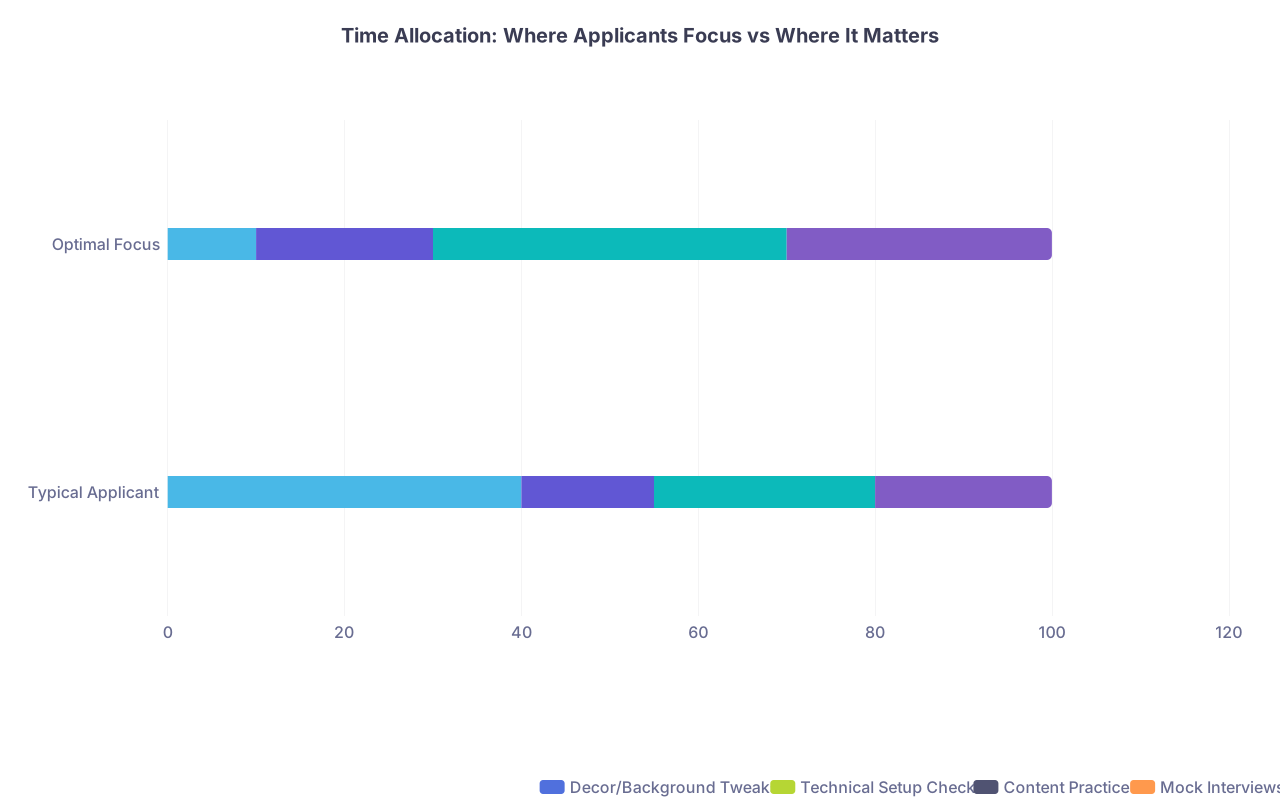
| Category | Decor/Background Tweaks | Technical Setup Check | Content Practice | Mock Interviews |
|---|---|---|---|---|
| Typical Applicant | 40 | 15 | 25 | 20 |
| Optimal Focus | 10 | 20 | 40 | 30 |
You can see the mismatch. Most applicants over-invest in cosmetics and under-invest in practice.
Specific Edge Cases You’re Overthinking
Let me hit a few common panic scenarios I keep hearing.
“They can see my bed in the background. Am I doomed?”
No. If:
- The bed is made.
- The rest of the visible area is reasonably tidy.
- You’re clearly treating the interview seriously.
Lots of people live in studios, dorm-style setups, or shared spaces. Programs know this. A neat bed in frame is not a professionalism violation.
“My apartment is tiny and kind of old-looking.”
No one cares that your wall paint is off-white from 1998. They care what comes out of your mouth.
What will hurt you:
- Visible trash, dirty dishes, or heaps of clothes.
- You acting weirdly apologetic or nervous about your space, to the point of distraction.
Own it, keep it clean, move on.
“I don’t have a perfect quiet space—my family is around.”
This is more real. But you still have options:
- Explain ahead of time in a short email to the coordinator if there’s an unavoidable constraint (e.g., “I’ll be in a shared home environment but have done my best to arrange a quiet corner.”).
- Use headphones with a mic to minimize environmental noise.
- Coordinate with family/roommates for a 3–4 hour quiet window.
- Choose the least-bad corner and stick with it; avoid switching locations mid-day.
Interviewers are much more forgiving of constraints than they are of carelessness.
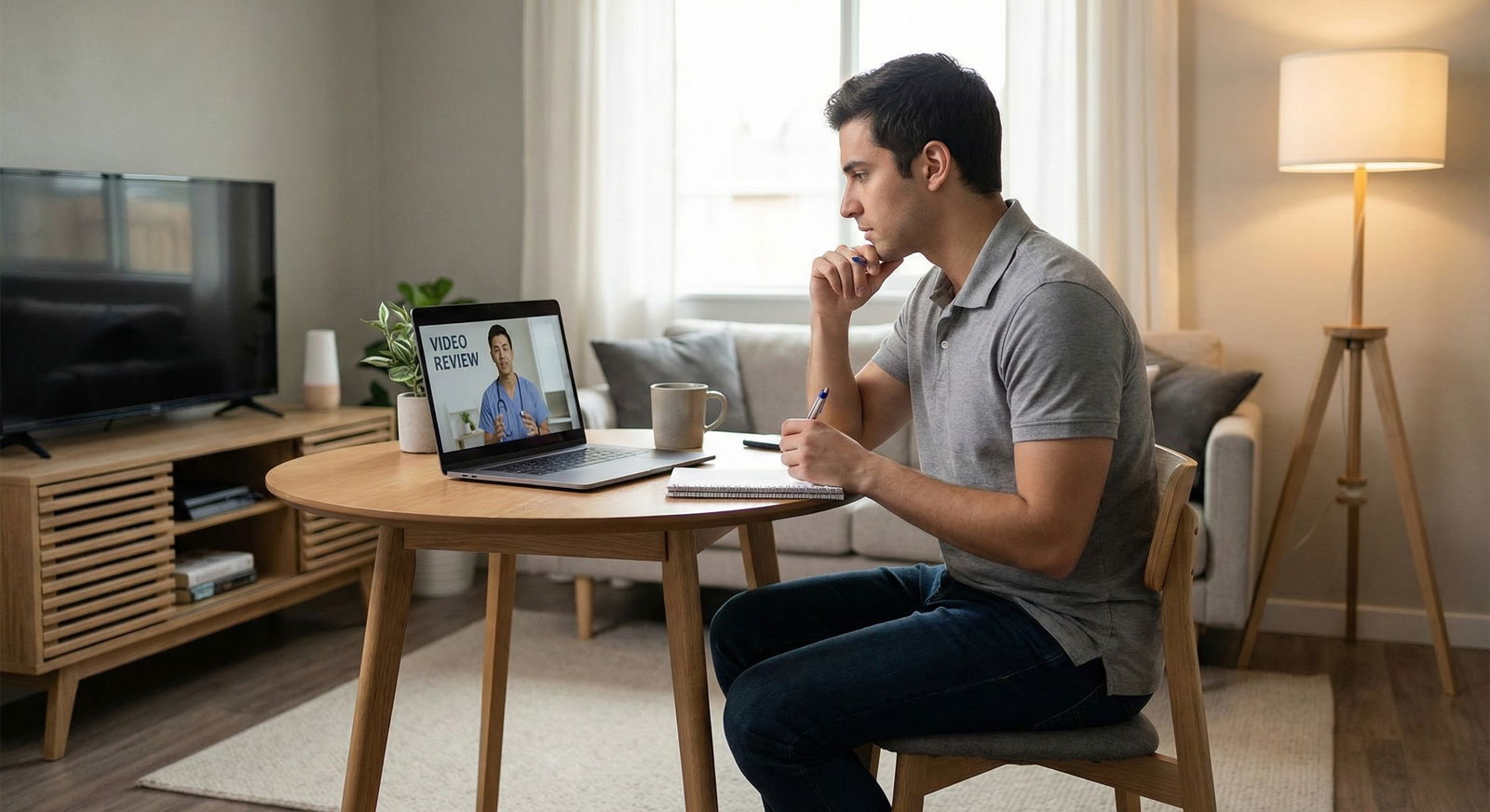
How to Prep Your Workspace in 30–45 Minutes and Be Done
Here’s a realistic, one-time setup that doesn’t become its own hobby:
Pick your spot
- Aim for a place where you can sit facing a wall, window, or bookshelf.
- Check what’s visible behind you on video.
Tidy just the visible frame
- Make the bed if it’s in frame.
- Remove obvious clutter (clothes piles, dishes, open closet chaos).
- You do not need to deep clean the whole room.
Fix lighting
- Sit facing a window if possible.
- If not, put a lamp behind your laptop shining toward your face.
- Avoid strong light behind you.
Stabilize the camera
- Use books or a box to bring your laptop camera to eye level.
- Frame yourself with some space above your head and shoulders visible.
Test once with someone who will be honest
- Do a 5–10 minute mock chat on the actual platform (Zoom, Thalamus, whatever).
- Ask them specifically: “Can you see and hear me clearly? Is anything distracting?”
Fix only the real issues they mention
- If they say, “Looks fine,” believe them. Stop.
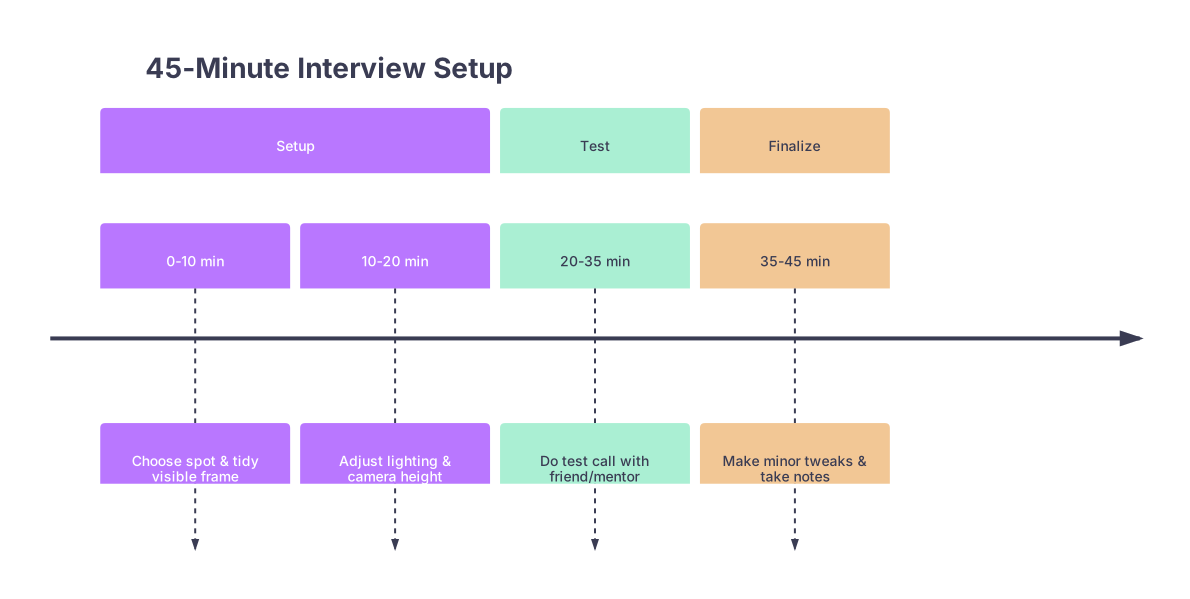
| Period | Event |
|---|---|
| Setup - 0-10 min | Choose spot & tidy visible frame |
| Setup - 10-20 min | Adjust lighting & camera height |
| Test - 20-35 min | Do test call with friend/mentor |
| Finalize - 35-45 min | Make minor tweaks & take notes |
Then forget it. Your workspace is no longer the project. You are.
The Real Test Isn’t Your Desk. It’s Your Judgment.
Interviewers do not sit there grading your furniture. They’re evaluating something much more basic:
- Did you treat this like a serious professional event?
- Did you plan ahead enough to avoid obvious pitfalls?
- Can you communicate clearly despite the artificial setup?
- Do your choices suggest you’ll be reliable on the wards?
Your workspace is just one tiny signal in that larger picture. It’s a quick check that you understand “appropriateness” in a professional context.
Years from now, you won’t remember where your bookshelf was or whether your plant looked symmetrical; you’ll remember whether you showed up as the person you actually are under pressure—or got lost rearranging your background while the important preparation slipped away.


