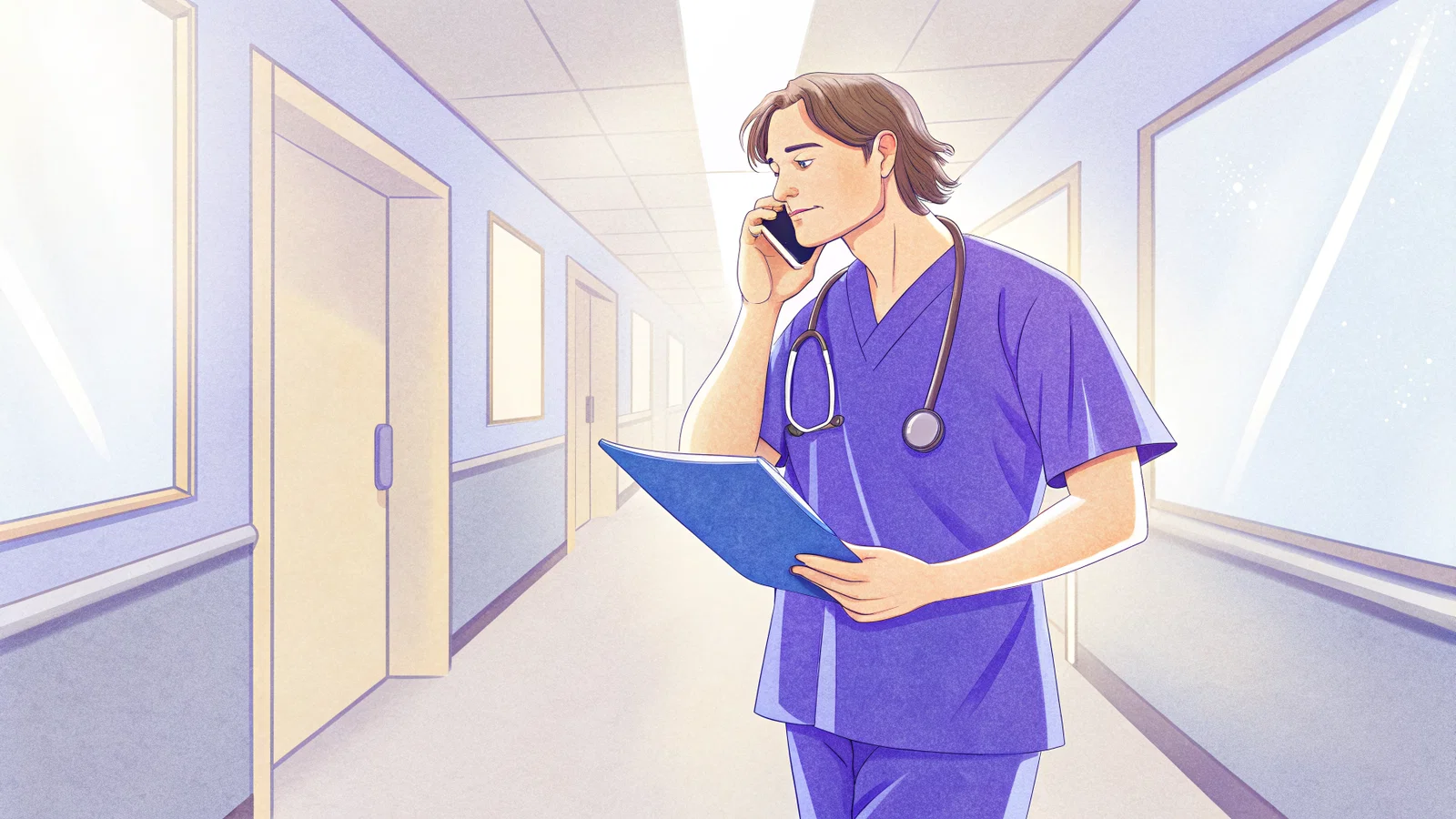
Your pager doesn't buzz. It's your phone. Your sister's name. You're ten hours into a call shift, rounding on a crashing patient, and now she's sobbing on the line. Your mother had a stroke. She's in an ambulance. You're the only family member nearby.
Panic hits. Then guilt. Then the cold, practical fear: If I leave, I'll get fired. I'll be labeled a problem. I'll lose my spot.
I've been in that exact corridor. I've watched too many residents freeze because they believe the residency machine won't stop for them. It will. The hospital will run without you. The question is whether you'll let it chew you up while you're gone.
This isn't a hypothetical. It's a real crisis that tests your career, your sanity, and your ethics. You need a plan. Not for someday, right now. I'll give you the blunt, scene-by-scene guide to surviving a family medical emergency during residency without torching your job or your mind.
The Core Challenge
A family medical emergency during residency isn't just an emotional freight train. It's a minefield of institutional policies, punitive attendance rules, and a culture that equates suffering with dedication. The common pitfalls are predictable. I've seen residents step on every single one.
The first mistake: assuming you have no rights. Residency programs are not exempt from labor laws because you're a trainee. The ACGME requires programs to have leave policies, including for family emergencies. You may be eligible for FMLA if you've been employed long enough. Even if you're not, most programs have a "personal leave" or "emergency leave" clause. Don't guess. Read your contract and your program's handbook. I've seen residents miss this because they were too exhausted to look. That's how you end up begging for unpaid time and getting a professionalism flag.
The second mistake: communicating poorly or too late. You call your chief resident and say, "I have a family thing, can I go?" Wrong. That's vague, invites pushback, and makes you look unreliable. You need to state facts, not ask permission. "My father had a heart attack. I'm the only family member available. I'm leaving the hospital now. I'll text you the patient handoffs within 15 minutes." That's clear. It's not a negotiation.
The third: being a martyr. You think staying for the last two hours of your shift proves you're tough. It proves you're a danger to patients and yourself. A distracted, emotionally wrecked resident is a liability. I've watched a surgical intern contaminate a sterile field because she was crying under her mask while her mom was in the ICU. Go home. Now.
The fourth: not documenting everything. You'll need a paper trail. If you're taking leave, request it in writing. Summarize every conversation with your program director or coordinator. I've seen verbal promises vanish like smoke. "Oh, we never said that was protected leave." CYA is not paranoid; it's self-preservation.
The fifth: assuming you'll bounce back immediately. After the emergency, you'll be raw. You'll try to jump back into 80-hour weeks to prove you're still a "team player." That's how you crash. Burnout is real. I've seen residents quit medicine entirely because they didn't give themselves a fucking day to breathe.
So how do you navigate this? You stop being a passive trainee. You become the CEO of your own crisis. Start by knowing your program's leave policy before you need it. I don't care if you're an intern. Read the damn handbook. Find out how many days of leave you have, whether it's paid or unpaid, and what hoops you need to jump through. The ACGME requires at least 6 weeks of leave for medical, parental, or caregiver reasons, but implementation varies. Some programs try to make you use vacation days. That's bullshit. Push back. You have a right to a leave of absence separate from vacation.
If you are concerned about how these absences affect your peers, learn more about 5 steps when a co-resident is out sick and your burnout risk spikes.
Next, identify your allies. The chief resident is your first line. They can cover your shift, rearrange the schedule, and run interference with the program director. But chiefs are overworked too. Don't dump your anxiety on them. Give them a clear plan: "I'm leaving for three days. I've paged the attending on my patients. The cross-coverage list is in the EMR. I'll be reachable by phone for urgent questions, but I won't be checking routine messages." That's professional. That's how you keep your reputation intact.
If your program director is a bureaucratic nightmare, and some are, you go to the GME office. The designated institutional official (DIO) is required to ensure fair leave policies. I've seen residents file formal complaints when a program retaliated against them for taking family leave. It's messy, but it works. You're not a prisoner.

Actionable Next Steps
Here's the step-by-step plan I've seen save careers and sanity. Print this. Memorize it.
1. Assess the emergency immediately.
- Is this life-threatening? Do you need to be at the bedside now?
- If yes, leave. Call your chief on the way out.
- If no, you have a few minutes to hand off.
2. Notify the right people, in the right order.
- First, your attending or senior resident on service. State the facts briefly.
- Second, your chief resident. Ask for coverage help.
- Third, your program director or coordinator. Send an email for documentation: "I am writing to inform you of a family medical emergency. I will be on leave starting [date/time]. I will provide updates. Please advise on the formal leave process."
- Do not ask. Inform.
3. Know your leave options cold.
- FMLA (if eligible): up to 12 weeks unpaid, job-protected. Requires 12 months of employment and 1,250 hours worked. Most residents qualify after intern year.
- ACGME leave: programs must have a policy for medical, parental, and caregiver leave. Minimum 6 weeks, but can be extended.
- Personal leave: often unpaid, may require a formal request. Some programs cap it at 2 weeks per year.
- If you're in a unionized program, you have additional protections. Use them.
During such difficult times, strengthening your support network is essential for residency success.
4. Secure coverage and hand off like a pro.
- Write a concise, bullet-point checklist for each patient. No novels. Medication changes, pending labs, anticipated problems.
- Sign out verbally to the covering resident. If you can't, text the key points.
- I've seen a resident leave a Post-it note that said "Bed 3 needs potassium recheck." That's not enough. Be thorough.
5. Set boundaries while you're away.
- Tell your program: "I'll check email once a day, but I'm unavailable for routine calls."
- Turn off your work pager. Seriously. If it's a true emergency, they'll find you.
- Don't apologize for being a human being with a family.
6. Plan your return.
- Don't go from zero to 80 hours. Ask for a transition day or a lighter schedule.
- Request a meeting with your program director to discuss any missed training requirements. You may need to make up a few weeks, but that's manageable. Your board eligibility is protected if you follow the leave policy. Don't let them scare you into thinking you'll lose certification.
Here's a visual decision tree to keep your head straight when the panic hits:
Resources you can use right now:
- Your program's resident handbook (leave section)
- ACGME institutional requirements: read the common program requirements on leaves of absence
- GME office: the DIO is your advocate, not your enemy
- Employee Assistance Program (EAP): free, confidential counseling, use it for the emotional fallout
- Residency union representative, if you have one
- A trusted attending who can be a reference if the program gets hostile
I've seen residents who followed this plan get through a parent's cancer diagnosis, a spouse's car accident, even a child's surgery. They kept their jobs, their board eligibility, and their sanity. The ones who didn't? They're the cautionary tales we whisper about in the call room.
Key Takeaways
- Be prepared before the crisis hits. Know your program's leave policy, your rights, and your emergency contacts. You can't learn this when you're already in shock.
- Focus on high-yield actions. Immediate notification, clear handoffs, and documentation. Everything else is noise.
- Don't apologize for being a person. Residency trains you to feel guilty for existing outside the hospital. Resist that. You're not weak for prioritizing your family. You're a functioning adult.
- Use the system, don't fight it. FMLA, ACGME, GME, these tools exist because residents before you got screwed. Don't let their sacrifice be wasted.
- Protect your return. A botched re-entry can do more damage than the leave itself. Negotiate a transition plan.
I'm not saying this is easy. It's the hardest thing you'll juggle during training. But you can do it without losing your job or your mind. The key is to stop reacting and start acting. You're a doctor, you're trained to manage chaos. Now manage your own.