
The way most residents approach night float is backwards—and it is exactly why they feel wrecked for weeks.
You do not “just survive” a night block. You plan it like a mini deployment: pre-, during-, and post-block. Hour by hour. Otherwise your sleep, mood, and judgment will spiral, and yes, your patients will pay for it.
Here is the timeline that actually works.
7–10 Days Before Night Float: Lock In the Foundation
At this point you should stop pretending you can live two lives—day schedule and night schedule. You are about to choose.
Your goals this week:
- Stabilize sleep
- Clear life admin
- Set expectations with family and co-residents
- Build your “night kit” so you are not improvising at 3 a.m.
Day –10 to –7: Stabilize and Declutter
Focus: Consistency and capacity.
Sleep:
- Fix a consistent wake time (e.g., 07:00) and stick to it daily.
- Cut late caffeine; last dose by 14:00. You are training your brain to obey a schedule.
- No heroic last-minute social events that keep you up past midnight. You are about to trade three weeks of evenings; do not also sacrifice the prep week.
Life admin:
- Pay rent, bills, and submit expense reports.
- Load your call-room drawer / work locker:
- Extra scrubs
- Spare socks, compression socks
- Toiletries (toothbrush, face wipes, small moisturizer)
- Healthy shelf-stable snacks (nuts, protein bars—not candy)
- Arrange:
- Childcare shifts
- Pet care
- Grocery delivery or meal prep
Communication:
- Tell your partner / roommate: “For 2–4 weeks, my functional hours are X–Y. Expect me to be useless at Z.” Spell it out.
- Tell your chiefs where your fatigue red-lines are (post-night clinic, mandatory noon conference expectations, etc.). Better now than after you no-show something.
Day –6 to –4: Begin a Gentle Shift
You do not flip fully yet. You nudge.
Target: Move bedtime and wake time 1–2 hours later every 24 hours.
Example progression:
- –6 days: Sleep 00:00 → 07:00
- –5 days: Sleep 01:00 → 08:00
- –4 days: Sleep 02:00 → 09:00
If your first night shift starts at 20:00 and runs to 08:00, your eventual “day” will be roughly 14:00–07:00. You are steering toward that.
Habits here:
- Start using blue light filters on screens after 22:00.
- Add short evening walks (20–30 minutes). You are pairing later wakefulness with some light activity, not doomscrolling.
Day –3 to –1: Commit to Night-Mode Lite
At this point you should lean hard into the night pattern.
Sleep schedule goal by –1:
- Asleep: 03:00–04:00
- Wake: 11:00–12:00
Do not overcomplicate it. A few rules:
- No early morning commitments. Decline pre-10:00 clinics, meetings, or social breakfasts these days.
- Avoid alcohol. It fragments sleep, which destroys your ability to tolerate the coming nights.
- Standardize wind-down: dim lights, cool room, same 20–30 minute routine (shower, podcast, reading—pick one and repeat).
The Last 24 Hours Before First Night: The Hard Flip
This is where most people mess up: they “power through” and arrive to night 1 already half-dead. Instead, you want banked sleep, then a controlled nap.
Let us assume:
- First night shift: 20:00–08:00
Morning of Day 0 (around 08:00–09:00)
At this point you should:
- Wake up no later than 09:00–10:00 if you slept late. Do not “sleep in until noon” or you will not be able to nap.
- Get bright light exposure: open curtains, go outside for a 15–20 minute walk. You are reinforcing daytime alertness.
Midday (11:00–15:00)
- Normal light meals—nothing huge and greasy.
- Light activity only: laundry, low-stakes errands. No intense workout that will trash you.
The Anchor Nap (14:00–17:00)
This nap makes or breaks your first night.
- Go down around 14:00–15:00
- Aim: 2–3 hours of solid sleep. Use:
- Blackout shades or sleep mask
- White noise
- Phone in another room
If you wake early and feel wired, stay lying in low-stimulation rest. Even partial rest helps.
Pre-Shift (17:00–19:30)
At this point you should treat preparation like a pre-game ritual.
- 17:00–18:00: Light meal with complex carbs + protein, not heavy fried food. Example: brown rice bowl with chicken and veggies.
- 18:00–18:30: Moderate caffeine (coffee or tea). Last full dose you plan for the night.
- Pack your bag:
- Water bottle
- 1–2 healthy snacks
- Light sweater
- Headphones
- Small notebook or index cards for to-do lists
Walk into the hospital slightly under-caffeinated but not hungry.
During the Block: Night-by-Night Survival Pattern
Here is what a single night should look like if your shift is 20:00–08:00.
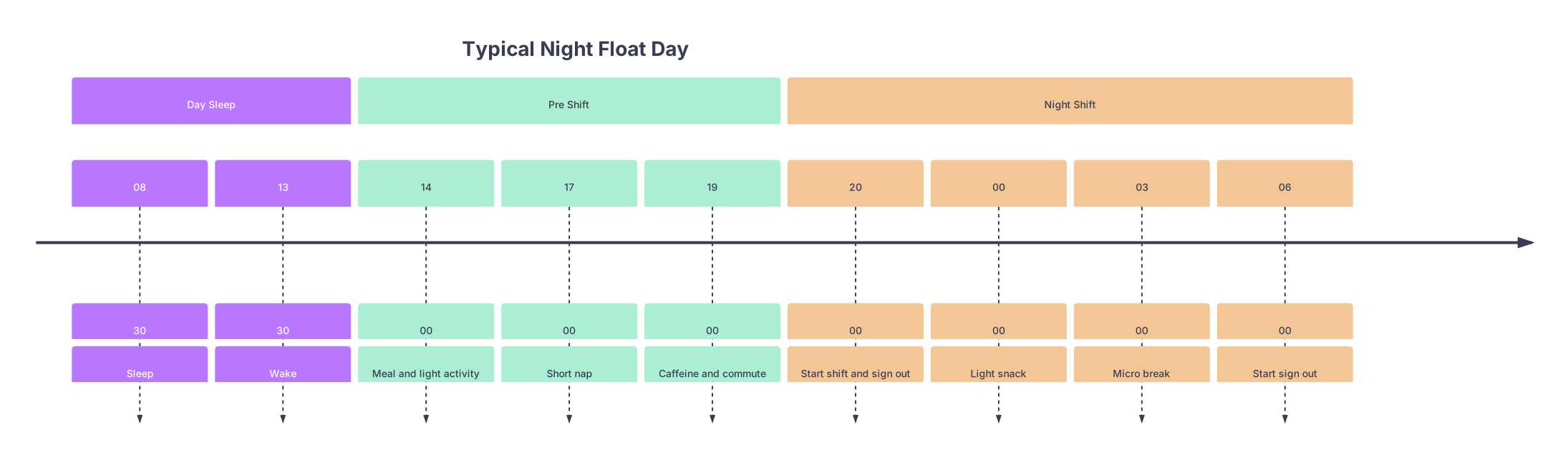
| Period | Event |
|---|---|
| Day Sleep - 08 | 30 |
| Day Sleep - 13 | 30 |
| Pre Shift - 14 | 00 |
| Pre Shift - 17 | 00 |
| Pre Shift - 19 | 00 |
| Night Shift - 20 | 00 |
| Night Shift - 00 | 00 |
| Night Shift - 03 | 00 |
| Night Shift - 06 | 00 |
The “Standard” Night (Shift 1–10)
20:00–23:00 – Structured Start
At this point you should:
- Get a tight sign-out. Ask explicitly: sickest patient, most likely to crash, anyone “making me nervous.”
- Make a quick priority list for the night:
- Sick/unstable
- Time-sensitive orders
- New admissions
- Routine calls / refills / cross-cover minutiae
You want a physical list; it reduces cognitive load at 04:00.
23:00–02:00 – Prime Work Block
Your brain is still decent here.
- Reserve this time for:
- New admissions that require thought
- Difficult family conversations
- Procedure-heavy tasks (lines, lumbar punctures)
- Snack strategy: Small, not sugary. Handful of nuts, yogurt, or cheese stick. Big meals will knock you out.
Caffeine rule: One more small dose (half coffee / tea) no later than 02:00. Later than that, you will ruin post-shift sleep.
02:00–05:00 – The Wall
This is where judgment drops off a cliff if you are careless.
- Micro-break every 60–90 minutes:
- 5 minutes away from screens
- Quick walk around the unit, stairs if safe
- Splash water on face
- Batch low-cognitive tasks:
- Routine order sets
- Simple cross-cover pages
- Brief progress notes for stable patients
If a major decision hits at 04:30:
- Say it out loud to the nurse or co-resident.
- If something “feels off,” call the senior or attending. Ego is useless at this hour.
05:00–07:30 – Prepare For Landing
At this point you should start landing the plane, not starting new flights.
- 05:00–06:00: Final checks on your sickest patients, follow up labs/imaging that you ordered overnight.
- 06:00–07:00: Start structuring sign-out notes:
- Overnight events
- Active problems and what you did
- Explicit “watch out for X today” flags
No caffeine after 02:00–03:00. Drink water only now.
07:00–08:00 – Sign-Out and Exit
Protect this time.
- Give concise, prioritized sign-out:
- “Here are the three patients I am worried about.”
- “These two studies are pending; if X, then Y.”
- Do not linger. No hanging out chatting in the workroom “to decompress” while your cortisol is screaming for a bed.
Daytime During the Block: Post-Shift to Pre-Shift
Most of your recovery happens between the nights, not after the block. Structure every day.
Immediately After Shift (08:00–09:00)
At this point you should be in autopilot mode.
- Minimal sunlight. Sunglasses for the walk/drive home.
- Light snack if starving. Avoid a massive breakfast.
- Make zero important decisions. You are not as sharp as you feel.
Core Sleep Block (09:00–14:00)
This is non-negotiable.
- Aim: 4.5–6 hours of continuous sleep.
- Room setup:
- Blackout shades or heavy curtains
- Temperature slightly cool
- White noise machine / app
- Phone:
- Do Not Disturb on
- Exception: one emergency contact who knows to call only if absolutely necessary
If you consistently wake at 12:00, stay in dark, low-stimulation rest until at least 13:00.
Mid-Afternoon Wake Window (14:00–17:00)
At this point you should switch into “real human” mode, briefly.
- First 30 minutes: Hydrate, light snack, 5–10 minute sun exposure.
- 14:30–16:00:
- One normal meal (lean protein + vegetables + complex carbs).
- Light chores: dishes, quick tidy. Nothing cognitively heavy.
- Exercise:
- Best window is early in this block (30–40 minutes: walk, light weights, yoga).
- Do not do high-intensity workouts right before your shift; they will crash you at 03:00.
Pre-Shift Nap (Optional but Powerful) (16:00–18:00)
- Short nap 20–40 minutes or a full 90 minutes if your core sleep was short.
- Set an alarm. Groggy 2-hour limbo naps are brutal.
Early Evening Pre-Shift (18:00–19:30)
- Light dinner. Avoid heavy fried food and giant carb bombs.
- Caffeine: last dose around 19:00.
- Brief check-in with family or friends. Even a 5-minute call helps keep you tethered to real life.
Managing a 4-Week Block: Week-by-Week Adjustments
Not all weeks of a night block feel the same. Here’s how they usually progress and how you should respond.
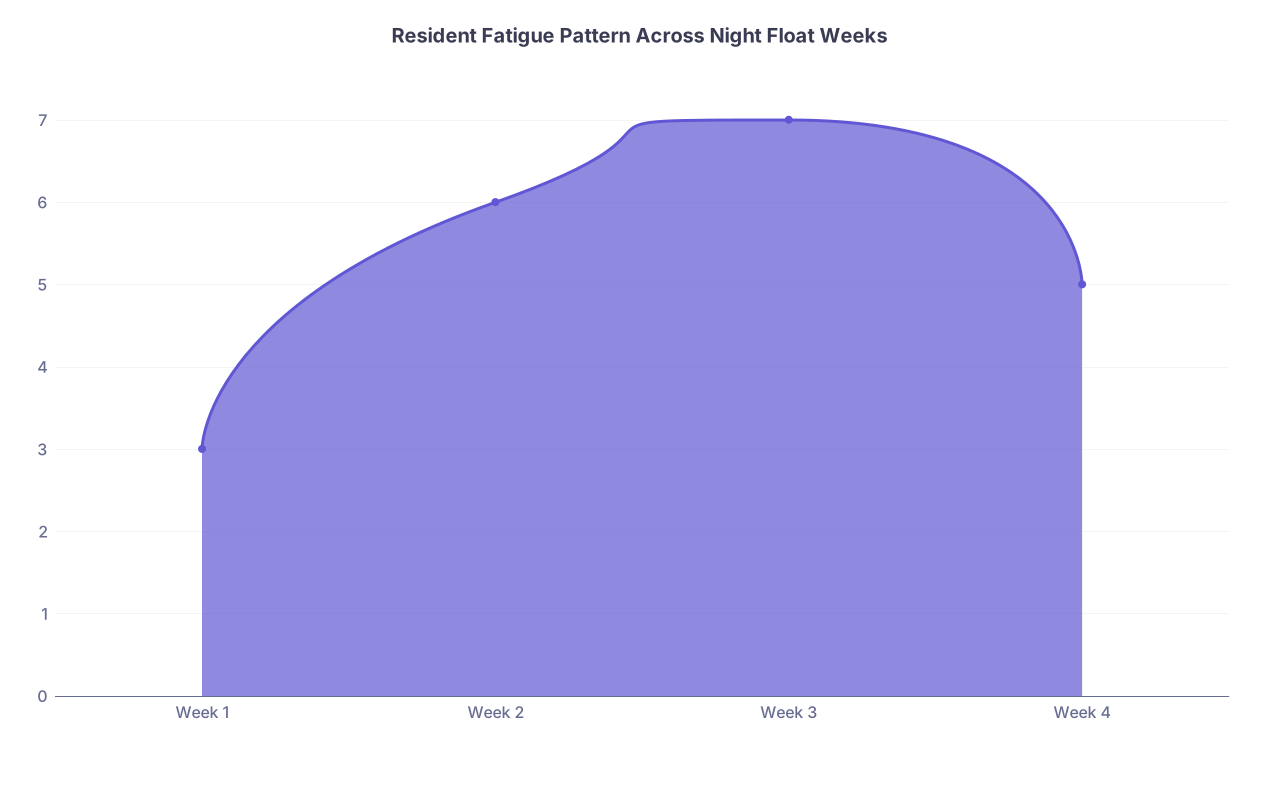
| Category | Value |
|---|---|
| Week 1 | 3 |
| Week 2 | 6 |
| Week 3 | 7 |
| Week 4 | 5 |
(Scale 1–10: higher = more fatigue)
Week 1: Adaptation
At this point you should expect:
- Sleep to feel choppy
- Mild headaches, GI oddness, and irritability
Response:
- Be strict about your daytime blackout period.
- Say “no” to extras: noon conferences, optional meetings, “quick” research tasks.
Week 2: False Confidence Week
You start thinking, “Honestly, nights are not so bad.”
This is dangerous.
- You will be tempted to:
- Pick up extra shifts.
- Stay up later on post-call days to see people.
- Add projects because you “have free days.”
Do not.
At this point you should deliberately protect:
- Your core sleep block
- One weekly “social anchor” (a short call with a friend, a quick dinner with your partner before you nap). Not three. One.
Week 3: The Grind
Fatigue peaks here, especially on demanding services (MICU, ED).
What I see most:
- Residents skipping the pre-shift nap “because I feel fine.”
- Emotional volatility: snapping at nurses, feeling detached from patients.
Countermeasures:
- Make the micro-breaks non-negotiable (5 minutes away from screens at least every 2 hours).
- Use scripted empathy with patients when you feel flat:
- “You are going through a lot right now; I want to make sure I understand what is hardest for you tonight.”
- This sounds forced at first. It helps keep you ethically anchored.
Week 4: Anticipation and Sloppiness
You start counting down. That is when people cut corners.
At this point you should:
- Double check:
- Antibiotic stop dates
- Anticoagulation dosing
- ICU handoffs
- Clean up:
- Old to-do sticky notes
- Half-finished sign-outs
You want to hand back the service in better shape than you found it. That is professionalism, even if you are exhausted.
Ethics on Night Float: Real-Time Guardrails
This is not just about comfort. It is about practicing ethically when you are sleep-deprived.
| Risk Area | Concrete Countermove |
|---|---|
| Impaired judgment | Call senior early at 03:00 |
| Short-tempered | 10-second pause before responding |
| Missed details | Use written overnight checklist |
| Dehumanization | 1 empathy question per encounter |
| Handoff errors | Structured sign-out template |
At the Start of Each Shift
At this point you should set three deliberate guardrails:
Error Check:
“If I am about to change a vasoactive, intubate, or stop heparin, I will sanity-check with someone if it is between 02:00–05:00.”Interaction Rule:
10-second pause before responding to any “stupid” page. Say nothing for 10 seconds. Then answer.Handoff Discipline:
Use the same structure every morning:- Sickest patients first
- New admissions next
- Loose ends last
During Tough Encounters (Angry Families, Frustrated Nurses)
- Acknowledge and delay if needed:
- “I hear you are really frustrated, and this matters. I need 10 minutes to stabilize another patient, then I will give you my full attention.”
- If you feel rage bubbling up:
- Step out, wash your hands slowly, look in the mirror, count to 20. This sounds corny. It works.
This is how you protect your ethical standards when your prefrontal cortex is running on fumes.
The Final Night: Setting Up Recovery
Most people drag the damage out for a week because they “celebrate” the end with all-nighters and big brunches. That is how you keep feeling wrecked.
You want a controlled landing.
Last Night Shift: 20:00–08:00
At this point you should:
- Cut caffeine earlier than usual (by 01:00–02:00).
- Avoid huge 04:00 snacks; keep it light.
Plan the day after like a specific protocol, not vibes.
Post-Block Recovery: 72-Hour Plan
Here is the reality: you will not be “totally normal” in 24 hours. But you can be functional in 3 days if you follow a structured timeline.
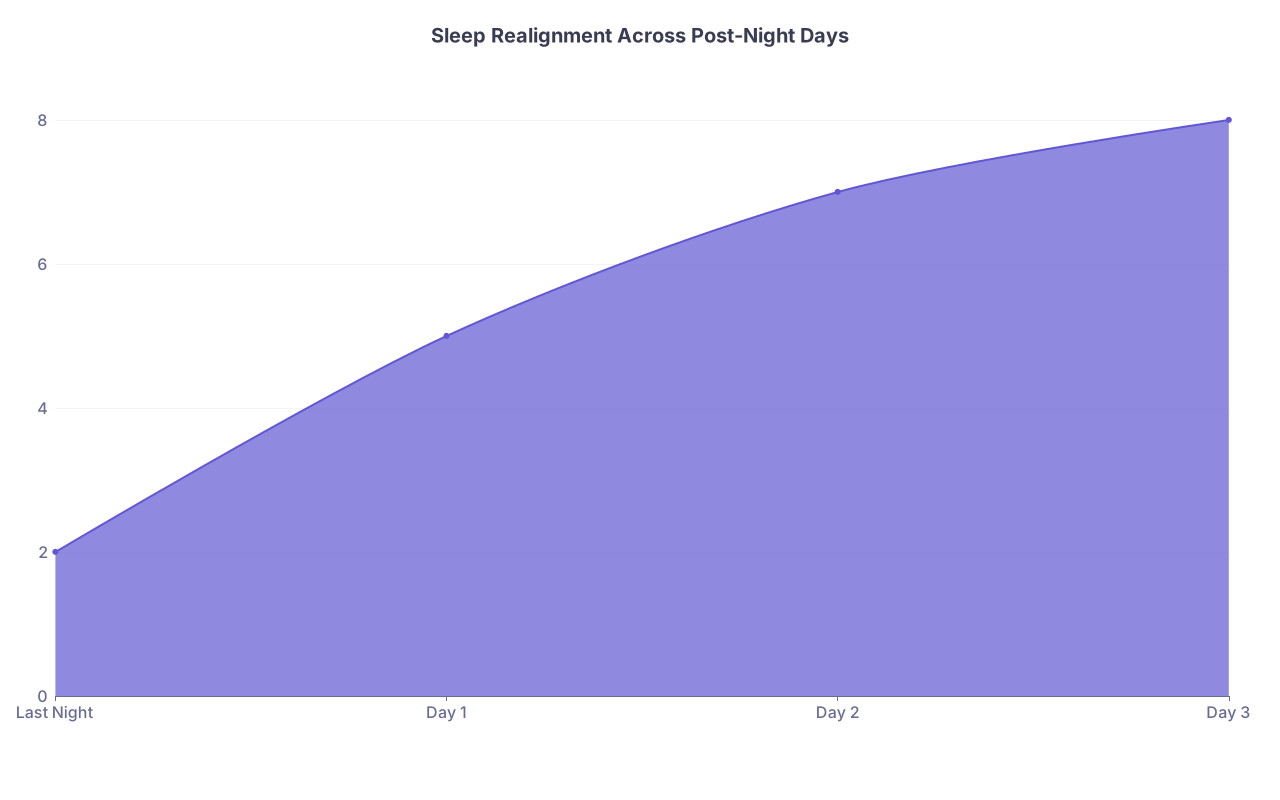
| Category | Value |
|---|---|
| Last Night | 2 |
| Day 1 | 5 |
| Day 2 | 7 |
| Day 3 | 8 |
(Scale 1–10: higher = alignment with normal day schedule)
Day +0 (Morning After Last Night)
08:00–09:00 – Go Home, Short Sleep
At this point you should:
- Go straight home. Do not go to celebratory breakfast.
- Sleep 3–4 hours max (e.g., 09:30–13:00).
If you sleep a full 7–8 hours right now, you will be up all night and prolong your jet lag.
13:00–18:00 – Forced Wakefulness
Painful, but key.
- Get outside: 30–60 minutes of bright light.
- Eat normal meals on a daytime schedule.
- Gentle activity only—walk, light stretching. No intense workout.
If you are crashing, use:
- One short nap: 20–30 minutes before 16:00.
21:00–23:00 – Target Bedtime
- Aim to sleep around 22:00.
- Simple wind-down:
- Warm shower
- No screens for 30 minutes
- Dark, quiet room
Expect fragmented sleep. That is fine.
Day +1
You will wake earlier than usual or feel like you were hit by a bus. Normal.
At this point you should:
- Lock wake time around 07:00–08:00 even if you slept badly.
- Get morning light for at least 20 minutes.
- Avoid naps after 15:00.
- Light to moderate exercise in late morning or early afternoon.
If you feel foggy, small caffeine, but nothing after 14:00.
Day +2
You should be ~80% back to baseline.
- Maintain the same wake time as Day +1.
- Work schedule:
- If you can, avoid heavy cognitive tasks first thing in the morning. Push key tasks to mid-morning.
- Social life:
- Keep events short and early evening. Not a massive night out.
Day +3 and Beyond
Sleep should be stabilizing.
At this point you should:
- Evaluate what worked:
- Did your core sleep block timing fit?
- Did pre-shift naps help?
- Make written notes for next block. Do not trust your future exhausted self to remember.
Putting It All Together: A Compact Timeline View
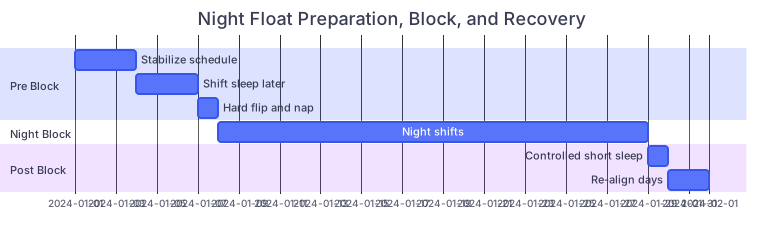
| Task | Details |
|---|---|
| Pre Block: Stabilize schedule | a1, 2024-01-01, 3d |
| Pre Block: Shift sleep later | a2, after a1, 3d |
| Pre Block: Hard flip and nap | a3, after a2, 1d |
| Night Block: Night shifts | a4, 2024-01-08, 21d |
| Post Block: Controlled short sleep | a5, 2024-01-29, 1d |
| Post Block: Re-align days | a6, after a5, 2d |


The 3 Things You Actually Need To Remember
- Night float is won before it starts: shift your sleep gradually, clear your life admin, and plan the first day flip like a procedure.
- During the block, protect your core sleep block, your pre-shift nap, and your 02:00–05:00 judgment guardrails; that is how you stay safe and ethical.
- After the last night, take the 3–4 hour recovery nap, force yourself to stay up, and re-anchor to normal days over 72 hours—do not let “celebration” ruin your reset.