
The biggest wellness mistake medical students make is assuming what worked in MS1 will still work in MS4. It will not.
Your work-life balance needs don’t just change a little each year—they flip. Repeatedly. If you keep clinging to last year’s coping habits, you burn out quietly and call it “being dedicated.”
Let’s walk the four years the way they actually feel, and map what you should do—month by month, then year by year.
Overview: How Your Wellness Priorities Shift MS1–MS4
At this point, you need a bird’s-eye view before we drill down.
| Year | Primary Wellness Task | Biggest Threat |
|---|---|---|
| MS1 | Build basic routines | Comparison + imposter syndrome |
| MS2 | Protect focus | Overwork + anxiety about exams |
| MS3 | Guard boundaries | Emotional exhaustion + sleep loss |
| MS4 | Rebuild life balance | Aimlessness + over-commitment |
And here’s how your time pressure typically ramps:
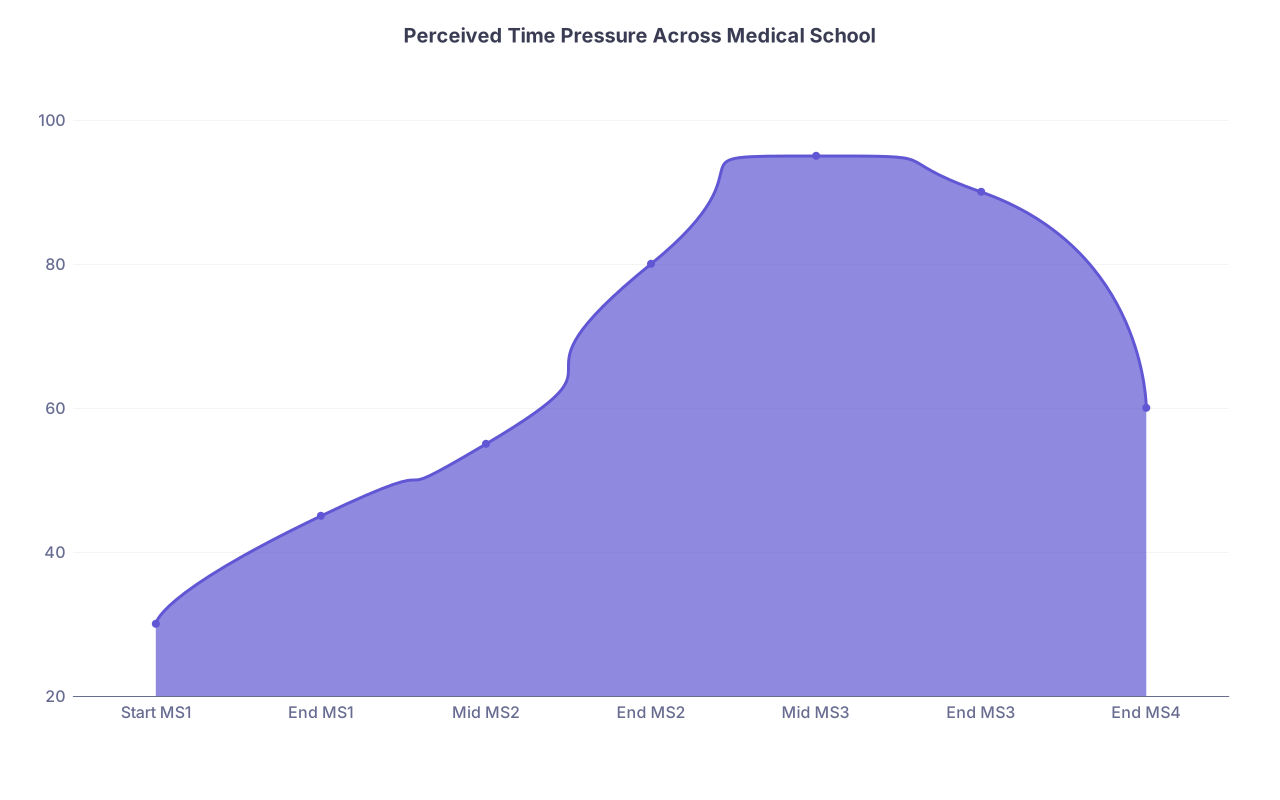
| Category | Value |
|---|---|
| Start MS1 | 30 |
| End MS1 | 45 |
| Mid MS2 | 55 |
| End MS2 | 80 |
| Mid MS3 | 95 |
| End MS3 | 90 |
| End MS4 | 60 |
Now we walk the road, starting from MS1 orientation.
MS1: Building Foundations (Not Hustle)
Your first year is not about “grinding harder than everyone else.” It’s about setting durable baselines you can actually maintain when things get ugly later.
Think: habits, not heroics.
Before MS1 Starts (June–August)
At this point, you haven’t even gotten your white coat. You should:
June–July: Audit Your Life
Strip things down now, before the firehose turns on.
- List your current time commitments: job, hobbies, family, exercise, volunteering
- Decide what must stay (non-negotiables) vs what can pause for 12 months
- Non-negotiables: sleep, 1–2 relationships, basic exercise, one hobby that keeps you sane
- Talk with close people (partner, parents, roommates): spell out how your time will change
If you ignore these conversations, you’ll be apologizing constantly by October.
August: Design Your Baseline Week
Do this before orientation. Literally sketch a weekly template.
- 7–8 hours sleep blocked in your calendar
- 3–4 exercise blocks (30–45 min)
- 1 social block (dinner, game night, call home) you treat like an exam
- Study blocks with realistic limits (you’re not doing 14-hour days long-term)
At this point you should decide your minimums:
- Minimum sleep per night (e.g., 6.5 hours, absolute floor)
- Minimum exercise per week (e.g., 2 short sessions)
- Maximum study hours per day before you stop (e.g., 10)
Those minimums will save you when panic hits.

| Step | Description |
|---|---|
| Step 1 | Start of MS1 Summer |
| Step 2 | Audit commitments |
| Step 3 | Choose non negotiables |
| Step 4 | Create weekly template |
| Step 5 | Set sleep and exercise minimums |
| Step 6 | Communicate plan to family and partner |
MS1 Fall (September–December): The Comparison Trap
At this point, everyone is pretending they’re fine.
Your real work now:
Month 1 (September): Learn Your Energy Patterns
You don’t need a fancy tracker. You need honesty.
- Track 1 week: what time you actually fall asleep, wake up, and your focus peaks
- Identify:
- Your best time block for heavy learning (e.g., 8–11 AM, 7–10 PM)
- Your crash period (post-lunch, late evening)
- Adjust studying to match those, not your classmates’ preferences
If you notice you’re constantly studying in your worst mental hours, fix it. That’s not “discipline.” That’s sabotage.
Month 2–3 (October–November): Build Study Systems That Don’t Eat Your Life
Common MS1 mistake: treating every lecture like it’s Step 1 content.
At this point you should:
- Decide your primary learning mode (Anki, question-based, small groups)
- Cap lecture catch-up time (e.g., no more than 2x real-time speed, no endless rewatching)
- Practice a “good enough” philosophy:
- 80–85% understanding + sleep beats 100% + chronic fatigue
Your wellness move here is resisting perfection. That’s an ethical issue, frankly. A future physician who never rests is a liability.
December: Pre-Break Reset
Before winter break:
- Do a short written reflection:
- What’s draining me most?
- What actually helped this semester?
- What boundaries did I fail to enforce?
- Pick one change for January. Not fifteen.
MS1 Spring (January–May): Avoid the Over-Optimization Spiral
By now, people start buying third-party resources like it’s a personality trait.
January–February: Tighten, Don’t Explode
At this point you should refine, not restart.
- Keep the same core system; adjust small things:
- Shorten your daily review
- Move exercise to a more realistic time
- Build in 1 “off” night per week (no studying after, say, 7 PM)
- Watch for red flags:
- Studying but not remembering anything
- Rage-scroll on social media instead of sleeping
- Stomach pain, headaches, or random crying -> your body keeping score
March–April: Ethics of Self-Neglect
You’re probably starting preclinical ethics now. Here’s the uncomfortable part:
If you normalize denying sleep, ignoring hunger, or skipping medical care for yourself… you will do it to others later. Patients, juniors, even your own kids.
At this point you should explicitly decide:
- Your personal “red lines” (I go to urgent care if X, I don’t study when I have Y)
- Who can call you out when you cross them (partner, friend, therapist, peer mentor)
May: End of MS1 Review
Write a one-page “Owner’s Manual for Me in Med School”:
- Best study method:
- Energy peak times:
- Biggest burnout triggers this year:
- What saved me:
- What I refuse to repeat in MS2:
You’ll need this in 3 months when MS2 panic starts.
MS2: Performance Pressure and Exam Anxiety
MS2 is not “just more MS1.” It’s content + stakes. Board prep, looming Step/NBME, people talking nonstop about scores.
Your wellness job this year: protect focused work and stop living in test anxiety.
MS2 Summer (June–August): Set Up Exam Year Without Ruining Your Life
June: Decide Your Exam Game Plan
At this point you should:
- Choose one main resource stack for boards (not five):
- Example: UWorld + Anki + one board book
- Decide your approximate dedicated period dates (even if your school sets most of it)
- Align your life:
- Tell family this is a higher-intensity year
- Look at events: weddings, travel, etc. Block them realistically
July–August: Build Sustainable Output, Not Hero Hours
Your goal is consistent medium effort, not sporadic all-nighters.
- Target a “standard workday” feeling: 8–10 hours of solid work with breaks
- Protect:
- Sleep: 7 hours minimum
- Exercise: even 20 minutes 4x/week
- 1–2 social touchpoints/week
If you’re already at 12-hour study days in August, you’re burning your best fuel too early.
MS2 Fall (September–December): Anxiety Management is Actually Study Strategy
By now, people are talking scores nonstop. Group texts are essentially cortisol generators.
September–October: Contain the Noise
At this point you should:
- Mute or leave any chat that spikes your anxiety more than it helps your studying
- Decide a score conversation boundary:
- “I don’t talk specific UWorld percentages. Happy to talk strategies.”
- Start basic mental hygiene:
- 5-minute daily check (mood 1–10, energy 1–10)
- One weekly decompression block: long walk, journaling, therapy, spiritual practice—whatever is actually restorative for you
November–December: Pre-Dedicated Wellness Infrastructure
Treat your upcoming dedicated period like a “wellness stress test.”
- Line up:
- Meal solutions (batch cooking, meal kits, or takeout budget)
- A short list of emergency contacts (person you text when you start spiraling)
- One no-questions-asked mental health resource (campus counseling, therapist, peer support)
At this point you should decide now:
- What you’ll do if your practice scores plateau or drop
- What “no studying tonight” looks like (what you’ll actually do instead, not just doomscroll)
MS2 Spring (January–Dedicated): Surviving Without Hollowing Yourself Out
You’re in the core performance phase now.
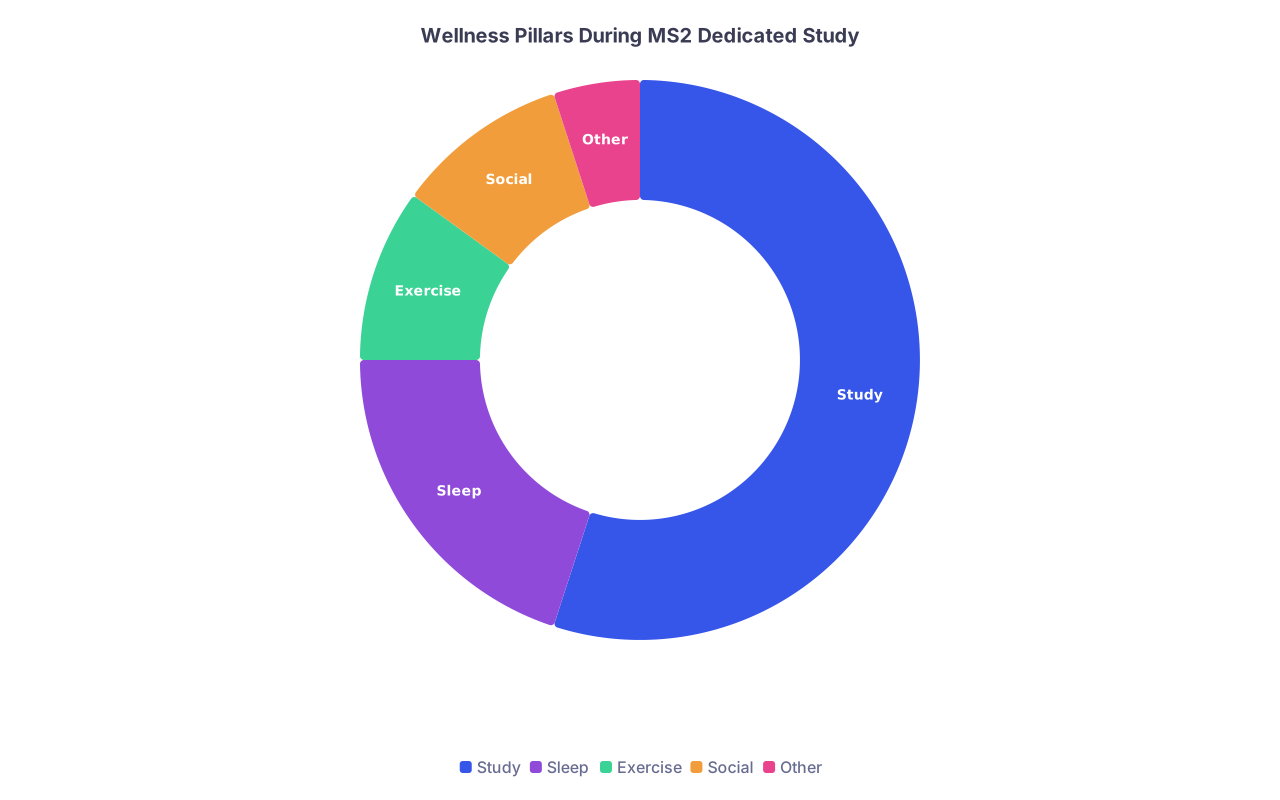
| Category | Value |
|---|---|
| Study | 55 |
| Sleep | 20 |
| Exercise | 10 |
| Social | 10 |
| Other | 5 |
January–February: Peak Training, Not Self-Destruction
At this point you should:
- Keep days structured:
- AM: hardest questions / learning
- PM: review, lighter tasks
- Non-negotiable cutoff time for screens before bed
- Schedule two half-days off per week (at least one afternoon/evening fully off)
- Watch your self-talk:
- Replace “I’m so behind” with “Next right question set is ___”
- Relentless self-criticism does not raise your score; it just erodes recall
Dedicated Period: Week-by-Week
Week 1:
- Establish your template day
- Overestimate breaks and under-estimate study blocks; adjust after 3 days
Week 2–3:
- Monitor: Are you remembering what you review?
- If not, you’re overloading. Scale back 10–20% volume.
- Keep exercise even if short; dropping it now tanks concentration.
Week 4–6:
- Plan 1 real “mental health day” every 10–14 days
- Practice test ritual:
- Same start time as real exam
- Planned decompression after (don’t review immediately in emotional brain)
Last 7–10 days:
- Taper like an athlete:
- Slightly reduce total hours
- Sleep becomes main priority
- Stop adding new resources completely
If you notice panic symptoms (chest tightness, chronic nausea, derealization), that’s not “normal stress.” That’s a health issue. At this point, reach out to counseling or a physician, not just friends.
MS3: Clinical Chaos and Emotional Exhaustion
MS3 is where every bad wellness habit gets exposed. You’re in the hospital early, leaving late, and your time isn’t yours anymore.
Your central task: guard your boundaries and emotional capacity. Not your flashcard streak.
MS3 Transition Month (Usually June–July)
At this point you’re switching worlds: classroom to wards.
1–2 Months Before First Rotation
You should:
- Talk to MS4s or residents: get rotation-specific reality
- Which services are brutal? Which are chill? When are exams?
- Set sleep expectations:
- Identify earliest wake-up you’ll likely need (4:30? 5:00?)
- Shift your schedule earlier gradually over 2–3 weeks before
- Simplify life infrastructure:
- Automate bills
- Set up easy food (frozen meals, simple staples)
- Streamline wardrobe (pre-pack clinic bag)

Rotation-by-Rotation Wellness Rules
Every 4–8 weeks, your life resets. You can’t build one perfect routine for MS3; you build micro-routines per rotation.
At this point on each new rotation, you should:
Day 1–2:
- Ask residents directly:
- “When do people usually arrive and leave?”
- “Is it realistic to plan one workout evening per week?”
- Map your non-clinical tasks:
- Shelf prep
- Notes
- Required assignments
Then design a minimum viable week:
- Sleep floor: e.g., never below 6 hours more than 2 nights in a row
- Exercise: one 20–30 minute movement block, even if that’s just a brisk walk
- Connection: 1 call/text thread you keep alive
High-Intensity Rotations (Surgery, ICU, Busy IM)
These are bandwidth killers. You’re not optimizing here; you’re surviving intact.
At this point you should:
- Shrink your expectations:
- Shelf prep: 20–40 quality minutes/day, not 3 hours
- Social life: tiny, intentional touches (voice notes, quick coffee on day off)
- Protect basics:
- Keep snacks and water with you. Low blood sugar destroys your mood and patience.
- Sit whenever you can. I’ve seen students go all day without sitting, then wonder why they’re snapping at nurses.
Ethically: these rotations will test whether you treat people like tasks when you’re tired. Your wellness directly affects how humane you are at 4 PM.
Lower-Intensity Rotations (Psych, FM in some places, Outpatient)
Here the threat is different: aimless procrastination that drags into the night.
At this point you should:
- Set a hard “off” time at night
- Do shelf questions early in the day when you still have willpower
- Use spare energy to:
- Reconnect with friends/partner
- Get back to real meals
- Sleep extra to repay some of the debt
Emotional Hygiene in MS3
You will see death, suffering, neglect. Sometimes cruelty. If you pretend it doesn’t affect you, it just buries deeper.
At this stage, each week you should:
- Do a 5–10 minute “debrief”:
- What case is still in my head?
- What emotion did I not let myself feel on the ward?
- Choose an outlet:
- Journal
- Talk to a trusted peer or mentor
- Therapy (strongly recommended if you’re carrying heavy stuff from multiple rotations)
If you catch yourself becoming numb or cynical about patients, that’s a wellness alarm, not just a “personality change.”
MS4: The Year You Either Heal… or Cement Bad Habits
MS4 is weird. Parts are chill, parts are brutal (sub-Is, interview season). You have more control—but also more decisions.
Your main job now: rebuild a sustainable adult life and identity outside “medical student.”
Early MS4 (April–August): Sub-Is and Application Prep
At this point you’re “almost-resident” on some rotations.
On Sub-Internships / Acting Intern
These feel like residency on training wheels.
You should:
- Clarify expectations on day 1:
- “What does a strong sub-I look like for you?”
- “What time do students usually arrive and leave?”
- Decide your self-protection rules:
- Maximum days in a row without real exercise
- Minimum sleep (yes, again)
- Push yourself on skills and responsibility—but not to the point of constant panic
Residency Application Prep
Don’t let ERAS and personal statements eat your life.
At this point you should:
- Block specific weeks for:
- Personal statement drafting
- ERAS entry and proofreading
- Requesting and tracking letters
- Keep writing sessions short (60–90 minutes). Long tortured sessions produce worse essays and worse mood.
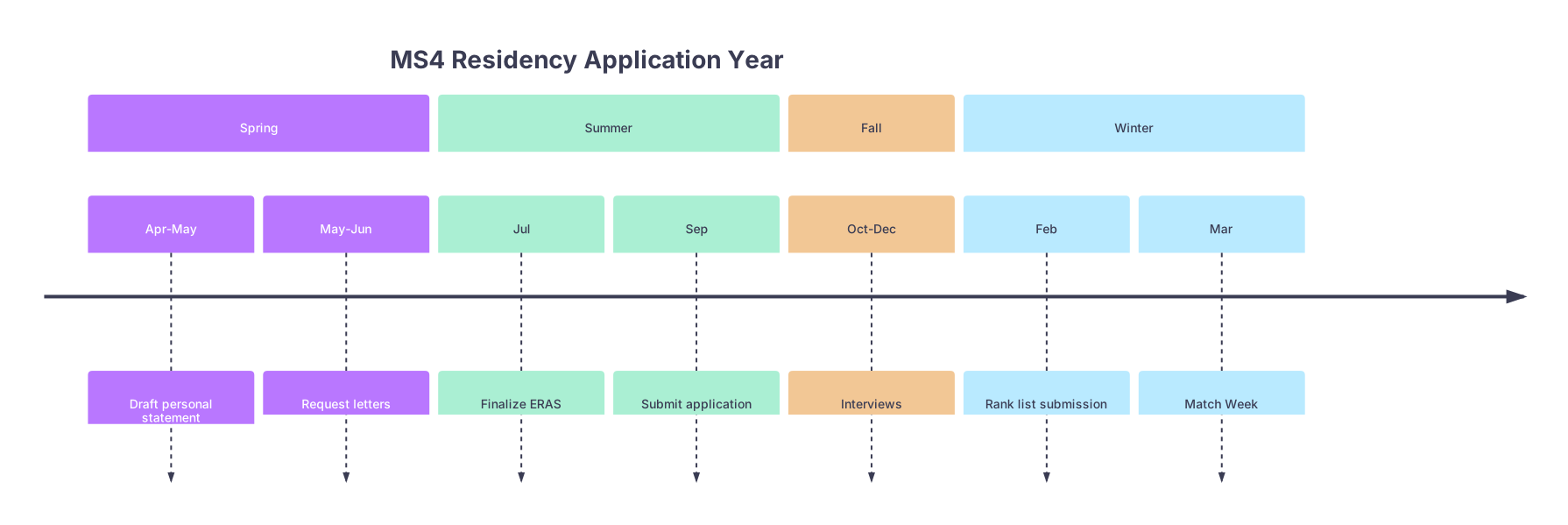
| Period | Event |
|---|---|
| Spring - Apr-May | Draft personal statement |
| Spring - May-Jun | Request letters |
| Summer - Jul | Finalize ERAS |
| Summer - Sep | Submit application |
| Fall - Oct-Dec | Interviews |
| Winter - Feb | Rank list submission |
| Winter - Mar | Match Week |
Mid MS4 (September–December): Interviews and Identity
You’re flying around, smiling on Zoom, answering variations of the same questions. Easy to let your physical health decay.
At this point you should:
- Standardize travel:
- Same bedtime routine in hotels/Airbnbs
- Pack simple snacks and hydration kit
- Emotionally:
- Limit obsessive program comparison and forum stalking
- Debrief each interview in a single journal page: impressions, deal-breakers, gut sense
This is also when you confront: Who am I outside of medicine?
If your only answer is “future [specialty] resident,” you’ve got some work to do.
Schedule:
- 1–2 non-medical activities per month: art, sports, volunteer work totally unrelated to health care
- Time with people who don’t care about your rank list
Late MS4 (January–Graduation): Rebuilding and Rehearsal for Residency
At this point, your main threat is aimlessness and over-commitment. You finally have some time, so you say yes to everything.
You should instead:
- Design a pre-residency wellness plan:
- Sleep schedule you want by July 1
- Movement habits you can carry into 80-hour weeks
- Simple meal routine
- Practice now:
- Waking up earlier if needed
- Studying in shorter, sharper bursts
- Saying “no” to extra commitments that don’t align with your values or rest

Also: go to your own medical appointments. Get vision, dental, primary care, therapy lined up or updated before residency. Future-you will not have time for any of this.
Year-by-Year Wellness Priorities at a Glance
To tie it together, here’s the compact version.
| Year | Core Question | At This Point You Should… |
|---|---|---|
| MS1 | How do I function as a student without falling apart? | Build basic routines, set minimums, learn your energy patterns |
| MS2 | How do I perform on exams without losing my mind? | Limit resources, structure dedicated, protect sleep and boundaries |
| MS3 | How do I care for patients without erasing myself? | Create rotation-specific micro-routines, guard sleep, process emotions |
| MS4 | How do I become a doctor and also a person? | Rebuild identity, prepare for residency life, re-establish non-medical habits |
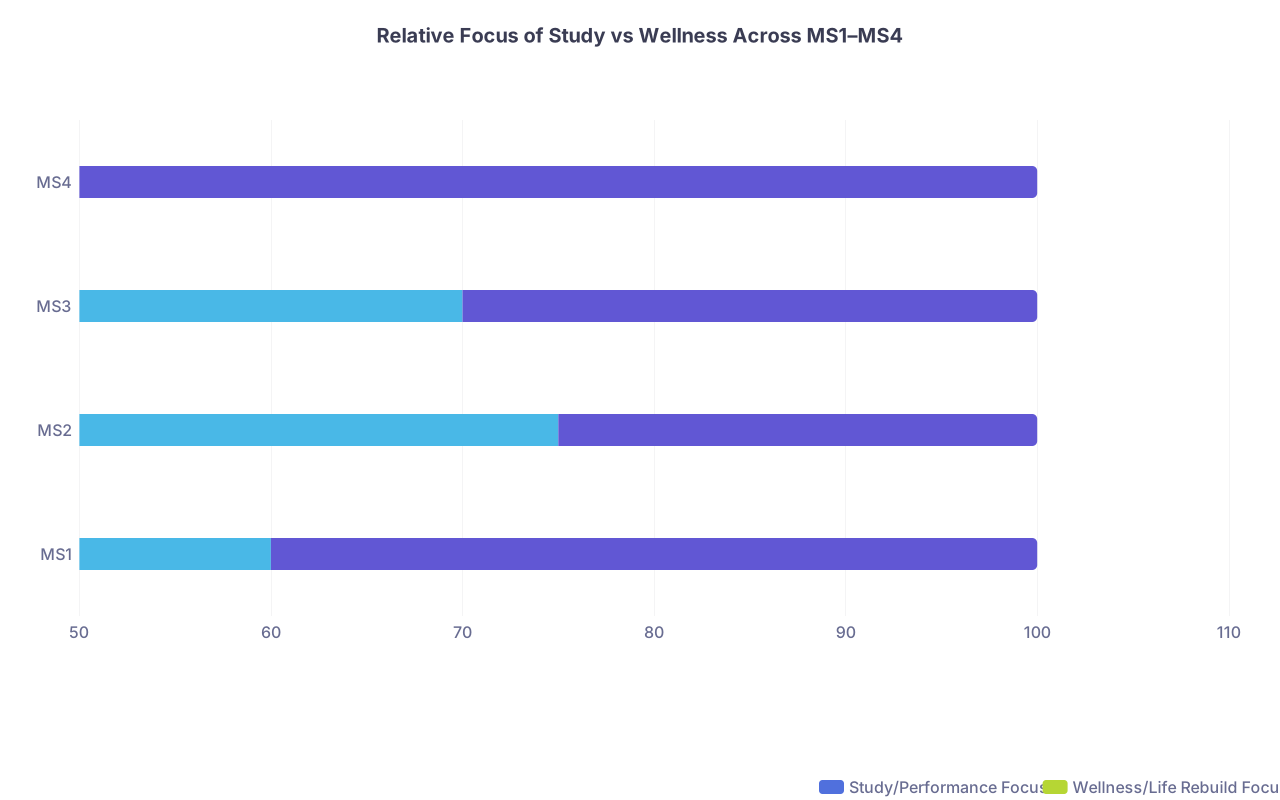
| Category | Study/Performance Focus | Wellness/Life Rebuild Focus |
|---|---|---|
| MS1 | 60 | 40 |
| MS2 | 75 | 25 |
| MS3 | 70 | 30 |
| MS4 | 50 | 50 |
Final Takeaways
- Your wellness plan must change every year; if it looks the same in MS3 as it did in MS1, it’s not working.
- At each transition point—new year, new rotation, dedicated study, interview season—you should stop, reassess, and design a specific “minimum viable week.”
- Protecting your own health is not optional or selfish; it’s a professional and ethical obligation that shapes the kind of physician you become.