
The way most doctors and trainees spend their “day off” is broken. Scrolling, half-charting, half-guilty, and back on call before your nervous system even realizes it had a break.
You can do better. And you should—because chronic non-recovery is an ethics problem, not just a wellness buzzword.
This is a 24-hour, hour-by-hour blueprint for a day off that actually restores you. I’ll walk you through it chronologically: what you do at each point, what you absolutely do not touch, and how to protect this day like it’s a patient with a DNR.
The Night Before (T‑12 to 0 Hours): Set Up Your Recovery
At this point, you’re still technically “on.” But how you land the plane now determines whether tomorrow is real rest or just “not at work.”
T‑12 to T‑6 hours: Close your loops
You’re 6–12 hours away from your day off.
Your job now: prevent tomorrow’s brain from dealing with today’s mess.
- Clear the most urgent inbox items. Not all. Just the ones that will:
- Blow up your phone tomorrow
- Endanger patient safety
- Damage a relationship (attending, chief, partner, family)
- Make a parking lot list for after your day off:
- 3 critical work tasks for your next workday
- 3 personal/logistical tasks (bills, forms, calls)
- Anything you’re tempted to “just knock out tomorrow”
Then stop. If you try to zero everything, you’ll be up till 1 a.m. and tomorrow is already ruined.
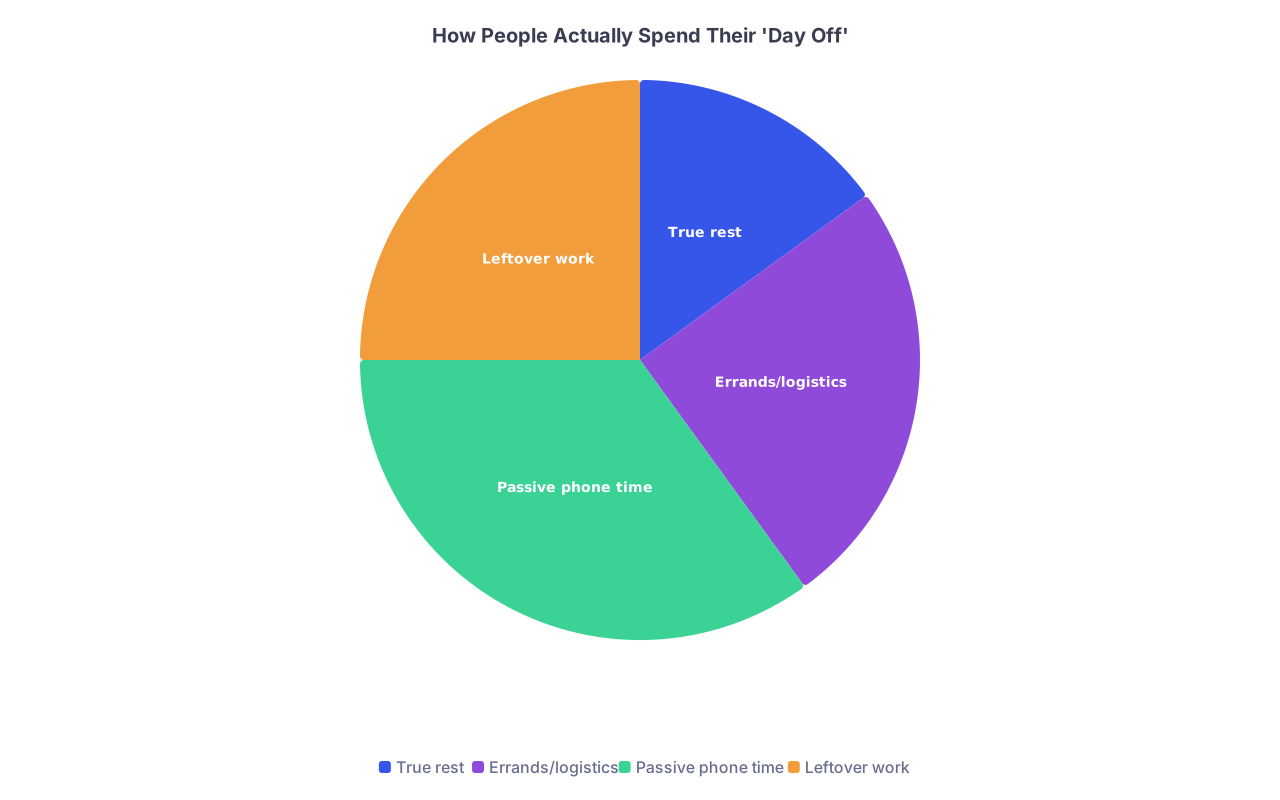
| Category | Value |
|---|---|
| True rest | 15 |
| Errands/logistics | 25 |
| Passive phone time | 35 |
| Leftover work | 25 |
T‑4 hours: Build your “recovery contract”
Before bed, you create rules for Future You. Because Off-Day You is weak and impulsive.
Write this down (paper, not just in your head):
- One sentence purpose for the day:
- “Today is for nervous system reset, not productivity.”
- 3 non-negotiables:
- Sleep at least X hours
- No charting / academic work
- Phone off/limited for Y hours
- 1 social boundary script (you will need this):
- “Tomorrow is my only true off-day this week. I’ll get back to you on [date] when I’m back on.”
You are not being dramatic. You’re defending your capacity to be a safe, ethical clinician.
06:00–09:00 – The Hard Reset Morning
If you’re chronically sleep-deprived, your exact wake time matters less than this: no alarms if safely possible.
06:00–08:00 – Wake, but don’t “start the day” yet
When you wake up (whether that’s 6 or 9), at this point you should:
- Delay your phone 45–60 minutes.
- No email.
- No EHR.
- No social media.
- Hydrate, basic hygiene, open blinds.
- Do one grounding check-in (2–3 minutes):
- “Body scan” from head to toe noticing tension
- 10 slow breaths with extra long exhale
Why? Because if the first thing your brain consumes is chaos, you’re back in fight-or-flight. Day off wasted before breakfast.
08:00–09:00 – Slow breakfast, body on “safe mode”
Eat sitting down. Not over the sink. Not in the car.
At this point, your only goals:
- Something with:
- Protein (eggs, yogurt, tofu)
- Complex carbs (oats, whole grain toast)
- No frantic multitasking. No “I’ll just look at my call schedule for next month.”
If you’re the type who twitches without background noise, fine—podcast or music—but choose non-medical, non-productivity content.
09:00–12:00 – Nervous System Recovery Block
This is the most valuable part of your day. You can’t squander it on Costco and oil changes.
From 09:00–12:00, your job is physiologic and psychological decompression. That’s it.
09:00–10:30 – Light movement + nature (if at all possible)
You do not need a 10-mile run. In fact, for many residents and physicians, that’s more stress.
Options that work:
- 30–60 minute walk outside
- Easy yoga or stretching session
- Very light jog or bike ride if you genuinely enjoy it
Rules:
- No step goals.
- No tracking apps screaming at you.
- Phone in your pocket or bag, not in your hand.
This is about:
- Lowering cortisol
- Letting your proprioceptive system know you’re not trapped in a unit or clinic all day
- Shifting from “go-go-go” to “I can move at my own pace”

10:30–12:00 – Deep rest for your prefrontal cortex
Now you protect 90 minutes for what I call non-productive absorption.
Pick one:
- Read fiction. Real fiction. Not leadership books. Not UpToDate.
- Long-form hobby:
- Drawing, painting
- Playing an instrument
- Woodworking
- Baking something slow
- If your brain is too fried to “do” anything:
- Lie down with an eye mask and calming music
- Gentle guided meditation (again: not “productivity hacks” meditations)
The rule here:
No goals. No metrics. No output needed.
This is where your brain actually starts to let go of recent cases, mistakes, near-misses, and those 3 a.m. pages that still live in your spine.
12:00–15:00 – Human Needs and Real Life (But Tamed)
You can’t avoid all “life admin” forever. But stacking every errand on your one day off is how burnout wins.
Your job in this block: minimum effective dose of logistics + intentional connection.
12:00–13:00 – Lunch and low-stakes connection
At this point, you should:
- Eat something satisfying, not just convenient
- Decide: solo recharge or gentle social time
- Solo: café by yourself with a book
- Social: one friend, partner, or family member who doesn’t treat your day off as “catch up on all my emotional needs”
Boundary you might actually say:
- “I’ve got about an hour of social battery today, but I’d love to see you for lunch.”
13:00–15:00 – Controlled errands window
Set a 2-hour errand cap. Hard stop at the end.
In that window, you can:
- Groceries
- One bigger chore (laundry OR cleaning bathroom, not the whole apartment)
- One admin task (pay bills, schedule appointment, renew license, etc.)
Do not:
- Redecorate your entire apartment
- Do your taxes
- Start a research abstract “just to get ahead”
- “Quickly” rework your CV
You’re not lazy. You’re treating recovery as an ethical obligation. Because if you walk into clinic exhausted every week, that’s not just “self-care failure.” That’s a patient care risk.
15:00–18:00 – Emotional Reset + Identity Beyond Medicine
By now, your body has some rest, your errands are contained, and you’re less keyed up. This is prime time for the piece most trainees skip: processing and identity work.
15:00–16:00 – Reflection block (yes, an actual hour)
No, this is not “journaling about how grateful you should be.”
This is where you metabolize the emotional load, instead of dragging it indefinitely.
Options:
- Brain dump journal:
- List the 3–5 cases or events still sticking with you
- For each: “What about this is bothering me?” in plain language
- Write what you’d say to an intern or student who went through the same thing
- Values check:
- Write 3 words for the kind of clinician you want to be (e.g., present, honest, technically excellent)
- Ask: Where did my past week align or clash with these?
Why this belongs in “medical ethics” phase:
Unprocessed moral distress accumulates. That’s how you end up numb, cynical, or cutting corners. An hour of honest reflection once a week is not fluff. It’s maintenance of your moral equipment.

16:00–18:00 – Identity outside the white coat
At this point, you should do something that reminds you: you’re a person who also happens to practice medicine, not a machine that occasionally goes home.
Pick one or two:
- Creative:
- Play music
- Write (non-medical)
- Cook a new recipe
- Photography walk around the neighborhood
- Relational:
- Call a friend who knows you from before med school or residency
- Time with partner or kids that’s not just coexisting on the couch
- Physical:
- Light sports (pickup basketball, climbing, dance class) if it feels fun, not like “more performance”
Crucial rule:
No “networking,” no career strategizing hidden inside this. If you catch yourself saying “This could look good on my application,” you’ve turned your off time into career time.
18:00–21:00 – Wind-Down and Guard Rails
This is where people torch the gains from the whole day. Too much alcohol, endless doomscrolling, or “I’ll just peek at the schedule for next month.”
18:00–19:30 – Dinner with intention
You do not need a Michelin-star situation. But be intentional:
- Eat sitting down, again.
- Low-stimulation background:
- Chill music
- Light conversation
- If TV, something low-stress and not medical
One strong suggestion if you’re in a relationship:
Ask each other non-work questions. Examples:
- “What’s one small thing that made this week less terrible?”
- “If we had a 3-day weekend with zero obligations, what would we do?”
19:30–20:30 – The “ethical check-in” (15–20 minutes is enough)
This is short but non-negotiable. At this point, your brain is soft enough to handle it.
You ask yourself:
- Did I cut any corners this week because I was too exhausted?
- Where did I treat a patient or colleague in a way I’m not proud of?
- If a med student were shadowing my internal life, what would I want to explain or apologize for?
Write a few bullet points. Not an essay.
This is not about self-flagellation. It’s an integrity audit. Without it, coping can slide into rationalization fast—especially in toxic teams or under brutal workloads.
21:00–22:30 – Protect Tomorrow’s Version of You
Now you close the loop on the day off and choose how you want to re-enter.
21:00–21:30 – Very light planning for re-entry (15–30 minutes)
At this point you should:
- Look at your schedule for the next 1–3 days. Once.
- On paper (again, not on your phone):
- List the top 3 work priorities for your next shift
- List 1–2 personal anchors (e.g., “text mom,” “pre-pack lunch,” “10-minute stretch after shift”)
Then close it. Do not start pre-charting. Do not answer “quick” messages.
| Time Window Task | Good or Bad | Why |
|---|---|---|
| Check schedule once | Good | Reduces anticipatory anxiety |
| Pre-chart 5 patients | Bad | Converts rest day into unpaid work |
| Pack lunch for tomorrow | Good | Supports future you without mental overload |
| Reply to non-urgent emails | Bad | Reopens work mode and invites more demands |
| List 3 priorities on paper | Good | Simple structure without over-planning |
21:30–22:30 – Downshift ritual
Now: quality of sleep. Because a “day off” with 4 hours of sleep is a joke.
Choose a consistent 30–60 minute sequence. For example:
- Hot shower or bath
- Stretching or foam rolling for 5–10 minutes
- Light, non-medical reading or audio (fiction, essay, comedy)
Phones out of reach. Blue light minimized. This is not negotiable if you want deep sleep, not just horizontal anxiety.
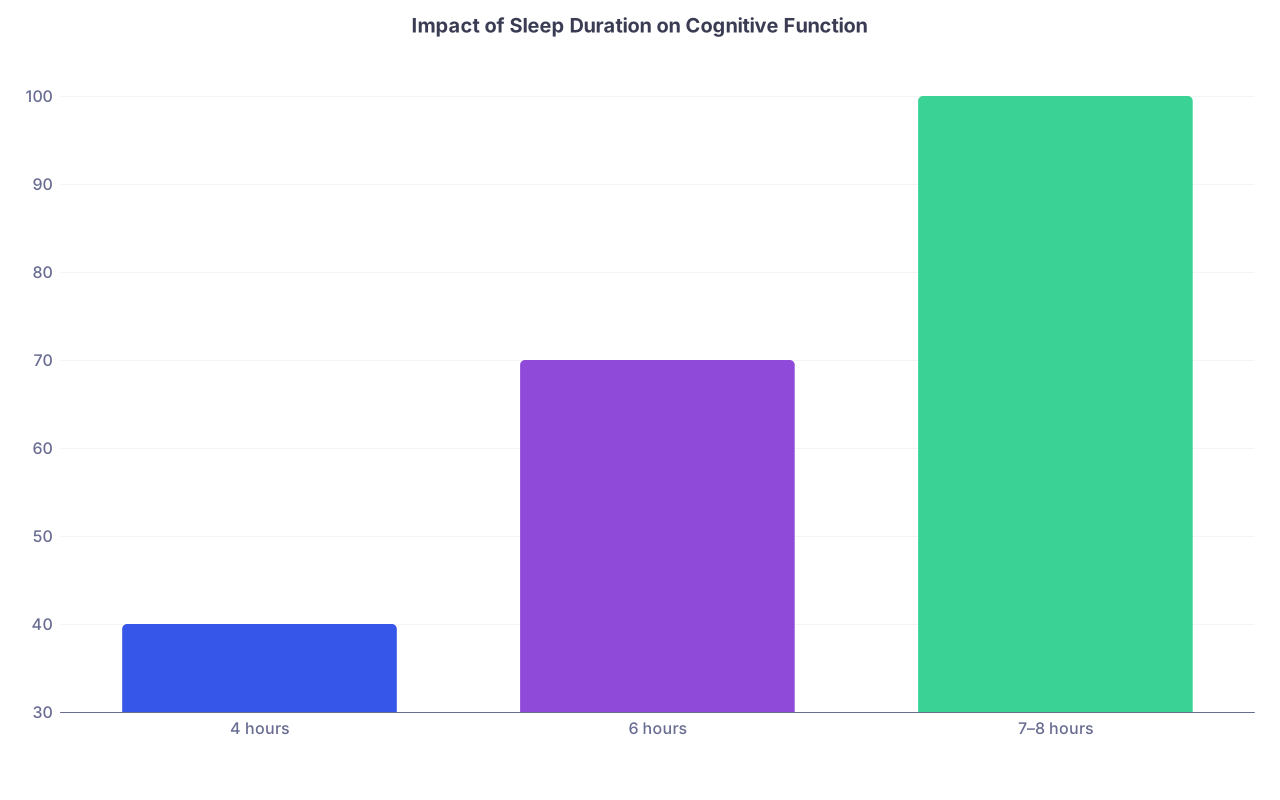
| Category | Value |
|---|---|
| 4 hours | 40 |
| 6 hours | 70 |
| 7–8 hours | 100 |
The point isn’t perfection; it’s that you’re signaling to your body: “We’re off duty. Fully.”
22:30–06:00 – The Overnight Non-Negotiable
You need 7–9 hours. Residents will scoff here, especially on q4 call. I know. I’ve watched people brag about “doing fine” on five.
They’re not fine. Their patients are just unlucky.
On the rare day you can control, your job is to hit as close to 8 as possible. If that means going to bed earlier and saying no to one more episode, do it. This is not asceticism. It’s keeping your frontal lobe online for clinical decisions.
Protection Rules: How to Keep This Day from Being Hijacked
A schedule is useless if everyone else gets to rewrite it.
Tech boundaries for the full 24 hours
- No EHR at all
- If your institution is abusive enough to expect this on off days, that’s a bigger structural problem—but you can still resist by not being the first to normalize it.
- Email:
- Zero checking before 15:00.
- One brief check between 15:00–17:00 only if truly necessary.
- Phone:
- Use “Do Not Disturb” with emergency exceptions (hospital, close family).
- Social apps moved off your home screen for the day.

People boundaries
You will meet resistance.
Common offenders:
- Colleagues who text “real quick” consults
- Family who think “but you’re not at work, so…”
- Your own guilt
You pre-write and use phrases like:
- “Today’s my protected day off—I’ll handle that when I’m back on.”
- “I’m offline for most of today. If this is truly time-sensitive, please route it through [on-call person/EHR] so it’s properly documented.”
- “I’d love to help, but I’ve hit my limit for this week. Can we revisit after [date]?”
You do not need to justify or over-explain. A short, clear boundary is enough.
Putting It All Together: Visual Day-Off Timeline
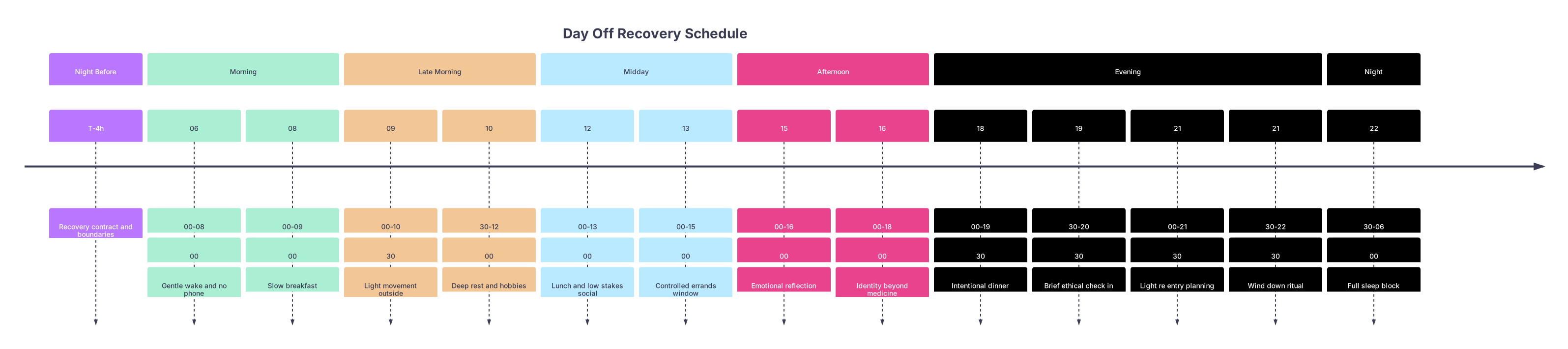
| Period | Event |
|---|---|
| Night Before - T-4h | Recovery contract and boundaries |
| Morning - 06 | 00-08 |
| Morning - 08 | 00-09 |
| Late Morning - 09 | 00-10 |
| Late Morning - 10 | 30-12 |
| Midday - 12 | 00-13 |
| Midday - 13 | 00-15 |
| Afternoon - 15 | 00-16 |
| Afternoon - 16 | 00-18 |
| Evening - 18 | 00-19 |
| Evening - 19 | 30-20 |
| Evening - 21 | 00-21 |
| Evening - 21 | 30-22 |
| Night - 22 | 30-06 |
If You Can’t Take a Full 24 Hours (Reality Check)
You might be on a rotation where the idea of an untouched 24 hours feels laughable. Fine. Then your job is not to abandon the blueprint. It’s to compress, not cancel.
- Only 8 hours off?
- Keep: 1 hour movement, 1–2 hours deep rest, 30 minutes reflection, 30 minutes wind-down.
- Cut: errands. They can wait.
- Post-call “day off” where you’re a zombie?
- Prioritize: sleep, hydration, light walk, 15-minute ethical check-in when barely functional.
The principle stays: on any block of time not owned by the hospital, some part belongs to actual recovery, not just existing.
Your Next Step Today
Do not bookmark this and move on.
Right now, before you do anything else, open your calendar and block off your next full or partial day off with three words in the title: “Protected Recovery Day.”
Then, copy this timeline into a note and rough in your own:
- Exact wake window
- Movement plan
- One hobby
- Errand cap
- Reflection time
- Wind-down ritual
If it’s not on the calendar, it’s a wish. Put it there. Then protect it like you would a critical medication order—because that’s what it is, for your brain and your ethics.