The biggest lie physicians tell each other is, “Just take care of yourself. It won’t affect your career.”
You and I both know that’s not what it feels like.
You’re not scared of therapy. You’re scared of a checkbox on a credentialing form destroying everything you’ve worked for.
Let me be blunt: your fear makes sense. The system has absolutely punished vulnerable doctors in the past. Some places still do. But it’s not as simple as “If I see a therapist, my career is over.” It’s more complicated, and honestly, less apocalyptic than the horror stories make it sound.
Let’s untangle what actually happens.
What you’re really afraid of (and yes, I feel it too)
You’re not just worried therapy will “show up.” You’re worried about very specific nightmare scenarios:
- Hospital privileging committee sees “depression” and delays or denies you.
- Credentialing form asks, “Have you ever been treated for mental illness?” and you either:
- Tell the truth and get flagged, or
- Lie and pray they never find out.
- State medical board thinks your SSRI equals “impaired physician.”
- Future employer somehow gets your therapy notes and decides you’re “high risk.”
- Malpractice insurer hikes your rates or refuses coverage because of your history.
I’ve watched residents count out Zoloft tablets in a call room, whispering, “If I take this, do I have to tell the board?”
I’ve heard an attending say, “I’d rather white-knuckle it than risk my license.”
This is the paranoia you’re swimming in. So let’s stop talking in vague “stigma” language and get very literal: who actually sees what, and when?
Does therapy show up in credentialing? The messy, honest answer
Short version:
- Therapy itself does not automatically “show up” anywhere.
- Your diagnosis doesn’t auto-populate onto credentialing forms.
- What does matter is how questions are worded and whether anyone thinks you’re currently impaired, not just treated.
But I know you want specifics, not reassurance slogans.
| Entity | Can They See Your Therapy Records Automatically? | What They Actually See/Ask |
|---|---|---|
| State Medical Board | No | Your answers to their questions; sometimes reports of impairment, not routine care |
| Hospital Credentialing | No | Your applications, disclosures, employer references |
| Insurance (malpractice) | No | Your application answers, claims history |
| Employer (clinic/hospital) | No | Your self-report, references, behavior at work |
Your therapist isn’t faxing your notes to your credentialing office. There’s no national “therapy database” that hospitals query like a criminal background check. That’s not how it works.
What is real:
Application questions
Some boards and hospitals ask awful, intrusive questions like:
“Have you ever been diagnosed or treated for any mental illness or substance use disorder?”
Others (better, and increasingly common) ask:
“Do you currently have any condition, including mental health or substance use, that impairs or limits your ability to practice safely?”Fitness for duty / impairment concerns
If you’re reported as unsafe, repeatedly impaired on the job, or clearly not functioning, that can absolutely trigger evaluation. Separate from just going to therapy.Self-disclosure
What you put on those forms matters. That’s where your fear lives: “If I tell the truth, will I be punished?”
So yes, this is scary. But “going to weekly therapy” is not some automatic flag flashing on an administrator’s screen.
The legal and ethical shift: the world is (slowly) changing
Here’s the part most residents don’t know: a whole lot of big organizations have already said, out loud, that these invasive mental health questions are wrong.
- The American Medical Association (AMA), Federation of State Medical Boards (FSMB), and American Psychiatric Association have all said boards and hospitals should only ask about current impairment, not your entire mental health history.
- The Joint Commission (that big scary accrediting body hospitals worship) discourages intrusive mental health history questions on credentialing.
- The Dr. Lorna Breen Heroes’ Foundation (after an emergency physician died by suicide) has pushed states and institutions to reform these questions. Many actually have.
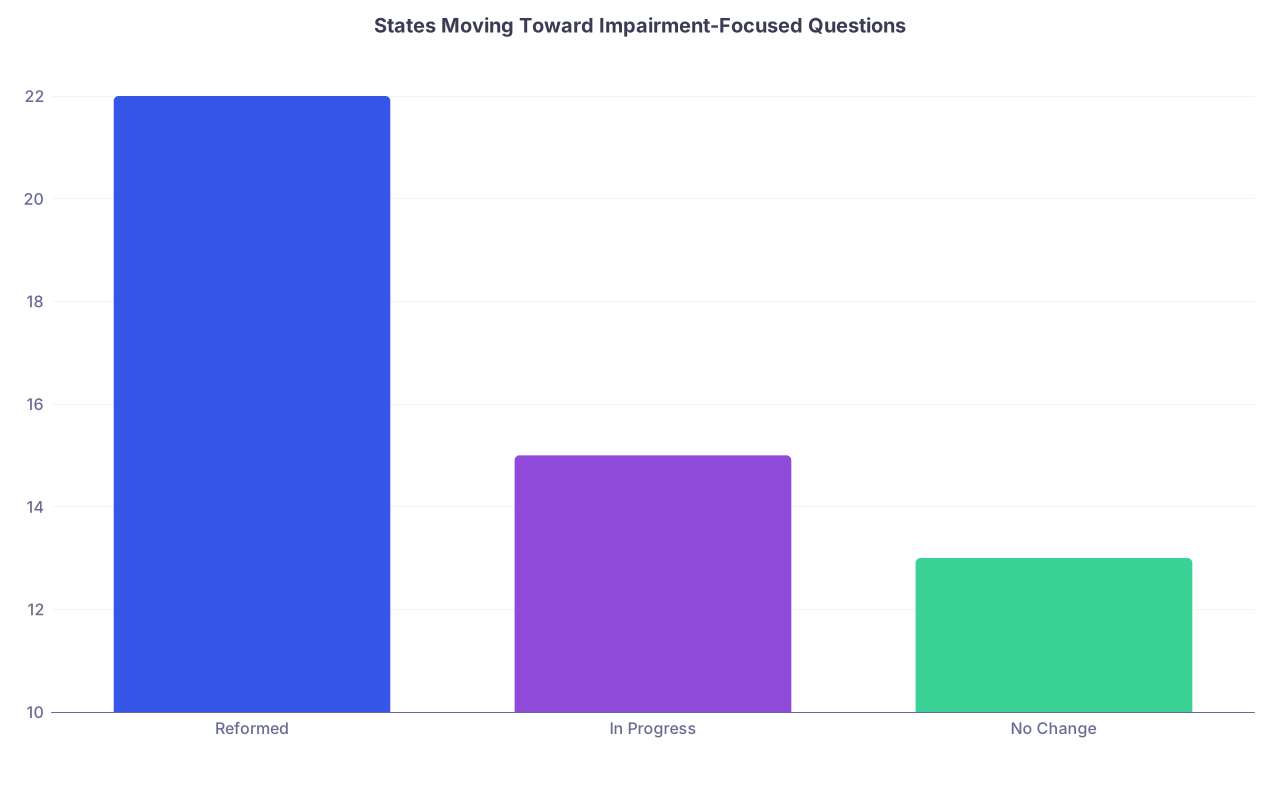
| Category | Value |
|---|---|
| Reformed | 22 |
| In Progress | 15 |
| No Change | 13 |
Is the system fixed? No. Some states and hospitals are still stuck in the dark ages. But the direction is clear: away from “Have you ever seen a therapist” and toward “Are you currently unsafe to practice.”
From an ethics standpoint, punishing people for seeking help is indefensible. And they know it. Lawsuits and public pressure are pushing hard.
This doesn’t erase your risk, but it means the blanket “If I go to therapy, I’ll lose my license” narrative? It’s outdated and exaggerated in most places.
Where therapy can intersect with credentialing (for real)
Let’s go through the worst-case angles you’re probably looping in your head.
1. State medical license applications
You’re terrified of this box:
“Have you ever been treated for a mental health condition?”
The truth:
Some states still ask broad “ever” questions. Many have moved to:
- Only asking about the last few years, and
- Framing questions around impairment, not simply treatment.

| Step | Description |
|---|---|
| Step 1 | Physician |
| Step 2 | Question about current impairment |
| Step 3 | Question about history of treatment |
| Step 4 | If no impairment - answer No |
| Step 5 | Decide what to disclose |
| Step 6 | State has modern policy |
Key point:
- If the question is about current impairment, and you are stable, functioning, and safe while in treatment, many attorneys and advocacy groups consider it accurate and ethical to answer “No.”
- If the question is broad, asking about any past diagnosis or treatment “ever,” then yes, that puts you in an impossible corner: tell the truth and risk overreaction, or stay vague and pray.
I’m not going to pretend that part doesn’t suck. It does. You may legitimately want legal advice specific to your state there. That’s not paranoia; that’s just being smart.
2. Hospital privileging and employment
Hospitals often use language like:
“Do you have any condition which affects, or is reasonably likely to affect, your ability to perform the privileges requested safely?”
Notice the word: affects. Not “Do you see a therapist” or “Have you ever been depressed.”
If your depression/anxiety/PTSD is well-managed with treatment?
- No, you do not automatically need to confess every therapy appointment.
- No, they do not routinely demand records from your psychiatrist or therapist unless there’s a serious concern about safety or performance.
Where you can run into trouble is:
- Repeated absences, erratic behavior, charting issues, disruptive conduct.
- Colleagues reporting they’re worried you’re not safe.
- An event that calls your judgment into question.
Even then, the usual sequence is: fitness-for-duty evaluations, occupational health, maybe monitored treatment — not automatic public shaming and career death.
Could a toxic institution weaponize that against you? Yes. I’ve heard of committees basically saying, “We’re not comfortable with this person’s stability.” It’s rare, but not imaginary. That’s why it’s rational to feel uneasy, even while being told “just get help.”
What about privacy laws – are therapy notes actually safe?
Here’s the piece that gets lost in all the anecdotal horror stories:
- HIPAA exists. Your treatment records are protected.
- Your therapist cannot just send your notes to your employer, hospital, or board because they ask nicely. They need your signed authorization or a valid legal order.

Where you lose control is when you sign blanket releases without reading them. People do this under stress all the time.
If anyone asks you to sign:
- “Permission to release ANY and ALL medical records”
Stop. Breathe. Ask, “What exactly are you requesting, and why?”
You are allowed to limit releases (for example: “this specific evaluation only, not all therapy notes”). You’re allowed to say no and consult counsel. You’re not being dramatic for wanting that.
The silent damage of not getting help
Let me say something that might piss you off a little:
You’re calculating the risk of therapy like it’s the only variable.
It’s not.
The other variable is you, untreated, under stress, for years. That carries career risk too:
- Burnout that turns into you snapping at patients or staff (hello “disruptive physician” label).
- Mistakes made at 3 a.m. because you haven’t slept, eaten, or talked about the panic you wake up with every night.
- Calling in sick repeatedly, backing out of responsibilities, or freezing in codes.
Those things? Committees absolutely look at them. That stuff does show up in references, performance letters, and 360 feedback.
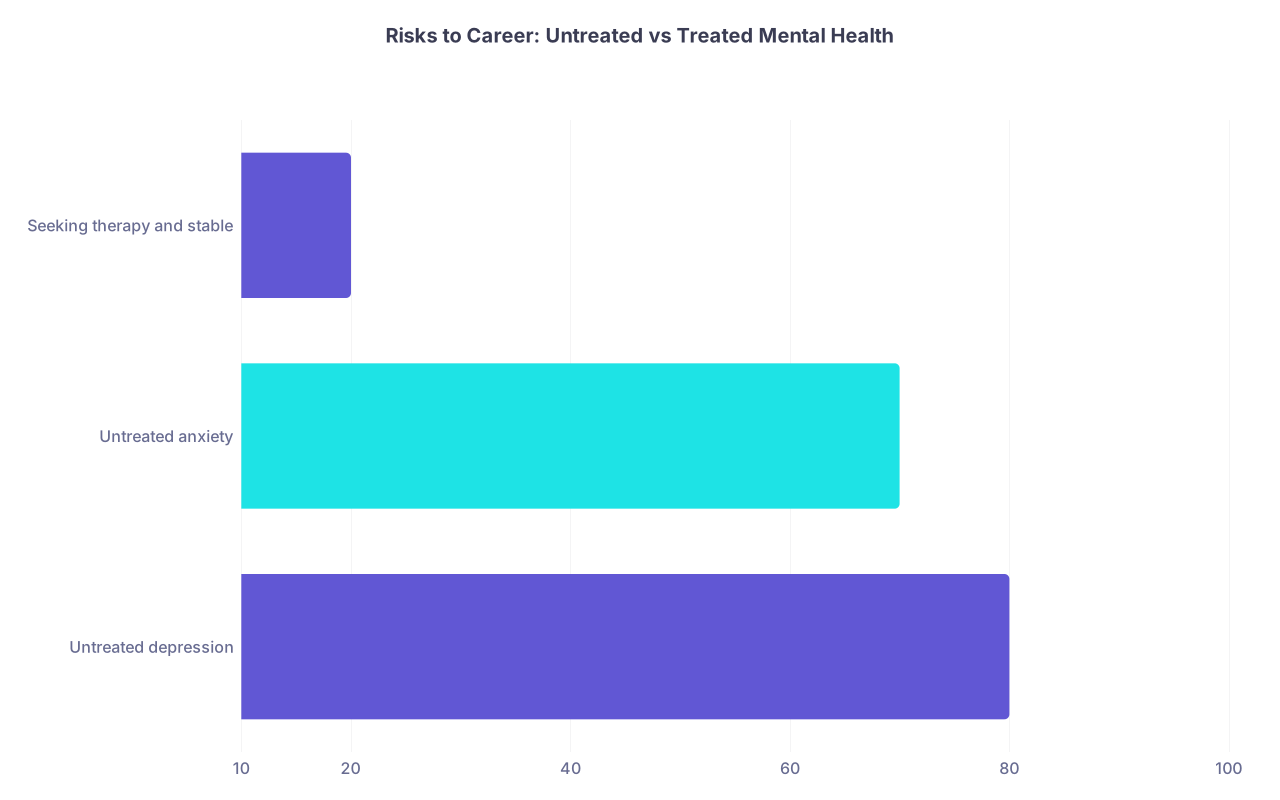
| Category | Value |
|---|---|
| Untreated depression | 80 |
| Untreated anxiety | 70 |
| Seeking therapy and stable | 20 |
No, this isn’t “if you just go to therapy, everything will be great.” It’s more like:
You are already in a risk equation. Avoiding help doesn’t magically keep your record clean if you implode later.
And here’s the uncomfortable truth:
Being in treatment, stable, and self-aware is way less concerning to most rational credentialing people than the colleague who won’t admit anything is wrong but keeps screwing up.
Tactical, not naive: how to protect yourself and get help
You’re not crazy for wanting a strategy. “Just trust the system” is how people get burned.
Here’s how I’d approach it if I were you and terrified (which, yes, I am):
Know your state’s questions
- Literally Google: “your state name physician license mental health questions” plus “Lorna Breen” or “FSMB.”
- Read the actual wording. Don’t rely on rumors in the residents’ lounge.
Choose your therapist wisely
- Consider a therapist completely outside your employer’s system. Private pay if you’re truly paranoid about insurance data trails.
- Make it clear you are a practicing physician and you’re worried about licensure; good clinicians get this.
Clarify “impairment” vs “treatment” with someone who knows law
- If your application questions are ugly, one consult with a health-care lawyer in your state might be cheaper than one surprise career detour.
Be boringly functional at work
- Document well. Show up on time. Don’t pick fights. You want your professional reputation to scream “reliable,” so if anything does come up, colleagues back you.
If you need meds, don’t self-prescribe
- Yes, everyone quietly scripts themselves SSRIs. That doesn’t make it smart. A documented, supervised treatment plan can actually help your case if anyone ever questions your stability.

The emotional part nobody says out loud
You probably feel trapped between two bad options:
- Suffer silently and hope you don’t implode.
- Get help and risk being labeled “unfit.”
That’s why you’re here, reading this, trying to find some secret third path where you can heal and still match, still get credentialed, still have a life outside of being “the doctor who couldn’t handle it.”
Let me say this clearly:
You are not defective for needing therapy in this job.
You are reacting like a human in an inhuman system.
The system should be reformed faster. It’s not moving fast enough. And yes, you’re stuck living in this ugly in-between era where the official words say “we support wellness” and your gut says “they’ll punish me if they know.”
So you walk the line:
- Get the help you need.
- Be intentional and informed about disclosures.
- Build a paper trail that shows competence, reliability, and insight — not chaos.
And if you’re already in therapy and now panicking: that doesn’t mean you doomed your career. It means you did something brave in a profession that punishes vulnerability. Don’t let fear retroactively turn that into a mistake.

FAQs – Answering the stuff you’re losing sleep over
1. Will my residency program find out if I’m in therapy?
Not automatically. Therapy is protected health information. Your program director doesn’t get a weekly report. They only find out if:
- You tell them, or
- There’s a serious performance or safety issue that triggers occupational health or mandated evaluation.
Just quietly going to therapy on your own? That doesn’t show up in your file.
2. Do I have to disclose antidepressant use on licensing or credentialing forms?
Only if the exact wording of the question requires it. Many modern forms ask about current impairment, not medication. If the question is, “Do you have any condition that impairs your ability to practice safely?” and your depression is stable on meds and you’re functioning well, many experts say it’s accurate to answer “No.” Broad “ever treated” questions are trickier and may warrant legal advice.
3. Can a state medical board or hospital demand my full therapy notes?
They can request them, but they don’t automatically get them. You typically have to sign a release. You can sometimes limit that release to a summary or specific evaluation rather than all session notes. If you ever get that kind of request, stop and talk to a lawyer or your therapist about the narrowest, safest way to respond.
4. Will a diagnosis of depression or anxiety ruin my chances at a job or fellowship?
By itself, no. Employers care more about your current functioning, references, and reputation. I’ve seen people with pretty serious histories (suicide attempts, inpatient stays) go on to get jobs and privileges because they were stable, candid when necessary, and had strong advocates. It’s not a golden ticket, but it isn’t an automatic door slam either.
5. Is it safer just to avoid therapy and “tough it out”?
Short term, it feels safer. Long term, it can absolutely backfire. Untreated mental health problems can lead to errors, absenteeism, outbursts, and burnout — all of which are way more obvious to credentialing committees than private therapy ever is. You’re trading a quiet, theoretical risk for a loud, visible one.
6. What’s the smartest way to start therapy if I’m terrified about career impact?
Pick a therapist outside your employer’s system. Ask about their experience with physicians. Tell them upfront you’re anxious about licensure and credentialing. Consider paying out of pocket if you’re extremely worried about insurance records. And quietly keep your work performance solid: on time, reliable, good documentation. Then, if anyone ever does question you, you don’t just have a diagnosis — you have a track record of functioning well because you got help.
Key takeaways:
- Therapy itself doesn’t “show up” in credentialing; what matters are the exact questions asked and whether you’re currently impaired, not simply in treatment.
- The system is flawed but shifting toward less invasive questions; avoiding all help isn’t actually the safer option long term.
- You can protect yourself by understanding your state’s wording, choosing your therapist carefully, and staying relentlessly functional and reliable at work while you take care of your mind.