
The way most attendings talk about burnout in public is sanitized. The way they talk about it behind closed doors is brutal.
Let me tell you what really happens.
By the time someone is a senior attending admitting to “burnout,” what they actually mean is: I ignored this for 15 years and now it has eaten half my life, my marriage, my health, or my sense of self. They wish they’d done things differently. And they’re usually very clear on exactly where they went wrong.
You’re not going to hear this at wellness grand rounds. You hear it late at night in empty workrooms. In the “you didn’t hear this from me” conversations. That’s what I’m going to give you.
The First Regret: Treating Burnout Like a Personal Weakness
The biggest mistake senior attendings will privately admit?
They thought burnout was a character flaw. Not an occupational hazard.
I’ve sat in departmental meetings where the same attending who can diagnose subtle disease from across the room would say things like, “I’m just not cut out for this anymore” or “I should be tougher.” They pathologized themselves instead of the system.
Here’s the dirty little secret you won’t see in CME slides: many current department chairs and program directors burned out hard in their 40s. They just never called it that. They called it “being tired,” “needing a vacation,” “this place getting to me.” Then they went right back into the same patterns.
What they wish they’d done differently:
Not assumed this was all on them.
They’d tell you now: If you feel ground down by a system designed to grind you down, that does not mean you are weak. It means the system is working as designed.
They wish they had recognized earlier:
- That chronic emotional exhaustion, cynicism, and feeling ineffective are not moral failures. They’re textbook burnout.
- That waiting for administration to “fix wellness” is like waiting for the EMR to get user-friendly. Possible in theory. Not happening in your lifetime.
- That naming the problem early would have allowed them to make smaller, reversible changes instead of waiting until the only option was something drastic: quitting, moving, or breaking.
The ones who burned out hardest were the ones who bought the myth that “real” physicians just push through. And they modeled that myth for you as a student and resident. Many are quietly ashamed of that now.
The Schedule They’d Never Agree To Again
Let’s be blunt: most older attendings signed contracts they’d never recommend you sign now.
They took 1-in-3 call for years. They said yes to every committee and every “can you just help with this project” request. They sold whole decades of weekends and evenings because “that’s how you build a reputation.”
What they realize too late is that reputation never stops asking for more.
I remember a cardiology attending—highly respected, research funded, everyone’s go-to—say this after his second divorce:
“I wish I had understood that the hospital will never say, ‘You’ve done enough. Go home.’ I was waiting for a signal that never comes.”
Here’s the part you won’t see on recruitment brochures:
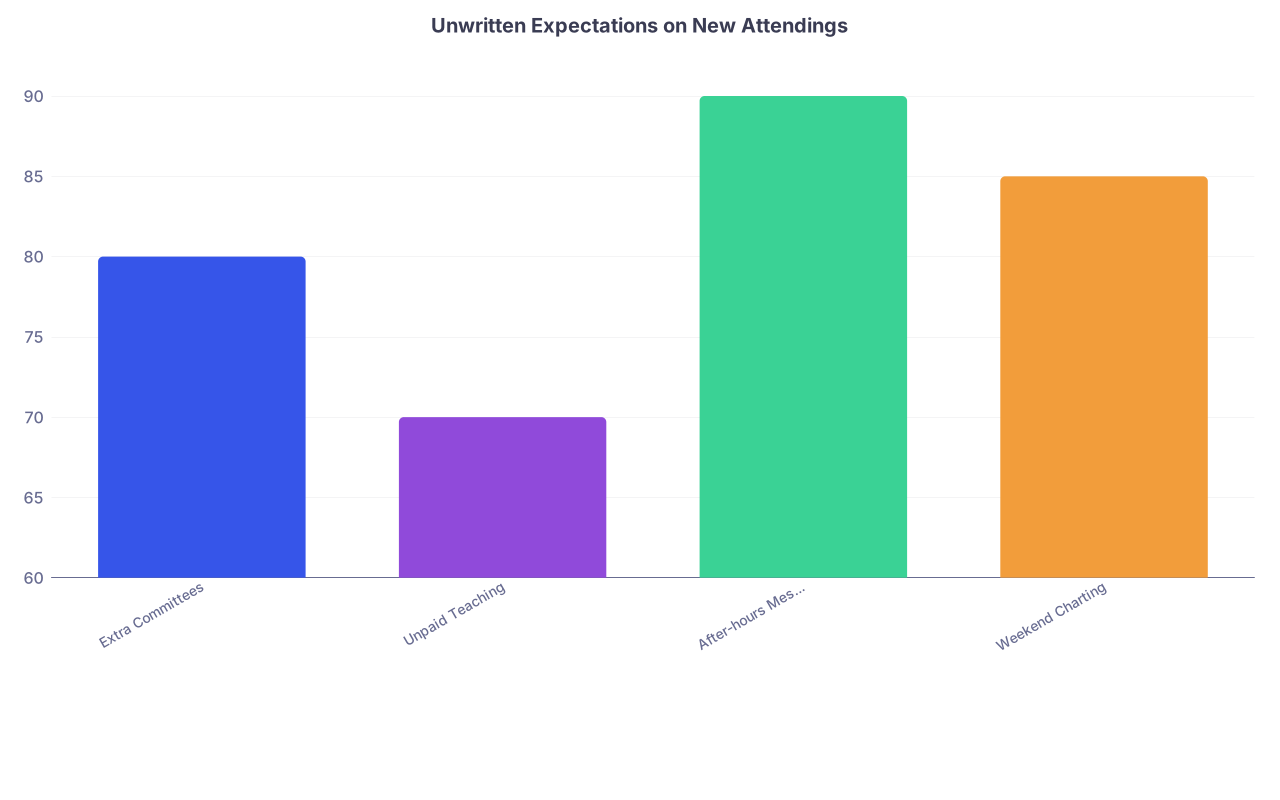
| Category | Value |
|---|---|
| Extra Committees | 80 |
| Unpaid Teaching | 70 |
| After-hours Messages | 90 |
| Weekend Charting | 85 |
Those numbers? Roughly the percentage of senior attendings I’ve heard complain about each of those… while having agreed to all of them in their first 5–7 years.
What they wish they’d done differently about their schedule:
They’d have capped certain things hard and early:
- Set a maximum number of nights or weekends per month and stuck to it, even if it meant slower promotion.
- Refused “voluntary” committee work that was really unpaid labor disguised as prestige.
- Negotiated admin/academic days that were protected in writing, not just “we’ll see.”
- Said no to “just this once” schedule favors that became the new normal.
Most of them waited until they were angry, bitter, and already on the edge before they started pushing back. By then, they were labeled “difficult.” What they’ll tell you now is this: it’s much easier to set boundaries in year one than to rebuild them in year ten.
The Money Trap They Wish They’d Seen Coming
Very few attendings will admit this out loud, but I’ve heard it too many times to ignore:
“I built my life around my attending income so fast that walking away from a toxic job became impossible.”
They thought the antidote to burnout was more money: extra shifts, moonlighting, consulting. Then suddenly the big house, private school, two car payments, and lifestyle creep turned into golden handcuffs.
They didn’t realize they were trading autonomy for granite countertops.
Here’s the uncomfortable math most of them never did until it was too late:
| Choice | Effect on Burnout Escape Options |
|---|---|
| Modest home | High flexibility |
| Maxed-out mortgage | Low flexibility |
| Renting early | Very high flexibility |
| Luxury car leases | Very low flexibility |
| No private school | More ability to cut hours |
The ones who can now cut back to 0.7 FTE, switch to locums, or completely change jobs? They’re not always the “richest” physicians. They’re the ones who didn’t ratchet up their lifestyle to match every raise.
What senior attendings wish they’d done differently:
- Paid off high-interest debt fast and then paused lifestyle inflation.
- Given their future burnt-out selves the option to walk away by avoiding unnecessary fixed expenses.
- Understood that every new permanent monthly payment is a small piece of future freedom sold.
- Realized that “I can’t afford to cut back” is often “I’m trapped by choices I made when I thought I’d never get tired.”
No one tells you during residency that the best burnout protection might be a smaller house and an older car. But ask the 58-year-old hospitalist who can’t retire even though they desperately want to. They’ll tell you.
The Relationships They Neglected Until It Was Awkward
Here’s something people rarely connect to burnout: social atrophy.
You’re surrounded by people all day, yet many attendings end up lonely. Not in the sense of being physically alone. In the sense of having no one who actually sees them outside the physician role.
I remember an oncologist, mid-50s, telling a resident: “I spent twenty years saying no to dinners, weekend trips, and birthdays. Then I finally had time and realized—there’s no one left to call.”
That’s not drama. That’s decades of small choices.
The regret pattern shows up like this:
- Prioritizing charting over date night “just this once” for ten straight years.
- Declining every non-medical social invitation because of “rounding tomorrow.”
- Stopping hobbies because they weren’t “productive.”
- Only socializing with colleagues in work contexts, never as actual friends.
Then burnout hits, and suddenly they’re trying to reconnect with people who learned long ago not to expect them.
What they wish they’d done differently:
- Treated a weekly dinner or family ritual as seriously as an OR block. Immovable unless the building is literally on fire.
- Kept one non-medical hobby alive, even if only in a tiny way.
- Cultivated at least one friend who doesn’t care about their CV and doesn’t ask about cases.
- Left some weekends sacred, no matter how behind charting was.
The harsh truth: charts get signed eventually. Kids’ childhoods and early marriages do not rewind. Senior attendings know this. Many can’t say it without their voice changing.
The Boundary Mistakes That Felt Noble At The Time
Here’s where altruism gets weaponized against you.
Most senior attendings were praised for “going above and beyond” their whole career. Answering patient portal messages at midnight. Rounding on days off. Fixing residents’ notes at 11 pm. Coming in “just to check” on a complicated case.
They thought they were being good doctors. Which they were. But they were also training everyone around them to expect superhuman availability.
The candid version I’ve heard from more than one gray-haired intensivist:
“I should never have let them learn that I will always pick up my phone.”
The problem is not caring. The problem is the absence of any boundary between caring and self-erasure.
Look at how this plays out daily:

| Step | Description |
|---|---|
| Step 1 | Starts Job |
| Step 2 | Wants to be helpful |
| Step 3 | Says yes to extra tasks |
| Step 4 | Gets praised |
| Step 5 | More requests come |
| Step 6 | Feels guilty saying no |
| Step 7 | Chronic overwork |
| Step 8 | Resentment and burnout |
What they wish they’d done differently about boundaries:
- Responded to after-hours non-urgent messages during business hours on purpose, from day one.
- Let a few low-stakes balls drop early to prove the world does not end.
- Said “I’m not available then, but I can do X” instead of rearranging their entire life to be endlessly flexible.
- Taught residents and colleagues: “I do not check email after 6 pm” and then lived it.
Most of them waited to set boundaries until they were already furious. When you finally say no from a place of exhaustion and anger, you look “burned out” and “not a team player.” If they had said no earlier and calmer, it would have been called “professionalism” or “clarity.”
Same word. Different timing.
The Emotional Armor That Turned Into Emotional Numbness
This part almost no one talks about honestly.
The emotional skill that gets rewarded in training is compartmentalization. Put it in a box, move on, see the next patient. You’re praised for being “unflappable,” especially in high-acuity specialties.
What older attendings figure out too late is that if you use that skill on everything—grief, fear, moral distress—it stops being a skill. It becomes your default setting. You can’t just turn it off when you leave the hospital.
That’s how you end up with the classic late-career lament:
“I don’t feel much of anything anymore. About work or home.”
You’ll hear seniors say things like:
- “Losing patients used to keep me up at night. Now I barely register it.”
- “My partner says I’m not there, even when I’m sitting next to them.”
- “I only feel alive in crisis now. Regular life feels flat.”
That’s burnout at the identity level.
What they wish they’d done differently:
- Talked about the cases that haunted them when they happened, instead of letting them stack up unprocessed.
- Used therapy or peer support early, not as a last resort when they were already broken.
- Allowed themselves to care and hurt visibly, at least with trusted colleagues, instead of performing constant stoicism.
- Not dismissed “moral injury” as a soft, academic term, but recognized it as the daily accumulation of doing less for patients than you know they need because of systems and constraints.
There is a big difference between healthy professional distance and emotional deadening. Senior attendings who crossed that line rarely saw the moment it happened. They wish they’d paid more attention to the early warning signs: sarcasm turning to cynicism, loss of joy when a case goes well, a persistent “why bother?” hum in the background of their workday.
The Career Flexibility They Never Allowed Themselves
Another confession you hear in faculty offices when the door is closed:
“I should have pivoted ten years earlier.”
Some of the most respected senior clinicians will quietly admit they outgrew their exact clinical role long before they changed it. Or never changed it at all. They kept doing the same job out of habit, fear, or loyalty.
They’ll say things like:
- “I stayed full-time on the wards when I knew I’d be happier with a teaching-focused role.”
- “I always wanted to work in palliative care / admin / med ed, but I thought it would be a step down.”
- “I waited until I hated everything before I tried something different.”
Look at how they now see the normal career arc:
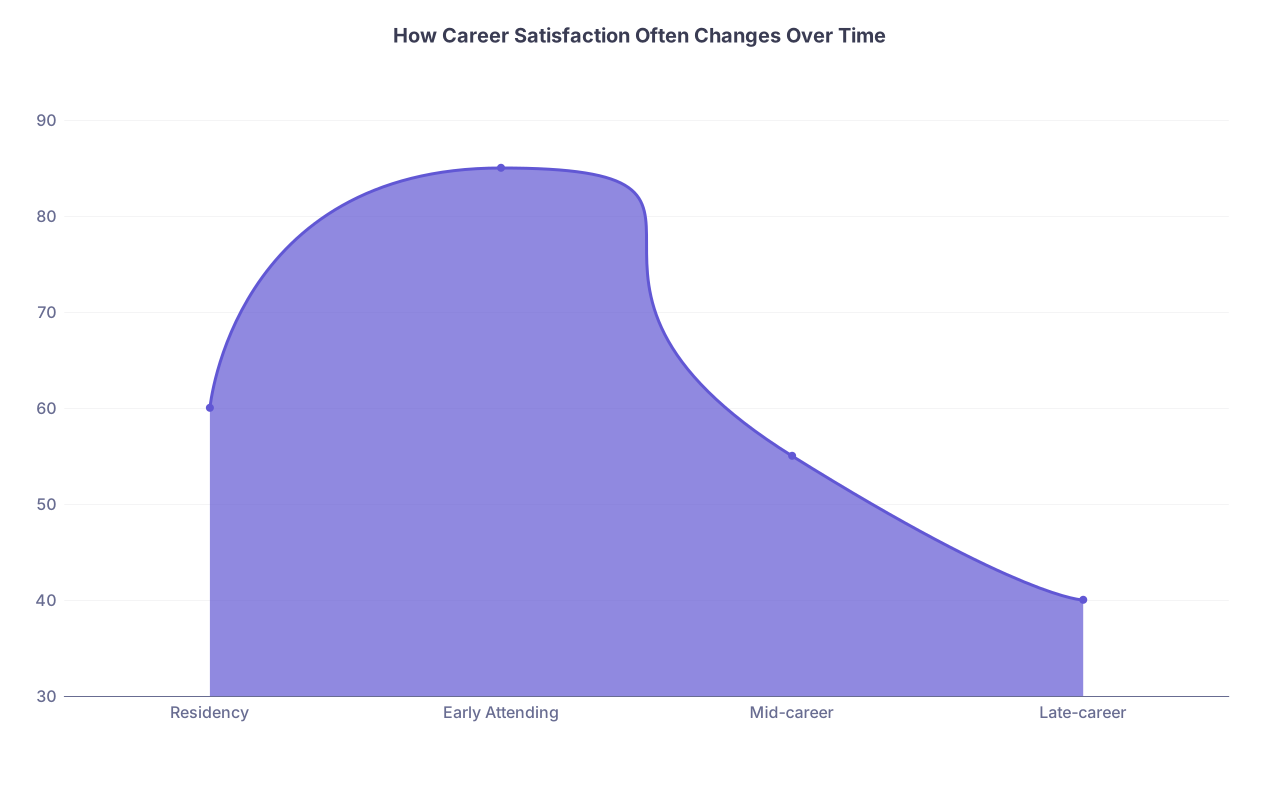
| Category | Value |
|---|---|
| Residency | 60 |
| Early Attending | 85 |
| Mid-career | 55 |
| Late-career | 40 |
(Those numbers aren’t from a paper. They’re from how people sound when they talk.)
What they wish they’d done differently:
- Treated their career as something to be restructured every 5–7 years, not set-and-forget.
- Given themselves permission to like some parts of medicine more than others—and then actively moved toward them.
- Asked explicitly for roles that fit their evolving strengths instead of hinting and hoping.
- Considered part-time or nontraditional roles before reaching the point where they fantasized about quitting medicine entirely.
The unspoken rule a lot of them lived by was: “You chose this specialty, now you endure it.” The wiser version would have been: “You chose this field; now keep choosing how you practice it.”
The Ethical Myth of “Patient First, Always”
Here’s the sacred cow.
Most of the older attendings grew up on the ethic of absolute self-sacrifice: patient comes first, always, no matter what. They believed that to their core. A lot still do.
But if you push them—really push them—here’s what many will admit they got wrong:
They confused short-term patient-first decisions with long-term patient-best outcomes.
You cannot practice excellent medicine for decades while treating your own body and mind as disposable. Eventually, your decreased presence, irritability, errors, and early exit from the field hurt far more patients than leaving on time would have hurt any one day.
I’ve heard it put this way, verbatim, by a senior surgeon:
“I thought staying late every night made me a better doctor. It made me a worse husband, and when that blew up, it made me a distracted, angry surgeon. My complication rate went up. No one talks about that part.”
They wish they’d reframed the ethics:
- That saying, “I’m too tired to safely take another elective case today” is not selfish. It’s ethical.
- That protecting time for sleep, family, and mental health is part of patient care, not separate from it.
- That teaching trainees to obliterate their own needs sets them up for the same crash.
Burnout is not just a wellness issue; it’s a patient safety issue. The older generation is starting to say this out loud. Quietly, but clearly.
What They’d Tell You If You Caught Them Off Guard
Let’s pull this together. If you cornered a burned-out-but-honest senior attending in an empty workroom and asked, “What do you wish you’d done differently?” the real answers would sound like this:
- “I wish I’d believed that my humanity was not a liability.” That needing rest, joy, and relationships doesn’t make you less of a physician.
- “I wish I’d protected future me.” With money choices, schedule limits, and boundaries that assumed I’d be older, more tired, and less impressed by academic titles.
- “I wish I’d course-corrected sooner.” In my job description, hours, and emotional life—instead of waiting until I hated everything and everyone.
No, you can’t fix the EMR. You can’t fix RVU culture by yourself. You can’t magic away call schedules.
But you can refuse to repeat the exact same mistakes the current seniors will tell you, if you really listen, that they deeply regret.
FAQ
1. How early in training should I start setting boundaries without looking lazy or uncommitted?
Earlier than you think. As a resident, you still follow duty hours and program rules, but you can start small: protect one evening a week, don’t answer non-urgent messages at 2 am, say no to optional projects that don’t align with your goals. People respect clear, consistent limits more than they respect constant overextension that ends in collapse.
2. Won’t saying no to extra work hurt my chances at fellowship or promotion?
Saying no blindly to everything, yes. Saying no strategically, no. The people who advance are not the ones who say yes to everything; they’re the ones who say yes to the right things and do them well. Senior faculty usually regret the hundreds of low-yield “yeses,” not the handful of “no’s” that protected their sanity.
3. How do I know if what I’m feeling is normal stress or the start of burnout?
Normal stress comes and goes with rotations, seasons, and workload. Burnout creeps. You start dreading work you used to like. You feel numb or cynical with patients. You’re constantly exhausted even after days off. You stop caring about things you used to value. If that’s you for more than a few weeks, don’t wait. Talk to someone, adjust something, and assume you are not magically immune to the patterns the senior attendings already lived through.