
What are you doing in the first 60 minutes after call that quietly ruins the next 24 hours?
Let me be blunt: most residents and attendings do not mess up during call. They mess up after call.
They stumble out of the hospital, make three or four “small” decisions that feel harmless, and then wonder why:
- They cannot sleep.
- Their next shift feels like wading through wet cement.
- Their mood is off for days.
- Their judgment at the bedside feels a half-step slower than it should.
This is not about “self-care” fluff. This is about avoiding specific, predictable post-call mistakes that sabotage recovery, impair cognition, and, yes, cross ethical lines when you show up impaired and call it “just tired.”
You want better work–life balance? Start by not doing these things after call.
The Biggest Post-Call Mistake: Treating Yourself Like You Are Not Impaired
You walk out post-call and tell yourself, “I’m just tired, I’ll push through.”
That’s wrong. Physiologically wrong.
Your brain post-call looks a lot like mild alcohol intoxication. You would not trust yourself after three drinks to drive, sign a mortgage, or have a major life conversation. Yet you will somehow trust yourself to:
- Drive 40 minutes on the freeway.
- Have a fight with your partner.
- Sign an apartment lease.
- Shop for a car.
- Agree to take an extra shift.
That is the core category error: treating a sleep-deprived brain as if it is a normal brain that just needs “willpower.”
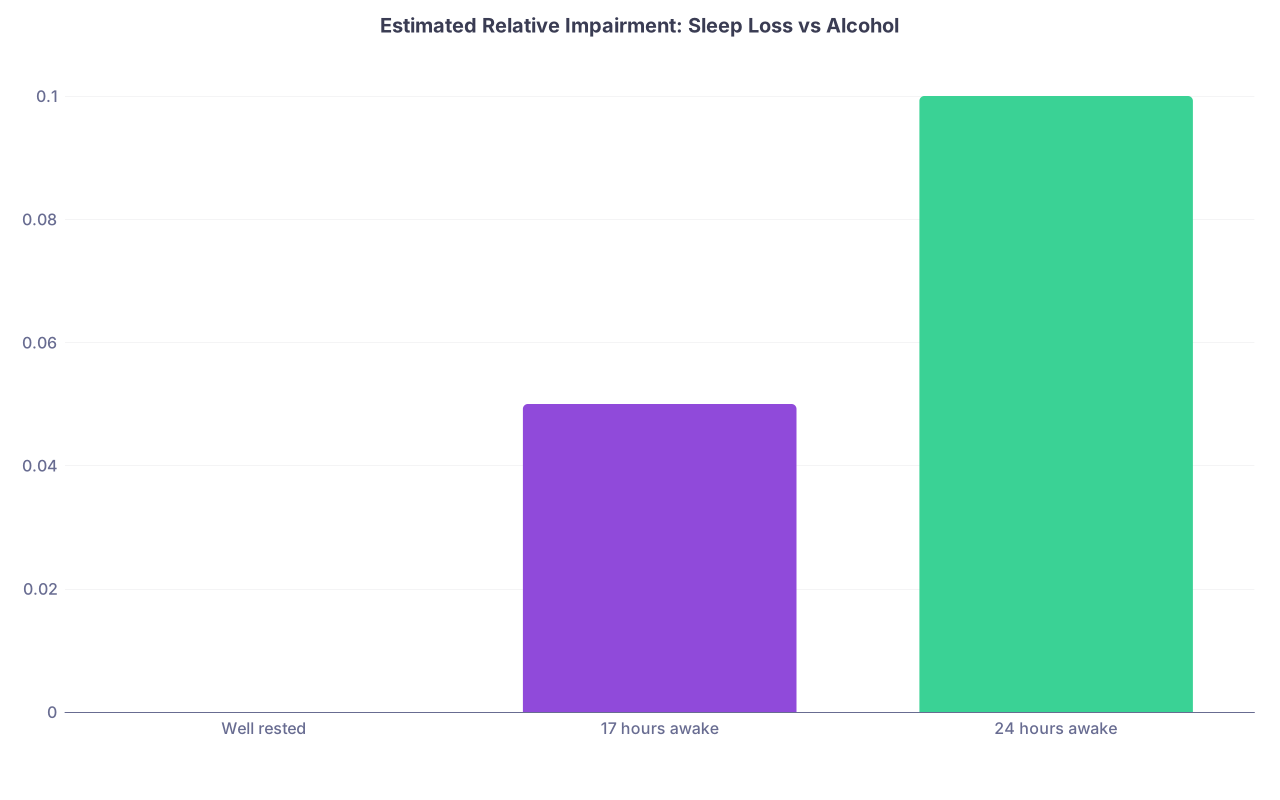
| Category | Value |
|---|---|
| Well rested | 0 |
| 17 hours awake | 0.05 |
| 24 hours awake | 0.1 |
Rough guide (research-backed, not guesswork):
- ~17 hours awake ≈ blood alcohol 0.05
- ~24 hours awake ≈ blood alcohol 0.10 (above legal driving limit in many countries)
So if you are post 24+ hours of call and still acting like your decisions are sharp, you are fooling yourself. And potentially endangering yourself and others.
Ethically, you would never accept that in a colleague. Do not excuse it in yourself.
Mistake #1: Driving Home Like It Is Just Another Commute
This is the most dangerous, most common, and most minimized post-call mistake.
You drag yourself to the car, blast the AC, turn on a podcast, and “push through.” I have seen:
- Residents clipping other cars in the parking garage barrier.
- An intern fall asleep at a red light 2 blocks from the hospital.
- A fellow wake up stopped sideways against a guardrail with no idea how they got there.
You know how many actually thought they were “too impaired to drive” when they left? Almost none.
Red flags you ignore:
- Microsleeps during checkout.
- Blinking hard to stay awake in the elevator.
- Needing caffeine just to walk to the parking lot.
- That weird disconnected, floaty feeling.
Those are not “I could use a nap” signals. Those are “You have no business being behind a wheel” signals.
Better options you keep dismissing because of pride or inconvenience:
- Call a ride (Uber/Lyft/taxi).
- Ask a co-resident/friend to drive you and pick up your car later.
- Nap 30–60 minutes in a call room before attempting to drive.
- Use hospital shuttle or public transit even if it is slower.
| Option | When To Use |
|---|---|
| 30–60 min nap | Nodding off at computer |
| Ride-share/taxi | >24 hours awake + long commute |
| Carpool with peer | Same direction, both exhausted |
| Public transport | City systems, no transfers |
| Stay nearby | Rare, if true danger to drive |
Do not romanticize “toughing it out.” Falling asleep at 60 mph is not grit. It is negligence.
Mistake #2: “Just a Quick Coffee” on the Way Home
You finally sign out. You are exhausted. The cafeteria smells like burnt beans and bad decisions. So you “reward” yourself with a triple shot latte at 9 a.m. and then go home… and stare at the ceiling until 2 p.m.
Then you crash. Hard. Right before you need to get up again.
You know this pattern. You have lived it.
Caffeine timing post-call is one of the most common self-sabotaging moves:
- You drink coffee late into the call night “to survive.”
- You top it off again on the way out.
- Your sleep drive is there, but adenosine blockade + stimulant effect wreck your ability to actually fall and stay asleep.
Post-call, your job is to get quality recovery sleep as early as possible. High-dose caffeine after you sign out directly competes with that.
Better rule:
- Caffeine cut-off: ~6 hours before your intended main sleep.
- On 24-hour call, last meaningful caffeine should be in the first half of the shift, not in the last 2–4 hours.
If you must have something on the way out:
- Half-dose (small coffee, not a venti + extra shots).
- Or decaf / herbal tea.
- Or cold water + food.
This is not asceticism. This is protecting the only tool that actually restores you: sleep.
Mistake #3: Letting Bright Light and Screens Punch Your Circadian Rhythm
You stumble home post-call, walk into a brightly lit kitchen, open the fridge, and blast yourself with overhead LEDs. Then you sit with your laptop or phone 12 inches from your face scrolling, doom-reading, messaging, or charting “just a bit more.”
You basically send your brain the message: “Great, sun’s up, day’s starting, stay awake.”
Result:
- You delay melatonin rise.
- You cut into your sleep window.
- You fragment whatever sleep you eventually get.

If you are serious about not destroying yourself with night work, treat light as a drug:
Post-call light mistakes:
- Bright bathroom and kitchen lights while you “just get a snack.”
- Big windows with no blackout curtains.
- TV + laptop + phone all glowing for two hours.
Better:
- Use dim, warm lighting at home (lamps, not ceiling floods).
- Blue-light filters on phone/computer if you truly must use them briefly.
- Go straight home. Not to brunch on a sunny patio, not to Target, not to Costco.
Your call shift already wrecked your circadian rhythm. Do not help it.
Mistake #4: Turning Post-Call into Social Hour or Second Job Time
You finally have “free” time. So you:
- Agree to brunch with friends.
- Go to a family event where everyone wants to talk.
- Start doing research work, board questions, or committee emails.
- Run six errands that have piled up.
It feels efficient. You tell yourself, “I’m up anyway, might as well be productive.”
What you are actually doing is spending the only biological currency you have left—your remaining alertness—on things that can almost always wait.
I have watched plenty of residents:
- Snap at their partners at post-call events.
- Agree to commitments they regret because their judgment is dulled.
- Submit sloppy work that later has to be redone.
The dangerous belief here: “If I am awake, I am available.”
You are not. You are physiologically compromised, emotionally raw, and intellectually subpar. That is not when you schedule:
- Serious relationship discussions.
- Financial decisions.
- Extra work.
- High-stakes academic tasks.
The ethical angle: if you would not want your physician making a big call after 24 hours awake, do not trust your own big life and career decisions in that state either.
Mistake #5: Eating Like You Are Rewarding Trauma, Not Refueling
You walk into your apartment. You are wrecked. You feel like you “earned” something. So you order 2,000 calories of grease and sugar and inhale it on the couch. Or raid the pantry for random snacks, then feel awful and blame “night float” for your weight and GI misery.
This is not about weight. It is about how you feel 3–6 hours later:
- Heavier, sluggish, bloated.
- Heartburn when you finally lie down.
- Blood sugar swings that either keep you wired or crash you hard.
You need food. You do not need a gastrointestinal assault.
Useful question: “What will this feel like in 2 hours when I am trying to sleep?”
Better pattern:
- Eat something light, balanced, and simple when you get home: protein + complex carb + some fat.
- Avoid large, greasy, spicy, or super sugary meals right before lying down.
- Hydrate—just not so much that you wake to pee every 90 minutes.
No, you do not have to meal-prep like an influencer. But having one dependable, low-effort post-call food option (frozen pre-portioned meal, yogurt + granola + fruit, eggs + toast) prevents the “I’m too tired to think, bring me pizza and regret” choice.
Mistake #6: “I’ll Just Power Through” and Not Sleep at All
Classic surgical resident move. They get off at 10 or 11 a.m., convince themselves that a nap will “ruin” their night sleep, and try to stay up until 9 or 10 p.m. Result: they are useless zombies for 10 hours, then crash randomly, then wake at 3 a.m. wired.
Your body after a 24-hour call does not need discipline. It needs sleep debt repayment.
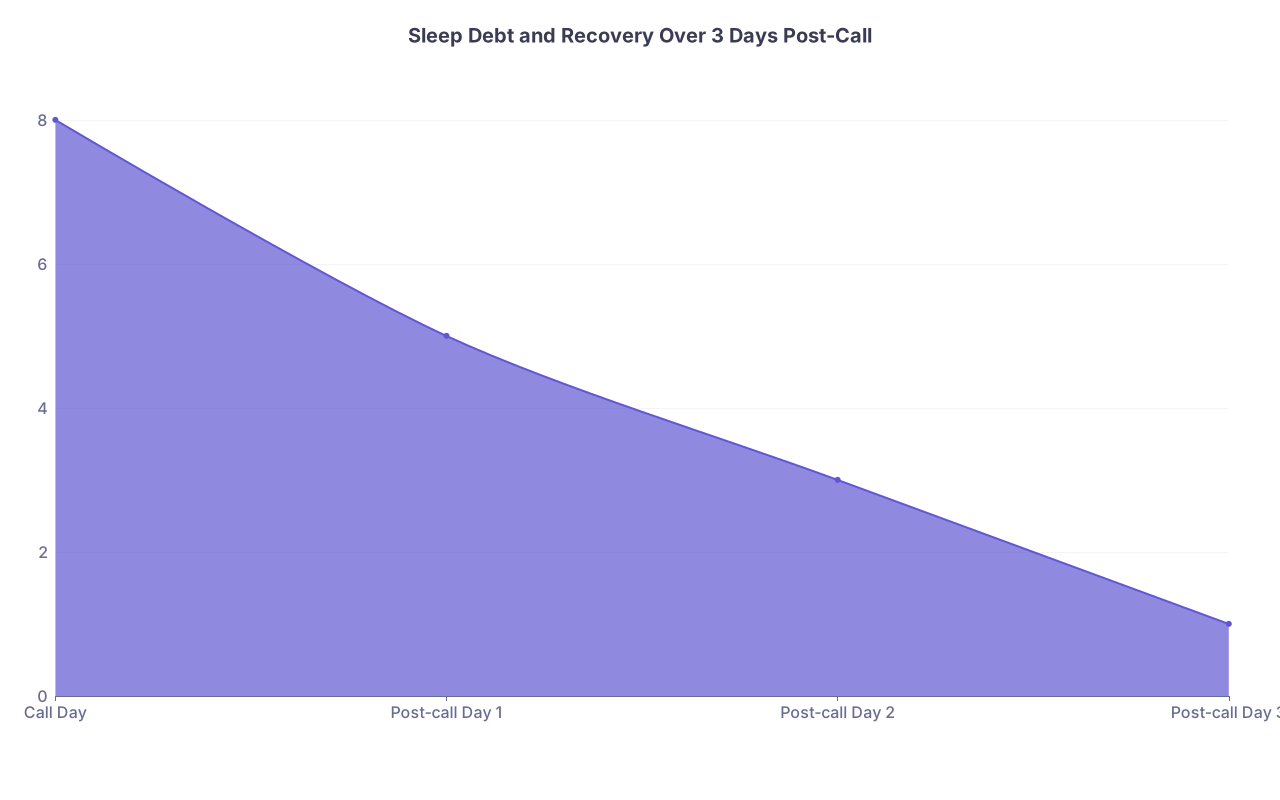
| Category | Value |
|---|---|
| Call Day | 8 |
| Post-call Day 1 | 5 |
| Post-call Day 2 | 3 |
| Post-call Day 3 | 1 |
Typical pattern of people who actually feel human again:
- Post-call: 3–6 hour core sleep within a few hours of getting home.
- Later that evening: 1–2 hour capped nap if needed, or early bedtime.
- Next 1–2 days: slightly longer main sleep periods.
Common self-sabotaging pattern:
- Stay up all day, fueled by coffee and stubbornness.
- Crash at odd time.
- Wake up groggy and misaligned.
Ethically, this bleeds into the next shift. If you show up with a massive sleep debt because you refused to nap “on principle,” your patients do not care about your principles. They care whether you are awake enough not to miss their STEMI.
Stop glorifying sleep deprivation as commitment. It is not commitment; it is impaired practice.
Mistake #7: Using Alcohol to “Knock Yourself Out”
You know this is bad, but post-call it becomes weirdly tempting. “Just one drink to take the edge off so I can sleep.”
Warning signs:
- That “one drink” keeps slipping into two or three over time.
- Sleep feels lighter, more fragmented.
- You wake up not refreshed but with a headache and brain fog.
- Decreases sleep quality (especially REM).
- Fragments sleep architecture.
- Interacts badly with any PRN sedatives, pain medications, or anxiolytics you may also be given or self-prescribing.
You wind up sandpapering your nervous system, night after night, while calling it “relaxing.”
If you are tempted to drink just to sleep post-call, that is not a minor habit. That is an early warning for maladaptive coping. Take it seriously. If you are at the point where you need it, that is a loud signal to talk to someone (occupational health, PCP, therapist, trusted attending).
Mistake #8: Pretending This Is Just About You, Not About Ethics
Burnout conversations usually stop at “wellness.” That is too soft.
Post-call decisions have ethical weight because:
- Impaired cognitive performance can cause real harm.
- Repeated neglect of your own recovery increases the risk of serious error.
- You are tacitly teaching juniors that this is “normal” and acceptable.

Examples I have personally seen:
- A senior resident bragging about “never napping” post-call while an intern quietly internalized that as the standard.
- An attending dismissing a fellow’s concerns about post-call driving with “You’ll get used to it,” which is code for “I do not want to think about this ethically.”
- Teams tolerating visibly impaired colleagues because “we have all been there.”
That culture is not neutral. It is dangerous.
Ethical reframing:
- Protecting your recovery is not indulgent. It is part of nonmaleficence: not harming patients by showing up impaired.
- Saying no to extra tasks post-call is not laziness. It is boundary-setting to prevent performance degradation.
- Modeling safer post-call behavior for students and interns is part of your responsibility as a professional.
If you are a senior or attending, people are watching. You either normalize recovery or normalize quiet impairment.
A Simple Post-Call Sequence That Does Not Sabotage You
You do not need a 19-step protocol. You need a few non-negotiables. Here is a sane default:
Before leaving the hospital
- Evaluate: “Would I trust myself to drive my kid right now?”
- If the answer is anything but a clear yes: arrange a ride or nap before driving.
- Stop caffeine.
Commute
- Minimal stimulation: no intense podcasts, no long phone calls.
- Window cracked, cool environment if driving.
- If you feel your head nodding: pull over. Immediately.
Home arrival (first 30–45 minutes)
- Dim lights.
- Light snack or small meal, nothing heavy.
- Quick hygiene (shower/brush teeth) but not a full spa routine that wakes you up again.
- Phone on silent/do not disturb.
Core sleep block
- Aim for 3–6 hours, depending on your schedule and how long you were on.
- Blackout curtains, eye mask, white noise if you need it.
- No alcohol, minimal fluids right before bed.
After waking
- Moderate caffeine okay after this sleep block.
- Gentle movement, short walk, light stretching.
- Limit heavy cognitive work or major decisions that day.
- Optional short nap later, but cap it and avoid late evening.

| Step | Description |
|---|---|
| Step 1 | Sign out |
| Step 2 | Short nap or ride share |
| Step 3 | Drive home carefully |
| Step 4 | Dim lights and light meal |
| Step 5 | Sleep 3-6 hours |
| Step 6 | Hydrate and light activity |
| Step 7 | Limited tasks and no big decisions |
| Step 8 | Safe to drive? |
You will not follow this perfectly every time. Life is messy. But the standard you hold in your head matters.
FAQs
1. Is it really that dangerous to drive post-call if I “feel okay”?
Yes. Subjective “I feel okay” is a terrible predictor of objective impairment when sleep-deprived. Microsleeps can occur without warning. If you are fighting to stay awake on rounds, you are not safe for a long highway drive. Compare it to alcohol: you would not trust “I feel okay” after several drinks either.
2. How much should I actually sleep after a 24-hour call?
For most people: aim for a 3–6 hour core sleep within a few hours of getting home. Less than 3 and you will stay significantly impaired. More than 6 or 7 can make it harder to sleep that night. Then try to go to bed earlier than usual that evening and catch up over the next 1–2 days.
3. What if I have family or childcare responsibilities post-call?
This is where planning and boundaries matter. Whenever possible:
- Arrange shared childcare on known call days.
- Be explicit with partners/family: post-call is not free time, it is recovery time.
- If you must be primary caregiver, protect at least a 2–3 hour protected sleep window. If that is chronically impossible, this is not a time-management issue; it is a system and support problem that needs addressing.
4. I feel guilty turning down tasks or social plans after call. Should I just push through?
No. Pushing through is exactly how you accumulate sleep debt and show up impaired to subsequent shifts. Frame it honestly: “I have been up all night and need to sleep so I can be safe for patients and for myself.” It is not selfish; it is professional. People who do not respect that boundary are not the people you should optimize your health around.
5. How do I know if my post-call coping (caffeine, alcohol, meds) is becoming a real problem?
Warning signs:
- You “need” alcohol or sedatives consistently to fall asleep after call.
- You rely on high-dose caffeine just to function, not just to stay alert briefly.
- Your sleep is chronically fragmented, and you feel wired-tired all the time.
- Colleagues comment that you look exhausted or “off” even on non-call days.
If that sounds familiar, this is beyond normal residency fatigue. Talk to occupational health, your own physician, or a mental health professional. Waiting until you are in crisis is another avoidable mistake.
Key points to walk away with:
- Stop pretending post-call you are just “a bit tired.” You are measurably impaired; act like it.
- Do not sabotage recovery with bad choices: unsafe driving, late caffeine, bright light, big plans, heavy food, or alcohol.
- Treat recovery as part of your ethical duty, not a luxury. Your patients, your colleagues, and your future self all depend on it.