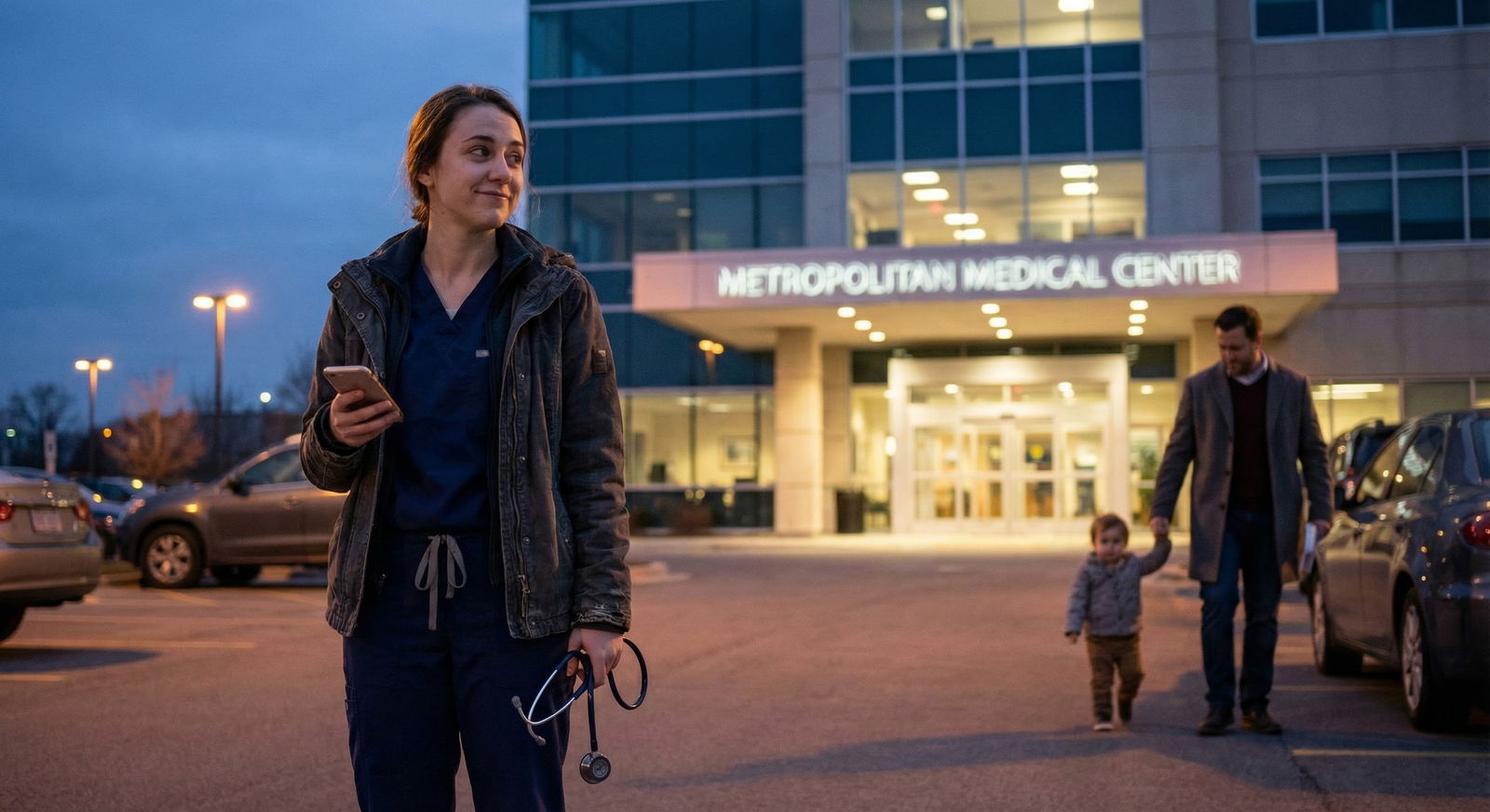
54% of residents report making at least one fatigue-related error in the past year. Most of them were on call when it happened.
That is not a “soft skills” problem. It is a quantifiable systems problem. Long call, fragmented sleep, and high cognitive load produce measurable increases in error rates and measurable drops in well‑being. The question is not whether it happens. The question is how bad the numbers look, and where the ethical line really sits once you see the data.
Let us go there.
What the Data Actually Say About Sleep and Performance
You are not “the exception” who performs fine on 3 hours of sleep. The psychomotor vigilance test (PVT) has been run enough times on residents that we can stop pretending.
One of the classic controlled sleep restriction studies found that after 17–19 hours awake, performance on reaction‑time tasks is equivalent to a blood alcohol concentration of 0.05%. After 24 hours awake, it is around 0.10%—legally drunk in every jurisdiction that matters. Those are not vague self-reports. Those are timed reaction tasks with quantifiable lapses.
A few key data points from physician-focused research:
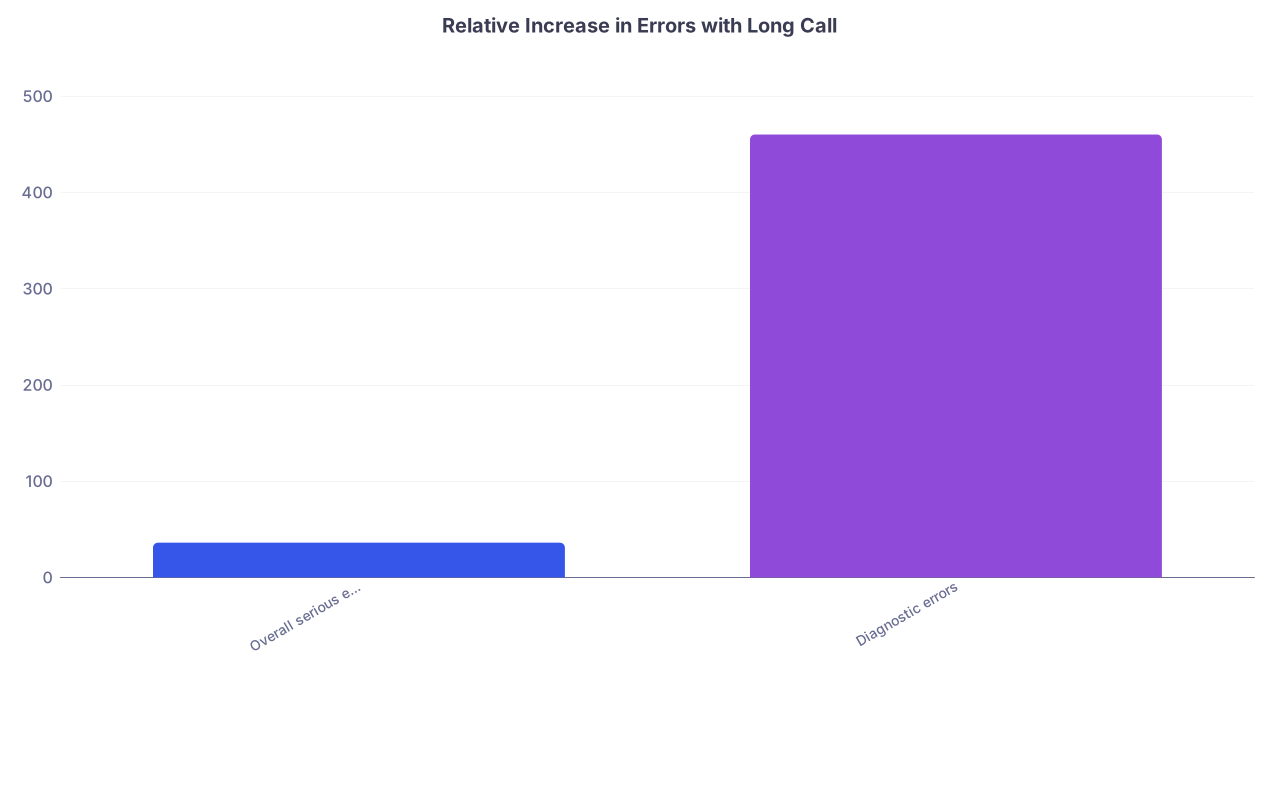
- Interns working traditional 24–30 hour shifts made 36% more serious medical errors than those on schedules that eliminated extended shifts (Landrigan et al., NEJM 2004).
- The same study documented 5.6 times as many serious diagnostic errors during traditional long-call rotations.
- Residents with fewer than 5 hours of sleep in a 24‑hour period had a 3–4x increase in attentional failures on PVT-like tasks.
In other words: the “I’m fine, I can push through” narrative is simply incompatible with the numbers.
| Category | Value |
|---|---|
| Overall serious errors | 36 |
| Diagnostic errors | 460 |
That 460% bar is the 5.6‑fold increase in diagnostic errors. If you want a single visual for “why long call is ethically complicated,” that is it.
How Long Call Shifts Distort Sleep (And Not Just Quantity)
Many residents fixate on total hours slept. “I got 4 hours on call, that is not terrible.” The data say the fragmentation matters almost as much as the total.
Polysomnography and actigraphy studies on residents during call vs non‑call nights show three consistent patterns:
Reduced total sleep time
- Non‑call: 6.5–7.5 hours
- Call: 1.8–4.5 hours (often in multiple fragments)
Loss of deep and REM sleep
- Slow-wave and REM percentages drop sharply when sleep is broken into 30–90 minute chunks.
- Cognitive consolidation, emotional regulation, and memory all depend disproportionately on those stages.
Circadian misalignment
- Many long-call systems run on a 28‑hour cycle: you start at 7 a.m., finish at 11 a.m. next day, recover poorly, then flip again.
- The circadian system does not realign that fast. So you accumulate “social jet lag” every 3–4 days.
There is a tight quantitative link between this pattern and lapses:
- Each additional hour awake after 16 hours increases the risk of a serious error by ~10–15% in several resident cohorts.
- Fragmented sleep (2+ awakenings per hour) produces similar cognitive slowing to an extra 1–2 hours of wakefulness at the same clock time.
So when an intern tells you, “I got 3 hours total,” but it was in 5 chunks of 30–40 minutes between pages, the effective recovery is closer to 1–1.5 hours of continuous sleep. The EEG data back that up. They never get stable slow-wave cycles.
From a systems perspective, you can almost model it as this: every awakening within the first 60 minutes effectively resets the “sleep effectiveness” clock back by 15–20 minutes. The more interruptions, the steeper the drop.
Error Rates: What Actually Spikes on Long Call
When you disaggregate “errors” into categories, the picture gets more uncomfortable. Fatigue hits some domains harder than others.
Common categories measured:
- Ordering errors
- Wrong drug, wrong dose, or wrong frequency
- Omissions
- Missed lab ordering, missed imaging, missing a dose
- Diagnostic errors
- Failure to consider a key diagnosis, incorrect prioritization
- Procedural errors
- Line placement complications, incorrect site prep, sterility breaches
Meta-analyses and large single-center studies consistently show:
- Ordering and omission errors rise 25–40% on extended shifts.
- Diagnostic errors rise 50–500%, depending on how strictly you define “serious.”
- Procedural complication rates increase by 15–30% when residents are >20 hours into a shift.
| Shift Length | Overall Serious Errors | Diagnostic Errors | Ordering/Omission Errors |
|---|---|---|---|
| ≤16 hours | 1.0x | 1.0x | 1.0x |
| 17–24 hours | 1.3–1.5x | 1.5–3.0x | 1.2–1.4x |
| >24 hours | 1.5–1.8x | 3.0–5.6x | 1.3–1.5x |
Notice something important: diagnostic thinking deteriorates fastest. The stuff you pride yourself on—pattern recognition, Bayesian reasoning, integrating the story at 3 a.m.—is exactly what fatigue crushes hardest.
So the “I’m careful, I double-check orders” defense misses the point. You may indeed compensate a bit on rote tasks. The complex reasoning that decides whether that borderline patient needs to be upgraded to the ICU is what erodes. Quietly.
And patients rarely know. They just had “a bad outcome.”
Well-Being: The Slow-Motion Damage
Everyone in training expects to be tired. That is not news. What gets underestimated is how strongly call structure predicts long-term burnout, depression, and even suicidality.
A few anchors:
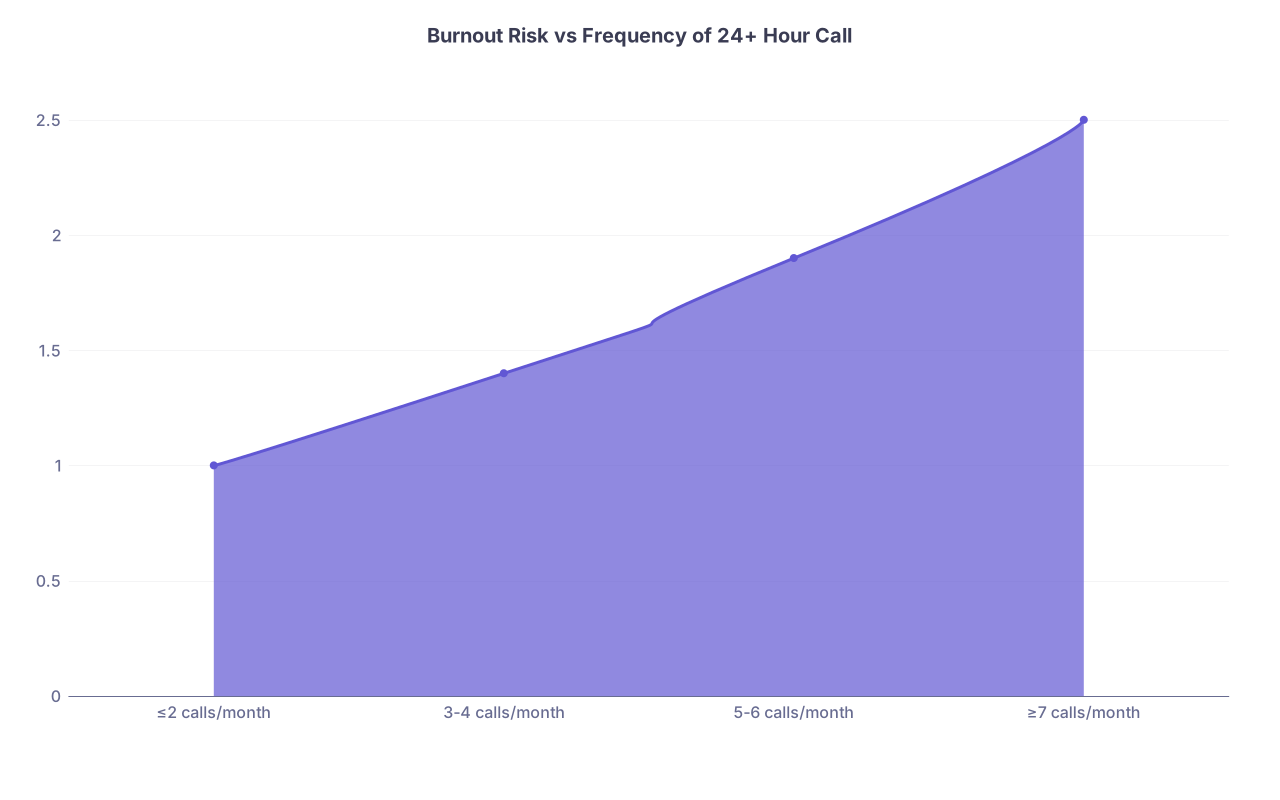
- Residents working >80 hours per week and frequent 24+ hour calls have 2–3x higher odds of burnout compared to those with better-protected schedules.
- Rates of major depressive symptoms in interns climb from 3–4% pre‑intern year to 25–30% by midyear, with sleep disruption and long call among the strongest predictors.
- Every 1‑point increase in a validated sleep disturbance scale has been linked to a 7–10% increase in odds of reporting suicidal ideation among trainees.
| Category | Value |
|---|---|
| ≤2 calls/month | 1 |
| 3-4 calls/month | 1.4 |
| 5-6 calls/month | 1.9 |
| ≥7 calls/month | 2.5 |
You see the pattern. Not linear. Once you cross around 5–6 24‑hour calls per month, burnout odds jump sharply. I have heard residents at that exposure level say things like, “I sleep on my days off just to feel normal enough to go back.” That is not resilience training. That is physiological debt collection.
Well‑being measures track:
- Emotional exhaustion
- Directly correlated with cumulative sleep debt over preceding 4–6 weeks.
- Depersonalization
- Higher when residents report >2 nights per week of call or home-call interruptions.
- Personal accomplishment
- Lowest when residents feel they are “just surviving nights” rather than learning.
Ethically, it becomes hard to argue that this is just “part of becoming a doctor” when the data line up with higher dropout, worse mental health, and more errors. You are not building grit; you are selecting for survivors of a biased stress test.
Ethics: Patient Safety vs “Training Value”
Every time this topic comes up, someone says, “But you need to see continuity of care. Nights are when you really learn.”
That line has been repeated so often it sounds like wisdom. But it is rarely backed up with data.
What the studies actually show:
- When work hours are reduced and long calls are limited, exam scores and board pass rates do not drop in well‑designed systems.
- Clinical exposure can be maintained with smarter scheduling: more day shifts, targeted night floats, simulation, and structured handoffs.
- The main measurable “loss” after duty hour restrictions is fewer uninterrupted long-term patient follow‑ups. That is real. But you must weigh it against error and burnout data.
There is an ethical framework here that is not complicated:
- Nonmaleficence (do no harm)
- You now know that beyond ~16–20 hours awake, your cognitive performance is objectively impaired, error rates climb, and patients face more risk.
- Beneficence
- Yes, experience matters. Seeing decompensations at 3 a.m. matters. But not at the cost of systematically higher harm.
- Justice
- Is it just that patients admitted at 5 a.m. to a tired team receive measurably worse diagnostic acumen than those at 2 p.m.?
- Respect for persons (including you)
- Treating trainees as endlessly stretchable resources is hard to reconcile with any respect-based ethic.
Once you see the numbers, defending conventional long-call structures mostly boils down to inertia, finances, and culture. Not evidence.
What You Can Control as an Individual
You are not going to redesign your residency’s call schedule as a PGY‑1. You do control micro‑decisions that measurably move risk.
Before Call
Treat pre‑call like pre‑op. You would not take a patient to the OR malnourished and hypotensive. You should not start a 28‑hour shift already 20 hours in sleep debt.
Realistically:
- Aim for 7–9 hours of sleep the night before call. The correlation between pre‑call sleep and next‑day cognitive performance is strong and linear.
- Avoid starting call after an overnight flight, conference, or moonlighting. Data on “sleep banking” show some benefit, but it does not fully protect against total deprivation. Do not double dip.
- Caffeine strategy: 100–200 mg early, then again in the mid‑shift. Massive boluses at 2 a.m. backfire and hurt post-call sleep, extending your recovery curve.
During Call
You cannot always nap. On some services that idea is frankly laughable. But there are levers.
- Micro‑breaks
- Even 5–10 minute breaks every 2–3 hours reduce subjective fatigue and minor error rates. ICU human-factors data show about a 10–15% reduction in lapses with structured micro‑breaks.
- Deliberate double‑checks on high‑risk tasks
- For insulin drips, anticoagulation, high‑risk chemo, or pediatric dosing, adopt a standard: on call, always cross-check with a second person or formal calculator, every time. Fatigue multiplies dose errors.
- Use checklists when your brain is mush
- Sepsis bundles, stroke orders, central line kits—they exist because fatigued brains skip steps. On call, treat them as mandatory, not optional.

| Step | Description |
|---|---|
| Step 1 | High stakes decision |
| Step 2 | Usual process |
| Step 3 | Use checklist |
| Step 4 | Delay for brief rest or senior review |
| Step 5 | Call senior or attending |
| Step 6 | Proceed with support |
| Step 7 | >20 hours awake? |
| Step 8 | Can delay? |
The point is not weakness. It is risk management. You accept you are impaired and you build scaffolding around that.
After Call
The biggest mistake I see: residents “power through” the post‑call afternoon, then crash, then wreck their sleep for the next night. The data show that well-being correlates better with recovery strategy than with any single bad night.
Evidence-based recovery:
- Try for a single 90–150 minute nap after call, not a 5–6 hour daytime sleep that pushes your bedtime to 3 a.m.
- Light exposure: bright light when you wake from the post‑call nap improves circadian realignment; dim light for 2–3 hours before planned bedtime.
- Alcohol: terrible idea post‑call. It fragments the already fragile recovery sleep and diminishes REM further.
I have seen residents consistently applying those simple levers report less cumulative fatigue 2–3 rotations later, even with the same call schedule. The physiology is not optional, but you can work with it.
What Needs to Change Systemically
You might not control this now, but you will later. Program directors and chiefs who ignore the data are choosing avoidable risk.
Patterns across institutions that have meaningfully reduced risk:
Cap overnight continuous duty at 16–20 hours for most services
- Surgical coverage is trickier, but even in surgery, more places are moving to night float or staggered shifts. The units that did this saw drops in errors without collapsing education.
True night float instead of Q3–4 28‑hour calls
- Concentrate circadian disruption into defined blocks with protected recovery, rather than chronic yo‑yoing. Studies comparing traditional call vs night float show:
- Similar or better exam performance
- Lower burnout
- Modest reduction in errors
- Concentrate circadian disruption into defined blocks with protected recovery, rather than chronic yo‑yoing. Studies comparing traditional call vs night float show:
Mandatory post‑call relief
- Not “leave by noon if okay with your attending.” Real, enforced cutoffs with backup coverage. The data show that beyond ~24–26 hours awake, marginal learning returns are near zero while error risk keeps climbing.
Robust handoff systems
- You cannot safely shorten call without strengthening handoffs. Use structured templates (I-PASS‑style), explicit anticipatory guidance, and protected handoff time. Programs that implemented this saw ~23% reductions in medical errors independent of duty hours.
Data monitoring
- Track error rates, near misses, and resident well-being by rotation and call type. If a particular schedule is associated with more events, change it. Treat it like any other quality improvement problem.
The ethical bar is not “did we meet ACGME hours.” The bar should be “given the data, is this the least risky way to staff nights while still training competent physicians?”
On many services, the answer is still no.
The Personal Ethics Layer
This is the part most people avoid. Once you understand these numbers, continuing to practice on extreme fatigue without mitigation is not ethically neutral. You know that your error risk is higher. You know patient outcomes may suffer. You know your own mental health is in play.
So there is a personal line you have to draw:
- At what point are you obligated to call your senior or attending because you are too impaired to safely make a high‑stakes decision alone?
- How do you respond when someone shrugs and says, “We all did it, you will be fine,” even though the error data and suicide statistics make that clearly false?
- Where do you place your own well‑being in the hierarchy of obligations—especially when you know that burnt-out, sleep-deprived physicians burn out faster, leave the field more often, and provide worse care?
I am not arguing that you refuse all call or demand a 9‑to‑5 residency. That is fantasy. I am saying you stop pretending that pushing through severe sleep deprivation is some noble sacrifice with no downstream cost.
The numbers show the cost. To patients. To you. To the profession.
Key Takeaways
- Extended long-call shifts (>20–24 hours awake) produce quantifiable impairments equivalent to legal intoxication, with 30–80% higher serious error rates and up to 5‑fold higher diagnostic errors.
- Frequent long call is strongly linked to burnout, depression, and suicidal ideation among trainees; well-designed hour restrictions and smarter scheduling reduce these without harming educational outcomes.
- You have dual obligations: to protect patients by acknowledging and mitigating fatigue-impaired performance, and to protect your own long-term well-being. The data are clear enough that ignoring them is no longer a neutral choice.