
The culture of medicine has quietly normalized conditions that would be a red flag for any other high‑risk industry. The data on physician suicide makes that painfully clear.
This is not a vague “wellness” issue. It is a quantifiable, measurable patient safety and workforce survival problem. You can put numbers to it. And when you do, the picture is ugly.
Below is what the data actually show about physician suicide, with a focus on what matters for medical students and residents: risk, mechanisms, warning signs, and concrete protective factors. Not vague wellness slogans. Ratios, rates, and realities.
1. How Big Is the Problem? The Core Numbers
Start with the baseline: suicide is a leading cause of death in young adults in the general population. That means trainees are already in a high‑risk age band before you add medicine.
Now layer the physician effect on top of that.
Across multiple large datasets:
- Physicians have about a 1.4–2.3× higher suicide completion rate than the general population, even after controlling for age and sex.
- Female physicians are hit disproportionately:
- General population: male suicide rate ≈ 3–4× female rate.
- Among physicians: this gender gap shrinks, and in some studies female physicians have 1.5–2× the suicide risk of women with similar education.
A synthesized set of ballpark numbers (U.S., adults):
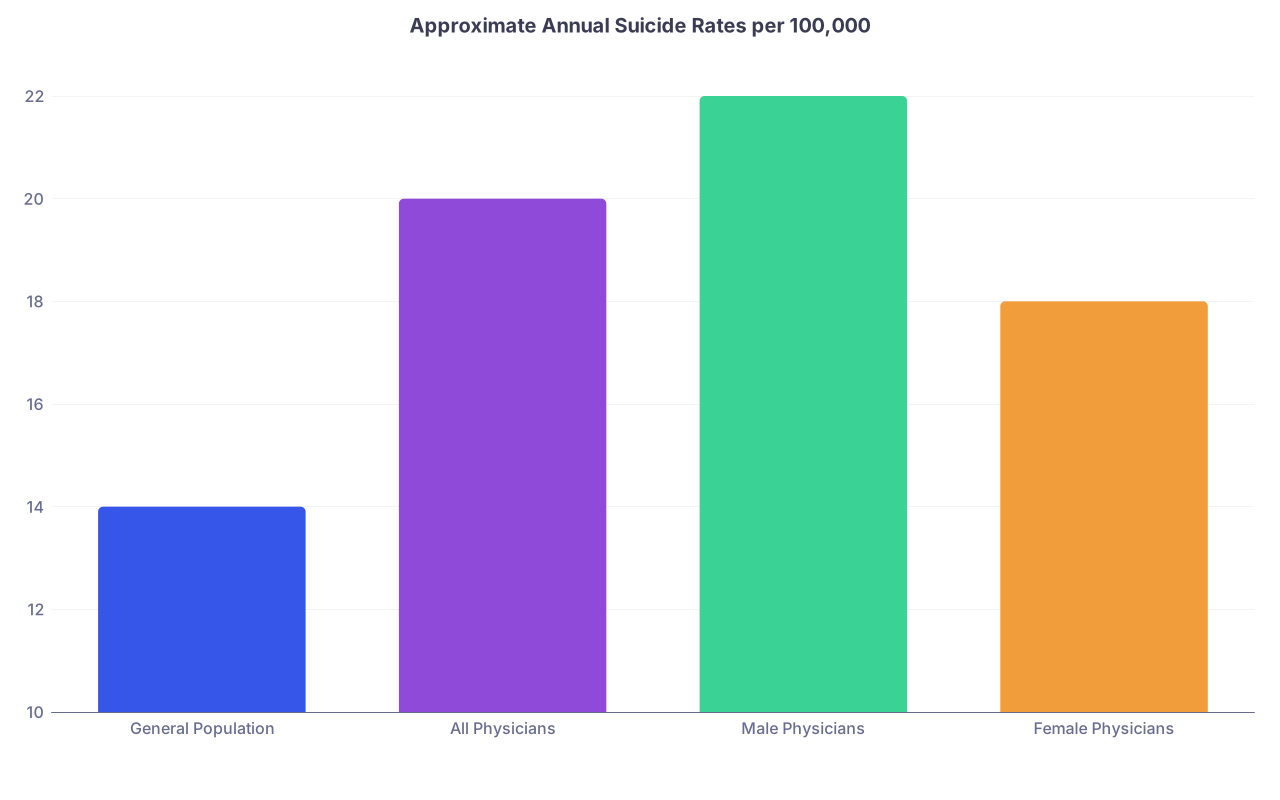
| Category | Value |
|---|---|
| General Population | 14 |
| All Physicians | 20 |
| Male Physicians | 22 |
| Female Physicians | 18 |
These are not exact for every study or country, but they are directionally correct. The pattern repeats in Europe, North America, and parts of Asia: physicians die by suicide more often than similarly educated non‑physicians.
Now map that to absolute counts.
- U.S. physician suicides are commonly estimated in the range of 300–400 deaths per year.
- That roughly equals the graduating class of a large medical school. Gone. Every year.
If that were an infectious disease killing 300–400 physicians annually, there would be task forces, dashboards, and daily email blasts. For suicide, most institutions barely manage a memorial email and a “reminder about wellness resources.”
2. Trainees vs Attending Physicians: Who Is at Highest Risk?
You want to know where you stand as a trainee, not just “physicians” in the abstract.
Data here are more fragmented because suicide among medical students and residents is relatively rare in absolute numbers (thankfully), which makes statistics noisy. But multiple lines of evidence still point in the same direction.
Key patterns from cohort studies and mortality reviews:
Medical students
- Suicidal ideation: often 10–25% report it at some point during training.
- Actual suicide deaths: low in absolute number but consistently present each year across large systems.
- Risk spikes around transitions: M1→M2, pre‑clinical → clinical, and around major exams (e.g., Step 1/2 or national equivalents).
Residents
- Chronic sleep deprivation, workload, and lack of autonomy drive higher burnout and depression scores than in many attending cohorts.
- Several large studies report suicidal ideation in 10–12% of residents annually, with variation by specialty and year.
- PGY1 and early PGY2 often show elevated risk, especially during ICU‑heavy or call‑heavy rotations.
Attending physicians
- Absolute number of suicides is higher simply because there are more attendings than trainees.
- Risk stays elevated across the career, especially in specialties with access to lethal means and cultures that stigmatize help‑seeking.
A rough visual of ideation vs completion in physicians vs general population:
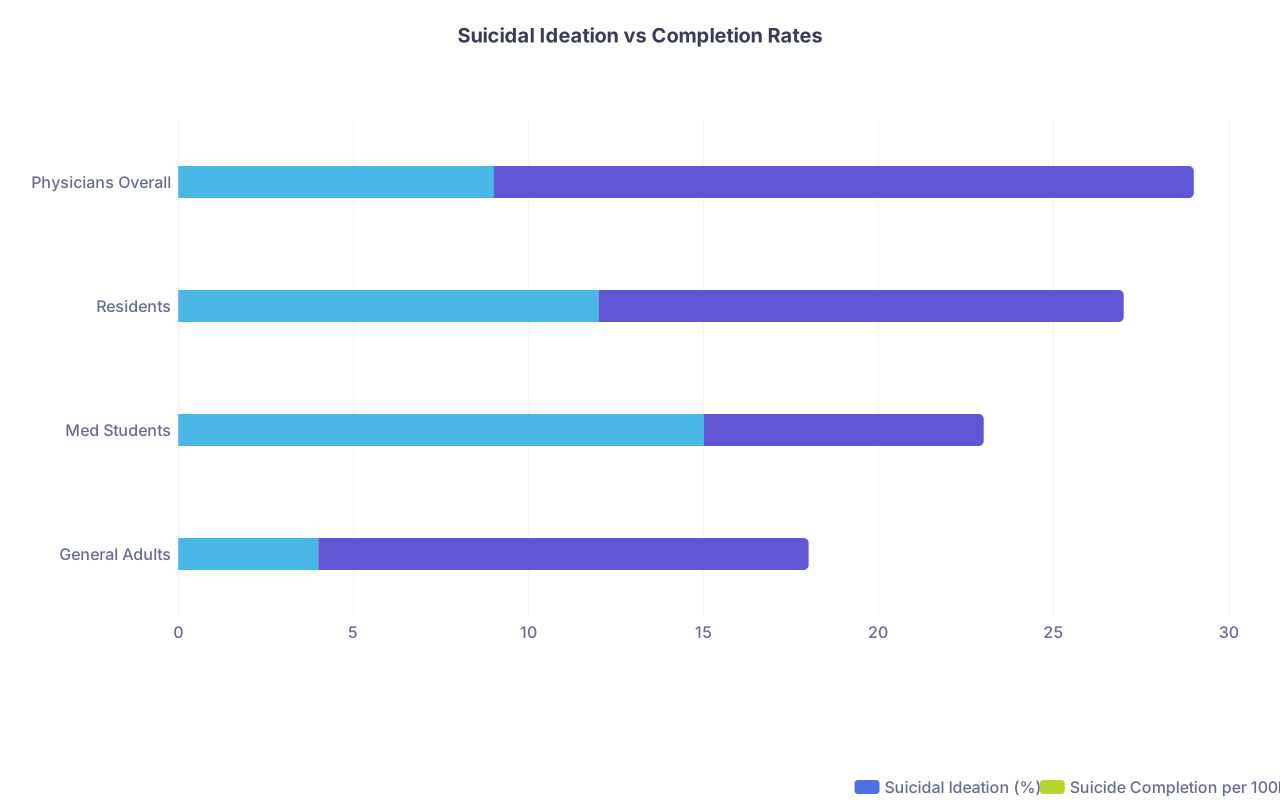
| Category | Suicidal Ideation (%) | Suicide Completion per 100k |
|---|---|---|
| General Adults | 4 | 14 |
| Med Students | 15 | 8 |
| Residents | 12 | 15 |
| Physicians Overall | 9 | 20 |
The key point: ideation rates in trainees are high, even if absolute death counts are lower than in older physicians. You are sitting in a risk field that is statistically denser than almost any other postgraduate profession.
3. What Actually Drives the Risk? Quantifying Contributors
When you sift through multivariate models, three clusters of variables keep showing up.
3.1 Mental health, burnout, and depression
The strongest single predictor is untreated or undertreated mental illness, especially major depressive disorder and substance use disorders.
- Depression in medical students and residents: pooled prevalence 25–30% in meta‑analyses.
- In many cohorts, depression is associated with a 2–5× increased odds of suicidal ideation.
- Burnout (emotional exhaustion, depersonalization, low personal accomplishment):
- Common prevalence: 40–60% in trainees.
- Directly associated with both ideation and self‑reported past attempts, even after adjusting for depression.
But here is the ugly mediator: help‑seeking is suppressed.
- Physician groups repeatedly report that 40–60% of those with significant depressive symptoms do not seek formal care.
- Top stated reasons (from survey data):
- Fear of licensing boards or credentialing consequences.
- Fear colleagues will find out.
- Belief that “I should be able to fix this myself.”
The data show a perverse selection effect: the people under the highest cognitive load and stress are the least likely to access the care that is proven to reduce suicide risk.
3.2 Workload, hours, and sleep
You cannot ethically randomize people to 80‑hour weeks and chronic sleep deprivation anymore (we basically ran that natural experiment on prior generations of residents), but the observational data are still damning.
- Residents working >80 hours/week and sleeping <6 hours/night on call‑heavy rotations show:
- Higher depressive symptom scores.
- Increased medical errors.
- Higher near‑miss and self‑harm event reporting.
- One large resident cohort found that each additional incremental increase in depressive symptoms was associated with roughly double the odds of reporting suicidal ideation that year.
Sleep is not a soft variable here. It acts like a dosage multiplier for all the other risk factors: stress, emotional lability, cognitive distortions, and poor judgment about when to seek help.
3.3 Access to lethal means and medical knowledge
Physicians have:
- Easier access to high‑lethality medications.
- Detailed knowledge of dose, kinetics, and what will or will not be reversible.
In high‑income countries, common physician suicide methods include:
- Self‑poisoning with medications (including anesthetics, opioids, sedatives).
- Hanging.
- Firearms (especially in the U.S., where population‑level firearm availability is high).
The completion rate is higher in physicians partly because chosen methods are more lethal and more “optimized.” Ideation that becomes action in this context is statistically more likely to end in death than in non‑physician groups.
4. Specialty Differences: Where the Risk Concentrates
The specialty gap is not an illusion. Different fields combine different baseline personalities, cultures, and stressors.
Across multiple countries, the “frequent flyers” for elevated suicide risk per capita include:
- Anesthesiology
- Psychiatry
- Emergency medicine
- General surgery and some surgical subspecialties
- Family medicine / primary care in some datasets
Rough, illustrative comparison (directionally consistent, not exact for any single country):
| Specialty | Relative Risk vs General Pop | Notable Factors |
|---|---|---|
| Anesthesiology | 2.0–2.5× | IV access, potent agents |
| Psychiatry | 1.8–2.2× | High mental health burden cases |
| Emergency Medicine | 1.6–2.0× | Shift work, acute trauma |
| Surgery | 1.5–1.8× | Long hours, perfectionism |
| Internal Medicine | 1.2–1.5× | Chronic complex patients |
If you are in or heading toward one of these fields, that does not mean you are doomed. It means you are choosing a job in a higher‑risk category, like a pilot picking long‑haul international routes or a firefighter specializing in high‑rise rescues. You manage that risk with deliberate mitigation, not denial.
5. What Predicts Suicide Among Trainees Specifically?
Let’s focus on medical students and residents because that is who this is for.
Patterns that appear repeatedly in trainee suicide reviews and psychological autopsies:
Recent significant evaluation or career stressor
Failed exam. Remediation. Dismissal hearing. Loss of desired residency spot.
There is often a triggering event in the preceding weeks.Documented mental health history
Past depression, anxiety, or prior suicide attempt is common.
Many were either:- Untreated,
- Under‑treated (meds without therapy, or vice versa),
- Or treatment was recently changed/stopped.
Isolation and secrecy
Colleagues describe them as “quiet,” “withdrawn,” “not wanting to bother others.”
Sometimes high achieving and perfectionistic to the point that vulnerability felt like failure.Substance use
Not always, but when present, it amplifies impulsivity and method lethality.
Among residents, diverted medications and alcohol are recurrent themes.
Quantitatively, risk spikes when multiple domains line up:
- Psychological (depression, anxiety, prior attempt),
- Environmental (call‑heavy block, 80+ hr weeks, conflict with supervisor),
- Acute stressor (exam failure, relationship breakup, malpractice case).
When those three categories cluster, you are in a statistically dangerous window, even if you “seem fine” externally.
6. Protective Factors That Actually Move the Numbers
This is where the conversation usually degenerates into platitudes. Ignore those. Focus on interventions with some empirical backing.
6.1 Confidential, low‑barrier mental health care
Programs that shift from “call student health” to dedicated, confidential, no‑cost counseling for trainees see:
- Increased utilization (sometimes doubling or tripling).
- Lower reported stigma.
- More early interventions before crises.
The more hoops you remove (referrals, copays, limited hours, being seen in the same building as faculty), the more people who are actually at risk will show up.
From the individual side, the data are very simple: treatment of depression and substance use disorders reduces suicidal ideation and attempts. You are not the special case for whom this does not apply.
6.2 Cultural and structural changes in training environments
This is slow and uneven, but some specific moves correlate with better outcomes:
- Reducing chronic >80‑hour weeks and enforcing genuine time off (not “off but still on pager”).
- Formal peer support or “buddy” systems, especially on high‑intensity rotations.
- Harassment and mistreatment policies that are actually enforced. Programs that tolerate abuse reliably have higher burnout and mental health problems.
None of this is magic. But each structural friction point you remove reduces the probability that a vulnerable person tips into a crisis.
6.3 Formal post‑event support (second victims)
After patient deaths, major complications, or code events, unprocessed guilt and shame are common in trainees. That is a recognized phenomenon: “second victim” syndrome.
Institutions that provide formal debriefs and peer or psychological support after such events show:
- Lower rates of persistent intrusive symptoms.
- Lower self‑reported suicidal ideation in downstream surveys.
If your program does not have this, you still can create informal approximations: debrief with trusted co‑residents, attendings you respect, or a therapist. The data show that social and professional support after critical incidents is protective.
7. Practical Risk Management for You, Not Just the System
You cannot fix the healthcare system in between wards and night float. But you can treat suicide risk the same way you treat sepsis: recognize patterns early, escalate aggressively, and do not play hero alone.
Think of it as a personal risk algorithm.
7.1 Track your “vital signs” over time
A few indicators you can track like labs:
- Sleep: averaging <6 hours/night for >2 weeks.
- Anhedonia: losing interest in things you normally enjoy for >2 weeks.
- Hopelessness: repeated thoughts that “nothing will get better,” “I am trapped.”
- Cognitive distortions: persistent thoughts that you are a fraud or a failure despite objective evidence to the contrary.
The more of these cluster and the longer they persist, the more your statistical risk climbs.
7.2 Know the high‑risk decisions
Certain thought patterns are big red flags, based on what we see in suicide notes and survivor reports:
- Planning access to lethal means (“I could use X drug from the Pyxis,” “I know the dose of Y that will be fatal.”)
- Thoughts that your absence would be better for others (“My partner/family/colleagues would be better off without me.”)
- Fantasies about death as relief, with concrete imagined scenarios.
Those are not “normal stress.” They are high‑risk cognitions, and the data link them directly to later attempts.
That is the point to treat it like an emergency, not a personality quirk.
7.3 If you are the bystander: what actually helps
The numbers show something simple: asking about suicidal thoughts does not increase suicide. That old myth has been debunked repeatedly.
Direct questions to consider:
- “Have you been thinking about hurting yourself?”
- “Have you thought about ending your life?”
- “Do you have a plan for how you would do it?”
If the answer is yes to plan + means, you are now in acute‑risk territory. The right move is not to keep a secret. It is to:
- Stay with them (in person or on the phone).
- Escalate to on‑call psychiatry, emergency services, or institutional crisis lines.
- Remove or secure access to lethal means if you safely can (medications, firearms).
I have seen multiple cases where one resident taking this seriously altered the trajectory of a colleague who later said, verbatim, “If you had not asked me directly, I would be dead.”
8. Licensing, Stigma, and the Data Behind the Fear
The biggest chilling effect on help‑seeking is fear of career damage.
The reality is mixed:
- Some licensing boards still ask broad questions about history of mental health treatment. Those questions do correlate with reduced help‑seeking.
- However, many boards have been pushed by legal and advocacy pressure to narrow their scope to current impairment, not diagnosis.
The empirical piece:
- Studies consistently show physicians overestimate the career risk of receiving mental health care relative to what actually happens.
- On the other hand, unaddressed impairment (e.g., showing up impaired, major performance problems, serious boundary violations) is far more likely to trigger career‑limiting interventions than quiet, well‑managed treatment.
From a data perspective, the personal and professional downside of untreated illness is far larger than the downside of documented, well‑managed care.
9. What Trainees Actually Need to Take Away
Boil this down to a few non‑negotiables:
- Physician suicide risk is objectively higher than general population risk, especially for female physicians and certain specialties. You are not imagining this.
- Depression, burnout, and substance use in trainees are common – and strongly predictive of suicidal ideation – but are highly treatable.
- Lethal means + medical knowledge create a completion risk that makes “waiting to see if it gets better” statistically dangerous once suicidal planning begins.
- Structural factors matter, but at the individual level, early help‑seeking, social support, sleep protection, and brutal honesty about suicidal thoughts are the variables you can actually control.
If you are already at the point of wondering whether you want to stay alive: the data are crystal clear that acute help – crisis lines, emergency services, urgent psychiatric support – dramatically lowers immediate risk and opens up options you cannot see from inside the tunnel.
You are not the outlier to whom the statistics do not apply. You are exactly who the statistics are describing.