The data shows a blunt truth: resident physicians are drowning in mental health symptoms and barely using the lifelines available to them.
That is not hyperbole. Large, multi‑institution surveys keep converging on the same numbers. High prevalence of depression, anxiety, burnout, and suicidality. Low uptake of formal therapy, medication, or institutional support. A massive utilization gap that is less about lack of need and more about culture, policy, and fear.
Let us walk through what the latest surveys actually show, quantitatively, and what that implies for work–life balance and ethics in training programs.
What the Surveys Say About Resident Distress
First, the baseline: how bad are mental health outcomes in residency?
Different specialties, instruments, and years give slightly different values, but the ranges are tight enough to be meaningful. Pulling from recent multi‑center and national surveys (ACGME, Medscape residents, specialty‑specific cohorts, and institutional longitudinal studies), the picture is depressingly consistent.
Across U.S. residents:
- Depressive symptoms (moderate or worse on PHQ‑9): roughly 25–35%.
- Anxiety symptoms (moderate or worse): roughly 25–40%.
- Burnout: commonly 55–75%, depending on specialty and PGY.
- Suicidal ideation in the past year: about 5–10%.
To make this less abstract, imagine a residency program with 100 residents. Statistically, you are looking at something like:
- 30 with clinically significant depression.
- 30 with significant anxiety.
- 60–70 feeling burned out.
- 5–10 who have seriously thought about suicide in the past 12 months.
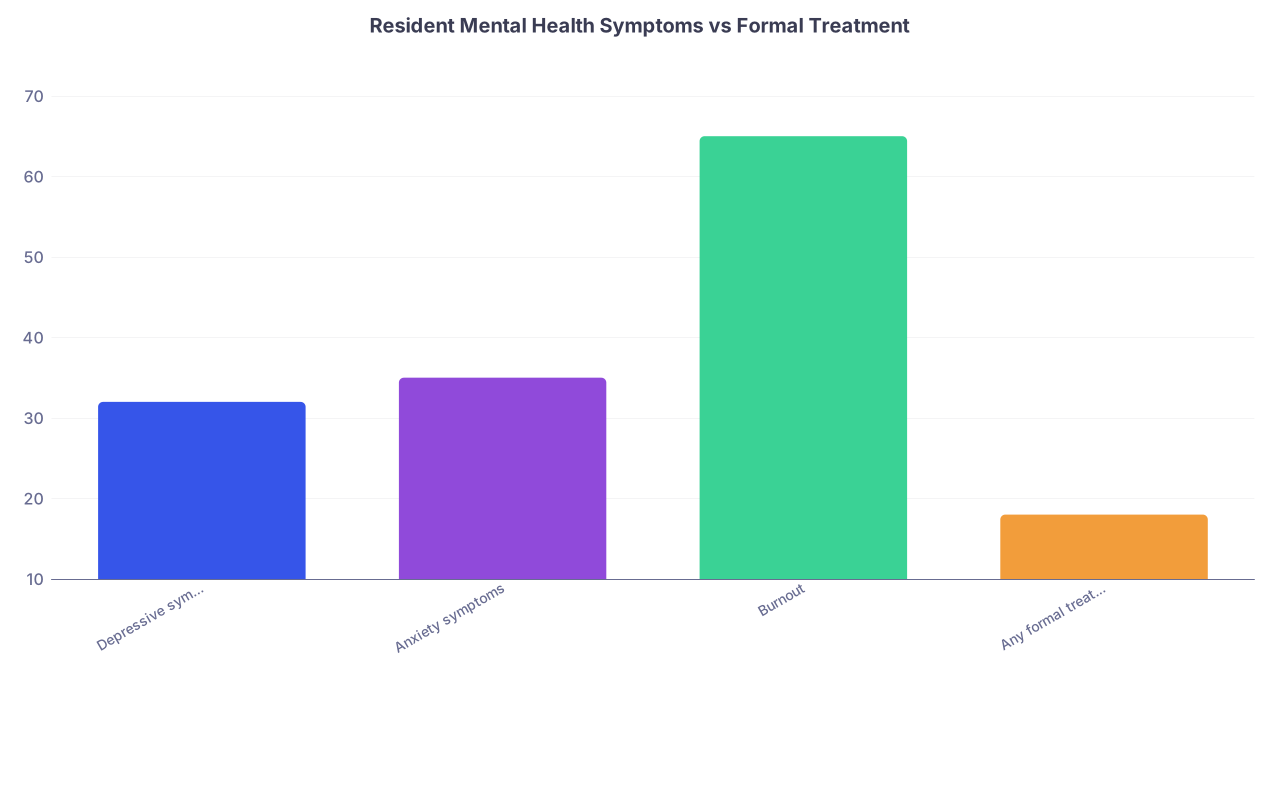
And yet, when you look at actual utilization of mental health services, the numbers fall off a cliff.
| Category | Value |
|---|---|
| Depressive symptoms | 32 |
| Anxiety symptoms | 35 |
| Burnout | 65 |
| Any formal treatment | 18 |
Read that carefully. Roughly two‑thirds are burned out. One‑third are clinically depressed or anxious. Fewer than 1 in 5 are getting any kind of structured mental health care (therapy, counseling, or psychiatric medication) in a given year.
That utilization gap is the core problem.
Actual Utilization: Who Seeks Help—and Who Doesn’t
When you drill into individual surveys, the pattern is the same: under‑treatment everywhere.
You see numbers like these in recent multi‑program surveys of residents:
- About 15–25% report seeing a therapist, counselor, or psychiatrist in the past year.
- Roughly 10–15% report taking a psychotropic medication (antidepressant, anxiolytic, or mood stabilizer).
- Around 5–10% report using institution‑provided wellness or counseling programs more than once.
There is overlap here, obviously. Many residents who take meds are also seeing a clinician. But even if you merge all of that into a single “any professional mental health support” category, you rarely crack 25%.
The specialty differences are where it gets stark.
| Specialty | Any Treatment (%) | Therapy/Counseling (%) | Psychiatric Medication (%) |
|---|---|---|---|
| Psychiatry | 30–40 | 25–35 | 15–20 |
| Pediatrics | 20–25 | 15–20 | 10–15 |
| Internal Med | 15–20 | 10–15 | 10–12 |
| Surgery | 8–15 | 5–10 | 5–10 |
| EM | 15–20 | 10–15 | 8–12 |
Residents in psychiatry and pediatrics are consistently more likely to seek care; surgical residents are consistently at the bottom.
So yes, the stereotype holds: the groups with the most macho or invincibility culture are the least likely to use mental health services. That is not an accident. It is structural.
Gender patterns are also predictable and large:
- Female residents are roughly 1.5–2 times more likely than male residents to seek therapy or counseling.
- Yet prevalence of burnout and distress is high in both genders. Men just seek less formal support.
- Nonbinary and LGBTQ+ residents tend to report both higher distress and higher utilization—if they can find providers they trust.
In other words: high need, selectively high uptake, and entire subgroups (especially male and surgical residents) who are quietly absorbing massive psychological load with minimal professional support.
The Utilization Gap: The Numbers Behind “I Don’t Want This in My Record”
Residents are not avoiding care because they feel fine. They are avoiding care because the incentives are misaligned.
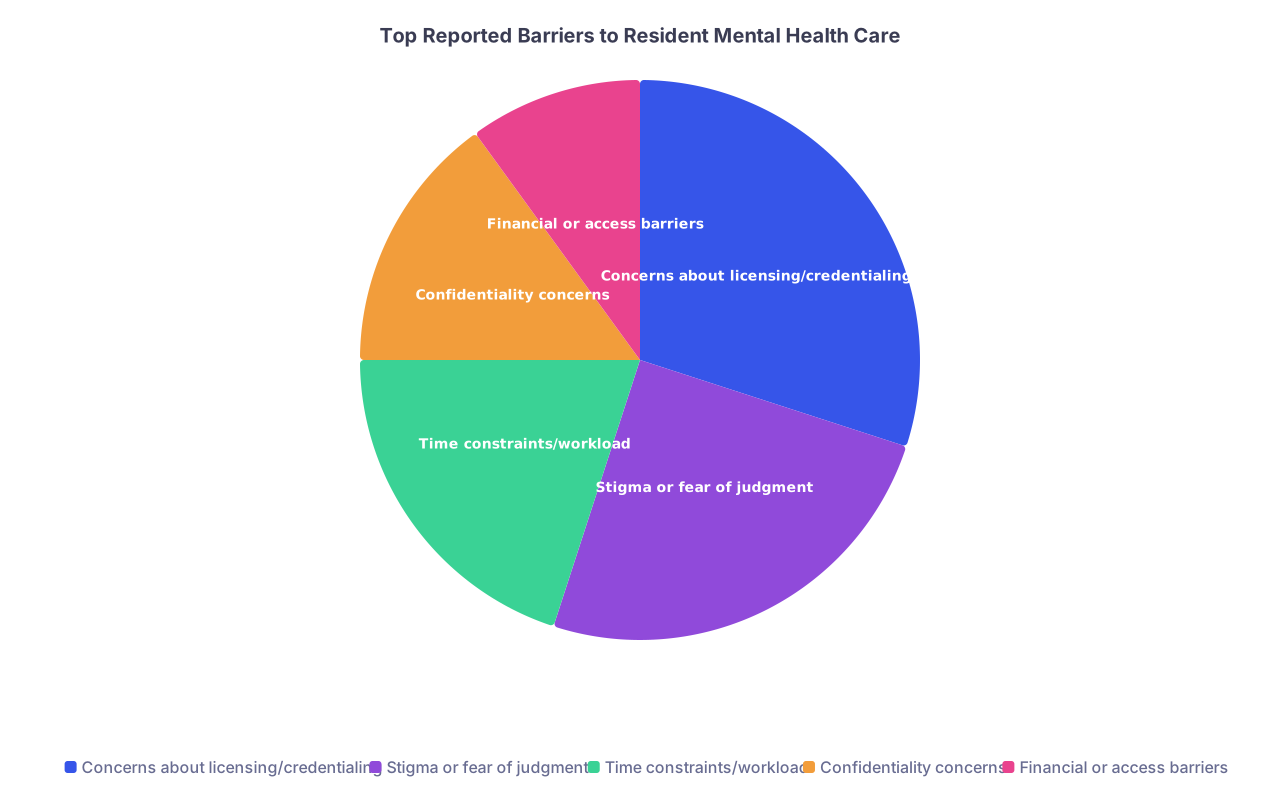
When surveys ask, “Why did you not seek mental health care despite symptoms?” the distribution of answers is not random. It clusters around a few recurring themes with very stable percentages.
You routinely see response breakdowns in this ballpark:
| Category | Value |
|---|---|
| Concerns about licensing/credentialing | 30 |
| Stigma or fear of judgment | 25 |
| Time constraints/workload | 20 |
| Confidentiality concerns | 15 |
| Financial or access barriers | 10 |
Interpretation:
- Roughly 30% of those not seeking care cite state licensing, hospital privileging, or future employment implications as a primary concern.
- About 25% cite stigma or fear of being judged by peers, attendings, or program leadership.
- Around 20% blame workload and scheduling—no time to attend appointments.
- Around 15% fear breaches of confidentiality, especially when services are run by their own institution.
- About 10% cite money or lack of in‑network, accessible providers.
The exact percentages vary across surveys, but the relative ranking is astonishingly stable. Regulatory and career fear sits at or near the top.
And here is the kicker: when you actually review licensing and credentialing questions across states, many still include broad or invasive mental health items (history of diagnosis, treatment, or hospitalizations), even when guidance from the Federation of State Medical Boards suggests limiting questions to current impairment. Residents are not paranoid. The risk is real.
So, what happens? You get rational, risk‑averse behavior:
- Residents with moderate symptoms delay care until they are in crisis.
- Those on medications may go through primary care or off‑the‑books channels instead of institutional psychiatry.
- Many stick to informal peer support and “corridor therapy” rather than charted treatment.
Ethically, that is a problem. Because systems are quietly incentivizing residents to stay sick.
Work–Life Balance: Utilization Patterns Track the Schedule
You cannot talk about mental health utilization in residents without looking at hours and workload. The correlation is not subtle.
Programs with:
- Longer average weekly hours (60+),
- More frequent 24‑hour calls,
- High “work compression” (intense workload even within ACGME hour caps),
consistently show higher burnout and depressive symptoms. That part is obvious. But the utilization story is more nuanced.
The data tends to show two things:
- Residents in the heaviest‑hour specialties (surgery, some IM subspecialties) underutilize formal care.
- When they do use care, it is often clustered around certain phases: transitions (intern year), exam cycles (USMLE Step 3, in‑training exams), and post‑adverse event periods (bad outcomes, litigation, major error).
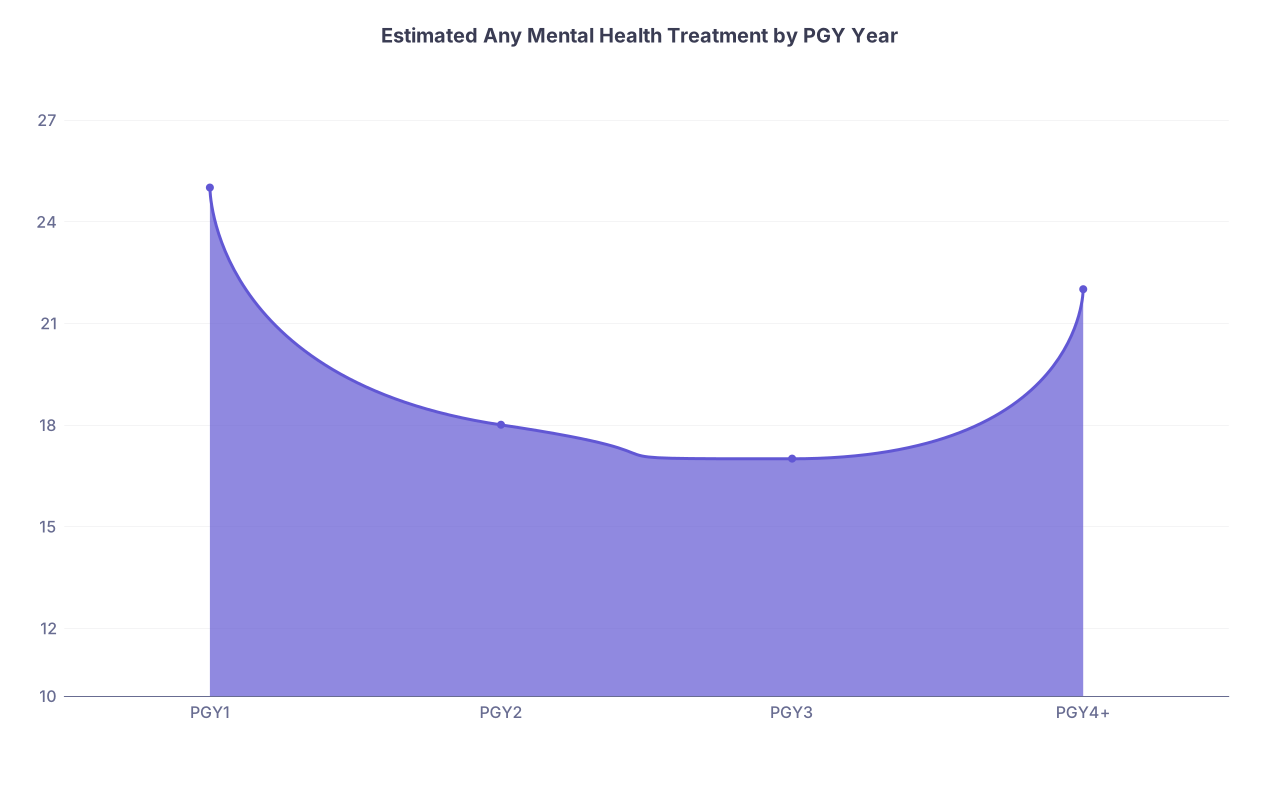
If you graph utilization across PGY years, you see a modest U‑shaped curve in many programs:
- PGY‑1: Spike in distress and higher initial utilization, often facilitated by orientation talks and “we care about wellness” messaging.
- PGY‑2–3: Utilization dips, sometimes substantially, as residents normalize the grind and have less time for appointments.
- PGY‑4+: Slight rebound in some specialties, especially as residents approach fellowship or job applications and anxiety spikes again.
| Category | Value |
|---|---|
| PGY1 | 25 |
| PGY2 | 18 |
| PGY3 | 17 |
| PGY4+ | 22 |
Interpretation: the highest‑need periods (early transition and high‑stakes career phases) get relatively higher utilization, but it never reaches parity with symptom prevalence.
You also see time‑of‑year effects. In longitudinal surveys that ping residents quarterly, mental health utilization often creeps up:
- During winter months (seasonal factors and cumulative fatigue).
- After annual program‑level stressors: in‑service exams, match season, major staffing changes.
These are predictable spikes. Programs could easily pre‑empt them with targeted resource pushes. Most do not.
Ethics and Culture: Why Transparency and Policy Matter More Than Posters
Posting “Wellness Resources” flyers in the call room is cheap. Changing ethical and structural barriers is not. But the data is very clear: posters without policy change barely move utilization.
When institutions make specific, concrete changes, you see measurable shifts:
- Changing medical staff credentialing forms to only ask about current impairment, not historical diagnoses, is associated with a small but real uptick in residents reporting they would feel comfortable seeking care.
- Explicit written statements from GME leadership that mental health treatment will not be disclosed in routine evaluations, and that performance will be judged on behavior and competence, not diagnoses, increase reported willingness to use services.
- Providing off‑site or third‑party counseling options, with no EHR integration and no access by faculty or program directors, correlates with higher utilization compared to in‑house, fully integrated systems.
From an ethics standpoint, there are several non‑negotiables if you want utilization to match need:
Privacy must be structurally protected, not just verbally promised.
If the psychiatrist sits three doors down from the program director and uses the same EHR, residents are rational not to trust the system. Survey comments are blunt on this point: “I would never go to someone employed by the hospital; I do not want this in Epic.” That is not paranoia. It is pattern recognition.Licensing and credentialing questions must be aligned with impairment, not diagnosis.
When 30% of those avoiding care cite licensing fear, programs have an ethical obligation to push their institutions and states to modernize forms. The FSMB guidance exists; many states just ignore it or implement it halfway.Leadership behavior has to match wellness rhetoric.
Residents are exquisitely sensitive to hypocrisy. If the same attending who scolds people for leaving on time also gives a grand rounds on physician well‑being, utilization will not budge. Surveys consistently show that perceived support from direct supervisors is one of the strongest predictors of willingness to seek help.Workload has to be addressed, not just “resilience.”
Data on resilience training is mixed at best. You cannot meditate your way out of 80‑hour weeks and chronic understaffing. Programs that adjust schedules, improve staffing, and protect true days off see better mental health outcomes and a healthier pattern of help‑seeking.
Ethics here is not theoretical. Every structural disincentive you leave in place is a decision to accept lower utilization and higher distress.
What Actually Increases Mental Health Utilization (Beyond Lip Service)
Now to the practical side: what moves the numbers?
I have seen the same interventions tried repeatedly across institutions, and the data on which ones actually shift utilization is fairly consistent.
High‑yield factors:
Protected, paid time for appointments.
When residents are explicitly told they can use X hours per month during work time for health care (including mental health) without needing to swap shifts or “pay back” the time, utilization goes up. Not theoretical. Measured.External, confidential providers with institution‑funded access.
Contracts with community therapists/psychiatrists, where residents can self‑refer and the program never sees billing details or notes, change behavior. It answers the “I do not want this in the hospital record” problem directly.Clear communication about what is and is not reported.
Many residents make decisions based on rumors. When GME offices publish explicit policies—what goes into files, what is reportable, how leave is coded—fear drops. Lower fear predicts higher utilization.Peer champions and near‑peer modeling.
When chief residents or recent grads openly share that they used therapy or medications during training and still matched into competitive fellowships or jobs, utilization follows. Not overnight, but the normalization effect is visible in survey responses.
Moderate effect but still useful:
- Wellness curricula that include actual skill‑building (CBT‑informed coping, boundary‑setting, sleep strategies), not just generic “resilience” lectures.
- Routine mental health check‑ins embedded in occupational health or annual evaluations with clear, nonpunitive follow‑up options.
Low effect on utilization by themselves:
- Yoga classes.
- Free snacks.
- Generic wellness emails.
These may improve mood at the margins, but they do not close a 40‑point gap between symptoms and treatment.
Personal Development, Professional Duty, and the Ethics of Self‑Care
There is an uncomfortable ethical angle most surveys do not capture, but residents talk about in open‑ended responses: the sense that seeking help is a personal failing or a sign of weakness, especially in procedural and “tough” specialties.
You see comments like:
- “If I admit I am struggling, they will think I cannot hack it.”
- “Everyone is tired; what makes me special?”
- “I will just push through until this rotation is over.”
Here is where I am blunt. From a data standpoint, that mindset is not just unhealthy; it is professionally dangerous.
Unmanaged depression and burnout are associated with:
- Higher self‑reported medical errors.
- Increased intention to leave medicine.
- Poorer patient communication ratings.
- Worse learning outcomes.
So the idea that white‑knuckling through residency is somehow more professional or more committed to patients does not hold up. It is the opposite. When you look at the numbers, untreated mental illness impairs care. Seeking treatment reduces that risk.
There is an ethical duty here that runs in both directions:
- Programs have a duty to create conditions where seeking mental health care is practically and professionally safe.
- Residents have a duty to treat their own mental health as a legitimate component of professional competence, not an optional add‑on.
The traditional culture—“suffer in silence, do not be a problem”—is out of step with the actual data on outcomes.
Where This Is Likely Headed
Trends over the last 5–10 years suggest slow movement in the right direction, but at nothing like the speed the numbers demand.
You can see modest improvements:
- More programs offering formal wellness curricula and some form of counseling access.
- Slight increases in self‑reported use of therapy and medication, especially among younger cohorts and psychiatry residents.
- More vocal discussion of physician suicide and mental health at national meetings.
But the gap remains huge. When 60–70% are burned out and only ~20% are engaged in formal mental health care, you do not need another survey to conclude that the system is under‑treating its workforce.
Expect three main pressures in the next few years:
Regulatory pressure from accrediting bodies and national organizations to modernize mental health policies and licensing questions. Some states have already shifted; others will be dragged.
Legal and reputational pressure when institutions are publicly linked to resident suicides or severe breakdowns where barriers to care were obvious and unaddressed.
Market pressure as applicants increasingly scrutinize program culture, schedules, and mental health resources when ranking programs. Programs that ignore this will lose competitive applicants over time.
The data is not ambiguous. Programs that align policy, culture, and resources with actual need will see better utilization, lower burnout, and more stable staffing. Programs that do not will keep functioning on quiet, preventable suffering.
The Short Version: What the Latest Surveys Really Say
Three points, stripped to the numbers:
Distress is high, treatment is low. Roughly one‑third of residents meet criteria for depression or anxiety, two‑thirds are burned out, but only about 15–25% use formal mental health services in a given year.
Barriers are structural, not just personal. Concerns about licensing, credentialing, confidentiality, stigma, and workload explain the bulk of non‑utilization. These are fixable with policy and culture change, not posters.
Ethics and outcomes line up: supporting resident mental health is not optional “wellness” branding; it is directly tied to patient safety, learning, and professional responsibility. The data shows that programs which treat mental health care as a core component of training—not an afterthought—get better results on every front.