
The worst mental health crashes in match season are predictable. If you know the pressure points by week, you can blunt most of the damage.
You are not going to “self-care” your way through this with vague advice and scented candles. You need a map. Week by week. What blows up when. And what to put in place before it hits.
This is that map.
Big Picture: The Match Stress Curve
At the highest level, match season has four emotional phases:
- Anticipation and Overload – ERAS prep through interview invites
- Performance and Imposter Syndrome – peak interview weeks
- Control Loss and Rumination – rank list crunch time
- Waiting and Catastrophizing – the long plateau to Match Week
Here is how distress usually tracks across the year.
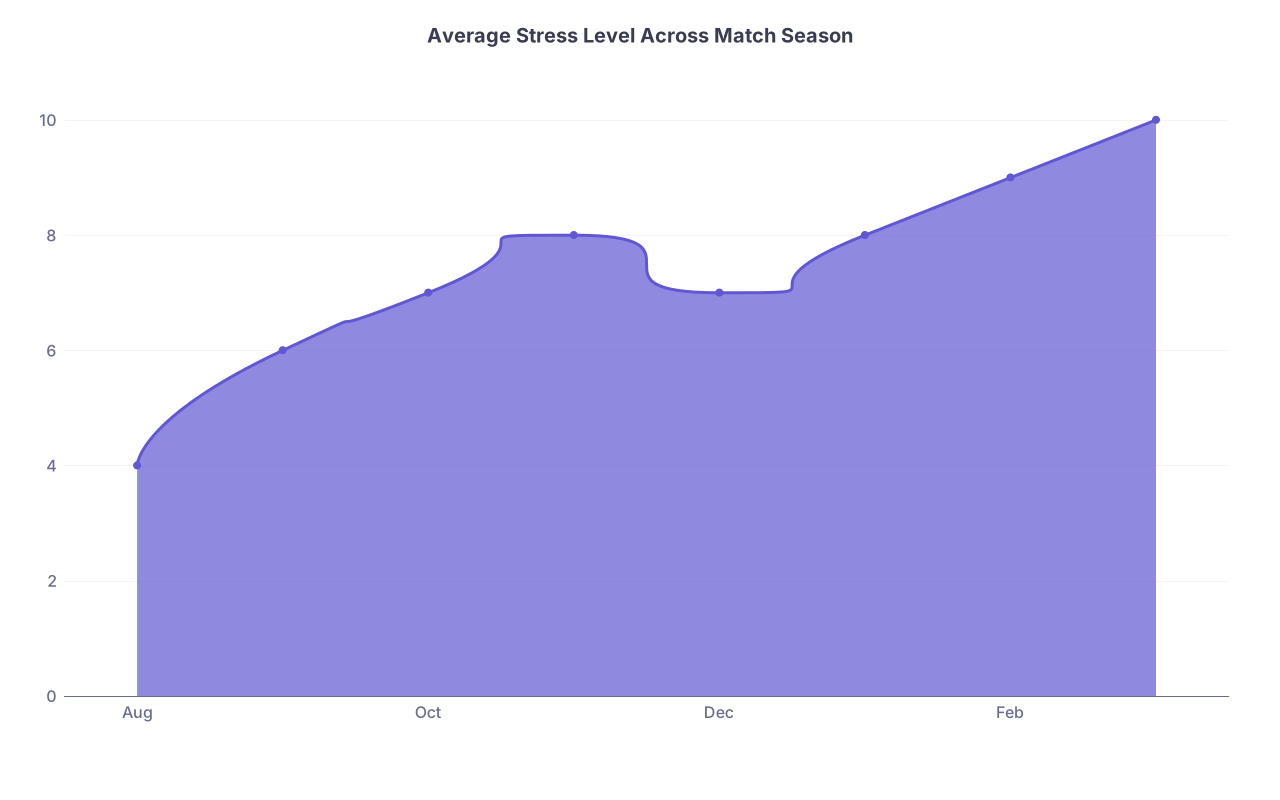
| Category | Value |
|---|---|
| Aug | 4 |
| Sep | 6 |
| Oct | 7 |
| Nov | 8 |
| Dec | 7 |
| Jan | 8 |
| Feb | 9 |
| Mar Match Week | 10 |
You are going to feel some of this no matter what. The goal is not zero stress. The goal is: no breakdowns that derail your performance, your relationships, or your safety.
August–September: ERAS Finalization and Submission
At this point you should stop pretending you will “figure it out later.” August and early September are foundation weeks.
Week 1–2 of August: Contain the Scope Creep
Typical stressors:
- Personal statement paralysis
- Comparing your program list to classmates
- Last-minute letters and chasing attendings
Guard your mental health by this week:
Lock your “good enough” plan.
Decide:- Target number of programs (e.g., 15 IM, 40 derm)
- Tiers: reach / solid / safety
- Letter writers and deadlines
Write it down. That list is now a contract with yourself. No endless tinkering.
Set weekly hours for ERAS only.
Example:- Weeknights: 1–1.5 hours max
- One 3-hour block on weekend
You are still on rotations. If ERAS bleeds into everything, your brain never rests.
Script your “I’m applying to X” answer.
You will get peppered with “Where are you applying?” on rounds, in the call room, by family.
Have one short, boring line ready so you do not emotionally re-engage every time:- “I am applying broadly in internal medicine with a mix of university and community programs.”
Week 3–4 of August: Personal Statement and Program List
Red-flag week: This is when I see people melt down over drafts and program FOMO.
By the end of August you should:
Freeze your personal statement structure.
Pick:- 1 opening story
- 2–3 concrete clinical moments
- 1 paragraph on future goals
Then stop reorganizing. You can polish sentences, not reinvent the outline.
Cap your program list expansion.
Pick a maximum number (e.g., 60 IM, 80 EM).
Any new program added must replace another. No endless additions at 1 a.m. from Reddit threads.Schedule one “no match talk” evening per week.
One night where you and your support people agree: no match, no ERAS, no scores. Brains need off-switches.
Mid-September: ERAS Submission Week
This is your first major spike.
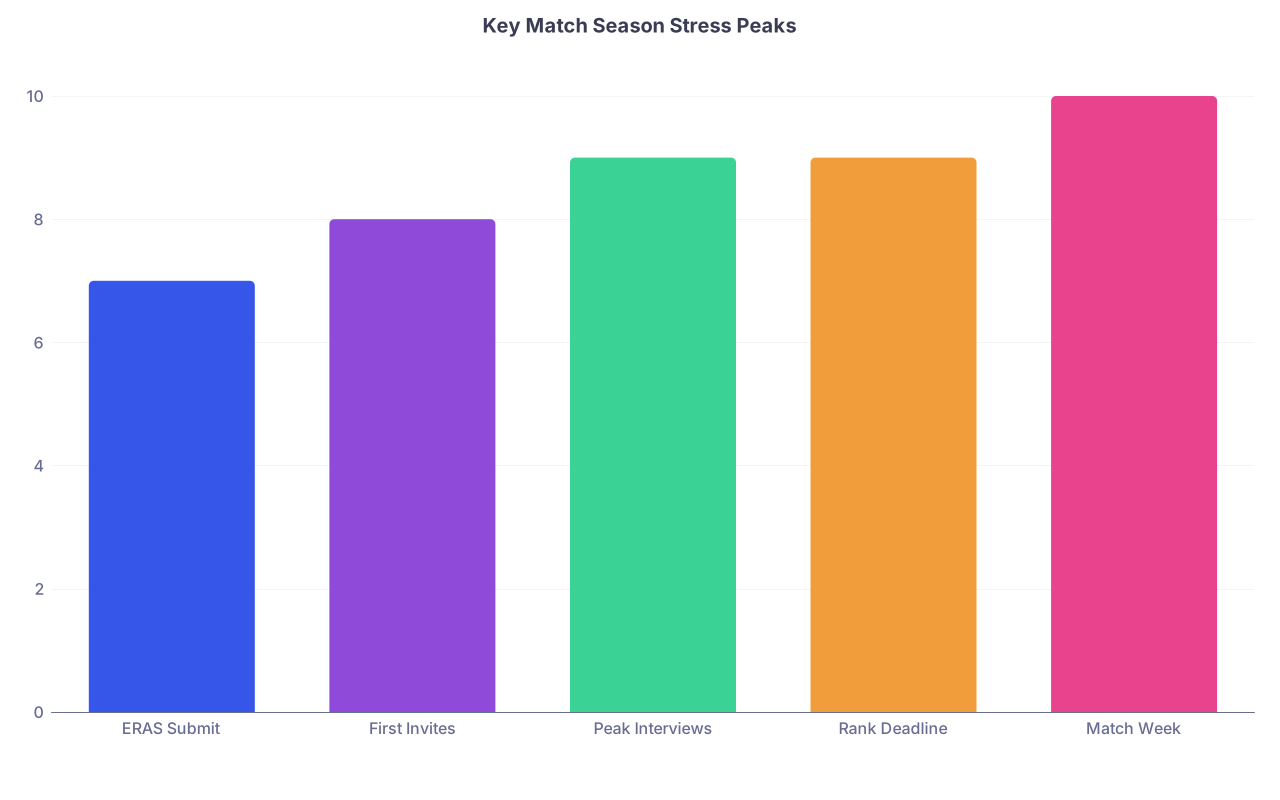
| Category | Value |
|---|---|
| ERAS Submit | 7 |
| First Invites | 8 |
| Peak Interviews | 9 |
| Rank Deadline | 9 |
| Match Week | 10 |
Submission Week (around Sept 15–20)
What usually happens:
- Obsessive proofreading and doom spirals about a single typo
- Program list panic: “Everyone else applied to 20 more places”
- Decision fatigue + sleep loss
By 5–7 days before ERAS opens you should:
Do a “last pass then delete the app from your brain” rule.
- One full, slow read of ERAS with a trusted friend or mentor
- Fix errors
- After that: you are done. No reopening at 2 a.m. to check your hobbies section.
Pre-plan your submission day.
- Fixed submit time: e.g., 7 p.m. after clinic
- Simple ritual after: walk, takeout, movie, whatever actually relaxes you
- No social media “I just submitted!!!” victory lap if that feeds your anxiety
Limit comparison channels.
For this week:- Mute group chats that constantly talk scores / program lists
- Delete Reddit / SDN app from your phone if you know you spiral there
Late September–October: Invite Season Whiplash
This phase breaks people more than ERAS itself. Because it is all about perceived rejection.

Week 1–2 After ERAS Submission
Stress patterns:
- Initial invite trickle → euphoric highs
- Watching classmates’ spreadsheets with invites you do not have
- Constant email refreshing and sleep wrecked by notifications
At this point you should:
Turn off push notifications for email.
Non-negotiable.
Set:- 3 invite-check windows per day (e.g., 8 a.m., noon, 5 p.m.)
Outside those windows: no email.
- 3 invite-check windows per day (e.g., 8 a.m., noon, 5 p.m.)
Create a simple invite tracker once.
Not an obsessive spreadsheet with 30 color codes. Just:- Program
- Date received
- Interview date
- Notes (time zone, pre-interview dinner, etc.)
Agree on a comparison boundary with classmates.
Literally say:- “I want to support you, but I cannot do real-time invite comparisons. Let’s just check in big-picture once a week.”
Mid–Late October: Invite Inequity and Self-Worth
This is where the “Why them, not me?” spiral hits.
You will see someone with similar or weaker stats book more interviews. You will hear “We just got another invite!” screamed down the hall. This is dangerous.
Guardrails for these weeks:
Create your “floor and stretch” plan.
Decide:- Floor: Minimum number of interviews that you consider viable for your specialty (e.g., 12 for IM, 8 for EM; check NRMP data, not myths).
- Stretch: The “would be amazing” number.
This stops you from assuming “I am doomed” when you are actually at 70–80% of floor and still receiving invites.
Pre-book one mental health checkpoint.
Schedule:- A session with a therapist, school counselor, or at least a brutally honest mentor in late October.
The appointment existing is already a buffer. You do not wait until you are not sleeping and crying in the call room.
- A session with a therapist, school counselor, or at least a brutally honest mentor in late October.
Set an “after 9 p.m. no match talk” rule.
Brain cannot relax when you are analyzing invite patterns at midnight.
November–January: Interview Season and Performance Fatigue
This is the grind. Travel (for in-person), Zoom fatigue, constant performance, and the subtle stress of “Am I ranking this right?”
| Month | Main Risk | What To Guard Most |
|---|---|---|
| November | Over-scheduling | Sleep & immunity |
| December | Burnout and apathy | Professionalism |
| January | Rank anxiety | Rumination |

Early November: The Overbooking Trap
Typical mistake: Saying yes to every date without protecting rest days.
By the time you schedule your first 3–4 interviews you should:
Set a hard weekly interview limit.
For video interviews:- 2–3 per week is usually the upper sane limit.
For heavy travel: - Often 1–2 per week, with buffer days.
- 2–3 per week is usually the upper sane limit.
Schedule true zero-interview days.
Intentionally leave:- One weekend day every 1–2 weeks with no interviews, no prep, no rank list talk. Actual recovery.
Standardize your prep.
Build a 1-page template you can reuse:- 3 reasons you like the program
- 3 questions you must ask
- 2 concrete patient / rotation stories to pull from
Limit prep for any single program to 60–90 minutes. Beyond that, anxiety rises faster than performance.
Late November–December: Apathy and Depersonalization
Repeated interviews create a weird mix of exhaustion and fakeness. Some people start to feel “I do not care anymore.” That is a sign of depletion, not actual indifference.
Mental health actions these weeks:
Use a post-interview decompression routine.
Same pattern every time:- 10–15 minutes to jot notes (vibe, red flags, standout residents)
- Close the laptop
- 20–30 minutes of something physical: walk, light workout, even stretching
Your body needs a clear switch from performance to off-duty.
Decide when to update your “top 5,” not every night.
Pick:- One day per week to re-evaluate your “top 5” or “top 10,” not after each interview.
This prevents endless rearranging that masquerades as control.
- One day per week to re-evaluate your “top 5” or “top 10,” not after each interview.
Protect sleep around clusters.
If you have:- 3 interviews in 5 days → the week before should be lighter social / call-wise if you can influence it. You are not superhuman.
January: Quiet Panic and Rank List Pre-Noise
Invites slow down. Interview count “is what it is.” Now the anxiety shifts to “Did I impress anyone?” and “What if I ranked them wrong?”
By early January you should:
Create your non-negotiable red flags list.
Before you obsess over tiny differences between good programs, decide:- 3–5 things that make a program unrankable for you
- Examples: malignant culture, clear violation of duty hour norms, zero support for visa if you need one, explicit disrespect on interview day.
This simplifies some tough calls. Red flag → move down or off list, regardless of prestige.
- Examples: malignant culture, clear violation of duty hour norms, zero support for visa if you need one, explicit disrespect on interview day.
- 3–5 things that make a program unrankable for you
Block one day for “rank list draft, then leave it.”
One focused day:- Build your first full draft
- Talk it through with 1–2 trusted people (max)
Then do not touch it for at least 3–4 days. Let your brain settle.
Shift daily goals away from match.
In January, you need identity outside “applicant.”
Each week, set:- 1 learning goal on rotation
- 1 social connection goal (call a friend, family dinner, etc.)
Your worth cannot be fully tethered to “interview number.”
February: Rank List Crunch and Loss of Control
This month is brutal because the illusion of control is at its peak, right when your actual control is lowest.
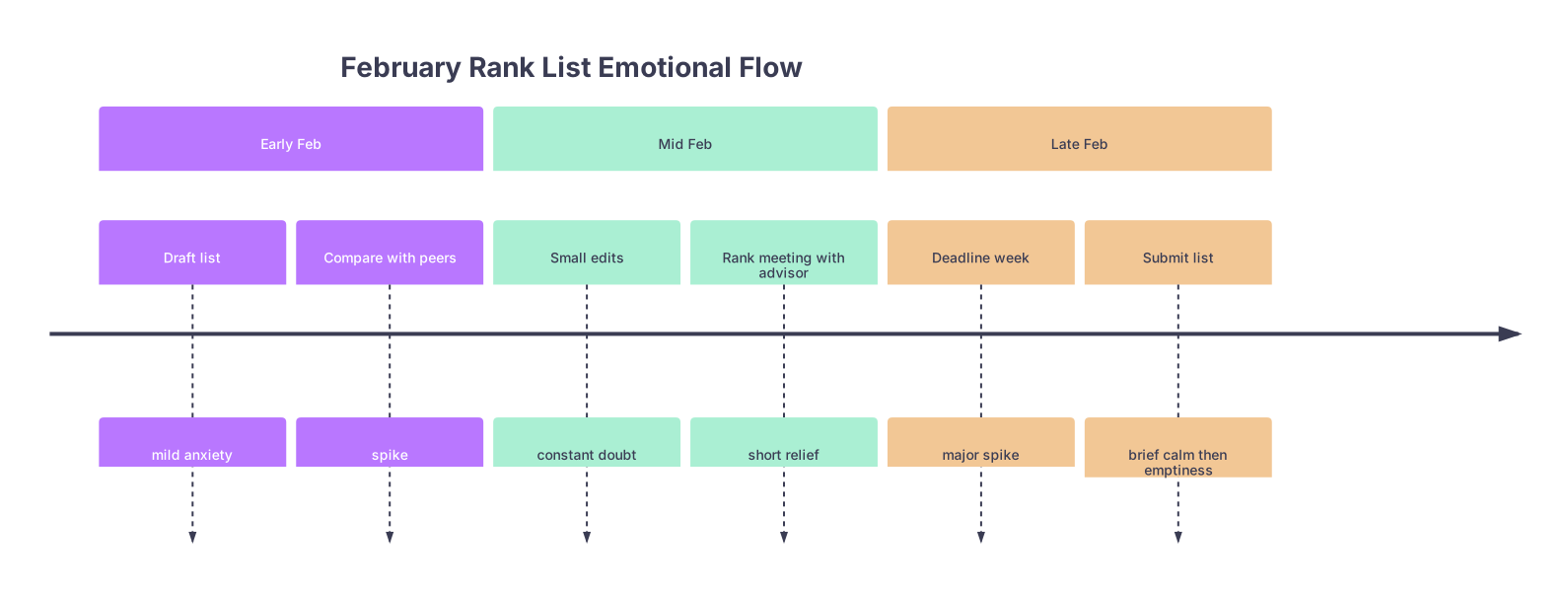
| Period | Event |
|---|---|
| Early Feb - Draft list | mild anxiety |
| Early Feb - Compare with peers | spike |
| Mid Feb - Small edits | constant doubt |
| Mid Feb - Rank meeting with advisor | short relief |
| Late Feb - Deadline week | major spike |
| Late Feb - Submit list | brief calm then emptiness |
Early–Mid February: Tinkering and Obsession
What I consistently see:
- People rearranging the top 5 almost daily
- Rereading every email, overinterpreting generic “we ranked you highly” messages
- Sleep disruption from endless “what if” scenarios
At this point you should:
Decide on your ranking principles in concrete order.
For example:- City / geographic non-negotiables
- Program culture and resident happiness
- Training quality / fellowship prospects
- Proximity to support system
- Prestige and name recognition
Write this list. When you feel stuck between two programs, check which aligns better with principle #1, then #2, and so on. Feelings still matter, but you are not ranking by random vibes.
Schedule a “last heavy discussion” deadline.
Pick a date 3–5 days before the NRMP deadline for:- Final long discussion with your mentor / partner / family
After that date: no more big rehashes. Only minor adjustments if a major new piece of information appears.
- Final long discussion with your mentor / partner / family
Set a daily rumination cap.
Yes, you will think about this. But do it on purpose:- 20 minutes at a fixed time (e.g., after dinner) to worry about the match
Outside that window, if your brain starts, say: “That is for 7:30 p.m., not now.” It sounds corny. It works.
- 20 minutes at a fixed time (e.g., after dinner) to worry about the match
Final Week Before Rank List Deadline
High-risk week for panic decisions and self-destructive coping.
Guard yourself by:
Freezing the top 3 programs 24–48 hours before deadline.
Unless:- You receive substantive new information (e.g., serious program scandal, personal crisis, sudden life change).
This prevents last-minute, sleep-deprived reshuffles that are mostly anxiety.
- You receive substantive new information (e.g., serious program scandal, personal crisis, sudden life change).
Avoiding crowdsourced rank lists.
Stop asking, “How are you ranking X vs Y?” in group chats. Your values and situation differ. Hearing 10 different answers confuses, not clarifies.Submit at a sane hour.
Do not submit at 11:45 p.m. delirious from call.
Submit:- During the day
- After you have eaten and slept decently
- Then log out and physically walk away from all devices for at least 30–60 minutes.
March: The Long Wait and Match Week
This is where almost everyone underestimates the psychological hit. The work is over, but your brain has no closure.
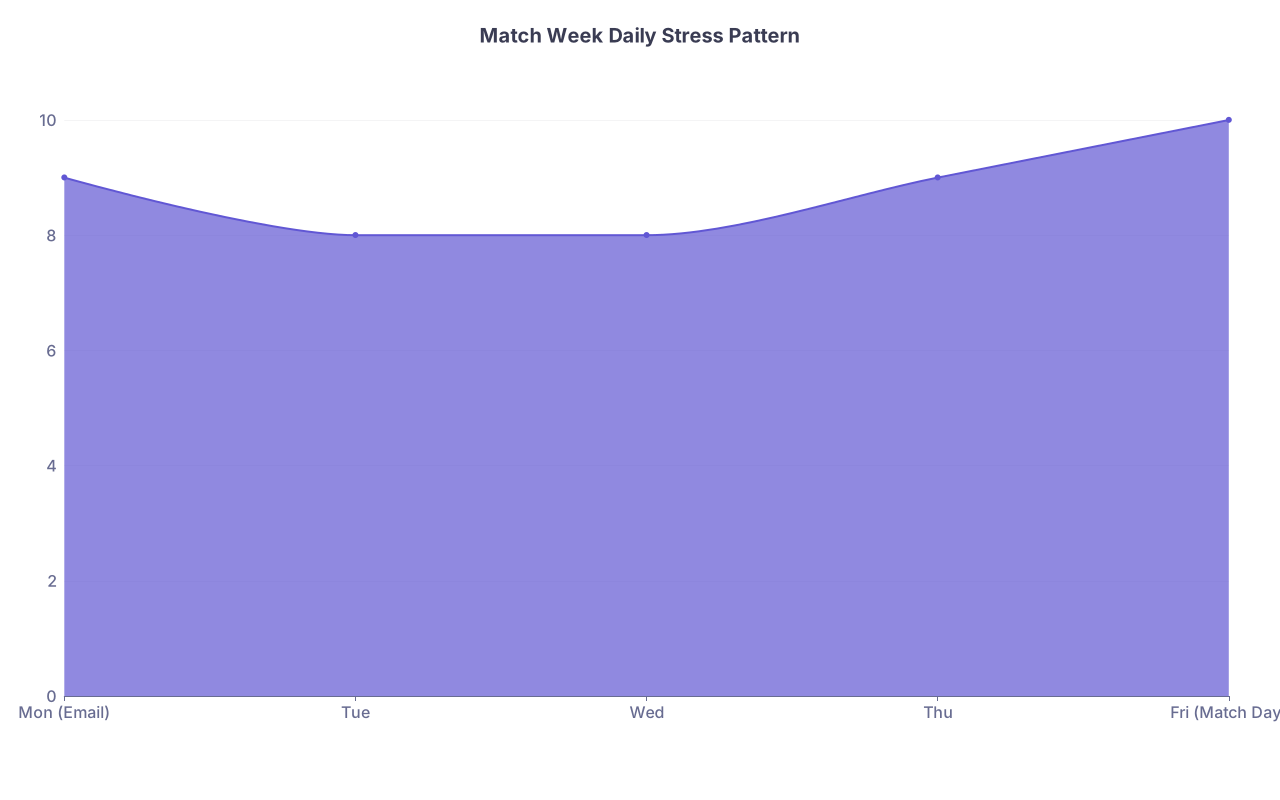
| Category | Value |
|---|---|
| Mon (Email) | 9 |
| Tue | 8 |
| Wed | 8 |
| Thu | 9 |
| Fri (Match Day) | 10 |

Early–Mid March: Pre-Match Week
What usually happens:
- People feel guilty for stressing (“It is out of my hands, I should relax”)
- Brain responds by stressing harder
- Future-tripping through thousands of imaginary match outcomes
By the week before Match Week you should:
Decide your Match Week social plan.
Three options:- Full group events (class parties, watch parties)
- Small circle (1–3 people, family or close friends)
- Mostly solo, with specific check-ins
Pick one intentionally. Do not drift into something bigger than you can handle.
Clarify your “if I do not match” logistics once.
Calmly review:- How SOAP works at your school
- Key contacts (student affairs, advising, mental health)
- Where you would physically be if that email came
Then stop re-reading SOAP instructions every night. You want familiarity, not obsession.
Schedule non-medical anchors.
During the 7–10 days before Match Week:- 2–3 activities unrelated to medicine (hobby, movie, outdoors)
You are allowed to exist outside this process.
- 2–3 activities unrelated to medicine (hobby, movie, outdoors)
Match Week: Monday Email Through Friday
Monday 10–11 a.m. (or whenever your “match / did not match” email arrives) is a massive emotional hit, even if you match.
Guardrail plan:
Block the entire Monday morning.
If your school has not already:- Do not schedule anything clinical around the email
- Have at least one person who knows where you are and checks on you
Have a pre-decided, simple reaction script.
If you matched:- Take 10–15 minutes to yourself before calling everyone
- It is normal to feel more numb than ecstatic initially
If you did not match:
- You are not allowed to be alone the rest of the day. Non-negotiable.
- Immediately loop in student affairs / dean’s office and 1–2 trusted support people. Do not wait “until you have processed.”
Match Day (Friday): decide your envelope strategy.
Some people open in front of everyone and then implode later. Others quietly open with a partner in a hallway first, then rejoin.
Choose:- Who is physically next to you when you open
- Whether you want someone to record video or not (you are allowed to say no)
After Match: The Emotional Whiplash
People expect pure joy. Real life is more complicated.
You might feel:
- Relief mixed with grief for the life you did not choose
- Survivor’s guilt if close friends did not match or matched poorly
- A strange emptiness after a year of constant forward focus
In the 1–2 weeks after Match you should:
Give yourself permission to have mixed feelings.
Matching into your second or third choice can hurt and still be a success. Both can be true.Schedule one structured reflection session.
One evening:- What went well in your process
- What hurt you more than it needed to
- How you want to approach future high-stakes transitions differently (fellowship, job, etc.)
Re-commit to basic health habits before intern year.
Use the relative calm to:- Rebuild a sane sleep schedule
- Restart physical activity, even modestly
- Reconnect with non-medical relationships
Your mental health entering residency matters. You do not want to start PGY1 already fried.