Building a Strong Support Network: Leaning on Colleagues During Emergencies in Residency
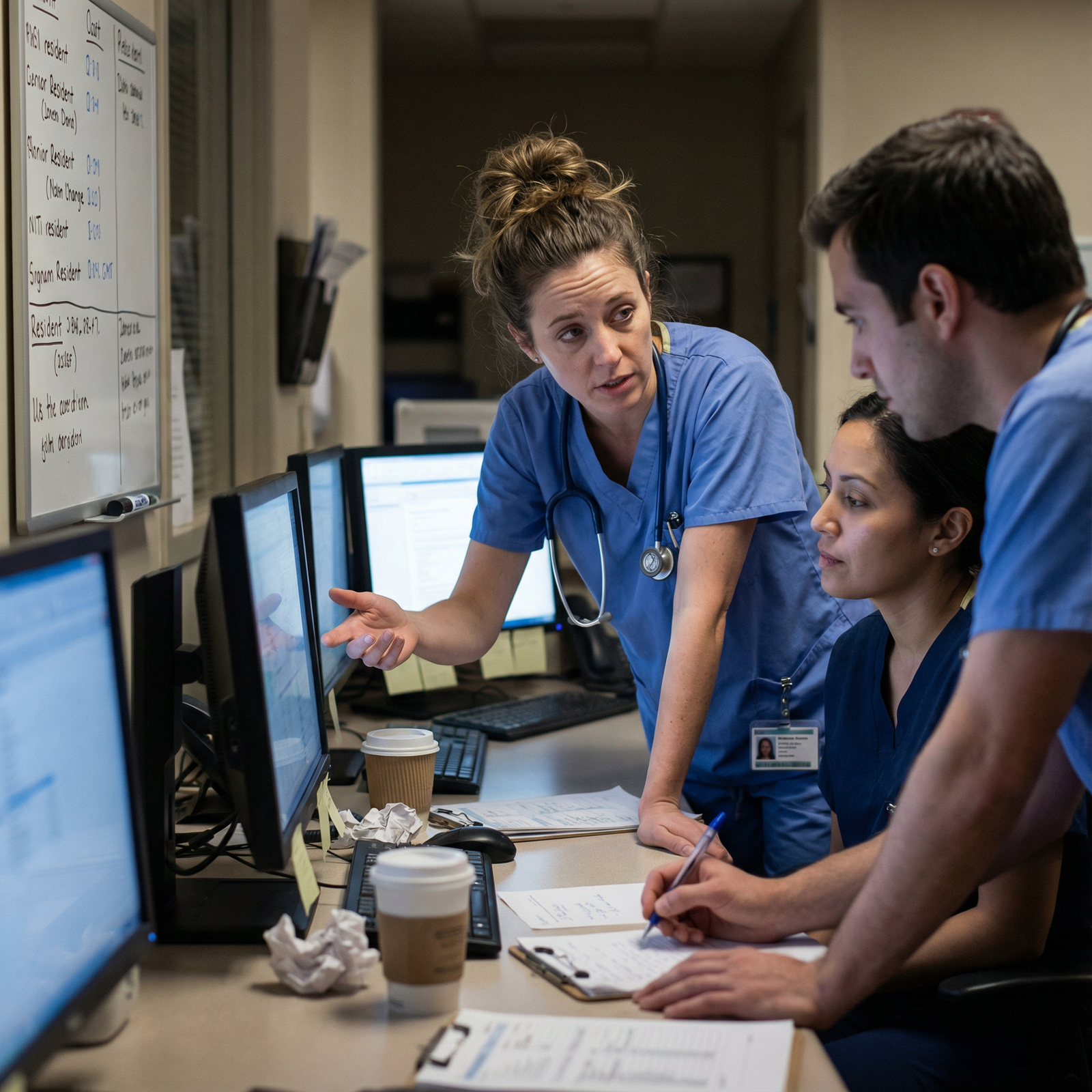
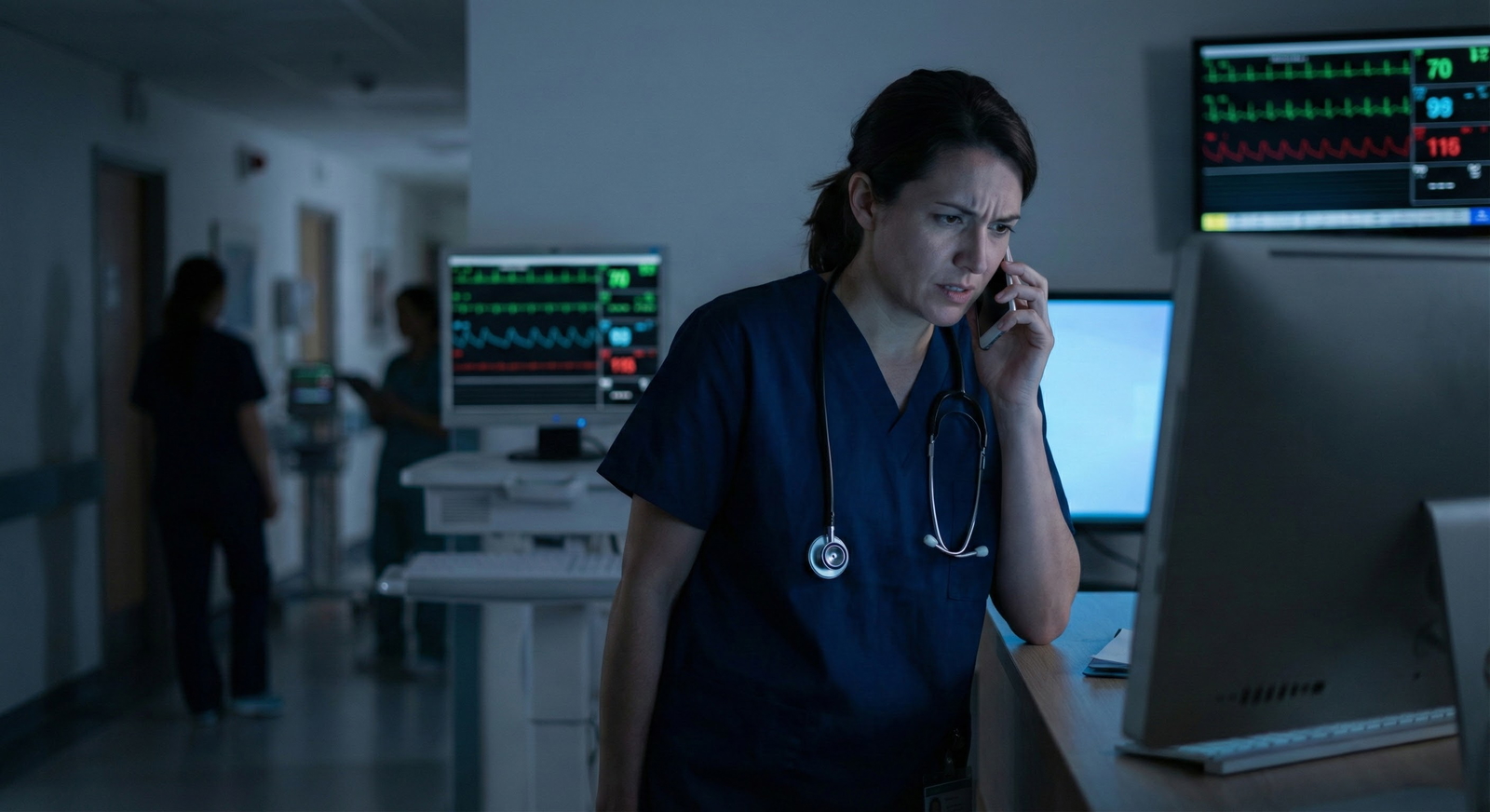
In the demanding world of medical residency, especially during on-call shifts, emergencies do more than test your clinical skills—they test your resilience, communication, and ability to lean on others. A robust Support Network of colleagues is not a luxury; it is a core component of safe patient care, sustainable performance, and your long-term Mental Health.
Emergencies magnify everything: the stakes, the emotions, the workload, and the consequences. When things go wrong at 3 a.m. and you’re the first one called, it can feel isolating—even in a busy hospital. Intentionally building and using a strong support system around you is one of the most powerful ways to protect yourself from burnout and to improve outcomes during high-pressure situations.
This guide focuses on practical, residency-specific strategies to build, maintain, and effectively use your support network—so you’re not facing Medical Residency emergencies alone.
Why a Support Network Matters in Medical Residency Emergencies
A Support Network in residency is more than a group of people you like. It’s an interconnected system of colleagues, seniors, attendings, nurses, and staff you can rely on for:
- Clinical backup in emergencies
- Emotional support after difficult cases
- Honest feedback and learning
- Shared responsibility and reduced isolation
1. High-Stress Environment and Its Impact on Mental Health
On-call shifts, rapid responses, codes, and trauma activations all expose residents to:
- Long, unpredictable hours
- Sleep deprivation and decision fatigue
- Repeated exposure to suffering, death, and high-stakes choices
- Moral distress when ideal care isn’t always possible
Without support, this environment increases the risk of:
- Anxiety and persistent worry before or during call
- Emotional numbing or detachment from patients
- Depression, burnout, and in severe cases, suicidal ideation
A strong Support Network helps you:
- Decompress after intense events (e.g., debriefing with a co-resident after a failed resuscitation)
- Normalize stress responses (“I’ve been there too; this is hard for everyone”)
- Recognize when you or a colleague may need professional help
2. Colleague Collaboration Improves Patient Safety
Emergencies almost always require Colleague Collaboration. No one person has all the answers in complex, rapidly evolving situations. Team-based care is safer care.
Supportive colleague relationships directly improve:
- Willingness to speak up when something seems off
- Efficiency in assigning tasks (“You page the ICU, I’ll talk to the family”)
- Comfort escalating to seniors or consultants early, rather than too late
- Debriefing and systems learning after near-misses
Studies consistently show that cohesive, collaborative teams have better patient outcomes, lower error rates, and higher satisfaction among staff. Building your support network is thus an essential form of Emergency Preparedness.
3. Emotional Resilience and Long-Term Sustainability
Residency is a marathon, not a sprint. The people you lean on during your intern year often become lifelong friends, colleagues, and referral partners. A strong support system:
- Buffers against feeling alone when things go wrong
- Provides perspective (“Yes, this was tough—but you did the right things”)
- Keeps you connected to the meaning and purpose behind medicine
In short, your support network is a key protective factor for your Mental Health and professional longevity.
Foundational Strategies for Building Your Residency Support Network
A strong network doesn’t happen by accident. You need to be intentional—especially early in training—about cultivating trust, familiarity, and mutual reliability.
1. Start Early: Intentionally Build Relationships from Day One
The first weeks of residency set the tone for your relationships.
Practical ways to start:
Introduce yourself broadly
Don’t limit connections to your immediate team. Learn the names of:- Co-residents and fellows in your program
- Nurses on your primary units
- Respiratory therapists, pharmacists, and unit clerks
Show up to social and educational events
- Orientation gatherings, welcome dinners, or retreats
- Noon conferences, journal clubs, resident wellness events
- Informal outings (coffee after call, post-rotation dinners)
These are not just “extras”—they’re where trust is built and where people start seeing you as “part of the team.”
- Join or form study and case discussion groups
Reviewing tough cases or boards-style questions fosters:- Shared vulnerability (“I don’t know this either”)
- Mutual teaching and respect
- A natural bridge from academic collaboration to clinical backup
2. Practice Open, Professional Communication
Effective support requires you to be both approachable and honest.
Tactics for open communication:
Normalize quick check-ins
- At sign-out: “How was your night? Anything particularly tough?”
- During a lull on call: “You doing okay? Need help with anything?”
Be willing to share your own challenges
You don’t have to overshare, but saying things like:- “Last week’s code really stuck with me; I was thinking about it for days”
- “I sometimes worry I’m missing something when it’s this busy”
invites others to be honest too and shows you’re human.
Use nonjudgmental language
When colleagues open up:- Replace “Why did you do that?” with “How did you see it in the moment?”
- Avoid gossiping about others’ mistakes—today it’s them, tomorrow it’s you.
Psychological safety—knowing you won’t be shamed for asking questions or voicing concerns—is the foundation of both learning and real-time Emergency Preparedness.
3. Create and Maintain a “Buddy System”
A buddy system is a simple but powerful structure for Colleague Collaboration.
What a buddy system can look like:
Same-level peer buddy
- Two interns or junior residents who agree to:
- Check in before, during, and after high-intensity calls
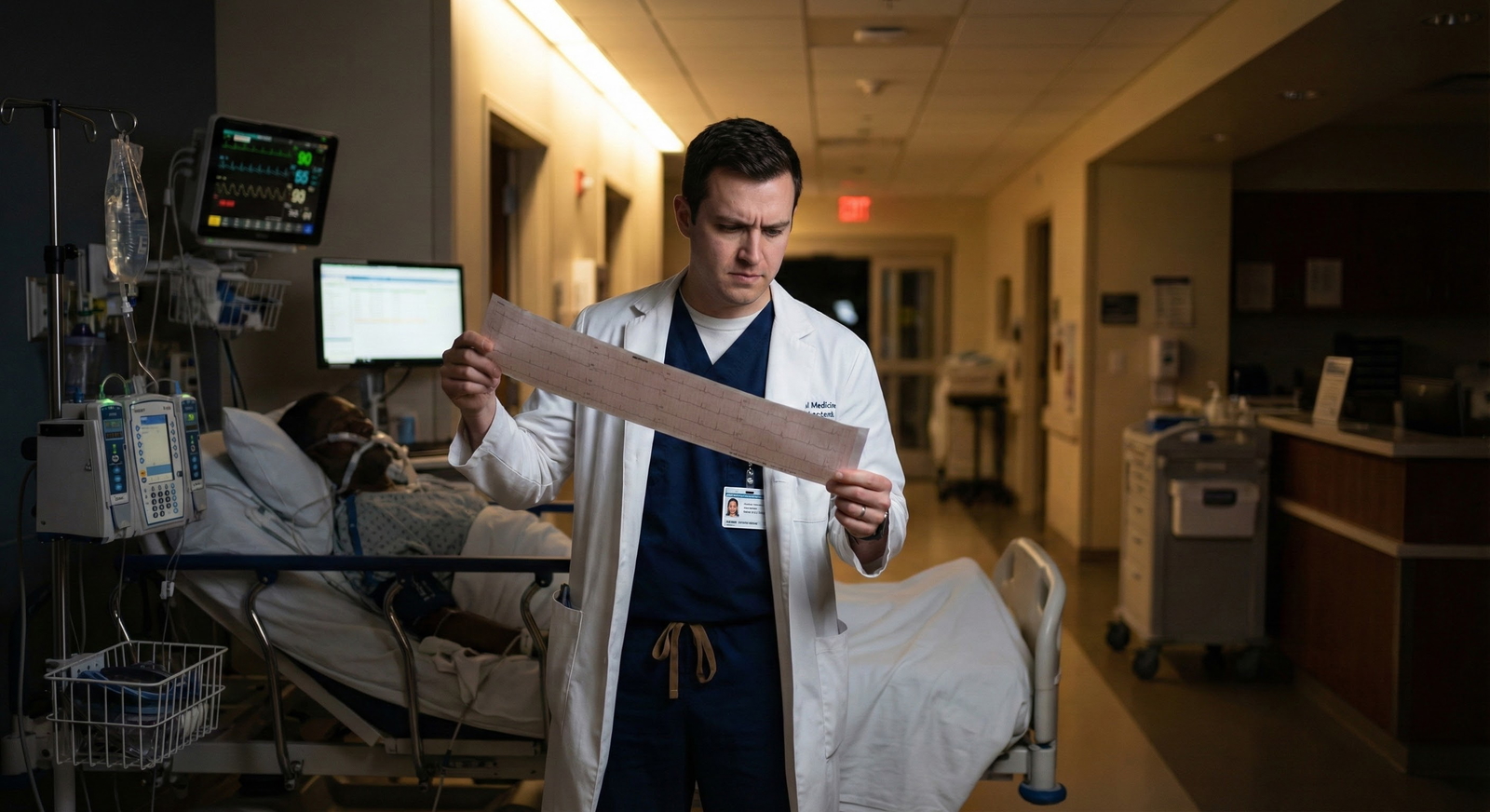
- Be available for “quick sanity checks” (“Can you look at this EKG?”)
- Two interns or junior residents who agree to:
Vertical buddy pairs
- A senior resident assigned to 1–2 juniors:
- Encourages them to call early with questions
- Reviews difficult overnight cases later in the week
- A senior resident assigned to 1–2 juniors:
How a buddy system helps in emergencies:
- Immediate availability of a trusted second set of eyes
- Shared accountability (“If you’re worried, I’ll come see the patient”)
- Reduced hesitation to escalate when unsure
Even if your program doesn’t formally assign buddies, you can create informal mutual support agreements with co-residents.
Leveraging Tools and Systems to Strengthen Your Support Network
Interpersonal relationships are central, but logistics and systems matter too. Using technology and institutional resources wisely can enhance your network and your Emergency Preparedness.
1. Use Technology to Stay Connected and Coordinate Help
Technology can make it easier to reach the right person at the right time.
Group messaging apps (e.g., WhatsApp, Signal, Slack, Teams):
Create focused groups, such as:
- “PGY-1 Night Float” or “MICU Nights Team”
- “OB Emergencies Tips” with senior residents and fellows
Use them to:
- Share pearls about common urgent scenarios (e.g., “Rapid Afib management reminders”)
- Alert each other to system changes (e.g., new sepsis protocol)
- Ask quick, non-patient-identifiable advice (“What order set do you use for DKA?”)
Always follow your institution’s privacy and HIPAA regulations. Avoid sending patient identifiers or sensitive data.
Shared digital resources:
Cloud folders or shared drives for:
- Local emergency protocols and algorithms
- Cheat sheets for common on-call issues (hypertensive emergency, chest pain, agitation)
- Step-by-step guides for calling rapid response or activating specific teams
Pinned posts in chats for:
- Important phone numbers (ICU, anesthesia, surgery back-up)
- Links to hospital policies and escalation pathways
These tools reduce cognitive load when you’re under pressure and make support more accessible.
2. Engage Formal Support Structures: Peer Support, Wellness, and Counseling
Your support network is not limited to fellow residents.
Institutional resources often include:
Peer support programs
- Trained faculty or residents available after adverse events
- Confidential conversations focused on emotional processing, not performance evaluation
Employee assistance programs (EAP)
- Free, often anonymous counseling sessions
- Crisis support after traumatic events
Wellness committees or resident councils
- Organize debrief sessions after major institutional events
- Advocate for schedule changes, call structure, or coverage after sentinel events
Proactively learning what exists at your institution before something goes wrong makes it easier to access help when you actually need it.
Building a Culture of Mental Health Awareness and Collegial Support
A healthy residency environment is one where asking for help is seen as strength, not weakness.
1. Normalize Talking About Mental Health
Stigma is still present in medicine, but you can help shift the culture.
Ways to promote openness:
Use everyday language that acknowledges stress
- “This rotation is tough; how are you holding up?”
- “Last week really drained me. I took a day to reset.”
Share resources openly
- Mention wellness or counseling services in casual conversations:
“I actually talked to the counseling service last month. It was helpful.”
- Mention wellness or counseling services in casual conversations:
Advocate for Mental Health content in formal teaching
- Suggest adding sessions on burnout, coping with error, and grief
- Volunteer to help organize resident support meetings or wellness rounds
2. Recognize Warning Signs in Yourself and Colleagues
Support also means noticing when someone might be struggling.
Red flags can include:
- Sudden withdrawal from team interactions or social events
- Increasing cynicism or irritability on rounds
- Frequent tears, emotional lability, or “flat” affect
- Comments like “It doesn’t matter anymore” or “I can’t do this”
- Marked decline in performance or repeated errors
If you’re concerned:
- Check in privately:
- “I’ve noticed you seem more down lately. I care about you—how are you really doing?”
- Offer concrete support:
- “I can help with a couple of your notes if that would make your night easier.”
- Encourage professional help when appropriate:
- “Would you consider talking to [wellness office/peer support]? I can help you connect.”
You don’t have to “fix” anything; being present and nonjudgmental is often the most powerful intervention.

Emergency Preparedness: Using Your Support Network When It Matters Most
Building a network is only half the equation; knowing how and when to lean on it during crises is just as important.
1. Before the Emergency: Prepare Together
You can reduce panic and chaos by planning ahead as a team.
Practical preparation steps:
Participate actively in simulation drills
- Treat them like real codes: practice calling for help, assigning roles, and speaking up.
- Use them to clarify who to call in which situations (e.g., “When do we activate the massive transfusion protocol?”).
Do brief pre-call huddles
- If multiple residents are on, spend 5 minutes at the start of the shift to:
- Exchange phone/pager numbers
- Identify who is primary for which units
- Agree on when to call each other for backup
- If multiple residents are on, spend 5 minutes at the start of the shift to:
Review escalation protocols
- Know:
- When to call seniors, fellows, or attendings
- How to reach rapid response, OB, anesthesia, or trauma teams
- Where critical supplies are located (code carts, difficult airway carts, etc.)
- Know:
Emergency Preparedness is not just clinical; it’s social and organizational.
2. During the Emergency: Actively Use Your Network
In the heat of a crisis, it’s easy to narrow your focus and try to handle everything alone. Resist that urge.
Key principles:
Call early, not late
- If you’re thinking “Should I call someone?” the answer is almost always yes.
- Early Colleague Collaboration in emergencies is almost never regretted.
Delegate clearly
- Ask specific people to do specific tasks:
- “Dr. Lee, please call the ICU and update them.”
- “Sam, can you get a full set of vitals and a repeat EKG?”
- Ask specific people to do specific tasks:
Use closed-loop communication
- When asking for help, confirm it was heard:
- “Can you draw labs and send a blood gas?”
- “Yes, I’ll do that now and report back with the results.”
- When asking for help, confirm it was heard:
Lean on emotional support even in real time
- A quick “Can you stand with me for this difficult conversation with the family?”
- Or even eye contact and a nod from a colleague can lower your stress.
3. After the Emergency: Debrief, Reflect, and Reconnect
How you and your team process emergencies afterward shapes both your learning and your well-being.
Effective debrief strategies:
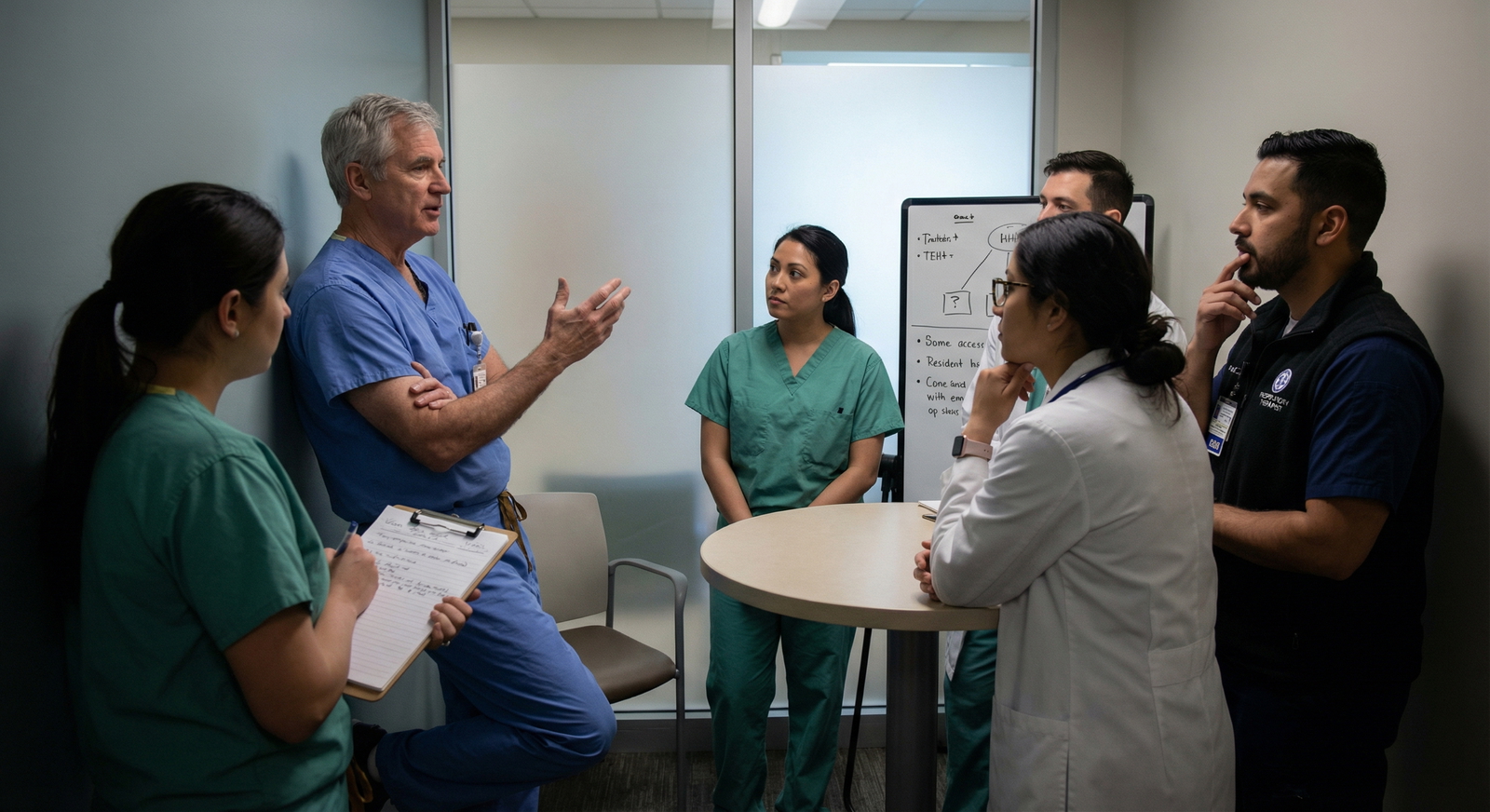
Do a brief, structured clinical debrief
- What went well?
- What could we have done differently?
- Were there system issues (delays, missing supplies) we should report?
Acknowledge emotions
- “That was tough. How is everyone doing?”
- Give space, even if only for a few minutes, for reactions.
Follow up later
- Send a message the next day:
- “Last night was rough. You did a great job with that patient.”
- Offer to review the case together on a calmer day.
- Send a message the next day:
Celebrate wins together
- When things go well—successful resuscitation, timely diagnosis—recognize the team:
- “We handled that really well as a group.”
Positive reinforcement builds trust and cohesion.
- “We handled that really well as a group.”
- When things go well—successful resuscitation, timely diagnosis—recognize the team:
Sustaining and Strengthening Your Support Network Over Time
Support networks evolve as you progress through training. Being intentional about maintaining them leads to more stable, reliable connections.
1. Reciprocity: Be the Support You Want to Receive
Mutual support is what keeps a network strong.
- Offer help when your load is lighter:
- “I’m caught up on notes—want me to see one of your admissions?”
- Show up for others after their tough nights or rotations.
- Share your knowledge generously; teaching is an act of support.
When people know you’re there for them, they’ll be more likely to be there for you.
2. Respect Boundaries and Individual Differences
People cope in different ways.
- Some want to talk right after an event; others need a day.
- Some prefer formal debriefs; others are more comfortable in one-on-one conversations.
Ask instead of assuming:
- “Would you like to talk about it now, or should we check in later?”
Respecting colleagues’ boundaries builds trust and prevents well-intentioned support from feeling intrusive.
3. Adapt as Roles Change
As you advance from intern to senior resident, or from resident to fellow, your place in the support network shifts.
- You may become a primary support person for juniors.
- Your own support may come more from peers and co-seniors.
Stay connected across levels and across specialties—these relationships will remain valuable long after residency.
FAQs: Support Networks, Emergencies, and Mental Health in Residency
1. Why is building a support network during residency so important for emergencies?
Because emergencies amplify stress, uncertainty, and responsibility. A strong support network provides rapid clinical backup, emotional containment, and shared decision-making. This reduces errors, improves patient outcomes, and protects your Mental Health, especially during frequent or prolonged on-call shifts.
2. I’m new and afraid of bothering my colleagues. How do I ask for help without feeling incompetent?
Frame your requests around patient safety and shared responsibility:
- “I’d like a second set of eyes on this patient to make sure I’m not missing anything.”
- “This is my first time managing this situation—can you walk through it with me?”
Most residents and attendings prefer you ask early rather than struggle alone; that’s a sign of professionalism, not weakness.
3. What should I do if I feel emotionally overwhelmed after a difficult emergency?
Start with someone you trust: a co-resident, senior, nurse, or mentor. Say something simple like, “That case really affected me—can we talk about it?” Also consider using formal resources: peer support programs, wellness services, or counseling. Seeking help early can prevent more serious Mental Health issues down the line.
4. How can I support a colleague who seems burned out or emotionally withdrawn?
Check in privately and nonjudgmentally:
- “I’ve noticed you seem really drained lately. I’m here if you want to talk.”
Offer specific help (“Can I take one of your admissions?”) and encourage them to use available resources. If you’re seriously worried about their safety, escalate to a trusted faculty member, chief resident, or wellness office.
5. How does Emergency Preparedness relate to my support network?
Emergency Preparedness is not just about algorithms and protocols—it’s knowing who you can call, how you communicate under pressure, and what roles each person can play. Practicing together (simulation drills, pre-call huddles, team debriefs) strengthens your Support Network and makes real emergencies more manageable and safer for both patients and staff.
A well-built support network transforms residency from a solo endurance test into a team-based, sustainable journey. By investing in your relationships, communicating openly, using institutional resources, and preparing together for emergencies, you strengthen not only your own resilience but also the safety and quality of care you provide.