
Last winter, a chief resident closed my office door and said, “We need to talk about R.” Stellar numbers, admired by faculty, always picked up extra shifts. Yet in three separate meetings that week, different attendings used the same phrase: “Something’s off.” Three months later, that resident was on medical leave for a full-blown breakdown.
Let me tell you the part students and residents never see: the moment before it all explodes. The subtle, uncomfortable shift when faculty start whispering, “Is she okay?” but nobody says it to your face.
What Committees Actually Watch For (That You Don’t See)
You think committees only care about your evaluations, your Step scores, your publications. That is the official story. The unofficial story is this: every competent program director has a running mental list of “risk for decompensation.”
They don’t call it that in emails. It shows up as, “Keep an eye on him,” or “Limit her nights for a bit,” or my personal favorite, “He’s working very hard—let’s make sure we support him.”
Translation: we’re picking up signals you’re near a breakdown.
Here’s the uncomfortable truth: by the time you feel like you’re just “starting to slip,” a few attendings have usually already noticed. They see the pattern before you do because they’re comparing you to hundreds of trainees they’ve watched burn out, get reported, disappear, or land in front of the GME committee.
And they are not looking at what you think.
They’re not obsessing over a single bad shift or one snappy comment. They’re watching for clusters of quiet behavioral changes that scream: this person is running out of psychological runway.
Let’s walk through those signals. The real ones. The ones that make PDs start asking, “Is this a wellness issue, a professionalism issue, or a safety issue?” Because once it’s in those terms, decisions get made about you—without you in the room.
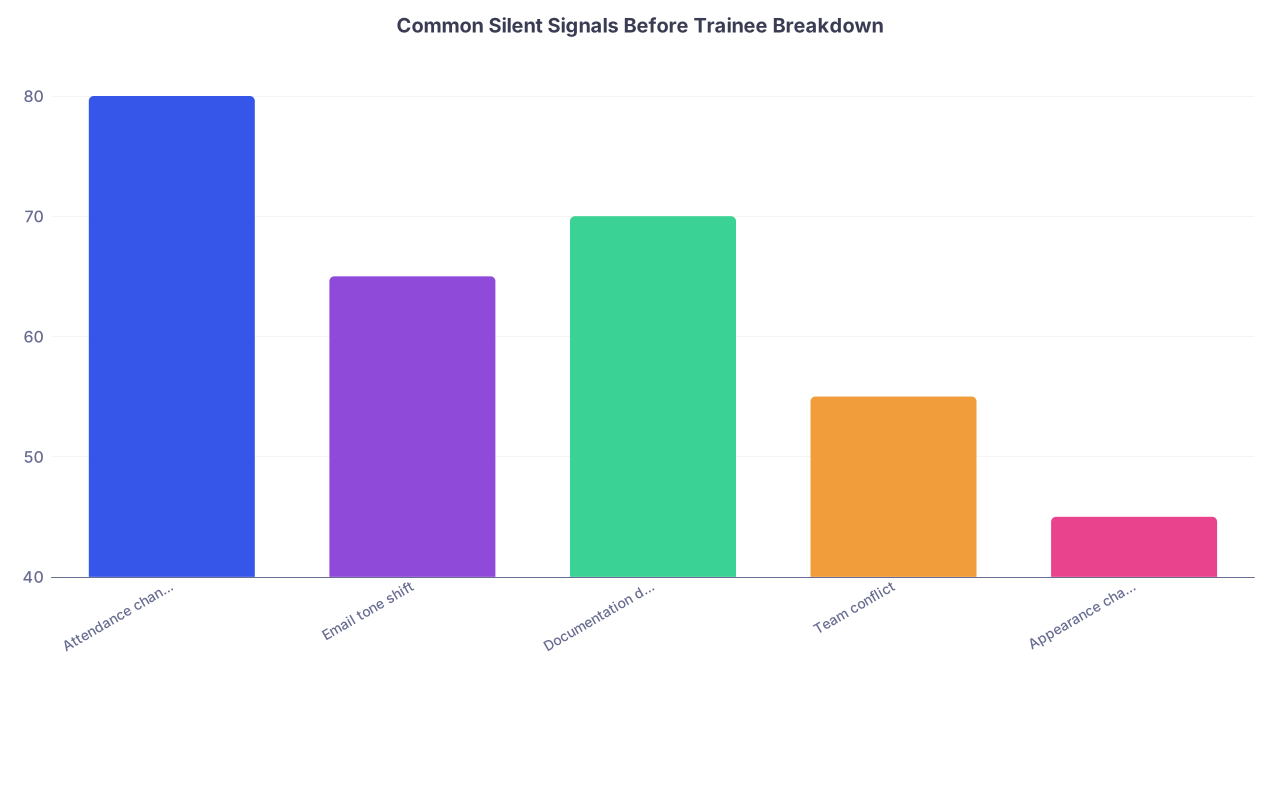
| Category | Value |
|---|---|
| Attendance changes | 80 |
| Email tone shift | 65 |
| Documentation delays | 70 |
| Team conflict | 55 |
| Appearance changes | 45 |
Signal #1: Your Reliability Starts to “Wobble”
Committees are obsessed with reliability. Not brilliance. Not charm. Reliability.
The first red flag is almost always small, repeated disruptions in reliability. Not one late arrival. A pattern that feels… off rhythm.
What they see on paper:
- More call swaps than usual
- Increased “sick” days that don’t escalate to formal leave
- Rotation directors sending quiet emails: “Just checking if everything is okay with X, had a few small concerns”
What attendings say behind closed doors:
- “She used to be rock solid. Now she’s late a lot, and it’s not like her.”
- “He keeps calling out post-call. I’m not sure he’s coping.”
- “Something’s different this block. I can’t put my finger on it, but the energy is off.”
Here’s the key: they’re comparing you to your old baseline. Not to your co-residents. When your pattern shifts—suddenly more disorganized, missing small tasks, struggling to close charts—that’s when committees start seeing vulnerability.
Once your name hits the “soft watch list,” it stays there for a while. Even if nobody tells you directly.
This is why “I’m fine, just tired” doesn’t convince anyone. They’ve heard that exact sentence from 20 people who later crashed.

Signal #2: The Tone of Your Emails and Notes Changes
This one surprises people, but experienced faculty spot it instantly.
Everyone underestimates how much your writing betrays your mental state. Email tone and documentation style are some of the earliest reliable indicators that you’re unraveling.
What program directors quietly notice:
- Emails that used to be concise and professional become oddly long, defensive, or emotional
- Or the opposite: abrupt, almost cold, with a “just tell me what you want” energy
- Increased typos, weird formatting, scattered thoughts in H&Ps or notes
- Consult notes that ramble, lack structure, or sound oddly irritated
I’ve sat in CCC meetings where someone pulls up a resident’s email to a nurse or coordinator and says, “Read this. This isn’t just unprofessional. This is someone who’s not coping.”
They’re not only asking, “Is this rude?” They ask: “Is this burnout? Depression? Substance? Cognitive overload? Sleep deprivation?”
The ethics piece? Once your writing signals distress, people should intervene supportively. In reality, half the time it’s framed first as a professionalism concern, not a wellness concern.
So now you’re under the microscope for being “difficult” when the real story is: you’re drowning.
If you notice yourself rewriting angry emails, overexplaining simple things, or avoiding responding at all—those are your own early warning signs, whether or not the committee has noticed yet.

| Step | Description |
|---|---|
| Step 1 | Baseline functioning |
| Step 2 | Subtle changes in behavior |
| Step 3 | Faculty start to comment quietly |
| Step 4 | Name added to watch list |
| Step 5 | Pattern of incidents builds |
| Step 6 | CCC or professionalism review |
| Step 7 | Supportive plan or formal action |
Signal #3: Your Interpersonal Style Warps
Every burned-out trainee thinks they’re “holding it together.” They’re wrong. The team feels the shift long before leadership gets involved.
Here’s how it actually spreads:
Week 1: A nurse tells another nurse, “He snapped at me again; is he always like this?” Week 2: A fellow mentions in passing, “She seems really on edge. Everything feels like a fight.” Week 3: A student goes to the clerkship director and says, “Honestly, I’m scared to ask him questions.”
That last one? That’s what triggers official attention.
Faculty talk in code:
- “Not a bad person, but there’s a lot of intensity on rounds.”
- “She seems very fragile lately; feedback is becoming hard.”
- “He’s good clinically, but the team is walking on eggshells.”
Committees are watching for:
- Overreaction to minor feedback (tears, anger, visible shutdown)
- Repeated reports that “the team feels uncomfortable”
- Students placing you at the extremes of evaluations: “best ever” or “worst ever,” with emotional commentary
They know the pattern. People nearing a breakdown lose flexibility. Everything feels personal. Every suggestion feels like an attack. You start orbiting around your own distress so tightly you stop seeing how you’re affecting the room.
Ethically, attendings should frame this as a wellness and support issue. Many do. Some don’t. They label you “difficult” instead of “distressed.” And once that word appears in writing, it sticks.
If your friends are saying, “You’ve been really snappy lately,” believe them. They’re telling you what the committee will be discussing in three months if nothing changes.
| Area | Normal Stress Behavior | Concerning Silent Signal |
|---|---|---|
| Attendance | Rare late arrivals with explanation | Pattern of small tardies and call-outs |
| Documentation | Occasional late note | Consistent backlog, disorganized content |
| Communication | Brief, neutral emails | Defensive, emotional, or oddly cold responses |
| Team Dynamics | Occasional irritation | Team avoiding you, repeated “on edge” comments |
| Self-Care | Tired but functional | Visible decline in hygiene or exhaustion |
Signal #4: Your Charting and Cognitive Work Fall Apart
This is where wellness stops being just “your problem” and becomes a patient safety issue. That’s when committees move fast.
Faculty look for more than just “slow notes.”
Here’s what actually triggers the alarm:
- Repeated incomplete charts with key elements missing
- Confused or contradictory plans from note to note
- Nursing notes and resident notes that don’t match the actual bedside story
- Consultants emailing attendings saying, “Is your resident ok? Their consult was… concerning.”
I remember one resident in IM: top quartile on exams, sharp on rounds. Over three months, her notes became longer but emptier. Tons of words, not a lot of thinking. Labs miscopied. Med lists unchecked. When the CCC reviewed her, we didn’t start with “knowledge deficit.” The room went quiet and someone said, “She looks like every resident I’ve seen right before they completely crash.”
We pulled her schedule. Sure enough—too many nights. Family illness. Relationship breakup. Zero support requested.
Here’s the ugly part: on paper, these get documented as “documentation deficiencies,” “concerns about organization,” “possible patient safety risk.” The formal language doesn’t say “this person is breaking.” But that’s exactly what’s happening.
If you notice:
- You’re rereading the same labs multiple times and not retaining them
- You keep missing small but important checklist items
- You’re double- and triple-checking simple decisions because you don’t trust your own mind
That is not just “being tired.” That is cognitive bandwidth collapsing under chronic stress. Your brain is throwing a red flag.
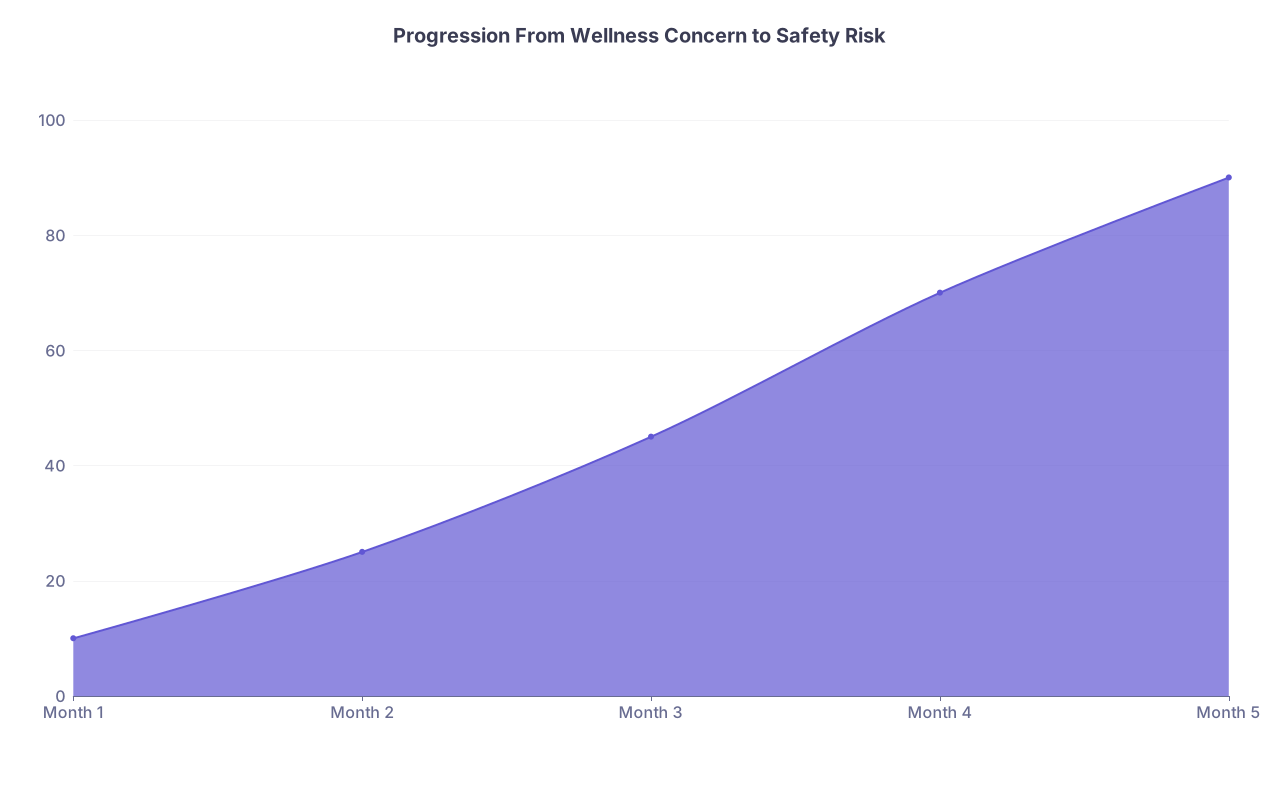
| Category | Value |
|---|---|
| Month 1 | 10 |
| Month 2 | 25 |
| Month 3 | 45 |
| Month 4 | 70 |
| Month 5 | 90 |
Signal #5: Your Physical Presence Starts to Tell the Story
Let me be blunt: your body will out you before your mouth does.
Committees and attendings quietly register:
- Noticeable weight loss or gain over a short period
- A resident who suddenly looks like they slept in their scrubs
- Repeatedly bloodshot eyes, tremor from too much caffeine, near-manic energy on rounds
- Or the opposite: slowed movement, flat affect, eyes dull, posture caved in
No one writes “looks terrible” in an official evaluation. They write:
- “Appears very fatigued”
- “May benefit from improved self-care”
- “Often seems disengaged or down”
On the wellness side, some PDs see this and pull you aside: “You look wrecked. What’s going on?” The more cynical ones shrug and say, “Residency is hard,” until something acute happens—an error, a complaint, a tearful outburst.
Here’s the behind-the-scenes truth: once multiple faculty mention your appearance as a concern, even gently, the committee begins to frame your entire performance through that lens: “Is this sustainable?” “Are we watching someone spiral?”
If you see yourself in the mirror and think, “I don’t recognize myself,” take that seriously. The committee might be thinking the same thing and deciding your fate without you knowing why it changed.

Signal #6: The Way You Talk About Medicine Turns Dark
There’s a shift we all hear. And once you’ve been around long enough, you can’t miss it.
Early trainee under normal stress: “I’m exhausted, but it was a good learning case.” “That call was brutal, but at least we stabilized her.”
Trainee nearing the edge: “I don’t care anymore.” “None of this matters.” “I hate this place. I hate these patients. I hate my life.”
You may think you’re just venting to co-residents, but that language spreads. Someone mentions it to a chief. The chief, if they’re good, flags it to the PD: “I’m worried about him. He’s not just tired. He’s nihilistic.”
Ethically, that should trigger support, not judgment. Sometimes it does. Sometimes your words get wrapped into narratives like “poor attitude” or “cynical,” especially if your performance is also slipping.
I’ve watched brilliant students talk themselves into trouble by broadcasting their despair too widely in the wrong rooms. Faculty start to ask: “Is she safe with patients?” “Is he going to quit mid-year?” “Can the team trust him?”
If your internal monologue is dark, you need help, not a professionalism lecture. But you cannot count on the system to understand that distinction. Protect yourself by getting support before your hopelessness becomes your reputation.
The Ethical Dilemma: Care vs Control
Let’s talk ethics, since that’s the category you put this under.
Every committee sits at an uneasy intersection of:
- Protecting patients
- Protecting the trainee
- Protecting the institution
That order shifts depending on who’s in the room.
On a good day, subtle signals prompt a quiet, compassionate intervention: “Let’s reduce her call.” “Let’s get him to counseling.” “Let’s connect her with a mentor, maybe adjust this rotation.”
On a bad day, the same signals get sorted into the “problem resident” bucket: “Document these concerns.” “We may need to put him on remediation.” “Make sure we protect ourselves if something happens.”
The silent signals you’re sending can be interpreted through either lens—support or discipline. And yes, there’s bias. Residents from marginalized backgrounds get labeled “angry,” “unprofessional,” or “not a team player” for the same distress others get helped for. I’ve seen it. Often.
So here’s the uncomfortable ethical truth: you cannot rely on the system’s conscience alone to protect you. You have to recognize your own warning signs earlier than they do, and you need allies who see you as a person, not just a risk.

How to Use This Knowledge Without Paranoia
You don’t need to walk around terrified that every yawn is being documented. That’s not the point.
You should, however, treat these signals as a mirror. If you’re:
- Swapping more calls than ever
- Snapping at people you like
- Letting email and charting pile up
- Hearing from multiple people that you “seem different”
- Starting to hate everything and everyone
…then you are closer to the brink than you think. Not because you’re weak. Because medicine is built like a pressure cooker and assumes you’ll wait until you explode before you ask for help.
You can outmaneuver that by acting earlier than the system does.
Have one honest conversation with someone who has actual power and a track record of decency—a trusted attending, PD, APD, chief. Not a vague “I’m stressed,” but a specific:
“I’m noticing I’m not functioning like myself—snapping at people, falling behind on notes, not caring about things I normally care about. I don’t want this to become a patient care issue or a professionalism issue. I need help adjusting something now before it gets there.”
Those words change how your situation is framed. You go from “resident we’re worried about” to “resident who showed insight and asked for help.” Committees love “insight.” It’s code for “salvageable and worth investing in.”
And if the first person brushes you off? That tells you more about them than about you. Try someone else. The good ones will hear those words and move mountains quietly.
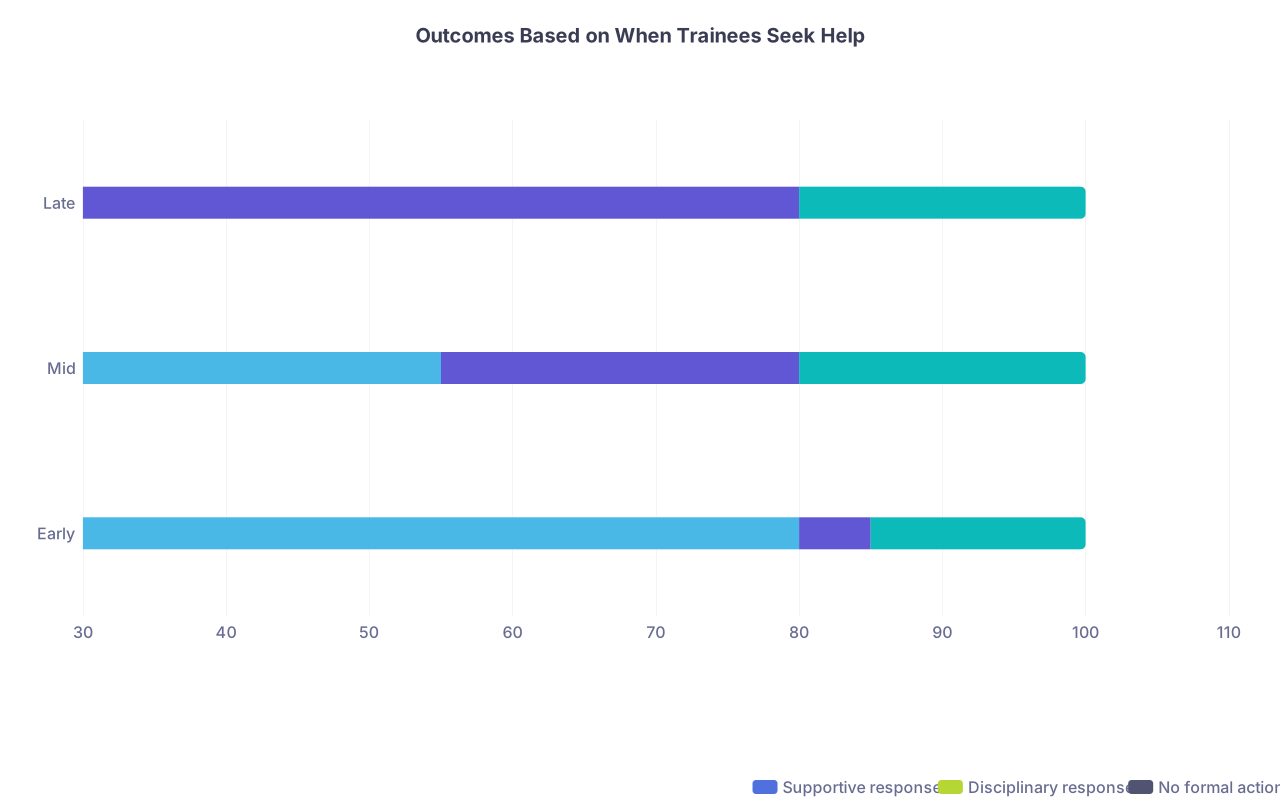
| Category | Supportive response | Disciplinary response | No formal action |
|---|---|---|---|
| Early | 80 | 5 | 15 |
| Mid | 55 | 25 | 20 |
| Late | 30 | 50 | 20 |
Final Reality Check
You won’t get an email that says, “We think you’re close to a breakdown.” That’s not how this works. You’ll sense it in how people start watching you more closely, in how much detail shows up in your evals, in how often your name comes up in meetings you’re not invited to.
The silent signals are real:
- Your reliability, tone, and presence shift before you consciously admit you’re in trouble.
- Committees notice and start making decisions about you—sometimes to help, sometimes to control risk.
- You have more power than you think if you recognize the pattern early and ask for help before they label you.
You’re not supposed to white-knuckle your way through training until something breaks. The ones who last aren’t tougher. They’re just earlier to recognize the cracks.