

It is Sunday night. Your exam is on Friday. You can already feel the tightness in your neck and that low-grade guilt that you are not doing enough. Fast-forward eight days: the exam is done, you are scrolling aimlessly, and your brain feels like oatmeal. You know you should be “recovering well” and “being professional,” but practically? What exactly changes in your self-care plan before vs after the exam?
This is where people either burn out quietly or build something sustainable. Let’s walk it chronologically.
Two Weeks Out: Setting the Framework
At this point you should stop improvising your life day to day. Exams are predictable enough that your self-care can be scheduled with the same seriousness as your study blocks.
10–14 Days Before the Exam: Build the Skeleton
Your main job here: design two different weeks.
- A Pre-Exam Week plan (performance-focused, tightly structured).
- A Post-Exam Week plan (recovery-focused, more flexible, but not chaos).
Write them both down. Side by side.
| Week Type | Primary Goal | Study Intensity | Sleep Target | Social Life |
|---|---|---|---|---|
| Pre-Exam Week | Performance | High | 7–8 hours | Limited |
| Post-Exam Week | Recovery | Low–Moderate | 8–9 hours | Rebuild |
| Normal Week | Baseline Flow | Moderate | 7–8 hours | Moderate |
At this point you should:
- Decide your bedtime/wake time for pre-exam week. Lock it in now.
- Decide what post-exam day 0–1 looks like (the 24 hours immediately after).
- Pick 3 non-negotiable self-care anchors you will keep in both weeks
Examples:- 20–30 minutes of movement daily
- 1 consistent meal with real protein and fiber
- 10 minutes screen-free before bed
If you do not pre-decide this, pre-exam panic and post-exam emotional crash will decide for you. And they are terrible planners.
Pre-Exam Week: Day-by-Day Adjustments
Now we enter the tight phase. At this point you should prioritize cognitive performance and ethical behavior (toward yourself and patients) over everything else.
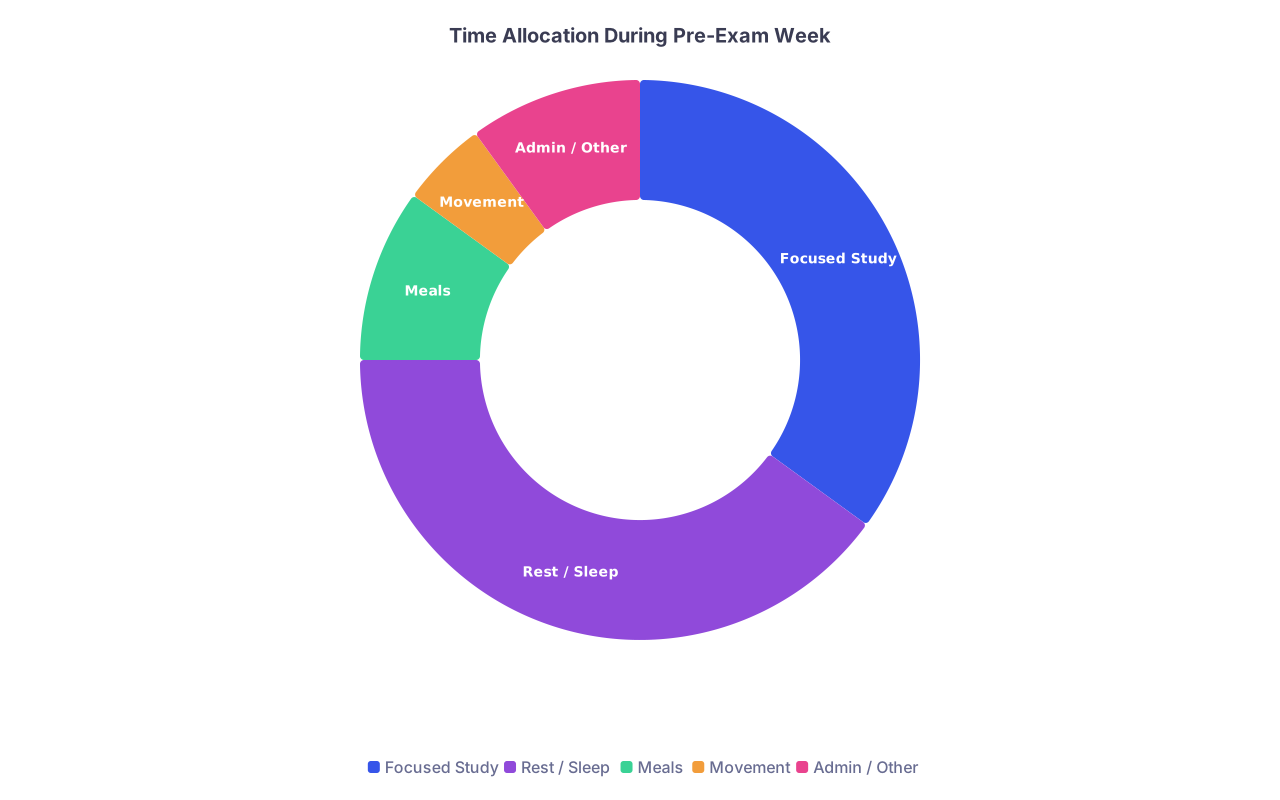
| Category | Value |
|---|---|
| Focused Study | 35 |
| Rest / Sleep | 40 |
| Meals | 10 |
| Movement | 5 |
| Admin / Other | 10 |
Pre-Exam Week: Big Rules
Before we drill down by day, a few clear stances:
- Cutting sleep below 6 hours nightly is not “hardcore.” It is self-sabotage.
- Changing your entire diet or exercise pattern this week is a mistake.
- Social drama and big life decisions? Deferred. You are in exam protection mode.
Daily Baseline for Pre-Exam Week (Mon–Thu, exam Friday example)
At this point each day should roughly follow:
- Wake at consistent time (±30 minutes).
- First 90–120 minutes: no phone, deep work only (Anki, question blocks, or reviewing incorrects).
- One planned 20–30 minute movement block.
- Three planned meal windows. Not “whenever I remember.”
- Hard stop to new content 24–36 hours before the exam.
Let us walk the days.
T–5 Days (Monday): Lock the Structure
Focus: set the tone and test your schedule.
At this point you should:
- Run the schedule you think you can sustain all week.
- Do one full-length or near full-length intense study block during the hours your exam will occur. Train your brain’s clock.
- Pay attention to how you feel at:
- 10:00 (mid-morning energy)
- 14:00–15:00 (post-lunch crash)
- 20:00–22:00 (sleep drive)
Self-care specifics for Monday:
- Movement: moderate (walk, light jog, yoga). Do not PR your deadlift.
- Nutrition: avoid large new foods, excessive caffeine experiments. Keep it boring and predictable.
- Boundaries: decide when you will no longer say yes to extra shifts, meetings, or favors this week. And actually say no.
Ethical angle: if you are on rotation, you have a duty to not be a zombie. Overextending to “show commitment” while your performance drops is not professionalism. It is vanity.
T–4 Days (Tuesday): Fine-Tune and Trim
Focus: tighten what worked Monday; remove what did not.
At this point you should:
- Review Monday:
- What time did your brain stop absorbing anything?
- Which breaks made you feel better vs more scattered?
- Make one change to your schedule. Not six.
Self-care specifics for Tuesday:
- Sleep: aim for full 7.5–8 hours. Think of this as banking resilience.
- Screen control: move doom-scrolling off your phone’s home screen.
If you have to search for the app, you will use it less. - Social: brief, supportive contact only. 10-minute call with someone who calms you, not someone who catastrophizes exams.
T–3 Days (Wednesday): Peak Cognitive Load, Controlled Body
This is usually your highest intensity study day. People overdo everything here—caffeine, sitting, anxiety.
At this point you should:
- Run 2–3 high-yield study blocks with strict timers (50 on / 10 off or 90 on / 15 off).
- Plan your last heavy content day. Past this, you are consolidating, not absorbing brand new material.
Self-care specifics for Wednesday:
- Movement: short, more frequent (3 x 10–15 min walks) rather than one long workout.
- Caffeine: plateau. Whatever you consume today is the maximum you take on exam day. No jumping from 1 cup to 4.
- Mind: 5–10 minutes of some form of grounding:
- Box breathing
- Quick body scan
- Brief meditation or prayer
This is also where people start muttering “I am going to fail” under their breath. Hear that and challenge it directly. Loud, global self-condemnations are not harmless. They train a pattern that will bleed into how you talk to patients and colleagues.
T–2 Days (Thursday if exam is Saturday; Wednesday if exam is Friday): Downshift
Now you are protecting your brain. Not cramming.
At this point you should:
- Stop adding new topics. Only:
- Light review of summary notes
- High-yield flashcards
- Reviewing your worst question patterns
- Time-block your exam morning routine on paper. Literally write:
- Wake time
- Breakfast
- Commute / login
- What you bring (ID, snacks, water)
Self-care specifics:
- Sleep priority night.
If you usually sleep at 23:30, you can move it 30–60 minutes earlier, but do not suddenly try 21:00 if you never do that. - Food: practice your exam-day breakfast now. If it makes you sleepy or jittery today, you will not magically tolerate it better on exam day.
- Social: avoid high-conflict conversations. No “we need to talk” with your partner, no fighting in the group chat about questions.
Ethically, this is where your choices impact others. If you are irritable and reckless with people because “I have an exam,” you are practicing a bad habit. Grit does not excuse rudeness.
T–1 Day (Day Before Exam): Protect the Edges
You are here. The day before. At this point you should feel slightly under-studied and slightly calmer than you expect. That is the sweet spot.
At this point you should:
- Cap study by mid-afternoon (15:00–16:00).
- Do only:
- Light review of very high-yield lists
- Familiar question stems just to keep your brain warm
- Confirm logistics:
- Route / parking / login details
- What to wear (layers, comfortable shoes)
- What time you must leave to arrive 30 minutes early
Self-care specifics:
- Movement: gentle. Walk, stretch, maybe easy yoga. No HIIT.
- Evening routine:
- Prep clothes, bag, ID, snacks by the door.
- Digital cutoff 60 minutes before bed.
- Something genuinely relaxing that is not school or social media drama—low-stakes TV, reading fiction, talking to someone safe.
Sleep will not be perfect. That is fine. One bad night on top of several decent nights is still okay.
Exam Day: Micro-Self-Care Only
Exam morning is not the time to reinvent your habits.
At this point you should:
- Follow the routine you rehearsed:
- Same breakfast as T–2
- Same caffeine as your last few mornings
- Same wake window (do not suddenly wake 3 hours earlier than usual)
- Use very short grounding techniques:
- 60 seconds of slow breathing in your car or bathroom stall
- A brief reset after each section: stand, shoulder rolls, eye focus far away for 20 seconds
Your only self-care decision-making now is micro:
- If you feel panic rising: longer exhale breaths, feet flat on floor, name 5 things you can see / 3 you can hear.
- If you hit the “I blew it” spiral halfway: remind yourself you have no idea how anyone else is doing, and your job is to maximize the remaining questions.
You are not obligated to discuss the exam immediately after. In fact, you probably should not.
Immediately Post-Exam (Day 0–1): Controlled Decompression
This is where students swing from monastic discipline to scorched earth. Binge drinking, all-nighters on Netflix, picking fights, ghosting.
You can celebrate without wrecking yourself.
At this point (0–24 hours post-exam) you should:
- Do one clear celebratory thing:
- Dinner with a friend
- Movie night
- Long walk and favorite takeout
- Keep the anchors:
- Eat an actual meal
- Get to bed within 1–2 hours of your usual time
- Move your body at least a little the next day

Ethical piece: if you are on service again soon, your team and your patients get you back. Hungover, sleep-deprived you is not fair to them, no matter how justified you feel.
Avoid:
- Rehashing every question in a group chat.
- Googling answers obsessively.
- Stalking Reddit for “official answer keys” that are not official at all.
You are not processing. You are retraumatizing your brain.
Post-Exam Week: Rebuild, Do Not Collapse
Now we do the other half of the plan you wrote two weeks ago.
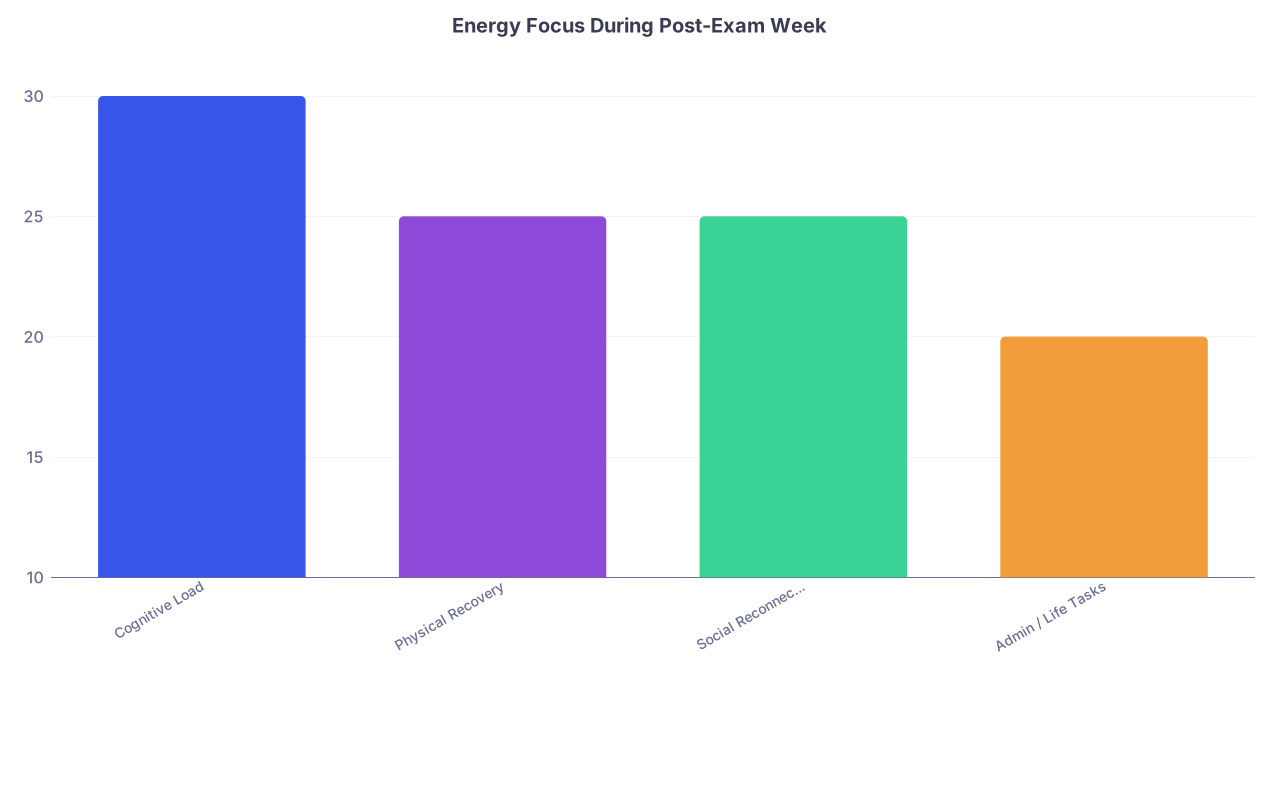
| Category | Value |
|---|---|
| Cognitive Load | 30 |
| Physical Recovery | 25 |
| Social Reconnection | 25 |
| Admin / Life Tasks | 20 |
Day 1–2 Post-Exam: Active Recovery
At this point you should:
- Shift from intense mental work to:
- Light physical activity
- Low-stakes tasks (laundry, cleaning your desk, inbox control)
- Put structure back into your days but with shorter obligations.
Self-care specifics:
- Sleep: allow an extra 30–60 minutes, but still wake within 1–2 hours of your usual time. Full reversal of your schedule will hurt later.
- Movement: slightly more than exam week. Maybe a real workout, but not maximal. Your nervous system is still calming down.
- Reflection: short, structured:
- What prep strategies actually helped?
- What wrecked you unnecessarily?
Write it down while it is fresh. Future-you will not remember clearly.
Day 3–4 Post-Exam: Identity Rebalancing
People forget this step and end up feeling hollow. You have been “exam-person” for weeks; you need to reclaim the rest of your life.
At this point you should:
- Reconnect with non-medical parts of your identity:
- Hobbies that have nothing to do with medicine
- Friends who could not care less about your score
- Do at least one thing that reminds you you are more than your CV:
- Play an instrument
- Work on art or writing
- Volunteer briefly somewhere non-academic
Ethical and professional angle: if your entire self-worth is score-based, you will treat patients and colleagues similarly—valuing productivity over humanity. That is a problem. Start fixing it now.
Self-care specifics:
- Social: schedule 1–2 deeper catch-ups rather than 6 shallow, exhausting hangouts.
- Digital: loosen restrictions a bit, but still avoid mindless 4–5 hour scroll sessions. Those do not restore anyone.
Day 5–7 Post-Exam: Gentle Re-entry to Baseline
By now, the adrenaline has faded. This is where you quietly decide whether your future weeks will be slightly better or exactly the same as before.
At this point you should:
- Transition back toward your baseline weekly template, not exam template.
- Reintroduce:
- Regular study or reading, but at a much lower dose.
- More consistent workout schedule.
- More normal level of responsibilities.

Use this week to answer:
- Where did my pre-exam self-care hold up?
- Where did it collapse first?
- Which anchors felt realistic? Which were fantasy?
Then you adjust your next pre-exam template. Incrementally.
Ethical Self-Care: Why This Actually Matters
This is not just about preventing burnout so you can keep grinding. There is a professional and ethical dimension.
- Chronic self-neglect makes you unsafe. Sleep-deprived, irritable clinicians miss details, snap at patients, and cut corners.
- Role modeling: your classmates, juniors, maybe your own kids one day—watch how you treat yourself under stress. That becomes the template they think is “normal.”
- Boundary-setting: saying no to extra responsibilities in pre-exam week is not laziness. It is accountability—you are protecting exam performance, patient care, and your own health.
Self-care is not spa days. It is disciplined, boring, repeated choices that protect your ability to think clearly and treat people decently over a 30–40 year career.
Visual Timeline: Two Weeks Surrounding the Exam
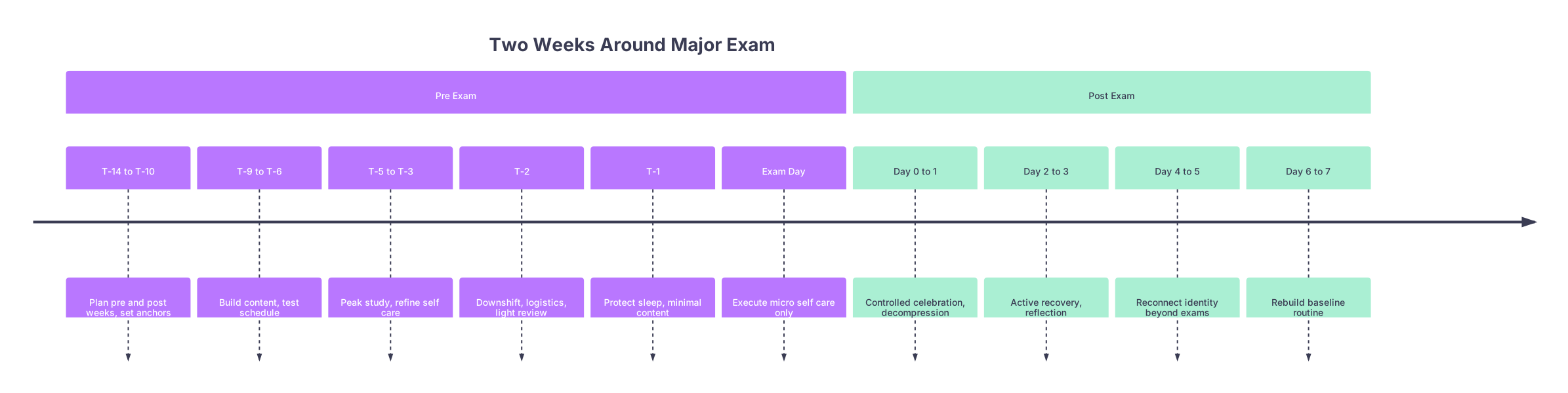
| Period | Event |
|---|---|
| Pre Exam - T-14 to T-10 | Plan pre and post weeks, set anchors |
| Pre Exam - T-9 to T-6 | Build content, test schedule |
| Pre Exam - T-5 to T-3 | Peak study, refine self care |
| Pre Exam - T-2 | Downshift, logistics, light review |
| Pre Exam - T-1 | Protect sleep, minimal content |
| Pre Exam - Exam Day | Execute micro self care only |
| Post Exam - Day 0 to 1 | Controlled celebration, decompression |
| Post Exam - Day 2 to 3 | Active recovery, reflection |
| Post Exam - Day 4 to 5 | Reconnect identity beyond exams |
| Post Exam - Day 6 to 7 | Rebuild baseline routine |
FAQ (Exactly 2 Questions)
1. What if my schedule is unpredictable because I am on a heavy clinical rotation?
Then at this point you should shrink the plan, not abandon it. Instead of a perfect daily template, anchor around non-time-based rules, like: “I move for 10 minutes before bed,” “I do 15 minutes of focused review at the start of each call shift,” or “I prep my exam-day breakfast the night before no matter what.” Make your self-care plan flexible but non-optional.
2. How do I handle guilt when taking breaks during pre-exam week or resting after the exam?
Guilt usually comes from a fantasy of how much you “should” be doing. Replace that with a written, realistic target for each day. If you meet the target, breaks and rest are part of the plan, not a failure. If you consistently overshoot or undershoot, adjust targets, not your humanity. The ethical line: once your rest is harming your commitments to patients, teammates, or your own health (ironically), you have gone too far. Until then, it is maintenance, not indulgence.
Key points:
- Pre-exam week self-care is about protecting performance with structure, not squeezing out every last minute.
- Post-exam week self-care is about structured recovery and identity rebalancing, not mindless collapse.
- Both weeks should be pre-planned together, so you do not let anxiety or exhaustion run your life by default.


