
Educational disclaimer: This content is for educational purposes only and does not constitute financial, legal, tax, contract, or professional advice. Compensation, benefits, employment terms, and program policies vary by institution; review official program information and consult qualified professionals for personalized guidance.
Meta description: Prelim surgery vs prelim medicine: compare reapplication strategy, letters, workload, flexibility, compensation, benefits, and Match backup tactics.
(See also: Prelim Year as a 'Backup Plan' for more.)
Everybody wants a clean answer here. Prelim medicine is safer. Or prelim surgery is safer if you're "serious." Nice folklore. Completely unreliable.
Here's the myth I'm going to wreck: that one prelim year is universally the smart backup. It isn't. "Safer" is not a vibe. It's a stack of practical questions: Which option gives you better odds of matching next cycle? Which one is less likely to leave you unemployed and exhausted a year later? Which one gives you stronger letters, a believable story, and enough functional brain cells to actually reapply well? Which one is survivable if your plans change again?
(See also: Do Backup Specialties Really Hurt Your Primary Chances? for more.)
(See also: Prelim Year as a 'Backup Plan'.)
That's the whole game. Not prestige. Not punishment. Not what some PGY-4 told you in a stairwell.
(See also: Do Backup Specialties Really Hurt Your Primary Chances? for more.)
(See also: Complete guide to backup specialty planning.)
My thesis is simple: there is no universally safer prelim option. The safer backup is the one that fits your likely reapplication target, your actual risk tolerance, and your realistic ability to perform under that internship's demands. Realistic ability. That part gets ignored all the time. I've seen applicants choose the "hardcore" option to look committed, then limp through the year, produce weak evaluations, and wonder why the second application cycle went worse.
So let's compare what actually matters: Match mechanics, transferability of letters, access to networking, daily workload, elective flexibility, research opportunities, PGY-2 pathways, and the psychological cost of spending a year in a role that may or may not help you. Because the wrong prelim year doesn't just waste time. It can actively make you less competitive.
The Myth of the 'Safer' Prelim Year
Applicants misuse Match data constantly. They look at aggregate numbers and assume preliminary positions behave like categorical safety nets. They do not. A prelim slot is not a consolation prize that automatically repairs a failed Match. It's a one-year job. Whether that job helps or hurts depends on what you do in it, who sees your work, and whether the year builds a coherent bridge to the next application.
Start with definitions, because people mash these together as if they're interchangeable. Categorical positions are full residency tracks with built-in progression. Preliminary positions are one-year internships, often used either by applicants heading into advanced specialties or by people trying to stay clinically active while reapplying. Transitional years are broader, often lighter in structure, and highly variable. Those three are not strategic equivalents. Not even close.
Yes, preliminary medicine usually offers more total positions nationally than preliminary surgery. That's true. It's also where applicants make a lazy leap. More slots does not automatically mean safer. Safety is not slot count. Safety is whether the year advances your next move. A broad medicine prelim in a program with advising, electives, and faculty support may be gold. A medicine prelim that is basically ward labor with no mentorship? That's not safer. That's just more available.
(See also: Prelim vs Transitional: Comparing Match Data for more.)
There's another hidden issue. Preliminary surgery tends to attract applicants already tied to advanced surgical or surgical-adjacent pathways. Preliminary medicine catches a wider mix: advanced specialty applicants, unmatched students, dual-appliers, and people trying to buy time. That means the intern class composition, faculty expectations, and advising culture can feel very different.
And let's kill one more fantasy: getting any prelim spot does not automatically improve your chances next year. I've seen interns finish a brutal year with no fresh letters, no specialty-specific advocacy, no research, and no coherent explanation of why the same plan should work this time. That is not an upgraded application. That is just an older application with more fatigue.
(See also: outcome differences between medicine and surgery for more.)
Some prelim years are launchpads. Others are service traps wearing a respectable name badge.
What the Data Actually Shows About Preliminary Positions
The data supports a narrower conclusion than applicants want. Preliminary medicine is more plentiful. Preliminary surgery is more specialty-aligned for surgery. Neither one is inherently "safe" across contexts.
That distinction matters because applicants often talk about prelim positions as if they all reduce risk equally. They don't. A prelim year only helps if it improves one or more of the things programs actually care about: recent clinical performance, strong letters from relevant faculty, clear commitment to the target field, and evidence that this year changed something meaningful. Better judgment. Better work ethic. Better fit. Better strategy.
If your target next cycle is surgery, then surgery continuity is not some symbolic flourish. It matters. If your target might shift toward internal medicine, neurology, PM&R, anesthesia, radiology, or another less surgically tethered field, medicine generally gives you broader credibility. Different mechanics. Different audiences. Different payoff.
The overlooked variable is program design. Two prelim medicine years can be wildly different. One may include elective blocks, subspecialty exposure, and faculty who have actually helped prior prelims match onward. Another may be nonstop wards, ICU, nights, and zero ownership of your future. Same title. Totally different outcome.
(See also: Challenging the idea that a prelim year hurts your specialty competitiveness)
(See also: how surgical preliminary years differ for more.)
Same with surgery. Some surgery prelims are integrated enough that the department knows you, writes for you, and gives you at least a fighting chance to prove yourself. Others use prelims as coverage bodies. Harsh but true. If a program cannot tell you where its prior prelims went, that's not because the story is complicated. It's because the answer probably isn't impressive.
Prelim Surgery: Better for Surgical Continuity, Worse for Sheer Survival
If you are genuinely reapplying to general surgery or another surgical field, prelim surgery is usually the better backup. Full stop. This is where the contrarian part is actually pretty straightforward: if your next application has to persuade surgical faculty that you still belong in surgery, then a surgery year gives you the raw materials to make that case. Fresh surgical letters. OR exposure. Department visibility. Someone in the room who can say, "I watched this person work at 5:15 a.m. on trauma rounds and they belong here."
That kind of credibility is hard to fake from outside the department. Surgery still cares about continuity. A lot. Especially after a failed Match. Programs want reassurance that you didn't just drift into surgery and drift right back out when things got ugly.
But here's the myth that needs to die: prelim surgery is not a reliable backdoor into a categorical spot. Conversions happen. They are real. They are also uncommon, heavily program-specific, and often dependent on an unexpected vacancy plus excellent performance plus timing. That is not a strategy. That is a possibility. Applicants who bank on converting are usually gambling with bad odds and a lot of wishful thinking.
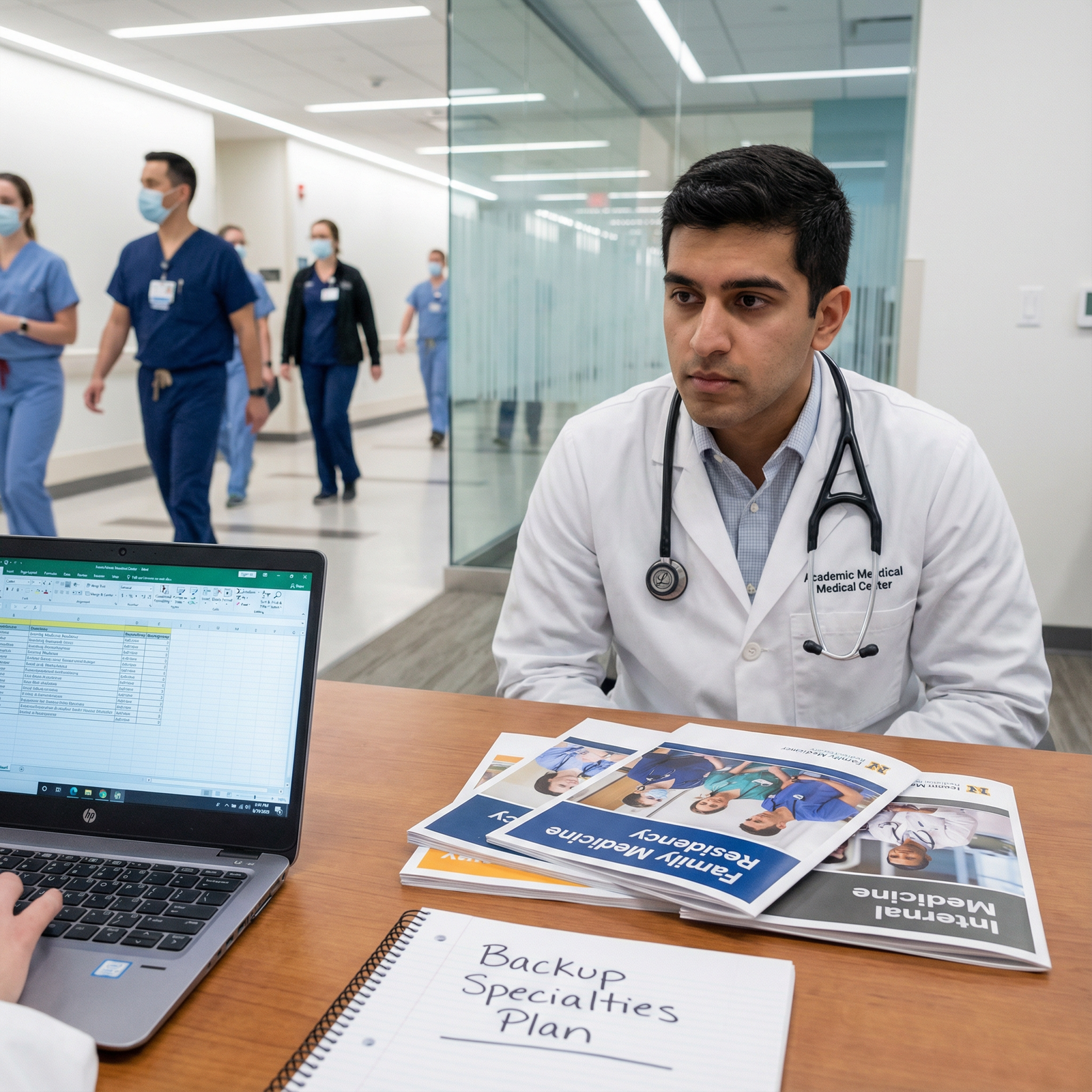
Now the downside. It's a big one. Prelim surgery is often brutal in exactly the ways that matter for a reapplicant. Long hours. Early mornings. More call. Less flexibility. Less time to polish a personal statement, line up research, make strategic away connections, or quietly construct a backup-to-the-backup plan. If you're all-in on surgery and resilient enough to perform well, that trade may be worth it. If you are not, it becomes a trap.
I've seen this go sideways. An applicant unsure about surgery takes prelim surgery because it "looks stronger," then spends the year drowning. Evaluations come back lukewarm. There's no energy for scholarship. The letters are generic. By October, they're trying to pivot into anesthesia or radiology with a file that screams one thing and one thing only: exhausted surgical intern of unclear direction.
That's not safer. That's self-sabotage with a lanyard.
And if you're already on thin ice academically or professionally, underperforming in a harsh surgery environment can hurt more than a solid medicine year would. Programs forgive a failed Match more easily than they forgive a weak internship with fresh evidence that you don't function well under pressure.
Prelim Medicine: More Flexible, But Not Automatically the Smart Play
(See also: When declaring a backup specialty helps)
Prelim medicine is often the safer backup for people who are undecided, dual-applying, or quietly suspect they may need to pivot. That's the strongest argument for it. Optionality.
A medicine prelim tends to produce letters that travel better across specialties. Broad inpatient medicine competence matters to internal medicine, obviously, but also to neurology, PM&R, anesthesia, radiology, and several advanced pathways that want to know you can manage sick adults, work in teams, and survive wards without melting down. If your original specialty choice was wrong, or no longer realistic, medicine gives you more lanes out.
It can also offer broader faculty exposure and, in some programs, more room for selective electives or continuity with research. I said some. Don't romanticize this. Plenty of medicine prelim years are punishing in their own right. ICU months, overnight admits, cross-cover disasters at 2 a.m., endless discharge games, and that special flavor of emotional fatigue that comes from carrying twenty patients and a crashing census. Different stress. Not softer stress.
The misconception that medicine prelim is "easy" is one of the dumber pieces of residency folklore. Easier than a malignant surgery prelim? Maybe, sometimes. Easy? Absolutely not.
What it does offer, when structured well, is a broader reapplication narrative. You can credibly say, "I strengthened my clinical foundation, worked closely with faculty, clarified my fit, and I'm applying more intelligently now." That story can work for several specialties. It is much harder to tell after a surgery prelim if you're no longer heading toward surgery.
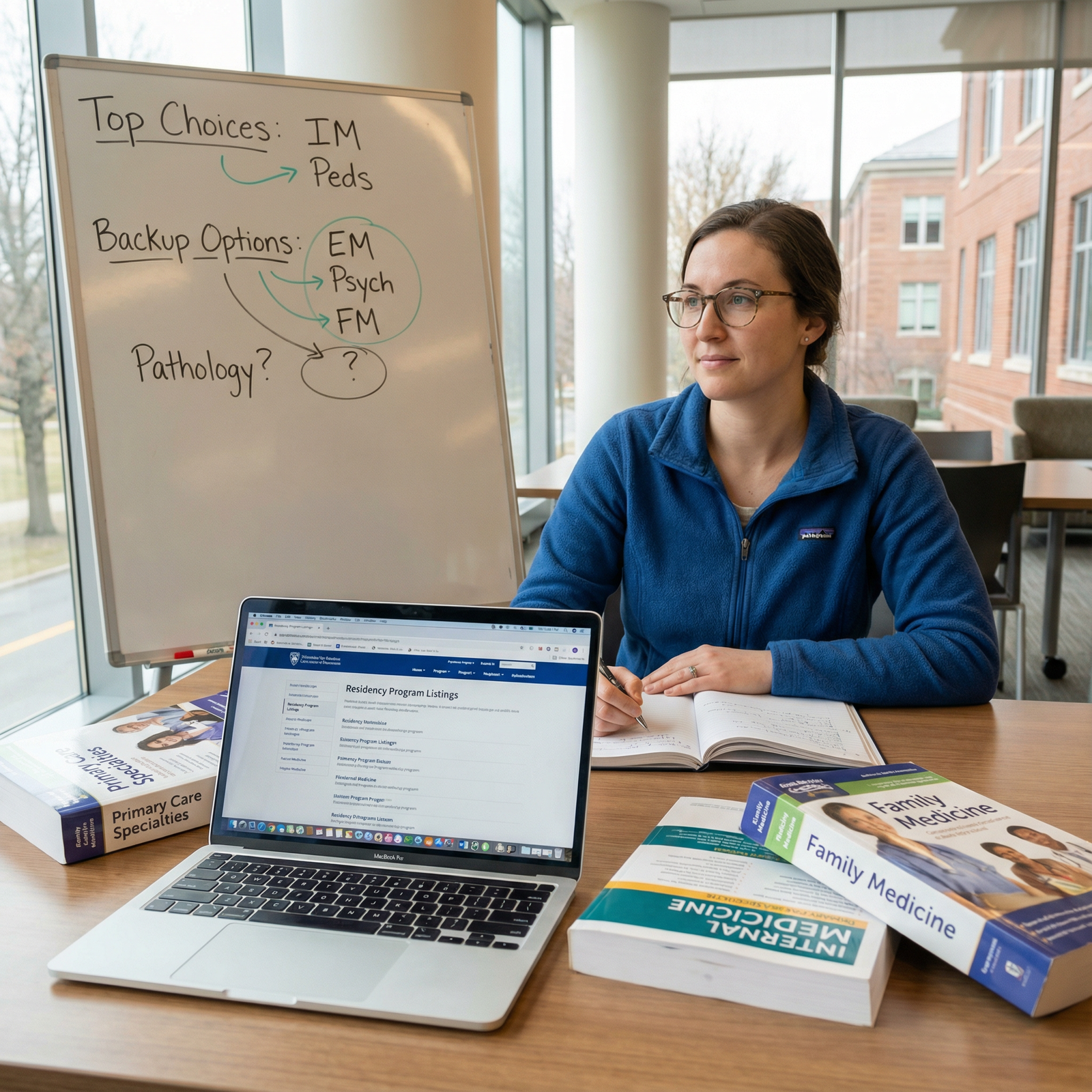
But let's bust another myth. If you plan to reapply surgery, many surgery programs will not view a medicine prelim as equivalent continuity. They just won't. You may have become a stronger doctor. Good. But surgical programs often still ask the blunt question: if you were committed to surgery, why weren't you in surgery? Fair or unfair, that bias exists. You ignore it at your own expense.
So yes, prelim medicine is often safer. But only if your real priority is preserving options. If your mission is surgical re-entry, medicine may keep you employed while making your story less persuasive to the audience you most need to convince.
How to Pick the Safer Backup for You
Start with the question applicants dodge because they don't like the answer: if this cycle goes badly again, what specialty are you most likely to pursue next year? Not your dream answer. Your honest one.
If the answer is definitely surgery, prelim surgery is usually the strategically coherent choice. Not because it's glamorous. Because it gives you the right proximity, the right evaluators, and the right narrative. You stayed in the arena. You took the hit and kept operating in the same world. Surgical faculty understand that story.
If the answer is "I might pivot," or "I need optionality because I'm not sure surgery is still realistic," then prelim medicine is usually safer. It preserves more exits. It gives you broader letters. It lets you build a case for several specialties instead of chaining yourself to one department's opinion of you.
Then stop staring at titles and inspect the actual program. I mean the boring, decisive stuff: elective months, ICU burden, night-float design, call load, access to target specialty rotations, research infrastructure, compensation and benefits, visa support if relevant, mentorship culture, and whether prior prelims actually matched onward. Not "we support our residents." Everyone says that. Ask for names of specialties and numbers of prelims placed.
Ask hard questions in interviews: How many prelims matched onward last year? Into what fields? Who advises prelims? Can prelims rotate with the department I want letters from? Do you have examples of applicants who successfully reapplied? If they get squirmy, pay attention.
Red flags are obvious once you stop wanting to be reassured. Programs that use prelims as pure service coverage. No advising. No track record of onward placement. No protected elective room. Vague promises about possible categorical conversion. That last one is especially dangerous. If they imply conversion without evidence, they are selling hope because they don't have a better product.
Here's where I land. The safest backup is not the one that sounds toughest, and it's not the one with the most slots. It's the one that leaves you one year later with better letters, a cleaner story, stronger recent performance, and enough stamina to make smart decisions instead of desperate ones.
That's the part applicants miss. Your backup year is not a moral test. It's not proof that you can suffer. It's a strategic bridge. Build the bridge that actually goes where you're likely to walk next.