Match Day passed. You opened an envelope or an email, and the words weren't what you spent four years working toward. SOAP week came and went in a blur of frantic phone calls, unmatched stress, and radio silence. Now it's April, the dust has settled, and you face a hard truth: you're a reapplicant targeting Internal Medicine (IM), Family Medicine (FM), or Pediatrics (Peds).
Running the exact same play and expecting a different result is a guaranteed path to another unmatched cycle. Program directors spot denial instantly. If your application looks identical to last year's, your file goes straight to the bottom of the pile.
You need a systematic, chronological turnaround plan. Here is your month-by-month timeline to rebuild your candidacy and capture a residency spot.
Month 0 (April): The Post-Match Reality Check
At this point, you should halt all panic-driven decisions and conduct an unsparing autopsy of your application. Grieving the outcome is normal, but limit yourself to 72 hours. After that, open a spreadsheet and start auditing.
I've watched dozens of unmatched candidates waste six weeks in April wallowing instead of diagnosing the problem. Do not make that mistake.
Step 1: Build a "Gap Analysis" Document
Create a centralized tracking document. Divide your previous application into five core metrics:
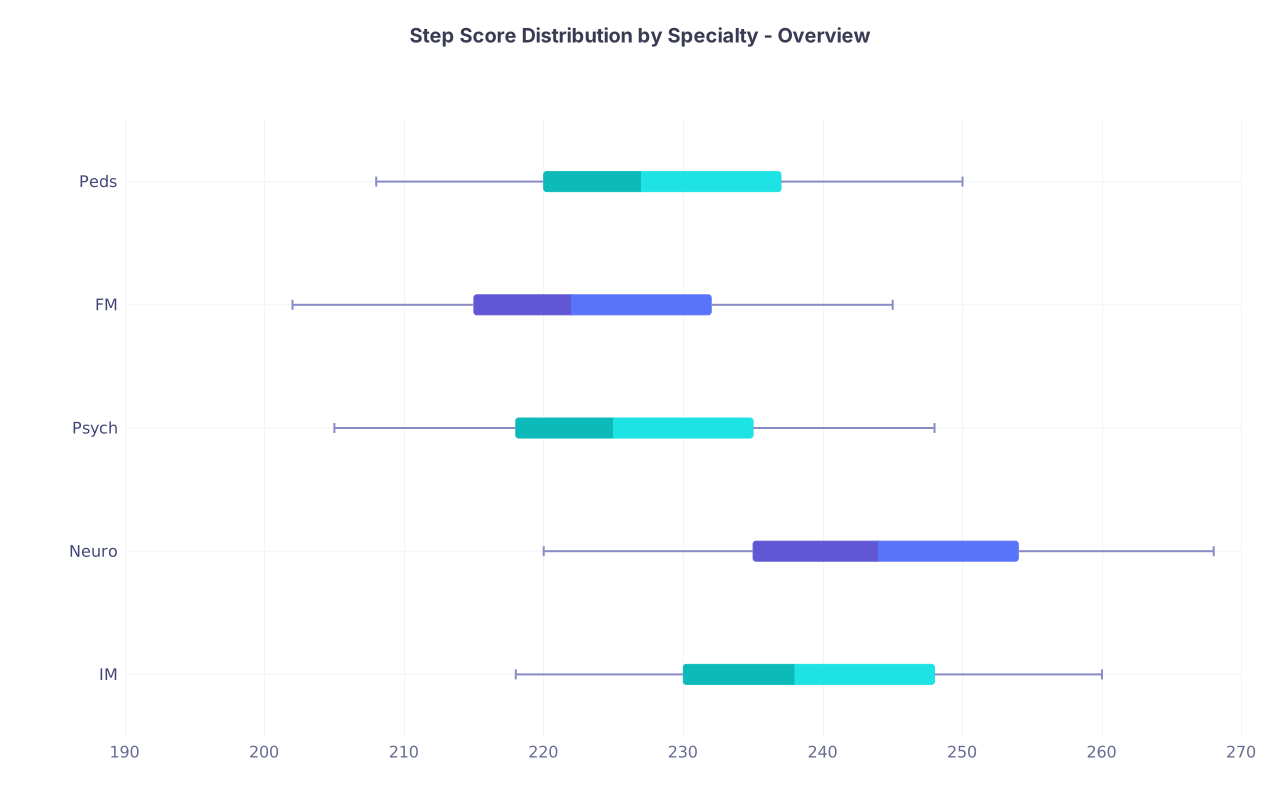
- Board Scores: Was your Step 2 CK below the program cutoffs (typically <230 for IM, <220 for FM/Peds)? Did you have a Step attempt failure?
- Application Timing & Strategy: Did you submit ERAS on opening day, or did you lag two weeks behind? Did you target 150 programs or foolishly cap it at 40?
- Letter Quality: Were your letters generic "did a good job on rounds" notes, or did they explicitly advocate for your clinical autonomy?
- Interview Conversion Rate: Did you receive zero to three interviews (a screening problem), or eight interviews but no match (an interview skills problem)?
- Specialty Alignment: Did you apply solely to IM with an application that screamed Family Medicine?
Step 2: Establish Your Command Center
Set up a dedicated workspace and digital tracking system (Notion, Trello, or Excel) specifically for your reapplicant campaign. Track program research, contact logs, letter requests, and rotation leads.
Step 3: Loop In Your Medical School Dean
By April 15th, schedule a 30-minute sit-down with your Dean of Student Affairs or senior specialty advisor. Ask them point-blank: "What turned programs off when you spoke to program directors during SOAP?" Request that your school commit to providing an updated Dean's Letter (MSPE) and an official institutional Letter of Intent when the next cycle opens.
Months 1-3 (May-July): The Tactical Rebuild
May through July is your heavy lifting phase. At this point, you should focus entirely on high-impact clinical upgrades and score rectifications. Generic volunteer work during these three months won't save a weak profile. Direct clinical performance will.
Prioritize Step 2 CK (If Score-Deficient)
If your Step 2 CK score was below specialty averages or missing altogether during the prior cycle, your May and June belong to study blocks.
- Internal Medicine: Aim for 240+.
- Pediatrics: Aim for 235+.
- Family Medicine: Aim for 225+.
Take two dedicated weeks off from clinical rotations if possible. Use UWorld, targeted NBME practice exams, and systematic weak-point remediation. A jump from a 218 to a 242 changes your narrative overnight: it turns a "red flag" into a story of resilience.
Lock In Fresh Letters of Recommendation
You cannot reuse three old letters without adding anything new. Program directors view recycled applications as lazy.
At this point, you should secure at least one brand-new, high-yield Letter of Recommendation dated within the current calendar year.
- For IM: Secure an attending letter from an acting internship (Sub-I) or intensive inpatient rotation that attests to your patient management, differential diagnostic skills, and note quality.
- For FM: Obtain a letter from an outpatient preceptor highlighting your longitudinal patient care, communication skills, and community orientation.
- For Peds: Get a letter emphasizing your clinical instincts, family-centered communication, and adaptability across neonatal, inpatient, or outpatient pediatric settings.
Line Up Targeted Audition Rotations
If you graduated or have flexible elective time, secure clinical experiences (acting internships or observerships with real hands-on workflow) at community hospital programs that historically sponsor or take reapplicants. Show up early, stay late, write clean notes, and own your patients. Turn a 4-week rotation into an extended job interview.
Months 4-6 (Aug-Oct): Application Polishing
By August 1st, your clinical rebuild should be nearing completion. Now you shift to messaging. Program directors don't hate reapplicants; they hate reapplicants who pretend they aren't reapplicants.
Personal Statement: Scrap It and Rewrite
Do not attempt to edit last year's essay. Open a blank document.
Your new Personal Statement must follow a strict three-part structure:
- The Foundation (20%): A brief, clear reminder of why you entered IM, FM, or Peds.
- The Reality & Ownership (30%): Address the gap head-on without whining or pointing fingers.
- Example: "While not matching in the 2024 cycle was disappointing, it provided a clear signal to evaluate my clinical preparation. I identified weaknesses in my exam timing and targeted inpatient management experience."
- The Growth & Evidence (50%): Detail every concrete step taken between April and August. Mention your score jump, your sub-internship performance, your new clinical projects, or your research work.
ERAS Overhaul: Work & Activities
Re-write every description in your ERAS experience section. Use active, high-impact verbs.
- Old, weak description: "Observed attending physician in clinic and helped take vitals."
- Reapplicant description: "Managed initial workups for 6-8 complex adult patients daily in a high-volume outpatient clinic, presented structured patient assessments directly to attendings, and coordinated post-discharge care plans."
Program Targeting Strategy
At this point, you should broaden your program application pool aggressively.
- Internal Medicine: If you applied to 60 programs last year, apply to 120-150 this year. Shift your focus away from academic powerhouses to community-based, university-affiliated hospitals with high International Medical Graduate (IMG) or reapplicant match rates.
- Family Medicine: Target rural, community-centric programs, and newer residency tracks expanding their class sizes.
- Pediatrics: Target mid-tier children's hospitals and community-based pediatric tracks with broad clinical exposure.
Interview Season (Nov-Mar): Sealing the Deal

You've secured the interview invite. Congratulations. Now you have to execute.
Interviews for reapplicants are high-stakes evaluations of your maturity. Interviewers want to answer one core question: Is this person defensive, or did they learn from failure?
Practice the Mandatory Question
Every single interview will feature a variation of: "I see you applied previously. What happened, and what have you done since?"
You need a 90-second, bulletproof response:
- Acknowledge without defense: "I didn't match last cycle, which was tough, but it gave me a valuable opportunity to audit my candidacy."
- State the cause concisely: "My application had a late ERAS submission date and lacked recent high-acuity inpatient exposure."
- Demonstrate massive action: "Over the past eight months, I retook Step 2 CK and raised my score by 20 points, completed a four-month inpatient Sub-I at Hospital X where I earned a strong departmental LOR, and authored a pediatric quality improvement paper."
- Pivot to the future: "As a result, I am entering this cycle as a significantly stronger, more clinically prepared candidate ready to contribute on day one."
Polish Your Logistics and Virtual Presentation
Do not risk an interview over bad technical setup.
- Buy a dedicated 1080p webcam and a soft ring light.
- Plug directly into ethernet; do not rely on spotty Wi-Fi.
- Choose a quiet, neutral background free of clutter.
Prepare a SOAP Contingency Plan
By February 1st, review your interview count. If you have fewer than 5 interviews across your applied specialties, begin preparing for SOAP immediately. Identify preliminary IM positions, Transitional Year (TY) slots, or secondary specialties (like FM if you originally applied IM-only) so you aren't caught off guard a second time.
Your Second Chance
At this point, you should execute this timeline relentlessly day by day. Match failure feels like an absolute judgment on your worth as a future physician, but program directors don't view it that way. They value grit. They respect candidates who take a hit, analyze their mistakes, fix their deficits, and return stronger.
Follow the calendar. Update your metrics. Do the work.
If you are ready to stop guessing and start rebuilding your application with expert precision, reach out to our team today for a comprehensive ERAS Application Audit and Mock Interview Session. Let's make sure this cycle is your last one.