
The worst mistake reapplicants make is drifting. You cannot “see how things play out” for a year and expect a different Match result. You need a calendar. Month by month. Week by week.
Here is that calendar.
Big Picture: Your Reapplicant Year at a Glance
Before we zoom into each month, understand the overall arc. From April (right after an unsuccessful Match or SOAP) to next Match Day, your life splits into four overlapping tracks:
- Clinical credibility – hands-on work, letters, direct supervision
- Application rebuild – CV, personal statement, ERAS strategy
- Testing – USMLE/COMLEX timing and score improvements
- Networking and targeting – real contact with real programs
At each point in the year, you should know which track is your priority and what must be finished that month. Wandering is how you become a two-time reapplicant.
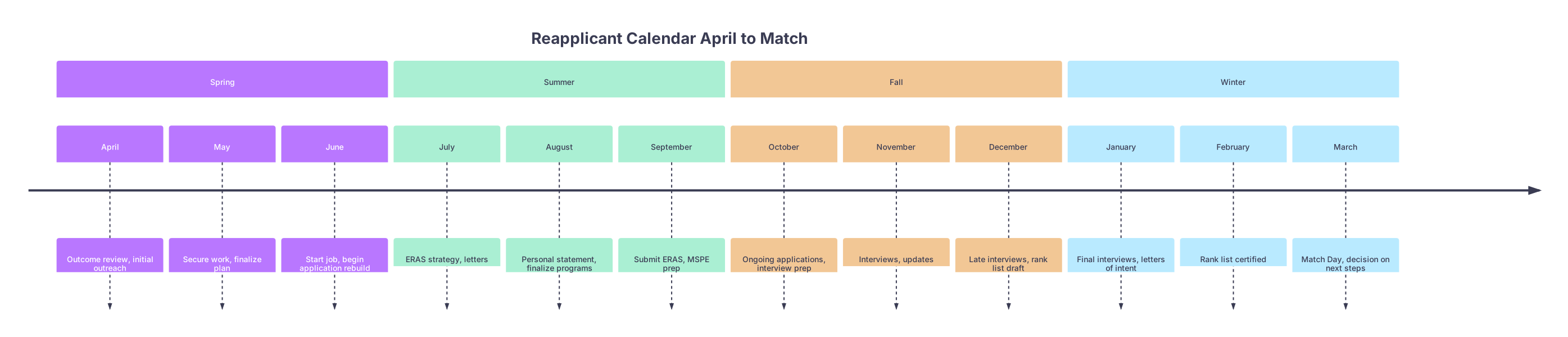
| Period | Event |
|---|---|
| Spring - April | Outcome review, initial outreach |
| Spring - May | Secure work, finalize plan |
| Spring - June | Start job, begin application rebuild |
| Summer - July | ERAS strategy, letters |
| Summer - August | Personal statement, finalize programs |
| Summer - September | Submit ERAS, MSPE prep |
| Fall - October | Ongoing applications, interview prep |
| Fall - November | Interviews, updates |
| Fall - December | Late interviews, rank list draft |
| Winter - January | Final interviews, letters of intent |
| Winter - February | Rank list certified |
| Winter - March | Match Day, decision on next steps |
April: Post-Match Autopsy and Immediate Moves
At this point you should stop guessing and get data. This month sets the trajectory.
Week 1–2 (Right after Match/SOAP)
You should:
- Do a hard debrief on your application.
- Compare yourself to NRMP Charting Outcomes for your specialty.
- Identify your real deficits: scores, number of programs, letters, red flags, lack of US experience, weak personal statement.
- Get at least two external reads on your ERAS from this cycle.
- One faculty member in your intended specialty.
- One advisor who has seen dozens of applications (PD, APD, dean, or experienced mentor).
- Decide: reapply in the same specialty or pivot.
- Staying the same: You must show significant upgrade (scores, clinical, letters).
- Switching: You need a clear, believable narrative and at least one solid letter in the new field.
If you have any thought of reapplying, you cannot vanish. You need structure and clinical connection.
Week 3–4
You should:
- Start hunting for a gap-year role. Aim to lock something in by late May:
- Prelim or transitional spots that may open late
- Research assistant / postdoc (ideally in your target specialty)
- Clinical research coordinator
- Hospitalist scribe, telemedicine support, or similar with MD supervision
- Observerships/externships if you are an IMG / need USCE
- Clean up your online footprint.
- LinkedIn updated
- Any unprofessional social media made private
- List every program you applied to and which showed interest.
- Interviewed you
- Emailed personally
- Offered wait-list-type communication
These are your first-tier targets for reapplication and updates.
At the end of April you should have:
- A written list of your 3–5 biggest weaknesses
- A preliminary plan for what you will do from July–March
- A shortlist of job/position types you are actively pursuing
May: Lock Down Work and a Clear Strategy
By May, you should move from “processing” to “executing.”
Early May
You should:
- Finalize your specialty decision. No more waffling after this month.
- Aggressively pursue positions:
- Email department chairs and program directors: concise, respectful, one-page email + CV.
- Ask directly about:
- Research positions
- Non-ACGME fellowships
- Extended observerships / gap-year roles integrated into the department
- Plan testing if your scores are a problem.
- Failed Step/Level or low score for your target specialty = retake or Step 3 (for grads) becomes part of your strategy.
- Book test windows tentatively (June–August) depending on your situation.
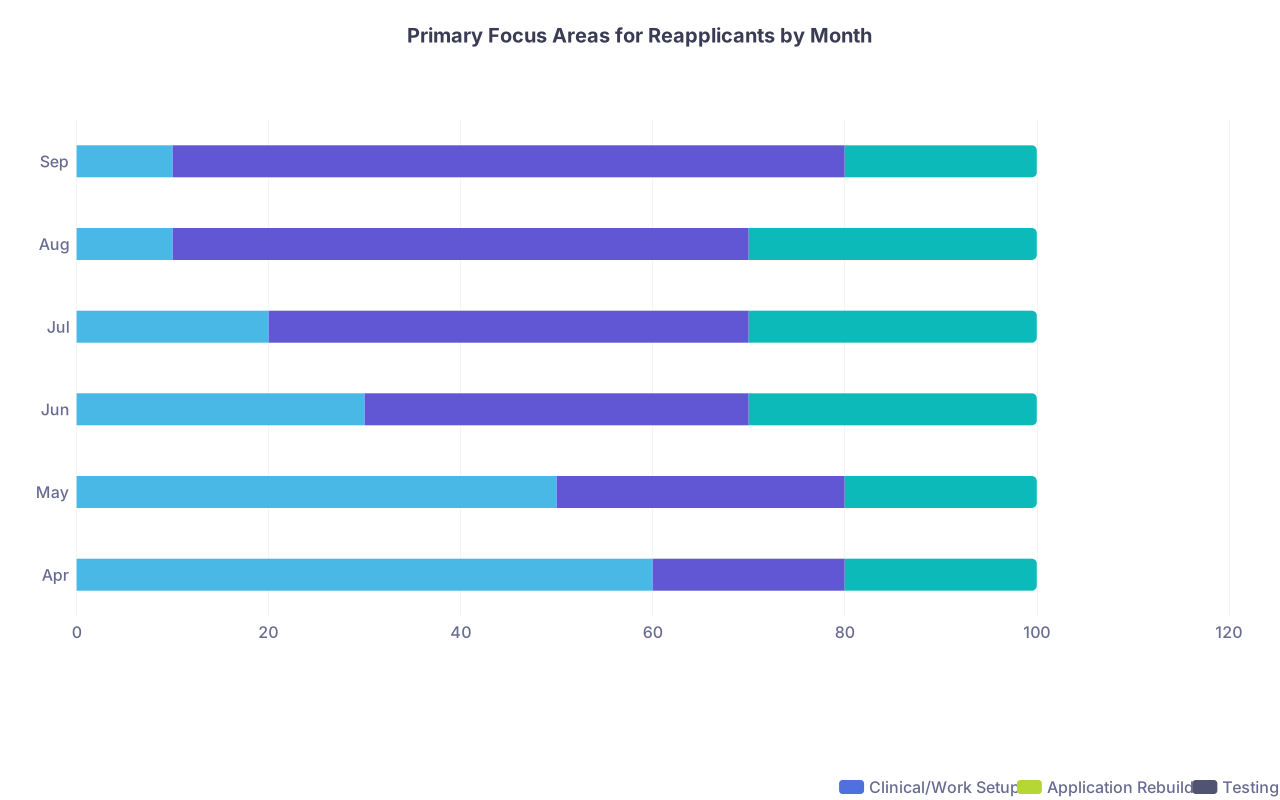
| Category | Clinical/Work Setup | Application Rebuild | Testing |
|---|---|---|---|
| Apr | 60 | 20 | 20 |
| May | 50 | 30 | 20 |
| Jun | 30 | 40 | 30 |
| Jul | 20 | 50 | 30 |
| Aug | 10 | 60 | 30 |
| Sep | 10 | 70 | 20 |
Mid–Late May
You should:
- Confirm at least one substantial activity running through next spring.
Aim for:- 0.8–1.0 FTE equivalent (full-time or close)
- Direct supervision by someone who can write you a new letter by August
- Request honest feedback from 3–5 programs where you interviewed.
Keep it short, polite, and specific. You will not always get answers, but when you do, they are brutally clarifying:- “Your Step 1 was below our usual range.”
- “We had concerns about limited clinical experience in the U.S.”
- “Your interest in our specialty was not clear.”
By the end of May you should have:
- A signed or near-final agreement for a job / research / observership
- A testing plan (or a confident decision not to test)
- A written one-page “strategy outline”: specialty, program tier, score plan, work plan
June: Start the Work, Rebuild the Foundation
ERAS opens mid/late June. By then you should be set up, not scrambling.
Early June
You should:
Start your new position (or be days from starting).
Brief your supervisor on your reapplication plan.
- Tell them you plan to request a letter by August.
- Ask for concrete expectations: clinical responsibilities, research output, teaching roles.
Open your new ERAS account as soon as it becomes available.
- Begin populating the CV section.
- List ongoing/future experiences with clear, realistic end dates.
Mid–Late June
You should:
- Reconstruct your experiences section from scratch.
- Cut fluff.
- Use stronger, more specific bullet points (outcomes, numbers, responsibilities).
- Draft updated personal statement outlines.
Two versions if you are dual-applying (for example: FM + IM). Do not try to make one vague essay cover both. - If you are retaking exams:
- Be doing active questions daily (UWorld, Amboss, NBME practice).
- Schedule the actual exam no later than August if you want programs to see the score early in interview season.
At the end of June you should have:
- ERAS skeleton filled out
- A functioning study and work routine
- Clarity on how this year’s work will produce at least one excellent letter
July: Strategic ERAS and Letters of Recommendation
July is about structure and credibility.
Entire Month
You should:
- Target your program list intelligently.
Do not repeat last year’s mistake of “spray and pray” or underapplying.
| Applicant Profile | Specialty | Program Count | Approach |
|---|---|---|---|
| US MD, average scores | IM/FM | 60–80 | Mix university + community |
| US DO, average scores | IM/FM | 80–100 | Heavier on community |
| IMG, strong scores | IM/FM | 120–150 | Broad, emphasize IMG-friendly |
| Low scores / red flags | Any | 120–200 | Very broad, many community |
- Request letters of recommendation early.
- At least 3, ideally 4, relevant letters in your chosen field
- One can be from your current role (attending or PI who sees your work)
- Refine your personal statement draft.
- Emphasize growth since last cycle.
- Do not whine about not matching. One short acknowledgment is enough; focus on what you have done about it.
Week-by-Week Focus
- Week 1–2:
- Confirm that letter writers know ERAS timelines.
- Send them: your CV, prior personal statement, and bullet list of what you have been doing with them.
- Week 3–4:
- Have a reasonably polished personal statement in circulation with 1–2 trusted reviewers.
- Confirm that your experiences in ERAS are updated through summer.
By the end of July you should have:
- All letter writers confirmed and requested
- Near-final program list ranges
- A personal statement in its second or third revision
August: Final Assembly and Polish
This is your construction month. In September you press “submit.”
Early August
You should:
- Lock your program list.
- Use tools: FREIDA, program websites, alumni data, and known IMG-/DO-friendly lists where relevant.
- Categorize programs into:
- High reach
- Reasonable
- Safety (realistic, not fantasy)
- Finalize your personal statement.
- One last serious edit from a faculty mentor in your specialty.
- Then stop tinkering. Over-editing kills voice.
Mid–Late August
You should:
Confirm all letters are uploaded or will be shortly.
- Gently remind any late writers with a polite, concrete deadline.
Polish your ERAS one more time.
- No typos.
- Dates accurate.
- Red flags addressed succinctly in the “Additional Information” or statement when necessary (failed exam, leave of absence, etc.).
Prepare a standardized email template for programs you previously interviewed at.
- Brief update on your year
- Expression of continued interest
- Offer to provide updated CV and any new scores
By the end of August you should have:
- Completed ERAS application ready to go on day 1
- Letters essentially in place
- Scores either improved or a clear explanation for what you did to strengthen other areas
September: Submission and Early Outreach
This is execution month. No more building, just sending.
Early September (Week 1–2)
You should:
- Submit ERAS as early as the system allows (typically mid-September).
Do not delay for minor cosmetic edits. Being early helps in many specialties. - Send tailored emails to:
- Programs that interviewed you last year
- Programs connected to your current institution / PI / mentor
Each message: 2–3 short paragraphs maximum, with attached updated CV.
Late September (Week 3–4)
You should:
- Continue your gap-year work at full effort. Word gets around.
- Build a simple interview preparation plan.
- Common questions doc
- Practice answers for: “Why did you not match?” and “What is different this year?”

At the end of September you should have:
- ERAS fully submitted
- Initial wave of program outreach completed
- A clear system for tracking interview invitations and communication
October: Early Interviews and Continuous Updates
By October, the invites (or the silence) start to speak.
All Month
You should:
- Respond to interview invitations immediately. Same day, ideally within hours.
- Block clinic/work dates as soon as interviews are scheduled. Coordinate with supervisors early, not the night before.
- Begin sending selective update emails.
- New research acceptance
- New leadership role
- Strong evaluation from your current position
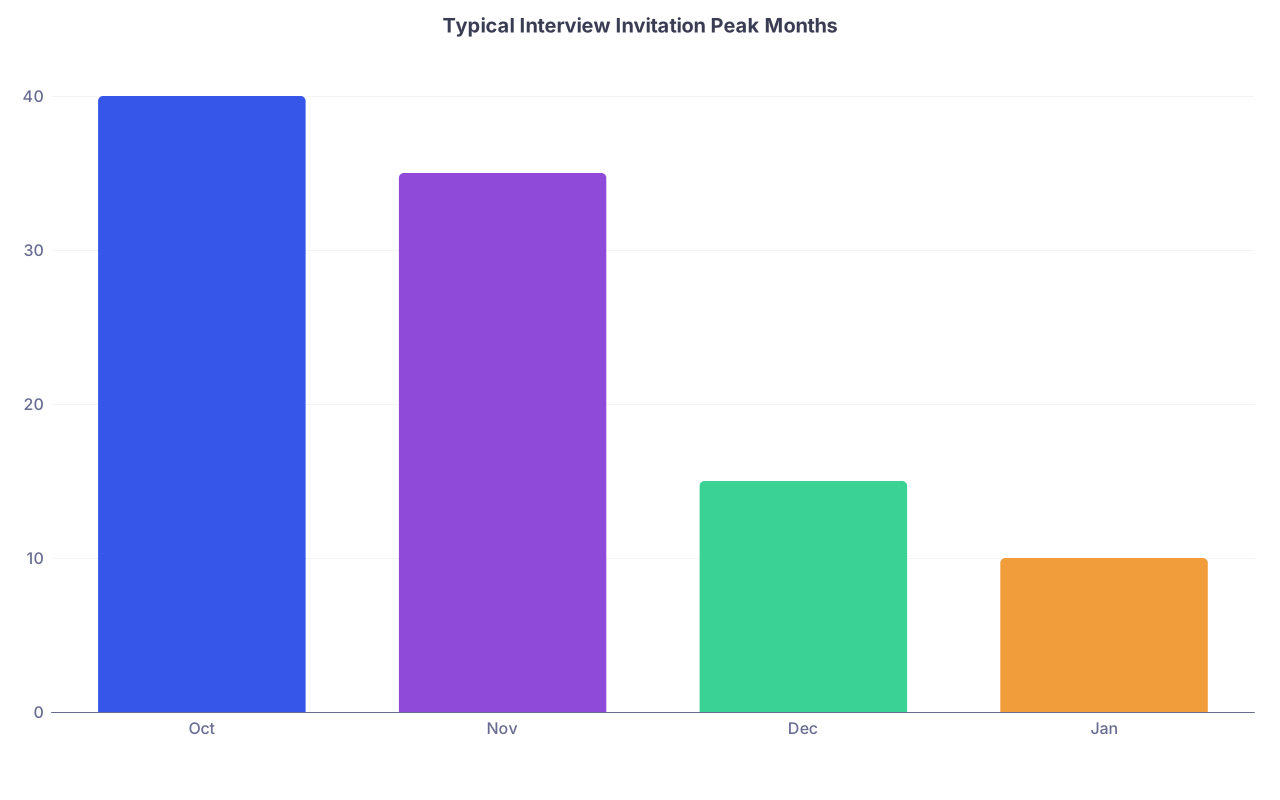
| Category | Value |
|---|---|
| Oct | 40 |
| Nov | 35 |
| Dec | 15 |
| Jan | 10 |
By the end of October you should have:
- A sense of whether your interview volume is on track for your profile
- A refined answer to “What have you done this year?” that feels natural and confident
November: Peak Interview Season and Reputation Building
This is where reapplicants either prove growth or repeat the same mistakes.
Throughout November
You should:
- Treat every interaction as an audition.
Staff, coordinators, residents, everyone. - Lean into your growth story.
For example:- “Last year I struggled to articulate why I wanted FM specifically. This year, after 10 months in a community clinic, I have seen exactly the kind of longitudinal care I want to build my career around.”
- Keep your current supervisors updated.
- They can advocate for you behind the scenes.
- Many program directors talk to each other; your current boss’s praise matters.
By the end of November you should have:
- A running list of programs where you feel strong fit
- Honest notes after each interview: culture, red flags, how you ranked them that day
December: Late Interviews and Rank List Drafting
December is consolidation. Fewer new opportunities, more decision-making.
Early–Mid December
You should:
Attend any remaining interviews.
Start building your rank list draft.
Not final, just a first pass based on:- Fit
- Training quality
- Geography, support system
- Visa considerations if IMG
Send appropriate thank-you notes within a few days of each interview, if the program’s culture supports it.
Late December
You should:
- Review your year with a mentor.
- Go through your current interview count and competitiveness.
- Identify if you should be worried (extremely few interviews) and what that means for backup planning.
At the end of December you should have:
- A clear draft rank list
- Realistic expectations about your Match probability
January: Final Push and Letters of Intent
January is for closing strong.
Early January
You should:
- Finish any late interviews.
Some community and smaller programs interview into January. - Refine your rank list.
- Compare your impressions from interview day with program factors: board pass rates, fellowship matches, call schedule, location.
Mid–Late January
You should:
- Send a single, honest letter of intent to your true #1 program (if their policy allows it).
- Explicit: “I will rank your program number one.” Only say this if it is true.
- Send interest letters (not intent) to a small number of other programs where you are very serious.
By the end of January you should have:
- Essentially final internal rank list
- Clear communication to your top choice(s) without overpromising
February: Certify and Prepare for All Outcomes
February is quiet externally but critical mentally.
Early–Mid February
You should:
- Finalize and certify your NRMP rank list well before the deadline. No last-minute drama.
- Review what you learned this year, independent of the Match result.
- Sketch a contingency plan if you do not match again:
- SOAP strategy (if you are eligible)
- Options for additional training, new exams, or further specialty pivot
Late February
You should:
- Stop rewriting history.
No more what-ifs, no more last-second emails. The process is in motion. - Stay fully engaged in your current role. People notice when reapplicants mentally check out before Match Day. That can hurt future letters if things do not go your way.
March: Match Week and Next-Step Decisions
Match Week comes fast. You must be prepared for both outcomes.
Early March (Before Match Week)
You should:
- Clarify SOAP eligibility and logistics with your dean’s office or coordinator.
- Update your CV with any new publications or roles to use in SOAP documents if necessary.
Match Week
If you match:
- Confirm with your current supervisors; thank them explicitly.
- Coordinate an appropriate transition plan from your gap-year role.
If you do not match again:
- Execute your SOAP plan immediately—no paralysis.
- After SOAP, if still unmatched, schedule rapid debriefs:
- With a trusted PD or advisor
- With your current supervisor
- Possibly with a second specialty for a serious pivot discussion

Your Next Move Today
Do not file this away and “come back later.” The entire point of a reapplicant calendar is action, not comfort.
Open a blank document or spreadsheet right now and create three columns:
- Month (April–next March)
- Primary goal for that month
- Concrete tasks you will complete
Then plug in your situation—scores, specialty, country, visa status—against this timeline and adjust where necessary. If that document is not at least half filled by the end of today, you are already falling behind the next Match.