
The biggest mistake reapplicants make is updating too late and too vaguely. Programs move fast; your updates have to be earlier, sharper, and more strategic than your first attempt.
You are not just “sending an update letter.” You’re running a year-long communication campaign with specific windows where an email helps you—and long stretches where it does nothing or even hurts you.
Here’s the timeline I’d follow if I were reapplying and wanted programs to actually care about my new achievements.
Big Picture: Your Update Windows
At this point you should understand the calendar you’re playing on. As a reapplicant, your “update” timeline runs from Match Week of your failed attempt through the next interview season.
We’ll slice this into phases:
- Match Week to June – Rebuilding and early positioning
- July–September – ERAS opens and initial screening
- October–December – Interview season
- January–Rank List Deadline – Final signals and outcomes
- After Match (if needed) – Post-Match reality check
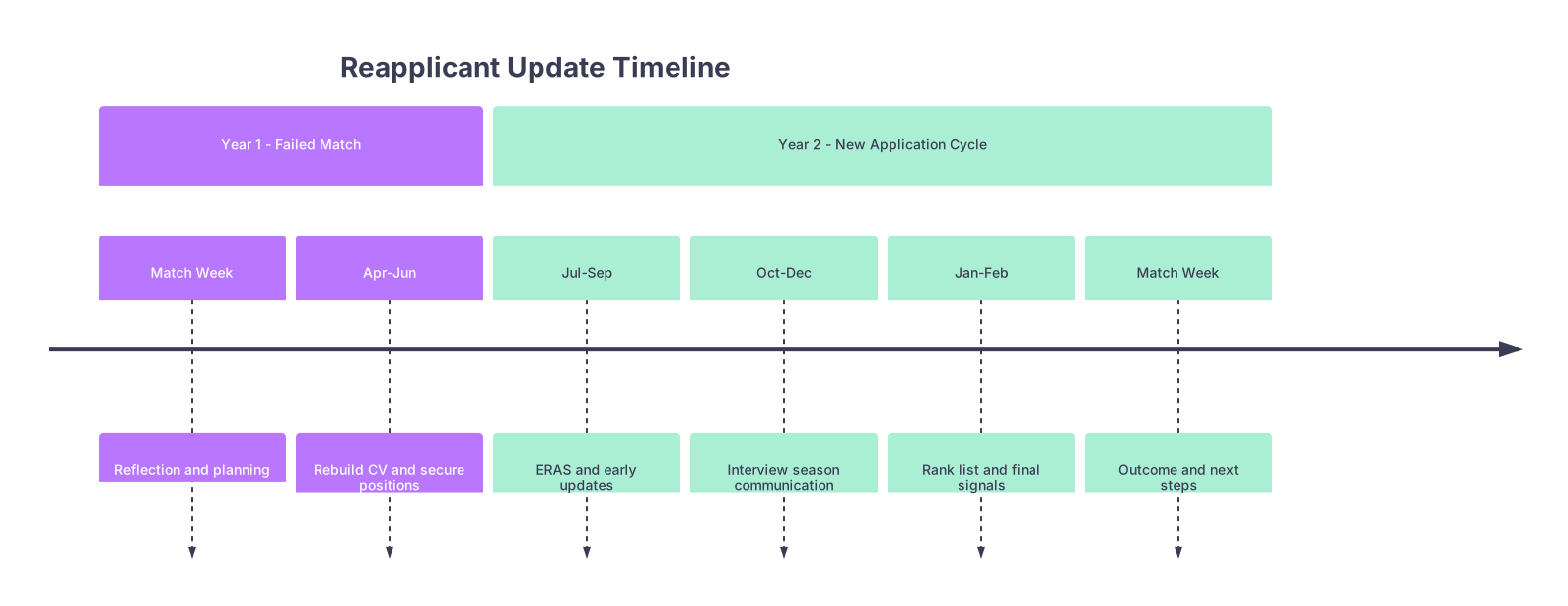
| Period | Event |
|---|---|
| Year 1 - Failed Match - Match Week | Reflection and planning |
| Year 1 - Failed Match - Apr-Jun | Rebuild CV and secure positions |
| Year 2 - New Application Cycle - Jul-Sep | ERAS and early updates |
| Year 2 - New Application Cycle - Oct-Dec | Interview season communication |
| Year 2 - New Application Cycle - Jan-Feb | Rank list and final signals |
| Year 2 - New Application Cycle - Match Week | Outcome and next steps |
Keep this structure in mind. Now we go phase by phase, with what to send, when to send it, and when to shut up.
Phase 1: Match Week Through June – Rebuild and Position
At this point you just did not match or scrambled into nothing useful. Emotions high. Programs still busy. This is not when you shotgun apology emails.
Match Week (March)
At this point you should:
- Confirm status with your dean’s office or GME
- Decide: reapply immediately vs wait a year
- Start identifying realistic target specialties/program tiers based on your prior cycle
Do not:
- Email programs you just interviewed with vague “I’ll be reapplying” messages. They’re closing their current class, not thinking about next year.
The only exception: if a program director explicitly invited you to stay in touch about the next cycle. Then a short “thank you / I plan to reapply” note during Match Week is fine.
Late March–April: Lock in Your “Bridge” Role
At this point you should be securing something that looks good in an update:
- Transitional year / prelim spot (if meaningful and with strong evals)
- Research position (ideally in your specialty)
- Clinical fellowship (non-ACGME, like a surgical prelim year, hospitalist scholar role, etc.)
- Dedicated year as chief, tutor, or major QI role if still in med school
Your top priority here is substance. You cannot update programs with air.
By end of April you should:
- Have your role confirmed in writing
- Know your supervisor/PI/attending, and have started a professional relationship
- Clarified whether they’re willing to write a strong letter by late summer
No updates to programs yet. You’re still building.
May–June: Quiet Prep, Strategic Only
At this point you should not be mass-emailing programs. However:
If you’re staying at the same institution and have a strong rapport with one or two PDs or faculty in your target specialty:
- By late May or June, you can send a very targeted, personal email to:
- A PD you previously interviewed with
- A faculty mentor in that department
What you send now (only if appropriate):
- Brief note that you’ll be reapplying this cycle
- One–two sentences on what you’re doing differently (e.g., “I’ve started a research fellowship in transplant surgery with Dr X and will be taking Step 3 in August.”)
- Ask for advice, not a spot: “I’d value any guidance you have as I prepare my next application.”
This is relationship maintenance, not an official “update letter.”
Phase 2: July–September – ERAS and Early Updates
Now it matters. Programs are assembling rankable piles from paper alone.
Key rule: meaningful updates beat frequent updates every time.
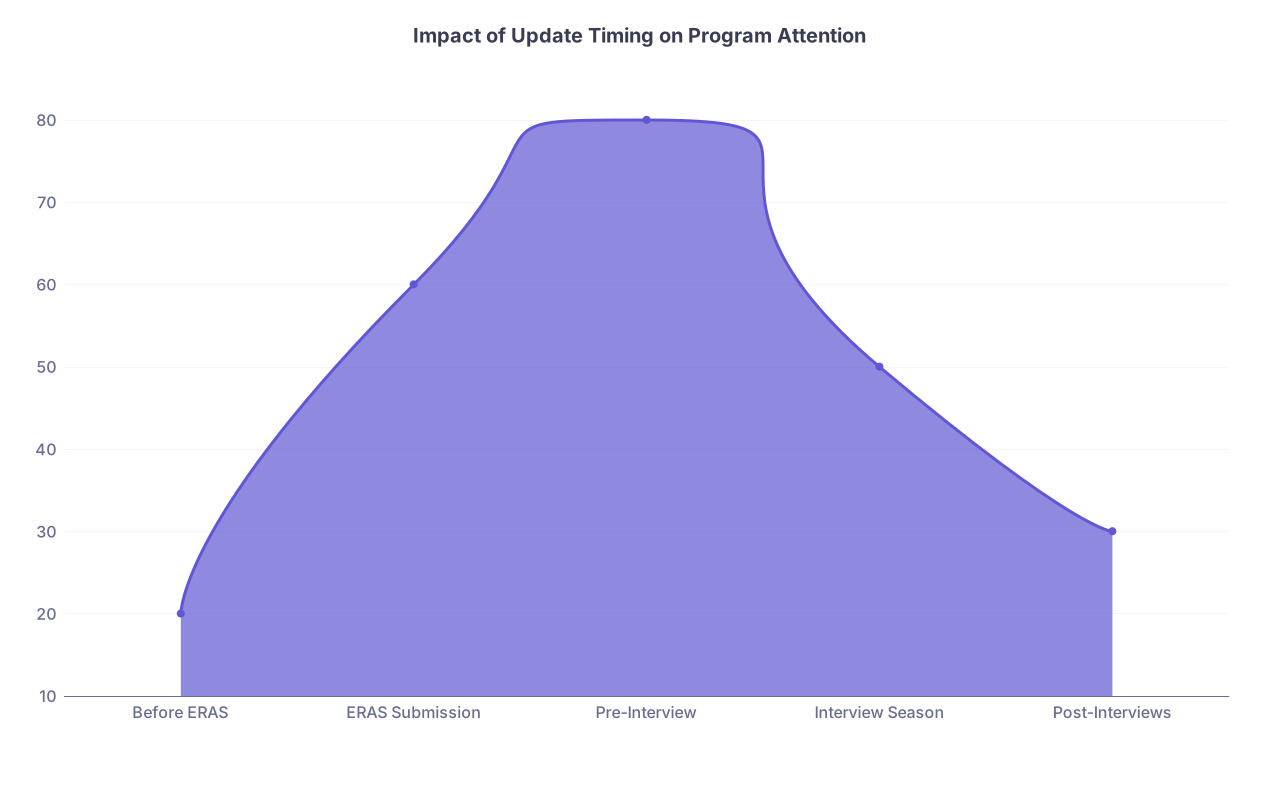
| Category | Value |
|---|---|
| Before ERAS | 20 |
| ERAS Submission | 60 |
| Pre-Interview | 80 |
| Interview Season | 50 |
| Post-Interviews | 30 |
Early July: ERAS Opens (Draft Mode)
At this point you should:
- Update ERAS with:
- Your new position (research, prelim year, fellowship, etc.)
- Any accepted publications or poster acceptances already in hand
- Plans for Step 3 if relevant (with an actual scheduled date)
Do not email programs yet. They can’t see anything until you apply.
Late July–Early August: ERAS Submission
At this point you should:
- Submit ERAS as early as you realistically can with a complete application
- Make sure:
- New letters (from your current supervisor/PD) are requested
- Personal statement directly addresses growth since last cycle (without sounding like a confession letter)
No separate update email needed yet. Your “update” is the new ERAS packet.
Mid–Late August: First Real Update Window
At this point some programs are reviewing but not fully set. You update only when you have something real:
Good candidates for an update now:
- Step 3 passed with solid score (if that was a weakness before)
- Big publication accepted (not just “submitted”)
- A confirmed leadership role (chief resident, committee chair, major teaching appointment)
- A significant change in training (e.g., starting a prelim year in their institution or a strong affiliated hospital)
You should:
- Send updates only to:
- Programs where you’re a realistic candidate
- Programs you’ve applied to this cycle
- Programs that value the specific achievement (academic places actually care about publications; community programs may not)
Timing rule: cluster your mid-cycle substantive updates. One strong email in late August or early September is better than three weak ones.
September: Pre-Interview Filters
By mid–late September, many programs are finalizing interview lists.
At this point you should:
- Send one concise update if:
- You’ve had a major exam result (Step 2/3),
- A notable publication is now formally accepted, or
- You’ve received a significant new letter (e.g., from a major name in the specialty)
This is your “pre-interview” push. After this, your baseline story is set.
Phase 3: October–December – Interview Season Updates
Now the game changes. Programs are meeting you, not just reading you.
If You Have NOT Received an Interview (by early November)
At this point you should accept that most programs that will interview you have already reached out, especially in competitive specialties.
You can send targeted letters of interest to a limited set of programs:
- Ideal timing:
- Mid to late October for early interviewers (Derm, Ortho, etc.)
- Late October to mid November for many IM, FM, Peds programs
You should:
- Focus on places where:
- You have clear geographic/family ties
- You’ve done an away rotation or research
- You’re realistically in-range based on their prior interview trends
Your email content now:
- 1–2 sentences contextualizing your reapplicant status and growth
- 1–2 sentences of true program-specific fit (not generic copy-paste)
- 1–2 lines of concrete update: “Since my last application, I’ve completed X, passed Y, led Z.”
Don’t send this more than once per program. That’s it.
If You HAVE an Interview Scheduled
Now updates can actually boost your rank position.
At this point you should:
- Avoid pre-interview spam.
- Bring updates into the interview:
- Mention them during faculty or PD interviews
- Update your CV if they request on-site copies
Send a short post-interview thank you email within 24–48 hours. If something truly significant happens between your interview and rank list time for that program, you can send one follow-up update.
Good reasons to send a mid-season update to a program you’ve already interviewed with:
- New Step 3 score that addresses concerns
- Major award, leadership role, or accepted first-author publication
- Expanded responsibilities in your current role (e.g., running a clinic, supervising interns)
Bad reasons:
- “I did another QI poster.”
- “I still really like your program.” (Say that once, not five times.)
Phase 4: January–Rank List Deadline – Final Signals
By January, most programs are focused on ranking, not discovering brand new applicants.
At this point you should shift from “updates” to “signals.”
Early–Mid January: Single Targeted Update + Interest Signal
At this point you should:
- Identify your top 3–5 programs
- For each, ask honestly: Do I have anything new and meaningful since my last contact or interview?
If yes, you can send a final update + interest email 2–3 weeks before the rank list deadline.
This message should include:
- One short paragraph: concrete updates (no fluff, just facts: new exam score, new role, accepted paper)
- One short paragraph: your level of interest
- If it’s your #1: say it directly. “You are my first choice and I will rank you first.”
- If not your #1, don’t lie. Say “one of my top choices” or just “very high on my list.”
Do not:
- Send this to 20+ programs
- Send identical “you’re my top choice” messages—that’s how you get a reputation
Late January–February: Silence Unless Truly Huge
As you get within a week of the rank deadline:
At this point you should stop unless:
- You match into an unexpected role
- You win a big national award
- You have a major, meaningful change in status
Most “late January updates” are ignored or resented. PDs are ranking, not re-reading.
Phase 5: After Match (If You Don’t Match Again)
If things go badly again, you have a different kind of update timeline.
Match Week (Second Cycle)
At this point you should:
- Contact trusted mentors, not programs.
- Request honest feedback from 1–2 PDs who know you well or interviewed you either cycle.
No mass remorse emails.
April–June: Decide and Rebuild (Again)
This looks like your previous Phase 1, but harsher:
- You should be brutally honest about specialty choice and competitiveness
- If reapplying, your new “updates” need to be structural:
- Switching into a more achievable specialty
- Taking and passing Step 3 if still pending
- A full year of strong clinical performance with excellent letters
Your update timing in a third attempt must be even more disciplined. Programs will be skeptical. Only real, structural change moves the needle.
What Counts as a “New Achievement” Worth an Update?
You need to discriminate. Not everything deserves an email blast.
| Type of Update | High-Value Example | Low-Value Example |
|---|---|---|
| Exams | Passing Step 3 with solid score | Registering for Step 3 |
| Publications | First-author paper accepted | Manuscript submitted |
| Roles | New paid research or clinical position | Joining a minor student club |
| Awards | National or major institutional award | Small local recognition |
| Responsibilities | Leading a QI project or clinic | Attending another workshop |
Rule of thumb:
- If it would make at least one line on your CV better, maybe update.
- If it’s something you’d only shove into a personal statement paragraph, probably not.
Sample Year-Round Update Cadence (Reapplicant, Single Cycle)
To make this concrete, here’s a typical “good” pattern.
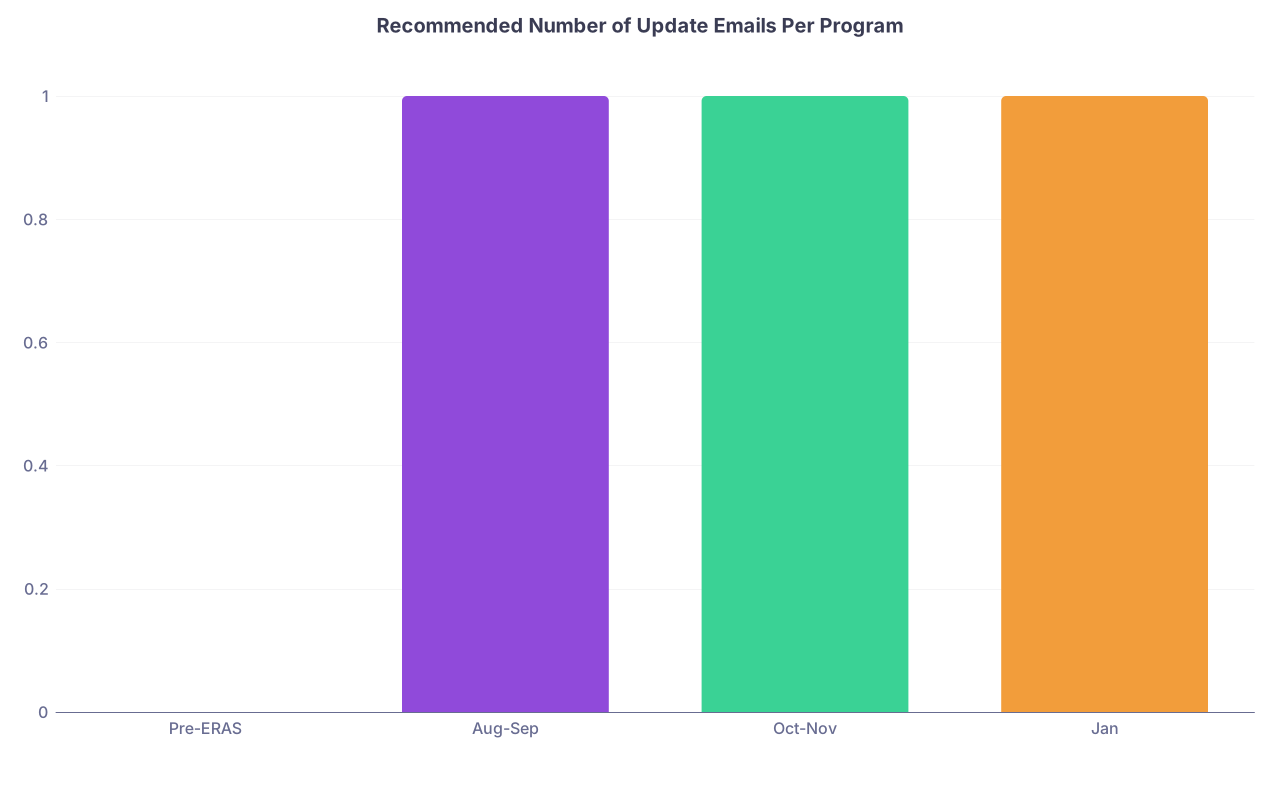
| Category | Value |
|---|---|
| Pre-ERAS | 0 |
| Aug-Sep | 1 |
| Oct-Nov | 1 |
| Jan | 1 |
Month-by-Month Snapshot
March–June:
- 0–1 informal mentor emails, no mass program updates
July:
- ERAS updated and submitted, no external email
August:
- Maybe 1 formal update email (Step 3 passed, new role, major publication)
September:
- 0–1 update if another major metric changes
October–November:
- 1 letter of interest to a limited set if no interview yet
- Post-interview thank yous (not “updates” per se)
December:
- 0–1 interview-season update to programs that already interviewed you, if there’s truly big news
January:
- 1 final update + interest email to your true top programs
If you’re sending more than 3 total updates to a single program in a cycle, you’re probably overdoing it.
Content Structure: What Your Update Email Should Actually Say
At every point, your structure should be tight:
Subject line:
- “[ERAS AAMC#] Update on Application – [Your Name]”
- Or “Application Update – New Step 3 Score – [Your Name]”
First sentence: who you are, what cycle, what specialty.
2–3 bullet points with concrete updates, each with dates and specifics.
One sentence of genuine program fit or continued interest.
Short closing, no begging.
Example for late August:
I’m writing to provide a brief update on my application in Internal Medicine for the 2025 Match.
Since submitting ERAS, I have:
• Passed Step 3 with a score of 232 (taken July 18, 2024).
• Started a full-time clinical research fellowship in cardiology at XYZ Hospital under Dr. Smith, where I’m coordinating a multicenter heart failure registry.
• Had a first-author manuscript on diabetes management accepted for publication in Journal of General Internal Medicine (in press).I remain very interested in [Program Name] given your strong emphasis on resident research and the cardiology exposure at your affiliated VA.
Thank you for your continued consideration.
Short. Sharp. Useful.
Final Takeaways
- Timing matters as much as content. Align your updates with program decision points: August–September, early interview season, and just before rank lists.
- Only real achievements deserve updates. Exams taken, roles started, manuscripts accepted, meaningful leadership—fine. Minor fluff is noise.
- Each program should hear from you a few times, not constantly. Think 2–3 well-timed, specific updates per cycle, not a monthly newsletter.