
Most unmatched graduates miss the next cycle not because they are unqualified, but because they miss time-sensitive moves. That is fixable.
You already know the sting of Match Week. What will hurt more is drifting for 6 months and realizing you blew easy deadlines that could have kept you competitive.
I am going to walk you, step by step, from Match Week of your unmatched year all the way to the day ERAS opens for programs next cycle. By date. By week. By “do this now or regret it later.”
Global View: The 12-Month Clock You Are Now On
Before we go month-by-month, you need the big frame. From the perspective of deadlines, your year usually looks like this (for a standard ERAS cycle starting in September):
(See also: Month-by-Month Reapplicant Calendar From April to Next Match Day for more details.)
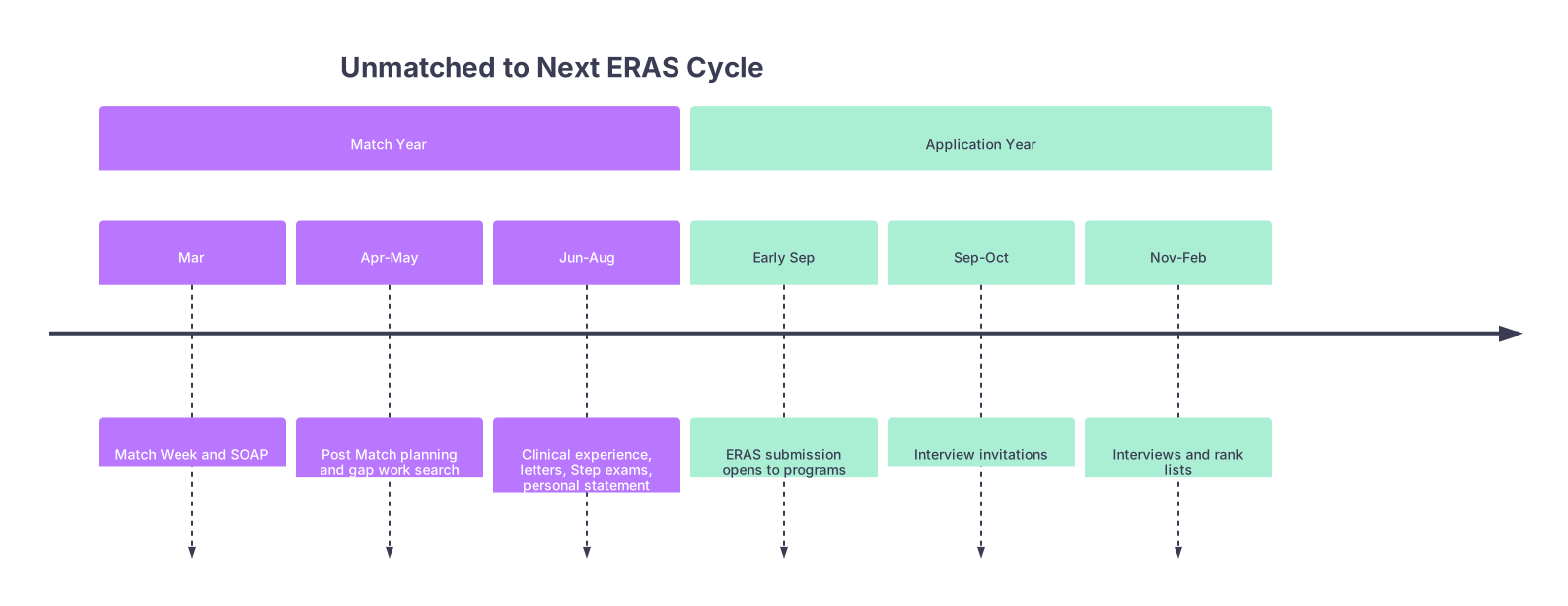
| Period | Event |
|---|---|
| Match Year - Mar | Match Week and SOAP |
| Match Year - Apr-May | Post Match planning and gap work search |
| Match Year - Jun-Aug | Clinical experience, letters, Step exams, personal statement |
| Application Year - Early Sep | ERAS submission opens to programs |
| Application Year - Sep-Oct | Interview invitations |
| Application Year - Nov-Feb | Interviews and rank lists |
You do not control invitations. You do control whether your materials are done on time, your exams are passed, and your story makes sense.
Now we zoom in.
Match Week to April 15: Immediate Damage Control
At this point you should accept that your “old plan” is gone and you are building a new one on a tight calendar.
Match Week (March): Right After You Go Unmatched
Non‑negotiable actions during Match Week (including SOAP days):
Learn exactly why you did not match.
Not vibes. Data. You need:- USMLE/COMLEX attempts and scores
- Number and type of programs applied to
- Interview count and distribution (community vs academic, geographic spread)
- Any red flags (LOA, professionalism comments, failed rotation)
Sit down with:
- A dean or student affairs advisor
- Program director or APD from your home department (if they are willing)
- A mentor in your target specialty
Ask directly: “If you were me and wanted to match next year, what must be different?”
Finish SOAP decisions with next ERAS in mind.
If you get a SOAP offer in a different specialty:- If you accept, you are now a resident. Different path.
- If you decline, you are fully committing to another year in the wilderness. Do not decide this casually.
Confirm your graduate status and visa/logistics.
If you are:- An IMG or on a visa → speak with your school and an immigration attorney about how much time you have and what status you will be in during your “gap” year.
- A US grad → confirm with your school what support they still provide post‑grad (MSPE updates, letter help, career advising).
Hard deadline in this window:
- By March 31: Have a written “deficit list”:
- Exams needed (Step 3, COMLEX 3?)
- New LORs needed
- Gaps in clinical activity
- Geographic strategy
- Specialty decision (stick vs switch)
If you still do not know whether you are reapplying in the same specialty or changing by April 1, you are already behind.
April–May: Lock Specialty, Secure Gap-Year Role, Plan Exams
At this point you should be moving from “what happened” to “what I am doing about it.”
By April 15: Specialty and Strategy Finalization
You must decide:
- Reapply same specialty vs switch
Examples:- Failed to match in Dermatology with 225 Step 1 and no research? Switching to Internal Medicine or Pediatrics is rational.
- Failed in Internal Medicine with 215 Step 1, 1 interview? You might still match in IM with:
- Improved application
- Strong US clinical experience (USCE)
- Strategy shift to community and less competitive regions
This choice drives everything: letters, rotations, research focus.
April 15–May 31: Lock in your Main “Gap‑Year Job”
You cannot spend the year “studying and waiting.” Programs hate that.
Your main options:
- Preliminary or transitional year spot (if you found one late / off cycle)
- Research position (paid or unpaid) in your chosen field
- Clinical job:
- USCE observer or research assistant
- Scribe
- Clinical research coordinator
- Hospital quality/improvement role
- Back home clinical work (for IMGs)
Less ideal, but better than nothing if documented and relevant.
Critical deadlines here:
By April 30:
- Have at least 10–15 active applications for gap-year positions (research, clinical roles, observerships).
- Contact your home department and nearby programs about research or unpaid roles.
By May 31:
- Have something concrete signed or verbally confirmed that will look like:
- Start date
- Supervisor
- Expected duties
- This job will be highlighted in ERAS as current position.
- Have something concrete signed or verbally confirmed that will look like:
June–August: Step 3, Fresh Letters, Application Materials
These three months are where most unmatched grads either recover or quietly sabotage the next cycle.
Step 3 (or COMLEX Level 3) Timing
Many unmatched graduates underestimate how much Step 3 changes their trajectory, especially with previous failures or marginal scores.
Use this rule:
- If any of these are true, you should aim to pass Step 3 before ERAS opens to programs in September:
- You have a Step 1 or Step 2 CK below ~220
- You have any exam failure
- You are IMG applying to IM, FM, or IM‑subspecialty
- You are reapplying after an unmatched cycle
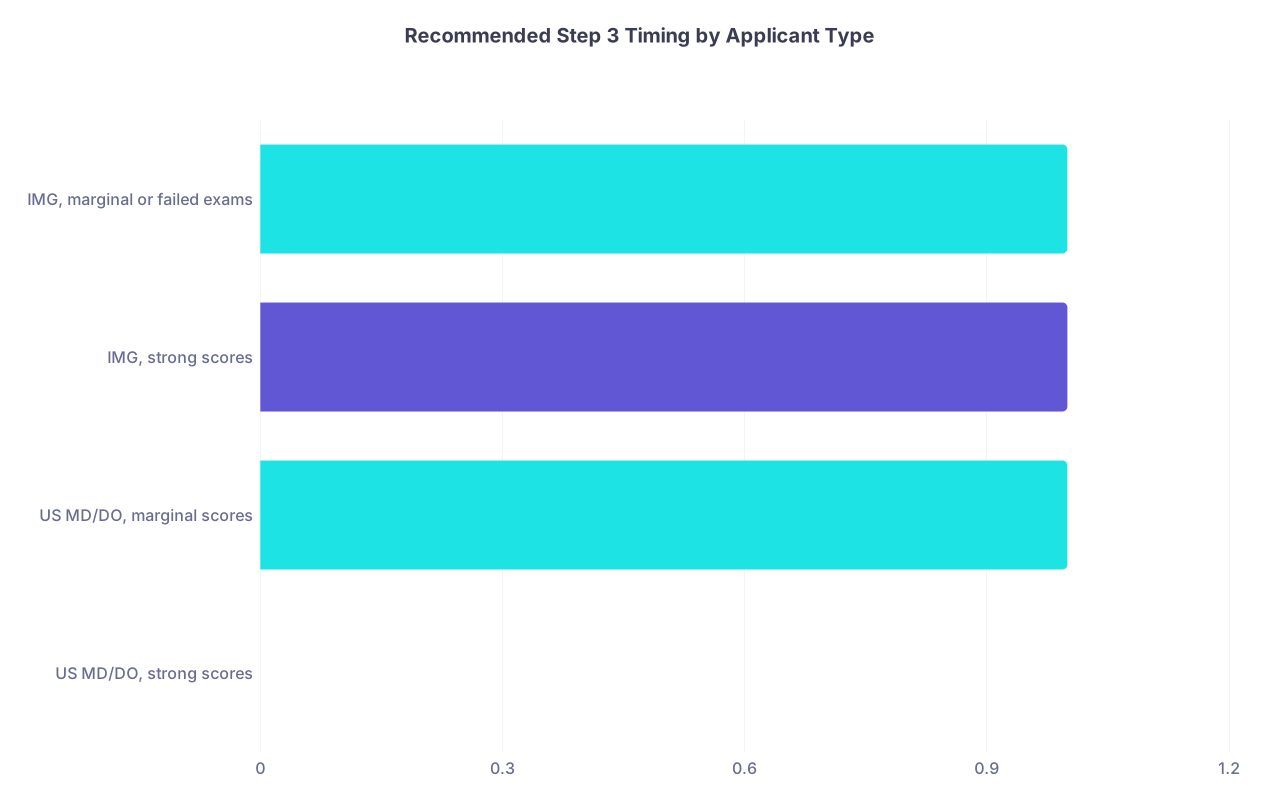
| Category | Value |
|---|---|
| US MD/DO, strong scores | 0 |
| US MD/DO, marginal scores | 1 |
| IMG, strong scores | 1 |
| IMG, marginal or failed exams | 1 |
(0 = optional before ERAS, 1 = strongly recommended before ERAS)
Real deadline:
Ideal exam date: mid‑July to mid‑August
- That way:
- You have time to receive your Step 3 score (usually 3–4 weeks).
- Score is in the ERAS application when programs first review.
- That way:
Latest “still OK”: late August
Results may land right after programs start reviewing, but better than not at all.
Letters of Recommendation (LOR) – New Cycle, New Proof
At this point you should stop hoping last year’s letters will carry you. They will not.
You need at least:
- 3 new or updated letters:
- 2 from your target specialty (IM, FM, Psych, etc.)
- 1 from research supervisor or previous attending who can comment on your growth since last cycle
Key deadlines:
By June 15:
- Identify exactly who you want letters from.
- Ask them directly, with:
- Your CV
- Brief summary of what went wrong last cycle
- Specific things you hope they can highlight (dependability, improvement, ownership of past issues)
By August 15:
- Have all LORs uploaded to ERAS (or at least requested and confirmed).
Unmatched graduates get delayed here because they feel awkward asking for letters “again.” Get over it. This is part of the recovery.
Personal Statement and CV: Rewrite, Do Not “Update”
May–June is decision time. July–August is writing time.
At this point you should:
Completely rewrite your personal statement with:
- Honest reflection on what you learned in the unmatched year
- Concrete actions you took (research, work, exam improvement)
- Clear, believable specialty choice story
Clean up your ERAS CV:
- Remove fluff
- Clarify timelines
- Make sure any gaps are covered by something (study, family responsibilities, illness, etc., but documented)
Deadlines:
- By July 1:
- Rough draft of personal statement
- Updated CV in a simple document (not ERAS yet)
- By August 1:
- Final statement reviewed by:
- At least one physician
- One person with strong writing skills
- Final statement reviewed by:
- By August 15:
- Statement and CV ready to paste into ERAS.
ERAS System Deadlines: June–September (Do Not Mess These Up)
Timelines vary slightly year to year, but the general structure is consistent.
Here are the key ERAS‑related dates you must anticipate:
| Milestone | Typical Timing |
|---|---|
| ERAS tokens / system opens to applicants | Late May – Early June |
| ERAS application entry & document upload | June – Early September |
| Programs can start receiving apps | Early – Mid September |
| MSPE release date | October 1 |
| NRMP registration opens | Mid September |
You must treat these as hard anchors and work backward.
Late May–June: ERAS Access and Document Infrastructure
At this point you should:
Get ERAS access:
- Obtain your token (through your medical school or ECFMG for IMGs).
- Log in, check that your identifiers and prior certifications are accurate.
Rebuild document infrastructure:
- Update photo if needed (professional, neutral background).
- Check that old LORs are still in the system if you plan to reuse any.
- Know which letters will be used for which specialty (if dual applying).
Deadline:
- By June 30:
- You should have:
- Active ERAS account
- Document list mapped out:
- Photo
- Transcript
- MSPE (school will handle; you must request updates if allowed)
- Score reports
- LORs planned and requested
- You should have:
July–August: Filling ERAS Carefully, Not Frantically
Most unmatched applicants rush ERAS in early September and submit a half‑polished document dump. Programs can see this.
At this point you should block out ERAS work:
July:
- Fill out:
- Biographical data
- Education and work history
- Publications and presentations (properly formatted)
- Draft your experiences section thoughtfully; this is not just job titles.
- Fill out:
By August 15:
- 90% of your ERAS application finished.
- All that should remain:
- Final proofreading
- Small tweaks to program lists
- Specialty‑specific tailoring where appropriate.
Program List and Targeting: July 15–September 1
Random mass applications are how you burned money last time.
This cycle, you build a deliberate list.
At this point you should:
Define your tiers:
- Core programs: Where you have a realistic shot given:
- Your scores
- Graduation year
- Visa status
- Stretch programs: A bit above your stats but plausible with improved story / Step 3.
- Safety/backup: Community and geographically flexible programs, often less IMG‑friendly but more forgiving if you have Step 3 and recent US experience.
- Core programs: Where you have a realistic shot given:
Use last cycle data:
- Where did you get interviews?
- Where did you hear nothing?
- Did anyone give you feedback?
For IMGs / older grads:
You must increase applications to:- Community programs
- Less competitive regions (Midwest, South, some rural areas) And stop worshiping brand names that will never look at your file.
Deadlines:
By August 1:
- Draft initial program list in a spreadsheet:
- Program name
- State
- IMG status
- Cut‑offs known or suspected
- Whether they require Step 3
- Your priority rating (1–3)
- Draft initial program list in a spreadsheet:
By September 1:
- Finalize program list so you are not making panicked changes at submission.
Early September: ERAS Submission Date – The Big One
This is the deadline most unmatched grads fixate on. It is very important, but only if you have done the months of work before it.
ERAS usually lets applicants submit their application several days before programs can view them. Your real goals:
- Submit on or very close to the first day you are allowed to submit.
- Have:
- Completed ERAS
- Photo
- Transcript
- Score reports
- At least 3–4 LORs assigned
- Personal statement attached for each specialty
Do not wait to submit because:
- You are “waiting for one more LOR”
- You are still wordsmithing your personal statement on September 5
Programs notice late applications, especially from reapplicants.
October–NRMP Deadlines: Do Not Go Dark After Submitting
Once ERAS is in, unmatched grads tend to go passive. That is a mistake.
Between September and February, you have another set of critical “soft deadlines”:
1–2 weeks after submission:
- Begin targeted, respectful emails to:
- Programs where you have a genuine tie
- Your home program and affiliated sites
- Include:
- Brief update
- One or two concrete reasons you fit
- Any fresh news (recent Step 3 pass, new publication)
- Begin targeted, respectful emails to:
NRMP registration (usually late September to October):
- Deadline: Register by the standard registration deadline to avoid late fees.
- Make sure your NRMP and ERAS data are consistent (name, school, graduation year).
MSPE release (October 1):
- Confirm with your school whether your MSPE was updated to reflect your post‑Match work.
- If allowed, make sure your new activities and growth are reflected.
Visual Summary: Your Critical Windows
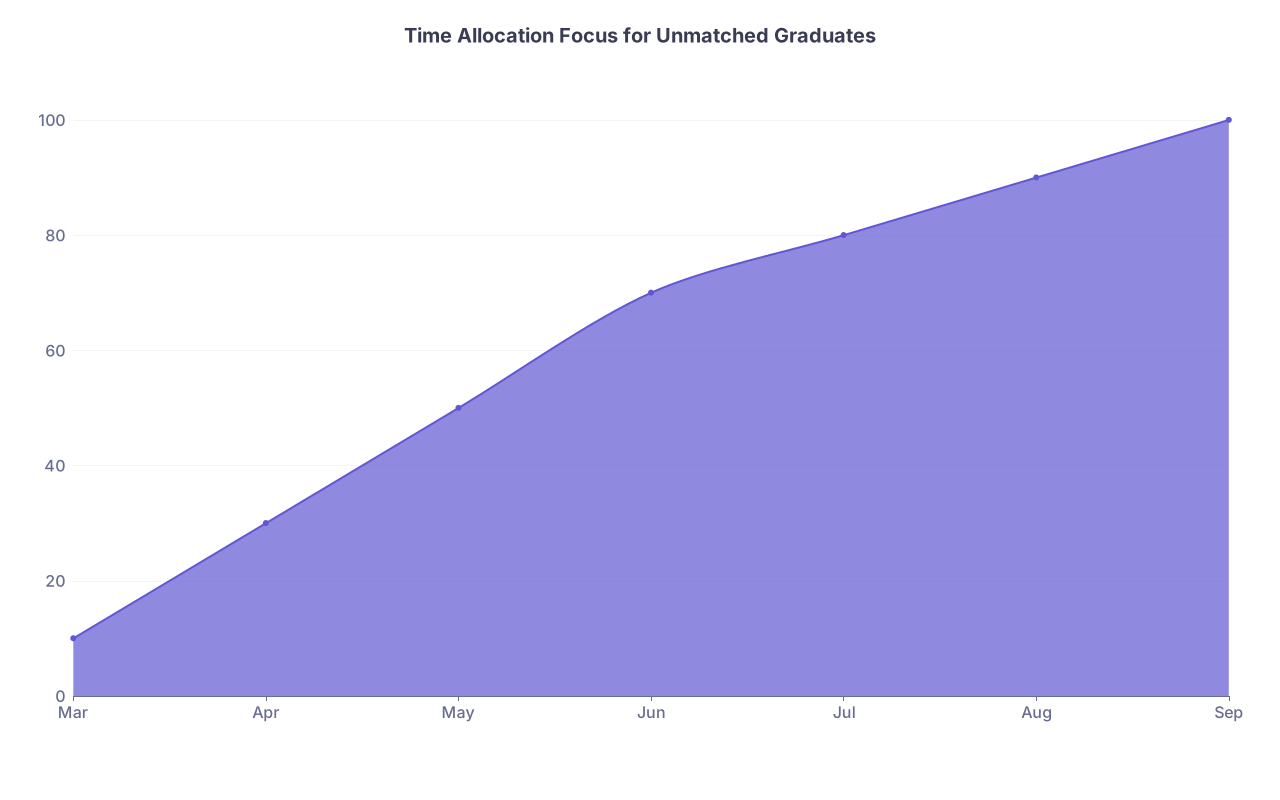
| Category | Value |
|---|---|
| Mar | 10 |
| Apr | 30 |
| May | 50 |
| Jun | 70 |
| Jul | 80 |
| Aug | 90 |
| Sep | 100 |
Think of that curve as: how “ready” your next ERAS should be. By July you want to be above 70%. By September 1, you want to be done.
FAQs (Exactly 4)
1. If I failed Step 2 or Step 3, when is the latest I can retake and still be competitive for the next ERAS?
You should plan your re‑take no later than early August. That allows enough time for:
- A proper preparation period (6–8 weeks minimum for a re‑take)
- Score reporting before or shortly after ERAS opens to programs
Taking the exam in late September or October means most programs will review your file without the new score, which is catastrophic when you already have a failure.
2. Is it ever smart to wait a year and not apply in the next ERAS at all?
Yes, but rarely. It makes sense when:
- You have multiple exam failures and no realistic way to fix your profile in 6–8 months.
- You are switching into a hyper‑competitive specialty and need serious research output.
- Visa or personal issues (illness, family crisis) make a clean application year impossible.
If you do skip a cycle, you must use the year in a way that creates obvious value: publishable research, USCE, or major exam remediation. Doing “nothing” for a year and then applying again is worse than reapplying quickly.
3. Can I reuse my previous letters of recommendation, or do all of them need to be new?
You can reuse strong letters, especially if the writer is senior and still supports you. However, you should not rely only on old letters. At least one or two letters need to be new or updated to show:
- Recent clinical performance
- Your response to being unmatched
- Growth and reliability in your current role
Programs want evidence that you did something constructive with the year, not just recycled the same story.
4. How late is “too late” to change specialties for the next cycle?
If you are switching into a new specialty for the very next cycle, you should commit no later than April–early May. After that, it becomes extremely difficult to:
- Get meaningful specialty‑specific letters
- Arrange relevant clinical or research exposure
- Craft a believable narrative by September
Changing your mind in July or August is a common error. It leads to thin specialty evidence and confused applications.
Key points:
- Your real deadlines start in March, not in September. Step 3, gap‑year work, and letters all have their own clocks.
- By mid‑August, your ERAS should be essentially finished; September is for submission, not creation.
- Every month you either reduce or increase the distance between you and a successful Match. Act like the calendar matters, because programs do.