Understanding What Matters in Anesthesiology Residency Program Research
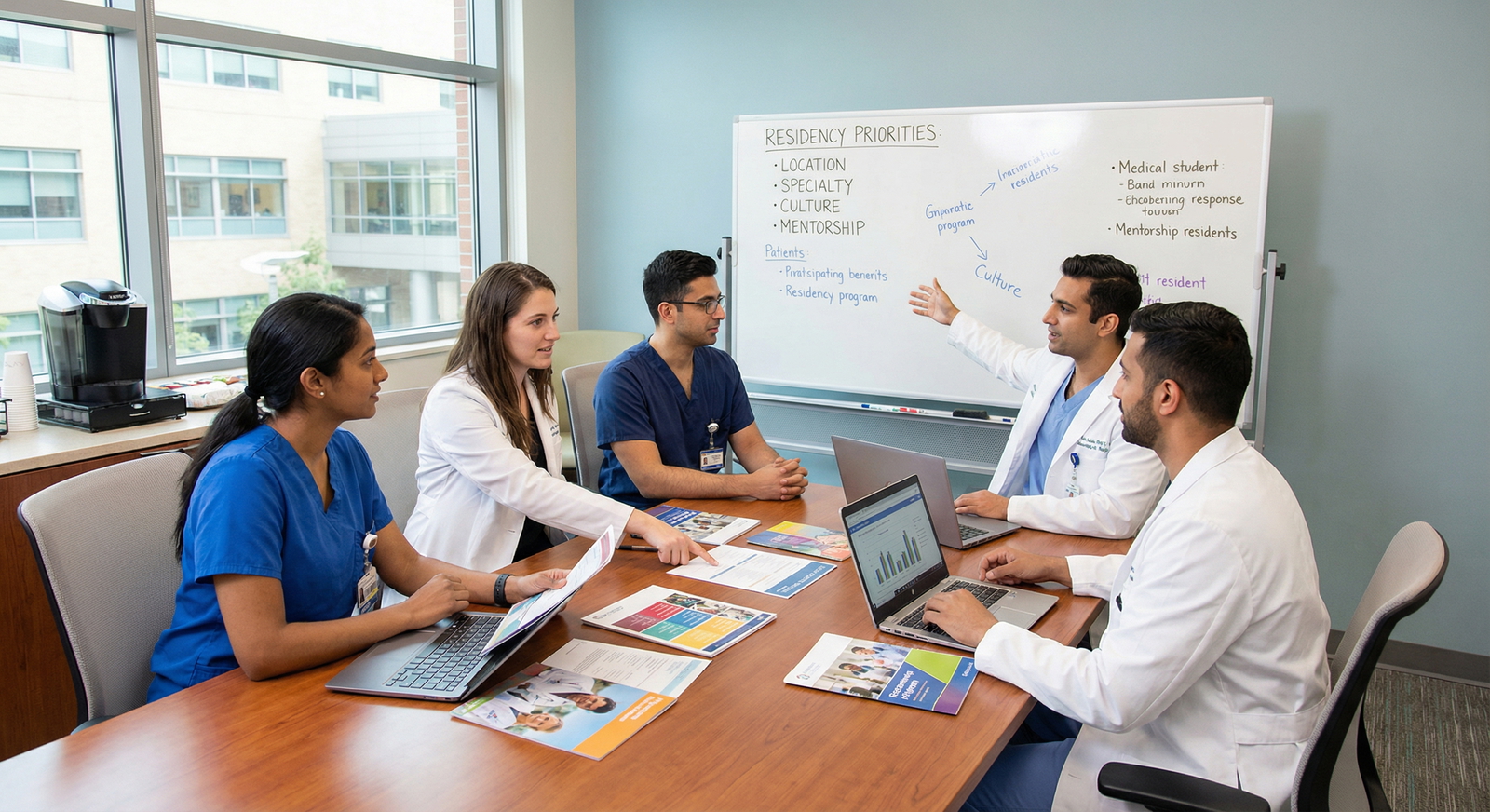
Choosing an anesthesiology residency is one of the most consequential decisions of your career. Before you even start building a program list, you need a clear sense of what actually matters—both generally and for you specifically.
Every anesthesia match cycle, applicants ask the same question: “What are the best anesthesiology residency programs?” The more useful question is, “Which programs fit my goals, personality, and learning style?” That’s where thoughtful program research strategy comes in.
At a high level, your research should help you answer four core questions:
- Can I get the clinical and procedural training I need to become an excellent anesthesiologist?
- Will I have the career outcomes I want (fellowship, job type, location)?
- Will I be supported as a person—physically, emotionally, and professionally?
- Can I realistically match at this program given my application profile?
To get there, you’ll need a structured approach to evaluating residency programs rather than relying on reputation, word-of-mouth, or vague “vibes” from a website.
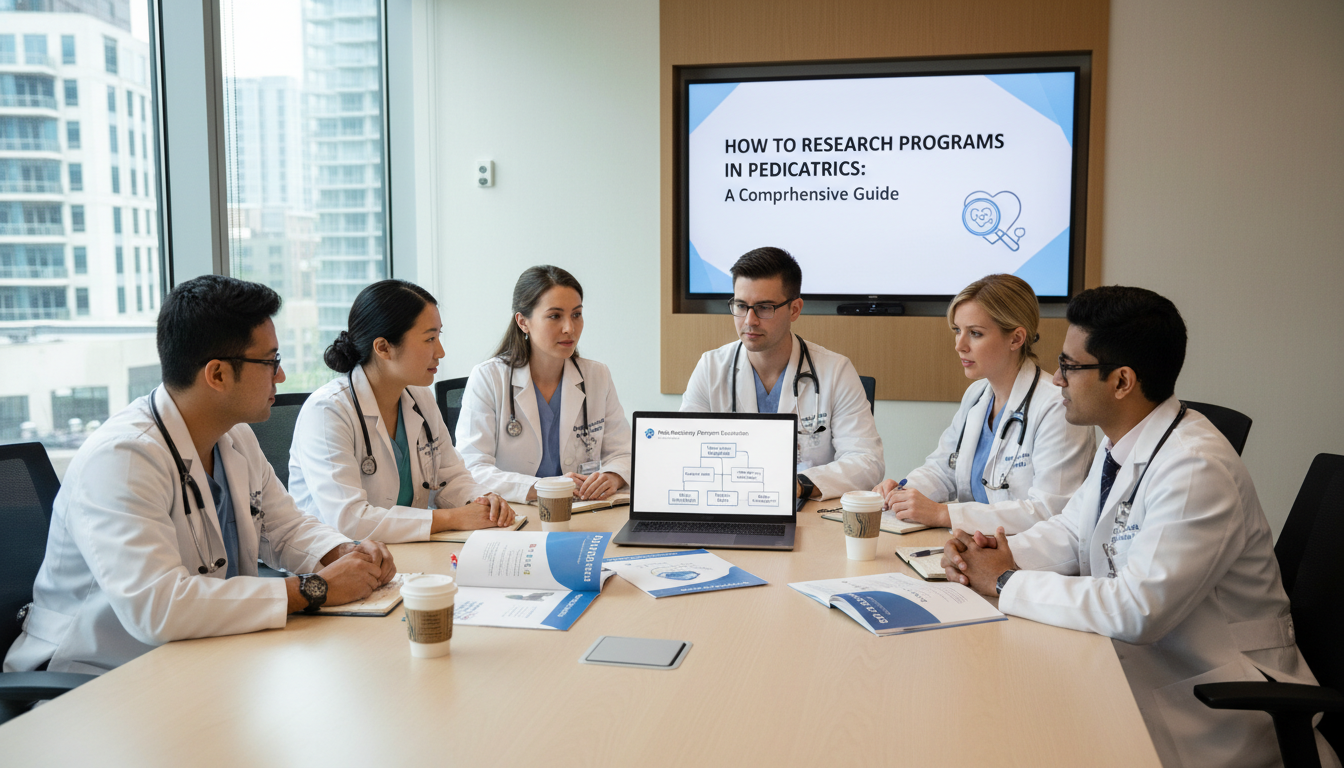
In this guide, we’ll walk through a step-by-step framework on how to research residency programs in anesthesiology, from defining your priorities to doing a deep dive on individual programs and using your findings to create a smart rank list.
Step 1: Clarify Your Goals and Non‑Negotiables
Before you open a single program website, you should know what you’re looking for. Otherwise, you’ll get lost in a sea of glossy photos and generic mission statements.
1.1 Identify Your Training and Career Goals
Ask yourself:
What kind of anesthesiologist do I want to be?
- Big tertiary academic center attending?
- Community generalist in a smaller city?
- Subspecialist (cardiac, peds, critical care, pain, OB)?
- Hybrid academic–private model?
How sure am I about subspecialization?
- If very sure (e.g., pediatric anesthesia), strong subspecialty exposure and fellowship match data should be high priorities.
- If unsure, broad case mix and elective flexibility become more important.
What matters most in my early career?
- Geographical flexibility
- High earning potential right away
- Research and academic trajectory
- Lifestyle and work–life balance
Write down 3–5 primary goals (e.g., “Match into a cardiac fellowship,” “Stay in the Midwest,” “Develop strong regional anesthesia skills”) and revisit this list throughout your research.
1.2 Define Your Personal and Lifestyle Priorities
Anesthesiology is demanding. Your environment will shape your wellness and satisfaction.
Consider:
- Location: Region, proximity to family/partner, urban vs. suburban vs. smaller city
- Cost of living: Housing affordability, commuting time
- Partner/family needs: Job market for partners, schools, childcare
- Support systems: Friends/family nearby, cultural or religious communities
- Lifestyle: Outdoor activities, arts/culture, climate
Clarify a few non-negotiables (e.g., “Must be within 2 hours of my aging parents” or “I cannot afford San Francisco/NYC rents”).
1.3 Align Your Program Research Strategy With Your Competitiveness
You also need a realistic sense of your competitiveness in the anesthesia match:
- Objective metrics:
- USMLE/COMLEX scores (including any failures)
- Medical school type (US MD, DO, IMG)
- Clerkship performance and honors
- Portfolio strength:
- Research and publications
- Leadership, teaching, unique experiences
- Strong anesthesiology letters vs. more generic letters
- Red flags:
- Leaves of absence, professionalism concerns
This isn’t about discouraging yourself—it’s about targeting the right tiers of programs and balancing your list.

Step 2: Build a Broad Initial List of Anesthesiology Programs
Once your priorities are clear, you can start building a “master list” of possible programs before narrowing down.
2.1 Use Official Directories and Databases
To begin program discovery, rely on centralized, reputable sources:
FREIDA (AMA Residency & Fellowship Database):
- Filter by specialty (Anesthesiology)
- Use filters for region, program type (university, community), size, etc.
- Export or copy program names and locations for your spreadsheet
AAMC Residency Explorer (if eligible):
- Compare your metrics with matched applicants at specific programs
- See ranges for board scores, research, and institutional characteristics
- Helpful for gauging reach/target/safety categories
NRMP and ERAS Program Lists:
- Confirm which programs participate in the anesthesia match
- Check program codes, positions, and track types (categorical vs. advanced)
Specialty Societies (e.g., ASA, SCA, SPA, ASRA):
- Often list accredited programs and fellowships
- Useful to track institutions with strong subspecialty presence
2.2 Categorize Programs by Type and Structure
Not all anesthesiology residencies are structured the same way. When researching residency programs, clarify:
Categorical vs. Advanced vs. Physician-only Positions
- Categorical (PGY-1 entry): Includes clinical base year (CBY) + anesthesia training
- Advanced (PGY-2 entry): Requires separate prelim or transitional year application
- Physician-only: For those with prior clinical training/PGY-1 completed
Program Setting and Affiliation
- University-based academic centers
- Community hospital programs with academic affiliation
- Hybrid models with multiple training sites
Note which structures fit your needs. For example:
- If you prefer a seamless 4-year pathway, emphasize categorical programs.
- If you want a flexible or geographically different intern year, consider advanced programs and start parallel research on prelim/TY programs.
2.3 Aim for a Balanced Initial Universe
For most applicants, start with a broad list of 40–70 anesthesiology programs to research more deeply, depending on:
- Your competitiveness and risk tolerance
- Desired geographic spread
- Interest in highly competitive academic centers vs. moderate-tier programs
You will narrow this list later, but this range gives you enough options to compare.
Step 3: Deep Dive Into Program Characteristics That Matter
This is where your program research strategy becomes detailed and structured. Instead of reading websites randomly, evaluate specific domains systematically.
Use a spreadsheet or note template with sections like:
- Clinical training & case mix
- Subspecialty exposure & fellowship pipeline
- Education culture & resident support
- Program outcomes
- Logistics (location, call, pay, benefits)
- Competitiveness/fit for your application
3.1 Clinical Training, Volume, and Case Mix
Your primary goal is to become a competent, confident anesthesiologist. Focus on:
Key Questions to Ask:
- What is the overall case volume per resident per year?
- Do residents get early, progressive autonomy in the OR?
- What is the exposure to:
- Complex tertiary cases vs. bread-and-butter community cases
- Cardiac, neurosurgery, trauma, obstetrics, pediatrics
- Regional anesthesia and nerve blocks
- Out-of-OR anesthesia (endoscopy, IR, MRI, cath lab)
- Are there dedicated rotations at:
- Level 1 trauma centers
- Large obstetric services
- Children’s hospitals
- VA hospitals or community sites
How to Research:
- Program website “Clinical Experience” or “Curriculum” pages
- Look for rotation schedules by PGY year and lists of training sites
- Check case logs during interview season (some programs show anonymized data)
- Ask residents directly about actual vs. advertised exposure
Example:
If you’re interested in critical care or trauma, prioritize programs with:
- High-volume trauma centers
- Multiple ICU rotations (SICU, CVICU, Neuro ICU)
- Early involvement in airway management and resuscitation
3.2 Subspecialty Exposure and Fellowship Opportunities
For many residents, anesthesiology residency is a launching pad for fellowship.
Common Anesthesia Fellowships:
- Critical Care Medicine
- Cardiac Anesthesiology
- Pediatric Anesthesiology
- Pain Medicine
- Obstetric Anesthesiology
- Regional/Acute Pain
- Research or education-focused tracks (less common/formal)
What to Look For:
- Does the institution offer in-house fellowships in subspecialties you might pursue?
- How many graduates go into fellowships, and in which fields?
- Do residents match into competitive fellowships at top institutions?
- Are rotations in your area of interest robust and early in training?
Programs with strong subspecialty divisions often provide:
- Early mentorship and exposure
- Research opportunities aligned with fellowship goals
- Internal applicant preference for fellowship positions
When evaluating residency programs, pay particular attention to where graduates match for fellowship—this is a strong proxy for program reputation and networking strength.
3.3 Educational Culture and Resident Support
Clinical volume is not enough. You need a program that values teaching and supports residents as learners.
Indicators of a Strong Educational Environment:
- Protected didactic time (weekly) where residents are truly relieved from clinical duties
- Structured curriculum:
- Board exam preparation (ITE, BASIC, ADVANCED)
- Simulation labs for crisis management and rare events
- Journal clubs and case conferences
- Faculty with clear education roles (Program Director, APDs, education chiefs)
- Regular, structured feedback and evaluation processes
- Resident involvement in quality improvement (QI) and patient safety initiatives
Culture and Wellness:
- Resident wellness programs and mental health resources
- Reasonable duty hours and responsiveness when violations occur
- Support for parental leave, medical leave, and schedule flexibility
- Approachability of leadership and openness to resident feedback
This is harder to gauge from a website; use interviews, resident panels, and alumni to understand the true culture.
3.4 Case Autonomy and Responsibility
Graduates frequently say that autonomy is what transformed them from student to attending.
Ask residents:
- “By CA-2 or CA-3, are you running your own rooms routinely?”
- “How often do attendings stay in the room vs. stepping out?”
- “Do you feel comfortable managing cases independently by the end of residency?”
- “Is there a graded responsibility model, or is autonomy limited by fellow presence?”
In some programs, heavy fellow presence can dilute resident experience; in others, fellows are additive and focus on the most complex cases while residents still gain hands-on experience.

Step 4: Evaluate Outcomes, Reputation, and Fit
Your program should position you well for the next step in your career—whether that’s fellowship, academic practice, or community work.
4.1 Board Pass Rates and Exam Preparation
Board certification is a baseline expectation.
Check:
- Written and oral board pass rates (BASIC, ADVANCED, APPLIED)
- Whether the program:
- Tracks and publishes pass rates (transparency is a good sign)
- Provides structured board review sessions, question banks, or stipends
- Offers remediation support when someone struggles
High, consistent pass rates suggest that residents are well-mentored and the curriculum is aligned with the exam.
4.2 Fellowship and Job Placement
For each program, try to gather:
- Percent of graduates pursuing fellowships vs. going directly into practice
- Types of fellowships and institutions where graduates match
- Geographic patterns in post-residency practice (where grads tend to work)
- Presence of alumni in leadership roles (chairs, division chiefs, etc.)
This information may be partially available on websites (graduating class announcements, alumni pages), but is often best obtained by directly asking on interview day: “Where have the last few classes gone after graduation?”
4.3 Academic vs. Community Orientation
Your future career goals should alignment with program orientation:
Academically oriented programs:
- Strong research infrastructure
- Expectations for scholarly activity (abstracts, publications)
- Teaching responsibilities for medical students
- Pathways to chief positions, academic careers
Community-focused programs:
- High volume of bread-and-butter cases
- Early independent practice exposure
- Less pressure to publish, more emphasis on efficient OR management
- Graduates often go into private practice or community jobs
Neither is “better” universally; it’s about fit. Be honest about where you see yourself.
4.4 Geographic and Lifestyle Fit
When evaluating residency programs, integration with your life outside the hospital is critical.
Research:
- Cost of living: Rent estimates, typical resident neighborhoods
- Commute times: Are training hospitals spread out? Is parking available?
- Local culture: Safety, diversity, recreation, arts, climate
- Support for partners/families: Nearby job markets, schools, support networks
During interviews and second looks (if offered), ask yourself:
“Can I picture living here for 3–4 years, in both my best and worst weeks?”
Step 5: Use Multiple Information Sources Strategically
Programs present themselves in curated ways. To get a more accurate picture, triangulate multiple data sources.
5.1 Program Websites and Official Materials
Use official sources for:
- Rotation schedules and call structures
- Faculty lists and subspecialty divisions
- Conference schedules and didactic descriptions
- Application requirements and selection criteria
- Mission and values statements
These are helpful but inherently optimized for recruiting.
5.2 Virtual or In-Person Open Houses
Many anesthesiology programs hold virtual info sessions before the anesthesia match.
Use them to:
- Hear directly from program leadership and residents
- Ask high-level questions about training philosophy and changes in the program
- Sense how transparent and approachable leadership seems
Prepare 2–3 thoughtful questions per session so you can compare answers across programs (e.g., “How has your program adapted call structure and OR staffing to address resident wellness and duty hours?”).
5.3 Talking to Current Residents and Recent Graduates
This is often the most valuable source of information.
When you talk to residents (during interview day, via email, or through alumni of your medical school), ask:
- “What are the program’s biggest strengths?”
- “What would you change if you could?”
- “Do residents feel comfortable raising concerns?”
- “How supported do you feel when life happens—illness, family issues, burnout?”
- “Is the reality of the call schedule close to what’s advertised?”
- “What does a hard month look like here? A good month?”
Pay attention to hesitation and tone, not just words. A resident saying “We’re like a family” can be reassuring—or a red flag if paired with discussions of frequent extra shifts, guilt about calling out sick, or blurred boundaries.
5.4 Using Data Tools and Applicant Communities Carefully
Online forums and social media (e.g., Reddit, specialty Discords, Student Doctor Network) can offer real-world perspectives and program rumors—but use them cautiously:
- Recognize that loud voices are often outliers—extremely happy or extremely unhappy.
- Verify any strong claims via other sources.
- Avoid letting anonymous opinions override your own direct impressions and priorities.
Use them mainly to:
- Identify issues to ask about directly (e.g., “I’ve heard there have been leadership changes—how has that affected the resident experience?”)
- Get a sense of how programs are perceived in terms of competitiveness.
Step 6: Organize, Compare, and Narrow Your Anesthesiology Program List
Now that you’ve gathered information, you need to make it actionable.
6.1 Create a Comparison Spreadsheet
For each anesthesiology residency, track key variables in a structured format. Columns might include:
- Location, region, setting (academic/community/hybrid)
- Program size and number of positions
- Categorical/advanced/physician-only status
- Notable training sites (children’s hospital, VA, trauma center)
- Strength of subspecialty rotations (cardiac, peds, OB, regional, ICU, pain)
- Board pass rates (if available)
- Fellowship match patterns
- Call structure (frequency, type of nights/weekends, ICU vs. OR call)
- Resident wellness initiatives and support
- Research opportunities and expectations
- Perceived competitiveness (reach/target/safety)
- Your subjective impression / “gut score”
This structure makes evaluating residency programs more objective and helps you see patterns.
6.2 Weight Your Priorities
Not all factors are equal. Assign approximate weights to your priorities, for example:
- Clinical training and case mix – 30%
- Fellowship/job outcomes – 20%
- Culture and resident support – 20%
- Location and lifestyle – 20%
- Research and academic opportunities – 10%
You don’t need a perfect scoring system, but having a rough framework prevents you from overvaluing flashy factors (like brand name) at the expense of the daily reality of your training.
6.3 Stratify Programs: Reach, Target, and Safety
Based on your competitiveness and tools like Residency Explorer:
- Reach programs: Highly competitive universities and top academic centers
- Target programs: Mid-tier academic and strong community programs where your metrics and profile closely match current residents
- Safety programs: Solid programs whose average metrics are below yours or that are less geographically desirable to the average applicant
A balanced list often includes something like:
- 20–30% reach
- 40–50% target
- 20–30% safety
Adjust based on your risk tolerance and how competitive your application is.
6.4 Refine Your Application and Rank Lists
As you proceed through the anesthesia match cycle:
Before submitting ERAS:
- Remove programs that clearly don’t meet your non-negotiables
- Keep a diverse range of locations and program types unless you have strong geographic constraints
After interviews:
- Update your spreadsheet with interview-day impressions
- Revisit your original goals—don’t let interview fatigue or flattery overshadow what matters long term
- Rank based on overall fit, not prestige alone
Remember: a “lower-tier” program that matches your goals and supports you as a learner will usually prepare you better than a prestigious program that burns you out or sidelines your development.
Putting It All Together: A Practical Program Research Workflow
Here’s a concrete step-by-step way to operationalize everything above:
Week 1–2: Self-Assessment and Goal Setting
- Clarify training goals, career interests, and personal non-negotiables.
- Honestly assess your competitiveness in the anesthesiology residency landscape.
Week 2–3: Broad List Building
- Use FREIDA, NRMP, and society lists to generate 40–70 programs.
- Tag by region, program type, and structure (categorical vs. advanced).
Week 3–5: Website and Data Deep Dive
- Build a comparison spreadsheet.
- For each program, review curriculum, rotation sites, call, and outcomes.
- Assign early “fit” impressions and tentative reach/target/safety labels.
Week 4–8: Interaction and Clarification
- Attend virtual open houses or info sessions.
- Talk to residents or alumni when possible.
- Refine understanding of culture, autonomy, and real workload.
Week 6–9: Narrowing and Final Application List
- Remove programs that clearly don’t meet your basic needs.
- Confirm that your list has enough target and safety programs.
- Submit ERAS strategically for the anesthesia match.
Interview Season: Continuous Re-evaluation
- After each interview, update your spreadsheet with qualitative impressions.
- Re-rank your evolving preferences based on your authentic reactions and priorities.
Rank List Construction
- Re-read your initial goal list and decide which programs truly align.
- Use your data but also trust your direct impressions.
- Rank programs in the exact order you’d want to train at them—don’t try to game the NRMP algorithm.
By approaching how to research residency programs this systematically, you transform an overwhelming process into a series of manageable steps and set yourself up for a successful, well-informed anesthesia match.
Frequently Asked Questions (FAQ)
1. How many anesthesiology programs should I apply to?
It depends on your competitiveness and geographic flexibility, but a rough guide:
- Strong applicants (high scores, no red flags, solid anesthesia LORs): ~20–30 programs
- Average applicants: ~30–40 programs
- Applicants with significant limitations (low scores, red flags, IMG status, strong geographic constraints): 40–60+ programs
The key is maintaining a balanced mix of reach, target, and safety programs rather than just increasing volume indiscriminately.
2. How important is a program’s “name” or national reputation?
Reputation matters somewhat, especially if you are targeting highly academic careers or ultra-competitive fellowships. However:
- Clinical competence, case exposure, and your personal performance carry substantial weight.
- Many excellent community and mid-tier academic programs produce outstanding anesthesiologists and place graduates into strong fellowships and jobs.
- A highly prestigious name does not compensate for poor fit, weak support, or chronic burnout.
Prioritize fit and training quality first, then consider reputation as a secondary factor.
3. Should I prioritize location or program quality?
Ideally, you find both. Practically, it becomes a trade-off:
- If you have strong family or personal reasons to be in a specific region, it’s reasonable to prioritize location—but ensure at least a baseline of clinical quality and support.
- If you’re more flexible, focusing on program quality and career alignment may serve you better long-term.
Ask: “Will I be able to complete this residency well in this location, given my support system and mental health needs?”
4. How can I tell if a program has a toxic or unhealthy culture?
Warning signs (especially if repeated by multiple residents or sources):
- High resident attrition or frequent transfers out
- Vague or evasive answers when asked about wellness or conflict resolution
- Residents who seem consistently exhausted, disengaged, or fearful of speaking honestly
- Regular duty hour violations without clear efforts to fix the underlying issues
- Dismissive attitude from leadership about resident concerns
Conversely, healthy programs acknowledge challenges openly, describe specific improvements they’ve made, and empower residents to be part of problem-solving.
By investing time and thought into how to research residency programs in anesthesiology, you give yourself the best chance of landing in a place where you’ll grow, be challenged appropriately, and ultimately thrive—both as a physician and as a person.