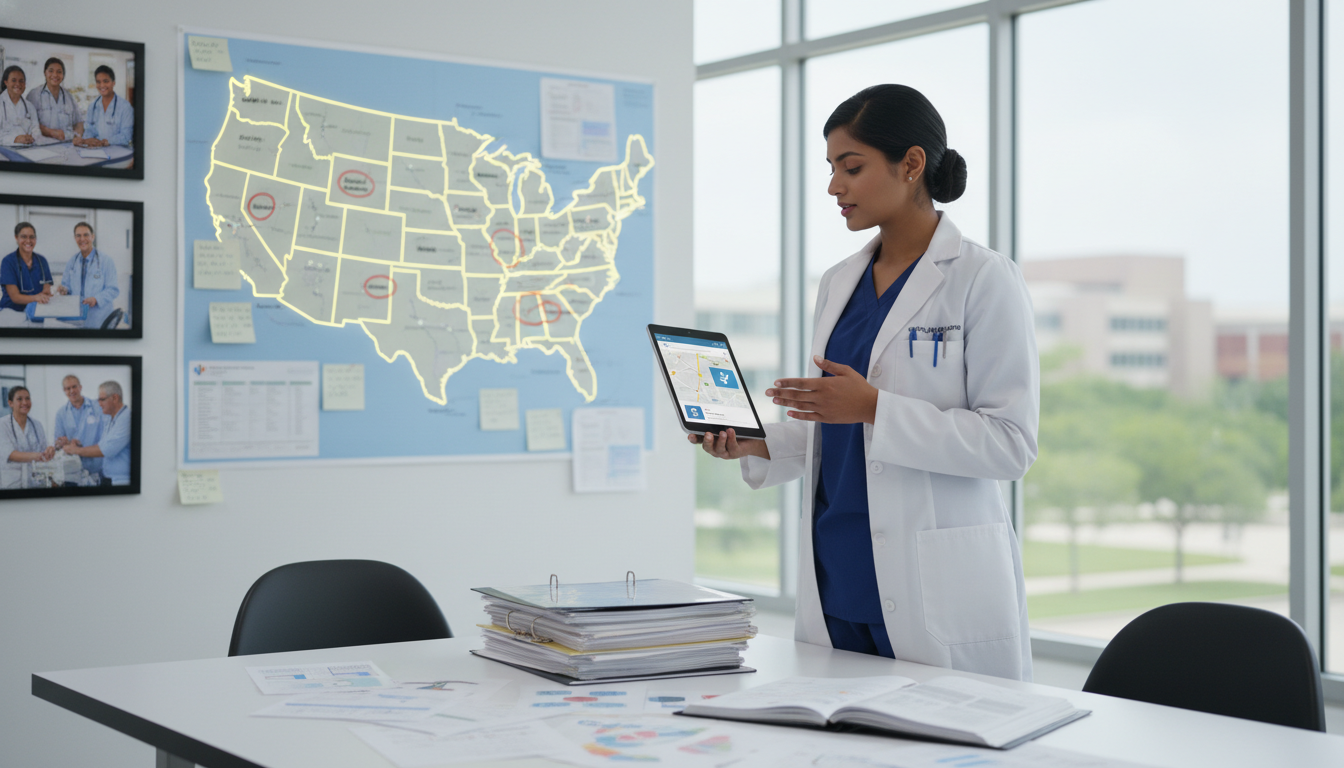
Understanding the Landscape: Clinical Informatics Pathways for Caribbean IMGs
Clinical informatics is a rapidly growing field at the intersection of medicine, data, and technology. For a Caribbean IMG, it can be both an exciting opportunity and a confusing landscape to navigate—especially when trying to understand how to research residency programs that will set you up for a future clinical informatics fellowship or health IT career.
Before you start building a program research strategy, you need to understand:
- What clinical informatics actually is
- The typical training pathways in the U.S.
- How being a Caribbean IMG affects your options
What Is Clinical Informatics?
Clinical informatics focuses on how information, data, and technology are used to improve patient care, clinical workflows, and health systems. It includes:
- Electronic health records (EHR) optimization
- Clinical decision support tools
- Data analytics and quality improvement
- Telemedicine, population health, and interoperability
- Health IT implementation and change management
You don’t usually do a residency in clinical informatics. Instead, you:
- Complete a primary specialty residency (e.g., Internal Medicine, Family Medicine, Pediatrics, Emergency Medicine, Pathology, etc.)
- Then apply for a Clinical Informatics fellowship (ACGME-accredited, 2 years in the U.S.)
- Or enter health IT roles (industry, hospital systems, digital health startups), sometimes with or without formal fellowship—depending on your experience and portfolio.
Why This Matters for Caribbean IMGs
As a graduate of a Caribbean medical school, you face additional filters:
- Some residency programs do not sponsor visas
- Some programs do not consider IMGs, or only consider U.S. citizen IMGs
- Some programs prefer or prioritize Caribbean graduates with strong USMLE scores and robust clinical performance, especially from well-known schools (e.g., SGU, Ross, AUC)
If you’re aiming ultimately for clinical informatics, your choice of residency program is crucial because:
- It determines your eligibility and competitiveness for a clinical informatics fellowship
- It shapes your exposure to health IT training and informatics projects
- It influences your access to mentors, EHR-focused QI work, and research in informatics
Programs with strong informatics infrastructure (large academic centers, integrated health systems) tend to be better stepping-stones.
Step 1: Clarify Your Career Goals and Constraints
Before you search for specific programs, define what you want from training. This will make your program research strategy targeted and realistic.
Clarify Your Informatics-Related Career Vision
Ask yourself:
- Do I want to be a formal clinical informatician (fellowship + board certification)?
- Or do I want to be a clinician who is very strong in health IT, quality improvement, and data-driven care?
- Am I more interested in:
- EHR optimization and clinical workflows?
- Data analytics and population health?
- Digital health, apps, and telemedicine?
- AI, machine learning, and predictive modeling?
This matters because:
- Some residencies have in-house clinical informatics fellowship programs
- Some have strong health IT departments but no fellowship
- Some are community programs with minimal informatics exposure
If your primary goal is an eventual clinical informatics fellowship, you should prioritize:
- Academic or large integrated health system residencies
- Programs with documented informatics tracks, QI infrastructure, or data science opportunities
- Sites that already host a clinical informatics fellowship or are affiliated with one
Identify Personal and Logistical Constraints
As a Caribbean IMG, you may need to navigate:
- Visa requirements (J-1 vs H-1B; some residencies and fellowships only sponsor one type)
- Geographic restrictions (family, spouse job, support systems, cost of living)
- Specialty choice flexibility (Internal Medicine vs Family Medicine vs others)
Clarifying these early will streamline how you evaluate residency programs and avoid wasting time on options you cannot pursue.
Actionable step:
Write down 3–5 “non-negotiables” (e.g., must sponsor J-1, must be within X state(s), must accept IMGs, must have EHR-based QI or research). These become your first-level screening filters when reviewing programs.
Step 2: Build a Structured Program Research Strategy
Many applicants randomly browse program websites and feel overwhelmed. Instead, you should follow a structured, stepwise approach to researching and evaluating residency programs, especially if you have a focused future in clinical informatics.
Step 2A: Understand the Big-Picture Filters
Before diving into informatics details, screen programs on:
- IMG-friendliness (including Caribbean IMGs)
- Visa sponsorship
- Board exam requirements (USMLE only vs COMLEX accepted, minimum score thresholds)
- Specialty competitiveness and historical fills
Use sources such as:
- FREIDA (AMA Residency & Fellowship Database)
- Program websites’ applicant criteria pages
- NRMP “Charting Outcomes in the Match” and “Program Director Survey” reports
- Your Caribbean medical school’s residency match lists (e.g., SGU residency match data) to see where graduates have matched in the past
If you’re at a school like SGU, Ross, or AUC, look specifically for:
- SGU residency match lists in Internal Medicine, Family Medicine, EM, etc.
- Programs where alumni have gone on to clinical informatics fellowships or health IT roles
This historical data helps identify IMG-friendly paths with a track record.
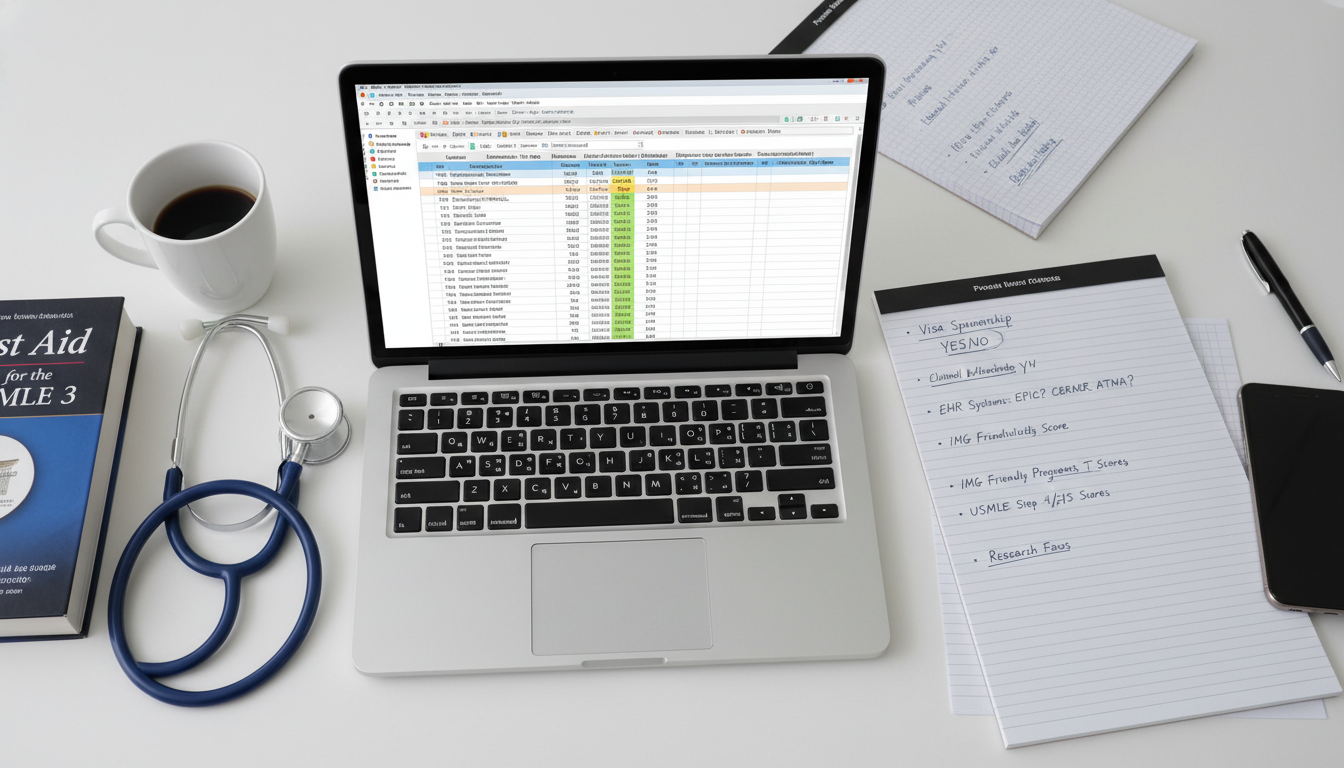
Step 2B: Create a Program Research Spreadsheet
To stay organized, build a spreadsheet (Excel/Google Sheets) with columns such as:
- Program name, ACGME ID, specialty
- Location and hospital system
- Visa sponsorship (J-1/H-1B/none)
- IMG acceptance (Y/N; % IMGs if available)
- EHR system used (Epic, Cerner, etc.)
- Clinical informatics exposure:
- In-house CI fellowship (Y/N)
- Dedicated informatics track or elective (Y/N)
- QI infrastructure and data tools
- Research and academic environment:
- Publication expectations/opportunities
- QI projects required?
- Alumni outcomes:
- Graduates into CI fellowship?
- Graduates into health IT roles (CMIO/associate CMIO roles, health IT companies)?
- Caribbean-specific notes:
- Past residents from your specific school (SGU, Ross, AUC, etc.)
- Your subjective rating (1–5) for:
- Informatics opportunities
- Overall fit
- Location
This becomes your central tool for evaluating residency programs and comparing them fairly.
Step 2C: Prioritize Program Types for Informatics
In clinical informatics, the type of residency program environment matters more than the name recognition alone. Generally, the settings with the richest informatics exposure are:
- Large academic medical centers with:
- Enterprise EHR systems (Epic, Cerner, etc.)
- Clinical informatics, biomedical informatics, or data science divisions
- Robust QI and patient safety departments
- Integrated health systems (Kaiser, Geisinger, Intermountain, etc.) where:
- Data and IT are central to care delivery
- System-wide clinical decision support and population health tools are developed
- Programs with in-house clinical informatics fellowship:
- Direct access to informatics faculty and fellows
- Opportunities to shadow, assist with projects, or join research
While community hospitals can offer smaller, more intimate training, they may have less formal health IT training. As a Caribbean IMG aiming for informatics, you should balance IMG-friendliness with the strength of the informatics environment.
Step 3: How to Research Residency Programs for Informatics-Relevant Features
Once you’ve applied your big filters (IMG-friendly, visa, specialty), you can start deep-dive research around informatics. This is the core of how to research residency programs in your specific situation.
3.1 Use Official Databases and Program Websites
Start with:
FREIDA: Filter for:
- Specialty (e.g., Internal Medicine)
- Programs that accept IMGs
- Visa sponsorship
- Presence of subspecialty fellowships (including informatics, if listed)
Program Websites: Look specifically for:
- Curriculum pages: Are there rotations in QI, population health, data analytics?
- Tracks and pathways: Global health, QI, leadership, clinician-educator, informatics, research—many of these overlap with informatics skill sets.
- Faculty pages: Identify anyone with titles like:
- Chief Medical Information Officer (CMIO)
- Associate CMIO
- Director of Clinical Informatics
- Informatics, medical informatics, health IT, health data science
- EHR information: Not always explicit, but sometimes mentioned in QI or IT sections.
If you see faculty actively involved in EHR committees, clinical decision support, or data-driven QI, that’s a positive sign.
3.2 Identify Programs with Clinical Informatics Fellowships
Programs with an ACGME-accredited clinical informatics fellowship are prime targets for informatics-focused Caribbean IMGs.
To find them:
- Search “ACGME Clinical Informatics fellowships” and review the official list
- Visit each fellowship website and note:
- Affiliated core residency programs (Internal Medicine, Pediatrics, EM, etc.)
- Current fellows’ backgrounds (IMGs? Caribbean graduates?)
- Alumni careers (health systems, industry, academia)
Next, cross-reference those institutions with your targeted residency lists:
- If a hospital system runs both an Internal Medicine residency and a clinical informatics fellowship, that environment is particularly valuable.
- Even if the fellowship rarely takes IMGs directly, being in the same system gives you network and project opportunities.
3.3 Evaluate Academic and QI Infrastructure
Strong health IT training often sits inside robust QI and academic frameworks. On program websites, look for:
- Required QI projects with access to:
- Data warehouses
- QI analysts or statisticians
- Epic/Cerner reporting tools
- Resident research day or scholarly activity requirements
- Dedicated time for scholarship (e.g., 1–2 blocks per year)
- Mentorship structure:
- Is there a resident research director?
- Are informatics-minded faculty available for mentorship?
Clinical informatics fellowships and many health IT roles value applicants who have:
- Led or co-led QI projects using EHR data
- Developed or optimized order sets, dashboards, or clinical decision support
- Participated in hospital committees around documentation or workflows
Residency programs that enable this are more aligned with your goals.
3.4 Look for Evidence of Technology Culture
Try to assess the culture of technology and innovation:
- Browse hospital news or blogs:
- Are they piloting telehealth initiatives?
- Are they recognized for EHR optimization, HIMSS EMRAM stages, or digital innovation awards?
- Check if the institution participates in:
- Digital health hackathons
- Data science collaboratives
- AI or predictive modeling projects in healthcare
- Look for cross-department collaborations:
- Joint projects with computer science, engineering, or public health schools (if affiliated with a university)
Programs embedded in tech-forward organizations offer richer informal opportunities, even if they don’t advertise a formal “informatics track.”
Step 4: Caribbean IMG–Specific Considerations and Strategies
As a Caribbean IMG, you must balance your informatics ambitions with realistic match strategy. Here’s how to tailor your program research strategy.
4.1 Use Your School’s Match Data Strategically
If you’re from a school like St. George’s University (SGU), the SGU residency match data is a powerful tool. Similarly for Ross, AUC, Saba, etc.
- Identify which programs:
- Repeatedly accept graduates from your school
- Historically match IMGs into Internal Medicine, Family Medicine, EM, etc.
- Then, overlay your informatics lens:
- Among those IMG-friendly programs, which are part of large academic or integrated systems?
- Which have clinical informatics fellowships or robust QI/research?
This intersection—IMG-friendly programs with strong health IT environments—should form the core of your target list.
4.2 Look for Alumni in Informatics and Health IT
Ask your school’s alumni office, mentoring programs, or LinkedIn:
- Are there Caribbean IMG alumni who:
- Completed a clinical informatics fellowship?
- Work as CMIOs, data scientists, or in digital health companies?
- Where did they do their residency and fellowship?
Once identified:
- Study their trajectories (residency, fellowship, additional degrees like MPH or MS in informatics)
- Reach out politely for informational interviews:
- Ask about which residency features helped them
- Ask which programs or settings were most supportive of informatics interests
This firsthand, IMG-specific insight is often more accurate than generic online advice.
4.3 Be Honest About Competitiveness and Back-Up Plans
Some academic programs with strong clinical informatics infrastructure can be competitive for IMGs, especially Caribbean graduates. Your USMLE scores, clinical performance, letters, and U.S. clinical experience will all influence your options.
Mitigate risk by:
- Including a range of program types: university programs, university-affiliated community programs, and solid community programs with strong QI cultures.
- Not limiting yourself to programs that explicitly mention “informatics” online. Many places are informatics-rich but don’t advertise heavily.
Your goal is a good residency home that:
- Will rank you seriously as a Caribbean IMG
- Offers enough informatics-related exposure (EHR, QI, committees, data projects)
- Keeps you competitive for future clinical informatics fellowship or health IT roles
Step 5: Deep-Dive Evaluation and Direct Outreach
Once you’ve narrowed your list, move from passive research to active information gathering.
5.1 Prepare Targeted Questions
When you email programs, attend virtual open houses, or go to interviews, ask questions that reveal their informatics environment, such as:
- “Do residents have opportunities to participate in EHR optimization or clinical decision support projects?”
- “Are there faculty with roles in clinical informatics, data analytics, or CMIO leadership who mentor residents?”
- “What kind of resident QI or research projects involving the EHR have been done in the last few years?”
- “Does your program collaborate with any clinical informatics fellowship or health IT departments?”
- “Are residents involved in any telehealth or digital health initiatives?”
This helps you distinguish between:
- Programs that are vaguely pro-technology
- Versus those with structured health IT training and mentorship
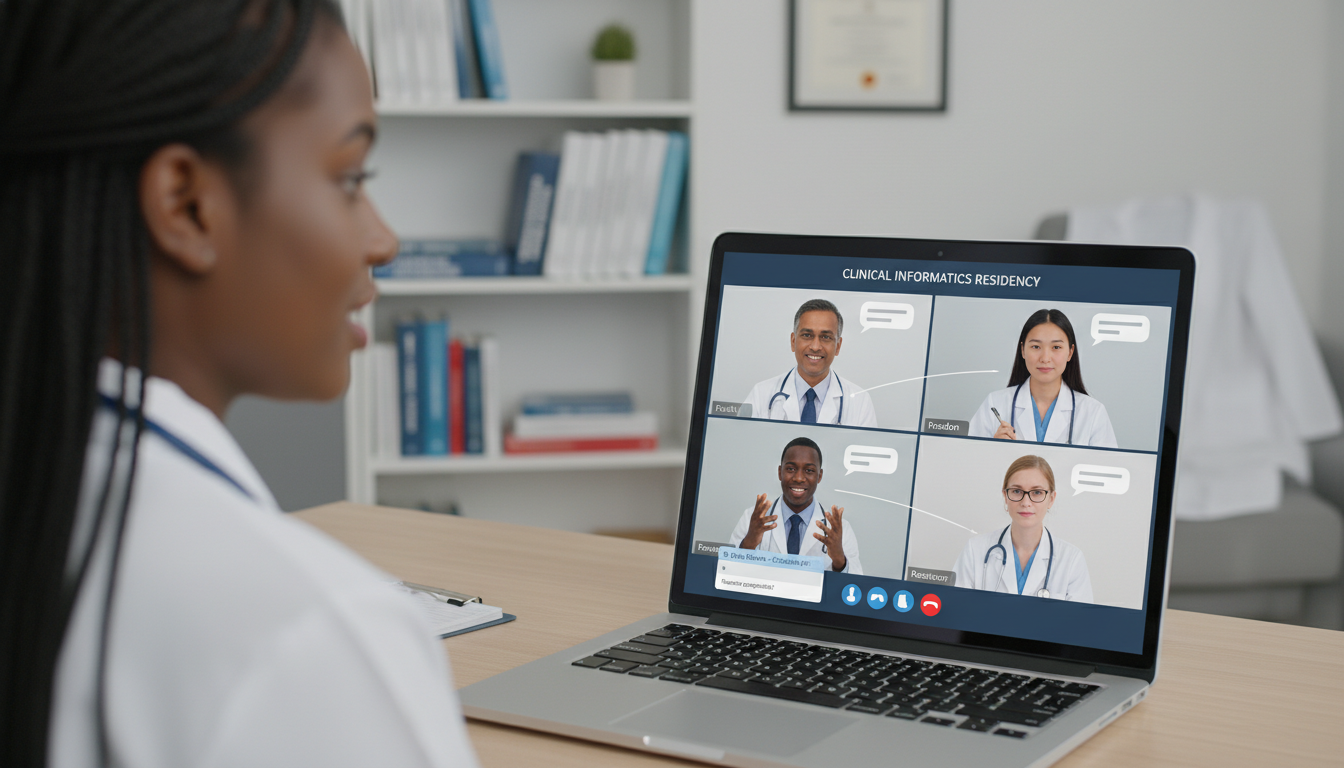
5.2 Contact Residents and Fellows (Especially IMGs)
Reaching out to current residents is essential, especially other IMGs and ideally Caribbean graduates. Ask them:
- How supportive the program is of:
- QI and research
- Innovation and technology projects
- Flexible electives (e.g., in IT, analytics, data science)
- Whether any residents:
- Worked with the CMIO or informatics team
- Presented EHR-based QI projects at conferences
- Matched into a clinical informatics fellowship or landed health IT jobs
Also clarify the unspoken culture:
- Do residents feel overworked with little time for scholarly or informatics projects?
- Is there leadership that values residents’ ideas about data and workflow?
5.3 Evaluate Program Fit Beyond Informatics
Even with a focused informatics goal, you still need:
- Solid core clinical training in your specialty
- Reasonable workload and educational support
- A supportive environment for IMGs (mentorship, remediation approaches, culture)
Ask current residents:
- How is teaching? Are attendings approachable?
- How often are formal didactics canceled?
- Are there IMG mentors at the faculty level?
- How does the program support residents pursuing non-traditional careers (informatics, administration, etc.)?
A powerful informatics environment is valuable only if you can thrive clinically and personally in that residency.
Step 6: From Research to Rank List – Synthesizing Your Findings
At the end of application season, you’ll probably have several interviews and multiple programs to compare. Turn your research into a practical ranking framework.
6.1 Create a Weighted Scoring System
Use your spreadsheet to score each program on:
- Informatics ecosystem (weight high):
- In-house CI fellowship or close affiliation
- CMIO/informatics faculty presence
- Access to EHR data and QI projects
- IMG and Caribbean friendliness (weight high):
- History of Caribbean graduates
- Culture of support for IMGs
- Visa and logistical compatibility (non-negotiable)
- Academic environment (moderate weight):
- Scholarly activity expectations
- Protected time for research/QI
- Overall personal fit (high weight):
- Geography, cost of living
- Call schedule, workload, wellness support
Assign each category a 1–5 score and weight them depending on what matters most for you. Summed scores will help you objectively compare programs, especially when interview impressions are mixed or emotional.
6.2 Think Long-Term: Path to Fellowship or Health IT Roles
As you finalize your rank list, explicitly imagine:
- If I match here, how will I build a fellowship or health IT–ready portfolio?
- Can I join informatics or EHR committees?
- Are there local data science or IT teams to collaborate with?
- Will I have faculty who can write strong letters describing my informatics work?
Programs that make it easy to answer “yes” to these questions should move up your list—even if they are not the “flashiest” academic names.
Practical Example: Two Hypothetical Programs
Consider two Internal Medicine programs, both IMG-friendly.
Program A – Mid-sized university hospital:
- Has an in-house clinical informatics fellowship
- Uses Epic across a large multi-hospital system
- Multiple faculty with informatics titles (CMIO, Associate CMIO)
- Required resident QI project with EHR data access
- Past graduate (Caribbean IMG) matched into their own CI fellowship
Program B – Community hospital:
- No CI fellowship; uses a basic EHR
- Minimal formal QI infrastructure; residents do chart-review projects
- No faculty with informatics titles
- No history of informatics fellowships from this program
If both are equally IMG-friendly and sponsor your visa, Program A is significantly stronger for an informatics-driven path—even if it may be slightly more competitive or in a less preferred city.
This type of structured comparison is exactly what your program research strategy should allow you to do clearly and confidently.
FAQs: Researching Programs for Caribbean IMGs in Clinical Informatics
1. Do I have to do a clinical informatics fellowship to work in health IT?
Not necessarily. Many clinicians work in health IT roles (EHR optimization, QI, digital health startups) without formal CI fellowship training, especially if they:
- Lead major EHR or QI projects during residency and early attending years
- Build strong collaborations with IT, data, or analytics teams
- Develop a portfolio of projects and presentations
However, an ACGME-accredited clinical informatics fellowship plus board certification can:
- Open more academic and leadership roles (e.g., CMIO track)
- Provide structured training in data, systems, and leadership
- Make your career progression more predictable and recognized
As a Caribbean IMG, a residency in a strong health system is the first, crucial step no matter which route you take.
2. Which specialties are best if I want to go into clinical informatics as a Caribbean IMG?
Common entry specialties into clinical informatics fellowship include:
- Internal Medicine
- Family Medicine
- Pediatrics
- Emergency Medicine
- Pathology
- Anesthesiology
For Caribbean IMGs, Internal Medicine and Family Medicine are generally the most accessible and safest starting points, with numerous programs that:
- Accept IMGs regularly
- Have strong EHR and QI ecosystems
- Are located within systems that host informatics fellowships
Choose the specialty you can genuinely commit to clinically, but prioritize training environments with robust health IT and QI infrastructure.
3. How can I demonstrate interest in informatics during residency applications?
You can show genuine informatics interest by:
- Highlighting any past experiences:
- EHR workflow projects during clinical rotations
- Data analysis, statistics, or programming courses
- Quality improvement or audit projects with a tech element
- Writing a personal statement with a focused informatics narrative (but still grounded in clinical excellence)
- Mentioning future goals such as:
- Joining clinical decision support projects
- Pursuing a clinical informatics fellowship
- Asking informed, specific questions at interviews about EHR, QI, and informatics opportunities
Ensure that your interest seems mature and realistic, not just a buzzword—tie it to concrete clinical impacts.
4. Are programs that frequently match SGU or other Caribbean grads into residency more likely to support my informatics goals?
Programs with a track record of SGU residency matches (or other Caribbean schools) are more likely to:
- Be familiar with Caribbean IMG training
- Have processes and support systems for IMGs
- Trust the quality of applicants from your background
However, IMG-friendliness does not automatically mean strong informatics resources. Use a two-step filter:
- Identify Caribbean-IMG–friendly programs from match lists.
- Among those, evaluate their health IT training, QI, research environment, and informatics connections.
The best programs for you combine both: supportive of Caribbean IMGs and rich in clinical informatics opportunities.