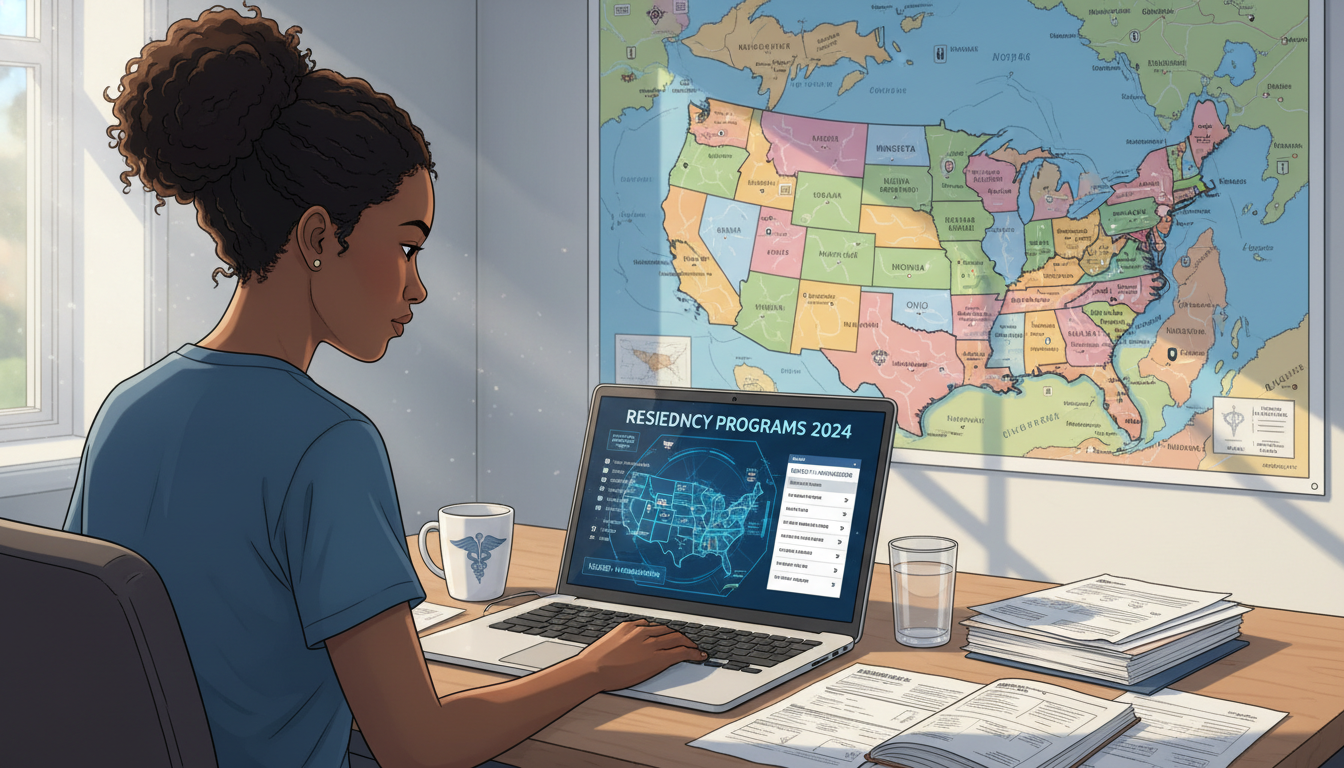
Understanding Geographic Flexibility as a Caribbean IMG in the Great Lakes
Geographic flexibility is one of the most powerful tools you have as a Caribbean IMG applying for residency in the Great Lakes Region. It can mean the difference between matching and going unmatched, or between matching into a specialty you love versus settling for something you don’t. But “be flexible” is vague advice. You need a clear, actionable strategy.
For a Caribbean medical school residency applicant—especially from schools like SGU, AUC, Ross, Saba, etc.—the Great Lakes region can be both welcoming and competitive. Many programs here have a history of accepting IMGs, and some SGU residency match lists show strong placement in states like Michigan, Ohio, and Illinois. At the same time, larger academic centers in Chicago, Minneapolis, or Cleveland can be very competitive.
This article focuses on how to use geographic flexibility strategically—not randomly—to improve your chances in:
- Internal Medicine, Family Medicine, Pediatrics, Psychiatry, and other IMG-friendly fields
- Midwest residency programs across IL, IN, MI, MN, OH, WI
- Community-based and university-affiliated hospitals
- Great Lakes residency options that align with your long-term career and personal goals
You’ll learn how to:
- Understand and map the Great Lakes residency landscape
- Use geographic preference residency tools (ERAS, NRMP) intelligently
- Balance regional preference strategy with location flexibility
- Build a program list that maximizes your match probability as a Caribbean IMG
The Great Lakes Region: Why It Matters for Caribbean IMGs
The Great Lakes region (Illinois, Indiana, Michigan, Minnesota, Ohio, and Wisconsin) is a high-yield area for Caribbean IMGs for several reasons:
High density of residency programs
- Many midwest residency programs in Internal Medicine, Family Medicine, Pediatrics, Psychiatry, and Transitional Year.
- A mix of large academic centers and robust community-based programs.
Documented IMG presence
- Many program websites and past SGU residency match data show consistent IMGs in:
- Internal Medicine in Michigan and Ohio
- Family Medicine across Wisconsin, Indiana, and Minnesota
- Psychiatry in Illinois and Ohio
- Many program websites and past SGU residency match data show consistent IMGs in:
Population and clinical exposure
- Diverse urban populations in cities like Chicago, Detroit, Cleveland, Minneapolis.
- Suburban and rural patient populations where IMGs are often welcomed and valued.
Perception of “fly-over” territory
- Some US grads prioritize coasts (New York, California, Florida) or their home states.
- This creates more opportunity for geographically flexible Caribbean medical school residency applicants who are open to the Midwest.
Where Geographic Flexibility Fits In
Geographic flexibility doesn’t mean “I’ll go anywhere, I don’t care.”
Instead, it means:
- Having a primary focus area (e.g., Great Lakes region)
- Being open within that area to:
- Different states
- Different types of communities (urban/suburban/rural)
- Different kinds of programs (community vs university-affiliated)
- Using location flexibility match strategies to improve your odds instead of limiting yourself to only one city or state.
For a Caribbean IMG, it’s usually risky to have a narrow target like “only Chicago” or “only Michigan.” You want to be regional, not hyper-local in your strategy.

Mapping the Great Lakes Residency Landscape
Before you talk about geographic preference residency strategies, you need to understand what actually exists in the region and where IMGs realistically match.
1. Break the Great Lakes Into Sub-Regions
Instead of thinking of “the Midwest” as one big blob, break it down:
Urban Academic Hubs
- Chicago (IL), Minneapolis/St. Paul (MN), Cleveland (OH), Detroit/Ann Arbor (MI), Milwaukee (WI), Indianapolis (IN)
- Typically more competitive; some programs IMG-friendly, others not at all.
Mid-Sized Cities and Regional Centers
- Places like:
- Grand Rapids, Lansing, Flint, Saginaw (MI)
- Toledo, Dayton, Akron, Canton, Youngstown (OH)
- Peoria, Rockford, Springfield (IL)
- Fort Wayne, Evansville, South Bend (IN)
- Madison, Green Bay, Appleton (WI)
- Duluth, Rochester, St. Cloud (MN)
- Many community and university-affiliated programs; often more open to Caribbean IMGs.
- Places like:
Smaller Cities and Rural Areas
- Critical-access hospitals, regional medical centers, and community-based programs.
- Strong opportunities in Family Medicine, Internal Medicine, and sometimes Psychiatry.
This sub-regional view helps you build tiers of preference while staying flexible.
2. Understand Program Types in the Great Lakes
For Caribbean IMGs, especially from schools with strong SGU residency match histories, the program type often matters more than the specific city name.
Large Academic Centers
- Pros: Reputation, subspecialty exposure, research.
- Cons: Often competitive; some explicitly limit or exclude IMGs.
- Strategy: Apply, but don’t rely on them to carry your match.
University-Affiliated Community Programs
- Pros: Strong clinical exposure, more IMG-friendly, access to academic resources.
- Cons: Name recognition slightly lower than flagship academic centers.
- Strategy: High priority for Caribbean IMGs with solid scores and good clinical evaluations.
Community Programs / Regional Medical Centers
- Pros: Often very IMG-friendly, high patient volume, good autonomy.
- Cons: Less research; sometimes fewer fellowships (varies).
- Strategy: Essential backup and even primary target for many IMGs, especially if scores are mid-range.
3. Use Data to See Where Caribbean IMGs Match
How to research this efficiently:
Program websites
- Check “Current Residents” pages:
- Look for Caribbean schools: SGU, Ross, AUC, Saba, AUA, etc.
- Check how many IMGs vs USMDs/DOs.
- If multiple Caribbean grads are present over several years, the program is likely IMG-friendly.
- Check “Current Residents” pages:
School match lists
- SGU residency match data and similar lists from other schools:
- Filter by state (MI, OH, IL, IN, WI, MN).
- Note repeated programs—that signals a pattern.
- SGU residency match data and similar lists from other schools:
FREIDA and AMA resources
- Look at:
- Percentage of IMGs
- Program size
- Location (city size, region)
- Look at:
This research helps you identify Great Lakes residency “clusters” where Caribbean medical graduates consistently match.
Designing a Geographic Flexibility Strategy
Once you know the landscape, you can design a regional preference strategy that balances desire and realism.
1. Define Your Preference Tiers (But Stay Honest)
Create a three-tier system focused on the Great Lakes:
Tier 1: Ideal Fits (High Interest + Realistic)
- States or cities you’d genuinely like to live in.
- Programs where:
- Your profile (scores, attempts, YOG) fits
- There is proven Caribbean IMG presence.
- Example:
- A Caribbean IMG with strong letters and 230+ Step 2 applying to:
- University-affiliated IM or FM programs in mid-sized Ohio or Michigan cities.
- A Caribbean IMG with strong letters and 230+ Step 2 applying to:
Tier 2: Good Opportunities (Moderate Interest + Strong Realism)
- Locations you’d be okay with even if not your dream.
- Programs with clear Caribbean IMG representation.
- Often smaller cities or less well-known areas in Indiana, Wisconsin, Minnesota.
Tier 3: Strategic Safety Options (High IMG Presence; Any Location)
- Programs in more remote areas, smaller towns, or less popular cities.
- Especially in Family Medicine and Internal Medicine.
- Used to increase your overall interview volume.
Geographic flexibility means you fully commit to applying to programs in all three tiers, not just the glamorous ones.
2. Avoid the “Hyper-Narrow” Trap
As a Caribbean IMG, limiting yourself to statements like:
- “Only Chicago programs”
- “Only Michigan academic centers”
- “Only big cities with major airports”
can seriously damage your chances.
Instead, frame your approach as “regional but wide”:
- “Great Lakes region with openness to urban, mid-sized, and smaller communities.”
- “Priority on the Midwest, especially Illinois, Indiana, Michigan, Ohio, Wisconsin, and Minnesota.”
This is location flexibility match thinking: you target a region but keep your net wide within it.
3. Align Specialty Choice With Geography
Some specialties are more forgiving for Caribbean IMGs in the Great Lakes region than others.
More flexible (IMG-friendly)
- Internal Medicine
- Family Medicine
- Pediatrics (to a degree)
- Psychiatry
- Transitional Year (varies)
More constrained
- Emergency Medicine (strongly competitive; limited IMG spots)
- General Surgery
- OB/GYN
- Anesthesiology
- Radiology, Dermatology, etc.
If you’re applying to a competitive field as a Caribbean IMG, geographic flexibility must be extreme (multiple regions, not just Great Lakes).
If you’re in IM/FM/Psych, regional focus on Great Lakes with broad internal flexibility can be a very strong strategy.

Practical Steps to Apply Geographic Flexibility in Your Application
Now, let’s turn geographic flexibility from a concept into a step-by-step plan you can execute for Great Lakes residency programs.
Step 1: Build a Great Lakes–Focused Program Spreadsheet
Create a spreadsheet with columns like:
- Program name
- State and city
- Type (academic, university-affiliated, community)
- Specialty
- IMG % / Caribbean presence (Yes/No)
- City size (large, mid, small)
- Your tier (1, 2, or 3)
- Notes (connections, observed residents, electives done, etc.)
Populate this with programs from Illinois, Indiana, Michigan, Minnesota, Ohio, and Wisconsin that:
- Show Caribbean IMG residents currently or recently
- Appear frequently on SGU or other Caribbean school match lists
- Are known to be midwest residency programs with IMG-friendly policies
This becomes your regional map and central planning tool.
Step 2: Decide Your Application Volume and Distribution
For a Caribbean IMG aiming primarily at Great Lakes residency programs in IM/FM/Psych:
- Total number of applications (example target):
- Internal Medicine only: 80–120 programs
- Family Medicine only: 60–100 programs
- Combined IM + FM + Psychiatry: 80–140 (balanced)
Within the Great Lakes focus:
- Aim for a mix across states:
- Don’t send 80% of applications to just Illinois and Michigan.
- Intentionally include:
- Smaller Ohio and Indiana cities
- Wisconsin and Minnesota community programs
- Michigan and Illinois mid-sized and smaller communities
This multi-state distribution expresses location flexibility match in a way that programs see directly in your ERAS file.
Step 3: Incorporate Geographic Preference Thoughtfully in ERAS/NRMP
The systems may ask for or allow:
- Geographic preferences
- Signaling (for some specialties)
- Personal statements that reference geography
Key principles for a Caribbean IMG:
Express regional commitment, not single-city obsession.
- Example:
“I am particularly interested in training in the Great Lakes region, including Illinois, Indiana, Michigan, Ohio, Wisconsin, and Minnesota, where I hope to build a long-term career serving diverse communities.”
- Example:
Show grounded reasons for your Great Lakes focus, such as:
- Clinical rotations or sub-internships in Michigan or Ohio
- Family or support system anywhere in the region
- Familiarity with Midwestern culture and climate
- Interest in serving Rust Belt or rural communities
Avoid overly narrow statements like:
- “I plan to only practice in downtown Chicago.”
- “My goal is to work exclusively in large academic centers.”
Programs in mid-sized or smaller Great Lakes areas want reassurance that you’re genuinely open to their location.
Step 4: Tailor Personal Statements and Interviews to Reflect Flexibility
Your regional preference strategy should appear consistently:
In your personal statement
- Explain your interest in the Great Lakes region as a whole.
- Mention specific experiences:
- Rotations in Detroit, Lansing, Akron, or Peoria
- Research or community work in Midwestern populations
- Emphasize adaptability and comfort with different practice environments.
During interviews
- Be ready to discuss:
- Why the Midwest / Great Lakes specifically?
- How you handle winter, smaller cities, or rural settings.
- Whether you’re considering staying long-term in the region.
- Be ready to discuss:
Honest but positive examples:
“I did two core rotations in Michigan and appreciated the collaborative culture and diverse patient population. I can see myself practicing long-term in the Great Lakes region, whether in a smaller city like yours or a larger metro area.”
“As a Caribbean IMG, I understand I need to be flexible geographically. I’ve prioritized Midwest residency programs because I’ve gotten to know the people, the health systems, and I’m comfortable with moving within this region.”
Step 5: Use Electives and Networking to Reinforce Regional Interest
If you still have time before applying:
Arrange electives / sub-Is in Great Lakes institutions:
- Detroit, Flint, Saginaw, Grand Rapids (MI)
- Cleveland, Dayton, Toledo, Akron (OH)
- Peoria, Rockford, Chicago suburbs (IL)
- Indianapolis, Fort Wayne, Evansville (IN)
- Madison, Milwaukee, Green Bay (WI)
- Minneapolis/St. Paul and regional centers in MN
Attend regional conferences or virtual events:
- Many midwest residency programs host meet-and-greet sessions.
- Introduce yourself, ask informed questions, mention your interest in the region.
These activities show both geographic preference and long-term commitment, which programs like to see from Caribbean medical graduates.
Example Scenarios: Applying Geographic Flexibility Wisely
To make this concrete, here are simplified scenarios for Caribbean IMGs targeting Great Lakes residency options.
Scenario 1: Strong Candidate, Internal Medicine Focus
- Step 2: 240s, no failures, recent YOG
- Clinicals: Several rotations in Michigan and Ohio
- Goal: Internal Medicine, open to fellowship later
Strategy:
- Apply to:
- Academic and university-affiliated IM programs in:
- Chicago, Cleveland, Detroit, Columbus, Minneapolis, Milwaukee
- Community IM programs in:
- Mid-sized cities across MI, OH, IL, IN, WI, MN
- Academic and university-affiliated IM programs in:
- Express:
- Clear commitment to training and possibly practicing in the Great Lakes long-term.
- Geographic flexibility:
- Open to every Great Lakes state, not limited to one city.
- Includes multiple smaller-city programs in the mix.
Scenario 2: Average Candidate, Family Medicine Focus
- Step 2: 220s, one attempt on Step 1
- Family Medicine interest; wants to match in the Great Lakes but is nervous
Strategy:
- Heavy focus on:
- Community FM programs across midwestern states, especially in smaller or mid-sized cities.
- Apply widely:
- 80–100 FM programs across IL, IN, MI, OH, WI, MN and possibly neighboring states.
- Emphasize:
- Passion for primary care and underserved populations.
- Openness to rural or small-town programs within the region.
Geographic flexibility here means not restricting to big cities. This is often what gets Caribbean IMGs over the line into a match.
Scenario 3: Competitive Specialty + Backup Plan
- Caribbean IMG aiming for Psychiatry or EM in Great Lakes
- Aware that IMG spots are limited
Strategy:
- Apply to:
- All IMG-accepting Psych programs in the Great Lakes region.
- Add neighboring regions (e.g., some South or Plains states).
- Backup:
- Simultaneous applications to Internal Medicine or Family Medicine in midwestern residency programs.
- Flexibility:
- Multi-region flexibility for Psych/EM.
- Strong Great Lakes focus for IM/FM backup.
This is a more complex location flexibility match plan, but necessary in competitive fields.
Key Takeaways for Caribbean IMGs Targeting the Great Lakes
Regional focus beats city obsession.
Don’t fixate on Chicago or one state; embrace the Great Lakes as a whole.Geographic flexibility is a match multiplier.
The more open you are within the region—to different cities, hospital types, and community sizes—the more interview invitations you’re likely to generate.Data-driven targeting works.
Use SGU residency match data, school lists, and program websites to identify IMG-friendly Great Lakes residency programs.Align your story with your geography.
Your personal statement, electives, and interviews should all reinforce that the Midwest/Great Lakes is a deliberate and informed choice, not a last resort.Backup planning is essential.
Especially if applying to competitive specialties, maintain flexibility in both location and specialty.
For a Caribbean IMG, the Great Lakes region can be one of the highest-yield areas in the United States—if you are strategic, informed, and genuinely flexible in how you approach residency selection.
FAQ: Geographic Flexibility for Caribbean IMGs in the Great Lakes Region
1. Is it realistic for a Caribbean IMG to match into a Great Lakes residency program?
Yes. Many midwest residency programs in the Great Lakes region regularly accept Caribbean IMGs, especially in Internal Medicine, Family Medicine, Psychiatry, and Pediatrics. SGU residency match data and other Caribbean school lists consistently show programs in Michigan, Ohio, Illinois, Indiana, Wisconsin, and Minnesota. Your chances improve greatly if you:
- Apply widely within the region
- Include community and university-affiliated programs
- Avoid limiting yourself to just one city or academic center
2. Should I list a specific Great Lakes state as my top geographic preference?
You can highlight a regional preference (e.g., “Great Lakes / Midwest”) rather than a single state. Listing only one state as your top preference can make you appear less flexible, particularly if you’re a Caribbean IMG. Programs across multiple Great Lakes states will feel more comfortable ranking you if they believe you’re genuinely open to moving anywhere in the region.
3. How many Great Lakes programs should I apply to as a Caribbean IMG?
This depends on your scores, YOG, and specialty, but common ranges are:
- Internal Medicine: 80–120 programs overall, with a strong subset in the Great Lakes region.
- Family Medicine: 60–100 programs total, including many community and regional Great Lakes residency programs.
- Psychiatry: Apply broadly across multiple regions; include all IMG-accepting Psych programs in the Great Lakes, and add backups in IM/FM.
The key is breadth within the region and inclusion of both urban and non-urban programs.
4. Will programs in smaller Great Lakes cities see my flexibility as a red flag or as a positive?
Most programs in smaller or mid-sized Great Lakes cities view genuine geographic flexibility as a positive, not a weakness. They want residents who:
- Understand the location (climate, community size, patient population)
- Are willing to live and work there without constantly trying to leave
- Have a clear interest in their type of community (suburban/rural/underserved)
As long as you can speak authentically about why you’re open to a range of Great Lakes locations, your flexibility will strengthen your candidacy, not hurt it.