
Understanding Geographic Flexibility as a Caribbean IMG in the Sun Belt
For Caribbean international medical graduates (IMGs), the Sun Belt—stretching roughly from California and Arizona across Texas and the Gulf Coast to Florida and the Carolinas—remains one of the most popular and attainable regions for residency. Yet “geographic flexibility” is often misunderstood. Many applicants treat location as a wish list (“I want Florida only”), rather than a strategic tool that can dramatically increase their chances of matching.
As a Caribbean IMG, your willingness and ability to be geographically flexible—especially within the Sun Belt—can be one of your strongest competitive advantages. This article breaks down how to think about location, how to build a smart geographic preference strategy, and how to use flexibility without looking unfocused.
You’ll learn how to:
- Balance your interest in sun belt residency options with realistic match odds
- Use geographic preference residency tools (like supplemental ERAS questions) effectively
- Leverage your school’s data (for example, SGU residency match patterns)
- Decide where you must, may, and will not go—and message this professionally
Why Geographic Flexibility Matters More for Caribbean IMGs
The reality of competitiveness
As a Caribbean IMG, you may be:
- Competing with US MD and DO grads for a limited number of spots
- Applying from a school that some programs are less familiar with
- Applying from outside the continental US, sometimes without strong US clinical networks
Because of this, you need more than solid metrics and letters. You need more shots on goal: more programs, more regions, and better alignment between your profile and program needs.
Geographic flexibility directly translates to:
- More programs you can realistically apply to
- More interviews, especially at community and regional programs
- More backup options if your most desired cities/regions don’t work out
Programs in smaller cities or less glamorous parts of the Sun Belt may have:
- Fewer applicants with “ties” to that exact city
- More openness to highly motivated, flexible Caribbean IMGs
- Serious needs for residents willing to stay and practice locally
How programs think about geography
Program directors rarely admit someone just because they are geographically flexible. But they do ask:
- “Is this applicant likely to come here and stay for three+ years?”
- “Do they understand our region, our patient population, our climate, our lifestyle?”
- “Are they applying here because they’re truly open, or just because they’re desperate?”
Your job is to show both:
- Honest interest in the region or type of community, and
- Clear readiness to relocate and thrive there
Programs in the Sun Belt often receive many applications for major metro areas (Miami, Dallas, Atlanta, Phoenix), but less attention for smaller cities or rural programs just outside those metros. That’s where a well-structured location flexibility match strategy can distinguish you.
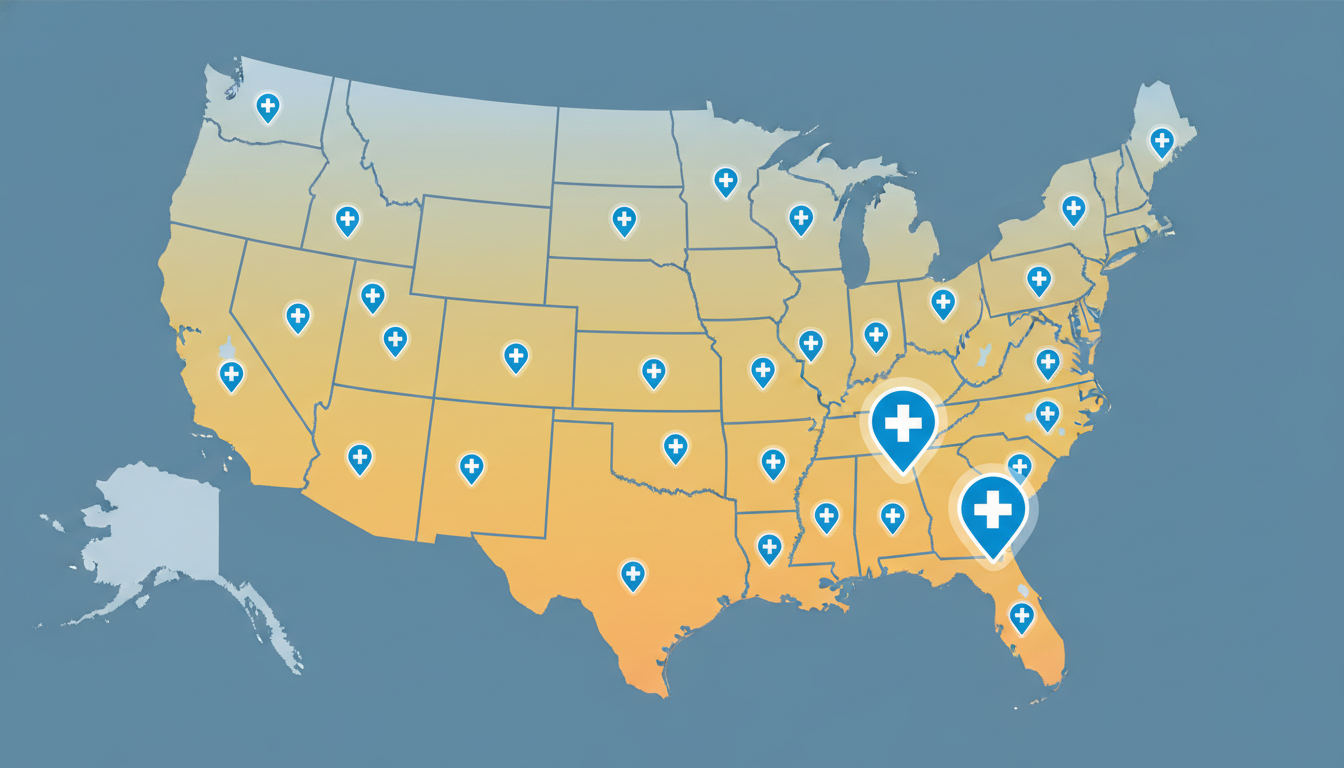
Mapping the Sun Belt: Regions, Competitiveness, and Fit
The “Sun Belt” isn’t one monolithic block. Different subregions have different levels of competitiveness, cultural environments, and Caribbean IMG-friendliness.
1. Florida and the Gulf Coast (High interest, variable competitiveness)
Pros for Caribbean IMGs:
- Large Spanish- and Caribbean-influenced communities (Miami, Tampa, Orlando)
- Significant history of Caribbean IMG presence in many community programs
- Warm climate, relatively affordable cost of living outside major metros
Challenges:
- Extremely competitive in South Florida and coastal metro areas
- Popular among US grads wanting beach and no state income tax
- Some programs saturated with applicants; interviews are hard without strong connections
Practical advice:
- Don’t limit your Florida applications to Miami/Orlando/Tampa.
- Look at smaller cities and inland areas (e.g., Gainesville-adjacent communities, Fort Myers, Pensacola region) where competition can be more moderate.
- If applying from a Caribbean school with solid Florida match history (such as SGU residency match lists showing Florida placements), use that: “My school’s graduates have consistently trained and succeeded in Florida programs; I hope to follow that path.”
2. Texas and Neighboring States (Large systems, strong IM presence)
Pros:
- Many large hospital systems and southern residency programs in internal medicine, family medicine, pediatrics, and some surgical specialties
- Some regions (West Texas, smaller cities) actively recruit IMGs
- No state income tax; relatively low cost of living outside Austin/Dallas/Houston
Challenges:
- Some Texas university-based programs are highly competitive and US-grad heavy
- US medical schools in the region produce many local applicants with ties
- Visa sponsorship can be variable—need program-specific research
Practical advice:
- Look strategically at community and university-affiliated community programs in mid-sized cities—for example, programs in El Paso, Lubbock, or the Rio Grande Valley, which may be more open to IMGs.
- Emphasize interest in serving diverse, often underserved populations and the border-region health needs, if applicable to your story.
3. Southeast: Georgia, the Carolinas, Alabama, Mississippi
Pros:
- Rapidly growing population; rising need for primary care and hospitalists
- Many southern residency programs in community hospitals and regional centers
- Some states (e.g., Mississippi, Alabama) are more open to IMGs because of physician shortages
Challenges:
- Big urban centers (Atlanta, Charlotte, Raleigh/Durham) may still be quite competitive
- Some rural programs may have fewer resources; need comfort with smaller towns
- Fewer Caribbean cultural communities in some locations—cultural adjustment may be larger
Practical advice:
- If you are open to small-town or semi-rural living, your geographic flexibility becomes a major asset.
- Learn about state-level service programs and loan repayment incentives in the Deep South; mentioning awareness of these can show long-term commitment.
4. Southwest and Desert States: Arizona, Nevada, New Mexico
Pros:
- Growing number of programs in internal medicine, family medicine, and psychiatry
- Some programs are newer and actively building their resident base, often more open to IMGs
- Lower competition in smaller cities and outside the big resort areas
Challenges:
- Fewer total programs than in Texas or Florida
- Visa policies vary; some states historically less IMG-dense
- Hot, dry climate—not for everyone
Practical advice:
- Use your location flexibility match strategy to highlight openness to learning in a new environment and serving unique populations (e.g., Native American communities, border regions).
- Demonstrate that you understand the climate, lifestyle, and distance from major coastal cities.
Building a Geographic Preference Strategy (Without Boxing Yourself In)
Geographic flexibility does not mean “I’ll go anywhere” with no strategy. That can come across as desperate or unfocused. Instead, you need a clear, layered plan that balances:
- Regions where you have ties or strong rationale
- Regions where you are genuinely enthusiastic and informed
- Regions you’re less familiar with but willing to consider for training
Step 1: Define your “must, may, and no-go” zones
Be honest with yourself before ERAS opens:
Must-have regions: Where you truly prefer to be if possible
- Example: “Sun Belt coastal states—Florida, Georgia, Carolinas—due to climate, Caribbean communities, and family proximity.”
May-go regions: Where you will go if needed, with thoughtful reasons
- Example: “Interior Sun Belt: Texas, Arizona, New Mexico, Alabama—good for training, open to smaller cities.”
No-go regions: Where you absolutely would not move, even if unmatched
- Example: “Far non-Sun Belt states or regions where I know the climate or location would be unmanageable for my family.”
You don’t need to tell programs about your no-go zones, but you do need clarity so you don’t waste application money or appear insincere.
Step 2: Understand geographic preference tools in ERAS
In some cycles, ERAS and specialty-specific applications include questions about geographic preference residency (e.g., “Are you willing to train in the Northeast, South, Midwest, West?” or “What regions do you prefer?”).
For a Caribbean IMG aiming for a sun belt residency, you might:
- Indicate “South” and “West” as preferred regions if those align with your Sun Belt strategy.
- Use any open-text fields to explain your reasoning grounded in:
- Climate preference (mild winters, similar to Caribbean)
- Proximity to family or established Caribbean communities
- Professional interests (e.g., underserved populations in the South, border health in Texas/Arizona)
Avoid claiming a preference for only a very narrow subregion (e.g., “South Florida coastal cities only”). This contradicts the idea of flexibility and can hurt you when programs outside that micro-region review your file.
Step 3: Coordinate your story across documents
Your personal statement, MSPE, letters (where applicable), and interviews should reinforce a coherent geographic story:
Personal statement:
- “Having trained in the Caribbean, I’m particularly drawn to southern residency programs and the broader Sun Belt region where I can serve diverse communities, including many that share cultural and linguistic similarities with my background.”
Program-specific paragraphs or secondary statements:
- Emphasize local or regional ties: family in Houston, prior rotation in Georgia, frequent visits to Florida, etc.
Interviews:
- When asked “Where else are you applying?” or “How important is location?” answer:
- “I’m focusing on the Sun Belt. I like the climate, patient population, and long-term opportunities here. I’m especially interested in programs like yours that serve diverse and often underserved communities. Within that region, I’m open to a range of cities and even smaller towns if the training is strong.”
- When asked “Where else are you applying?” or “How important is location?” answer:
Applying and Ranking with Geographic Flexibility in Mind

Using your school’s data: SGU and similar Caribbean programs
If you attend a larger Caribbean school such as St. George’s University (SGU), Ross, AUC, Saba, etc., your residency match data is a goldmine. The SGU residency match reports, for example, often show:
- Which specialties are most IMG-friendly in the Sun Belt
- Which hospitals and systems repeatedly take your school’s grads
- Trends over several years (e.g., increased placement in Texas community IM programs)
Use this to:
- Build an initial target list of programs in your specialty across Sun Belt states
- Identify “SGU-friendly,” “Ross-friendly,” or “AUC-friendly” institutions (if you’re from those schools)
- Prioritize places where you’re not starting from zero in terms of familiarity
This doesn’t guarantee interviews—but it does indicate that:
- The program is familiar with Caribbean training
- Your school’s graduates have succeeded there before
How many programs and how wide geographically?
For a Caribbean IMG, especially in primary care specialties (IM, FM, Pediatrics, Psych):
- Applying to 40–60+ programs is common; sometimes more if your metrics are borderline.
- Distribute them across your Sun Belt strategy, for example:
- 30–40%: Florida + Gulf coast
- 30–40%: Texas and neighboring states
- 20–30%: Carolinas, Georgia, Alabama, Mississippi, Arizona, New Mexico, Nevada
If your Step scores or clinical evaluations are weaker, lean even more heavily into geographic flexibility:
- Add smaller cities and more rural programs that align with your specialty and visa needs.
- Be willing to consider 2–3 different Sun Belt subregions instead of just one.
Ranking strategy: balancing desire vs. realism
When it’s time to submit your rank order list:
Rank in your true order of preference—never “game the system” by ranking “safety” programs higher than ones you like more, just because you think you’re more likely to match there.
Within the Sun Belt, think of clusters:
- Tier 1: Programs in cities/regions you strongly prefer
- Tier 2: Programs that are a good fit career-wise but second-choice geographically
- Tier 3: Programs you’d attend happily for training, even if location isn’t ideal long-term
Keep geographic flexibility in mind, but don’t rank a city or region you genuinely cannot see yourself living in for 3+ years.
Example cluster ranking for an Internal Medicine applicant from a Caribbean school:
- Ranks 1–5: University-affiliated community programs in mid-sized Florida and Texas cities
- Ranks 6–15: Community programs in Georgia, the Carolinas, Arizona, New Mexico
- Ranks 16–25: Smaller, more rural programs in Alabama, Mississippi, West Texas, inland Florida
The applicant is still Sun Belt-focused, but not fixated on one metro area.
Demonstrating Geographic Flexibility Without Sounding Desperate
Being flexible is valuable. Sounding like you’ll “go anywhere for anyone” is not. Programs want to feel chosen, not like they’re merely a fallback.
What to say in applications and interviews
Stronger phrasing:
- “I am focusing on the Sun Belt because I thrive in warm climates and I hope to continue serving diverse populations, including many with Caribbean and Latin American roots.”
- “While I don’t have direct family ties to [City], I do have strong regional connections through my medical school rotations in [State/Region] and am excited about the opportunity to build a career here.”
- “I am open to both larger metropolitan areas and smaller communities. What matters most to me is robust clinical training and a supportive learning environment.”
Weak or risky phrasing:
- “I’ll go anywhere, I just want to match.”
- “I really only want Miami or Orlando, but I guess I applied here too.”
- “I applied everywhere because I’m a Caribbean IMG.”
Showing maturity about relocation
Programs in the Sun Belt, especially in smaller towns, worry about residents leaving after one year due to location shock. Address this:
- Mention any previous moves or cultural transitions you’ve successfully navigated (Caribbean to US, different islands, etc.).
- Highlight adaptability:
- “I adapted quickly to a new country and healthcare system during my Caribbean training and US rotations. This experience has prepared me to relocate again and integrate into a new community and care team.”
- Acknowledge realistic challenges (distance from family, cultural differences), but emphasize your plan:
- Virtual connections with family
- Local community involvement (church, sports, cultural groups)
- Intent to explore the region and integrate
Example: Tailored geographic explanation in a personal statement
“Coming from the Caribbean, I value warm climates and communities with a strong sense of connection. The Sun Belt region offers both, along with the opportunity to care for diverse patients, including many immigrants and underserved populations. My clinical rotations in Florida and Georgia confirmed that I work well with these communities and enjoy the pace and pathology of medicine in the South.
At the same time, I recognize that excellent training is not limited to big coastal cities. I am very open to mid-sized and smaller cities throughout the Sun Belt. What I am looking for is a program where I can grow as a clinician, contribute to the team, and build long-term relationships with patients and colleagues.”
This shows clear regional preference plus flexibility across types of locations—a powerful combination for a Caribbean IMG.
FAQs: Geographic Flexibility for Caribbean IMGs in the Sun Belt
1. As a Caribbean IMG, should I only apply to Sun Belt residency programs?
Not necessarily only, but it can be smart to have a regional focus that matches your story—especially if climate, culture, or community ties matter deeply to you. Many Caribbean IMGs successfully match outside the Sun Belt too, particularly in the Midwest and Northeast, which may be relatively more open in some specialties.
For some applicants, a mixed strategy works best:
- Majority of applications in Sun Belt states (aligned with your background and preferences)
- A smaller number of applications in other IMG-friendly regions where your school has a strong presence
The key is to maintain coherence: if you say “I only want the Sun Belt” but then apply widely elsewhere, programs may sense inconsistency.
2. Does saying I have a “geographic preference” hurt my chances outside that region?
If handled poorly, yes; if handled well, no. You want to express preference, not exclusivity.
For example, you can frame it as:
- “My primary interest is the Sun Belt, but I remain open to strong training opportunities elsewhere.”
On a supplemental form that forces you to choose preferences, choose honestly, but don’t contradict yourself in other parts of your application. Programs know that applicants apply broadly; they mainly want to see that you have thoughtful reasons for your interests.
3. How important are “ties” to a city or region in the Sun Belt?
Ties matter, but they are not the only route for you as a Caribbean IMG. Programs often value:
- Family living in the region or nearby states
- Prior schooling, military service, or work there
- US clinical rotations in the same state or surrounding region
- Cultural and community connections (e.g., Caribbean communities in Florida, Texas, Georgia)
If you have no direct ties, you can still be competitive by:
- Showing genuine knowledge about the region (weather, patient demographics, local health needs)
- Explaining positive reasons you want to move there (not just “I’ll take anything”)
- Emphasizing your history of adaptability and relocation
4. I matched from SGU (or another Caribbean school) to a Sun Belt residency—does that help future fellows or job prospects in the region?
Yes. Completing residency in a Sun Belt program significantly boosts your likelihood of:
- Securing fellowship positions in that same region (especially if your program is well-regarded)
- Obtaining job offers locally after residency, as many communities prefer to hire graduates who already know their system and population
For current applicants, reviewing SGU residency match lists and similar data from your school helps you understand where alumni build long-term careers. Matching where others from your school have succeeded can help you tap into an existing professional network.
Geographic flexibility, used strategically, is one of the most powerful tools you have as a Caribbean IMG aiming for a Sun Belt residency. By combining honest regional preferences with a willingness to explore a range of cities and communities—and by clearly communicating that balance—you turn “location” from a constraint into a competitive advantage in the residency match.