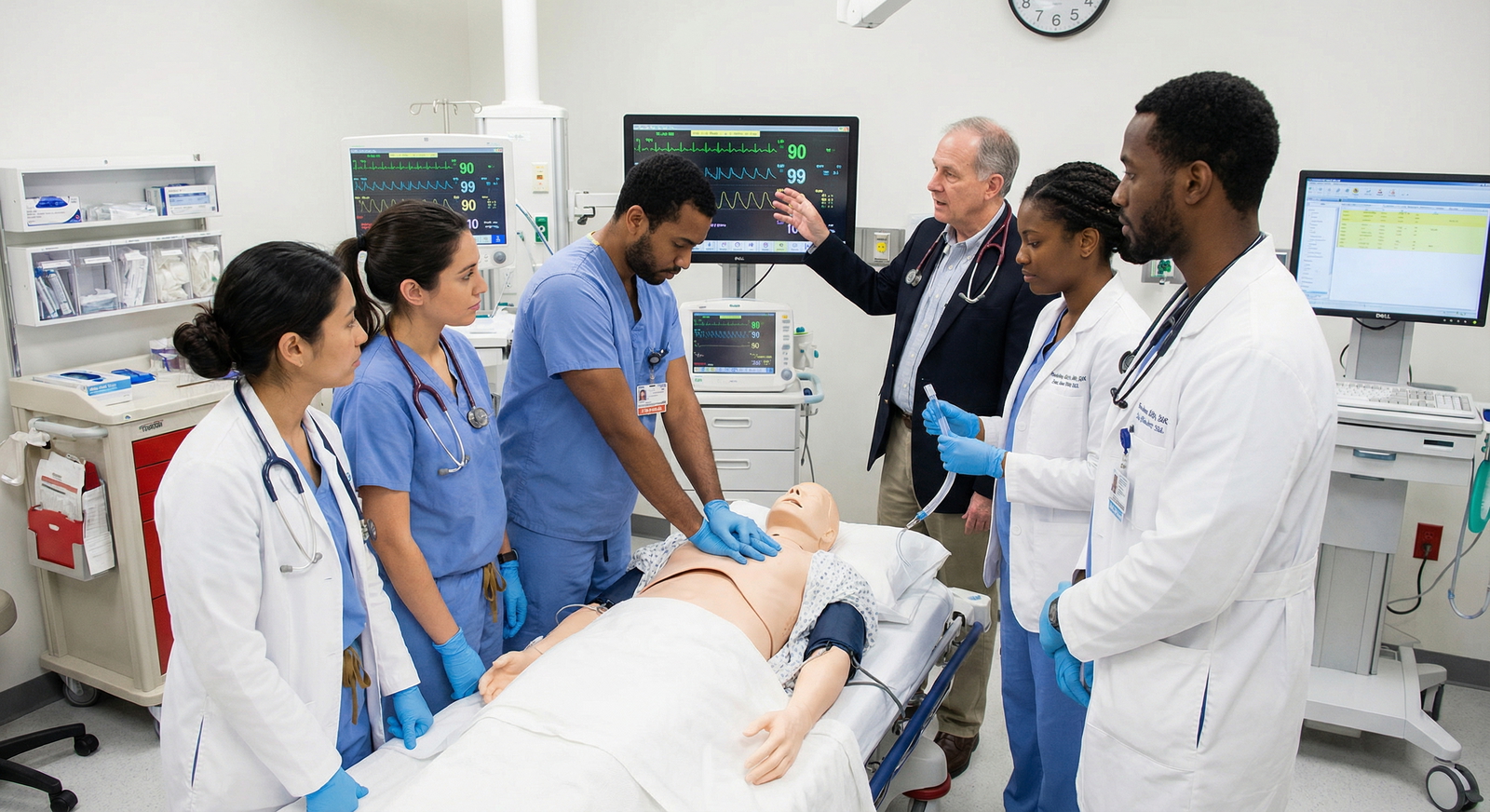
Choosing a residency program is more than just matching into a specialty—it’s choosing the environment that will shape your clinical skills, professional identity, and early career trajectory. The right fit can accelerate your growth, open doors for fellowships and jobs, and support your well-being. The wrong fit can make already demanding years significantly more challenging.
This enhanced checklist is designed to guide medical students and graduates through a structured, thoughtful process of choosing the right Residency Program. It combines Self-Assessment, targeted research, and effective Networking so you can make a confident, strategic decision.
Understanding Your Goals: Deep Self-Assessment Before You Rank
Before you compare any specific residency program, you need clarity on who you are as a learner and future physician. A strong Self-Assessment will simplify later decisions and help you filter programs more efficiently.
1. Clarify Your Specialty Interests and “Why”
You likely have a sense of which specialty (or few specialties) you’re considering. Go one step further and clarify your underlying motivations.
Ask yourself:
- Which rotations energized me the most? Which ones drained me? Why?
- Do I prefer short-term, acute care (e.g., EM, surgery, ICU) or long-term continuity (e.g., pediatrics, internal medicine, family medicine)?
- Do I enjoy procedures, cognitive problem-solving, or a mix of both?
- Do I like working with a specific population—children, older adults, surgical patients, underserved communities?
Actionable steps:
- Review your clerkship evaluations and notes from attendings and preceptors. Themes (e.g., “strong communicator,” “procedurally skilled,” “excellent with complex cases”) can validate your specialty choice.
- Conduct at least one informational interview with a resident or attending in each specialty you’re seriously considering. Ask them what they wish they’d known before choosing the field.
2. Define Your Work–Life Balance and Lifestyle Priorities
Residency will be demanding no matter where you train, but the degree and type of intensity vary by specialty and program.
Reflect on:
- Non-negotiables: Do you need to be in a specific city or near family? Do you have caregiving responsibilities or a partner’s career to consider?
- Tolerance for intensity: How do you handle night shifts, long call days, and frequent schedule changes?
- Personal interests: Are regular days off or protected weekends important for hobbies, religious practices, or mental health?
Examples:
- If you have young children, you might prefer programs with predictable schedules, strong parental leave policies, and nearby affordable childcare.
- If you’re highly driven and aiming for a competitive fellowship, you may accept a heavier workload in exchange for research and high-acuity exposure.
Write down your top 3–5 lifestyle priorities. These will become key filters when you compare programs.
3. Understand Your Learning Style and Mentorship Needs
Residency Program cultures vary dramatically in how they teach and support residents.
Consider:
- Learning structure: Do you thrive with structured didactics, clear protocols, and stepwise supervision, or do you prefer flexible, self-directed learning?
- Feedback style: Do you like frequent, direct feedback or more periodic, formal evaluations?
- Mentorship preferences: Do you want close, longitudinal mentorship with specific faculty, or are you comfortable seeking guidance independently?
Look for:
- Programs with protected didactic time that is truly honored.
- Clear systems for advising and mentorship (e.g., assigned mentors, coaching programs, faculty advisors for career development).
- Support for diverse learning needs—simulation labs, board review sessions, feedback training.
4. Align With Long-Term Career Development and Geographic Goals
Your residency choice should support, not limit, your long-term plans.
Reflect on:
- Career path: Academic medicine, community practice, global health, public health, administration, or subspecialty training?
- Fellowship plans: Are you targeting a competitive fellowship (e.g., cardiology, GI, orthopedic subspecialties, oncologic surgery)? You’ll want strong research infrastructure and a history of successful fellowship matches.
- Geographic preferences: Do you see yourself practicing in the same region long term? Many residents stay in the area where they train due to local Networking, familiarity with the system, and job opportunities.
Actionable steps:
- Look at each program’s recent fellowship match list and post-residency job placements.
- If you want to practice in a specific region, prioritize programs embedded in that local healthcare ecosystem.

Researching Residency Programs: What to Look for Beyond the Brochure
Once you understand your priorities, you can evaluate residency programs more strategically. This section focuses on how to assess training quality, environment, and opportunities for Career Development.
5. Confirm Accreditation and Board Eligibility
Accreditation is the baseline for any serious residency consideration.
Key questions:
- Is the program accredited by ACGME?
This ensures the program meets national standards in training, supervision, and resident support. - Have there been recent citations or issues?
You can look at ACGME’s public reports or ask program leadership directly during interviews. - Does the program’s training lead to Board eligibility in your specialty?
Ask about board pass rates over the last 3–5 years; consistently strong rates indicate robust preparation.
Red flags:
- Recent or frequent ACGME citations without a clear remediation plan.
- Markedly low board pass rates compared to national averages.
6. Evaluate Program Reputation and Outcomes in Context
Reputation matters—but it is only one piece of the puzzle.
Ways to assess:
- Ask mentors and faculty at your medical school about each program’s strengths and weaknesses.
- Review fellowship and job placement data from program websites or during interviews:
- Where did recent graduates go?
- Are they matching into the fellowships or practice settings you’re aiming for?
- Consider regional versus national reputation:
- Some programs are powerhouses regionally with strong local job pipelines.
- Others have broad national recognition that can help if you plan to relocate.
Balanced perspective:
- A “top-tier” name is helpful but not worth sacrificing your well-being, support, or alignment with your goals.
- A strong “mid-tier” program with excellent mentorship, teaching, and culture can be a better fit and lead to outstanding outcomes.
7. Analyze Curriculum, Clinical Exposure, and Training Structure
The structure of your daily work determines how much you learn and how well you grow.
Key elements to investigate:
- Clinical volume and case mix:
- Are you seeing a wide variety of cases, including complex pathology?
- Do residents get enough procedural experience (for procedural specialties)?
- Responsibility and autonomy progression:
- How does responsibility increase from PGY-1 to senior years?
- Are senior residents trusted as team leaders and decision-makers?
- Didactics and teaching:
- Is there protected didactic time? Is it truly protected, or do residents get paged out constantly?
- Are there regular Morbidity & Mortality (M&M) conferences, journal clubs, and board review sessions?
- Simulation and skills labs:
- For procedure-heavy fields and acute care, simulation centers can significantly enhance learning.
- Night float and call systems:
- How many nights per month?
- How are post-call days handled?
- How does the call schedule change by PGY year?
You can often glean this information from:
- Program websites
- Virtual or in-person open houses
- Questions during interview days
- Conversations with current residents
8. Assess Research, Scholarship, and Career Development Support
Even if you don’t plan on a heavily academic career, research and scholarly activity can open doors.
Ask about:
- Research infrastructure:
- Are there ongoing clinical or basic science projects residents can join?
- Is there a research director or dedicated faculty mentor for resident projects?
- Protected research time:
- Are there elective research blocks or “research tracks”?
- Resources:
- Statistical support, IRB help, access to data, funding for conference travel.
- Scholarly expectations:
- Are residents expected to present at local/national meetings?
- How many publications or presentations do typical residents graduate with?
Career Development:
- Is there formal career advising (e.g., CV workshops, mock interviews, fellowship application guidance)?
- Are there subspecialty advisors for those pursuing fellowships?
- How does the program support residents seeking nontraditional paths (public health, policy, industry, global health)?
9. Evaluate Work Environment, Culture, and Wellness
Program culture may be the single most important factor in your daily experience.
What to look for:
- Resident morale and camaraderie:
- Do residents seem genuinely supportive of each other?
- How do they talk about program leadership when asked open-ended questions?
- Attending–resident relationships:
- Are attendings approachable and invested in teaching?
- Is there a culture of psychological safety—can residents ask questions and admit uncertainty?
- Resident wellness initiatives:
- Access to mental health resources (counseling, therapy).
- Wellness days or retreats.
- Policies on sick days and coverage.
- Response to burnout and fatigue:
- How does the program handle duty hour concerns?
- Are there systems to check in on struggling residents and offer support?
Red flags:
- Residents appear exhausted, guarded, or overly hesitant to speak honestly.
- Frequent mentions of feeling “unsupported,” “burnt out,” or “disposable.”
- Stories of punitive responses to illness, personal emergencies, or honest mistakes.
10. Consider Location, Cost of Living, and Support Systems
Where you train affects your lifestyle and stress level.
Factors to weigh:
- Setting: Urban, suburban, or rural.
- Cost of living: Compare resident salary to typical rent and expenses in that area.
- Commute: Distance from hospital to typical housing; availability of parking or public transportation.
- Support networks: Proximity to family, friends, or communities important to your identity (cultural, religious, LGBTQ+, etc.).
- Partner and family needs: Job market for partners, schools for children, childcare options.
Ask programs:
- Are there housing stipends or discounted hospital housing?
- Is there relocation assistance?
- Are there resident groups or organizations for partners and families?
Networking Strategically: Using Connections to See the “Real” Program
Networking isn’t just about future jobs; it’s a powerful tool for learning what programs are really like behind the polished presentations.
11. Leverage Residency Fairs, Virtual Showcases, and Conferences
Residency fairs and specialty conferences allow you to compare many programs quickly and begin building meaningful relationships.
How to use them effectively:
- Prepare a short introduction: Who you are, specialty interest, and 1–2 things you’re seeking in a program.
- Ask targeted questions:
- “How does your program support residents interested in [research/global health/fellowships]?”
- “What changes have you made recently based on resident feedback?”
- Collect contact information from program coordinators, chief residents, and faculty.
Follow up with a brief thank-you email and any additional questions.
Networking benefits:
- Helps you stand out as a genuinely interested applicant.
- Gives you information that may not appear on the website (e.g., recent program improvements, leadership changes).
12. Use Alumni and Near-Peer Networks Intentionally
Your school’s alumni can provide candid insights you won’t hear on interview day.
Actionable steps:
- Ask your Student Affairs or Career Office for a list of alumni in your target specialties or programs.
- Reach out via email or LinkedIn with a concise, respectful message:
- Who you are
- How you found them
- 2–3 specific questions (e.g., culture, workload, fellowship support)
- Ask near-peers (MS4s, recent grads) about:
- Their interview impressions of different programs.
- Factors that made them rank a program highly or lower.
- Any surprises after starting residency—good or bad.
These conversations can reveal:
- How accurate program marketing is.
- Whether the culture aligns with the values and priorities you identified in your Self-Assessment.
Systematically Evaluating and Ranking Programs
Once you have information from websites, interviews, and Networking, you’ll need a structured way to compare Residency Programs and build your rank list.
13. Build a Personal Comparison Framework
Create a comparison table or spreadsheet with the factors that matter most to you. Common columns include:
- Location and cost of living
- Program size (small, medium, large)
- Clinical volume and case mix
- Research and Career Development opportunities
- Fellowship match outcomes
- Culture and resident support
- Work schedule and call structure
- Diversity, equity, and inclusion (DEI) efforts
- Proximity to support system (family/friends)
- “Gut feeling” or overall fit
Assign each factor a weight based on importance (for example, 1–5). Then rate each program for those factors (for example, 1–10). Multiply and sum to create a score for each program.
This scoring system:
- Helps make decision-making more objective.
- Makes trade-offs visible (e.g., excellent training but high cost of living vs. moderate training but strong support system nearby).
14. Listen to Your Gut—But Ground It in Data
Data and frameworks are essential, but your “gut feeling” during interviews and interactions matters.
Reflect after each interview:
- How did I feel at the end of the day—energized, hopeful, anxious, uneasy?
- Could I picture myself working with these residents and faculty at 3 a.m. on a tough call night?
- Were there any subtle red flags (e.g., residents not speaking freely, dismissive responses about wellness)?
Your instinct often captures aspects of program culture that are hard to quantify but very real in daily life. Balance this with your scoring system, especially for close decisions.
15. Refine, Review, and Finalize Your Rank List
As Match deadlines approach:
- Revisit your priorities: Have any changed since you started the process (e.g., personal circumstances, clarified career goals)?
- Re-check your information: Verify that major details (e.g., program changes, leadership updates) haven’t shifted.
- Seek input from trusted mentors:
- Share your top choices and reasoning.
- Ask if they see any blind spots (e.g., fellowship competitiveness, regional job market).
Ultimately:
- Rank programs in the true order of your preference, not based on where you think you are more likely to match.
- Remember: The algorithm favors applicant preference. Let your authentic priorities drive your final list.

Frequently Asked Questions (FAQs) About Choosing a Residency Program
1. How important is program reputation when choosing a residency?
Program reputation is important but not everything. It can influence:
- Fellowship and job opportunities, especially in highly competitive subspecialties.
- Initial perceptions from employers who may recognize certain institutional names.
However, reputation must be weighed alongside:
- The program’s fit with your learning style and goals.
- Resident culture and wellness, which strongly impact your day-to-day experience.
- The program’s track record in supporting Career Development for paths like academia, community practice, or nonclinical roles.
A slightly less “prestigious” program where you thrive, receive strong mentorship, and graduate confident and competent may serve you better than a top-name program where you feel unsupported or burnt out.
2. What should I focus on during residency interviews?
Use interviews to gather information you can’t easily get from websites:
Focus on:
- Work environment and culture: Ask residents what they like most and what they’d change.
- Training quality: Ask about clinical exposure, autonomy, and how responsibilities evolve by PGY year.
- Faculty support and mentorship: Ask for examples of times faculty advocated for residents or supported Career Development.
- Wellness and workload: Clarify call schedules, night float, responses to duty hours concerns, and mental health resources.
- Recent program changes: Ask what feedback residents have given and how leadership has responded.
After each interview, jot down your impressions the same day while memories are fresh.
3. Are research opportunities necessary in a residency program?
Research opportunities are not mandatory for every career path, but they are valuable in several scenarios:
Research is particularly helpful if:
- You are aiming for a competitive fellowship.
- You’re interested in academic medicine, medical education, or health policy.
- You want to strengthen your CV and professional network.
If you’re certain you want community-based practice and not academia, limited research may not be a deal-breaker. However, a program that at least supports scholarly activity (QI projects, case reports, teaching) is beneficial for both your growth and your CV.
4. How can I learn about a program’s culture before applying or ranking?
To understand culture beyond official marketing:
- Talk to current residents:
- Ask open-ended questions like, “What would you tell a close friend considering this program?”
- Pay attention to tone, not just content.
- Seek alumni perspectives from your own medical school who trained there.
- Observe interactions on interview day:
- How do residents and faculty talk to each other?
- Do residents seem comfortable asking questions?
- Look for signs of responsiveness:
- Ask about changes made in the last few years based on resident feedback.
- Review online forums cautiously:
- They may contain bias or outdated information, but can sometimes highlight recurring themes worth exploring further.
5. Should I prioritize location when choosing a residency program?
Location is more important than many applicants initially realize. It influences:
- Cost of living and financial stress
- Proximity to support systems (family, friends, communities important to your identity)
- Partner’s career options and children’s schooling
- Your likelihood of staying in that region after training, since many physicians practice near where they trained
You don’t need your “dream city,” but choosing a location where you can maintain some quality of life—social support, reasonable finances, and a livable environment—can significantly impact your resilience and satisfaction during residency.
By combining honest Self-Assessment, thorough research into each Residency Program’s training environment, and strategic Networking, you can approach the residency match and ranking process with clarity and confidence. Your goal is not just to match—it’s to match into a program where you can grow into the kind of physician you aspire to be, supported by a team and culture that align with your values and long-term goals.