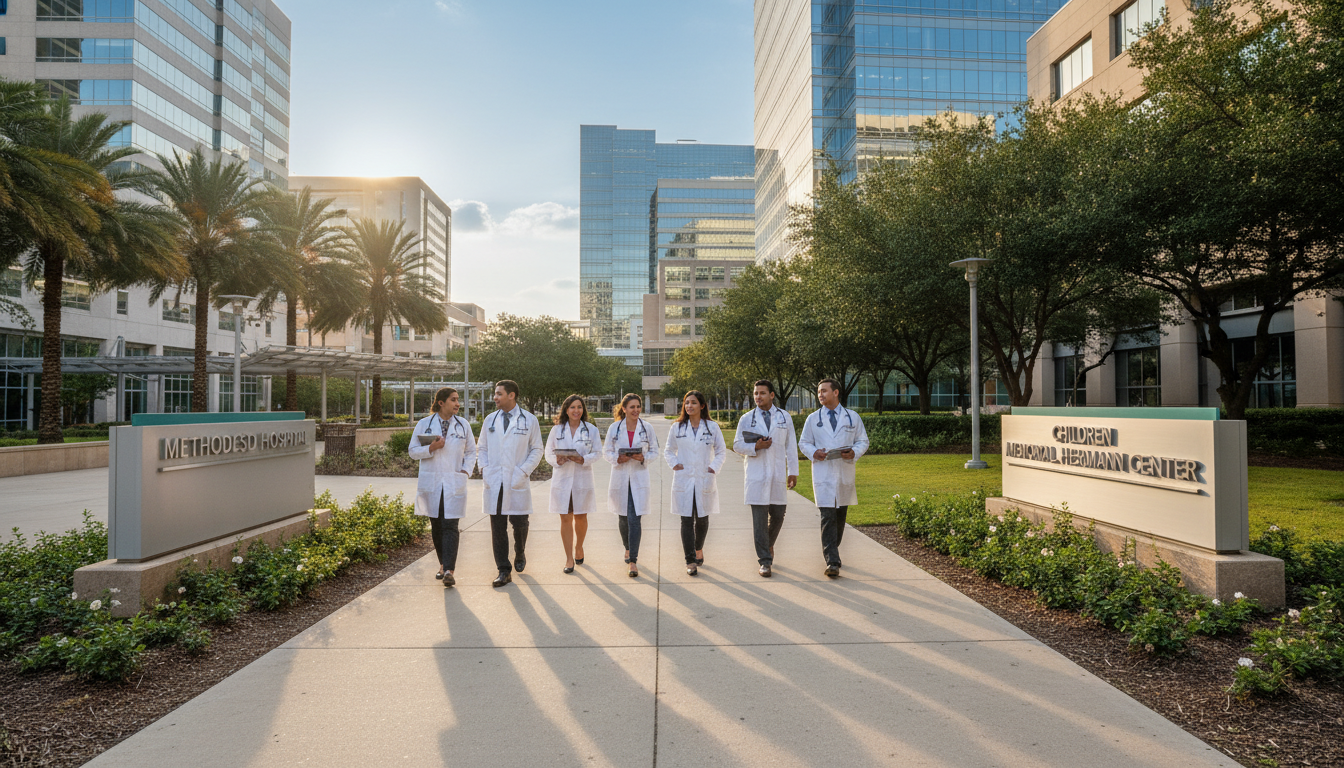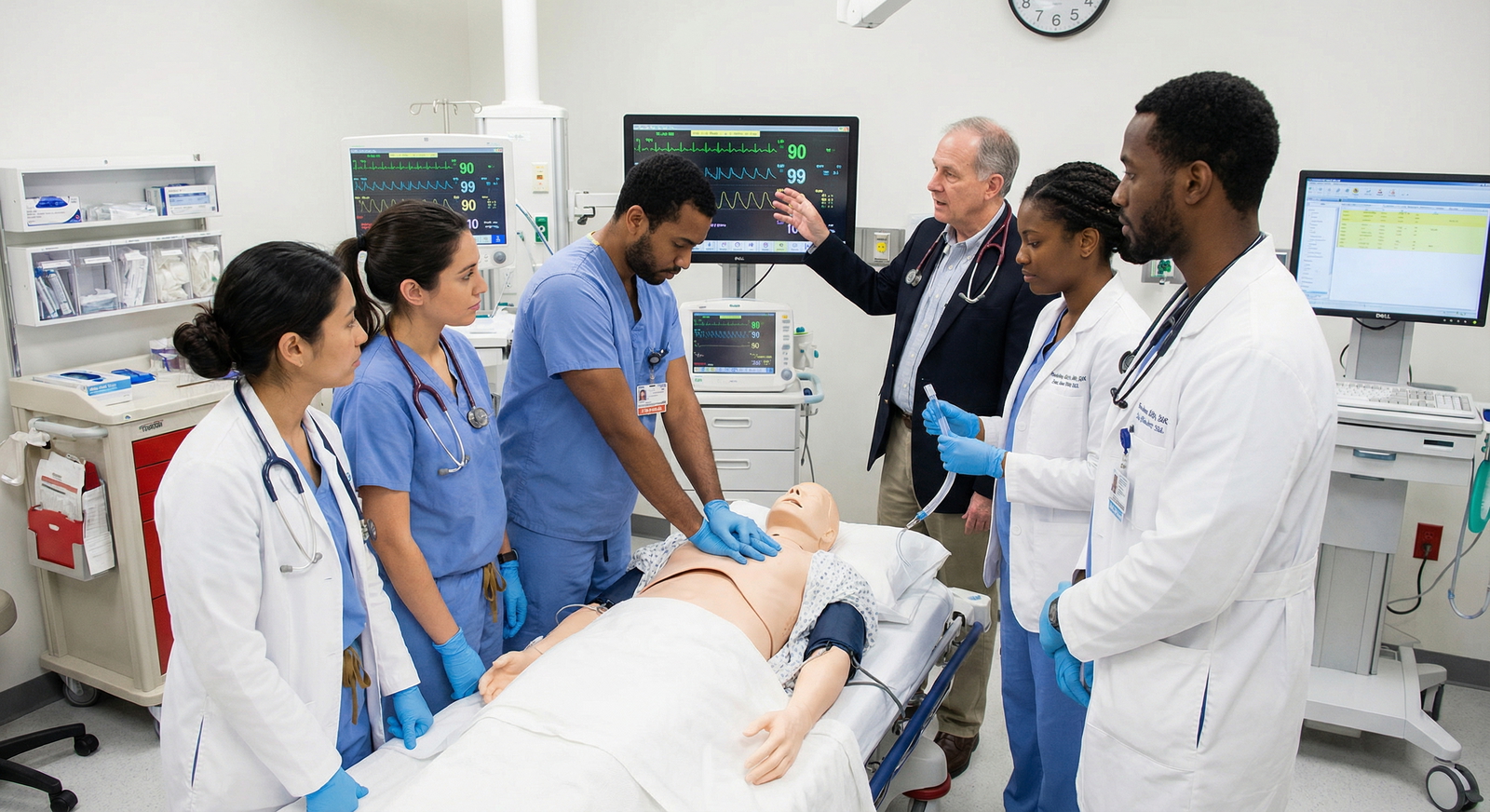
Choosing where to train as a DO graduate is rarely just about a single “dream program.” For applicants focused on community hospital programs, geographic flexibility can make the difference between matching and not matching—especially in today’s competitive osteopathic residency match environment.
Below is a detailed guide to using geographic flexibility strategically as a DO graduate applying to community-based residency programs.
Understanding Geographic Flexibility in the Match
Geographic flexibility is your willingness to train in a variety of locations, rather than limiting yourself to a single city, state, or region. For DO graduates, especially those targeting community hospital residency or community-based residency programs, it can be a powerful asset.
Why it matters for DO graduates
Program distribution favors flexibility
Many community hospital residencies—particularly osteopathic-friendly or historically AOA sites—are:- Outside major metropolitan areas
- Affiliated with regional or suburban hospitals
- Located in states with large catchment areas but smaller cities (e.g., Midwest, South, Mountain West)
Competitive advantage in the osteopathic residency match
- Applicants who signal willingness to relocate are more likely to receive interviews at solid community programs others might overlook.
- Having broad geographic preference residency options can compensate for slightly weaker board scores or fewer publications by increasing the total number of programs you can apply to.
Program directors’ perspective
Community hospital PDs worry about:- Applicants using their program as a “backup only”
- Residents leaving early due to dissatisfaction with location
So they favor candidates who show: - A coherent regional preference strategy
- Realistic understanding of the community and lifestyle
- Consistent interest in similar geographic settings
Mapping Your Geographic Priorities as a DO Graduate
Before applying, you need a clear, honest framework for how flexible you can be—professionally, personally, and financially.
Step 1: Define your non-negotiables
Ask yourself:
Family / relationship obligations
- Do you need to be within driving distance of a partner, spouse, or children?
- Are there eldercare responsibilities that truly limit your distance?
Visa or legal status (if applicable)
- Are there specific states or programs more likely to sponsor visas?
- Is an underserved or rural area J-1 waiver position part of your long-term plan?
Health or personal needs
- Do you require proximity to specific medical care?
- Are there climate or environmental factors that meaningfully affect your health?
Anything truly non-negotiable should shape—but not excessively limit—your geographic preference strategy.
Step 2: Define your “strong preference” regions
Once non-negotiables are clarified, identify:
- Regions where you would be happiest (e.g., Northeast corridor, Midwest, Pacific Northwest)
- States that combine professional opportunity and lifestyle you value
Group them as:
- Tier 1: Strong preference
- Tier 2: Acceptable / neutral
- Tier 3: Only if necessary to match
This tiering will guide how you:
- Distribute applications across regions
- Communicate geographic preference in your personal statements and interviews
Step 3: Understand location vs. program quality trade-offs
You will rarely get perfect location + perfect program fit. For DO graduates applying to community-based residency programs, think in terms of:
Would you rather:
- Attend a strong community hospital residency in a mid-sized or rural town, or
- A mediocre program in your favorite city?
Is your goal:
- Bread-and-butter clinical experience and procedural volume, or
- Niche subspecialty research that may be more common in large academic centers?
Community hospital programs often excel in:
- Autonomy and early responsibility
- High clinical volume
- Close-knit faculty mentoring
If your professional priority is becoming a solid, confident clinician, being flexible geographically may open doors to excellent training that’s not in a major coastal city.

Strategic Use of Geographic Flexibility in Your Application
You don’t just have geographic flexibility—you need to signal it effectively to residency programs while still sounding authentic.
1. Building a targeted, flexible application list
A thoughtful list for a DO graduate might look like:
Anchor region(s):
- 30–40% of applications to one or two regions you know very well or strongly prefer
- Example: Midwest and Mid-Atlantic community hospital programs
Expansion region(s):
- 40–50% to nearby or similar areas where you’d be reasonably happy
- Example: South, New England, or Mountain West
Stretch region(s):
- 10–20% to locations you might not have considered originally but still could accept
- Example: More rural states or less competitive urban areas
For a DO graduate residency applicant, this often means applying:
- Broadly across community-based residency programs
- Not over-concentrating in highly saturated markets (e.g., a single competitive coastal city)
2. Using personal statements to show flexible but thoughtful preferences
If programs allow supplemental or program-specific personal statements, consider:
For regional statements:
- Explain a genuine connection or rationale: prior rotations, family ties, lifestyle fit, or long-term career plans in that region.
- Emphasize: “I am open to a variety of community hospital settings in [Region], from urban-adjacent communities to smaller towns.”
For general statements:
- Highlight your openness to training in different types of communities, especially those served by community hospital residencies.
- Example language:
“I am particularly interested in community-based residency programs across the Midwest and South, where I can train in settings that closely reflect the communities I hope to serve long-term. I am open to both suburban and smaller city environments that offer high clinical volume and close faculty mentorship.”
3. Communicating geographic preference in interviews
Interviewers often ask:
- “Where else are you applying?”
- “Do you have a geographic preference?”
- “Can you see yourself living here for three or four years?”
Effective responses combine honesty + strategic flexibility:
Weak answer:
“I’m applying everywhere and I don’t really have a preference.”
(Sounds unfocused and possibly disingenuous.)Overly rigid answer:
“I must stay within two hours of [city], that’s my only option.”
(Signals high risk of ranking few programs and possibly not matching.)Strong, balanced answer:
“I have a strong preference for training in the [Region] because of [specific reasons—family, long-term practice goals, familiarity with patient population]. At the same time, I’ve applied to community hospital programs in several neighboring regions and I would seriously consider any community-based residency that offers strong clinical training, supportive faculty, and a collegial environment, even if it’s a bit farther from home.”
This shows:
- A clear regional preference strategy
- Willingness to realistically commit to the program’s location
4. Handling “location commitment” questions
Some programs are in less-popular locations and may ask, directly or indirectly, “Will you really come here?” or “What would keep you in this area?”
You can respond:
- Acknowledge the location frankly (without criticizing)
- Emphasize what attracts you:
- Cost of living
- Outdoor activities or lifestyle
- Tight-knit community
- Desire to practice in similar communities in the future
Example:
“I understand that [Town] is smaller than some major cities, but that’s part of what appeals to me. I grew up in a mid-sized community and saw how important community-based care is. I’m looking for a program where I can get high clinical volume, meaningful patient relationships, and close mentorship. Those features are far more important to me than being in a large city.”
Special Considerations for Community Hospital and Osteopathic Applicants
As a DO graduate, your path and priorities sometimes differ from MD peers, especially in community settings.
Community hospitals as high-yield options for DO graduates
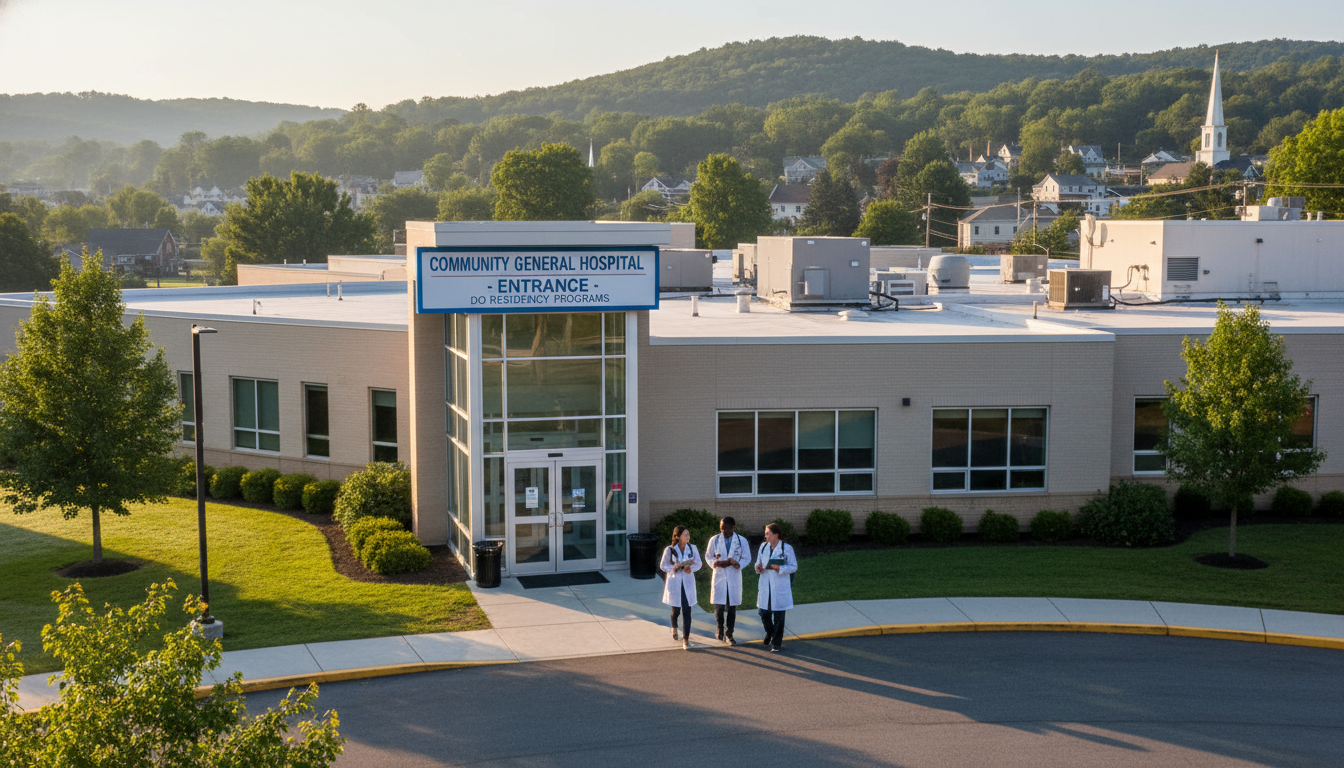
Community hospital residency and community-based residency programs often:
- Have strong osteopathic representation in faculty and residents
- Are more familiar with COMLEX scores and osteopathic training
- May be more open to holistic review of applicants
When combined with geographic flexibility, this may translate to:
- More interview offers than you’d receive by focusing only on large academic centers
- Greater chances to match into your preferred specialty (especially primary care, IM, FM, EM, pediatrics, psychiatry)
Tailoring your geographic strategy as a DO graduate
Know where DOs tend to match well
- Some regions (Midwest, South, parts of the Northeast) have long traditions of osteopathic training.
- In these areas, your DO background is often a neutral or positive factor, not a barrier.
Leverage osteopathic clinical rotations regionally
- If you completed audition or core rotations at community hospitals in a certain region, that region becomes a natural geographic anchor.
- Emphasize these experiences in your application and interviews to show realistic understanding of local practice environments.
Align long-term career goals with location type
If you foresee:- Practicing primary care or general IM/FM in a smaller community
- Working in underserved or rural settings
- Staying in community-focused practice rather than purely academic work
Then training in a community-based residency in a similar setting—even if it’s farther from home—is a strong strategic choice.
Balancing Geographic Flexibility with Personal Well-Being
Being open-minded about location does not mean ignoring your mental health, relationships, or long-term priorities.
Evaluating if a distant location is truly viable
When you consider a program far away from your current home base:
Ask:
Can I realistically build a support system there?
- Are there co-residents, extended family, or community connections?
- Would I be comfortable starting fresh socially?
Does the cost of travel back home fit my finances?
- Occasional flights or long drives may be manageable, but consider frequency and cost.
How would the climate and culture affect me?
- Harsh winters, extreme heat, or cultural isolation can wear on you over three or four years.
If you can’t see yourself safely and sustainably thriving there, be cautious about ranking that program highly—even if you want to be “flexible.”
When to say “no” despite being flexible
It is appropriate to limit or de-prioritize:
- Locations where you feel unsafe or deeply uncomfortable
- Programs where current residents appear burnt out or unsupported, regardless of geography
- Areas with extreme isolation if you know you need urban or suburban resources to stay mentally healthy
Geographic flexibility should increase options—not commit you to an environment that jeopardizes your well-being or training quality.
Managing partner or family considerations
For DO graduates with partners, spouses, or children, geographic flexibility requires more structure:
Couples Match considerations:
- If participating, coordinate a joint regional preference strategy, not just individual wish lists.
- Focus more heavily on regions that have multiple programs and specialties within driving distance.
Single-location family needs:
- Be upfront with yourself and advisors if your family requires you in a specific radius.
- Offset geographic limitations by being flexible in program type and competitiveness level within that radius (e.g., broader range of community hospital residencies, preliminary years if necessary).
Practical Action Plan for a DO Graduate: Step-by-Step
To put this into practice, here’s a concrete plan to integrate geographic flexibility into your osteopathic residency match approach.
Step 1: Self-assessment (1–2 weeks)
- List your:
- Non-negotiable constraints
- Strong and moderate regional preferences
- Acceptable but non-ideal locations
- Reflect on your goals for training (clinical volume, lifestyle, research, fellowship odds).
Step 2: Research community hospital programs (2–4 weeks)
- Use:
- AMA FREIDA, program websites, and DO-friendly program lists
- Your school’s match data for prior DO graduates in similar specialties
- Identify:
- Community-based residency programs with prior DO residents
- Regions where DOs historically match well
Create a spreadsheet with:
- Program name, city, state
- Community vs academic classification
- DO friendliness (high/medium/low)
- Your personal geographic preference tier
Step 3: Build your application list
For each geographic tier:
Tier 1 (preferred regions):
- Include a mix of:
- Slightly reach
- On-par
- Safer community hospital programs
- Include a mix of:
Tier 2 (neutral but acceptable regions):
- Heavier emphasis on solid community programs that match your academic profile.
Tier 3 (less desired but viable regions):
- A smaller but significant number of safety programs that increase your overall chance to match.
Aim for a balanced distribution so that no single city or state determines your entire match outcome.
Step 4: Integrate geographic messaging into your applications
- Personal statement(s):
- Mention your regional interest and openness to similar communities.
- ERAS experiences:
- Highlight rotations or volunteer work that link logically to certain locations or populations.
- Supplemental application (if applicable):
- Use geographic preference options truthfully but with flexibility where you could realistically live.
Step 5: Interview season strategy
- Prepare scripted but authentic answers about geographic preference and flexibility.
- Before each interview:
- Review the local community—economy, culture, patient demographics.
- Identify at least two specific, positive reasons you could see yourself living there.
Take notes after each interview:
- How did the location feel (even virtually)?
- Can you envision 3–4 years there?
- How did residents discuss lifestyle and support outside of work?
Step 6: Rank list construction
When you make your rank list, weigh:
- Program quality vs. geographic preference
- Long-term career value of the training vs. short-term comfort of location
- Mental health and social support needs
In many cases, especially for DO graduates, it is rational to rank:
- A strong community hospital program in a “B+” location above
- A clearly weaker program in an “A+” location, if your long-term career depends on solid training.
FAQs: Geographic Flexibility for DO Graduates in Community Hospital Programs
1. As a DO graduate, should I prioritize program reputation or location?
For most DO graduates entering the osteopathic residency match, it’s wise to prioritize training quality over ideal location, especially within community hospital residency settings. A strong community-based residency with good case volume, supportive teaching, and solid graduate outcomes will serve your long-term career better than a weaker program in your favorite city. However, do not completely ignore location—if you know you cannot thrive in a certain environment, that will ultimately affect your performance and well-being.
2. Does being geographically flexible really improve my chances of matching?
Yes. Geographic flexibility:
- Expands the number of programs you can realistically apply to
- Increases the odds of interview invitations in less saturated regions
- Signals to community-based residency programs that you are less likely to withdraw or be dissatisfied because of location
For many DO graduate residency applicants, especially in moderately competitive specialties, a broader geographic range is a key factor in successfully matching.
3. How many regions should I indicate as preferred if ERAS or supplements ask for geographic preference?
Indicate all regions where you would genuinely be willing to live and train, not just your top one or two. However, avoid checking every single option if there are areas you truly would not consider. A reasonable approach is to:
- Focus on 2–4 main regions that you prefer
- Still apply to and consider some programs slightly outside those regions if they offer excellent training and you could reasonably live there.
4. Can I change my geographic strategy in future applications if I don’t match the first time?
Absolutely. If you enter SOAP or plan to reapply:
- Reassess which regions yielded more interviews or positive feedback.
- Consider expanding your geographic flexibility if your first attempt was too restrictive.
- Re-focus on community hospital residency and community-based residency options in regions more open to DO graduates.
Each application cycle can refine your regional preference strategy based on real-world results, feedback, and your evolving priorities.
Geographic flexibility, used thoughtfully, empowers DO graduates to tap into the full range of community hospital programs across the country. By combining a realistic self-assessment, a regionally balanced application strategy, and clear communication of your preferences, you can significantly strengthen your position in the residency match while preserving your personal and professional well-being.