
Understanding the PM&R Landscape as a DO Graduate
Physical Medicine & Rehabilitation (PM&R) is a relatively small but rapidly growing specialty, and as a DO graduate you’re entering a field that historically has been very welcoming to osteopathic physicians. Many leaders in physiatry trained at osteopathic schools or have DO faculty in their departments. That said, competition has increased in recent years, and how you research residency programs can significantly affect your chances in the physiatry match.
Before you start building a list of programs, it helps to understand the big-picture context that will shape your strategy:
How Friendly Is PM&R to DO Graduates?
Across the country, PM&R is considered one of the more DO-friendly specialties. Many programs:
- Have multiple DO residents or faculty
- Accept COMLEX scores without requiring USMLE
- Value osteopathic perspectives on holistic, functional care
However, the degree of DO friendliness varies widely by program. Some heavily academic programs may strongly prefer USMLE scores and applicants with research-heavy CVs, while community-based programs may emphasize clinical skills and fit over metrics. Your program research strategy must account for this variation.
Types of PM&R Residency Programs
As you begin your osteopathic residency match planning, understand the main categories:
University-based academic programs
- Often associated with large academic medical centers
- Strong research infrastructure
- Multiple fellowships (SCI, TBI, pain, sports, peds, etc.)
- May be more selective, sometimes more USMLE-focused
Community-based programs
- Often affiliated with regional hospitals or rehab networks
- Strong clinical exposure, sometimes less research
- May have closer attendings-to-resident relationships
- Often more DO-friendly, but not always
Hybrid programs
- Community hospital with a university affiliation
- Mix of strong clinical training and moderate research opportunities
Knowing which type best matches your goals will guide how you prioritize and evaluate residency programs.
Clarify Your Own Profile and Priorities First
Before you dive into databases and spreadsheets, take an hour to reflect and write down:
Your application profile
- COMLEX (and/or USMLE) scores
- Class rank, any honors/awards
- Research experiences
- Leadership, extracurriculars
- PM&R exposure: electives, rotations, shadowing
Your preferences
- Geography (regions you will and will not consider)
- Size of program (small, medium, large)
- Academic vs clinical focus
- Desired fellowships (if any: sports, pain, SCI, TBI, peds, etc.)
- Lifestyle, call schedule tolerance, family needs
This self-assessment will shape how you approach evaluating residency programs and will keep you grounded when programs start to blur together.
Step-by-Step Program Research Strategy for PM&R
A structured, stepwise approach prevents you from getting overwhelmed and helps ensure you don’t miss great options.
Step 1: Start with Comprehensive Program Lists
Begin by identifying all accredited PM&R residencies:
AMA FREIDA Online
- Filter by specialty: Physical Medicine and Rehabilitation
- Check fields such as program size, number of positions, fellowship offerings, and call structure when available.
AAMC Residency Explorer (if accessible through your school)
- Allows you to compare your metrics to those of past matched applicants at specific programs.
Program websites and institutional GME pages
- Sometimes newer programs or recent expansions are most accurately reflected on the institution site.
Create an initial master list (spreadsheet recommended) that includes:
- Program name
- City/state
- Program type (academic, community, hybrid)
- Number of categorical vs advanced positions
- Contact information and website link
This becomes your working database for the rest of your research.
Step 2: Filter for DO-Friendliness and Exam Requirements
As a DO graduate, certain filters can immediately refine your osteopathic residency match strategy.
For each program, identify:
Historical DO presence
- Check current and recent residents’ bios/photos
- Look for DO faculty members
- Note programs where DOs are present in leadership roles (PD, APD, chief residents)
Exam requirements
- Does the program accept COMLEX only?
- Do they require USMLE Step 1/2?
- Do they strongly prefer USMLE even if COMLEX is accepted?
Many DO candidates match successfully with only COMLEX, but some competitive programs effectively require USMLE for serious consideration. If you haven’t taken USMLE, flag programs that are COMLEX-friendly.
Step 3: Categorize Programs by Competitiveness and Reach
To build a rational list, roughly assign each program into three informal categories:
“Reach” programs
- Highly academic or prestigious brands
- Very strong research output
- Historically low percentage of DOs or very competitive applicant pool
“Target” programs
- Profiles align well with your stats and experiences
- Mix of DO and MD residents
- Solid training with moderate competition
“Safety” programs
- Program metrics historically below or similar to yours
- Traditionally DO-friendly
- Possibly smaller markets or less “name recognition”
Your goal is not to guess exact match probabilities, but to build a balanced application portfolio. Most DO applicants should:
- Apply to a broad number of programs (often 25–40+ depending on competitiveness)
- Include several reaches, a core of target programs, and a few safer options
How to Research Residency Programs in Depth
Once you’ve narrowed your long list to a manageable number, begin deeper research. This is where you truly differentiate programs and find where you will thrive.
1. Analyze Program Curriculum and Rotations
Thoroughly review each program’s curriculum:
PGY-2 to PGY-4 rotation structure
- Inpatient rehab (general, stroke, SCI, TBI)
- Outpatient clinics (sports, MSK, EMG, pain, prosthetics/orthotics)
- Pediatrics, consults, and specialty rotations
Procedural exposure
- Ultrasound-guided injections
- EMG/NCS volume and quality
- Spasticity management (botulinum toxin, intrathecal baclofen)
- Interventional pain (if part of PM&R practice at that institution)
Protected didactics
- Regular lecture schedules, board review, journal clubs, workshops
- Multidisciplinary conferences with neurology, ortho, neurosurgery, etc.
For example, if you are very interested in sports and MSK, prioritize programs with:
- Dedicated sports clinics
- Sideline coverage opportunities
- Strong ultrasound curriculum
- Faculty with sports medicine fellowships
If you anticipate an interest in neurorehabilitation (SCI, TBI, stroke), look for:
- High-volume inpatient rehab units
- Level I trauma center affiliation
- SCI or TBI fellowships or centers of excellence
2. Evaluate Clinical Volume and Patient Mix
Solid physiatry training depends on both breadth and depth of patient exposure:
Inpatient volumes
- Number of beds on the rehab unit
- Typical diagnoses: stroke, SCI, TBI, amputation, polytrauma, debility
- Whether residents are truly primary team leaders or mainly consultants
Outpatient clinics
- Ratio of inpatient to outpatient time
- Exposure to chronic pain, sports injuries, spasticity, prosthetics
- Continuity clinics with long-term follow-ups
As a DO graduate accustomed to hands-on, holistic care, you may especially value programs where:
- You manage patients longitudinally (e.g., from acute rehab through outpatient follow-up)
- You are given meaningful responsibility early, with appropriate supervision
3. Consider Research and Academic Opportunities
Even if you’re not planning a heavily academic career, some exposure to research can help you match into competitive fellowships later. When evaluating residency programs:
- Look at recent resident publications and presentations
- Review faculty research interests and ongoing projects
- Check for formal research curricula or mentorship programs
- Note whether residents have protected research time
If your long-term goal is an academic physiatry career, prioritize programs that:
- Have NIH-funded or multi-center clinical trials
- Host national or regional research collaborations
- Have a track record of placing graduates into academic positions
4. Assess Fellowship Pipeline and Graduate Outcomes
Your residency should position you well for your next step, whether that’s fellowship or direct practice:
Fellowships offered in-house
- Sports medicine
- Pain medicine
- Spinal cord injury
- Brain injury
- Pediatric rehab
- Neuromuscular / EMG
Graduate destinations
- What fellowships do graduates match into?
- Academic vs community jobs
- Geographic diversity of their placements
Programs with robust fellowship pipelines and a history of supporting DO graduates into competitive fellowships can be especially attractive in your physiatry match strategy.
5. Examine Culture, Wellness, and Support
Culture is harder to measure from a website, but there are clues:
- Resident testimonials and videos
- Diversity among residents and faculty
- Emphasis on wellness initiatives, retreat days, and mental health resources
- Policies about duty hours, backup call, and coverage when residents are sick
During your research, note:
- Are residents featured prominently and positively?
- Does the program talk about mentorship and support?
- Do they mention specific wellness efforts beyond vague statements?
A “strong” program on paper but with a toxic culture can make residency miserable. As a DO graduate, you may be particularly sensitive to whether the environment is inclusive and supportive of osteopathic training and perspectives.
Data Sources and Tools: Where to Look and What to Ask
To execute a robust program research strategy, you need to gather data from multiple sources.
Program Websites and Social Media
Program websites often include:
- Detailed rotation schedules
- Faculty bios and sub-specialty interests
- Resident lists and profiles
- Application requirements and interview timelines
Program social media (Instagram, Twitter/X, LinkedIn) can give you a feel for:
- Day-to-day resident life
- Academic achievements and conferences
- Community outreach and extracurricular activities
Look for patterns. If a program highlights DO residents and osteopathic principles, that’s a positive signal for your DO graduate residency search.
Online Databases and Official Resources
Use multiple information sources to cross-check and deepen your understanding:
- FREIDA
- Filters for program size, call, and other logistics
- NRMP data & Charting Outcomes
- Specialty-specific match data, including DO vs MD metrics
- ERAS Program Directory
- Application requirements and contact information
- Residency Explorer (if accessible)
- Comparison between your metrics and previous cohorts
These tools help you make realistic assessments of competitiveness and shape your osteopathic residency match approach.
Networking: Residents, Attendings, and Mentors
Human insight is invaluable for evaluating residency programs:
Current residents
- Ask about workload, culture, and hidden strengths/weaknesses
- Inquire how DOs are treated and supported
- Clarify how much teaching and feedback they receive
Faculty and program leadership
- Often accessible via emails or at conferences
- Ask targeted questions about curriculum, electives, and future program plans
Your own mentors
- PM&R attendings or DO faculty at your medical school
- Alumni who matched into PM&R
- They can flag programs that are particularly DO-friendly or not aligned with your interests
Virtual and In-Person Experiences
Take advantage of any opportunity to observe programs directly or indirectly:
Away rotations / audition electives
- Especially valuable if you’re targeting specific regions or competitive programs
- Provide the best insight into culture and clinical training
Virtual open houses and info sessions
- Common since the pandemic
- Offer chances to ask questions and meet multiple faculty/residents
Prepare a short list of questions tailored for each program. Examples:
- “How have DO residents historically performed on boards and in fellowship matches?”
- “What changes are you planning in curriculum over the next few years?”
- “How is feedback delivered to residents, and how often?”
- “How does your program support resident wellness and prevent burnout?”
Comparing and Narrowing: Practical Framework for Decision-Making
As your research progresses, you’ll have more information than you can easily hold in your head. Systematic comparison helps you build a final, well-balanced rank list.
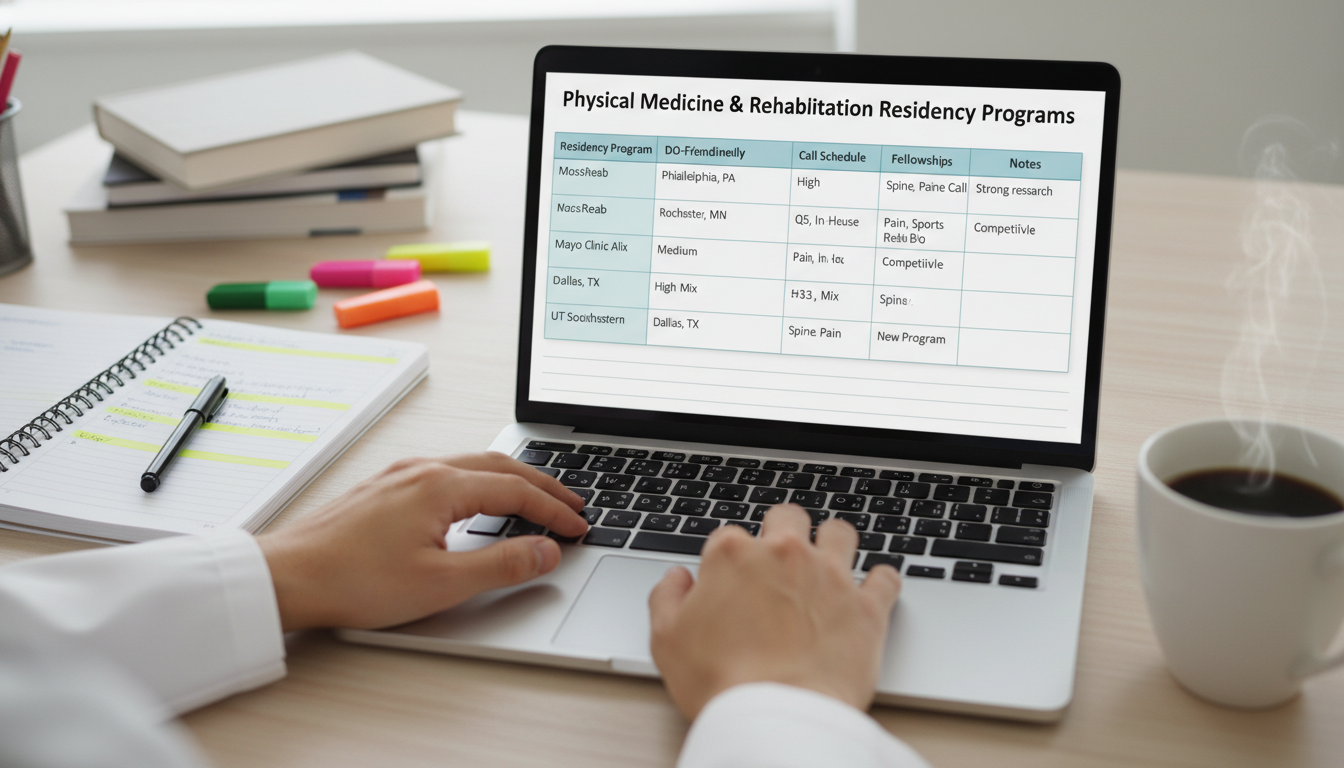
Build a Structured Comparison Spreadsheet
Create columns that reflect your priorities as a DO graduate entering PM&R. Common fields include:
- Program name & location
- Program type (academic/community/hybrid)
- DO-friendliness (High/Medium/Low)
- Exam requirements (COMLEX only vs COMLEX + USMLE)
- Size of residency (number of residents/year)
- Inpatient vs outpatient balance
- Key strengths (e.g., sports, neurorehab, pain, peds)
- Fellowships available
- Research intensity (High/Medium/Low)
- Culture/wellness notes
- Geographic desirability
- “Gut feeling” score (1–10)
Use the spreadsheet not just as a data repository, but as a decision-making tool. After interviews, update the “culture” and “gut feeling” columns with fresh impressions.
Weighted Scoring System (Optional but Helpful)
If you like quantitative approaches, assign different weights to your priorities. For example:
- DO-friendliness: 20%
- Location: 15%
- Clinical exposure breadth: 20%
- Fellowship opportunities: 15%
- Culture and wellness: 20%
- Research: 10%
Score each program in each category (e.g., 1–5) and calculate a weighted total. This doesn’t replace your intuition, but can highlight programs that consistently rise to the top.
Pay Attention to Red Flags
While researching, be mindful of potential warning signs:
- No or very few DO residents despite many years of existence
- High resident attrition or frequent transfers
- Vague or outdated website information (may indicate poor organization)
- Recurrent negative comments from different independent sources
- No structured didactics or limited procedure exposure
A program can still be good despite some negatives, but consistent red flags should prompt deeper questioning during interviews or open houses.
Balancing Ambition and Realism
Ambition is healthy, but your final list should reflect a realistic understanding of your profile:
- Strong DO applicants with research and solid scores can safely apply to a broad range of academic and community programs.
- Applicants with more modest metrics or limited PM&R exposure may need to prioritize DO-friendly and community-heavy programs.
- All applicants benefit from applying broadly and thoughtfully across levels of competitiveness.
Remember that your evaluating residency programs process is not just about “Can I match here?” but “Will I be happy and well-trained here?”
Final Thoughts: Tailoring Your Strategy as a DO Entering PM&R
As a DO graduate, you bring unique strengths to PM&R: holistic patient care, manual skills, and a functional, patient-centered mindset. Many PM&R programs value these attributes, but not all communicate it equally. Researching programs thoroughly allows you to:
- Identify environments that genuinely welcome osteopathic training
- Align program strengths with your interests (sports, pain, neurorehab, peds, etc.)
- Avoid mismatches in expectations around research, workload, or culture
- Build a physiatry match portfolio with an optimal balance of reach, target, and safety programs
Investing time up front in a structured program research strategy can make the rest of the osteopathic residency match process more focused, less stressful, and ultimately more successful.
FAQ: DO Graduates Researching PM&R Residency Programs
1. Do I need to take USMLE if I’m a DO applying to PM&R?
Not strictly, but it depends on your target programs. Many PM&R residencies, including strong ones, will consider DO applicants with only COMLEX scores. However, some academically focused or highly competitive programs either require or strongly prefer USMLE. If you have not taken USMLE and don’t plan to, prioritize programs that explicitly accept COMLEX and have a history of matching DOs.
2. How many PM&R programs should a DO applicant apply to?
Numbers vary by applicant profile, but most DO applicants aiming for PM&R apply to roughly 25–40+ programs. Stronger applicants with high scores and significant PM&R exposure might successfully target fewer, while those with weaker metrics or late specialty decisions benefit from a broader list. Focus on building a balanced mix of reach, target, and safety programs.
3. What makes a program “DO-friendly” in PM&R?
Signs of DO-friendliness include:
- Multiple current or recent DO residents and faculty
- Program materials explicitly mentioning COMLEX acceptance
- Leadership or chief residents with DO backgrounds
- Positive feedback from DO alumni or current DO residents
A single DO graduate doesn’t automatically make a program DO-friendly, but a consistent pattern suggests openness and experience training osteopathic physicians.
4. How important is research for matching into PM&R as a DO?
Research is helpful but not always essential. Many community and hybrid PM&R programs value strong clinical skills and fit more than research output. However, if you’re aiming for highly academic residencies or competitive fellowships (e.g., pain, sports at top institutions), having some research—ideally related to rehab, neurology, sports, or MSK—can strengthen your application. When evaluating residency programs, consider whether the research expectations match your prior experiences and career goals.
By combining honest self-assessment with systematic research, you can identify PM&R residencies where you’ll be both competitive and genuinely happy as a DO graduate.