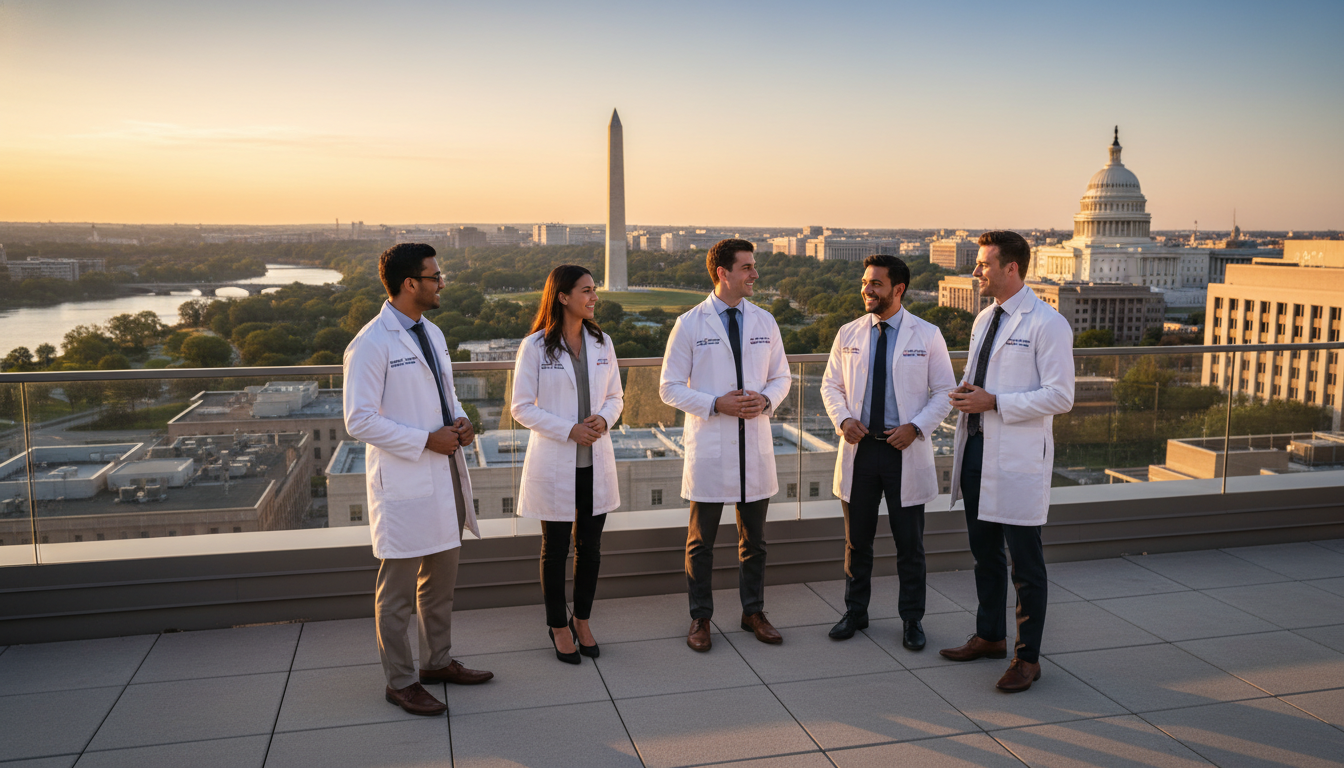
Understanding Geographic Flexibility in the DMV Residency Landscape
Geographic flexibility is one of the most underappreciated strategic tools in the residency application process—especially in a rich, compact region like the DMV (Washington, DC, Maryland, and Virginia). For many applicants, “I want to stay in DC” or “I only want Maryland Virginia residency programs” feels like a clear preference. But the truth is more nuanced: how you balance desire for a specific city with willingness to consider nearby locations can significantly impact your chances of matching.
In the DMV, geographic flexibility doesn’t mean choosing between “East Coast vs. West Coast.” It often means deciding how open you are to:
- DC residency programs vs. Maryland vs. Virginia programs
- Academic centers vs. strong community programs in the suburbs
- Urban cores (e.g., DC, Baltimore) vs. mid-sized cities or smaller communities
- Longer commutes vs. relocating to a new subregion (e.g., Northern Virginia instead of downtown DC)
This article will walk you through how to think about geographic preference in the DMV, how to signal it strategically on your ERAS application, and how to create a realistic, flexible approach that supports both your personal life and your match odds.
The DMV Residency Map: How the Region Actually Functions
Before you can use geographic flexibility to your advantage, you need a realistic mental map of the DMV as a residency ecosystem, not just as three jurisdictions.
1. The Three “Layers” of the DMV
1. Core DC
- Typical characteristics:
- Large academic medical centers
- Strong focus on research, policy, underserved care
- High cost of living, urban lifestyle, heavy traffic
- Example program types:
- University-based DC residency programs in Internal Medicine, Pediatrics, Psychiatry, etc.
- Hospitals closely tied to federal agencies or national organizations
2. Maryland
- Two main subclusters:
- Baltimore area: major academic centers plus robust community programs
- Suburban Maryland (e.g., Montgomery, Prince George’s counties): community-based and hybrid academic–community programs, often serving diverse populations
- Features:
- Mix of urban and suburban lifestyles
- Slightly more housing flexibility than downtown DC
- Easy access to DC by car or transit, depending on location
3. Virginia
- Especially Northern Virginia and broader Maryland Virginia residency corridor:
- Busy community hospitals with high patient volume
- Some university-affiliated sites with strong reputations
- Growing GME footprints with new or expanding residency programs
- Features:
- Suburban and semi-urban lifestyle
- Generally somewhat more space/affordability vs. central DC (varies by neighborhood)
- Commute to DC possible from many areas, though traffic can be intense
2. Commute vs. Relocation: Hidden Geography
A unique aspect of the DMV is that “geographic preference” can be very different from “where your program is on a map.”
For example:
- You might live in Silver Spring, MD and commute to:
- A DC residency program
- A community hospital in Montgomery County
- Some Northern Virginia locations (with a challenging commute)
- You might live in Arlington, VA and reasonably reach:
- DC academic centers
- Several Northern Virginia community or hybrid programs
- You might live in Baltimore and still have:
- Direct access to major academic centers there
- Some, but fewer, feasible commutes to DC or suburban Maryland
This means that a regional preference strategy in the DMV isn’t binary; you can often have one home base and still access multiple training environments.

Building a Smart Regional Preference Strategy
A clear, intentional regional preference strategy is essential for maximizing both fit and match probability. Here’s how to design one specifically for the DMV.
Step 1: Clarify What “Geography” Really Means to You
When you say you want the DMV, what are you actually valuing?
Consider these dimensions:
- Proximity to specific people
- Partner’s job or school in downtown DC
- Family in suburban Maryland or Northern Virginia
- Co-parenting responsibilities requiring a strict radius
- Lifestyle
- Urban density vs. quieter suburban setting
- Access to restaurants, nightlife, or cultural institutions
- Access to green space, quieter neighborhoods, lower housing costs
- Commute tolerance
- Maximum time you’re willing to commute each way (e.g., 30 min vs. 60–75 min)
- Tolerance for driving vs. public transit vs. walking
- Cost of living
- Are you comfortable with DC rent + parking fees?
- Would you prefer to stretch your resident salary further in Maryland or Virginia?
- Future plans
- Do you hope to stay in the DMV long term?
- Are you interested in federal policy, government-related work, or national organizations that are DC-based?
Write out your non‑negotiables vs. preferences:
- Non‑negotiable: “Partner’s job is in DC; I need to be within ~45–60 minutes of downtown.”
- Preference: “I’d like to live in DC, but I’m open to Maryland Virginia residency sites if the commute is manageable.”
Step 2: Translate Personal Needs into a Location Flexibility Match Plan
“Location flexibility match” strategy means deciding how many different areas you are truly open to while staying honest about your core needs.
For DMV, this might look like:
- High flexibility
- “I will consider programs anywhere in DC, Maryland, or Virginia as long as they are within ~90 minutes of a major city.”
- You’ll apply to:
- DC residency programs
- Baltimore-based programs
- Northern Virginia and suburban Maryland
- Possibly programs further south or west in VA and further north in MD
- Moderate flexibility
- “I want to be in the broader DMV, but ideally within commuting range of DC or Baltimore.”
- You’ll apply to:
- Core DC programs
- Baltimore academic and community programs
- Northern Virginia and suburban Maryland within a set radius
- Low flexibility
- “I must be in or immediately around DC (or a specific county/area).”
- You’ll:
- Focus heavily on a narrow subset of DC and close-in Maryland Virginia residency programs
- Need to compensate with:
- Broader specialty choice strategy
- Larger number of applications
- Backup plans (prelims, transitional years, or a broader second-choice region)
The narrower your geographic window, the more you must widen other variables (number and type of programs, specialty competitiveness) to keep your match odds reasonable.
Applying to DC, Maryland, and Virginia: Strategic Considerations
Now let’s translate this into actual application choices within DC, Maryland, and Virginia.
1. DC Residency Programs: Pros, Cons, and Fit
Pros
- Strong academic reputations and robust faculty networks
- Excellent exposure to:
- Policy, public health, advocacy
- International populations and global health perspectives
- Complex pathology and high-acuity care
- Proximity to federal agencies, NGOs, and national organizations
Cons
- High cost of living (rent, childcare, parking)
- Limited housing space, longer waits for services, higher day-to-day costs
- Very competitive for some specialties due to desirability and academic prestige
Best fit if you:
- Are interested in health policy, public service, or academic medicine
- Have strong local support or a financial plan for DC living costs
- Want a highly urban training environment and diverse patient populations
Geographic flexibility angle:
If you prioritize DC but can’t match there, you might still maintain your lifestyle and goals by living in DC while training at a nearby Maryland or Virginia program—if the commute is feasible.
2. Maryland Programs: Academic and Community Balance
Maryland offers a balanced portfolio of programs that can be central to a geographic preference residency strategy:
Baltimore area
- Major academic medical centers with national reputations
- High clinical volume, complex cases, and research opportunities
- City with its own distinct culture, cost structure, and lifestyle
Suburban Maryland
- Hospitals serving very diverse, often multilingual populations
- Mixture of community and academic-affiliated programs
- Potential for more space, sometimes more affordable housing than DC
Best fit if you:
- Value a mix of academic rigor and livable cost of living
- Don’t necessarily need to live in downtown DC but still want easy access
- Enjoy mid-sized city or suburban environments
Geographic flexibility angle:
If you’re open to both Baltimore and the DC metropolitan area, your number of realistic options increases substantially. You can present this as a thoughtful regional preference strategy—e.g., “I want to train in the broader Mid-Atlantic corridor around DC and Baltimore, where I have strong personal and professional connections.”
3. Virginia Programs: Growing, Diverse Opportunities
“Maryland Virginia residency” often gets grouped together, but Virginia itself has a wide range of settings:
Northern Virginia (Arlington, Fairfax, Alexandria, etc.)
- Busy community hospitals, some with university affiliations
- Very diverse populations, including many immigrant communities
- Proximity to DC with somewhat different housing markets
Central/Southern Virginia
- University-based programs and well-established community programs
- Lower cost of living in many areas
- More small-city or semi-rural experiences
Best fit if you:
- Want solid clinical training with high volume and hands-on responsibility
- Prefer or are open to suburban or small-city living
- Don’t mind being a little farther from the DC core if the program is strong
Geographic flexibility angle:
Applicants sometimes underestimate these programs because they’re not “in DC.” Yet, including them can markedly improve your match probability while still keeping you within a few hours of the capital and within the broader DMV or Mid-Atlantic region.

How to Signal Geographic Preference (Without Overcommitting)
In the era of preference signaling, program signaling, and supplemental ERAS information, how you communicate your geographic preferences matters—especially in an area with as many overlapping options as the DMV.
1. Using ERAS and Supplemental Applications Strategically
If the supplemental ERAS or specialty-specific forms ask for geographic preference:
- If DMV is your top region, say so clearly.
- But also consider whether you can group it into a slightly larger region (e.g., “Mid-Atlantic” or “Northeast/Mid-Atlantic”) if that is honest and gives you more flexibility.
Example phrasing in a geographic preference field:
“I have a strong preference for residency training in the Washington DC, Maryland, and Virginia region due to family support, my spouse’s career, and my long-term interest in federal health policy and public service. I would also be happy in the broader Mid-Atlantic, but the DMV is my ideal training environment.”
This signals:
- Clear priority on DMV
- Some flexibility if needed
- Concrete, believable reasons (family, spouse’s career, policy interest)
2. Communicating Preference in Personal Statements and Letters
You can incorporate geographic preference residency themes directly into your main or program-specific personal statements:
- Mention:
- Ties to the region (e.g., grew up in Maryland, attended college in DC, partner in Virginia)
- Specific reasons you want the DMV (policy, diversity, certain hospital systems)
- Long-term goal to practice in the region
But avoid sounding rigid:
- Not: “I will only consider DC city programs.”
- Instead: “I hope to build my career in the broader DC/Maryland/Virginia community, where I already have personal and professional ties.”
3. Interviews: Balancing Honesty and Openness
On interviews, you’ll often be asked:
- “What brings you to this region?”
- “Do you have ties to DC/Maryland/Virginia?”
- “Where else are you applying?”
Use this as an opportunity to reinforce a regional preference strategy:
- Emphasize:
- Your commitment to the DMV region overall
- Your openness to different settings within the region (urban, suburban, academic, community)
- The specific elements of their program and location that appeal to you
Example response:
“My partner works in DC, and we both hope to stay in this area long term. That said, I’ve applied across DC, Maryland, and Virginia because I’m open to different settings and want to find the best training environment. I’m particularly drawn to your program’s mix of high-volume community care and your proximity to DC, which would allow us to stay anchored in the region.”
This shows:
- Clear geographic preference
- Flexibility about exact city or type of hospital
- A thoughtful match between your needs and the program’s setting
Practical Steps to Design Your DMV Application List
To put all this together, here’s a concrete process for building your list while leveraging geographic flexibility.
Step 1: Define Your “Primary Zone” vs. “Secondary Zone”
- Primary Zone
- Where you most want to be (e.g., DC + close-in Maryland and Northern Virginia)
- Secondary Zone
- Still acceptable but slightly farther or less ideal (e.g., Baltimore, Central Virginia, Western Maryland)
Make an honest list:
- “I’d be excited to train in any of these cities/neighborhoods.”
- “I’d be okay training in these areas but would likely live differently/visit DC on weekends/etc.”
Step 2: Categorize Programs in Each Zone
Within your specialty:
- List all programs in:
- DC (university, hybrid, community)
- Maryland (Baltimore + suburban programs)
- Virginia (Northern VA + others)
Group them by:
- Academic vs. community
- City vs. suburban vs. smaller town
- Program size and reputation
Aim for:
- A healthy mix of reach, target, and safety programs within your Primary Zone
- Additional safety and target programs in your Secondary Zone, especially if you’re in a competitive specialty or have application weaknesses
Step 3: Check for Over-Reliance on a Single Micro-Location
Watch for:
- Too many programs in one tiny subarea (e.g., only downtown DC academic programs)
- Too few community or hybrid programs in your list
- No backup region outside the DMV, if your application is less competitive
A common pitfall:
- “I want to be in DC, so I only applied to a handful of big-name DC programs.”
- This is risky.
- Strengthen your list by including:
- Well-regarded community programs in Maryland and Virginia
- Academic centers in Baltimore or other VA cities
- Possibly a backup region outside the DMV if your Step scores, grades, or experiences are average or below for your specialty
Step 4: Re-Align with Your Personal Life
Ask:
- If I match in:
- DC
- Baltimore
- Suburban Maryland
- Northern Virginia
- Central/Southern Virginia
What does my daily life look like?
Consider:
- Where would I live?
- Who would be nearby?
- How would my partner/family manage?
- Can I afford rent/childcare/parking there?
If one of your “zones” would create major strain (e.g., two-hour commute from your partner, unaffordable rent), reconsider whether programs in that zone truly belong on your list.
FAQs: Geographic Flexibility in the DMV Region
1. If I say I prefer DC, will Maryland and Virginia programs think I’m less interested?
Not necessarily—if you frame it correctly. Programs understand that applicants often have a regional focus rather than a single zip code. You can say:
- “I’m committed to building my career in the DC/Maryland/Virginia area.”
- “While DC is where my partner works, I’ve applied across the region because I’m open to different types of training environments.”
This conveys genuine interest in the entire region while being honest about your priorities.
2. Is it realistic to live in DC and commute to Maryland or Virginia residency programs?
It can be, but it depends heavily on:
- Exact location of the hospital
- Your schedule (nights, call, weekend coverage)
- Your tolerance for traffic and commute time
Some residents do live in DC and commute to suburban Maryland or Northern Virginia; others live in Maryland or Virginia and commute into DC. Before deciding:
- Map out commute times at peak hours
- Ask current residents how realistic the commute is on call days and post-call days
- Consider your own wellbeing—fatigue and long drives don’t mix well in residency
3. I have no personal ties to the DMV. Will that hurt my chances?
Not inherently. Many DC residency programs and Maryland Virginia residency sites are accustomed to drawing applicants from across the country. To strengthen your application:
- Explain why you’re drawn to the DMV:
- Interest in federal policy, advocacy, or public health
- Desire to work with diverse, urban and suburban populations
- Long-term plan to settle in the Mid-Atlantic
- Demonstrate consistency:
- Apply to multiple programs in the region
- Mention DMV-focused interests in your personal statement or experiences (e.g., health policy rotations, advocacy work)
Programs generally want residents who can articulate a plausible reason to live and train in their area, whether or not you have family nearby.
4. How many DMV programs should I apply to if I’m geographically restricted to this region?
It depends on:
- Your specialty’s competitiveness
- Your academic metrics and application strength
- How narrow your geographic window is (DC only vs. DC + Maryland + Virginia)
Broad rules of thumb:
- If you are only considering DMV:
- For competitive specialties: you may need to apply to all feasible programs in DC, Maryland, and Virginia, plus consider a backup specialty or a second region.
- For less competitive specialties: still aim for a broad mix of academic and community programs across the entire region, not just the most prestigious DC names.
- If you’re open to a primary DMV focus with a secondary region (e.g., Northeast):
- Apply comprehensively in the DMV, then add a similar mix in your secondary region to safeguard your match chances.
Geographic flexibility in the DMV isn’t about giving up your priorities; it’s about using the compact, interconnected nature of DC, Maryland, and Virginia to your advantage. By understanding the regional landscape, clarifying your personal needs, and signaling your preferences thoughtfully, you can design a match strategy that keeps you close to your goals—both professional and personal—while maximizing your chances of securing a strong residency position.