
For a DO graduate aiming to train in New York City, “geographic flexibility” can be the difference between matching into a strong program and going unmatched. NYC is one of the most competitive training markets in the country, and understanding how to use regional preferences strategically is essential—especially for the osteopathic residency match landscape, which has fully merged into the single ACGME system.
This guide walks you through how to think about geographic preference as a DO graduate targeting NYC residency programs, how flexible you should be, and how to communicate that flexibility to maximize your chances of matching where you’ll thrive.
Understanding Geographic Flexibility in the Current Match Era
Geographic flexibility means being open to a range of locations—neighborhoods, boroughs, cities, and sometimes even regions—rather than insisting on a single, narrow area. For a DO graduate focused on New York City residency programs, it’s about balancing:
- A strong interest in New York City residency opportunities
- A realistic assessment of competitiveness
- Thoughtful backup plans in nearby or entirely different regions
Why Geographic Preference Matters So Much in NYC
New York City is a magnet for residency applicants because of:
- High patient volume and complex pathology
- Diverse populations and social determinants of health
- Brand-name institutions and academic reputations
- Personal reasons: family, partner, lifestyle, or professional networking
Because of this demand, NYC programs often receive thousands of applications. From a DO graduate’s standpoint, this has several implications:
- Higher baseline competition: Even solid applicants may be screened out simply due to volume.
- Program culture variability: NYC has everything from community hospitals in outer boroughs to elite academic centers in Manhattan.
- Limited DO-specific advantage: In the previous dual AOA/ACGME landscape, some DO-only programs offered additional opportunities. Now, in the unified system, you compete directly with MD applicants for nearly all spots.
The Unique Position of DO Graduates
As a DO graduate, you bring strengths—holistic, patient-centered training; OMM skills; often more community-oriented experience—but some challenges remain:
- Some historically MD-dominant NYC programs may still favor applicants with strong academic metrics (e.g., high USMLE scores, substantial research, home institution connections).
- A small number of programs may have limited familiarity with DO curricula, although this is improving yearly.
- DO applicants often need to be more intentional about their geographic preference residency strategy—targeting programs that have a track record of recruiting osteopathic graduates.
In this environment, geographic flexibility doesn’t mean “giving up on NYC.” It means structuring your strategy so you include New York City residency options while not depending on them exclusively.
Balancing NYC Aspirations with Match Reality
You can think of your approach as a spectrum—from highly constrained (NYC only) to highly flexible (nationwide). Most DO graduates should aim for a middle ground: a strong focus on NYC with carefully chosen nearby and regional options.
Defining Your Core Geographic Priorities
Start by asking: Why NYC? Your reasons shape how rigid or flexible you should be.
Common motivations:
- Family or partner in NYC: You may need to be in or near the city (e.g., caring for parents, partner’s job).
- Career goals: Interest in academic medicine, public health, or subspecialty fellowship opportunities concentrated in NYC.
- Personal identity and community: Desire to serve a specific cultural, linguistic, or immigrant community prevalent in New York City.
- Lifestyle and urban environment: Preference for public transit, dense city living, or NYC’s cultural scene.
Then ask the counter-question: What can I compromise on?
- Borough vs. city (e.g., willing to be in Queens or Staten Island vs. central Manhattan)
- Commuting radius (e.g., up to 60–90 minutes each way)
- Neighboring cities and regions (e.g., North Jersey, Long Island, Westchester, upstate New York, Philadelphia, Connecticut)
The clearer your priorities, the more targeted and rational your geographic flexibility match strategy will be.
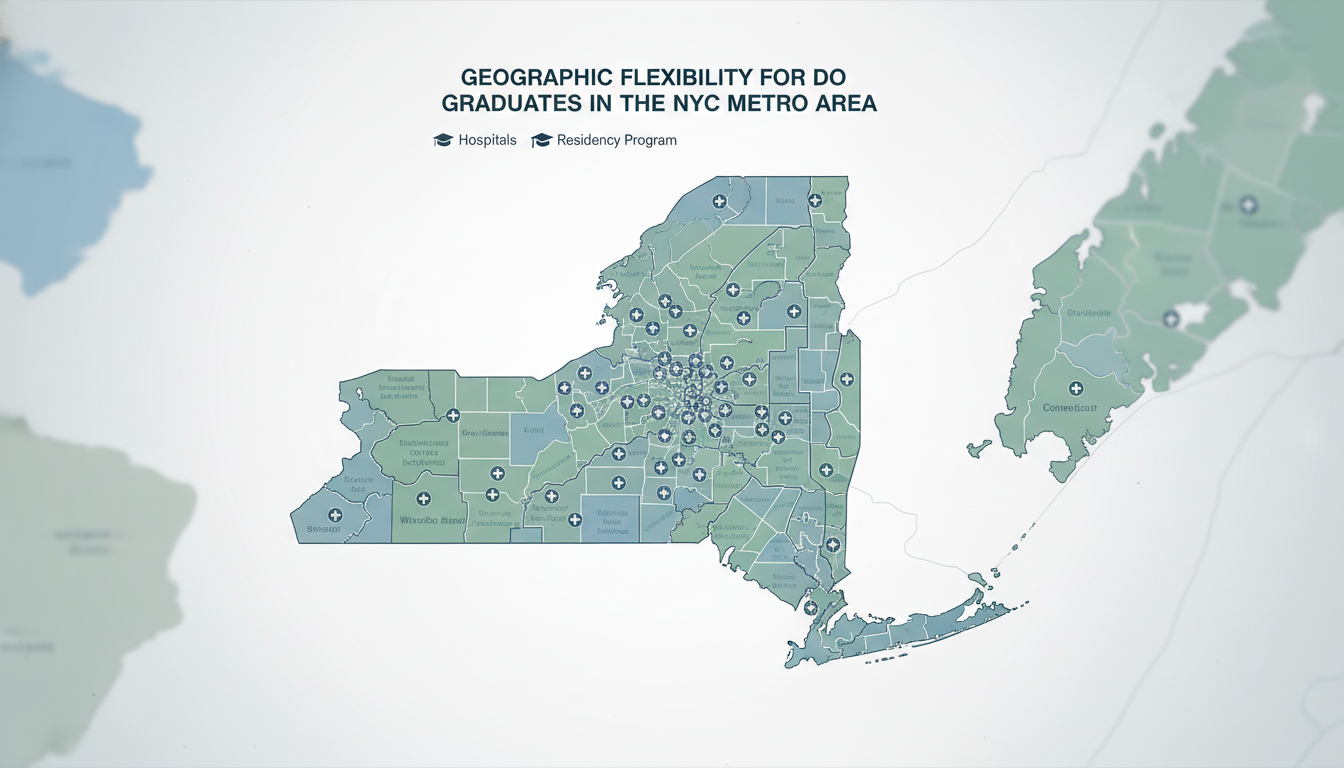
Mapping NYC and “Greater NYC” Options for DO Graduates
NYC is not a single residency market; it’s a cluster of overlapping sub-markets. Understanding these helps you widen your net intelligently while staying true to your NYC goal.
1. Core New York City Residency Programs
Within the five boroughs (Manhattan, Brooklyn, Queens, The Bronx, Staten Island), NYC residency programs vary widely:
- Academic flagships (e.g., large university-affiliated centers): Highly competitive, often heavy research focus.
- Community-based hospitals with academic ties: More clinically focused, may be relatively more DO-friendly, especially those with a history of osteopathic residents.
- Safety-net and public hospitals: High acuity, broad clinical exposure, strong training but often intense workload.
A DO graduate residency applicant should research:
- DO representation in current/past residents (websites, social media, program presentations)
- Program’s explicit history with DO graduates (ask at open houses, virtual sessions)
- Clinical volume, patient mix, and educational support
In your ERAS and interview conversations, you’ll want to highlight why New York City residency specifically appeals to your training goals, not just lifestyle.
2. “Commutable NYC”: Long Island, Westchester, New Jersey, Southern Connecticut
Geographic flexibility often starts with expanding to areas that are realistically commutable to the city, especially if family or partner constraints keep you tied to NYC.
Examples:
- Long Island (Nassau/Suffolk): Several community and university-affiliated hospitals; some with strong primary care and IM programs that historically welcome DOs.
- Westchester and Hudson Valley: Suburban yet close enough to the city; occasionally more DO-friendly; easier parking and lower cost of living.
- Northern New Jersey: Many residents commute into NYC on days off; NJ residency programs can provide similar pathology and diverse patient populations with slightly less competition at some sites.
- Southern Connecticut (e.g., New Haven, Stamford): May offer strong academic and community programs within a reasonable travel distance to New York City.
From a geographic preference residency standpoint, these areas:
- Preserve your connection to NYC
- Expand your pool of program options
- May be more accessible for DO graduates than the most oversubscribed central Manhattan programs
3. Broader Regional Flexibility: The Northeast Corridor and Beyond
If your priority is to practice or eventually return to NYC, you don’t necessarily need to train there. Strong training in nearby regions can position you well for fellowship or attending jobs in NYC later.
Consider:
- Upstate New York (e.g., Rochester, Syracuse, Albany, Buffalo): Often strong community and academic programs; sometimes lower competition than NYC itself.
- Philadelphia and Eastern Pennsylvania: Major academic centers plus community hospitals; relatively easy transportation back to NYC.
- Boston and New England: Highly competitive in some specialties but still worth considering for strong DO applicants.
- Mid-Atlantic (Delaware, Maryland, DC, Virginia) and regional hubs (e.g., Chicago, Atlanta): May be acceptable if your long-term goal is the Northeast and you’re flexible on short-term location.
This is where location flexibility match thinking becomes crucial—you trade short-term geography for long-term career goals and match security.
Building a Geographic Strategy as a DO Applicant Focused on NYC
You need a deliberate regional preference strategy that fits your competitiveness and personal needs.

Step 1: Assess Your Competitiveness Honestly
Your strategy changes significantly depending on your profile:
Highly competitive DO applicant
- Strong COMLEX and USMLE (if taken) scores
- Honors/high performance in core rotations
- Strong letters from recognizable academic faculty
- Research and leadership experience
Moderately competitive DO applicant
- Solid but not stellar scores
- Good clinical evaluations
- Some research, leadership, or unique experiences
At-risk DO applicant
- One or more red flags (failed exam, LOA)
- Lower scores or weaker letters
- Limited research or unique experiences
The more competitive you are, the more you can concentrate your geographic target on NYC and near-NYC programs. The more at-risk, the more location flexibility match becomes a survival strategy.
Step 2: Tier Your Geographic Targets
A practical way to structure your list:
Tier A: NYC proper (dream and reach)
- Academic and community programs within the five boroughs
- Mixture of reasonable and ambitious choices
Tier B: Commutable greater NYC
- Long Island, Westchester, Northern New Jersey, Southern Connecticut
- Focus on programs with known DO representation
Tier C: Broader Northeast and preferred regions
- Upstate New York, Pennsylvania, New England, Mid-Atlantic
- Programs aligned with your specialty and career goals
Tier D: Safety-net regions where you’d still be willing to live
- Areas outside your first-choice region but acceptable if needed
- Good training, potentially less competition
As a DO graduate residency applicant with a strong NYC preference, you might distribute applications like:
- Competitive DO: ~30–40% NYC, 30–40% commutable/nearby, 20–30% broader regions
- Moderate DO: ~20–30% NYC, 30–40% commutable/nearby, 30–40% broader regions
- At-risk DO: ~10–20% NYC, 20–30% commutable/nearby, 50–60% broader regions (or more)
Adjust numbers by specialty (e.g., family medicine vs. dermatology).
Step 3: Underlying Specialty-Specific Realities
Geographic flexibility matters more for certain specialties:
- Primary care (FM, IM, pediatrics): More positions nationally; you can be modestly selective geographically but shouldn’t rely on NYC alone.
- Competitive specialties (derm, ortho, plastics, ENT, ophtho, neurosurgery): If NYC is nonnegotiable, you risk not matching at all; most DOs need a national search.
- Moderately competitive specialties (EM, anesthesia, radiology, psych, OB/GYN): A DO graduate seeking a New York City residency in these must be particularly thoughtful. Include NYC, but build serious regional depth.
Perform a specialty-specific analysis using NRMP data, program websites, and DO-focused advising resources.
Step 4: Communicating Geographic Preference Strategically
Even though ERAS no longer uses the formal geographic signaling system used in some pilot projects, the concept still matters. You can show regional preference indirectly:
Personal statement:
- Reference connections to NYC or the region (family, prior living, clinical rotations).
- Explain why the New York City residency environment fits your goals (e.g., high volume, underserved communities).
Supplemental essays or program-specific questions (if requested):
- State clearly: “I have strong ties to New York City and am planning my career in this region, but I am also open to training in the broader Northeast.”
Interviews:
- When asked, “Where else are you applying?” or “How important is location?” be honest and balanced.
- Emphasize: “NYC is my long-term home base, but I value excellent training and am flexible in the short term.”
Avoid sounding desperate (“I’ll go anywhere, please”) or rigid (“NYC or nothing”). Programs want to see both commitment and realism.
Practical Tactics to Strengthen an NYC-Focused, Flexible Strategy
Beyond theory, here are concrete action steps you can take.
1. Leverage Clinical Rotations and Away Electives
To improve your odds at NYC residency programs:
- Schedule audition rotations or sub-internships in NYC or nearby hospitals.
- During rotations:
- Build relationships with attendings and residents.
- Ask directly about DO-friendliness and program culture.
- Seek strong letters of recommendation.
If you cannot secure NYC rotations, aim for reputable regional institutions in the Northeast to show your comfort with the broader area.
2. Tailor Applications to Highlight NYC-Relevant Strengths
Frame your experiences for a New York City context:
- Work with diverse or underserved populations
- Multilingual abilities or cross-cultural communication
- Urban public health, community outreach, or advocacy
- Interest in systems-based practice in complex healthcare systems
Highlight these across your CV, personal statement, and interviews.
3. Research DO-Friendly Programs in and Around NYC
For each program on your list, ask:
- Do they currently have DO residents?
- Do they list DO graduates on their alumni pages?
- Have they participated in DO-focused recruitment events or visited osteopathic schools?
Especially in NYC and its surrounding areas, prioritize programs with a clear track record of osteopathic residency match success.
4. Plan for Rank List Strategy with Geography in Mind
When ranking:
- Place programs in order of genuine preference, not perceived chances—NRMP matching algorithm favors the applicant’s true ranking.
- Cluster your list so that:
- Your top section may be NYC internships and residencies.
- Middle section includes commutable and broader regional programs you genuinely like.
- Lower section includes less preferred but still acceptable locations.
Do not omit safety options purely because of location if matching is your top priority. For a DO graduate, geographic flexibility at the ranking stage is often what prevents an unnecessary SOAP scramble.
5. Prepare for the Emotional Side of Geographic Flexibility
It’s normal to feel torn between wanting to be in NYC and wanting to match securely. Some practical advice:
- Talk to mentors who trained outside their desired city and later returned—this is very common.
- Visualize how 3–4 years in another region might still align with your long-term goal of practicing in NYC.
- If family is a major factor, involve them in conversations about realistic commuting and relocation.
Long-Term Perspective: Training Elsewhere, Returning to NYC
Even with a strong geographic preference residency plan, you may ultimately match outside New York City. This is not a failure; it’s a different path to the same destination.
To maintain a connection to NYC for the future:
- Attend regional and national conferences where NYC institutions are well-represented.
- Seek electives, visiting rotations, or away rotations in NYC during residency (where allowed).
- Network with faculty who have ties to New York City residency programs or health systems.
- If interested in fellowship, target programs in NYC or the Northeast during your PGY2–PGY3 years.
Many attending physicians in NYC trained elsewhere for residency and returned later with stronger credentials, broader perspectives, and competitive fellowship backgrounds. Long-term, your initial match location is one piece—not the entirety—of your New York–focused career.
FAQs: Geographic Flexibility for DO Graduates Targeting NYC
1. As a DO graduate, is it realistic to limit my applications only to NYC?
Usually not. Even very strong applicants take on risk by applying exclusively to NYC. The osteopathic residency match is fully integrated with MD applicants now, and New York City programs are saturated. Unless you’re exceptionally competitive and in a less-competitive specialty, you should include commutable and regional programs in your list.
2. Will applying broadly outside NYC make programs think I’m not serious about New York City?
No. Most programs assume applicants apply widely. You signal NYC interest through your personal statement, connections, and interviews—not by excluding other locations. A thoughtful regional preference strategy allows you to show genuine NYC interest while staying realistic.
3. How many NYC and nearby programs should I apply to as a DO applicant?
It depends on specialty and your competitiveness, but as a rough frame:
- For core specialties (IM, FM, peds, psych, EM, OB/GYN), many DO applicants apply to at least 40–60 programs total.
- Within that, 10–20 might be NYC proper, with additional 10–20 in Long Island, New Jersey, Westchester, and nearby states.
- Adjust upward or downward based on your academic standing and any red flags.
4. If I match outside NYC, how hard is it to come back for fellowship or practice?
It’s very possible. Your chances of returning depend more on the quality of your residency training, your performance, and your networking than on your PGY1 ZIP code. Many physicians in New York City trained outside the region and successfully returned for fellowship or attending positions. Use your residency years to build a strong CV and maintain connections to NYC through conferences, mentors, and elective opportunities.
By approaching your New York City residency ambitions with clear priorities, honest self-assessment, and smart geographic flexibility, you can protect your match chances while still keeping NYC central to your long-term identity and goals as a DO physician.