Choosing where you train is one of the most consequential decisions you’ll make as a DO graduate. For applicants who love the Mountain West but also want to keep doors open elsewhere, geographic flexibility becomes a powerful strategy rather than a compromise. This article will walk you step-by-step through how to think about geographic preference, design a flexible application plan, and still position yourself strongly for the osteopathic residency match.
Understanding Geographic Flexibility as a DO in the Mountain West
Geographic flexibility means you have priorities, not rigid ultimatums, about where you match. Instead of “Colorado or bust,” you think in tiers:
- Tier 1: Ideal locations (e.g., specific Mountain West states, such as Colorado, Utah, or Wyoming)
- Tier 2: Acceptable secondary regions (e.g., nearby Western states or areas with similar lifestyle)
- Tier 3: Locations you’d consider if the program fit is excellent (e.g., select urban programs further afield)
For a DO graduate with ties to the Mountain West, the key is balancing your regional preference strategy with realistic odds in today’s competitive environment.
Why this matters more for DO graduates
Even in the unified ACGME system, DOs still face certain realities:
- Some regions (including parts of the Mountain West) have fewer total residency positions than coastal or Midwestern hubs.
- Historically, MD-heavy academic centers may still have implicit bias or less familiarity with osteopathic training, although this is improving.
- Certain specialty and location combinations (e.g., competitive specialty + highly desirable city) may be particularly challenging for DOs.
For DO applicants seeking a Mountain West residency, geographic flexibility:
- Increases your match probability by widening your net.
- Protects your long-term goals (e.g., eventually practicing in Colorado) by making sure you match somewhere solid now.
- Gives you leverage later—a strong residency in another region can still lead to fellowship or practice jobs back in the Mountain West.
Mapping Your Geographic Priorities: A Structured Approach
Before you write your personal statement or make your program list, you need a clear, honest map of your preferences. This is especially important if you’re aiming for a Colorado residency or another specific Mountain West state but are open to other places.
Step 1: Define your non‑negotiables
Ask yourself:
- Do you absolutely need to be within X hours of family or a partner?
- Are you limited by licensure rules (e.g., military commitments, visa issues)?
- Are there climate or health factors (e.g., asthma at high altitude) that truly limit your options?
- Are there obligations like loan repayment programs tied to certain regions?
Write down only those factors that are truly non‑negotiable, not just “strong preferences.” For many DO graduates, nothing on this list is truly immovable, but it’s worth checking.
Step 2: Create your preference tiers by region
Given a Mountain West focus, an example three‑tier system might look like:
Tier 1: Ideal Regions
- Mountain West: Colorado, Utah, Montana, Idaho, Wyoming, Nevada, New Mexico
- Specific cities or settings you love (e.g., Denver, Salt Lake City, Bozeman, rural Wyoming)
Tier 2: Secondary Regions
- Nearby Western states: Arizona, Oregon, Washington
- Regions with similar lifestyle/outdoor culture (e.g., Pacific Northwest, certain Rocky Mountain-adjacent parts of the Midwest)
Tier 3: Strategic Options
- Metro areas with large numbers of residency spots and DO-friendly programs (e.g., Midwest hubs, parts of the South)
- Areas with strong training reputations, especially if they’re DO-friendly and known for accepting applicants from the Mountain West
You can adjust these tiers according to your goals, but formalizing them helps align your ERAS application strategy with your real-world limits.
Step 3: Align specialties with geography
Some specialties are highly concentrated in certain regions (e.g., academic subspecialties in big East/West Coast centers), while community-based specialties like family medicine or internal medicine are more distributed.
For example:
- A DO student applying family medicine or internal medicine can reasonably expect to find Mountain West residency options and still be geographically flexible.
- A DO student applying dermatology, orthopedic surgery, or ENT may need to be notably more flexible and consider national rather than regional targeting, even if they hope to return to the Mountain West later.
Be realistic: the more competitive your specialty, the more location flexibility is often required to maintain your match chances.

Researching Programs: Mountain West First, Nation Second
If your heart is in the Mountain West, you should absolutely lead with this region in your research—but not limit yourself to it.
Start with Mountain West–focused research
Target the following for your primary region:
State and Regional Societies
- Colorado, Utah, and other Mountain West state osteopathic and allopathic societies often maintain lists of training sites.
- Many host conferences where program directors (PDs) from mountain west residency programs attend.
Residency Explorer, FREIDA, and Program Websites
- Filter for states within the Mountain West.
- Identify:
- Programs with prior DO graduates or current DO residents.
- Programs with explicit osteopathic recognition or mention DO-friendly policies.
- Community-based or smaller academic centers, which can be more accessible to DOs.
Alumni Networks from Your DO School
- Ask your school’s GME office or alumni office for a list of graduates in:
- Colorado residency programs
- Other Mountain West training sites
- These alumni are invaluable sources on:
- Program culture
- How DOs are perceived
- Local lifestyle realities (cost of living, commute, call schedules)
- Ask your school’s GME office or alumni office for a list of graduates in:
Rural vs Urban Mountain West Options
- Many Mountain West states have rural-focused or community tracks.
- These may be more DO-friendly and may prioritize applicants with ties to the region.
- If rural practice is even a remote consideration for you, these programs can be powerful stepping stones.
Then expand outward strategically
Once you have your Mountain West list, layer in programs from your Tier 2 and Tier 3 regions using similar methods. Filter for:
- Programs that already have multiple DO residents or leadership with a DO background.
- Places with a track record of matching DOs into fellowships or competitive jobs.
- Geographically flexible regions that still offer:
- Outdoor access
- Reasonable cost of living
- Supportive training environment
This dual approach lets you honor your regional preference while still being realistic.
Crafting Your Application: Balancing Geographic Preference and Flexibility
The biggest mistake applicants make is turning a preference into a perceived ultimatum. You want programs to understand your interest in the Mountain West and Colorado residency options, but not conclude you’re unwilling to train elsewhere.
Addressing geography in your personal statement
You can integrate your geographic preferences without closing doors. For a DO graduate with Mountain West roots, consider language like:
- “I am particularly drawn to the Mountain West, where I grew up hiking and skiing and where my family still lives. At the same time, I am open to training in any region that offers strong clinical exposure and supportive mentorship.”
- “My long-term goal is to practice in the Mountain West, ideally in a community similar to the one where I was raised. I recognize that I may train in another region first to gain the best possible experience before returning to this area.”
Key principles:
- Avoid absolutes (“I will only consider programs in Colorado”).
- Emphasize values and community more than specific cities.
- Frame geography as an important factor but not a dealbreaker.
Geographic preference in ERAS and signaling
With geographic preference tools (used in some specialties) and supplemental applications:
- Use signals or geographic questions to highlight genuine ties:
- Grew up in the Mountain West
- Undergraduate or medical school in the region
- Close family in Colorado or neighboring states
- Avoid “over-claiming” ties to multiple distant regions; be honest and consistent.
If asked to list geographic preferences, you can:
- Place the Mountain West as your top region.
- Still check “open to other regions” or similar options if available.
- In free-text boxes, explain that you value the Mountain West but recognize training quality as your highest priority.
Letters of recommendation and geography
You can sometimes leverage letters to subtly convey your regional fit:
- A letter from a preceptor in Colorado or another Mountain West state can credibly say:
- “The applicant has a strong commitment to serving communities in the Mountain West, and I believe they will be an asset to programs in this region.”
- At the same time, request letters from non–Mountain West clinicians if you are applying widely, to avoid over-signaling that you are “locked” into just one area.
Interview Season: Communicating Preference Without Limiting Yourself
Interviews are where geographic preferences can be clarified or misinterpreted. Your goal is to show programs that you would happily train there, even if it’s not your top geographic choice.
How to talk about your Mountain West ties
Expect questions like:
- “What brings you to our region?”
- “Do you have any geographic preferences?”
- “Where do you see yourself practicing long-term?”
For a DO graduate with Mountain West aspirations, effective responses may include:
- “Long-term, I’d love to practice in the Mountain West, where my family is. But my immediate priority is the best possible residency training. If I match at a strong program like yours, I would be very happy to train here and then consider returning later.”
- “The Mountain West is important to me personally, but professionally, I’m looking for high patient volume, good mentorship, and a supportive program. I see those elements here, which is why I’m seriously interested.”
This language:
- Affirms genuine interest in their program and region.
- Shows location flexibility while acknowledging your roots.
- Avoids sounding like you’re “using” the program as a back-up.
What if a program outside the Mountain West presses you?
If asked directly, “If you had to choose, would you prefer to match closer to home?” you can answer honestly without damaging your candidacy:
- “My family is in the Mountain West, so of course that’s meaningful to me. That said, I care most about fit and training quality. If I felt this program was the best match, I would rank it very highly, regardless of distance.”
Program directors care most about:
- Will you come if we rank you?
- Will you be happy and successful here?
Geographic honesty + a clear statement of program interest addresses both concerns.
Building a Rank List That Protects Your Goals and Your Match Chances
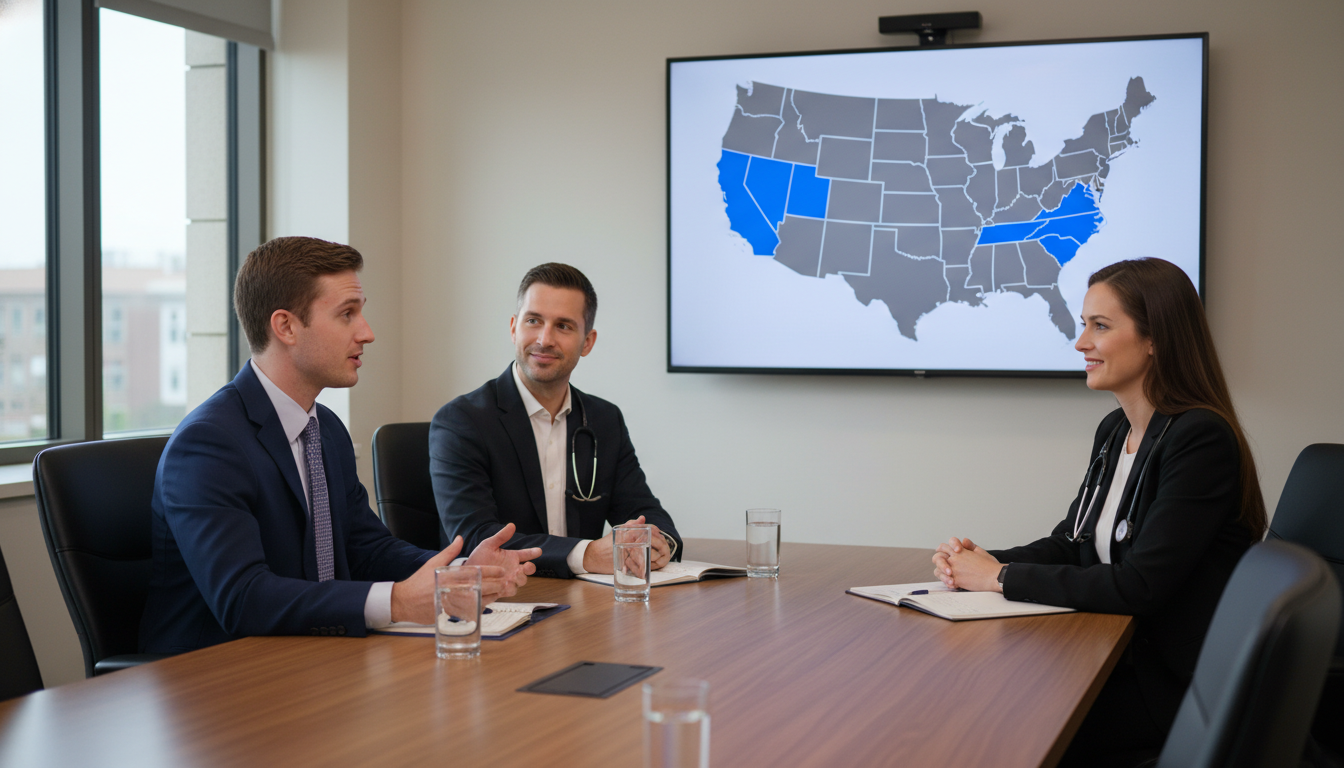
When it comes time to rank programs, your geographic preference residency strategy needs to be anchored by one principle: never sacrifice matching for a perfect location—especially as a DO applicant in a competitive environment.
How many programs should you rank?
The answer depends on specialty and competitiveness, but common patterns:
- Primary care (FM, IM, peds): Many DO applicants aim to rank 12–15+ programs, more for weaker applications.
- Moderately competitive specialties: Often 15–20+, depending on interview yield.
- Highly competitive specialties: Strategy becomes even more individualized, often involving backup specialty plans.
As a DO graduate, err slightly on the higher side of recommended ranges, especially if you’re aiming for a popular region like Colorado.
Structuring your rank list geographically
One practical approach:
- Top of the list: Your most desired Mountain West programs (or Colorado residency options), ranked purely on fit and training quality.
- Next tier: Strong programs in secondary regions where you’d be comfortable living and training.
- Final tier: Programs in other regions where you may not have initially imagined yourself but where training is solid and you could realistically be content.
You should not:
- Drop a program significantly lower solely because it’s outside the Mountain West if it’s otherwise an excellent fit.
- Rank a weak or poorly fitting Mountain West program above a strong, supportive program in another region just because of location.
This is where geographic flexibility protects you: you can stay true to your regional priority while also hedging against the risk of not matching.
Considering couples match and family factors
If you are couples matching or have a partner/family with their own geographic constraints:
- Map out overlapping regions where both of you have at least moderate interest.
- Use your rank list(s) to reward overlap but maintain a few safety combinations in less ideal locations where both can still be reasonably happy.
In these cases, being rigidly Mountain West–only can dramatically inflate risk. A more flexible attitude—“We’d love to be in the Mountain West, but we’ll go where both of our careers can succeed”—tends to yield better outcomes.
Long-Term View: Getting Back to the Mountain West If You Train Elsewhere
Many DO graduates worry that if they don’t match in the Mountain West, they’re giving up their dream of returning. That is rarely true.
How to maintain Mountain West connections during residency elsewhere
While training outside the region, you can:
- Attend regional or national conferences where Mountain West programs and employers recruit.
- Seek electives or away rotations back in the Mountain West during residency (especially in your final year).
- Maintain professional ties with:
- Faculty at your DO school with Mountain West links.
- Alumni from your program who now practice in Colorado or other Mountain West states.
- Join relevant state medical societies where you hope to practice after residency (many allow out-of-state resident memberships).
Using fellowship or job applications to return
If you train in a different region, you can still return for:
- Fellowship: Many Mountain West academic centers recruit fellows nationally. A strong residency performance anywhere can make you competitive for a Mountain West fellowship.
- First job: Mountain West health systems often struggle to recruit for certain areas or specialties. A DO-trained physician with solid references and genuine ties can be very attractive, even if you never trained in the region.
In other words, don’t treat residency as your only chance to live in the Mountain West. Instead, see it as one step in a multi-stage career that may still bring you back to Colorado or neighboring states.
FAQs: Geographic Flexibility for DO Graduates in the Mountain West
1. As a DO graduate, is it realistic to focus on a Colorado residency?
It can be realistic, but you need to recognize that Colorado is highly desirable and has a relatively limited number of total spots compared with some larger states. Many programs are competitive and attract national applicants. If you are aiming for a Colorado residency:
- Strongly emphasize ties to the region (family, prior education, long-term goals).
- Apply broadly within the Mountain West (not just Colorado).
- Maintain national geographic flexibility so you still match if Colorado options don’t work out.
2. Will stating a strong Mountain West preference hurt my chances elsewhere?
Not if you do it thoughtfully. If your personal statement or interviews say:
- “I will only be happy in the Mountain West,”
some programs may view you as a relocation risk.
But if you say:
- “I have strong ties to the Mountain West, but I’m primarily looking for excellent training and fit, and I’m open to programs in any region that offer that,”
most programs will accept this as normal and not hold it against you. The key is emphasizing training quality and program fit as your top priorities.
3. How can I show regional interest without looking geographically rigid?
Use “both/and” language rather than “either/or”:
- “I’m particularly drawn to the Mountain West because of family and lifestyle, and I’m also open to training elsewhere if the program is a strong fit.”
- On applications with regional preference options, you can select a primary region (Mountain West) but also check boxes that you’re open to other geographic areas.
Back this up by applying and interviewing across multiple regions—even while highlighting Mountain West ties where appropriate.
4. If I don’t match in the Mountain West, is it still possible to eventually practice there?
Yes. Many physicians train elsewhere and later return to the Mountain West for fellowship or their first job. To keep that door open:
- Stay connected to Mountain West mentors and networks.
- Attend relevant conferences and join state medical societies in target states like Colorado.
- Consider fellowship or rural/underserved practice opportunities in the Mountain West after residency.
Your residency location matters, but it does not permanently lock you out of any future region, including the Mountain West.
By approaching geography as a spectrum of preferences rather than all-or-nothing demands, you can prioritize the Mountain West, protect your match chances, and still set yourself up to build a career—and life—that fit your values as a DO graduate.