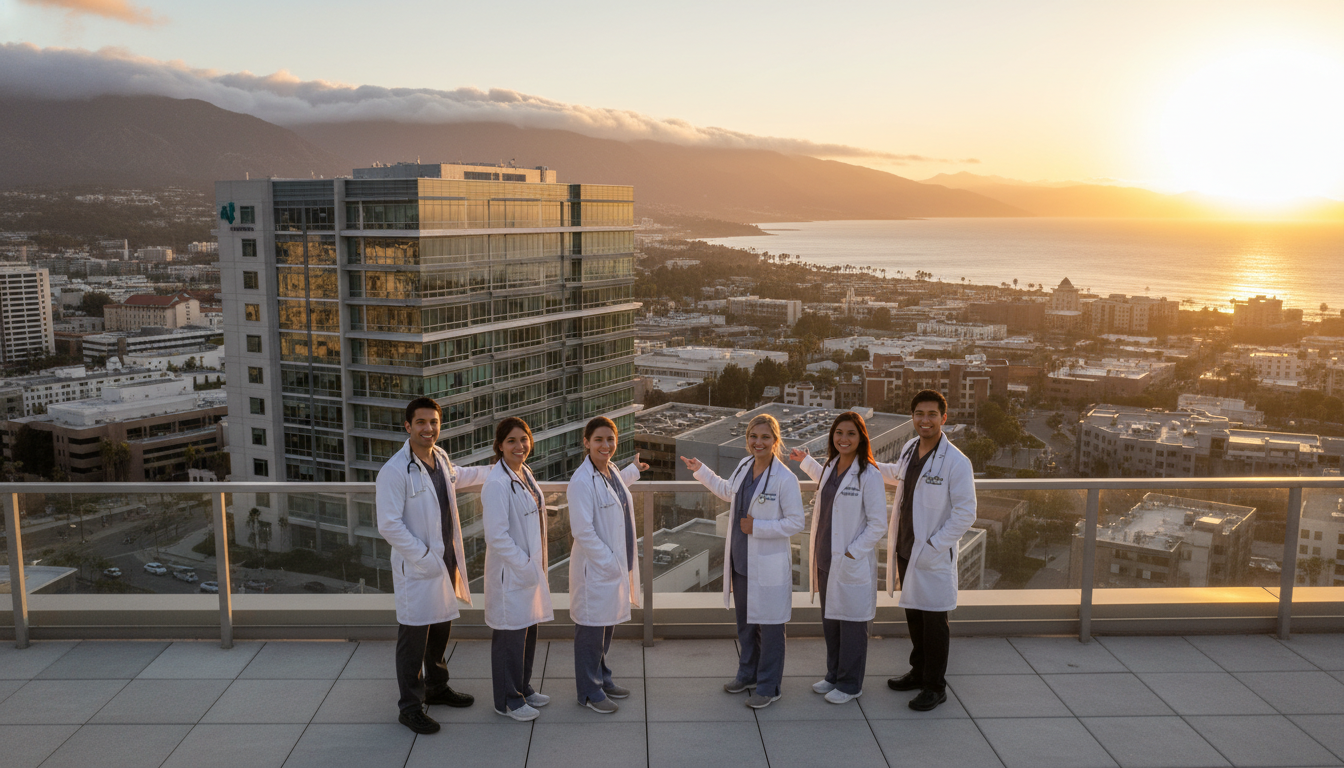
Understanding Geographic Flexibility as a DO Graduate in the Bay Area
For a DO graduate in the San Francisco Bay Area, geographic flexibility is more than a buzzword—it’s a strategic tool that can make the difference between matching and going unmatched, between thriving in residency and constantly struggling with cost of living, commute, or family constraints.
In the current residency landscape, especially for osteopathic applicants, how you think about geographic preference residency and location flexibility match strategies directly shapes your options. This is particularly true if you’re aiming for a San Francisco residency or other Bay Area residency programs, which are among the most competitive urban training environments in the country.
This article will help you:
- Understand what “geographic flexibility” really means for a DO graduate
- Weigh the pros and cons of staying in the San Francisco Bay Area
- Build a realistic regional preference strategy that balances your goals and competitiveness
- Use ERAS, supplemental applications, and signaling tools wisely
- Make practical, financially sound decisions about where to apply and how broadly to stretch your radius
Why Geographic Flexibility Matters So Much for DO Graduates
Geographic flexibility is your willingness to train outside your initial target area—for example, considering programs beyond San Francisco and the core Bay Area—to increase your odds of a successful osteopathic residency match.
The DO-Specific Context
As a DO graduate, your experience in the match is influenced by:
- Program culture and historical acceptance of DO applicants
- Perceived competitiveness of DO vs MD within specific specialties and regions
- Availability of DO-friendly faculty, alumni, or mentors
- Your own board exam profile (COMLEX only vs COMLEX + USMLE)
In highly desirable locations—like the Bay Area—some programs still lean heavily MD, and many receive far more applications than they can reasonably review, making each DO application face even steeper competition.
Key implications for DO graduates:
- Relying only on Bay Area or California programs dramatically raises your risk of going unmatched, especially in competitive specialties (derm, ortho, ENT, urology, EM in some regions, etc.).
- Slightly expanding your geographic radius (e.g., Northern California inland, Central Valley, or nearby states) often multiplies the number of realistic programs for you.
- Programs in less saturated markets may be more open and enthusiastic about DO applicants and may provide better hands-on training.
How Geography Intersects with Competitiveness
Your geographic flexibility should be calibrated to your competitiveness. Consider:
Academic profile
- Strong: High board scores, honors in core rotations, strong letters, research.
- Average: Mid-range scores, solid but not standout clinical performance.
- At-risk: Below-average scores, exam failures, weaker clinical evaluations, limited letters.
Specialty competitiveness
- Highly competitive: Dermatology, plastic surgery, orthopedic surgery, ENT, neurosurgery, ophthalmology, some radiology/EM markets.
- Moderately competitive: Anesthesiology, OB/GYN, general surgery, emergency medicine (variable), radiology, some internal medicine programs.
- Less competitive (relatively): Family medicine, psychiatry (though tightening), internal medicine at community programs, pediatrics (varies by region).
Location competitiveness
- “Destination” areas like San Francisco, Los Angeles, San Diego, New York City, Boston, Seattle are in consistently high demand.
- Many applicants prioritize lifestyle, coastal areas, and large academic centers.
If your profile is average or at-risk and you’re applying to a competitive specialty AND a highly desirable geography (Bay Area), you’re stacking three layers of difficulty. In that scenario, geographic flexibility is not optional; it’s a central survival strategy.
Staying in the Bay Area: Benefits, Tradeoffs, and Realistic Expectations
The San Francisco Bay Area is attractive for personal, professional, and cultural reasons, especially if you already live here as a DO graduate:
- Family and social support systems
- Spouses/partners with local jobs
- Access to prestigious academic and tech ecosystems
- Diversity in patient populations and pathology
- Mild climate and lifestyle amenities
But every benefit comes with tradeoffs.
Pros of a Bay Area Residency as a DO Graduate
Robust Clinical Exposure at Large Centers
Many Bay Area training institutions offer:- Tertiary/quaternary care exposure
- Strong subspecialty services
- Complex patient populations (oncology, transplant, advanced cardiology, high-risk OB)
Networking and Career Trajectory
- Closer ties to West Coast academic and community networks
- Access to local conferences, research collaboratives, and innovation hubs
- Potential advantages for staying in California post-residency
Personal Stability
- Reduced relocation stress
- Continuity of community, childcare arrangements, and spousal employment
- Familiarity with housing, transportation, and local systems
Cons and Risks of Limiting Yourself to the Bay Area
Extremely High Competition for Spots
Many programs in or near San Francisco receive:- Thousands of applications for a limited number of positions
- Large numbers of highly competitive MD applicants from top-tier schools
- International medical graduates (IMGs) with strong research portfolios
As a DO graduate, even with strong credentials, you may be at a relative disadvantage if programs have historically taken few or no DOs.
Cost of Living and Financial Stress
- High rent or mortgage costs
- Long commutes if you live in more affordable suburbs
- Increased financial pressure during a relatively low-earning phase (residency)
Fewer “Backup” Program Types
The immediate Bay Area has fewer smaller community hospitals compared to some regions of the country. In many locations, DO graduates often find more open doors at:- Regional community hospitals
- Smaller academic-community hybrids
- Rural or semi-rural training sites
Geography vs. Training Quality: A Critical Reframe
One of the most important mindset shifts:
“A slightly less glamorous location with excellent training is almost always better than a glamorous location with limited training opportunities or a much higher risk of going unmatched.”
Your osteopathic residency match outcome will shape the rest of your career far more than your zip code during 3–7 years of training.

Building a Regional Preference Strategy Around the Bay Area
Geographic flexibility does not mean giving up on the Bay Area. It means positioning the Bay Area within a broader, strategically chosen set of regions.
Step 1: Clarify Your Anchor Points
Anchor points are locations that strongly influence where you must or prefer to be:
- Family responsibilities (elderly parents, children in school, spouse’s career)
- Immigration or visa constraints
- Medical conditions requiring specific care centers
- Long-term personal or cultural ties
For a DO graduate already in the Bay Area, San Francisco might be:
- A primary anchor (non-negotiable)
- A strong preference (desirable but flexible)
- A nice-to-have (you’d like to stay but could leave for training and return later)
Be honest with yourself. Label your Bay Area preference accordingly; your strategy hinges on this.
Step 2: Define Your “Geographic Tiers”
Develop a tiered geographic framework for your application list:
Tier 1: Core Bay Area
- San Francisco, Oakland, San Jose, Peninsula, and immediate surroundings
- Highly desirable and competitive
Tier 2: Greater Northern/Central California
- Sacramento region, Central Valley (e.g., Modesto, Stockton, Fresno), North Bay, Monterey/Salinas
- Still in-state, potentially closer drives or short flights to SF
- Often more DO-friendly, with strong community-based training
Tier 3: Broader West Coast / Nearby States
- Oregon, Washington, Nevada, Arizona, Utah, Colorado
- Similar time zones; easier travel back to SF for family visits
- Mix of academic and community programs, including some with strong DO representation
Tier 4: National Flexibility (if willing)
- Other regions of the U.S.: Midwest, South, East Coast
- Bigger pool of community and mid-tier academic programs
- Often where DO graduates significantly expand their chances of matching
Your regional preference strategy might include programs from all four tiers, with varying numbers based on your competitiveness and personal constraints.
Step 3: Map Competitiveness to Geographic Flexibility
Adjust how flexible you must be based on your profile:
If you’re highly competitive (strong scores, honors, solid research)
- You can target more Bay Area and Tier 1/2 programs, but should still include Tier 3 as a safety net, especially in competitive specialties.
- You might keep Tier 4 smaller but not zero, depending on risk tolerance.
If you’re average
- Bay Area should be part of your list, but not the majority.
- Robust representation from Tier 2 and Tier 3 is essential.
- Include a meaningful Tier 4 list if your specialty is competitive.
If you’re at-risk or in a highly competitive specialty
- Tier 1 (Bay Area) can be included, but you must not rely on it.
- Tier 2/3/4 should dominate your list.
- Consider adding less competitive specialties or dual-apply strategies, especially if your priority is to match somewhere.
Step 4: Translate to Actual Numbers
For many DO graduates applying in a moderately competitive specialty, an example distribution might look like:
- Total programs applied: 60–80 (or more, depending on specialty and advice from mentors)
- Tier 1 (Bay Area): ~10–15%
- Tier 2: ~25–30%
- Tier 3: ~30–35%
- Tier 4: ~20–30%
This is just a framework. Tailor it using real data:
- Check program websites for DO-friendly language and prior DO residents
- Ask upper-level DO residents where they matched
- Use NRMP’s Charting Outcomes and specialty-specific guidance
Using ERAS and Supplemental Tools to Communicate Location Preferences
Modern residency applications offer some ways to indicate geographic preference residency while maintaining flexibility.
Geographic Signaling vs Geographic Rigidity
Some specialties use supplemental ERAS applications where you can:
- Signal geographic preference (e.g., West Coast, Pacific region)
- Identify “most interested” programs
- Sometimes note willingness to train in rural vs urban settings
For a DO graduate in the Bay Area, the goal is to:
- Convey genuine interest in the Bay Area and greater West Coast
- Avoid appearing so rigid that programs outside SF assume you won’t rank them highly
Practical Steps for ERAS and Supplemental Applications
Program List Curation
When you build your list:
- Mark which programs have taken DOs in the past 3–5 years
- Note which Bay Area and Northern California programs are clearly DO-friendly
- Tag your realistic vs reach programs across all tiers
Personal Statement and Secondary Responses
If you write location- or region-specific content:
- Emphasize ties to the Bay Area when applying to local programs (family, school history, long-term goals in California).
- For non-Bay Area programs, show authentic interest in that region (clinical opportunities, patient demographics, lifestyle that fits your needs) rather than suggesting it’s only a backup to San Francisco.
Avoid generic statements like:
“I prefer to stay in the Bay Area but would be happy anywhere.”
Instead, write nuanced, program-specific reasons:
- Discuss local patient populations, healthcare challenges, or training resources.
- Tie your interest to your long-term practice goals.
Geographic Preference Signals
If you have limited signals or geographic indications:
- Prioritize a mix of Bay Area and nearby West Coast programs where you are competitive and genuinely interested, not just the biggest-name institutions.
- Consider signaling a broader region (e.g., West Coast) rather than only “California” if forced to choose.
Interviews: Communicating Flexibility
During interviews:
For Bay Area programs:
- Emphasize your stability, local support system, and long-term interest in serving the Bay Area community.
For non-Bay Area programs:
- Avoid language that makes them feel like your second choice.
- Highlight what you specifically value about their region:
- Cost of living advantages
- Unique clinical exposure (rural medicine, specific populations)
- Opportunities your Bay Area setting doesn’t offer
A good way to phrase it:
“The Bay Area is home for me, but my priority is strong training. I’ve looked very deliberately at your program because of [X, Y, Z], and I can see myself thriving here even if it means being away from San Francisco for a few years.”

Financial, Lifestyle, and Long-Term Career Considerations
Residency is not only about training quality; it’s also about surviving—financially, emotionally, and logistically.
Cost of Living: Bay Area vs Elsewhere
Living in the Bay Area as a resident might mean:
- Higher rent: A large portion of your monthly income
- Trade-offs like roommates, longer commutes, limited savings
- Difficulty paying down student loans aggressively
Training in a lower-cost region might:
- Let you save money or at least avoid additional debt
- Provide options like buying a modest home later in residency
- Reduce financial stress that can contribute to burnout
For some DO graduates, 3–5 years outside San Francisco is a temporary financial strategy that pays off long term.
Family and Partner Considerations
Questions to work through before you draw hard geographic boundaries:
- Can your partner or spouse find meaningful work if you relocate?
- Are there family members who rely on you in the Bay Area, or could they be supported by others while you train elsewhere?
- Would temporary distance from family be acceptable if it leads to a more secure match and better training?
There’s no single right answer. But be realistic: sometimes the short-term sacrifice of leaving the Bay Area is outweighed by the long-term professional and financial benefits.
Long-Term Career Impact
Remember:
- Many physicians return to the Bay Area after training elsewhere.
- Fellowship opportunities in California are open to applicants who trained in other states, especially if they have strong clinical and academic performance.
- Local hiring often values competency and recommendations from respected programs more than whether you did residency specifically in San Francisco.
Your location flexibility match choices should be guided by where you can become the best version of yourself as a physician, not just where you live during residency.
Practical Action Plan for a DO Graduate in the Bay Area
To operationalize all of this, here’s a simple stepwise plan:
Self-Assessment with Mentors
- Meet with at least one DO faculty member and one advisor familiar with Bay Area and California programs.
- Honestly assess your scores, clinical performance, and specialty competitiveness.
Define Acceptable Geographic Boundaries
- Decide: Are you willing to leave the Bay Area but stay in California?
- Are you willing to leave California but stay on the West Coast?
- Are you open to the rest of the country if necessary?
Tier Your Regions and Programs
- Build a spreadsheet with Tier 1–4 regions.
- Include DO-friendliness, program size, and historical match data when available.
Diversify Program Types
- Mix academic, academic-community, and community-based programs.
- For DO graduates, a strong community program outside the Bay Area can sometimes provide more hands-on experience and leadership opportunity than a hyper-competitive urban academic center.
Use ERAS & Supplemental Tools Strategically
- Signal interest in a mix of Bay Area and broader West Coast programs.
- Avoid sending all signals solely to the most prestigious SF programs if your profile is not aligned with that level of competition.
Prepare a Location Narrative
- Develop a consistent way to talk about your Bay Area roots and your openness to leaving.
- Be genuine—programs can sense when applicants are simply telling them what they think they want to hear.
Revisit and Adjust Early
- During interview season, reassess:
- Are you getting enough invitations in your target region?
- Do you need to add more programs in less competitive regions if SOAP is a concern?
- During interview season, reassess:
FAQs: Geographic Flexibility for DO Graduates in the San Francisco Bay Area
1. Is it realistic to match into a Bay Area residency as a DO graduate?
Yes, but it depends heavily on your specialty, your academic profile, and specific program culture. Some Bay Area programs are DO-friendly and regularly take osteopathic graduates; others rarely or never do. Research this carefully:
- Look at current and recent residents on program websites
- Ask DO mentors or alumni where Bay Area DOs have matched
- Recognize that even DO-friendly Bay Area programs are still highly competitive due to location desirability
For many DO graduates, it’s realistic to include Bay Area programs, but risky to rely solely on them.
2. How much should I prioritize geographic preference vs program quality?
Program quality and fit should be your primary priorities. A strong residency in a less desirable location often sets you up better for long-term success than a marginal training experience in San Francisco. That said, your geographic preference matters for:
- Personal well-being and support systems
- Financial feasibility
- Family and partner needs
The key is to find a balanced strategy: favor programs that provide good training while remaining open enough geographically that you’re likely to match.
3. If I leave the Bay Area for residency, will it be harder to come back later?
Not necessarily. Many physicians complete residency and even fellowship in other states and then return to California, including the Bay Area. Your ability to come back depends more on:
- Your training quality and reputation of your program
- Your performance, letters of recommendation, and any subspecialty training
- Networking through conferences, research collaborations, and alumni connections
You can actively maintain Bay Area ties by attending regional conferences, staying in touch with mentors at your DO school or local physicians, and seeking away rotations or fellowships in California if possible.
4. How do I show programs I’m serious about them if they’re outside my home region?
Be specific, not generic, in your application materials and interviews:
- Reference particular features of the program: curriculum, patient population, unique rotations, or educational philosophy.
- Show real interest in the community: cost of living benefits, outdoor activities, cultural fit, or clinical needs of local populations.
- Avoid language that suggests they’re your backup to San Francisco. Instead, frame your interest as one of several regions where you could see yourself thriving.
Programs are more likely to rank you highly when they believe you genuinely want to train there, not just if your top Bay Area options fall through.
By approaching your geographic flexibility thoughtfully—as a DO graduate rooted in the San Francisco Bay Area—you give yourself a stronger, more resilient strategy for the osteopathic residency match. With a clear regional preference strategy, honest self-assessment, and careful use of ERAS tools, you can both honor your ties to the Bay Area and protect your ultimate goal: matching into a residency where you’ll become the best physician you can be.