
Osteopathic graduates in the Tri-State area occupy a uniquely advantageous—but sometimes confusing—position when it comes to residency geography. You’re training in or near one of the country’s most competitive and densely populated regions, with hundreds of programs across specialties—but you’re also facing intense competition, high cost of living, and complex family and personal factors.
This guide walks you through how to think strategically about geographic flexibility as a DO graduate targeting the New York, New Jersey, and Connecticut residency markets—without closing doors you might wish you’d kept open.
Understanding Geographic Preference vs. Geographic Flexibility
Before you build a list of residency programs, it helps to clarify terms that appear in ERAS, NRMP, and program communications.
Geographic preference residency: what it really means
When programs and advisors talk about geographic preference residency, they’re talking about how strongly you prioritize a certain region or city. For many DO applicants in the Tri-State area, this means:
- Wanting to stay in NYC or nearby NJ/CT suburbs
- Needing to remain close to family support systems
- Being restricted by a partner’s job, children’s schooling, or financial limitations
- Seeking specific populations or practice settings (e.g., urban underserved in the Bronx, community-based in New Jersey, or suburban Connecticut)
You’ll often see this reflected in:
- ERAS personal statement and experiences
- Supplemental ERAS geographic signals or preference questions (when offered)
- What you say in emails, at interviews, and during “why our program?” answers
Location flexibility match: why it matters
Location flexibility is your willingness to train outside your ideal area if it improves your chances of matching into the right specialty, training environment, or program culture.
For a DO graduate in the Tri-State area, location flexibility could mean:
- Applying to Upstate New York or more rural New Jersey/Connecticut programs, not just NYC
- Including programs in neighboring states (e.g., Pennsylvania, Massachusetts) while still maintaining a strong presence in the Tri-State region
- Being open to different hospital types (community, county, academic-affiliate) within and beyond the urban core
This flexibility is often the difference between:
- Matching into your chosen specialty vs. scrambling for a backup, or
- Matching once vs. reapplying after an unmatched year
The key is intentional flexibility: expanding geography in a way that still aligns with your training goals, not random scattershot applications.
The Tri-State Landscape: Opportunities and Challenges for DO Graduates
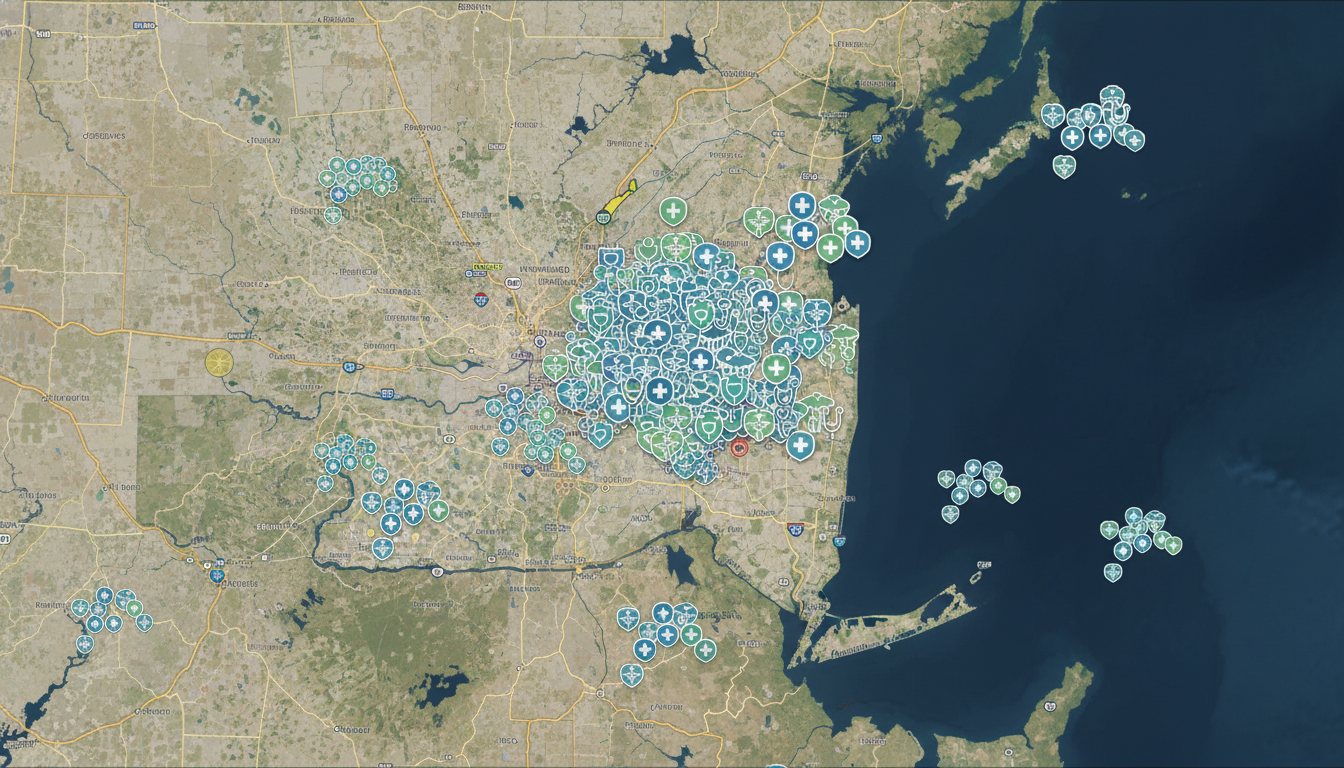
The New York New Jersey Connecticut residency ecosystem is dense, varied, and historically mixed in its openness to DO graduates. Understanding this context can help you calibrate both your expectations and your geographic strategy.
Major strengths of the Tri-State area for DO applicants
High density of residency programs
- Dozens of hospitals within a short radius of New York City alone
- Multiple community and academic-affiliated programs in New Jersey and Connecticut
- Broad coverage of core specialties: Internal Medicine, Family Medicine, Pediatrics, Emergency Medicine, Psychiatry, Surgery, Anesthesiology, OB/GYN, and more
Strong DO presence and integration
- Many hospital systems (especially in NJ and parts of NY) have long-standing relationships with osteopathic schools
- A significant number of faculty and program directors are DOs, particularly in community-based and formerly AOA-accredited programs
- Growing acceptance of DO graduates in historically MD-heavy institutions, especially post-single accreditation
Clinical diversity and training depth
- NYC safety-net hospitals offering high-acuity, high-volume experience
- Suburban and exurban programs providing continuity care, stable patient panels, and more autonomy
- Exposure to a wide range of patient demographics, languages, and social determinants of health
Key challenges DO graduates face in the Tri-State region
Intense competition
- High number of applicants nationally who prefer to live in or near NYC
- International medical graduates (IMGs) strongly target New York and New Jersey programs
- Many top-tier academic centers remain relatively MD-dominant, particularly in competitive specialties
Specialty-specific competitiveness
- For DO graduates, certain specialties in the Tri-State area can be especially difficult:
- Dermatology
- Orthopedic Surgery
- ENT, Plastic Surgery, Neurosurgery
- Some highly selective Internal Medicine or EM programs
- Even in “less competitive” specialties, NYC-based programs may be significantly more selective than non-urban counterparts
- For DO graduates, certain specialties in the Tri-State area can be especially difficult:
Cost of living and support systems
- High rent, transportation, and daily expenses affect both residents and their families
- Some DO graduates may need to stay close to family for childcare or financial support, which can restrict the application map
Understanding these tradeoffs is central to building a smart regional preference strategy that balances ambition with realism.
Building a Smart Regional Preference Strategy as a DO Graduate
To navigate the osteopathic residency match successfully while prioritizing the Tri-State region, start with a structured planning process.
Step 1: Clarify how “tied” you are to the Tri-State area
Ask yourself:
- Do I need to be within commuting distance to a particular city (e.g., Manhattan, North Jersey, Fairfield County)?
- Do I simply prefer the region but could move a few hours away if needed?
- Are there non-negotiable personal responsibilities (elder care, children’s schooling, partner’s job)?
You might fall into one of these categories:
Must stay in Tri-State
- Only realistic if:
- You’re targeting a less competitive specialty (e.g., FM, IM, Psych, Peds)
- You’re willing to include a broad range of programs in all three states (urban, suburban, smaller community hospitals)
- You have a strong application relative to the specialty
- Only realistic if:
Prefer Tri-State but can relocate within the Northeast
- Adds options in:
- Pennsylvania, Massachusetts, Rhode Island, Delaware, possibly Maryland
- Upstate NY and more rural portions of NJ/CT
- This level of flexibility significantly improves match safety while maintaining broad geographic alignment with home
- Adds options in:
Open nationwide but with Tri-State emphasis
- Tri-State remains your primary focus, but you strengthen your chances with:
- Strategic programs in DO-friendly regions (Midwest, some Southern states)
- Places where your school or mentors have stable connections
- Tri-State remains your primary focus, but you strengthen your chances with:
For most DO graduates, especially in moderately competitive specialties, Category 2 offers the best balance of regional preference and match security.
Step 2: Understand DO-friendliness and program tiers
Within the Tri-State region, programs differ widely in their historic DO graduate residency acceptance patterns.
To assess DO-friendliness:
- Check recent resident rosters (program websites, social media)
- Talk to upperclassmen and recent grads from your DO school
- Ask your mentors which programs have actively recruited DOs
- Search FREIDA and program pages for statements like “we welcome applications from DO graduates” and note if they require USMLE in addition to COMLEX
Then roughly categorize programs:
- Tier 1: Very DO-friendly, with many current or recent DO residents
- Tier 2: Mixed cohorts with both MD and DO residents, moderate competitiveness
- Tier 3: Historically MD-dominated, with few or no DOs, or very prestige-driven
In a Tri-State–focused strategy, your list should:
- Include a strong core of Tier 1 and Tier 2 programs in NY/NJ/CT
- Use Tier 3 sparingly, unless your metrics and portfolio are truly competitive for those programs
Step 3: Balance geographic preference with specialty competitiveness
Your geographic flexibility match strategy should differ based on your desired specialty:
Highly competitive specialties (Derm, Ortho, ENT, Plastics, Neurosurgery, integrated IR, etc.)
- If you insist on only Tri-State, your risk of not matching is high, regardless of being a DO or MD
- As a DO, you almost always need:
- Strong step scores (often including USMLE in addition to COMLEX)
- Robust research
- Broad geographic applications, often well beyond Tri-State
- Many DO applicants in these specialties pursue dual-match or backup specialty strategies
Moderately competitive specialties (EM, Anesthesiology, OB/GYN, certain IM or Psych programs)
- A Tri-State focus is reasonable, but:
- Add programs in other Northeastern states and possibly Midwest
- Include a few more DO-heavy or community-based programs as a safety net
- Use electives and audition rotations strategically in the region
- A Tri-State focus is reasonable, but:
Less competitive specialties (FM, categorical IM in many community programs, Peds in some settings)
- A Tri-State–only strategy can work if:
- You apply broadly across NY/NJ/CT
- You are open to more peripheral or community-based sites
- Geographic flexibility still helps if your metrics are modest or you have red flags
- A Tri-State–only strategy can work if:
Practical Application Strategy for DOs Targeting the Tri-State Area
Now, translate your regional preference strategy into a concrete residency application plan.

1. Map your personal priority zones
Divide your geographic targets into zones, for example:
Zone A (Ideal):
- Within 45–60 minutes of your home base or key family location
- Could be NYC boroughs, nearby NJ (Hudson, Bergen, Essex), or SW Connecticut
Zone B (Acceptable):
- Wider Tri-State area:
- Upstate NY (Albany, Rochester, Syracuse, Buffalo depending on your ties)
- Central and Southern New Jersey
- More distant Connecticut hospitals
- Places you’d be comfortable living for 3+ years
- Wider Tri-State area:
Zone C (Extended):
- Surrounding states: PA, MA, RI, DE, etc.
- DO-friendly programs where your school has a track record, even if not in your ideal area
Aim for a healthy distribution of programs across these zones, especially if your specialty is moderately or highly competitive.
2. Use ERAS and supplemental tools wisely
When ERAS or specific specialties introduce geographic preference questions or signaling (some pilot projects exist), tailor your approach:
Be honest but strategic
- Indicate genuine preference for the Tri-State or Northeast if that’s your true priority
- Avoid claiming rigid preference for NYC if your actual zip code or experiences don’t match that story
Leverage your Tri-State narrative
- If you have deep roots (grew up in Queens, trained in New Jersey, family in Connecticut), explicitly state this in:
- Personal statement
- Supplemental questions
- “Why this program/region?” answers at interviews
- If you have deep roots (grew up in Queens, trained in New Jersey, family in Connecticut), explicitly state this in:
Show flexible commitment
- Combine statements like:
- “The Tri-State area is home for me, and I am particularly drawn to your program’s patient population and clinical training environment”
- With:
- “I am committed to my specialty and prepared to relocate if it allows me to train in the right environment for long-term growth.”
- Combine statements like:
This demonstrates strong regional preference without sounding rigid or high-maintenance.
3. Specialty-specific Tri-State tips
Internal Medicine (IM)
- Large number of IM programs across NY/NJ/CT, many DO-friendly
- Build a list that includes:
- Academic-affiliated community hospitals in Brooklyn, Queens, Staten Island, Bronx
- New Jersey community and teaching hospitals (especially those with prior DO residents)
- Connecticut programs outside the most competitive academic centers
- Consider adding a few Upstate NY and Pennsylvania programs for balance
Family Medicine (FM)
- Often more DO-friendly; many programs outside the NYC core
- Use geographic flexibility to:
- Target NJ and CT community programs that may be less saturated
- Explore rural and suburban options where osteopathic principles are well embraced
Psychiatry
- Increasingly competitive, especially in urban centers
- If you’re focused on NYC/NJ, be sure to:
- Apply widely within Tri-State
- Add programs in smaller cities (e.g., Albany, Hartford, Scranton, etc.)
Emergency Medicine (EM)
- Many EM programs in the region are competitive and heavily desired
- As a DO:
- Strongly consider EM programs in smaller cities or non-urban settings within the Northeast
- Be realistic about Tier 3 academic EM programs in Manhattan; include them only if your metrics support it, but don’t rely on them
4. Use away rotations strategically
For DO graduates, an away rotation in the Tri-State area can be particularly valuable when:
- You’re from out-of-region but want to establish a Tri-State connection
- You’re targeting specific hospitals that are historically MD-heavy but becoming more DO-inclusive
- You need strong letters from faculty within your target region
When choosing away sites:
- Prioritize programs that:
- Have at least some history with DO residents
- Are realistic target programs, not long-shots only
- During the rotation:
- Demonstrate reliability, teachability, and teamwork
- Ask explicitly what they look for in DO applicants and how to strengthen your candidacy
Communicating Your Geographic Story as a DO Applicant
How you frame your geographic flexibility can significantly influence how programs perceive you.
Align your personal statement with your regional goals
For a DO graduate rooted in the Tri-State area, your personal statement can:
- Highlight your connection to local communities
- Growing up in Brooklyn, volunteering in Newark, working in Hartford, etc.
- Emphasize experiences that tie your story to the local patient population
- Caring for immigrant communities, working with under-resourced urban clinics, or suburban primary care experiences
If you’re open to a wider geography:
- Include a sentence or two that reflects flexibility:
- “While my personal and professional roots are in the Tri-State area, I’m committed to finding the training environment that best prepares me as a physician, and I am open to relocating to achieve that goal.”
Use interviews to reinforce both preference and flexibility
Programs often ask some version of:
- “Why this region?”
- “Would you be willing to move away from [your home region]?”
- “Where do you see yourself practicing long term?”
As a DO graduate in the Tri-State area, you can respond along these lines:
- Emphasize genuine regional connection (family, training, cultural familiarity)
- Link your interest to patient population and career goals
- Clarify that while you hope to remain in the Tri-State area:
- You understand the realities of the osteopathic residency match
- You’re committed to your specialty and willing to relocate if needed
Programs value applicants who are both invested in their community and realistic about the match process.
Putting It All Together: A Sample Tri-State Flexibility Plan
To illustrate how this works in practice, consider this scenario:
Profile:
- DO graduate from a New Jersey osteopathic school
- Applying to Internal Medicine
- Step/COMLEX scores around national average
- Strong clinical evaluations, moderate research, no major red flags
- Family in North Jersey; would prefer to stay close but can relocate on the East Coast
Geographic strategy:
Zone A (Ideal)
- 10–15 programs in NYC (Bronx, Queens, Brooklyn, Staten Island) that are DO-friendly
- 10–12 programs in Northern and Central New Jersey
- 3–5 programs in Southern Connecticut
Zone B (Acceptable)
- 8–10 Upstate NY programs
- 5–7 programs in more distant New Jersey and Connecticut locations
Zone C (Extended)
- 8–10 programs in Pennsylvania (Philly suburbs, Allentown, Scranton, etc.)
- 4–5 DO-friendly programs in Massachusetts or Rhode Island
Narrative:
- Personal statement emphasizes:
- Long-standing connection to the Tri-State area
- Experience with diverse patient populations in NYC and NJ
- Interview and correspondence messaging:
- “The Tri-State area is home to me, and I would be thrilled to train here. At the same time, I’m committed to pursuing high-quality internal medicine training wherever that opportunity arises.”
This approach leverages regional preference while maintaining realistic location flexibility, optimizing match safety and fit.
FAQs: Geographic Flexibility for DO Graduates in the Tri-State Area
1. Is it realistic to match into a Tri-State residency as a DO graduate if I only apply to NY/NJ/CT?
It can be realistic in certain specialties (e.g., Family Medicine, many community-based IM or Peds programs) if:
- You apply broadly across all three states
- You include a strong number of DO-friendly and community programs
- Your academic record is solid and you have no significant red flags
However, if you’re targeting more competitive specialties or aiming only at top-tier academic centers in Manhattan or major cities, a Tri-State–only strategy becomes risky. Most advisors recommend some degree of location flexibility beyond NY/NJ/CT to protect against going unmatched.
2. As a DO, should I apply to historically MD-heavy academic programs in NYC?
Yes, but strategically and in moderation. If you have:
- Strong USMLE and COMLEX scores
- Research output, especially aligned with the program’s interests
- Strong letters from academic faculty
…then including some historically MD-heavy programs in NYC and surrounding areas can be appropriate. Just don’t anchor your entire list on them. Balance these “reach” programs with DO-friendly and community-based options both within and outside the Tri-State region.
3. How do I show programs I’m serious about their region without sounding inflexible?
Use a both–and approach:
- Clearly express what draws you to their region:
- “I grew up in Staten Island and have always envisioned practicing in this area.”
- “My clinical rotations in Newark reinforced my commitment to serving this community.”
- Then emphasize flexibility:
- “While this region feels like home, I’m committed to my specialty and understand that training opportunities may take me elsewhere if needed.”
This signals genuine interest without giving the impression that you would be upset or disengaged if you needed to relocate.
4. Does being a DO hurt my chances specifically in the New York New Jersey Connecticut residency market?
In many community-based and DO-friendly academic-affiliate programs, being a DO is common and well-accepted, especially in specialties like IM, FM, Psych, Peds, and some EM or OB/GYN programs.
You may face more barriers at:
- Historically MD-dominant, research-heavy academic centers
- Certain ultra-competitive specialties or subspecialty-focused programs
However, as the single accreditation system continues to mature, many Tri-State programs have integrated DO graduates successfully. The main levers you control are:
- Strong exam scores (USMLE where advised, COMLEX always)
- Solid clinical performance and letters
- A balanced geographic strategy that doesn’t overconcentrate on a handful of highly competitive programs
By approaching the osteopathic residency match with a deliberate regional preference strategy, you can honor your desire to remain in the Tri-State area while preserving enough geographic flexibility to safeguard your match outcome. Thoughtful planning, realistic self-assessment, and clear communication of both your commitment and your openness are the foundations of a successful DO graduate residency journey in New York, New Jersey, and Connecticut.