Choosing where you train is one of the most consequential decisions of your career. For a DO graduate in Southern California, geographic flexibility can dramatically expand your options in the osteopathic residency match—yet many applicants don’t leverage it strategically.
Below is a comprehensive guide to understanding and using geographic flexibility to your advantage, specifically tailored to DO graduates with ties to SoCal.
Understanding Geographic Flexibility as a DO Graduate
Geographic flexibility isn’t just “being willing to move anywhere.” It’s a structured, intentional approach to where you apply, how you signal preferences, and how you talk about location in your application and interviews.
For a DO graduate in Southern California, this typically means answering several questions:
- How important is it to stay in a Southern California residency program versus being open to other regions?
- Are you willing to consider all of California, the West Coast, or the entire country?
- How much are you willing to trade location for program quality, training opportunities, or competitiveness?
- How do DO-specific issues (COMLEX vs USMLE, program perceptions, DO friendliness) interact with your geographic preference residency strategy?
Why Geographic Flexibility Matters Even More for DO Graduates
As a DO graduate, you’re applying in a system that has merged ACGME and AOA accreditation, but some residual biases and structural challenges remain:
- Not all programs are equally DO-friendly (especially in certain academic centers or historically MD-dominated regions).
- Some specialties remain highly competitive for DOs (e.g., dermatology, plastic surgery, orthopedic surgery, ENT, some academic internal medicine programs).
- Some regions—particularly Southern California—are heavily competitive and saturated with applicants from multiple medical schools, including large California MD institutions.
Because of this, geographic flexibility acts as a multiplier on your chances of matching:
- Flexible geography → Larger pool of DO-friendly programs
- Willingness to look beyond SoCal → Less regional competition
- Broader list → Higher probability of at least one match, especially in competitive specialties
In other words, for a DO applying from Southern California, staying only in SoCal means fighting for very limited seats in an extremely desirable region.
Balancing SoCal Roots vs. Match Reality
Many DO graduates trained or grew up in Southern California and feel a strong pull to stay. The question isn’t “SoCal vs. anywhere” but rather how to build a tiered geographic approach that respects your preferences without sabotaging your match chances.

The Reality of Southern California Residency Competitiveness
Southern California is one of the most competitive regions in the country for residency, regardless of specialty. Factors include:
- High desirability for lifestyle (weather, proximity to beaches, outdoor activities, large metropolitan areas).
- Numerous nearby medical schools (e.g., UCLA, USC, UC Irvine, UC Riverside, Kaiser, Loma Linda, WesternU/COMP, and others).
- Many applicants with strong geographic ties and a stated preference for staying in SoCal.
- Some SoCal programs historically more conservative in their selection and less DO-represented, especially in highly academic environments.
This doesn’t mean you can’t match in Southern California—it means you should avoid an all-or-nothing SoCal-only application strategy, especially if:
- You’re targeting a competitive specialty (EM, anesthesia, ortho, derm, radiology, some IM programs).
- Your metrics are average or below for your specialty (COMLEX/USMLE, class rank).
- You have application red flags (course failures, leaves, professionalism issues).
A Tiered Geographic Preference Framework
Instead of a binary “SoCal or bust,” build a 3–4 tier location strategy:
Tier 1: Priority Region (Southern California residency)
- Programs in LA, Orange County, San Diego, Inland Empire, Ventura County.
- Include a mix of academic centers and community-based hospitals.
- Focus on programs with known DO graduates or faculty, or those listed as DO-friendly through alumni, program websites, or match data.
Tier 2: Expanded Region (All of California + Nearby States)
- Northern California (Bay Area, Sacramento, Central Valley, coastal regions).
- Neighboring states: Arizona, Nevada, Oregon, Washington.
- Many of these still offer SoCal-compatible lifestyle (West Coast culture, shorter flights/drive to family).
Tier 3: Broad National Options (DO-friendly, midwest and south, smaller cities)
- Regions known to be historically DO-inclusive.
- Medium and smaller cities with strong clinical training but less national applicant pressure.
- Programs where you may have a relative, friend, or some connection you can reference.
Tier 4: Strategic Long-Shot or Niche Programs
- Highly competitive academic programs or dream locations outside your main preferences.
- Programs where you have a very specific fit (research interest, unique curriculum, special track).
By structuring your preferences this way, you maintain your SoCal medical training goals while ensuring you’re not overly dependent on one of the most competitive regions in the country.
Case Example: DO Graduate from SoCal, Applying Internal Medicine
- COMLEX Level 1 and 2: Just above national average
- No major red flags
- Strong clinical evaluations, one publication
- Wants to stay in Southern California but open to California in general
Good geographic strategy:
- 8–12 programs in Southern California (mix of academic and community).
- 8–10 programs in the rest of California (community, county, and university-affiliated).
- 10–15 DO-friendly programs in the West and Midwest.
- 2–3 “reach” academic programs in highly competitive cities.
Risky strategy:
- Applying only to 8 SoCal programs and 2 out-of-state programs “just in case.”
The first strategy aligns with location flexibility match principles—prioritizing SoCal while respecting the reality of competition.
Using Geographic Flexibility Strategically in the Osteopathic Residency Match
Geographic flexibility isn’t just about where you send ERAS applications. It affects how you structure your entire application, from personal statement to interview responses.

Communicating Geographic Preference vs. Geographic Flexibility
Residency programs care about two things regarding location:
- Will this applicant actually come here if we rank them highly?
- Does this applicant genuinely want to be in our region, or is this a backup?
Your task is to communicate a balanced message:
- Yes, I have genuine reasons to value this region or program.
- Yes, I am flexible and able to relocate, with clear thinking behind my choices.
How to Frame Geographic Preference in Your Personal Statement
Avoid writing a personal statement that is only about your desire to train in Southern California. Instead:
- Emphasize career goals, patient populations, and training priorities first.
- Incorporate SoCal or regional interest as a secondary layer:
- Interest in caring for diverse, multilingual communities.
- Desire to work with underserved populations common in California.
- Family ties or long-standing connection to the region.
Then, signal flexibility subtly:
“While my roots are in Southern California and I am deeply connected to the communities here, I am equally committed to obtaining the best training environment for my future patients. For that reason, I have applied broadly to programs that will help me build strong clinical skills, serve diverse populations, and grow as a future osteopathic physician.”
This makes your geographic preference residency stance clear: you favor SoCal, but you’re open and realistic.
Using Supplemental ERAS Preferences (If Applicable)
If your specialty or year includes geographic preference signals (like in some pilot initiatives):
- Use “Southern California” or “California” as a top preference.
- But do not rely on signals alone; continue broad applications to DO-friendly regions.
- Avoid sending all signals to the same hyper-competitive region—use at least one or two to highlight flexible or less-competitive regions where you’d genuinely be happy.
Addressing DO-Specific Issues in Different Regions
As a DO graduate, consider how DO acceptance varies across regions:
Southern California and West Coast:
- Strong DO presence in some community and county programs.
- Some academic centers still skew toward MD applicants.
- Many programs are inundated with California applicants from multiple schools.
Midwest and South:
- Often rich in DO-friendly programs and larger numbers of osteopathic grads on faculty and leadership.
- Lower cost of living, potentially easier to own or rent near hospitals.
- Some programs eager to recruit DOs who are enthusiastic about the region.
Your regional preference strategy should include:
- Looking up resident rosters on websites and checking for DO representation.
- Talking to alumni or upper-level DO residents about hidden gem programs outside SoCal.
- Prioritizing regions where DOs have historically matched, even if they don’t match your dream climate perfectly.
Building a Residency List: Practical Steps for a DO in Southern California
To operationalize your SoCal medical training goals with geographic flexibility, use a structured list-building process.
Step 1: Define Your Non-Negotiables vs. Nice-to-Haves
Non-negotiables might include:
- You must be in the United States (vs. Canadian-only or other systems).
- You need a program that accepts COMLEX alone or is comfortable with COMLEX + USMLE.
- You require a specialty with a certain schedule due to health or family needs.
Nice-to-haves:
- Being within driving distance of Southern California.
- Coastal city or mild climate.
- Access to certain subspecialties or research.
Geographic flexibility means you relax some nice-to-haves if needed to secure your non-negotiables.
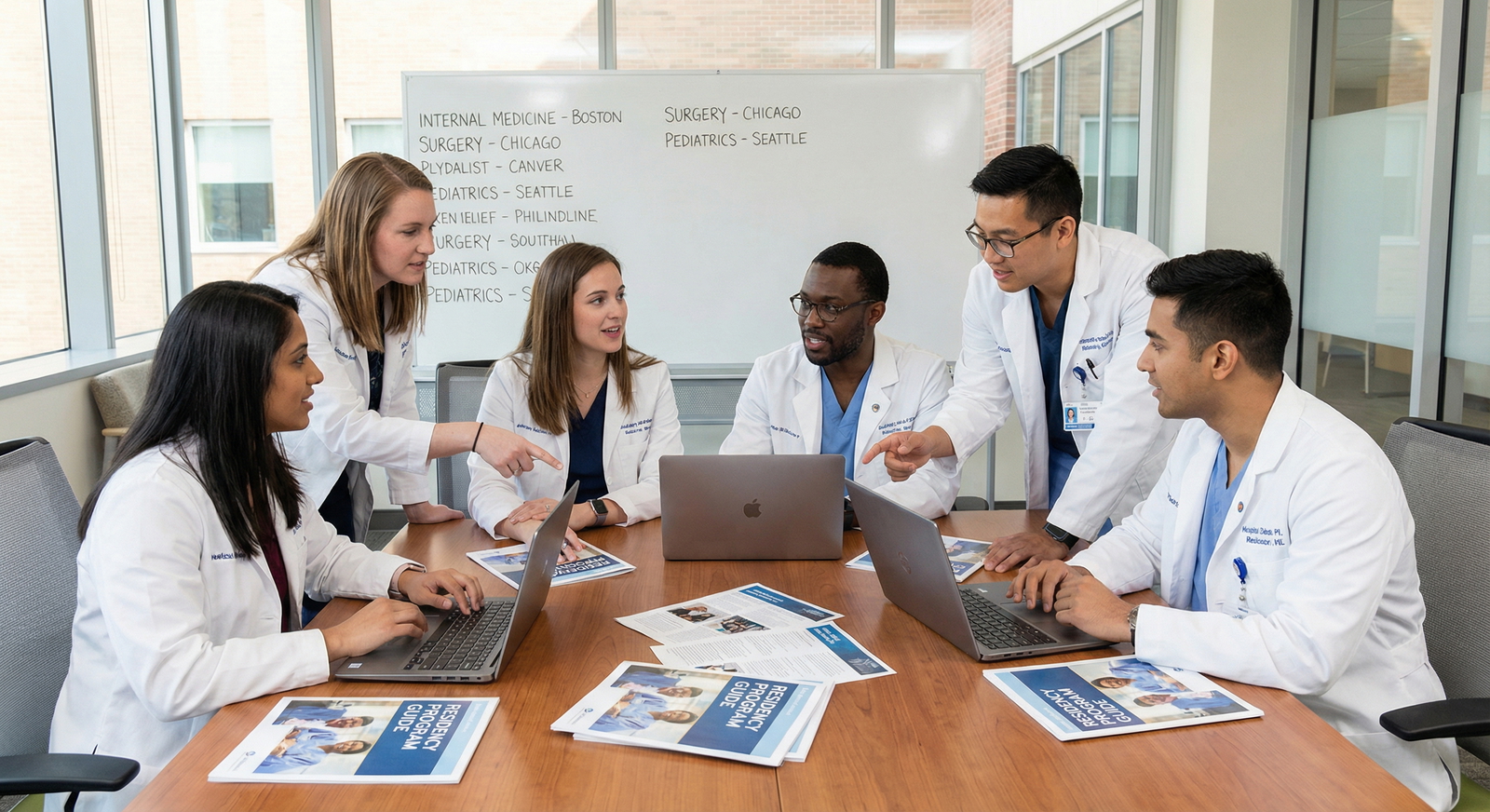
Step 2: Create Categories of Programs by Geography
For example, if you’re applying to Family Medicine:
SoCal Core (10–15 programs)
- Mix: Urban academic, community, county-based.
- Example locations: LA, Orange County, San Diego, Riverside/San Bernardino.
Rest of California (10–15 programs)
- Central Valley, Sacramento, Bay Area suburbs, coastal towns.
- Often slightly less competitive than LA/SF metros.
Regional Expansion (10–15 programs)
- Arizona, Nevada, Oregon, Washington, Colorado.
- Consider cities like Phoenix, Tucson, Las Vegas, Portland, Seattle, Denver.
National DO-Friendly Programs (10–20 programs)
- Programs with 30–60% or more DO residents.
- Communities you could imagine living in for 3+ years.
- Focus on training quality, board pass rates, and resident satisfaction.
This builds both depth in your preferred region and breadth across the country, maximizing match chances.
Step 3: Research DO-Friendliness and Program Culture
For each program on your list:
- Check current resident bios—count DO vs MD.
- Look for alumni from your COM or other DO schools.
- Search for “Program name + DO friendly” on forums (filter noise, but it gives clues).
- Ask recent graduates from your school which programs were receptive to DOs and SoCal applicants.
Programs that regularly take DOs are often more flexible in geography as well, meaning they might favor strong DO applicants even from outside their region.
Step 4: Adjust Your List Based on Competitiveness
Align your list with your academic profile:
- If your metrics are below average for your specialty:
- Increase number of non-SoCal, DO-friendly programs.
- Consider adding more smaller cities and community-based programs.
- If your metrics are strong:
- You can still benefit from geographic flexibility but may afford a higher percentage of SoCal and academic programs.
- Still apply outside SoCal to maintain match safety.
Interviews, Ranking, and Final Decisions: Staying Flexible Without Losing Yourself
Once interviews arrive, your geographic flexibility strategy enters a new phase: deciding where to attend interviews and how to build your rank list.
Deciding Which Interviews to Accept
If you’re fortunate to have more interview offers than you can reasonably attend:
- Prioritize by training quality and fit, not just geographic desirability.
- Ask:
- Would I be comfortable living here for 3–7 years?
- Does this program support DOs, provide strong mentorship, and prepare graduates well?
- Give higher weight to:
- DO-friendly programs in slightly less desirable locations versus DO-skeptical programs in perfect locations.
For a DO graduate from Southern California, an excellent community program in the Midwest may provide better training and career doors than a marginal, over-stretched program in a super competitive SoCal city.
How to Talk About Geography in Interviews
When asked, “Do you have any geographic preferences?” or “Why this region?”:
- Acknowledge your SoCal ties if relevant.
- Emphasize that you’ve intentionally applied broadly.
- Highlight the regional strengths—don’t just talk about palm trees and beaches.
Example:
“I grew up and trained in Southern California, so that region is naturally close to my heart. At the same time, I applied broadly because my priority is high-quality training in a supportive environment. What I really appreciate about this region is the strong sense of community, the diverse patient population, and the opportunity to work with a team that clearly values resident education. If I matched here, I would be excited to commit fully to both the program and the community.”
This reassures programs outside SoCal that they are not simply a backup in your geographic hierarchy.
Constructing a Rank List That Reflects Realistic Flexibility
When building your rank list:
- Rank programs in order of where you would most want to train, independent of region.
- Don’t push a less-safe SoCal program above a safer, higher-quality out-of-state program just for location if the training difference is substantial.
- Ask yourself:
- “If this was the only program I matched at, would I be able to live with that?”
- If the answer is “absolutely not,” it shouldn’t be on your list.
Remember: You can always return to Southern California later for fellowship or practice. Many physicians train outside SoCal and successfully build careers in the region afterward.
FAQs: Geographic Flexibility for DO Graduates in Southern California
1. As a DO graduate from SoCal, is it realistic to match into a Southern California residency if I only apply to SoCal programs?
It’s possible but risky, especially for competitive specialties or applicants with average metrics. Southern California attracts a high volume of strong MD and DO applicants, and the number of positions is limited. To protect yourself, build a list that includes SoCal but also expands throughout California and beyond, emphasizing DO-friendly programs in less saturated regions.
2. How can I show strong interest in SoCal programs without sounding geographically rigid?
In your personal statement and interviews, connect your interest in SoCal to meaningful reasons—family, community ties, patient population, or long-term career plans—while clearly stating that you’ve applied broadly to ensure the best training fit. Emphasize that your top priority is quality training and patient care, with SoCal being a preferred but not exclusive region.
3. Do I need to limit myself to regions that historically accept more DOs?
No, but you should weight your list strategically. Applying to some programs and regions with strong DO representation increases your match safety. You can still apply to more competitive, traditionally MD-heavy programs (including some SoCal academic centers), but they should not represent the majority of your list—especially if your scores and application are mid-range.
4. If I leave Southern California for residency, will it be harder to come back for practice or fellowship?
Not necessarily. Many physicians complete residency elsewhere and later return to Southern California for fellowship or attending jobs. To keep that door open:
- Maintain connections with mentors in SoCal.
- Attend regional conferences or virtual events when possible.
- Consider fellowships in California or neighboring states. Ultimately, high-quality training and strong recommendations matter more than having every step of your training in SoCal.
By intentionally cultivating geographic flexibility, you as a DO graduate in Southern California can dramatically expand your opportunities in the osteopathic residency match. Use regional preference strategically, maintain an open yet realistic mindset, and remember: residency is a finite chapter. The skills and reputation you build can bring you back to SoCal—or anywhere else you choose—later in your career.