Understanding Geographic Flexibility as a US Citizen IMG
For a US citizen IMG or American studying abroad, geographic flexibility can be one of your strongest strategic advantages in the residency match—especially in the Mountain West. Programs increasingly consider geographic preference residency signals, and your willingness (or reluctance) to relocate can directly shape where you interview and how you rank programs.
However, flexibility does not mean being vague or directionless. The key is to define clear priorities while showing you are open to multiple locations and settings. In the Mountain West, where programs are more spread out and often have unique patient populations and lifestyle features, a structured approach to flexibility can help you stand out.
This article focuses on how a US citizen IMG in the Mountain West can use geographic flexibility to:
- Increase the number of interviews
- Align location with personal and career goals
- Communicate realistic yet open preferences
- Build a coherent regional preference strategy without looking scattered
We will also highlight examples specific to Colorado residency and broader mountain west residency opportunities to make these ideas concrete.
Why Geographic Flexibility Matters More for US Citizen IMGs
1. You’re Competing in a Different Way Than US Seniors
As a US citizen IMG (or American studying abroad), you’re often compared with:
- US allopathic seniors
- US osteopathic applicants
- Non–US citizen IMGs
You may not have the same home program advantage or local network. But you have two things working in your favor:
- US citizenship – No visa sponsorship needed; many programs are more open to you than to non–US citizen IMGs.
- Willingness to relocate – Many US seniors build narrow geographic lists; you can intentionally be broader.
Programs in the Mountain West—including Colorado, Utah, Idaho, Wyoming, Nevada, Montana, New Mexico, and parts of Arizona—often struggle to recruit enough residents who genuinely want to stay in the region long-term. If you can demonstrate:
- You’re open to living and training in smaller markets or less urban centers
- You understand the region’s culture, lifestyle, and patient needs
- You are not restricted to one major city
You become a very attractive candidate, especially as a US citizen IMG.
2. Regional Ties vs. Regional Understanding
A frequent fear for US citizen IMGs is: “I have no ties to the Mountain West. Will programs overlook me?”
The answer: not necessarily, especially if you show:
- A deliberate interest in the region’s practice environment
- Realistic knowledge of climate, lifestyle, and patient population
- A thoughtful geographic preference residency narrative in your personal statement or ERAS section
Being “geographically flexible” doesn’t require being from the region. It means you can convincingly explain why training there aligns with your goals and life.
Mapping the Mountain West: What Flexibility Looks Like in Practice
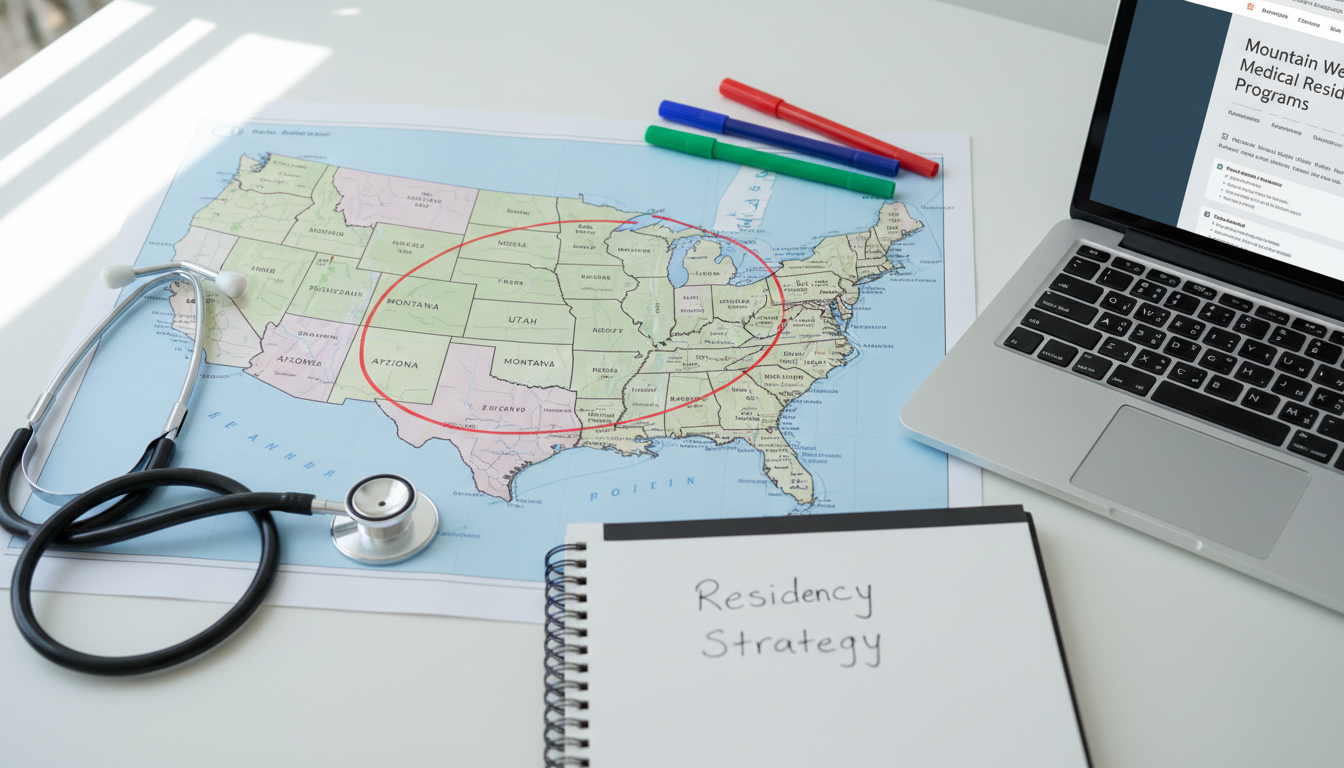
The Mountain West is not homogenous. When you say you’re “open to the Mountain West,” programs want to know what that really means. As a US citizen IMG, your advantage comes from being specific in how you’re flexible.
1. Understand the Spectrum of Locations
Think of the region in four broad buckets:
Major urban centers
- Denver metro (Colorado)
- Salt Lake City (Utah)
- Phoenix metro / Tucson (Arizona – sometimes considered Mountain West in broader definitions)
- Las Vegas / Reno (Nevada)
Mid-sized regional cities
- Colorado Springs, Fort Collins, Greeley (Colorado)
- Albuquerque (New Mexico)
- Boise (Idaho)
- Ogden / Provo (Utah)
- Spokane-like markets if including broader region
Smaller cities and rural hubs
- Billings, Bozeman, Missoula (Montana)
- Casper, Cheyenne (Wyoming)
- Grand Junction, Pueblo (Colorado)
- Farmington, Las Cruces (New Mexico)
- Twin Falls, Idaho Falls (Idaho)
Frontier or critical access communities
- Very small towns with strong rural or frontier medicine focus
- Often through rural tracks or community-based programs
Geographic flexibility is not just which state you’ll consider—it’s which type of community you’re genuinely willing to train in.
2. Example: Colorado Residency vs. Broader Mountain West
An American studying abroad might initially say: “I really want Colorado residency, but I’d consider nearby states.”
A more strategic, flexible version:
“My top priority is residency in the Mountain West, with strong interest in Colorado and adjacent states. I’m drawn to programs that serve both urban and rural populations, and I’m very open to mid-sized or smaller cities if they offer strong inpatient training and exposure to under-served communities.”
This kind of language:
- Signals regional preference (Mountain West, Colorado-centered)
- Maintains location flexibility match (not locked to Denver only)
- Appeals to programs in Utah, New Mexico, Idaho, Wyoming, and Montana who seek residents willing to commit to their environments
3. Balancing Lifestyle and Training Opportunities
The Mountain West is famous for:
- Outdoor recreation (skiing, hiking, climbing)
- High altitudes and dry climate
- Native American and rural/frontier health needs
- Mix of academic and community-based teaching environments
Your regional preference strategy should clearly show:
- You understand this context
- You’re prepared for potential lifestyle tradeoffs (e.g., distance from major airports, winter driving, fewer big-city amenities in some areas)
- You value the type of clinical exposure these programs offer
Programs can quickly tell if you’re only attracted to “Colorado skiing” versus genuinely committed to practicing in the region or caring for its populations.
Building a Coherent Regional Preference Strategy as a US Citizen IMG
To use geographic flexibility wisely, you need a plan, not just openness. This involves being clear on:
- Your core region(s) of focus
- Your non-negotiables
- Your flexible zones
- The way you talk about geography in ERAS, interviews, and letters
1. Define Your Core and Secondary Regions
For a US citizen IMG targeting the Mountain West, one effective model is:
- Core region: Mountain West (with particular emphasis on Colorado plus 2–3 neighboring states)
- Secondary regions: One or two additional US regions with similar practice or lifestyle characteristics (e.g., Pacific Northwest, parts of the Midwest, certain rural programs in the South)
This structure:
- Keeps your story believable—your interest isn’t scattered across all 50 states
- Gives you backup territories if Mountain West interviews are limited
- Shows programs that your geographic preference residency is intentional, not random
Example structure:
- Core: Colorado, Utah, New Mexico, Idaho, Wyoming
- Secondary: Oregon, Washington (Pacific Northwest), selected rural-friendly programs in the Midwest
You can then tailor personal statements or preference explanations accordingly.
2. Identify Your Non-Negotiables
Even the most flexible applicant has real limits. If you don’t clarify them early, you risk:
- Applying too broadly and wasting resources
- Landing interviews at places you would never realistically rank highly
Common non-negotiables for US citizen IMGs include:
- Proximity to family (e.g., aging parents, spouse’s job)
- Climate considerations (e.g., severe asthma worsened by cold or altitude)
- Religious or cultural needs (e.g., requiring a certain community or resources)
- Financial realities (e.g., cost of living in select cities)
Never pretend to be flexible beyond what you can live with for 3–7 years. Programs value honest, thoughtful applicants more than overpromising ones.
3. Define Your Flexible Zones
Within your non-negotiables, decide areas where you truly don’t mind adapting, such as:
- Size of city (you can handle a smaller or mid-sized city if training is strong)
- Distance from a major airport
- Access to big academic hospitals vs. strong community programs
- Mix of inpatient vs. outpatient experiences
- Presence or absence of a large IMG community
For many US citizen IMG applicants, a powerful message is:
“I’m comfortable living and training outside major metropolitan areas, and I value programs that serve under-resourced or rural communities.”
This resonates deeply in the Mountain West, where rural and frontier care are central missions.

How to Communicate Geographic Flexibility in Your Application
Geographic flexibility helps you only if programs can see and understand it. You must communicate it consistently across your:
- ERAS application
- Personal statement(s)
- Interview answers
- Letters of recommendation (if possible)
1. ERAS and the Geographic Preferences Section
If ERAS or a given specialty offers a geographic preferences tool or question, use it carefully:
- If you select “Mountain West” as a preferred region, be prepared to explain why in interviews.
- If you also select another region (e.g., Midwest), have a consistent story that connects both (similar patient populations, commitment to rural health, proximity to extended family, etc.).
- Avoid choosing nearly every region; this dilutes the signal and may seem unfocused.
For a US citizen IMG emphasizing the Mountain West, you might:
- Choose Mountain West as your primary region
- Choose up to one or two other regions where your reasons are clear and defendable
2. Personal Statement: Region-Specific vs. General
You can approach personal statements in two ways:
A. One generalized but region-aware statement
This works if your main interest is type of training rather than specific geography.
Example phrases for a Mountain West focus:
- “I am particularly interested in programs that serve both urban and rural communities in the western United States, including the Mountain West.”
- “Growing up in [X region] and later studying abroad has given me an appreciation for communities that face physician shortages; I’m eager to train in regions such as Colorado and neighboring states where this need is significant.”
B. A core statement and a “Mountain West–focused” variant
Some applicants create a slightly modified statement for Mountain West programs, referencing:
- Interest in high-altitude medicine, wilderness medicine, or rural/frontier care
- Specific awareness of local public health challenges (e.g., Indigenous health, mental health access, substance use in rural areas)
- Experience traveling, rotating, or living in the region (even short-term)
For example:
“During my clinical rotation in Colorado, I was struck by how programs balance high-acuity tertiary care with outreach to rural hospitals. This combination of complex pathology and community engagement aligns precisely with the type of physician I hope to become.”
This shows genuine geographic preference residency interest without sounding scripted.
3. Interview Answers: Consistency and Credibility
Programs will test whether your stated flexibility is real. Common questions include:
- “Where else have you applied?”
- “What attracted you to the Mountain West?”
- “Do you see yourself practicing in this region long term?”
- “How would you feel about living in a smaller city like ours?”
As a US citizen IMG or American studying abroad, you can answer honestly and strategically:
Example approach:
Acknowledge your broad flexibility
- “Because I’m a US citizen IMG without a strict geographic anchor, I applied broadly but thoughtfully.”
Reaffirm your regional interest
- “The Mountain West is one of my top regions because I value the mix of urban and rural training, and I’m strongly interested in [rural medicine/high altitude medicine/wilderness medicine/frontier health/etc.].”
Address long-term potential
- “I can genuinely see myself staying in this region after residency, especially if I find a community where I can build long-term relationships with patients.”
If you don’t realistically plan to stay long-term, don’t lie—but you can say:
“While I’m open to practicing in different parts of the country, I expect the Mountain West training experience—especially exposure to under-served and rural populations—to shape my career goals significantly.”
4. Letters of Recommendation: Subtle Support
When appropriate, you can ask letter writers to mention aspects of your flexibility or regional interest, for example:
- “She has expressed strong interest in serving in rural and Mountain West communities.”
- “He has demonstrated openness to relocating for residency and has researched programs in the Mountain West specifically.”
This reinforces your narrative, especially if coming from a mentor who understands US training geography.
Practical Application Strategies for US Citizen IMGs Targeting the Mountain West
Putting all of this into practice requires concrete steps. Here’s how to integrate geographic flexibility into your mountain west residency application plan.
1. Build a Program List That Matches Your Stated Flexibility
To avoid mixed messages, your program list should reflect your geographic story.
For a US citizen IMG strongly interested in Colorado and the Mountain West:
Include:
- A mix of academic and community-based Colorado residency programs
- Programs in nearby states (Utah, New Mexico, Idaho, Wyoming, Montana, Nevada, Arizona as applicable)
- A reasonable but not excessive number of programs in your secondary region(s)
Avoid:
- Extremely heavy concentration in one East Coast city while telling programs your heart is in the Mountain West
- A scattered list with no obvious pattern (e.g., 2 programs in Colorado, 3 in Florida, 4 in New York, 5 in California, etc., with no unifying rationale)
Programs can often see where else you applied or deduce from your interview comments. Consistency builds trust.
2. Use Electives and Rotations Strategically
As an American studying abroad, US clinical experience is essential. If possible:
- Seek elective or sub-internship rotations in:
- Colorado or other Mountain West states
- Regions with similar patient demographics (rural/underserved populations)
Even one month in a Mountain West hospital can:
- Provide content for your personal statement
- Generate a letter of recommendation from a regional physician
- Show programs you’ve actually experienced the environment you claim to prefer
If you can’t secure a Mountain West rotation, build experiences that parallel its mission (e.g., rural underserved clinics, Native American health, frontier medicine electives elsewhere).
3. Highlight Location Flexibility in Your CV and Activities
In ERAS activity descriptions, you can quietly demonstrate geographic flexibility by:
- Mentioning travel for volunteer work or clinical experiences in unfamiliar environments
- Describing roles where you adapted to new cultures or regions
- Emphasizing language skills or cultural competency that’s relevant to Mountain West populations (e.g., Spanish for New Mexico/Colorado/Arizona, familiarity with Indigenous health issues)
This helps programs see you as someone who thrives in new environments, not just tolerates them.
4. Prepare for Lifestyle Questions Honestly
Mountain West programs may ask:
- “How do you feel about winter driving and snow?”
- “We are several hours from a major international airport—how would that affect you?”
- “Our city is smaller and more quiet than many urban centers; have you lived in environments like this before?”
Prepare by:
- Reflecting on past moves or adjustments you’ve handled successfully
- Being honest about what challenges you but framing it as manageable
- Showing you have realistic expectations (e.g., you’ve researched cost of living, climate, transportation)
For example:
“I grew up in a more urban environment, so a smaller city would be an adjustment, but I’m genuinely attracted to the close-knit feel and the opportunity to be part of a community. I’ve researched the area, talked with current residents, and I’m very comfortable with the lifestyle tradeoffs.”
FAQs: Geographic Flexibility for US Citizen IMGs in the Mountain West
1. As a US citizen IMG, should I say I’m open to “anywhere in the US” to increase my chances?
Not necessarily. While it sounds flexible, it often comes across as unfocused. It’s more effective to:
- Define a primary region (e.g., Mountain West)
- Add one or two secondary regions with a clear rationale
- Be able to explain why each area makes sense for you
Programs prefer applicants with a believable regional interest over those who appear to be casting a completely random net.
2. I have no family or prior experience in the Mountain West. Will programs take my interest seriously?
Yes—if you can explain it clearly and consistently. Emphasize:
- Interest in rural/underserved care, outdoor lifestyle, or specific clinical opportunities
- Any rotations, volunteer experiences, or personal travel that connected you to similar communities
- A long-term openness to practicing in the region, even if not guaranteed
Being a US citizen IMG already gives you a logistical advantage (no visa Needed); thoughtful geographic reasoning strengthens your case.
3. Can I say that Colorado is my first choice but that I’m still flexible about other Mountain West states?
Absolutely. Many applicants do this successfully by framing it as:
“Colorado is particularly attractive to me for [reasons X, Y, Z], but I’m broadly interested in training throughout the Mountain West, especially in programs that blend urban and rural experiences.”
Just ensure:
- Your program list reflects this (not only Colorado applications)
- You don’t tell every state it is your “top” without nuance
4. How much should I emphasize geographic preference vs. program features in interviews?
Balance is key. Programs want to hear:
- That you genuinely like their location and could see yourself living there
- That you’re primarily choosing them for their training quality, patient population, and fit, not just geography
A good structure is:
- Start with a program-specific training feature you value (curriculum, patient mix, culture).
- Add how the location supports your goals or lifestyle.
- Conclude with a statement showing long-term fit (e.g., openness to staying in the region).
This approach shows that your geographic flexibility is integrated into a thoughtful, career-oriented plan—exactly what Mountain West programs hope to see from a US citizen IMG.