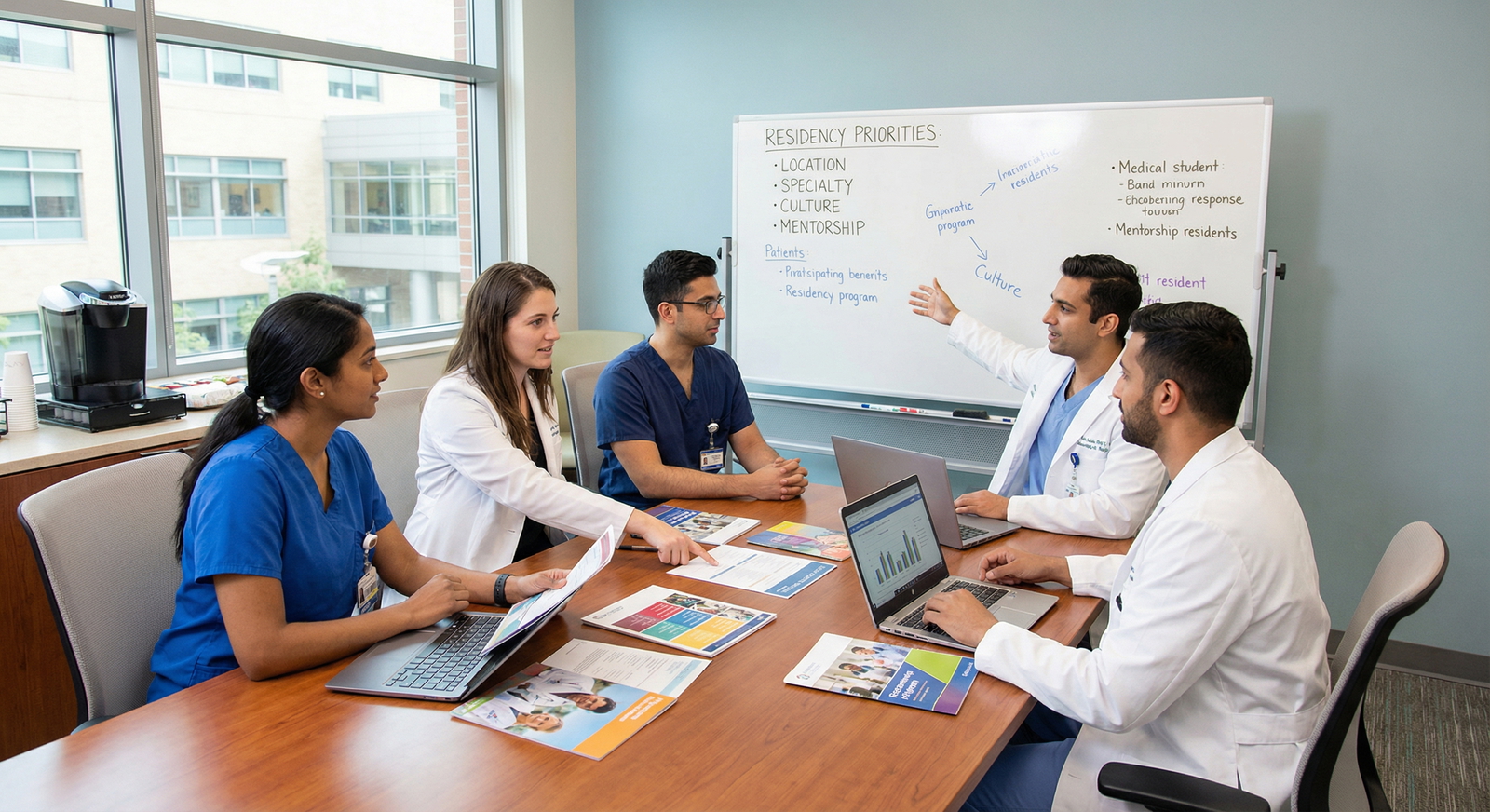
Understanding Geographic Flexibility in Kaiser Permanente Residency Programs
Geographic flexibility is one of the most powerful—and underrated—levers you can use as an MD graduate residency applicant. For students targeting Kaiser Permanente residency programs, thinking strategically about where you are willing to train can dramatically influence both your chances of matching and the kind of career you build afterward.
Kaiser Permanente (KP) has an expanding network of GME programs across several regions in the United States, most prominently in California (Northern and Southern), as well as in the Pacific Northwest, Hawaii, Colorado, Georgia, and the Mid-Atlantic area. Each region has different patient demographics, practice environments, and lifestyle considerations. Understanding how to use geographic flexibility to your advantage—while staying honest about your true preferences—is essential.
This guide is tailored for the MD graduate residency applicant from an allopathic medical school who is interested in an allopathic medical school match with Kaiser Permanente programs. We’ll walk through how to think about geographic preference residency decisions, how to plan your regional preference strategy, and how to balance flexibility with authenticity in your rank list and applications.
1. Why Geographic Flexibility Matters for MD Graduates Targeting Kaiser
For an MD graduate, your willingness (or reluctance) to move for residency can significantly shape your application strategy and your ultimate match outcome—especially within an integrated system like Kaiser Permanente.
1.1. How Programs Think About Location and Applicants
Residency programs generally prefer applicants who are likely to:
- Fit well with the program and local culture
- Stay engaged and committed for the full duration of training
- Potentially remain in the region after graduation
For Kaiser residency programs, which are embedded in a large, coordinated health system, long-term retention is particularly valuable. Your stated geographic preferences are often interpreted as indicators of:
- How likely you are to accept an offer if matched
- How invested you are in that community or region
- How well your personal situation aligns with the program’s location (family, partner, support system)
This doesn’t mean you should fabricate ties or pretend enthusiasm for a location you do not actually want. But it does mean that demonstrating authentic geographic flexibility—with a clear, rational explanation—can make you more attractive to multiple Kaiser Permanente residency sites.
1.2. Impact on Match Chances in Kaiser Permanente Programs
In a competitive allopathic medical school match, geographic flexibility can:
- Increase total interview numbers: If you apply across multiple regions (e.g., Kaiser Northern California, Southern California, Pacific Northwest, Colorado), you automatically broaden your chances.
- Expand your “safety net”: Even if your top choice is, say, Kaiser Los Angeles, expressing openness to Kaiser Sacramento, San Diego, or the Northwest can give you more realistic match options within the same health system.
- Align with Kaiser’s integrated model: Programs may value candidates who can imagine future practice in different Kaiser regions, or at least remain open to internal mobility over the long term.
For an MD graduate, especially coming from outside a Kaiser-dense state like California, this can be a meaningful differentiator.
2. Mapping the Kaiser Permanente Residency Landscape
Before you can make a strong regional preference strategy, you need a functional understanding of where Kaiser residency programs are and how they differ.
2.1. Major Kaiser Regions with GME Programs
While specific offerings evolve, Kaiser Permanente has significant residency and fellowship presence in:
- Northern California (KPNC)
- Urban, suburban, and semi-rural settings (e.g., Oakland, Sacramento, Santa Clara)
- High patient diversity, strong emphasis on integrated care and population health
- Southern California (KPSC)
- Programs in Los Angeles, San Diego, Orange County, and Inland Empire areas
- Mix of urban academic-style training and community-based practice
- Pacific Northwest (Kaiser Permanente Northwest)
- Primarily Oregon and Southwest Washington
- Strong primary care emphasis; collaborative, lifestyle-friendly cities like Portland
- Colorado (Kaiser Permanente Colorado)
- Programs with exposure to both urban and mountain communities
- Strong preventive medicine and outpatient care culture
- Georgia (Kaiser Permanente Georgia)
- Growing footprint; access to a diverse East Coast population
- Mid-Atlantic States (Mid-Atlantic Permanente Medical Group)
- Maryland, Virginia, DC region, often with academic partnerships
- Hawaii (Kaiser Permanente Hawaii)
- Unique patient population, strong emphasis on community and continuity
Each location offers different training experiences, cost-of-living implications, and long-term career opportunities within Kaiser’s system or beyond.
2.2. Kaiser’s System-Wide Features That Interact with Geography
Regardless of region, Kaiser programs share several structural features:
- Integrated electronic health record (EHR) across the system
- Population health and outcomes focus
- Team-based care with physicians, NPs, PAs, pharmacists, and other allied professionals
- Emphasis on quality metrics and value-based care
Where geography matters is how these core features intersect with:
- Patient demographics (rural vs urban, income levels, racial/ethnic diversity)
- Regional workforce needs (e.g., primary care shortage areas)
- Lifestyle factors (housing costs, commute patterns, climate, outdoor activities)
Understanding these intersections helps you articulate clearly why you are open to specific Kaiser locations.

3. Building Your Personal Geographic Preference Strategy
Geographic flexibility doesn’t mean “I’ll go anywhere, no questions asked.” Instead, it means knowing your genuine boundaries and then being strategic within them. For Kaiser-bound applicants, that strategy must account for both personal and system-level factors.
3.1. Step 1: Define Your Non-Negotiables
Before you think about the allopathic medical school match algorithm or ERAS geographic signals, you must clarify your own constraints. Consider:
- Family responsibilities
- Are you a primary caregiver for a parent or child?
- Do you need to stay within a certain driving distance?
- Partner or spouse factors
- Partner’s job market and licensure limitations
- Immigration or visa considerations
- Financial constraints
- Ability to relocate to a high cost-of-living area (e.g., Bay Area, Los Angeles)
- Need to live near extended family for support (childcare, housing)
- Health and personal needs
- Access to specialized medical care for yourself or family
- Climate or environmental needs (e.g., asthma, seasonal affective disorder)
List out your immutable constraints clearly. Anything not on this list is potentially an area where you can exercise location flexibility match strategy.
3.2. Step 2: Identify Your “Preferred but Flexible” Regions
Next, categorize regions into:
- Strong preference (e.g., Kaiser Northern California due to family in the Bay Area)
- Moderately preferred (e.g., Kaiser Southern California or Northwest for lifestyle)
- Acceptable if options are limited (e.g., Colorado or Georgia if you mainly want Kaiser training)
- Truly off the table (beyond non-negotiables)
For Kaiser programs, this might look like:
- You grew up in Southern California → KPSC is your top tier.
- You have friends and a support system in Portland → KP Northwest is tier 2.
- You’re open to an adventure in Colorado for strong training → still on your list, but not your first choice.
This tiering helps you prioritize where you send signals, where you do away rotations, and how you discuss geography in interviews.
3.3. Step 3: Align Your Personal Story with Geographic Choices
Programs are alert to applicants claiming they “love this region” without credible reasons. To strengthen your geographic preference residency narrative:
- Highlight meaningful connections
- Medical school rotations in a Kaiser region
- Significant time living there in the past
- Family ties or long-standing personal connections
- Align career goals with local population needs
- Interest in working with immigrant populations in Southern California
- Desire to practice primary care in underserved communities in Colorado
- Focus on chronic disease management in an aging population in Northern California
- Be honest but strategic
- It’s acceptable to say: “My first choice is to be closer to my family in Northern California, but I’m genuinely excited by Kaiser’s model and would enthusiastically consider training in other regions where I can still work within this system.”
Programs respond better to nuanced, authentic answers than vague “I can go anywhere” statements.
4. Applying Geographic Flexibility in the Match Process
Once you’ve clarified your preferences, you need to apply them practically through ERAS, interviews, signaling (if applicable), and ranking decisions—particularly if you’re aiming for a Kaiser Permanente residency.
4.1. Application Phase: Where and How Broadly to Apply
For an MD graduate residency applicant targeting Kaiser:
- Apply to all Kaiser programs that you’d genuinely attend
- Avoid applying to locations you would truly never rank; it wastes time and can distort your strategy.
- Layer in non-Kaiser programs by region
- If you strongly prefer California, also apply to non-Kaiser programs in similar practice settings there (community-based, integrated health systems).
- Balance competitiveness and region
- If you’re a highly competitive applicant, you can be somewhat more selective geographically.
- If your application is mid-range or has red flags, broader geographic flexibility can significantly increase your odds.
A practical example:
A mid-tier MD graduate with strong clinical evaluations, some research, and no major red flags might:
- Apply broadly to Kaiser Northern and Southern California programs in internal medicine, family medicine, or pediatrics.
- Add Kaiser Northwest and Colorado as “geographically flexible” options.
- Include a mix of community and academic non-Kaiser programs in similar regions.
4.2. Communicating Geographic Preference on ERAS and in Interviews
Use every communication channel carefully and consistently:
- ERAS application
- Personal statement: If you choose to mention geography, tie it to career goals and personal context.
- Experiences: Highlight any prior work, volunteer activity, or clinical exposure in specific Kaiser regions.
- Program-specific questions (supplemental applications, if present)
- Be specific about why that region fits you (clinical, social, personal).
- Interviews
- Expect questions like: “Where else have you applied?” “How do you feel about this region?”
- Answer by integrating both honesty and flexibility:
- “My family is in Northern California, so it’s home for me and remains my top region. That said, I’m very drawn to the Kaiser model overall, particularly the integrated EHR and emphasis on team-based care. I’ve applied to several Kaiser programs, including here, because I’d be happy to train in any region where I can gain strong experience in population health and continuity care.”
Programs will notice if you contradict yourself across interviews, so commit to a clear, consistent story.
4.3. Rank Order List: How Flexible Should You Be?
When creating your rank list for the allopathic medical school match:
- Rank in your true order of preference—not what you assume programs want.
- If you would genuinely rather be at a non-Kaiser program in your top city than at Kaiser in a less preferred region, rank accordingly.
- If your priority is the Kaiser model and long-term potential clinic job in the system, then ranking multiple Kaiser sites—even in secondary-choice locations—above non-Kaiser options might be rational.
Example ranking strategy for an MD graduate:
- Kaiser Internal Medicine – Northern California (near family)
- Kaiser Internal Medicine – Southern California
- Non-Kaiser academic IM – Northern California
- Kaiser Northwest IM
- Community IM program – home state
- Kaiser Colorado IM
This is just an illustration; your actual list should reflect your unique preferences and risk tolerance.

5. Balancing Career Goals, Lifestyle, and Kaiser’s Regional Strengths
Choosing a residency is more than a tactical match exercise—it’s about where and how you want to grow as a physician. Geographic flexibility gains meaning when linked to your professional and personal goals.
5.1. Matching Your Career Goals to Kaiser Regional Profiles
Different Kaiser regions have unique strengths that may align with your long-term plans:
- Academic vs. community focus
- Some Kaiser sites have strong research, academic affiliations, and subspecialty training (e.g., Northern and Southern California).
- Others may be more community-focused with strong continuity clinics and ambulatory care, ideal if you want to be a primary care physician in an integrated system.
- Population health interests
- Regions with large, diverse patient populations (e.g., Southern California, Georgia, Mid-Atlantic) can offer rich experience in health disparities, chronic disease management, and culturally responsive care.
- Outdoor and lifestyle priorities
- Northwest and Colorado may appeal if you value outdoor recreation, a different pace of life, or a smaller city environment during residency.
If your goal is to eventually become a Kaiser Permanente residency faculty member, you might prioritize a location with established academic infrastructure and fellowships; if your goal is outpatient primary care, your considerations may skew more toward clinic environments, mentorship, and long-term practice opportunities.
5.2. Considering Long-Term Retention and Post-Residency Jobs
Kaiser often recruits from its own residency graduates. Geographic flexibility during residency can yield long-term options:
- Train in one region, practice in another
- Completing residency at Kaiser Southern California does not preclude you from later working at Kaiser Northwest or Colorado, especially in high-need specialties.
- Network and system familiarity
- Regardless of geographic region, you’ll build familiarity with Kaiser’s systems, culture, and workflows, making you more mobile within the organization later.
When discussing geography on interviews, it’s helpful to show openness not just for residency, but also for future practice—without overpromising:
“I can most easily picture myself practicing long-term on the West Coast, but I’m very open to exploring opportunities in other Kaiser regions after residency, especially where there’s high need in internal medicine.”
This signals commitment to the system, even if you have clear regional preferences.
5.3. Managing Lifestyle Trade-Offs
Every geographic decision involves trade-offs:
- Cost of living vs. program prestige
- Training in a marquee region (e.g., Bay Area, LA) may strain your finances more than living in Portland or Denver.
- Be realistic about your budget across multiple years of residency.
- Proximity to family vs. independence
- Being close to home may offer support and convenience, but training in a new environment can foster growth and resilience.
- Urban vs. suburban/semi-rural settings
- Consider commute times, safety, transportation, and housing options in each region.
Being geographically flexible doesn’t mean ignoring these realities; it means weighting them thoughtfully alongside your training priorities.
6. Practical Tips and Common Pitfalls for Kaiser-Focused MD Graduates
6.1. Practical Tips for Crafting a Strong Geographic Narrative
- Pre-write a concise geographic statement for interviews
- Two to three sentences that explain your primary preferences and your willingness to consider other Kaiser regions.
- Use your personal statement selectively
- If geography is central to your story (e.g., you are a first-generation physician returning to serve your community), include it.
- If not, you can still demonstrate regional interest in supplemental questions or interviews.
- If possible, do rotations or electives in a Kaiser region
- Away rotations can strengthen your credibility and provide a basis for saying, “I’ve experienced Kaiser’s care model firsthand and know it fits me.”
- Be consistent across all communications
- Program directors notice inconsistency between what applicants say to different programs in the same region.
6.2. Common Mistakes to Avoid
- Overstating your willingness to move
- Saying “I’ll go anywhere” but then ranking only one region high can backfire if word circulates informally.
- Ignoring cost-of-living realities
- Underestimating housing, transportation, and childcare costs in high-priced regions can lead to real hardship.
- Failing to differentiate between regions
- Telling every program “I love this area” without naming anything specific to that region undermines your credibility.
- Over-narrowing your options too early
- For MD graduates without strong geographic constraints, prematurely excluding entire regions can limit your ability to match into Kaiser programs that might suit you well.
6.3. Example Scenario: Strategic Flexibility in Action
You’re an MD graduate from an allopathic medical school in the Midwest, interested in internal medicine, and drawn to Kaiser’s team-based, population health–oriented structure. You have no strict geographic constraints, but your preferences are:
- Prefer West Coast and Pacific Northwest
- Open to Colorado
- Less excited about the East Coast but willing to consider
Your strategy might look like this:
- Apply to:
- Kaiser IM programs in Northern and Southern California, Northwest, and Colorado
- A few Kaiser-adjacent or Kaiser-affiliated academic partners in the Mid-Atlantic
- Non-Kaiser programs in those same regions as additional options
- Interviews:
- State a clear priority for West Coast but express enthusiastic openness to Northwest and Colorado.
- For Mid-Atlantic interviews, be transparent that while your initial preference was West Coast, you’re very drawn to the chance to train in Kaiser’s integrated system and would be happy to relocate if matched.
- Rank list:
- Rank your preferred West Coast Kaiser programs highest.
- Place KP Northwest and Colorado below them but above non-Kaiser programs where you feel less alignment with your training goals.
- Include select non-Kaiser programs in your home region as a final safety net.
This approach honors your preferences while leveraging true geographic flexibility to maintain a strong chance of matching into a Kaiser residency.
FAQs: Geographic Flexibility and Kaiser Permanente Residency
1. Do Kaiser residency programs prefer applicants with local ties?
Local ties can be helpful but are not mandatory. Programs value:
- Demonstrated interest in the region (rotations, prior living experience, family connections)
- Genuine understanding of the patient population and community
- Alignment with Kaiser’s care model
If you lack local ties, you can still be competitive by articulating a clear, thoughtful rationale for wanting to train in that specific region and showing location flexibility match reasoning across Kaiser sites.
2. Should I mention Kaiser as my long-term career goal during interviews?
Yes—if it’s true. Kaiser residency programs often view applicants as potential long-term colleagues. You can say, for example:
“I’m strongly interested in building a career in integrated, value-based care, and I see Kaiser as a potential long-term home.”
If you’re not sure, it’s fine to frame it as a strong possibility rather than a promise:
“I can see myself staying with Kaiser after residency, but I’m also open to seeing where opportunities and personal circumstances lead.”
3. How many geographic regions should I include in my application if I’m focused on Kaiser?
Most Kaiser-focused MD graduates benefit from including at least 2–3 Kaiser regions they’d realistically consider. This could mean:
- Northern + Southern California
- California + Northwest
- California + Colorado + Mid-Atlantic
The exact number depends on your competitiveness, personal constraints, and specialty. Very competitive applicants can be slightly narrower; others should consider more breadth.
4. If I’m very flexible geographically, should I say that outright?
You can absolutely convey flexibility, but be specific and believable. Instead of saying, “I’ll go anywhere,” try:
“I don’t have rigid geographic constraints. My priority is training in a system like Kaiser that emphasizes integrated care and population health. I have a slight preference for the West Coast due to lifestyle and proximity to friends, but I’d be genuinely excited to train in any Kaiser region that offers strong internal medicine training and a collaborative culture.”
This shows flexibility while still sounding grounded and realistic.
By understanding the Kaiser Permanente residency landscape, clarifying your personal constraints and preferences, and communicating a coherent geographic narrative, you can leverage geographic preference residency and location flexibility match strategies to maximize both your match success and your long-term satisfaction as an MD graduate entering residency.