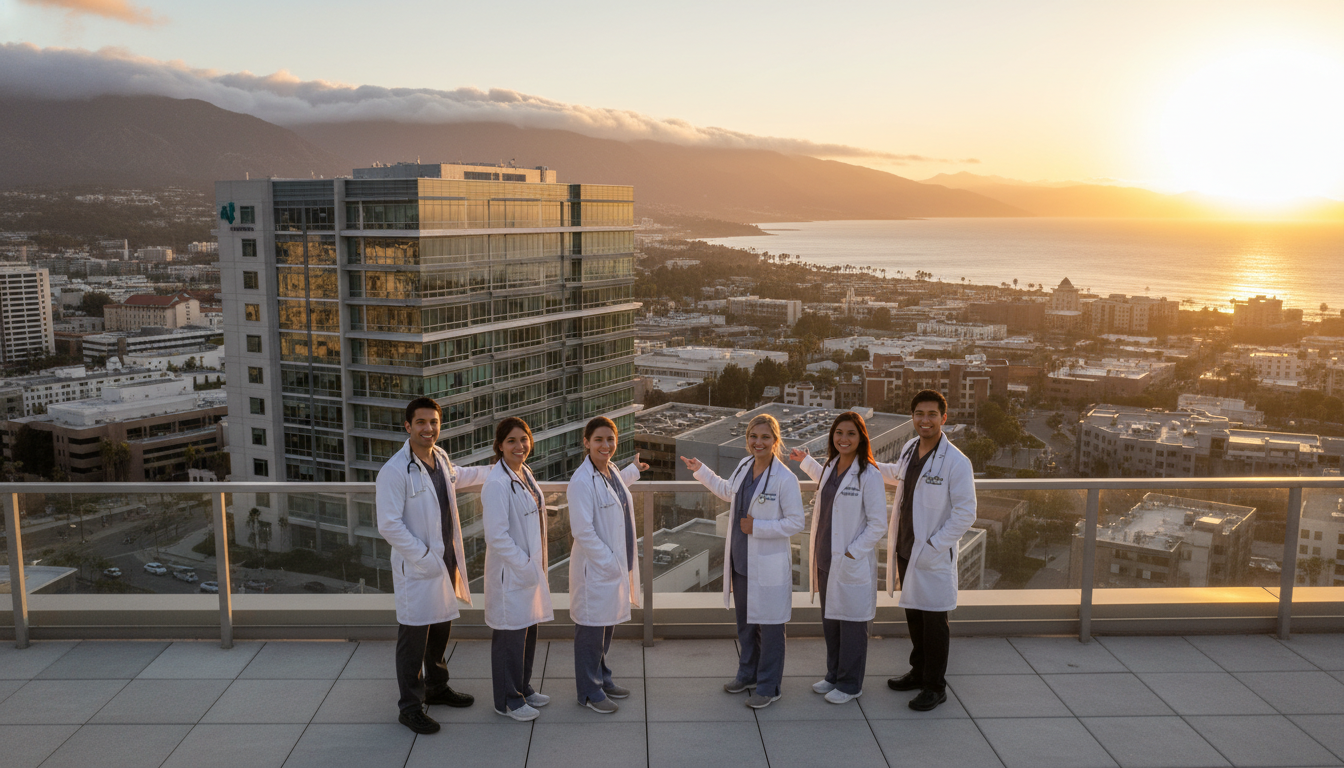
Understanding Geographic Flexibility as an MD Graduate in the Bay Area
For an MD graduate in the San Francisco Bay Area, “geographic flexibility” is much more than a generic buzz phrase on your residency application. It’s a deliberate strategy that can dramatically influence your competitiveness in the allopathic medical school match, your career trajectory, and your quality of life.
If you’re training, living, or grew up in the Bay Area, you’re already in one of the most competitive medical ecosystems in the country. Bay Area residency and San Francisco residency programs are attractive to applicants nationwide—meaning that if you limit yourself to this region without a plan, you risk an unnecessarily stressful Match season.
This article will help you:
- Understand what geographic flexibility really means in the residency context
- Weigh the pros and cons of staying in the Bay Area versus being open to other regions
- Craft a realistic regional preference strategy that still maximizes your odds of matching
- Communicate your geographic preferences clearly and professionally in ERAS and interviews
- Use geographic flexibility to your advantage, rather than seeing it as a compromise
Why Geography Matters So Much in the Residency Match
Geography is one of the most influential, yet poorly understood, factors in residency placement—especially for MD graduates coming from competitive regions like the San Francisco Bay Area.
The Unique Competitiveness of the Bay Area
The Bay Area and San Francisco residency markets have characteristics that shape your options:
High program desirability
- Prestigious academic centers (UCSF, Stanford, plus strong community programs)
- Rich case mix, subspecialty exposure, research opportunities
- Tech/biotech ecosystem and strong public health infrastructure
High cost of living
- Programs may receive more applications than they can reasonably review because applicants are drawn to the prestige and location, even if the financial trade-offs are steep.
- Some applicants eventually rank Bay Area programs lower due to housing and cost concerns, but the application volume remains extremely high.
National applicant pool
- Many top students from allopathic medical schools nationwide apply heavily to the Bay Area, making these programs more selective than average.
For an MD graduate residency candidate in this region, the bottom line is: if you are Bay Area–only, you are inherently in a high-risk strategy category, especially in moderately or highly competitive specialties.
What Is Geographic Flexibility?
Geographic flexibility refers to:
- Willingness to apply and rank residency programs outside your preferred city or region
- Ability to articulate reasonable, honest preferences without boxing yourself in
- Openness to training in an area that may not match your “ideal” lifestyle but fits your professional and personal goals overall
This doesn’t mean you must be willing to live anywhere. Instead, it means adopting a structured approach to location preference that balances your desire for a San Francisco residency with realistic options elsewhere.
How Programs Interpret Geographic Preference
Programs often consider geographic signals when building their rank lists. They look for evidence that you’re likely to accept and thrive at their location:
- Application and rank list patterns (e.g., all West Coast only vs. broad national spread)
- Personal statement or supplemental essays mentioning ties to a region
- Past experiences (school, family, clinical rotations) in or near the area
- How you talk about geography during interviews
If your application screams “Bay Area or bust,” programs outside Northern California might worry:
- You are interviewing with them as a “backup only”
- You’d be unhappy and less likely to commit or stay long-term
Being thoughtful and consistent in your geographic messaging is part of a sound location flexibility match strategy.
Designing a Regional Preference Strategy from a Bay Area Base
For an MD graduate in the San Francisco Bay Area, the core challenge is: How can I structure my geographic strategy to keep Bay Area options alive, but still match safely?
Step 1: Define Your True Non-Negotiables
Before talking maps and spreadsheets, identify what you truly cannot compromise on. Common non-negotiables:
- Family obligations
- Dependent children or elder care responsibilities
- Partner’s job constraints or immigration status
- Health considerations
- Need to be near a certain health system or support network
- Visa issues (if applicable)
- Limitations on locations or program types that can sponsor your visa
Write these out clearly. Everything else—urban vs. suburban, climate, distance from a major airport—belongs in the “preferences” (not non-negotiables) category.
Step 2: Categorize Regions by Priority
From a Bay Area home base, consider grouping US regions into tiers:
Tier 1: Strong Preference (High Priority)
- San Francisco residency and broader Bay Area residency programs
- Greater Northern California (Sacramento, Central Valley, North Bay, possibly coastal areas)
- Possibly other major West Coast cities with similar culture or climate (LA, San Diego, Portland, Seattle) if they align with your goals
Tier 2: Acceptable Alternatives
- Other urban centers with robust academic or hybrid training opportunities
- Regions where you have extended family or professional networks
- Medium-sized cities with solid hospitals and lower cost of living
Tier 3: Strategic Adds (If Needed)
- Geographic areas less saturated with applicants, where your profile may stand out
- Programs known to be IMG-friendly or with a high proportion of MD graduates from outside their immediate area
This tiered model supports a regional preference strategy that doesn’t look random, but still shows genuine location flexibility.
Step 3: Match Your Flexibility to Your Specialty’s Competitiveness
Your willingness to leave the Bay Area should be informed by your specialty:
Highly competitive specialties (e.g., dermatology, orthopedic surgery, plastic surgery, ENT):
- You should strongly consider applying broadly, including outside California—even if you prefer to return to the Bay Area for fellowship or practice.
Moderately competitive specialties (e.g., EM, anesthesiology, OB/GYN, many surgical subspecialties):
- Bay Area–only is risky unless you are an exceptional applicant. A smart approach is to apply heavily across the West Coast plus some national programs in regions you can realistically see yourself in.
Less competitive specialties (e.g., family medicine, internal medicine without a strong subspecialty research focus, pediatrics in some regions):
- You may have more freedom to prioritize Bay Area programs, but it is still safer to include multiple regions, especially if your metrics are average or there are application weaknesses.
As an MD graduate from an allopathic medical school, you do have an advantage over some applicants (like some IMGs) in the allopathic medical school match—but geography and specialty competitiveness still matter.

Practical Tools to Manage Geographic Flexibility
Translating geographic preferences into a workable application plan takes structure. Here are practical tools and frameworks you can use.
Tool 1: The 3-Column Geographic Spreadsheet
Create a spreadsheet with three primary columns:
Column A – Ideal Locations (Bay Area + Closely Related Regions)
- List specific programs in San Francisco, Oakland, San Jose, and greater Bay Area
- Add Northern California and select West Coast urban centers
- Note: Program type (academic vs. community), your competitiveness, and any ties
Column B – Realistic + Acceptable Locations
- Cities where you have family/friends or previous rotations
- Regions aligned with your lifestyle preferences (coastal, diverse population, etc.)
- Programs where your metrics (Step scores, clerkship grades, research) are well above average
Column C – Safety Net Locations
- Areas with historically higher fill rates but less applicant attention
- Smaller cities or regions with strong training but lower name recognition
- Programs where your metrics put you solidly in the top tier of their applicant pool
This visual helps you see whether you’re heavily skewed toward the Bay Area or truly diversified.
Tool 2: The 80/20 Flexibility Rule
To avoid extremes, consider an “80/20” approach:
- 80% of your application: Regions you actively prefer (Bay Area + Tier 1–2 regions)
- 20% of your application: Programs in regions that are not ideal, but clearly acceptable if your goal is “match > prestige/location”
Within that 80% bucket, you can still have a significant focus on San Francisco residency and Bay Area residency programs—but you’ll be buffered by a thoughtful national spread.
Tool 3: Reality Check with Data
Use specialty- and program-specific data to ground your strategy:
- NRMP Program Director Survey (for your specialty): How many applications programs receive and their selection filters
- Program websites and recent match lists: Where residents come from, how many from California, any visible regional patterns
- Your school’s match data (if accessible):
- How many MD graduates from your allopathic medical school match into Bay Area residency positions
- Which geographic regions are common fallback or alternative destinations
If your metrics are near the mean for your specialty, but most successful Bay Area applicants from your school had significantly higher scores, that’s your signal to be more geographically flexible.
Communicating Geographic Preference in ERAS and Interviews
Geographic flexibility is not just about where you apply; it’s also about how you communicate your preferences.
Balancing Honesty and Flexibility in Your Application
You may be asked to express geographic preference residency choices in:
- Supplemental ERAS questions or program-specific essays
- Standardized forms used by some specialties or programs
- Optional statements about ties to regions
Key principles:
Be specific where you truly have ties
- “I grew up in the East Bay and have strong family roots in the San Francisco Bay Area.”
- “I completed multiple clinical rotations at institutions across Northern California.”
Avoid language that implies absolute rigidity
- Instead of: “I must remain in the Bay Area.”
- Use: “I have a strong preference to remain in Northern California due to family support, but I am open to training in other regions that offer strong academic and clinical opportunities.”
Signal broad interest when appropriate
- “In addition to the Bay Area, I am particularly interested in residency programs in other West Coast and major urban centers where I can continue working with diverse, underserved populations.”
Programs outside your top region should feel you are genuinely interested, not just using them as insurance.
Answering “Where Do You See Yourself Geographically?” in Interviews
This question appears in many forms:
- “Do you have any geographic preferences for residency?”
- “Where do you see yourself practicing long-term?”
- “Are you hoping to stay in California?”
An effective structure for your answer:
Lead with your general openness
- “I’m open to different regions and more focused on the quality of training and fit with the program culture.”
Acknowledge your natural preference
- “That said, I do have strong connections to the San Francisco Bay Area—my family lives there, and much of my clinical training has been in that region.”
Reaffirm interest in the program’s own location
- “At the same time, I see many advantages to working in [this city/region], especially the diverse patient population and the strong community teaching culture here. I could absolutely see myself thriving here.”
This approach avoids sounding disingenuous but also doesn’t close doors.
Personal Statement: How Much Geography Is Too Much?
In your personal statement:
- You can briefly mention your Bay Area roots or motivations (e.g., growing up in San Jose, working with San Francisco’s underserved communities).
- Avoid devoting large sections to insisting on staying in San Francisco; this can alienate programs elsewhere.
- A better balance:
- Focus on your professional identity, values, and goals.
- Mention that you hope to ultimately serve a community similar to those you’ve worked with in the Bay Area, without tying that exclusively to one city.

Strategic Scenarios: How Flexible Should You Be?
To see how these principles play out, here are concrete scenarios tailored to an MD graduate in the Bay Area.
Scenario 1: Above-Average Applicant in a Moderately Competitive Specialty
- Specialty: Anesthesiology
- You: US MD graduate, strong board scores, honors in key clerkships, some research, good letters
- Geographic desire: Strong preference for San Francisco residency or Bay Area residency, but not absolute
Recommended approach:
- Apply broadly across California (Bay Area, Central Valley, Southern California)
- Add 1–2 other West Coast states and 1–2 other regions where you have some ties or interest
- In interviews: Emphasize your preference for the West Coast but express sincere openness to other regions with strong case volume and teaching
Your profile gives you a realistic shot at staying near the Bay, but geographic flexibility protects you against the unpredictability of any single region’s applicant pool.
Scenario 2: Average Applicant in a Highly Competitive Specialty
- Specialty: Dermatology
- You: US MD from an allopathic medical school, solid but not exceptional metrics, modest research
- Geographic desire: Wants to stay in California, especially Bay Area
Reality check:
The combination of a competitive specialty and a highly desirable region is risky.
Recommended approach:
- Dramatically broaden your geographic strategy: apply across multiple regions (West, Midwest, South, Northeast)
- Consider dual-application or backup strategy (e.g., apply broadly in internal medicine as well)
- Frame your geographic story as: “I have strong ties to California, but I am committed to training in any setting that allows me to grow into an excellent dermatologist.”
Here, location flexibility match strategy is critical. Many successful derm applicants train outside their home region and later return for fellowship or practice.
Scenario 3: Applicant with Significant Personal Constraints
- Specialty: Internal Medicine
- You: MD graduate in San Francisco with aging parents who rely on you
- Geographic desire: Genuine need to stay within a drivable radius of the Bay Area
Recommended approach:
- Focus heavily on Bay Area and broader Northern/Central California, while including as many programs as realistically possible within that radius (academic + community).
- Honestly explain your family responsibilities if asked; programs often respect well-articulated, sincere constraints.
- Make sure your application volume is sufficient to compensate for limited geography (more programs applied to within the region).
Here, geographic flexibility is limited by necessity, not preference. The key is maximizing choices within your workable radius.
Long-Term Perspective: Training Elsewhere, Returning to the Bay
Many MD graduates from California, especially those targeting Bay Area residency, eventually train elsewhere and later return:
Fellowship in the Bay Area:
- You might complete residency in another region, gain strong training and references, and then match into a Bay Area fellowship at UCSF or Stanford.
Returning for practice:
- California and the Bay Area regularly recruit physicians who trained across the country. Your network from medical school, mentors, and conferences can help you find positions later.
Seeing geographic flexibility as a temporary training decision, rather than a lifelong relocation, can make it feel more manageable. The key question becomes:
“Where will I receive the best training and be most likely to match, even if I intend to live in the Bay Area long-term?”
FAQs: Geographic Flexibility for Bay Area MD Graduates
1. If I really want a San Francisco residency, should I only apply to Bay Area programs?
No. For almost all specialties, this is too risky. Even very strong MD graduate residency candidates can go unmatched with a Bay Area–only list due to the intense competition. If San Francisco is your top choice, you can still prioritize those programs in your rank list while applying and interviewing broadly elsewhere.
2. Will applying to programs outside California hurt my chances at Bay Area residency programs?
Generally, no. Programs expect you to apply broadly. They know you have limited control over geography in the allopathic medical school match. As long as your application clearly demonstrates sincere interest in their program (through your experiences, essays, and interview), applying to other regions does not diminish your appeal.
3. How can I show location flexibility without sounding unfocused?
Anchor your story with clear themes—such as serving diverse, urban underserved populations or training in systems with strong academic resources. Then explain that several regions (Bay Area plus others) meet those criteria. This way you appear purposeful, not random, in your regional preference strategy.
4. What if I match far from the Bay Area and regret it later?
Residency is a finite training period, usually 3–7 years. Many physicians complete residency outside their preferred region and later move—via fellowship or attending positions—back to their desired area, including the San Francisco Bay Area. Focus on getting the best training you can, maintaining your Bay Area connections, and planning for a potential transition back later.
Thoughtful geographic flexibility allows you to honor your connections to the San Francisco Bay Area while safeguarding your ultimate goal: matching into a strong residency program where you can grow into the physician you want to be.