
Understanding Geographic Flexibility as a Cleveland MD Graduate
Geographic flexibility is one of the most underrated strategic tools for an MD graduate residency search, especially if you are coming from an allopathic medical school in or around Cleveland. Whether you trained at Case Western, Cleveland Clinic Lerner College of Medicine, or another allopathic program with strong Ohio ties, your approach to geography can significantly shape your chances in the allopathic medical school match.
For many applicants, the instinct is to lock in on one dream city or one “perfect” program, such as a single Cleveland Clinic residency or university hospital. But in a competitive match environment, applicants who understand and actively manage geographic flexibility often:
- Generate more interviews
- Build more balanced rank lists
- Match at programs that fit both professionally and personally
- Reduce stress and uncertainty during application season
This article breaks down what geographic flexibility really means for MD graduates in Cleveland, how to align it with your personal life and career goals, and how to deploy a clear regional preference strategy without sabotaging your chances elsewhere.
Why Geography Matters So Much in Residency
Geography is not just about where you live for the next three to seven years—it directly affects your:
- Training opportunities and case mix
- Professional network and mentorship
- Fellowship prospects
- Cost of living and financial stress
- Family and social support
The “Cleveland Advantage” – and Its Limitations
Training in Cleveland has several built‑in strengths for an MD graduate:
- Multiple major academic centers (e.g., Cleveland Clinic residency programs, University Hospitals, MetroHealth)
- High‑acuity patient populations
- Strong reputation of Cleveland residency programs nationally
- Experience handling Midwest weather, diverse communities, and complex social determinants of health
These points can be selling features when you apply broadly. Programs in other states know that an MD graduate from a Cleveland allopathic medical school has experienced:
- High‑volume clinical exposure
- Strong academic expectations
- Patient populations similar to many Midwestern and Rust Belt cities
However, Cleveland is also an attractive training hub. As a result, local academic programs are competitive, particularly certain Cleveland Clinic residency spots (e.g., internal medicine, anesthesiology, dermatology, radiology). Relying only on “home city” or “home institution” is a common strategic error.
Geographic flexibility expands your safety net beyond Cleveland and Ohio, while still allowing you to highlight Cleveland experience as a strength.
Defining Your Geographic Preferences: Beyond “I’ll Go Anywhere”
Many MD graduates write “location flexible” in their personal statement or tell advisors “I’ll go anywhere.” But programs know that almost nobody is truly indifferent to location. A vague stance makes your strategy weaker, not stronger.
A better approach is structured and specific geographic flexibility.
Step 1: Clarify Your Non‑Negotiables
Before deciding how wide your geographic net can be, define boundaries in three domains:
Personal and Family Factors
- Do you have a spouse/partner with a job or training location?
- Children in school or family members needing care?
- Immigration/visa constraints that limit certain states or institutions?
- Strong need to be within a driving radius of Cleveland?
Health and Lifestyle Needs
- Weather tolerances (e.g., very hot, very cold, high humidity)
- Need for ready access to specific medical services for yourself or a loved one
- Urban vs. suburban vs. rural preferences
Training and Career Goals
- Need for a program with strong fellowship placement in a particular field
- Desire for an academic vs. community vs. hybrid program
- Interest in specific populations (e.g., underserved, immigrant communities, rural medicine)
Write these out explicitly. Non‑negotiables help you define “flexibility with limits” rather than false openness.
Step 2: Choose Your Geographic “Tiers”
Instead of “Cleveland or anywhere,” think in tiers:
Tier 1: High‑Priority Regions
- Example: Greater Cleveland, broader Northeast Ohio, maybe extending to Columbus or Pittsburgh
- These are places you would be genuinely excited to live and train, with clear personal or professional reasons.
Tier 2: Strongly Acceptable Regions
- Example: Midwest cities similar to Cleveland (Detroit, Pittsburgh, Chicago, Indianapolis, Milwaukee)
- Regions where you can articulate why you’d fit (culture, cost of living, clinical experiences).
Tier 3: Open but Selective Regions
- Example: Certain coastal cities, the South, or Mountain West, depending on your priorities.
- You’d consider moving there, but only if the program is an especially good fit or offers specific advantages.
This tiered approach makes your geographic preference residency strategy realistic and intentional, rather than vague.

Strategic Use of Geographic Flexibility in the Match
Once you understand your preferences and boundaries, the next step is to integrate geographic flexibility into your application strategy. This is where many applicants from Cleveland either underuse or misuse geography.
1. Building a Regionally Balanced Application List
A sound allopathic medical school match strategy for a Cleveland MD graduate usually includes:
- A core cluster of programs in Northeast Ohio, including:
- Multiple Cleveland Clinic residency options across specialties
- University Hospitals, MetroHealth, and potentially VA programs
- A regional expansion into surrounding states:
- Michigan, Pennsylvania, Indiana, Illinois, possibly New York or West Virginia
- A selective national extension:
- Programs that match your academic profile, research interests, or fellowship goals, even if they’re far from Cleveland
A practical allocation (adjust for competitiveness of your specialty):
- 30–40% of applications in your “home and near‑home” region (Cleveland + nearby states)
- 40–50% in broader but still culturally or clinically similar regions
- 10–20% reserved for “stretch” or highly desirable locations nationwide
This approach maximizes:
- The advantage of your regional familiarity
- The safety of a broader net
- The chance to match somewhere that enhances your long‑term career trajectory
2. Expressing Geographic Interest Without Over‑Committing
Programs like to know you’re likely to come if they rank you highly, but they also understand that many applicants are geographically flexible. Your task is to communicate:
- Genuine, specific reasons for interest in a region or city
- But not statements that conflict with what you’ve told other programs
Use these tools strategically:
Personal Statement (PS)
- For a Cleveland MD graduate, it’s fine to mention strong ties to Northeast Ohio and Midwest populations.
- If you want national flexibility, avoid a PS that sounds like you would only ever be happy in Cleveland.
- Consider focusing on types of communities or practice environments you value that exist in many regions (e.g., diverse urban safety‑net hospitals, integrated academic centers).
Supplemental Essays
- Some specialties or programs ask direct questions about geographic preference residency considerations.
- Be honest but flexible:
- Example: “While Northeast Ohio is home, I am strongly interested in training in urban academic centers that serve diverse, often under‑resourced populations, such as those found in [Program City].”
Interview Conversations
- Prepare a brief, consistent explanation of your location flexibility match strategy.
- If you have strong Cleveland ties, lean into that when interviewing close to home.
- If you interview far from Ohio, be prepared to explain convincingly why that region is a place you’d commit to for several years.
3. Signaling Geographic Interest (When and How)
In recent cycles, some specialties or programs have implemented preference signaling systems. These can intersect with geographic strategy:
- Use at least one signal locally if you strongly favor a Cleveland residency program (e.g., your top Cleveland Clinic residency choice).
- Use some signals regionally (Midwest or Northeast) where your Cleveland background carries weight.
- Reserve a small number for “national stretch” programs that genuinely align with your goals.
Do not signal exclusively in Cleveland or Ohio unless you truly are not geographically flexible.
Weighing Cleveland vs. Moving Away: Practical Trade‑Offs
If you are an MD graduate in Cleveland, you naturally need to decide how much to prioritize staying. This isn’t just emotional—it’s also strategic.
Advantages of Staying in Cleveland
Stronger Home‑Program Relationships
- Faculty know your work ethic, professionalism, and growth.
- Easier to secure highly personalized letters.
- Home institution often interviews more of its own students.
Continuity of Clinical Environment
- You already understand the local healthcare landscape and hospital systems.
- Familiarity can help you hit the ground running as an intern.
Support Systems
- Family, partners, and friends nearby can buffer residency stress.
- Lower moving costs and less logistical disruption.
Reputation of Cleveland Residency Programs
- Many Cleveland residencies, including Cleveland Clinic residency programs, are nationally recognized.
- Strong training can open doors for fellowships across the country.
Advantages of Geographic Flexibility and Leaving Cleveland
Expanding Career Horizons
- Exposure to new health systems, cultures, and patient populations.
- Access to specialized fellowships or niche areas not present locally.
Reduced Competition for Local “Hotspots”
- Cleveland’s top programs are highly sought, even nationally.
- Sometimes a “slightly less famous” program in another region offers more responsibility, operative volume, or leadership roles.
Dual‑Career and Partner Considerations
- Your partner’s training or career may be better served in other regions.
- Some cities have larger markets for non‑medical professionals.
Long‑Term Location Exploration
- Residency is often when people discover where they actually want to build a life.
- Experiencing different regions can refine your long‑term geographic preferences.
Case Example: Internal Medicine MD Graduate in Cleveland
Applicant A insists on staying only in Cleveland.
- Applies to 8–10 local internal medicine programs.
- Receives 5 interviews, mostly at mid‑tier academic and community hospitals.
- Match outcome: Matches locally, but limited exposure to programs that might have offered better subspecialty mentorship elsewhere.
Applicant B prioritizes Cleveland but is genuinely geographically flexible.
- Applies to Cleveland residency programs plus another 30–40 internal medicine programs throughout the Midwest and selected coastal cities.
- Receives 14 interviews, including several strong university‑affiliated residencies in other states.
- Rank list includes:
- Top-choice Cleveland Clinic residency
- Multiple Midwest academic centers
- A few strong community programs in different regions
- Match outcome: Matches at a well‑respected Midwest academic center that sets up an excellent fellowship trajectory. Would have been happy to match in Cleveland, but now has new opportunities.
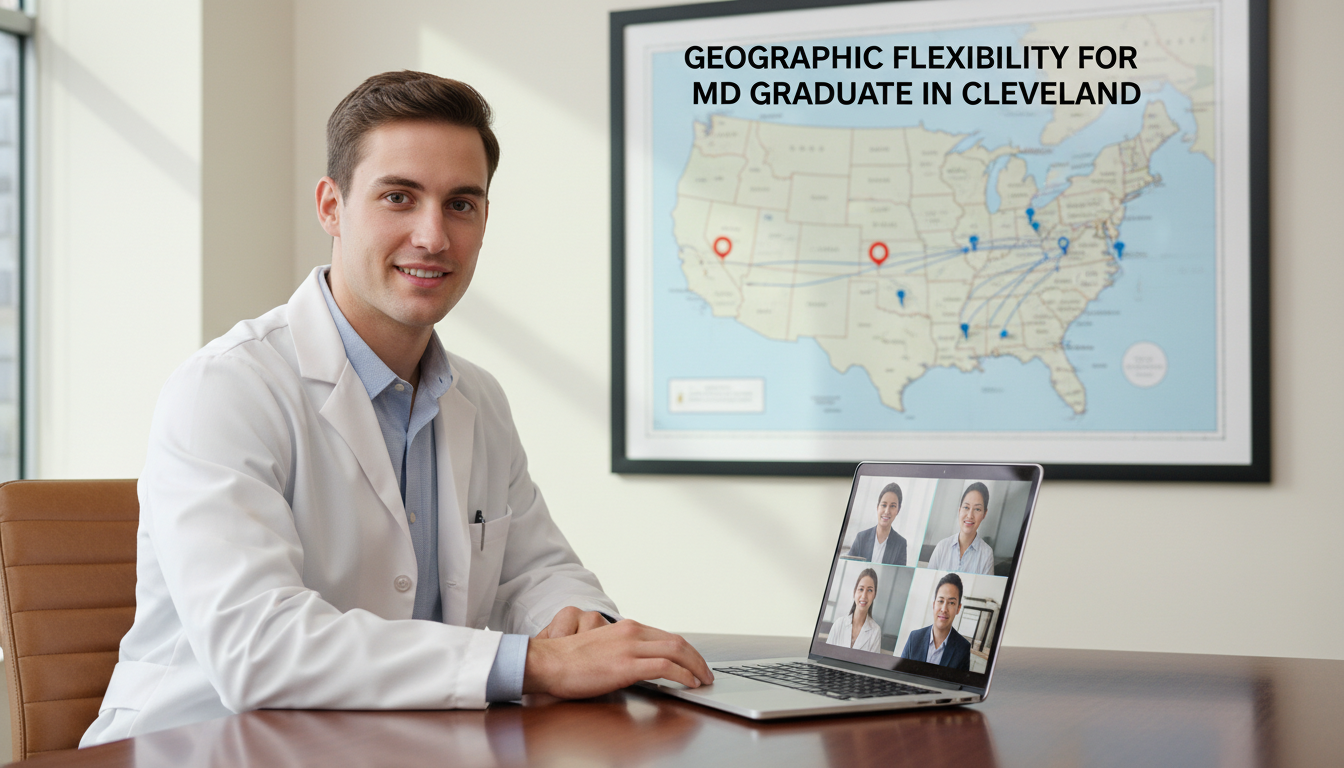
Applicant B’s outcome is driven less by “moving away” and more by effective geographic flexibility.
How to Communicate Geographic Flexibility Without Hurting Credibility
Programs subjectively evaluate how likely you are to rank them highly. Poorly handled geographic messaging can inadvertently signal you’re unlikely to come.
Common Mistakes
Over‑promising Commitment
- Telling every program you’re “absolutely committed” to their city or region, especially if you have strong, obvious Cleveland ties.
- Inconsistencies between your personal statement, supplemental essays, and interview responses can raise red flags.
Vague “I’ll Go Anywhere” Statements
- This can sound unrealistic and insincere.
- Programs may suspect you actually have strong, unspoken preferences.
Ignoring Local Ties in Other Regions
- If you have family, friends, or previous education outside Cleveland (e.g., college elsewhere), failing to highlight those ties undercuts your geographic flexibility story.
Better Communication Strategies
Explain the Logic Behind Your Flexibility
- Emphasize values that can be met in multiple regions:
- Academic rigor
- Commitment to underserved patients
- Diverse patient populations
- Strong mentorship culture
- Example response in an interview:
“Cleveland has been an incredible place to train, and I’d be happy to stay. At the same time, what really drives my geographic flexibility is finding a program that combines strong academic resources with significant exposure to underserved urban populations. That’s something I see both in Cleveland and here in [Program City].”
- Emphasize values that can be met in multiple regions:
Use “Anchors” in Multiple Regions
- If you grew up in another state, went to college elsewhere, or have relatives outside Ohio, highlight these connections:
- “Although I completed my MD in Cleveland, I grew up in [State], and I’m very comfortable in this region.”
- “Most of my extended family is actually in [Region], so training here would also feel like coming home.”
- If you grew up in another state, went to college elsewhere, or have relatives outside Ohio, highlight these connections:
Be Honest About Primary vs. Secondary Preferences
- You can say:
“My first preference is to remain in the Midwest near my support system if possible, but I applied broadly because I’m open to training wherever I can receive the strongest possible preparation for a career in [specialty/fellowship].”
- You can say:
This balances authenticity with flexibility, which programs respect.
Action Plan: Building a Geographic Strategy as a Cleveland MD Graduate
To translate all of this into action, use a stepwise plan:
1. Map Your Personal Geography
Create three lists:
- Strong Ties (family, education, relationships)
- Moderate Ties (previous internships, research, close friends)
- Interest Regions (places you’d like to explore living in, even without ties)
This clarifies where you can convincingly claim interest.
2. Categorize Programs by Region and Fit
For each program on your potential list, note:
- Region (e.g., Cleveland, broader Ohio, Midwest, East Coast, West Coast)
- Program type (academic, community, hybrid)
- Key features (fellowship match, case mix, research support)
Then, check your distribution:
- Are you overly concentrated in Cleveland?
- Do you have enough programs in regions where your profile is competitive?
- Are you including both “reach” and “solid” programs in multiple regions?
3. Tailor Your Messaging
- Adjust your personal statement to highlight Cleveland experience without sounding geographically locked.
- Prepare region‑specific talking points for interviews (e.g., why the Midwest, why the East Coast).
- Use supplemental applications to clarify genuine regional interest without contradicting yourself.
4. Discuss with Advisors Who Understand Cleveland and National Trends
- Meet with a faculty mentor or advisor familiar with Cleveland residency programs and national match data.
- Ask explicitly:
- “Given my grades, Step scores, and experiences, how much should I lean on Cleveland vs. branching out?”
- “Where geographically have students with a similar profile matched in the last 3–5 years?”
Their insights can refine your geographic preference residency strategy.
5. Re‑Assess After Interview Season Starts
If your interview invitations cluster in certain regions, that’s real‑time data:
- If you receive more invitations outside Cleveland than expected:
- Consider leaning into those regions with stronger expressions of interest.
- If most invitations are local (e.g., Cleveland and surrounding Midwest):
- Accept that your practical flexibility may be narrower this cycle—and build a robust rank list within those regions.
FAQs: Geographic Flexibility for MD Graduates in Cleveland
1. If Cleveland is my top choice, should I still apply broadly to other regions?
Yes. Even if a Cleveland Clinic residency or another Cleveland program is your top choice, apply broadly enough to protect yourself in the allopathic medical school match. Programs can fill unexpectedly, applicant pools vary, and personal circumstances can change. A broad list preserves your options while still allowing you to rank Cleveland first.
2. Will programs outside the Midwest worry that I won’t actually move from Cleveland?
They might, if you don’t address it proactively. Use your personal statement, supplemental essays, and interviews to explain convincingly why their region also fits your goals. Highlight any non‑Cleveland ties (e.g., where you grew up, where your partner works, or where you went to college). Focus on values (training quality, patient population, lifestyle factors) that make that region a natural fit for you.
3. How can I show regional preference without hurting my chances in other areas?
Be specific but not exclusive. Instead of saying, “I only want to be in Cleveland,” say, “I have strong ties to Cleveland and the Midwest and would be excited to continue training in this region.” When you apply to other areas, emphasize the aspects of their region that appeal to you—without claiming it’s your “only” or “absolute top” choice. Consistency and plausibility are key.
4. Is it risky to rank multiple programs in different regions highly?
Not at all. The NRMP algorithm is applicant‑favorable; it tries to place you in your highest‑ranked program that also ranks you. Ranking several programs in different regions simply reflects your true flexibility. As a Cleveland MD graduate, this often increases your overall chance of matching while still giving priority to your top choices—whether that’s a Cleveland residency program or an excellent opportunity elsewhere.
Geographic flexibility doesn’t mean abandoning your roots in Cleveland or pretending you don’t care where you live. For an MD graduate here, it means understanding your priorities, expressing them authentically, and building a broad, strategically structured application that maximizes both your match chances and your long‑term career satisfaction.