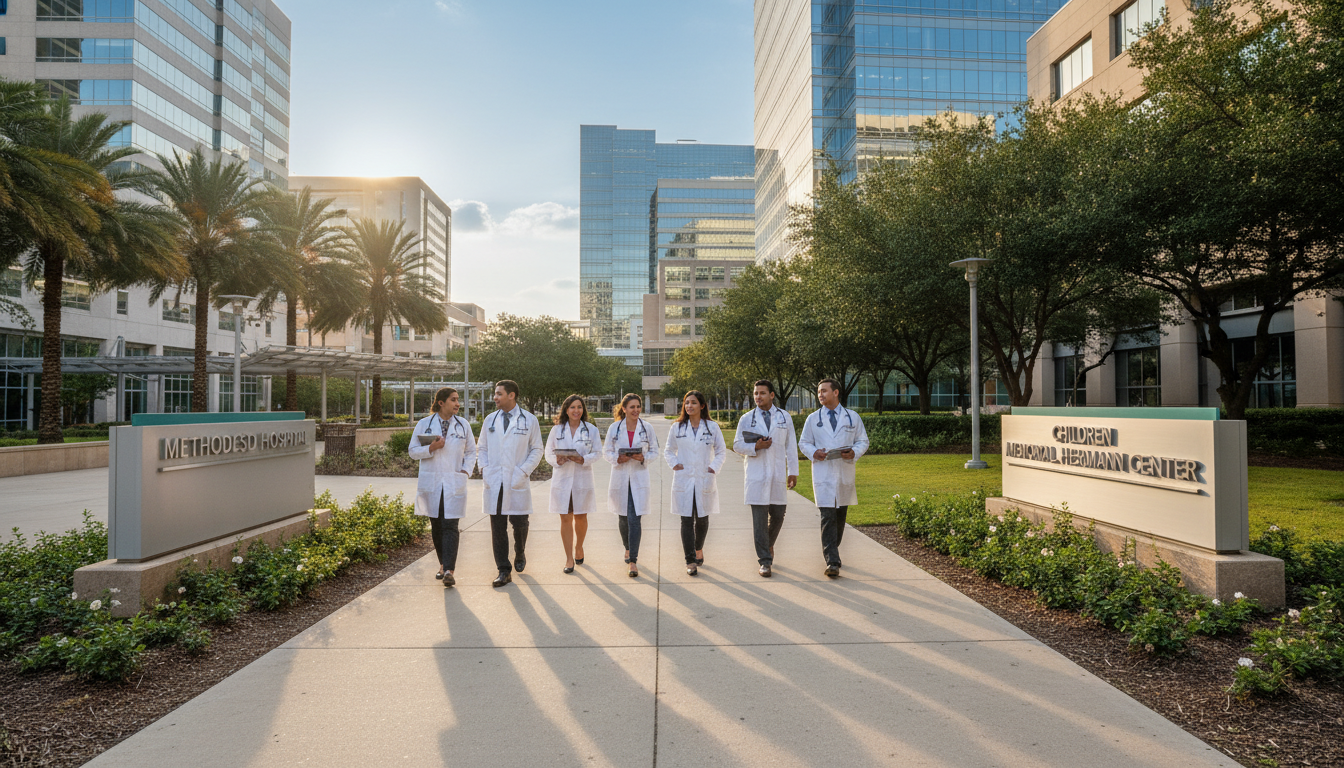
Choosing where to train is one of the most strategic decisions you will make as a non-US citizen IMG. If you are drawn to Chicago and Illinois residency programs but are also open to other areas, understanding geographic flexibility can dramatically strengthen your match strategy.
This article explains how to think about geographic preference residency decisions as a foreign national medical graduate, how to position Chicago in your regional preference strategy, and how to communicate both interest and flexibility effectively to program directors.
Understanding Geographic Flexibility as a Non-US Citizen IMG
Geographic flexibility means you have preferences about where you train, but you are not rigidly limited to a single city, state, or region. For a non-US citizen IMG, it is both a practical survival strategy and a powerful advantage in the Match.
Why Geographic Flexibility Matters More for Non-US Citizen IMGs
As a foreign national medical graduate, you are often navigating:
- Visa limitations (J-1 vs H-1B availability)
- Perceived risk by programs (sponsorship costs, perceived administrative burden)
- Higher competition in major cities (like Chicago, New York, California)
- Less US network (fewer faculty advocates and mentors in the US system)
Being geographically flexible allows you to:
Broaden the denominator of opportunities
Instead of only applying to “Chicago residency programs,” you expand to Illinois residency and nearby states, then to entire regions (Midwest, Great Lakes) and eventually national if your profile and resources allow.Reduce risk of going unmatched
Strong applicants sometimes go unmatched because they restrict themselves to a single city or narrow set of “prestige” hospitals. Geographic flexibility lowers that risk significantly.Find visa-friendly environments
Some areas, especially less competitive regions, are more open to sponsoring visas and to foreign national medical graduates who will serve their local communities.Demonstrate maturity and adaptability
Programs appreciate candidates who are clear about goals yet realistic about constraints. Thoughtful flexibility (not desperation) signals professionalism.
Chicago as a Geographic Anchor, Not a Cage
You may love Chicago for its:
- Diverse patient population
- Large academic centers (e.g., University of Chicago, Northwestern, UIC, Loyola, Rush)
- Strong community and safety-net hospitals
- Significant immigrant communities and cultural familiarity
Use Chicago as your anchor—your central preference—but not your cage. Thoughtful non-US citizen IMG applicants set up a hierarchy like:
- Tier 1 – Primary preference: Chicago residency programs and immediate suburbs
- Tier 2 – Secondary preference: Illinois residency options outside Chicago (Rockford, Peoria, Springfield, Urbana, etc.) and nearby metro areas in neighboring states (Milwaukee, Indianapolis, Detroit, St. Louis)
- Tier 3 – Backup regions: Visa-friendly programs in Midwest and nationwide that are historically more open to IMGs
This is geographic flexibility: a clear priority (Chicago) plus a structured expansion plan.
Step 1: Clarify Your True Geographic Priorities
Before you can be flexible, you need to be honest with yourself about what matters most.
Key Questions to Ask Yourself
How critical is Chicago specifically?
- Is it because of family, spouse/partner, friends, or support systems?
- Do you already have housing or financial/logistical reasons?
- Or is it a general attraction to a big, diverse US city?
Are you prepared to live outside a major metro area?
- Would you be comfortable in a mid-size city, college town, or more rural community?
- Can you handle limited public transport or fewer international grocery stores and cultural communities?
What is your long-term plan in the US?
- Do you ultimately want to practice in Chicago or Illinois?
- Would you be willing to train elsewhere and later move to Chicago for fellowship or practice?
What are your visa and family constraints?
- Are you J-1 or H-1B dependent?
- Do you have dependents (spouse/children) whose needs shape where you can live?
Example: Two Different Geographic Mindsets
Applicant A
- Married, spouse already working in downtown Chicago
- Wants to stay in Chicago or within commuting distance
- Still open to some Illinois residency programs outside the city if opportunities are strong
- Strategy: High density of Chicago applications + selected Illinois and neighboring states
Applicant B
- Single, highly flexible
- Loves Chicago but has no family or fixed location constraints
- Strategy: Apply broadly across Chicago, Illinois, Midwest, and multiple US regions; use Chicago as a preference but not the main filter
Document your answers. This personal clarity will shape your geographic preference residency narrative in your personal statement, interviews, and Rank Order List.
Step 2: Mapping Chicago and Illinois into a Wider Regional Preference Strategy
After clarifying your priorities, translate them into a regional preference strategy that balances desire with realism.

Layer 1: Chicago Residency Programs
For most non-US citizen IMGs targeting Chicago, your first layer includes:
Academic medical centers
- Programs with strong research and subspecialties
- Often more competitive and sometimes more restrictive for visas
Large community and safety-net hospitals
- Often more IMG-friendly
- May have long histories of J-1 sponsorship
- Sometimes more hands-on clinical exposure
Your tasks:
- Identify which Chicago programs sponsor your visa type (J-1 and/or H-1B).
- Check IMG percentages in each program’s current residents.
- Read program websites for explicit statements about non-US citizen IMG friendliness or visa policies.
Layer 2: Broader Illinois Residency
Geographic preference residency planning should then expand to:
- Medium-sized cities in Illinois (e.g., Peoria, Rockford, Springfield, Urbana/Champaign)
- Community-based programs affiliated with larger universities (e.g., regional campuses)
- Safety-net, county, and veterans’ hospitals
Advantages of this layer:
- Often less competitive than central Chicago
- More willing to sponsor visas and train IMGs
- Provide strong clinical exposure and autonomy
- May have pipeline relationships to Chicago fellowships later
Layer 3: Surrounding Metro Areas and the Wider Midwest
This is where location flexibility match strategy becomes powerful. Nearby cities:
- Milwaukee (Wisconsin)
- Indianapolis (Indiana)
- Detroit (Michigan)
- St. Louis (Missouri)
- Minneapolis–St. Paul (Minnesota) and others
Benefits of this regional preference strategy:
- You’re still in a relatively similar climate, culture, and patient demographics as Chicago
- Many Midwest programs are historically IMG-friendly
- You can later pursue fellowship or job opportunities back in Chicago or Illinois
Layer 4: National Expansion if Needed
If your profile suggests you need to maximize your chances (e.g., lower scores, older YOG, gaps), consider:
- Expanding beyond the Midwest to IMG-friendly regions nationally (e.g., parts of the South, Northeast, or smaller cities nationwide)
- Focusing on programs with high percentages of foreign national medical graduates and consistent J-1 sponsorship
This national layer does not contradict your Chicago interest; it simply serves as a safety net for the Match.
Step 3: Communicating Chicago Interest and Flexibility to Programs
One of the biggest challenges is balancing:
“I am truly committed to Chicago”
with
“I am flexible and realistic if Chicago doesn’t work out.”
In Your Personal Statement
For Chicago-focused programs, you can:
- Show specific reasons for Chicago/Illinois residency:
- “The diverse immigrant populations on the South and West Sides of Chicago align closely with my interest in caring for underserved communities similar to those in my home country.”
- Mention prior experience or ties:
- Family in the area, prior observerships/clerkships in Chicago, mentors at local institutions
- Emphasize long-term alignment:
- Desire to practice in urban, diverse settings like Chicago after training
For more geographically broad applications, you can:
- Express a general interest in the Midwest or specific regions
- Connect your adaptability and cultural flexibility to success in different settings
- Avoid sounding like you only want one city (unless you genuinely cannot move for family/visa reasons—then explain transparently and respectfully)
In MyERAS Geographic Preferences (if used) and Filters
ERAS sometimes allows you to indicate geographic preferences. Use this thoughtfully:
- It is reasonable to list Midwest and perhaps an additional region if you truly are flexible.
- Avoid stating only Chicago in formal systems; most programs cannot see city-level preference anyway, but keep your narrative coherent.
In Interviews
Prepare clear, calm answers to questions like:
- “Why Chicago?”
- “If you are so interested in Chicago, why did you apply to our program in [other city]?”
- “Would you come here if this is your only offer?”
Example answer for a non-Chicago program:
“Chicago is where I first experienced the US healthcare system, so it has a special place in my journey. However, my main priority is to train in a program that values education, supports international graduates, and serves a diverse population. Your program offers all of these. If I match here, I would be fully committed and excited to train in this community.”
This shows authentic Chicago interest but also mature geographic flexibility—exactly what many PDs appreciate.
Step 4: Optimizing Your Application List with Geographic Flexibility
Geographic flexibility only works if it is reflected in a balanced program list.

Build a Spreadsheet That Reflects Strategy
Include columns such as:
- City, State
- Program Type (academic, community, hybrid)
- Visa Type Sponsored (J-1, H-1B)
- IMG Percentage / Non-US Citizen IMG notes
- US Clinical Experience (USCE) requirements
- Connection to Chicago/Illinois/Midwest (e.g., same university system, known to send graduates to Chicago fellowships)
- Competitiveness tier (Reach / Target / Safety)
Then:
- Ensure you have enough programs in each tier and in each region
- Confirm that not all “reach” programs are in Chicago alone
- Add “safety” programs in more flexible locations and IMG-friendly communities
Aim for Diversity of Programs
Within Chicago and beyond, target:
- Academic centers for research and prestige
- County or safety-net hospitals for depth of clinical exposure
- Community programs with good fellowship placement records
- Programs known for strong support of foreign national medical graduates
For a typical non-US citizen IMG in Internal Medicine or Family Medicine, this might look like:
- 15–20 Chicago programs (mixed academic and community)
- 10–15 additional Illinois residency programs
- 15–30 programs in neighboring Midwest states
- 10–20 IMG-friendly programs nationally
Numbers will vary depending on specialty competitiveness, your profile, and finances, but the concept of distribution is key.
Use Data on IMG Friendliness and Visa Sponsorship
Before finalizing your list:
- Check official program websites for visa policies
- Review NRMP Charting Outcomes and FREIDA for IMG percentages where available
- Talk to alumni, consultants, or mentors who understand which Midwest/Illinois programs actually take non-US citizen IMGs regularly
This ensures your geographic flexibility is not just theoretical—it’s targeted to realistic opportunities.
Step 5: Balancing Geographic Flexibility with Personal and Professional Needs
Flexibility doesn’t mean ignoring your well-being. As a foreign national medical graduate, you must also protect your ability to thrive.
Consider Personal Support Systems
Ask yourself:
- Do you have family or friends in Chicago or nearby areas who can help you adjust?
- Would moving to a more isolated region significantly affect your mental health or resilience?
- Are there communities (religious, cultural, linguistic) you need to feel grounded?
If Chicago is where your essential support lies, it’s valid to weight it more heavily—but then you must compensate by applying more broadly within the region and slightly beyond.
Weigh Career Goals and Fellowship Aspirations
Some specialties and fellowships are highly competitive. Training in a well-structured community program outside Chicago does not exclude you from returning to Chicago for fellowship or practice.
Many physicians follow a path like:
Residency in a mid-size Midwest city → Fellowship at a Chicago academic center → Practice in Illinois or Chicago suburbs
When evaluating non-Chicago programs, ask:
- Do they have graduates who matched into Chicago or Illinois fellowships?
- Do faculty have connections with Chicago academic institutions?
- Is there a track record of supporting foreign national medical graduates in advanced training?
Financial and Practical Realities
Practical questions:
- Is the cost of living sustainable in a particular city on a resident’s salary?
- Will you need a car, and can you afford buying and maintaining one?
- How will moving multiple times (for residency then fellowship) affect your finances and visa logistics?
Sometimes, a more modest city with lower rent and easier logistics can provide a more stable foundation for your early years in the US than an extremely expensive urban center.
Step 6: After the Match – Using Flexibility to Return to Chicago Later
Geographic flexibility is not only for securing a residency position. It shapes your long-term pathway as well.
Scenario: You Match Outside Chicago or Illinois
If you train elsewhere but still aim for Chicago:
- Maintain ties with Chicago mentors, faculty, or contacts if you have them
- Attend regional or national conferences where Chicago programs are present
- Seek research or case collaborations with Chicago-based faculty when possible
- Apply to Chicago fellowships or jobs while highlighting:
- Your experience with diverse populations
- Your adaptability across different health systems
- Your long-term commitment to serving communities similar to Chicago’s
Programs in Chicago value residents who can handle complexity, diversity, and resource challenges—experiences you can gain in many other cities, not only within Illinois residency programs.
Scenario: You Match in Chicago
If you achieve your primary goal:
- Use your time there to build networks, strengthen your CV, and explore future opportunities within Illinois and beyond
- Remember that you may later want to move for fellowship or job; the geographic flexibility mindset still matters
- Support other non-US citizen IMGs who are trying to navigate the same decisions—your insight will be extremely valuable
Frequently Asked Questions (FAQ)
1. As a non-US citizen IMG, is it risky to only apply to Chicago residency programs?
Yes, usually. Chicago is a competitive market with many applicants, including US graduates and IMGs. Limiting your applications solely to Chicago residency programs significantly increases your chance of going unmatched, unless your profile is exceptionally strong and aligned with multiple programs’ priorities. A safer approach is to prioritize Chicago but apply broadly across Illinois residency options and IMG-friendly programs in the Midwest and beyond.
2. If I say I am “geographically flexible,” will Chicago programs think I’m not truly committed to them?
Not if you communicate it correctly. You can clearly express:
- Why Chicago is meaningful to you (specific, personal, and professional reasons)
- That your primary preference is Chicago/Illinois
- That, as a foreign national medical graduate, you also need to be realistic and open to where opportunities exist
Programs understand the constraints non-US citizen IMGs face. Thoughtful geographic flexibility is seen as maturity, not disloyalty.
3. How should I rank programs if my heart is in Chicago but my safest offers are outside Illinois?
Your Rank Order List should reflect where you would genuinely be happiest and most successful, assuming you match there, not where you think you are “more likely” to match. Usually, this means:
- Rank your Chicago programs in true preference order
- Rank your Illinois and non-Chicago programs afterwards in the order you would actually be willing to attend
Geographic flexibility ensures you have realistic backup options, but you should still honor your authentic preferences when ranking.
4. Does training outside Chicago reduce my chances of working there in the future?
Not necessarily. Many physicians practice in Chicago after training elsewhere. To keep doors open:
- Choose a program with solid clinical training and at least some history of graduates going to larger centers
- Stay engaged in research, networking, and conferences where Chicago institutions are present
- Consider fellowships in Chicago as a pathway back
Your residency location is important, but it does not permanently fix your career geography, especially if you continue to build connections and a strong professional record.
Geographic flexibility for a non-US citizen IMG is not about giving up your dream of Chicago; it’s about strategically protecting that dream. By anchoring your preferences in Chicago and Illinois, while building a wide, realistic safety net across the Midwest and beyond, you dramatically increase your chances of matching—and of ultimately shaping the career and life you want in the United States.