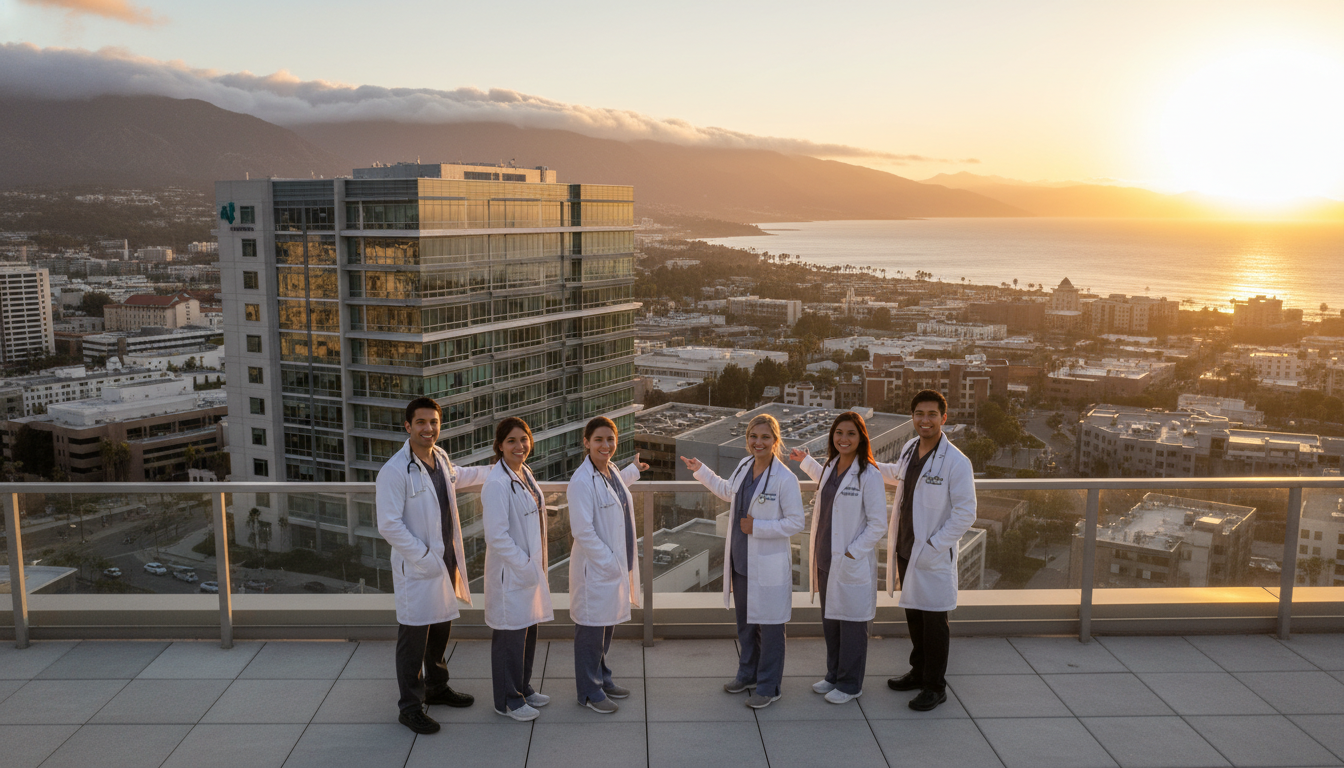
Seattle is an attractive destination for many non-US citizen IMGs: strong academic centers, a growing tech and biotech ecosystem, and a reputation for progressive, patient-centered care. Yet one of the most powerful—but often underused—tools you have as a foreign national medical graduate is geographic flexibility.
Understanding how to present your geographic preference (or flexibility) strategically can make the difference between a scattered, low-yield application list and a targeted, realistic match strategy that opens doors in Seattle and beyond.
This article walks through how to think about geographic flexibility specifically as a non-US citizen IMG interested in Seattle residency programs and Washington state residency more broadly.
Understanding Geographic Flexibility in the Match
Geographic flexibility is your willingness and ability to train in multiple locations, not just one city or region. For a non-US citizen IMG targeting Seattle, it means:
- You prioritize Seattle and Washington state, but
- You are also realistically open to other regions, and
- You can clearly explain this hierarchy of preferences in ERAS, interviews, and emails.
Why geographic flexibility matters even if Seattle is your top choice
Residency slots in and around Seattle—especially at large academic institutions—are highly competitive. For a foreign national medical graduate, there are extra filters:
- Visa sponsorship limitations (J-1 vs H-1B)
- Program bias toward US graduates
- Limited interview slots due to geographic competition
Rigidly stating “Seattle only” without a strategic explanation can:
- Shrink your pool of programs significantly
- Make you appear less realistic about your chances
- Concern programs that you might rank only a tiny geographic subset
On the other hand, thoughtful geographic flexibility can:
- Increase your interview volume
- Provide backup options while still keeping Seattle in play
- Signal maturity and realism to program directors
Distinguishing “preference” from “restriction”
For your application, think in three tiers:
- Strong Preference Region
- Example: Greater Seattle area, Puget Sound region, Western Washington
- Preferred but secondary regions
- Examples: West Coast (Oregon, California, Idaho), Pacific Northwest, or cities with similar climate/health systems
- Acceptable flexibility
- Other US regions you would realistically consider if your first tiers are not feasible
Your goal is to communicate:
“Seattle and Washington state are my priority, but I am also seriously open to [X, Y] regions based on [objective reasons].”
How Geographic Preference Works in Seattle-Focused Applications
Seattle residency programs vary widely in how they view and weigh geographic preference. As a non-US citizen IMG, you must understand the practical landscape.
Types of Seattle and Washington state residency programs
You’ll encounter several types of programs, each with different tolerance for non-US citizen IMGs and geographic flexibility:
Large university-based programs (e.g., major Seattle academic centers)
- Often highly competitive, many US grads, strong research.
- Visa sponsorship policies may be strict or limited (some only J-1).
- Might favor applicants with prior US training or strong Seattle ties.
Community-based programs in Seattle metro or nearby cities
- Often more IMG-friendly.
- More flexible on geographic background if clinical performance is strong.
- May be more open to J-1 and sometimes H-1B.
Smaller or newer Washington state residency programs (outside Seattle)
- Examples: Yakima Valley, Spokane, Tri-Cities, Bellingham, rural or semi-rural family medicine or internal medicine programs.
- Frequently have a higher percentage of IMGs.
- May offer broader visa sponsorship.
Understanding this spectrum lets you shape a regional preference strategy: core focus on Seattle programs plus thoughtful inclusion of other Washington state and West Coast sites.
How programs interpret your geographic story
Program directors (PDs) and selection committees often ask:
- Does this applicant have a credible reason to be in this region?
- Will they be happy and stay engaged here for 3+ years?
- Are they applying here only because they heard it’s “IMG-friendly”?
- Are they being realistic given their profile and geographic constraints?
For Seattle specifically, PDs may look for:
- Prior time spent in the Pacific Northwest (PNW): rotations, relatives, work
- Familiarity with the rainy climate, urban–suburban mix, and cost of living
- Understanding of local patient populations (refugee health, Native/Indigenous health, tech-driven demographic changes, etc.)
Your task: demonstrate genuine Seattle and Washington state interest, while still making it clear that you understand competition and are open to other, similar regions.
Building a Geographic Strategy as a Non-US Citizen IMG
This is where geographic flexibility becomes a tangible strategy rather than a vague concept.

Step 1: Define your “Seattle-first” but not “Seattle-only” plan
Start by mapping your preferences:
Tier A: Primary target – Seattle metro & immediate surroundings
- University-based programs in Seattle
- Community or affiliate programs in the Seattle metro or Puget Sound region
Tier B: Washington state residency outside Seattle
- Family medicine, internal medicine, psychiatry, pediatrics, or transitional year in Spokane, Yakima, Tacoma, Olympia, and other cities
- Programs with mission focus on underserved or rural communities
Tier C: Similar West Coast / Pacific Northwest regions
- Oregon, Idaho, and possibly Northern California or Alaska
- Places with similar healthcare systems, patient demographics, or climate
Tier D: Nationwide options that align with your profile
- IMG-friendly internal medicine, family medicine, psych, peds, or prelim programs
- States with significant visa sponsorship histories (e.g., NY, NJ, PA, MI, IL, TX)
This layered approach allows you to retain a strong Seattle focus while protecting yourself from over-concentration risk.
Step 2: Balance your program list: depth vs breadth
A common mistake for non-US citizen IMGs is either:
- Over-concentrating in one city (e.g., mostly Seattle), or
- Spreading too thin with no coherent geographic preference residency story.
Aim for a balance:
- 30–40% of applications: Washington state + broader Pacific Northwest (if Seattle is truly your top choice)
- 60–70%: Other IMG-friendly regions based on competitiveness and visa options
Adjust this ratio based on:
- Your USMLE/COMLEX scores
- YOG (year of graduation) and clinical experience gap
- US clinical experience (USCE) length and type
- Visa type needed (J-1 vs H-1B) and how restrictive that makes you
Step 3: Align your experiences with your geographic narrative
To make your geographic preference credible:
USCE in the PNW or West Coast
- Observerships or externships in Seattle or Washington state are ideal.
- If not possible, West Coast USCE still supports a “regional comfort” argument.
Personal or family ties
- Relatives living in Washington or neighboring states
- Partner/spouse working or studying in the region
- Prior non-clinical time in Seattle (e.g., language course, research, visiting scholar)
Thematic alignment with the region’s healthcare needs
- Interest in refugee health, migrant health, or indigenous health—important in Washington state.
- Rural or underserved care experience that matches Yakima/Spokane/rural Washington missions.
Document these clearly in your ERAS CV, personal statement, and interview answers.
Presenting Geographic Flexibility in Your Application
Having a solid plan is only half of the work. You also need to communicate your geographic flexibility in a way that:
- Makes Seattle your clear priority
- Shows realism and openness
- Avoids sounding contradictory or opportunistic
Using ERAS sections strategically
Personal Statement (PS)
If you are using a single PS, you can:
- Emphasize: “I am particularly drawn to the Pacific Northwest, and I hope to train in programs such as those in Seattle and Washington state.”
- Then add: “At the same time, I value programs across the country that share these commitments to [underserved care, primary care, academic rigor, etc.].”
If writing region-tailored PS variants (where allowed and practical):
- A PNW-focused PS can explain your link to Seattle and Washington specifically.
- Another version can be slightly more national in scope.
Geographic Preferences (if ERAS/NRMP offers such fields that year)
- If you indicate a regional preference, consider selecting “Pacific Northwest/West Coast” rather than only “Washington” unless you have a very strong buffer of other programs in-state.
- Use any “additional comments” spaces (if available) to clearly but briefly say:
- “I particularly value opportunities in Seattle and Washington state due to [X]. I am also open to training in [Y region] where similar patient populations and care models exist.”
Program Signaling (if applicable)
- If signals are limited, you should prioritize:
- 1–2 top-choice Seattle residency programs
- 1–2 other Washington state programs
- 1–2 backup regions with strong IMG/visa histories
- Use program signaling to reinforce that you are serious about Seattle and the PNW, not just applying broadly without intention.
- If signals are limited, you should prioritize:
Handling interviews and emails: what to say and what not to say
During interviews, you may be asked:
“Where else have you applied?”
“Are you focusing on any particular region?”
“If you couldn’t match in Seattle, what would you do?”
For a non-US citizen IMG pursuing Seattle:
Do say:
- “Seattle and Washington state are my top choices because of [specific, genuine reasons].”
- “However, I have also applied to programs in the broader Pacific Northwest and several other regions where I feel I can grow as a clinician and maintain visa sponsorship.”
- “My main priority is to join a program that offers [X] and [Y], which I see strongly represented here in your program and region.”
Avoid saying:
- “Seattle only, I won’t consider anything else.” (This can sound unrealistic or risky.)
- “I applied everywhere.” (Lacks focus and weakens your story.)
- “I just want a visa.” (Even if visa is essential, frame it more professionally.)
In follow-up emails:
If writing to Seattle or Washington state programs, you can use language like:
- “Your program is one of my top choices in the Seattle area due to [specific features].”
- “I have a strong long-term interest in practicing in Washington state, especially in [urban/underserved/rural] communities.”
If you plan to send any “I will rank you highly” messages, be honest. Do not promise that every city is your “top choice.” It harms credibility across the board.
Visa Considerations and Location Flexibility
For a foreign national medical graduate, geographic flexibility interacts directly with visa strategy. Seattle might be your dream, but your visa needs may require a wider net.

J-1 vs H-1B and how they affect your geographic approach
J-1 Visa
- Most common for residency.
- Many Seattle and Washington state programs are J-1 friendly.
- Post-residency, you must consider the two-year home requirement or waiver options (often in underserved/rural areas).
- Geographic flexibility during residency can help position you for later J-1 waiver jobs, including in rural Washington.
H-1B Visa
- Fewer programs sponsor H-1B, and some Seattle university-based programs may have limited or no H-1B slots.
- If you must have H-1B, your geographic pool dramatically shrinks.
- In this case, maximize national flexibility, not just Seattle, while still applying to Seattle H-1B-friendly programs if available.
Using location flexibility to protect against visa-related risk
As a non-US citizen IMG:
- Verify visa policies of each Seattle and Washington state residency program before applying.
- Use your geographic flexibility to add IMG-friendly, visa-sponsoring programs across multiple regions.
- Ask residents (via email or LinkedIn) in Seattle programs about:
- Recent visa sponsorship patterns
- Any unofficial preferences (e.g., J-1 only, no H-1B for IMGs)
Showing programs you understand these constraints—and have a realistic plan—can increase their confidence in ranking you.
Practical Examples and Actionable Tips
To translate this into a concrete geographic preference residency plan, consider two example profiles.
Example 1: Recent graduate, strong scores, limited USCE
Profile:
- YOG: 2023
- USMLE Step 2: 245
- USCE: 1 month observership on the East Coast
- Visa: Needs J-1
Strategy:
- Target Seattle academic and community IM programs plus Washington state family medicine and psych programs, emphasizing interest in PNW.
- Add Oregon and Idaho programs with similar mission and patient demographics.
- Broaden to IMG-friendly East Coast and Midwest as a safety net.
- In essays/interviews, clearly articulate:
- “I hope to train in Seattle or Washington state due to [X], but I am also excited about PNW and other regions with similar patient populations and training environments.”
Example 2: Older YOG, strong clinical background, must have H-1B
Profile:
- YOG: 2015
- Recent home country clinical experience, multiple years
- USMLE Step 2: 225
- Visa: Must have H-1B (cannot accept J-1 due to personal/legal reasons)
Strategy:
- Research and list Seattle-area and Washington state programs that explicitly sponsor H-1B. There may be only a few.
- Expand widely to national H-1B-sponsoring programs, accepting that Seattle alone is too narrow.
- In application materials, communicate:
- “I particularly value training in Seattle or Washington state; however, due to my visa needs, I am applying broadly to H-1B-sponsoring programs where I can best serve diverse and underserved communities.”
In both cases, Seattle remains a priority, but success in the Match depends on location flexibility match rather than geographic rigidity.
Actionable tips checklist
- Make a tiered region list: Seattle → Washington → PNW → National.
- Build a spreadsheet with program visa type, IMG percentage, and location.
- Tailor at least one section of your PS to highlight PNW/Seattle interest.
- Avoid writing or saying “Seattle only” unless you truly have a safety alternative (e.g., prior US green card, backup career plan).
- Use informational interviews (talk to current residents, alumni) to validate your understanding of Seattle and Washington state training environments.
- Regularly review ERAS and NRMP updates about geographic preference features so you don’t misrepresent or over-restrict yourself.
FAQs: Geographic Flexibility for Non-US Citizen IMGs Targeting Seattle
1. If Seattle is my dream location, is it a mistake to apply elsewhere?
No. For a non-US citizen IMG, especially one needing a visa, applying only to Seattle residency programs is usually a high-risk strategy. Applying broadly does not mean you are less committed to Seattle; it means you are realistic about competition and visa constraints. You can still rank Seattle programs highest while having other regions as necessary backups.
2. Will programs in other regions think I am less interested in them if I mention Seattle?
If you communicate carefully, no. Avoid saying “Seattle is my only dream.” Instead, focus on program features (patient population, curriculum, mission) that you appreciate everywhere. For Seattle programs, you can emphasize additional personal or regional motivations. For other regions, highlight what uniquely attracts you to them—without comparing them negatively to Seattle.
3. How can I show strong Seattle interest if I’ve never been to Washington state?
You can still build a convincing case by:
- Doing virtual electives, webinars, or conferences linked to Seattle or PNW institutions.
- Reading and mentioning specific program initiatives (e.g., community outreach, research areas, underserved care projects).
- Explaining how your background prepares you for Seattle’s patient demographics and climate.
- Demonstrating a clear understanding of cost of living, culture, and environment, showing you have done your homework.
4. Does indicating a geographic preference in ERAS hurt my chances elsewhere?
It depends on how the system is implemented in a given cycle and how you use it. Generally, indicating a broad regional preference (e.g., Pacific Northwest/West Coast) is safer than declaring one city only. Many programs still review all applications, regardless of stated geographic preference. Use the feature to signal seriousness, not to artificially restrict yourself.
By embracing geographic flexibility while keeping a clear Seattle-first mindset, you can craft a residency application strategy that is both focused and resilient. As a non-US citizen IMG, this balance is crucial for navigating the realities of visa sponsorship, program competitiveness, and the dynamic landscape of Seattle and Washington state residency opportunities.