Understanding Geographic Flexibility as a Non‑US Citizen IMG
For a non-US citizen IMG interested in Denver residency programs, “geographic flexibility” is not just a nice talking point—it can be a strategic advantage and, in many cases, a necessity. Program directors know that immigration, visas, and limited sponsorship options can constrain where a foreign national medical graduate can realistically match. How you present your geographic preferences can directly affect your interview offers and rank list outcomes.
In the context of a Colorado residency search, geographic preference residency questions in ERAS and interviews will push you to clarify:
- How committed are you to Denver or Colorado specifically?
- Are you open to other regions or only one metro area?
- Does your visa status limit where you can apply?
- How does your personal life (family, finances, support system) shape your location flexibility match strategy?
This article walks through how to think realistically and strategically about geographic flexibility as a non-US citizen IMG considering Denver and broader Colorado residency options.
Why Geographic Flexibility Matters Extra for Non‑US Citizen IMGs
Geography affects every IMG, but for a foreign national medical graduate, the stakes are higher. Programs must consider both fit and logistics (especially visa sponsorship) when ranking international graduates.
1. Visa Sponsorship is Uneven Across Regions
Not all Denver residency programs or Colorado residency sites sponsor the same types of visas. Some general patterns:
- Some academic Denver programs (e.g., large university-affiliated hospitals) may sponsor both J-1 and H-1B visas.
- Smaller community programs in Colorado may:
- sponsor only J‑1
- have limited or no IMG sponsorship history
- accept IMGs only with EAD/green card or US citizenship
Because of this, a non-US citizen IMG who insists on a very narrow geographic target (e.g., “Denver only, H‑1B only”) may dramatically reduce their match odds.
Practical effect:
The more flexible you are with both geography and visa type (when safe and reasonable for your long-term plans), the easier it is to build a robust, realistic program list.
2. Limited Interview Slots for IMGs
Many programs cap the number or proportion of IMGs they interview. If there are only a few IMG spots in Denver residency programs, staying rigidly tied to only one city becomes high-risk.
Programs often consider:
- US clinical experience in the same or nearby region
- Ties to Colorado or neighboring states
- Flexibility to train at a variety of practice settings (urban, suburban, rural)
Geographic flexibility lets you tap into both Denver urban academic centers and community and regional programs across Colorado and neighboring states, widening your net.
3. Personal and Legal Realities
As a non-US IMG, you also need to align location with:
- Cost of living vs. resident salary
- Access to immigration services and international airports
- Proximity to cultural communities or language support
- Availability of spousal employment or family schooling options
Program directors understand these pressures, but they also want to see that you can adapt to different settings if needed.

Building a Realistic Regional Preference Strategy (Denver + Beyond)
To balance ambition and safety in your application, you need a clear regional preference strategy. This goes far beyond simply clicking boxes in ERAS.
Step 1: Start with Honest Self-Assessment
Before you commit to “Denver or nothing,” evaluate:
Academic profile
- USMLE scores
- Gaps since graduation
- Strength and recency of clinical experience
- Strength of letters (especially from US faculty)
Visa needs
- Willing to take J‑1? Or only H‑1B?
- Already have EAD, green card, or other work authorization?
Personal constraints
- Dependents or spouse with location needs
- Health needs requiring specific facilities or climate
- Financial limits (e.g., cannot afford very high cost-of-living regions)
Reality check example:
If you are a non-US citizen IMG with average scores, a moderate gap, and needing H‑1B in a saturated city like Denver, you must greatly broaden your geographic flexibility match plan outside Colorado to remain competitive.
Step 2: Define “Core Region” vs “Expandable Region”
For most applicants interested in Denver:
Core region
- Denver metro and surrounding Front Range communities
- Other Colorado residency programs in cities like Aurora, Colorado Springs, Greeley, Fort Collins, Pueblo, Grand Junction
Expandable region
- Neighboring or similar states (e.g., Wyoming, Utah, New Mexico, Kansas, Nebraska), particularly where there may be fewer IMGs applying
- Regionally similar settings (mountain west or midwestern states) that share culture/patient population types you can learn to appreciate
Use a tiered approach:
Tier 1 – High priority:
Denver and specific Colorado residency programs you strongly prefer and that clearly accept/sponsor non-US citizen IMGs.Tier 2 – Medium priority:
Other Colorado programs and regional programs in neighboring states with a strong track record of accepting IMGs or sponsoring J‑1/H‑1B.Tier 3 – Safety/expansion:
Less competitive or more IMG-friendly programs further from Denver, still within regions you can realistically live in.
This regional preference strategy prevents you from being too narrow (e.g., 10 applications all in Denver) or too scattered (100 random programs across the US with no narrative).
Step 3: Use Program Filters Effectively
When you build your list:
- Use tools like FREIDA, program websites, and third-party databases to check:
- Visa types sponsored
- Percentage of IMGs in the current resident class
- Any explicit IMG or visa restrictions
- For Denver and Colorado, confirm:
- Are there current international graduates in the program?
- Are they on J‑1 or H‑1B?
- Does the program mention preference for US citizens only?
If the information is unclear, consider a polite email to the program coordinator asking about visa sponsorship for foreign national medical graduates. This also shows professional interest.
Presenting Geographic Preferences in ERAS and Interviews
How you speak about geography can either reassure program directors or raise red flags. This is especially true for non-US citizen IMG applicants who could be perceived as rigid or high-risk because of visa complexities.
1. ERAS Geographic Preference Questions
ERAS allows you to indicate geographic preference residency choices (regions or states). If Denver and Colorado are your main targets, you might be tempted to select only “Mountain” or mention “Colorado only.”
This can backfire if:
- Programs outside Colorado see you as unlikely to rank them high
- You later apply broadly to other regions but your declared geographic preference doesn’t match
More strategic approach:
If Denver/Colorado is your top choice but not your only option, you can:
- Select Mountain region and possibly another compatible region
- Use your personal statement and experiences for Denver-area programs to highlight specific ties
In program-specific supplemental questions:
- Emphasize genuine reasons for wanting Denver/Colorado (patient population, lifestyle, academic interests, or family ties)
- Still communicate openness to practicing in other regions if needed
Example wording in a supplemental question:
“Colorado is my top geographic preference because I completed an observership in Denver and greatly value the diverse urban and suburban patient population along the Front Range. I also have extended family in the region who can provide crucial support during residency. While I am especially drawn to Denver residency programs, I remain open to training within the broader Mountain and Midwest regions where I can serve similar communities and continue my long-term interest in primary care for underserved populations.”
This shows clear preference without sounding like “Denver or nothing.”
2. Interview Responses About Location Flexibility
Interviewers may ask:
- “Why Denver?”
- “Would you be happy here long-term?”
- “Are you open to practicing in other areas after training?”
- “Do you have geographic constraints due to your visa or family?”
As a non-US citizen IMG, your goals are to:
- Show authentic enthusiasm for their location
- Explain legitimate reasons tying you to the region
- Signal reasonable flexibility—you can thrive in their setting even if it’s not your #1 city
- Avoid sounding like you’re only using their program as a backup
Strong answer example (Denver program):
“Denver is my first-choice city for residency. I’ve spent six months here in clinical observerships and have built a support network in the local immigrant community. I appreciate the balance of an academic environment with access to a diverse patient population, including many Spanish-speaking and refugee families, which aligns with my long-term interest in community internal medicine. That said, I know there is no guarantee in the Match, so I have also applied to other Colorado and Mountain West programs where I believe I can contribute similarly. I would be very happy to train in Denver and am committed to staying in the region long term if the opportunity arises.”
For non-Denver programs in your expanded region:
“My top geographic interest is the Mountain West, including Colorado and neighboring states. I’m drawn to this region’s mix of urban and rural communities and the opportunity to serve underserved populations. While I initially explored Denver because of my existing connections, I have learned a lot about how your hospital serves a broad catchment area and offers strong exposure to both inpatient and outpatient medicine. I can absolutely see myself thriving here and committing fully to this community.”
This approach keeps your location flexibility match narrative consistent and sincere.

Balancing Denver Preference with Immigration and Career Goals
Geography is not just about where you live—it intersects with your visa, career trajectory, and long-term plans to remain in the US.
1. J‑1 vs H‑1B in the Context of Denver and Colorado
As a foreign national medical graduate, deciding which visa you can accept substantially changes your geographic options.
J‑1 visa
- More common for IMGs across the US
- Often easier to secure from university/academic centers
- Requires a 2-year home-country return or waiver (usually via service in an underserved area) after residency
- Many Colorado rural or underserved regions may offer J‑1 waiver jobs, often outside central Denver
H‑1B visa
- Less universally offered, especially in smaller or newer programs
- Typically requires Step 3 passed before residency start
- May be more available at larger Denver academic centers or well-resourced community hospitals
Geographic flexibility insight:
If you strongly prefer Denver H‑1B only, your list of Denver residency programs will be narrow. If you are open to J‑1 and later a waiver in a different Colorado or regional location, you expand both training and long-term practice options.
2. Long-Term Plans: Staying in Colorado vs. Nationwide Flexibility
Think beyond residency:
- Do you want to stay in Colorado or Denver after training?
- Are you open to moving to another state for a J‑1 waiver or first job?
- Is your spouse/partner’s career limited to certain regions?
Connecting your long-term goals to your regional preference strategy helps your story make sense:
Example narrative:
- “I hope to train at a Denver or Colorado residency program to build connections in the state, and afterward I am open to serving in a rural or underserved Colorado community to fulfill any waiver requirement and continue serving populations similar to those I trained with.”
Programs value residents who are likely to stay and serve the region, especially in states like Colorado with many underserved rural and frontier areas.
3. Financial and Lifestyle Considerations
Denver’s cost of living has risen significantly. For a non-US citizen IMG with limited savings and often no local financial safety net, this affects:
- Housing affordability within commuting distance of hospitals
- Childcare costs
- Reliance on public transport vs. car ownership
By comparison, some smaller Colorado cities or neighboring states may offer:
- Lower rent and living costs
- Easier commutes
- Tighter-knit communities supportive of international physicians
Being transparent with yourself about these trade-offs will help you decide how firmly to hold onto “Denver-only” vs. a broader Colorado residency or regional approach.
Practical Action Plan: Step-by-Step for the Non‑US Citizen IMG Targeting Denver
To put all of this together, here’s a structured action plan that respects your Denver interest while building genuine geographic flexibility.
Step 1: Clarify Your Non-Negotiables
List 3–5 items that are truly non-negotiable, for example:
- Must have J‑1 or H‑1B sponsorship (no unpaid or observer-only roles)
- Will not apply where IMGs are explicitly not accepted
- Comfortable with cold climate but not extreme rural isolation, or vice versa
- Need proximity to international airport for family reasons
This keeps your flexibility realistic, not chaotic.
Step 2: Research Denver and Colorado Programs in Depth
For each Denver or Colorado residency program you’re interested in:
- Check:
- Visa sponsorship (J‑1, H‑1B, or both)
- % of IMGs in current residents
- Board pass rates and program reputation
- Clinical sites (academic vs community, urban vs rural rotations)
- Look for:
- Any mention of preference for regional or in-state candidates
- Tracks for rural, underserved, or primary care interests
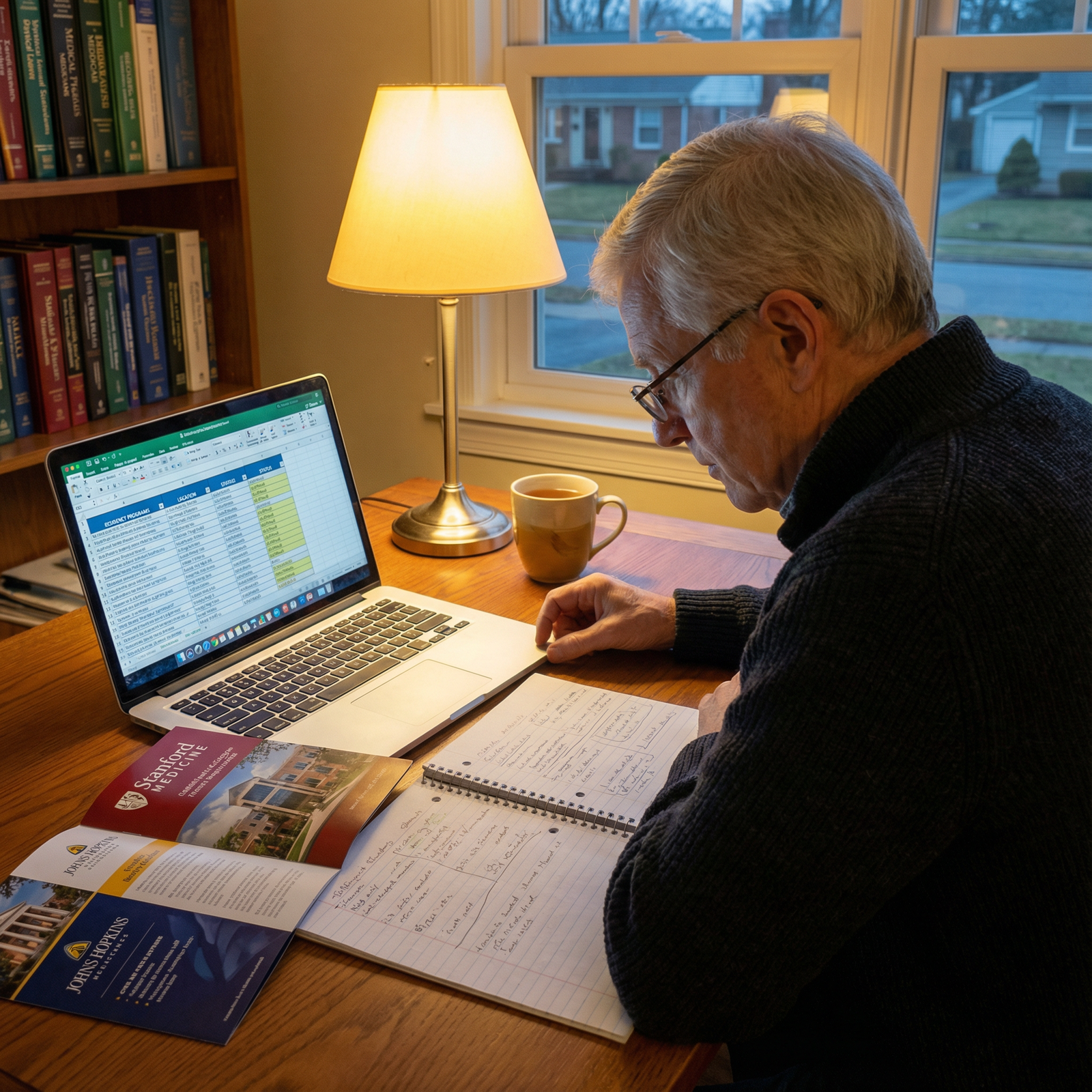
Create a spreadsheet with columns like:
- City (Denver, Aurora, Colorado Springs, etc.)
- Program type (university, community)
- Visa type(s)
- IMG presence
- Personal notes (why you like it, potential red flags)
Step 3: Expand Region Intentionally
Identify programs outside Denver that still make sense for your story:
- Other Colorado residency programs (e.g., in mid-size cities)
- Mountain West states with:
- Visa sponsorship
- Track record of IMGs
- Reasonable distance/travel from Denver for occasional family visits
Shape a coherent regional narrative: “I am committed to the Mountain West and its patient populations,” rather than “I applied randomly to 15 states.”
Step 4: Tailor Your Application Materials
Personal Statements:
- Have one version emphasizing Denver and Colorado ties, to use for Denver residency programs and Colorado sites.
- Have a second version focusing on broader Mountain West/regional interest.
Letters of Recommendation:
- If you have Denver or Colorado observerships/electives, highlight those experiences and get letters when possible.
- If you only have experiences elsewhere, translate those skills into how they prepare you for Colorado-style practice (diverse populations, altitude-related issues, outdoor injuries, etc.).
Step 5: Practice Your Geographic Flexibility Responses
Before interviews, write and rehearse concise answers to:
- “Why Denver?”
- “Why Colorado or the Mountain West?”
- “How flexible are you geographically if you don’t match in Denver?”
- “How does your visa status influence your location choices?”
Focus on being:
- Honest but not fatalistic
- Positive about any region where you’ve applied
- Clear about your intention to contribute long term, not just complete visa requirements and leave
Frequently Asked Questions (FAQ)
1. If Denver is my top choice, is it a mistake to apply to programs in other states?
No. For a non-US citizen IMG, applying only to Denver residency programs is often too risky due to visa constraints, limited IMG spots, and high competition. You can still present Denver and Colorado as your primary preference, but a smart location flexibility match plan includes additional Mountain West or other compatible regions where you can genuinely see yourself training.
2. Will programs outside Colorado reject me if I say I prefer Denver?
Not necessarily. Programs understand that applicants have preferences. The key is to show that while Denver or Colorado may be your first choice, you have specific, positive reasons for applying to their program and would be happy to train there. Avoid ranking other regions as “backups” in your language; instead, frame them as different but attractive options within your broader career goals.
3. How much should I mention visa issues when discussing geography?
You should be transparent but brief and solutions-focused. For example: “As a non-US citizen IMG, I require J‑1 sponsorship, which I know your program offers. I am particularly interested in Colorado because many underserved communities here also offer J‑1 waiver opportunities, aligning with my long-term plan to serve in areas of need.” Do not dominate the conversation with immigration concerns, but do acknowledge them clearly.
4. I have no previous ties to Denver or Colorado. Can I still convincingly prioritize this region?
Yes, but you must build and articulate thoughtful, evidence-based reasons:
- Research healthcare needs and demographics of Denver and Colorado
- Connect your interests (e.g., rural medicine, immigrant health, outdoor/sports injuries) to local realities
- Obtain observerships, electives, or volunteer experiences in the region if possible
- Show that you have actively learned about living in Denver (cost of living, climate, culture)
Even without family or prior residence, you can demonstrate sincere, informed interest in Colorado residency and the Denver environment.
By understanding and strategically using geographic flexibility, a non-US citizen IMG can significantly improve their chances of matching—while still giving themselves a strong opportunity to land in Denver or elsewhere in Colorado. The key is to combine honest self-assessment, thoughtful regional planning, and clear communication of both your preferences and your adaptability.