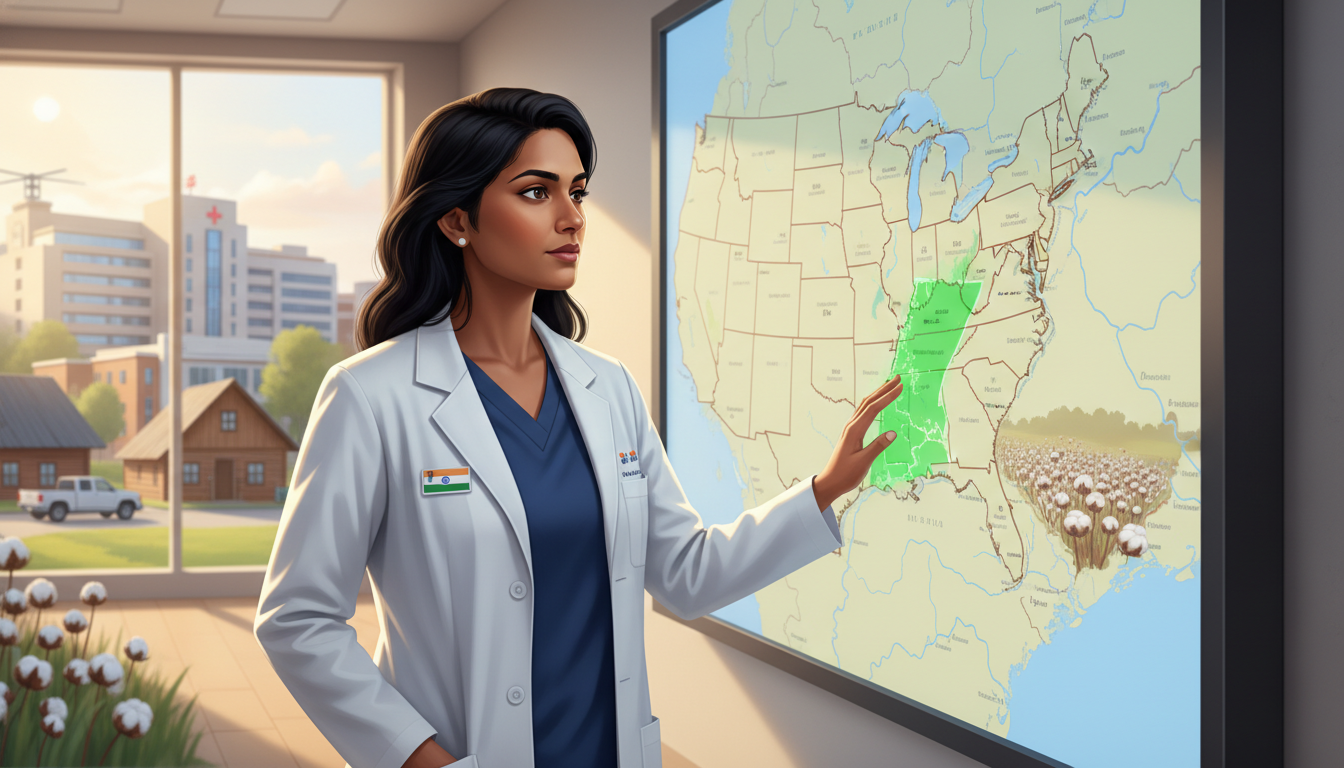
Understanding Geographic Flexibility as a Non‑US Citizen IMG
For a non-US citizen IMG, geographic flexibility can be the difference between matching and going unmatched—especially in niche regions like the Mississippi Delta and the Deep South. Programs in this area often serve underserved, rural, and economically challenged populations and can be relatively more welcoming to foreign national medical graduates who demonstrate genuine commitment, maturity, and adaptability.
In the residency application context, geographic flexibility refers to:
- Your willingness to train in multiple regions (or in a specific, less popular region such as the Mississippi Delta or the broader Deep South)
- Your ability to credibly explain why you are open to certain locations
- How you strategically align your geographic preference residency selections and signals with your overall career and visa goals
For a non-US citizen IMG, geography is not just about lifestyle; it directly affects:
- Visa sponsorship options (J-1 vs H-1B)
- Match probability
- Long-term career opportunities in medically underserved areas
- Fellowship access and future mobility
This article will walk through how to think about geographic flexibility, how to position your interest in a Mississippi Delta residency, and how to balance honesty with strategic planning as a foreign national medical graduate.
Why the Mississippi Delta and Deep South Matter for Non-US Citizen IMGs
The Mississippi Delta—stretching across parts of Mississippi and neighboring Deep South states—is a unique region:
- High burden of chronic disease (diabetes, hypertension, obesity)
- Rural and underserved communities with significant healthcare disparities
- Fewer local medical schools and resident pipelines than large metropolitan areas
- Programs that often value service-minded, resilient residents, including non-US citizen IMGs
For a foreign national medical graduate, this region can be strategically important:
Higher Openness to IMGs in Certain Programs
Some internal medicine, family medicine, psychiatry, and pediatric programs in the Mississippi Delta and Deep South have a long history of accepting IMGs and sponsoring visas. These programs value commitment to underserved populations and may be more flexible about Step attempts or graduation year than ultra-competitive coastal programs.Visa Sponsorship and Long-term Pathways
- Many deep south residency programs sponsor J-1 visas; a smaller number sponsor H-1B.
- After residency, the region has many J-1 waiver opportunities (Conrad 30, HHS and other waivers) that favor physicians willing to work in Health Professional Shortage Areas (HPSAs)—common in the Mississippi Delta.
Stronger Match Probability with Clear Regional Commitment
When a program sees a non-US citizen IMG who can articulate a thoughtful, realistic reason for choosing the Mississippi Delta (not just “I will go anywhere”), they may classify that applicant as more likely to rank them highly and remain in the program.
In other words, linking your geographic preference residency strategy to this region can improve your immediate match prospects and your long-term immigration and career prospects.

Building a Smart Geographic Preference Strategy as a Non‑US Citizen IMG
You cannot control where you attended medical school, but you can control how you present your location flexibility match strategy. For a non-US citizen IMG aiming at Mississippi Delta and other deep south residency programs, think in three layers:
- Priority Region: Mississippi Delta / Deep South
- Secondary Regions: Similar underserved or IMG-friendly areas
- Flexible Options: Places you’re genuinely willing to move to if needed
1. Make the Mississippi Delta Your Clearly Defined Priority Region
If the Mississippi Delta is truly a top target:
Learn the geography:
Understand which cities and hospitals are in or near the Mississippi Delta (e.g., Greenville, Greenwood, Clarksdale, Cleveland, and regional centers like Jackson; plus parts of Arkansas, Louisiana, and Tennessee that are culturally and medically similar).Know the healthcare profile:
Be able to discuss:- High rates of chronic disease and limited specialty access
- Transportation and access barriers
- Healthcare disparities by race and income This shows you’ve done your homework and are not just naming a region for convenience.
Align with your career interests:
Emphasize how the Mississippi Delta aligns with:- Primary care or generalist specialties
- Longitudinal continuity clinic and community outreach
- Public health, health equity, or global health interests
- Research in disparities or rural medicine
Example (interview response):
“I’m particularly interested in training in the Mississippi Delta because I want a residency that combines strong clinical training with meaningful work in underserved communities. The Delta’s high burden of chronic disease, especially diabetes and cardiovascular disease, mirrors what I saw in rural regions of my home country. I feel my language skills, cross-cultural experience, and long-term goal to work in underserved areas position me well to contribute and learn here.”
2. Select Secondary Regions that Make Sense with Your Story
Program directors can tell when you say “I’m willing to go anywhere” without any logic. Instead:
Choose 2–3 additional regions that are realistic and consistent:
- Other parts of the Deep South (Alabama, Louisiana, Arkansas, Tennessee)
- Rural Midwest or Appalachian regions
- Smaller cities with safety-net hospitals
Maintain a coherent narrative:
For example:- “I am drawn to regions where I can work with underserved populations, especially in the Deep South and rural areas, including the Mississippi Delta, Alabama Black Belt, and parts of Arkansas and Tennessee.”
This way your location flexibility match story still reflects a clear theme: underserved, rural, and continuity care, not random geography.
3. Decide How Flexible You Truly Are—and Be Honest
Geographic flexibility is a spectrum. Before you apply, ask yourself:
- Am I willing to live in a small town for 3 years?
- How important are proximity to major airports, specific climates, or cultural communities (e.g., ability to practice my religion, access to ethnic food markets, etc.)?
- Would I be willing to remain in the region after residency for a J-1 waiver job?
Once you know your true boundaries:
- Avoid claiming “no preferences” if you have strong ones.
- You can still present yourself as flexible while being honest:
- “I am open to a wide range of locations, particularly in the Mississippi Delta and the broader Deep South, where I can gain experience with underserved rural populations. While I appreciate urban life, I am prepared to live in a smaller community during residency if it provides strong training and visa sponsorship.”
Programs respect clarity more than vague claims.
Presenting Geographic Flexibility in Your Application Materials
Your geographic preference residency strategy must be consistent throughout your written application and interviews. As a non-US citizen IMG, you have two extra layers: explaining your location flexibility and addressing visa/immigration factors without sounding desperate.
Personal Statement: Subtle but Strategic
Your personal statement is not a travel essay—but you can weave in your regional preference strategy.
Include:
A short, targeted paragraph linking your background to the Mississippi Delta:
- Past work with underserved or rural populations
- Experience with low-resource health systems
- Interest in health equity or public health in marginalized communities
A line that connects your story to the Deep South residency context:
- “Given my experience working in resource-limited clinics and my commitment to addressing health disparities, I am particularly interested in training in medically underserved regions such as the Mississippi Delta and the broader Deep South.”
Avoid:
- Overly generic statements: “I am interested in all US regions.”
- Location-based reasons that seem superficial: “I like warm weather” or “The cost of living is low.”
ERAS Geographic Preferences and Signaling
If ERAS or specialty-specific applications include sections or tokens related to geographic preference:
- Be consistent: If you list the Mississippi Delta/Deep South as a top preference, your program list should reflect that (a noticeable portion of applications in that region).
- Use signals wisely: If specialty rules allow, signal:
- A few Mississippi Delta programs where you’re most competitive.
- A mix of core and reach programs in similar regions.
Do not waste limited preference slots on regions where you’re unlikely to rank programs highly.
CV and Experience Section: Show Real Exposure
To support your geographic flexibility:
Highlight any experiences that prepare you for a Mississippi Delta residency:
- Rural rotations
- Community health clinics
- Rotations or observerships in the South or similar settings
Use descriptions that map directly to what Delta programs value:
- “Managed a high volume of chronic disease in a resource-limited clinic.”
- “Provided care to socioeconomically disadvantaged populations where transportation and health literacy were major barriers.”
Specific experience > generic claims of interest.

Communicating Geographic Flexibility During Interviews
Interviews are where your location flexibility match story becomes most important. Faculty want to know:
- “Will this applicant actually move here?”
- “Will they be happy enough to stay for all 3 years?”
- “Are they genuinely interested in the Mississippi Delta or just applying everywhere?”
Common Interview Questions and Sample Responses
1. “Why are you interested in our region/the Mississippi Delta?”
Strong answer components:
- Explicit mention of the Delta or Deep South
- Connection to your past experiences
- Clear understanding of local challenges
- A future-oriented reason (training, career goals, J-1 waiver plans if appropriate)
Example:
“I’ve intentionally focused my applications on the Mississippi Delta and similar rural Deep South communities because I’m passionate about working in underserved areas. In my home country, I worked in a rural clinic where we had limited resources and high rates of uncontrolled diabetes and hypertension—very similar to the challenges in the Delta. I want a residency that will give me strong inpatient training but also prepare me to be a physician who understands social determinants of health and can work effectively with resource limitations. Long term, I’m open to remaining in an underserved area on a J-1 waiver, so training in this region makes sense for my career and immigration path.”
2. “Do you have any geographic preferences?”
Avoid either extreme (“I only want New York/California” or “I have no preferences at all”).
Balanced answer:
“I’m open to several regions, but I’ve prioritized the Mississippi Delta and the Deep South because of the combination of strong clinical training and service to underserved populations. I’m prepared to live in a smaller community for residency if the program provides good educational support and visa sponsorship. After residency, I would also consider staying in a similar region for my early career, especially if there are J-1 waiver opportunities that allow me to continue serving in high-need areas.”
3. “How do you feel about living in a rural or smaller city?”
Program directors worry about retention. Show that you’ve thought practically:
- Acknowledge that it’s different from big cities.
- Emphasize your adaptability and past examples.
Example elements:
- “I understand it may be quieter than large metropolitan areas, but during medical school I lived in a small town for clinical rotations and actually appreciated the close-knit community.”
- “My main priority in residency is strong training; I’m comfortable adjusting my lifestyle to make that happen.”
Handling Visa Questions Without Overemphasizing Immigration
As a foreign national medical graduate, you must consider visa sponsorship—but don’t make your answers sound like you care only about visas.
Balanced approach:
- State your needs clearly:
- “I will require J-1 sponsorship” or “I am eligible and interested in H-1B if available.”
- Immediately reconnect to geography and service:
- “I recognize that after residency I will likely need to work in a medically underserved area on a waiver, which aligns with my interest in rural and Delta communities.”
Programs in the Mississippi Delta appreciate when your immigration reality aligns with their regional workforce needs.
Practical Steps to Prepare for a Mississippi Delta Residency Path
To transform “flexibility” from words into a convincing profile, take concrete steps before and during application season.
1. Research and Shortlist Programs
Use FRIEDA, residency websites, and IMG forums to identify:
- Internal medicine, family medicine, psychiatry, pediatrics programs in Mississippi and nearby Deep South states.
- Which programs explicitly mention non-US citizen IMG friendliness or visa sponsorship.
- Programs physically located in or serving Mississippi Delta populations.
Create tiers:
- Core targets: Programs that regularly match IMGs with your Step scores and graduation year.
- Reaches: A few stronger academic or hybrid programs in the region.
- Backup: Other underserved regions with similar profiles.
2. Seek Regional Exposure (Even Virtually)
If you cannot do US clinical experience in the Mississippi Delta:
- Look for:
- Virtual electives or observerships linked to Southern institutions.
- Online conferences or webinars focused on rural health in the Deep South.
- Mentors or alumni who trained in these regions.
Mention this exposure in your personal statement, CV, and interviews to support your regional preference strategy.
3. Develop a Realistic Lifestyle Plan
Residency in the Mississippi Delta is not New York or Los Angeles. Before you arrive:
- Research:
- Housing options and cost of living (often favorable).
- Transportation needs (many residents need a car).
- Cultural and religious communities (mosques, churches, temples, language groups).
- Prepare mentally:
- Fewer big-city amenities but more close-knit relationships.
- Potential feelings of isolation initially—and strategies to cope (online social networks, visits to nearby cities on days off).
When you talk about your flexibility, mentioning that you’ve already researched these aspects shows seriousness and maturity.
4. Align Your Long-Term Career Vision
Residency programs in the Mississippi Delta and broader Deep South appreciate applicants who might stay in similar regions after training—especially for primary care or hospitalist roles.
As a non-US citizen IMG, your location flexibility is strongest when it naturally fits your long-term plan:
- “I can see myself working in a rural or semi-rural area in the first years after residency, possibly on a J-1 waiver.”
- “I’m interested in primary care/hospital medicine in underserved communities, so training in the Delta is consistent with my future goals.”
You don’t have to promise you’ll stay forever—but showing a realistic commitment to underserved or rural practice for several years is compelling.
Key Takeaways for Non‑US Citizen IMGs Targeting the Mississippi Delta
Geographic flexibility is not saying ‘I’ll go anywhere.’
It’s choosing a coherent set of regions—like the Mississippi Delta and the broader Deep South—aligned with your strengths, visa needs, and career goals.For a foreign national medical graduate, geography equals opportunity.
Deep south residency programs may offer:- More IMG-friendly attitudes
- Visa sponsorship
- Future J-1 waiver jobs in the same or similar areas
Your geographic preference residency strategy must be consistent.
Personal statement, ERAS preferences, program list, interview answers, and CV should all tell the same story: you’ve thought about the Mississippi Delta and similar regions, and you genuinely see yourself training—and possibly working there.Authenticity plus preparation wins.
Programs can distinguish between applicants who selected the region randomly and those who understood the realities of a Mississippi Delta residency and still chose it intentionally.
By thoughtfully building and communicating your location flexibility match strategy around the Mississippi Delta, you position yourself as a serious, mature, and mission-driven non-US citizen IMG—exactly the kind of resident many deep south programs hope to recruit.
FAQ: Geographic Flexibility for Non‑US Citizen IMGs in the Mississippi Delta
1. Is it risky to focus too much on the Mississippi Delta or Deep South in my application?
It’s not risky if you maintain balance. You can highlight the Mississippi Delta as a primary interest while still applying to and mentioning similar underserved regions (rural Midwest, Appalachia, other parts of the Deep South). The key is a coherent regional preference strategy, not exclusive focus on one tiny area. Overly narrow targeting becomes risky only if you limit your actual program list too much.
2. As a non-US citizen IMG, should I say I’m open to any location just to increase my chances?
No. Claiming total flexibility when you are not truly willing to live “anywhere” can backfire. Programs in less popular regions want applicants who are likely to stay. It’s better to honestly prioritize regions like the Mississippi Delta and similar underserved areas and explain why those fit you, rather than pretending to have no geographic preference at all.
3. How important is it to mention visa issues when discussing geography?
You should be clear about your visa needs (J-1 vs H-1B eligibility), but don’t let visa concerns dominate your answers. Link geography and immigration logically: for example, explain that training in the Mississippi Delta aligns with your interest in underserved care and also with long-term J-1 waiver possibilities. Programs expect non-US citizen IMGs to think about visas—they just don’t want that to be your only reason for choosing a region.
4. If I have never visited the Deep South, can I still credibly claim interest in a Mississippi Delta residency?
Yes, if you prepare well. Study the region’s health challenges, read about its history and culture, attend virtual events, and talk with residents or alumni who trained there. Then, connect what you learn to your own background—especially any experience in low-resource or underserved settings. Programs understand that many foreign national medical graduates have not been able to visit beforehand; what matters is whether your interest is informed, consistent, and believable.