
Understanding Geographic Flexibility as a Non‑US Citizen IMG
For a non-US citizen IMG, “geographic flexibility” is more than just being willing to move. It is a deliberate, strategic approach to where you apply, how you present your location preferences, and how you manage visa constraints while aiming for a strong match outcome—especially in unique locations like Alaska and Hawaii.
In the continental US, applicants can often rely on large numbers of programs in each region; in Alaska and Hawaii, options are fewer and more specialized. That makes your approach to geographic preference residency choices particularly important. When you combine small program numbers with visa restrictions and the realities of being a foreign national medical graduate, every decision about where—and how broadly—you apply carries extra weight.
This article will walk you through:
- How Alaska and Hawaii residency programs are structured
- How to think about geographic preference in these states
- How to present location flexibility in ERAS and interviews
- Visa and logistics issues specific to these regions
- A step-by-step, realistic strategy to maximize your match chances
Throughout, the examples assume you are a non-US citizen IMG (e.g., requiring J‑1 or H‑1B), but the principles also help other IMGs planning a location flexibility match strategy.
The Landscape: Alaska & Hawaii Residency Options and Realities
Before you can decide how flexible to be, you need a realistic understanding of what actually exists in Alaska and Hawaii.
1. Program Availability and Structure
Alaska residency options
Alaska has a very limited number of GME positions, and much of the clinical training relies on partnerships with out-of-state institutions. Key points:
Family medicine focused
- Alaska’s main ACGME-accredited residency training pathway is family medicine (often through programs like Alaska Family Medicine Residency in Anchorage, historically affiliated with institutions in the lower 48).
- There are also rural and community-focused training tracks with emphasis on primary care, underserved populations, and broad-scope practice.
Rotation-based exposure
- Some residents from mainland programs rotate through Alaska for rural or wilderness medicine experiences.
- These are usually not full core residency programs you can directly match into as a primary site, but they can be part of a broader regional preference strategy if you train elsewhere and later seek practice opportunities in Alaska.
Hawaii residency programs
Hawaii offers more structured GME than Alaska, though still limited compared with major mainland hubs:
Core specialties present
- Internal Medicine, Family Medicine, Pediatrics, Psychiatry, General Surgery, OB/GYN, and some subspecialties are represented (often anchored in major Honolulu-based teaching hospitals and university-affiliated systems).
- Programs often emphasize community health, diverse populations (including Native Hawaiian and Pacific Islander communities), and continuity of care.
Smaller class sizes
- Typically fewer positions per year than comparable mainland programs.
- This can make them more competitive even if not as famous as large academic centers, because there are simply fewer seats.
2. Implications for a Non-US Citizen IMG
For a foreign national medical graduate, the limited program numbers and geographic isolation mean:
High-stakes applications
- You cannot rely on volume; you must be precise and realistic in your targeting.
- Overly narrow focus (e.g., “I will only apply to Hawaii and nowhere else”) severely increases your risk of not matching.
Visa sponsorship is a bottleneck
- Not all programs in Alaska or Hawaii sponsor H‑1B; many rely on J‑1 visas via ECFMG.
- As an IMG, verify visa types explicitly on program websites and FREIDA. Email coordinators if unclear.
Rural and underserved focus
- Many Alaska and some Hawaii residency programs emphasize underserved, rural, or frontier populations.
- Programs may favor applicants who convincingly show long-term interest in these communities, not just lifestyle attraction (e.g., beaches or scenery).
3. Key Takeaways for Geographic Strategy
- Treat Alaska & Hawaii as targeted regions within a broader application map, not as your only destinations.
- Use your geographic flexibility (i.e., willingness to apply widely across multiple states/regions) to balance the risk inherent in these small markets.
- Understand that for many Alaska opportunities, you may need to complete training elsewhere and later pursue fellowships, jobs, or special tracks in Alaska.
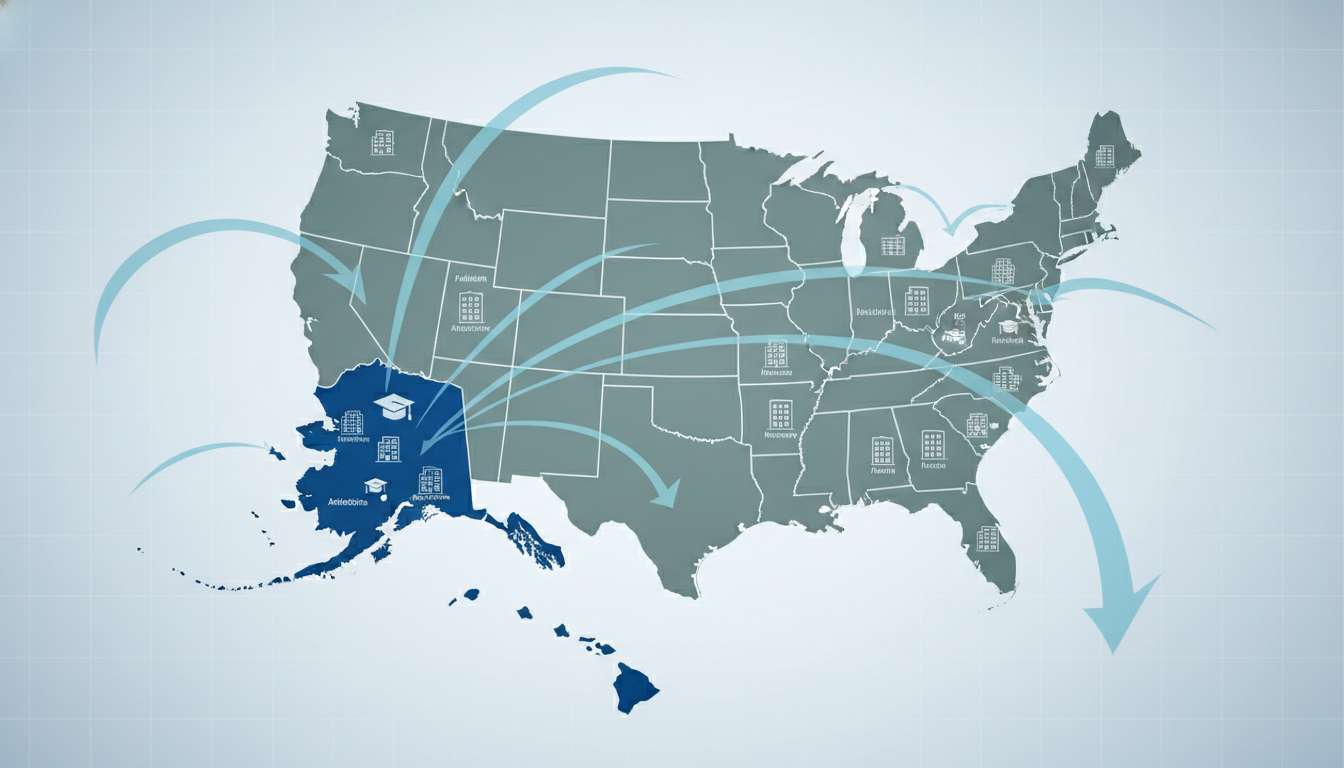
Clarifying Your Geographic Preference and Flexibility
“Geographic preference residency” is a formal and informal concept:
- Formally: ERAS has the “Geographic Preferences” signaling option in some specialties.
- Informally: Programs infer your preference from your personal statement, letters, experiences, and interview conversation.
For a non-US citizen IMG targeting Alaska or Hawaii, you must show targeted interest while still demonstrating location flexibility to avoid looking overly rigid.
1. Balancing Regional Preference with Flexibility
Think in terms of three tiers:
- Primary interest regions: Alaska and Hawaii
- Secondary regions: Areas with similar profiles (e.g., Pacific Northwest, West Coast, other states with rural and underserved populations, or states with high IMG acceptance and J‑1/H‑1B sponsorship)
- Safety/expansion regions: Additional states or cities where you are realistically willing to train, even if they are not your top lifestyle choice
For example:
- You might mark “Pacific” as a higher geographic preference region (if available for your specialty) to capture Hawaii and West Coast.
- You then still apply to a significant number of programs in midwest or northeast IMG-friendly states that sponsor visas.
Programs in Alaska and Hawaii want to see that you are genuinely interested in their setting, not that you are using them as your only escape to a vacation-like location. But they do not want to hear that you would be miserable anywhere else—this can make you appear risky or unrealistic.
2. Communicating Regional Preference Strategy in ERAS
You can show interest in Alaska and Hawaii without appearing geographically inflexible:
Personal statement tailoring
- If you write region-specific personal statements, mention:
- Attraction to rural/frontier medicine (Alaska)
- Interest in multicultural, island, or indigenous health (Hawaii)
- Previous experiences with remote settings, global health, resource-limited environments, or community engagement.
- Avoid generic “I love beaches / I love snow” as your main justification; programs want professional, not purely lifestyle, motivations.
- If you write region-specific personal statements, mention:
Geographic preference signals (if available)
- If the specialty allows you to signal regions, prioritize the broader region that includes Alaska/Hawaii (e.g., “Pacific” or “West”).
- Still distribute some signals to other regions where you are competitive and would be happy.
Experiences and electives
- Highlight any experiences that demonstrate adaptability to unusual settings: rural rotations, global health, volunteering in remote clinics.
- If you have not rotated in Alaska or Hawaii, emphasize analogous experiences that show you can function away from large urban academic centers.
3. Example: Framing Your Geographic Flexibility
Instead of:
“I am only interested in Hawaii because I love the ocean and want to live near the beach.”
Try:
“I am especially interested in Hawaii residency programs because they combine community-based training with diverse, multicultural patient populations, including Native Hawaiian and Pacific Islander communities. My previous work in resource-limited rural clinics has prepared me to serve in settings where cultural sensitivity and continuity of care are critical. I am flexible about location and open to training in any region where I can contribute meaningfully to underserved communities.”
This phrasing:
- Shows a clear geographic interest in Hawaii
- Connects to your clinical and professional goals
- Explicitly states you are open and flexible about location
Visa, Logistics, and Lifestyle: What Geographic Flexibility Really Means Here
Being geographically flexible as a non-US citizen IMG doesn’t just mean applying widely. It also means being prepared for the practical realities of living and training in Alaska or Hawaii versus the mainland.
1. Visa Considerations in Alaska & Hawaii
For a foreign national medical graduate, visa policy is central:
J‑1 visas (ECFMG-sponsored)
- Most IMG-heavy programs rely on J‑1s.
- After training, you face the two-year home residence requirement, unless you obtain a waiver (often through working in underserved US locations).
H‑1B visas
- Fewer programs in smaller states sponsor H‑1B, given the added cost and complexity.
- If you strongly prefer H‑1B, your realistic options in Alaska and Hawaii may narrow significantly.
Action steps:
Check FREIDA and program websites for explicit statements:
- “Accepts J‑1 only”
- “Supports H‑1B for eligible candidates”
- If absent, email the coordinator with a clear, concise question.
Build a spreadsheet of your target programs with columns for:
- State/Region (Alaska, Hawaii, West, Midwest, etc.)
- Visa type supported
- IMG friendliness (approximate, based on past match lists)
- Program size and match outcomes
Your geographic flexibility strategy should integrate this data. For example, you might:
- Apply to a smaller number of Hawaii programs that sponsor J‑1, plus a larger number of mainland J‑1-friendly programs where match probability is higher.
- Consider Alaska as a long-term practice goal (e.g., via J‑1 waiver job after residency elsewhere) if direct residency opportunities are extremely limited or do not sponsor your visa of choice.
2. Practical Realities of Living in Alaska & Hawaii
Cost of living
- Hawaii: Very high cost of living, particularly Honolulu. Housing and groceries can be significantly more expensive than many mainland cities.
- Alaska: Costs can also be high, especially for groceries and heating, though housing varies by city.
As a resident on a fixed salary, this matters. Geographic flexibility sometimes means accepting a higher cost of living in exchange for a unique training environment. Programs may partially offset this with benefits, but you should research:
- Approximate resident salary at those institutions
- Average rent near the hospital
- Transportation costs (car ownership, parking, public transit)
Travel and distance from family
- Both Alaska and Hawaii are far from most other states and from many applicants’ home countries.
- Fewer direct flights; more time and cost to visit family or attend conferences.
- Emotional resilience and adaptability are important, particularly if you have limited social support locally.
If you emphasize Alaska or Hawaii as high geographic preferences, be prepared to explain in interviews how you will:
- Cope with distance from family and support networks
- Build a support system locally
- Stay committed to the full duration of training
3. How This Affects Your Match Strategy
Given these realities, geographic flexibility for a non-US citizen IMG looks like:
- Not: “I will only go to Hawaii or Alaska or I won’t train at all.”
- Instead: “I strongly prefer regions that offer rural, indigenous, or island medicine exposure (e.g., Hawaii, Alaska, certain mainland rural programs), but I am fully prepared to thrive and contribute in any program that trains me to provide excellent care to underserved patients.”
This mindset reassures programs you are:
- Motivated by professional goals, not only lifestyle
- Emotionally and practically prepared for the demands of their location
- Still grounded and realistic about the match process as a foreign national medical graduate

Applying Strategically: Building a Location Flexibility Match Plan
Now that we have explored the context, let’s translate this into a step-by-step plan for your residency application cycle.
Step 1: Define Your “Ideal” and “Acceptable” Regions
Start by listing:
Primary ideal regions:
- Example: Hawaii, Alaska, Pacific Northwest, select West Coast cities
Secondary acceptable regions:
- Example: Midwest states with strong IMG intake and J‑1 sponsorship (Michigan, Ohio, Illinois, etc.)
- Some northeastern programs with a history of taking IMGs
Non-negotiable exclusions (if any):
- For instance, a region where you have critical family limitations or legal constraints
- Keep this list small to maintain flexibility
This exercise helps you understand where Alaska and Hawaii fit into a broader geographic framework, not as your only plan.
Step 2: Match Specialty and Region to Your Profile
Your chance of matching into Alaska or Hawaii depends heavily on:
- Specialty competitiveness
- USMLE/COMLEX scores
- Years since graduation
- US clinical experience
- Quality of letters and research (if relevant)
If you are targeting more competitive specialties, direct Alaska and Hawaii opportunities as a non-US citizen IMG may be extremely limited. In that case, a rational approach might be:
- Aim for those specialties in IMG-friendly mainland regions, and
- Treat Alaska or Hawaii as a later career relocation (e.g., after residency, fellowship, or through J‑1 waiver positions).
For primary care specialties (Family Medicine, Internal Medicine, Pediatrics):
- Programs in Hawaii (and certain Alaska-affiliated tracks) may be more accessible if your profile is solid and your narrative fits their mission (underserved, cross-cultural medicine, rural health).
Step 3: Build a Tiered Application List
A common structure for a non-US citizen IMG might be:
- 10–20% of applications to “dream” or niche locations, including:
- Hawaii residency programs relevant to your specialty
- Any direct Alaska training options that accept non-US citizen IMGs and sponsor your visa
- 50–60% of applications to solid, IMG-friendly programs in multiple US regions where:
- Visa sponsorship is clear
- Past match lists show a pattern of accepting foreign national medical graduates
- 20–30% of applications to “safety” programs:
- Less popular locations
- Community-based programs with a history of welcoming IMGs
- Programs known to consider applicants with modest scores but strong clinical commitment
This structure ensures geographic preferences (Alaska & Hawaii) are represented but not over-relied upon.
Step 4: Highlight Geographic Flexibility in Interviews
When interviewing with Alaska or Hawaii residency programs—or any program—use consistent messaging:
Emphasize mission alignment:
- “I am drawn to Alaska because of its focus on frontier medicine and caring for remote communities. As an IMG who has worked in limited-resource settings, I feel aligned with that mission.”
- “I value Hawaii’s diversity and unique health disparities; my long-term goal is to work with diverse, multicultural communities.”
Show commitment + flexibility:
- “While I have a special interest in your region, I applied broadly across the US and I am prepared to build a career wherever I match. What matters to me is strong clinical training and the chance to serve underserved patients.”
Address practical considerations proactively (if asked):
- Confirm you have researched cost of living, travel constraints, and climate.
- Show you understand that residency is demanding, and you are choosing this environment with open eyes.
Step 5: Keep a Long-Term View
Even if you do not match into Alaska or Hawaii, geographic flexibility and a regional preference strategy can still bring you there later:
After residency:
- Many positions in Alaska and Hawaii seek physicians comfortable with underserved, rural, or multicultural populations.
- J‑1 waiver jobs (for those on J‑1 visas) are often in underserved areas; Alaska and some parts of Hawaii may have such opportunities.
Fellowship and later relocation:
- Complete residency in an IMG-friendly area, then seek fellowship or attending roles that allow relocation to these states.
This long-term view prevents you from over-concentrating on a single, small set of programs during your initial match.
Common Pitfalls and How to Avoid Them
Pitfall 1: Over-narrow Application List
Focusing 50–80% of your applications solely on Alaska and Hawaii can be risky for a non-US citizen IMG, given the small number of positions and uncertain visa support.
Solution: Keep these regions as selective targets and maintain a broad portfolio of applications across multiple states.
Pitfall 2: Lifestyle-Only Justification
Telling a Hawaii program that you want to surf every weekend, or telling an Alaska program you just want adventure, without demonstrating professional alignment, weakens your candidacy.
Solution: Emphasize patient care, underserved communities, and training quality first. Lifestyle can be a secondary bonus, not the primary driver.
Pitfall 3: Ignoring Visa Reality
Applying widely to Alaska or Hawaii residency programs that do not sponsor your visa type wastes time and money.
Solution: Verify visa sponsorship before applying. Prioritize programs consistent with your immigration needs.
Pitfall 4: Appearing Geographically Rigid
If programs perceive that you will only be happy in one specific location, they may worry you will not rank them highly or may not complete training.
Solution: Clearly and consistently communicate that you are flexible and grateful for any strong training opportunity, while still expressing sincere interest in their region.
FAQs: Geographic Flexibility for Non-US Citizen IMGs in Alaska & Hawaii
1. As a non-US citizen IMG, is it realistic to match directly into an Alaska residency program?
Direct entry into Alaska-based residency positions is limited. Many structured GME programs are family medicine focused and may be affiliated with institutions outside the state. Visa sponsorship and IMG acceptance vary. It is possible but uncommon, and you must:
- Carefully research which Alaska opportunities truly exist as core residency programs
- Confirm they accept foreign national medical graduates and sponsor your visa
- Apply broadly elsewhere to avoid overreliance on a small number of positions
For many IMGs, a more realistic pathway is: train in an IMG-friendly mainland program, then pursue Alaska-based jobs, fellowships, or J‑1 waiver positions after residency.
2. Are Hawaii residency programs IMG-friendly for non-US citizen applicants?
Some Hawaii residency programs do accept IMGs and sponsor J‑1 visas; a smaller number may sponsor H‑1B. Competitiveness varies by specialty, but limited positions mean competition can be strong. To improve your chances:
- Have solid exam scores and recent graduation, if possible
- Demonstrate clear interest in multicultural, community-based medicine
- Show genuine understanding of Hawaii’s unique population health challenges
- Still apply widely across the US to maintain good match odds
3. How should I use geographic preference signaling if I’m especially interested in Hawaii?
If your specialty uses ERAS geographic signaling:
- Consider signaling the broader region that includes Hawaii (e.g., Pacific/West), not only individual programs.
- Use one or two signals strategically on Hawaii programs you are truly committed to, only if your overall profile is reasonably competitive.
- Still allocate signals to other regions where you are willing and able to train, balancing your interest in Hawaii with practical match odds.
Always make sure your personal statements and experiences support your stated geographic preferences.
4. If I don’t match in Alaska or Hawaii, can I still eventually work there?
Yes. Many non-US citizen IMGs ultimately reach Alaska or Hawaii through post-residency pathways:
- Completing residency in another state that accepts IMGs and sponsors J‑1 or H‑1B
- Securing a J‑1 waiver position or other underserved-area job in Alaska or Hawaii after training
- Applying for staff or fellowship roles at institutions in these states once you are board-eligible or board-certified
Geographic flexibility during training—being open to multiple regions—often makes it easier, not harder, to eventually practice in Alaska or Hawaii, because you can prioritize strong training and visa compliance first, then strategically relocate.
By approaching Alaska and Hawaii as part of a broader, flexible geographic strategy, you protect your match chances while still honoring your regional interests. As a non-US citizen IMG, your best asset is a combination of realism, adaptability, and a clear commitment to serving diverse and underserved patients—qualities that resonate in Alaska, Hawaii, and far beyond.